Exploring Social Determinants of Health: A Nursing Case Study Approach
VerifiedAdded on 2023/04/19
|11
|2500
|227
Case Study
AI Summary
This nursing case study analyzes the social determinants of health impacting Billy, an Aboriginal child, and his family. It identifies substance use and poverty as key determinants affecting their health and wellbeing. The study discusses how these factors contribute to illness, social issues, and limited future potential. It further explores the role of a registered nurse in supporting the family through community development, advocacy, and health program monitoring, emphasizing family-centered and child-centered approaches. The case study includes a genogram depicting Billy's family structure and highlights the importance of addressing social inequalities to improve health outcomes. Desklib provides access to this and many similar assignments.

Running head: NURSING
Nursing
Name of the Student:
Name of the University:
Author Note:
Nursing
Name of the Student:
Name of the University:
Author Note:

Paraphrase This Document
Need a fresh take? Get an instant paraphrase of this document with our AI Paraphraser
1NURSING
Contents
Introduction......................................................................................................................................2
First social determinant....................................................................................................................2
The second determinant of health....................................................................................................4
Role of registered nurse in supporting Billy and his family............................................................5
Conclusion.......................................................................................................................................6
Genogram........................................................................................................................................8
Reference.........................................................................................................................................9
Contents
Introduction......................................................................................................................................2
First social determinant....................................................................................................................2
The second determinant of health....................................................................................................4
Role of registered nurse in supporting Billy and his family............................................................5
Conclusion.......................................................................................................................................6
Genogram........................................................................................................................................8
Reference.........................................................................................................................................9
2NURSING
Introduction
The social determinants of health are the complex circumstances within which the
individuals live and born and that impact their health. The social determinants of health include
several different intangible factors like the cultural constructs, socio-economic factors, place
based factors and the political factors. While the place based factors include the safe
environmental conditions, education systems and the accessible healthcare, availability of
healthy food, and well-designed neighbourhoods (Garg, Boynton-Jarrett & Dworkin, 2016).
Distribution of resource, money and power at the global and local level creates a societal
stratification that are responsible for the health inequalities within the different groups of people
that are based on the economic and social class, ethnicity and gender. Researches and the data
have showed that the social determinants of health have high levels of impact on the healthcare
ratio of the healthcare spending and the social service spending which results into an improved
health of the population. To tackle the social determinants of health, the provider has actively
partnered with the community organizations that will play a major role in improving access to
the transportation, job training, healthy food, and access to housing (Braveman & Gottlieb,
2014).
First social determinant
The first social determinant in relation to the health and wellbeing of the Billy, his family
and the wider community includes is the social determinant of substance use. The experience of
the substance use varies across different individual. There is a combination of the social factor,
psychological factor and the biological factors that contributes negatively to the substance use
and addiction. A vital thing to note is how the social determinants of health and addictions
impact and are linked with one another (Shahram, S. (2016). Research have shown that the about
Introduction
The social determinants of health are the complex circumstances within which the
individuals live and born and that impact their health. The social determinants of health include
several different intangible factors like the cultural constructs, socio-economic factors, place
based factors and the political factors. While the place based factors include the safe
environmental conditions, education systems and the accessible healthcare, availability of
healthy food, and well-designed neighbourhoods (Garg, Boynton-Jarrett & Dworkin, 2016).
Distribution of resource, money and power at the global and local level creates a societal
stratification that are responsible for the health inequalities within the different groups of people
that are based on the economic and social class, ethnicity and gender. Researches and the data
have showed that the social determinants of health have high levels of impact on the healthcare
ratio of the healthcare spending and the social service spending which results into an improved
health of the population. To tackle the social determinants of health, the provider has actively
partnered with the community organizations that will play a major role in improving access to
the transportation, job training, healthy food, and access to housing (Braveman & Gottlieb,
2014).
First social determinant
The first social determinant in relation to the health and wellbeing of the Billy, his family
and the wider community includes is the social determinant of substance use. The experience of
the substance use varies across different individual. There is a combination of the social factor,
psychological factor and the biological factors that contributes negatively to the substance use
and addiction. A vital thing to note is how the social determinants of health and addictions
impact and are linked with one another (Shahram, S. (2016). Research have shown that the about
⊘ This is a preview!⊘
Do you want full access?
Subscribe today to unlock all pages.

Trusted by 1+ million students worldwide
3NURSING
half of the people that are seeking for the addiction have mental illness. The people that
experience substance use and the addiction also experiences he discrimination and stigma.
Stigma here is described as a discrimination and negative stereotype and the resultant behaviour
results due to this. There are various ways through which the discrimination and stigma can
effectively impact a person, like the feeling of isolation, fear of seeking treatment, and loss of
self-esteem. Often the people that have concurrent disorder have also experiences the
intersecting layers of discrimination and multiple layers of mental health and it includes both the
mental health issues and addiction issues (Finch et al., 2013).
It is important to note that the Billy and his family are aboriginals and this means that
they are face discrimination from the whites. It has also been mentioned by Billy that his mother
drinks alcohol every night with her neighbour and the it is also important to note that both his
parents and his older sibling smokes cigarettes. Thus, it is an obvious thing that they facing
issues relating to the substance use and it is seriously causing health issues. There are several
other factors like the genetic, psychological, environmental and the biological factors that have
positive associations with the substance use. These factors also include the sex orientation,
educational attainment, income level, age and ethnicity, race and gender. Furthermore, it is
important to highlight that the substance use is also linked with the community dynamics,
household dynamics, and the interpersonal dynamics. Whereas, peer pressure social networks
and family pressure are the major influencers of the substance use during the adolescent stage
(Dasgupta, Beletsky & Ciccarone, 2018). Familial risk factors for the substance use include the
child perception regarding the usage of the substance, economic status of the family, child a
parent relationship, levels of parental education, marital status of parents and substance abuse by
family. Moreover, the attitudes of the parents that favour the usage of drug tends to have linkage
half of the people that are seeking for the addiction have mental illness. The people that
experience substance use and the addiction also experiences he discrimination and stigma.
Stigma here is described as a discrimination and negative stereotype and the resultant behaviour
results due to this. There are various ways through which the discrimination and stigma can
effectively impact a person, like the feeling of isolation, fear of seeking treatment, and loss of
self-esteem. Often the people that have concurrent disorder have also experiences the
intersecting layers of discrimination and multiple layers of mental health and it includes both the
mental health issues and addiction issues (Finch et al., 2013).
It is important to note that the Billy and his family are aboriginals and this means that
they are face discrimination from the whites. It has also been mentioned by Billy that his mother
drinks alcohol every night with her neighbour and the it is also important to note that both his
parents and his older sibling smokes cigarettes. Thus, it is an obvious thing that they facing
issues relating to the substance use and it is seriously causing health issues. There are several
other factors like the genetic, psychological, environmental and the biological factors that have
positive associations with the substance use. These factors also include the sex orientation,
educational attainment, income level, age and ethnicity, race and gender. Furthermore, it is
important to highlight that the substance use is also linked with the community dynamics,
household dynamics, and the interpersonal dynamics. Whereas, peer pressure social networks
and family pressure are the major influencers of the substance use during the adolescent stage
(Dasgupta, Beletsky & Ciccarone, 2018). Familial risk factors for the substance use include the
child perception regarding the usage of the substance, economic status of the family, child a
parent relationship, levels of parental education, marital status of parents and substance abuse by
family. Moreover, the attitudes of the parents that favour the usage of drug tends to have linkage
Paraphrase This Document
Need a fresh take? Get an instant paraphrase of this document with our AI Paraphraser
4NURSING
with the usage of substance at the adolescent stage. It is important to note, that similar condition
also prevails in the family of Billy. The prominent factors substance use is the alcoholism in the
family, structure of authority that exists in the family, sense of the family ties, family
atmosphere. The dependence on the substances causes the social disadvantages, criminal
activities, domestic violence, family disharmony, psychiatric disorders, financial crisis,
unemployment and educational dropout. The perceived social norms have been found to be
playing a major role in substance use (Soron et al., 2017).
The second determinant of health
The second determinant of health in relation to the health and wellbeing of the Billy, is
family member and the wider community is the social determinant of poverty. It is important to
note that the social and the health status are intricately linked with the individuals that belong
from the people that live longer, and healthier in comparison to the lower classes. A multitude of
factors like the cultural, economic affect the health of a person (Douthit & Alemu, 2016). This
conclude that the people that are living in the same community or are living in different parts of
the world will be having highly different chances of being healthy. The significant factor that
affects the health is the poverty and the it can be said that the poor health and poverty are linked
intricately. Lack of the clean water, overcrowding and poor nutrition and the other types of the
health issues put the health at risk. Poverty renders the scenario to become difficult for the
families that are not able to earn money and are also not able to pay for their care. Inequality puts
a lot of pressure on the health and the people in the equal societies liver longer and children of
such people are less likely to die during their infancy (Chung et al., 2016).
There is a high prevalence of family violence in the region and the father of Billy was a
perpetrator with his mother during the times of pregnancy. Billy’s mother receives disability
with the usage of substance at the adolescent stage. It is important to note, that similar condition
also prevails in the family of Billy. The prominent factors substance use is the alcoholism in the
family, structure of authority that exists in the family, sense of the family ties, family
atmosphere. The dependence on the substances causes the social disadvantages, criminal
activities, domestic violence, family disharmony, psychiatric disorders, financial crisis,
unemployment and educational dropout. The perceived social norms have been found to be
playing a major role in substance use (Soron et al., 2017).
The second determinant of health
The second determinant of health in relation to the health and wellbeing of the Billy, is
family member and the wider community is the social determinant of poverty. It is important to
note that the social and the health status are intricately linked with the individuals that belong
from the people that live longer, and healthier in comparison to the lower classes. A multitude of
factors like the cultural, economic affect the health of a person (Douthit & Alemu, 2016). This
conclude that the people that are living in the same community or are living in different parts of
the world will be having highly different chances of being healthy. The significant factor that
affects the health is the poverty and the it can be said that the poor health and poverty are linked
intricately. Lack of the clean water, overcrowding and poor nutrition and the other types of the
health issues put the health at risk. Poverty renders the scenario to become difficult for the
families that are not able to earn money and are also not able to pay for their care. Inequality puts
a lot of pressure on the health and the people in the equal societies liver longer and children of
such people are less likely to die during their infancy (Chung et al., 2016).
There is a high prevalence of family violence in the region and the father of Billy was a
perpetrator with his mother during the times of pregnancy. Billy’s mother receives disability
5NURSING
support and the money received is less and makes it nearly impossible to cover all the expenses
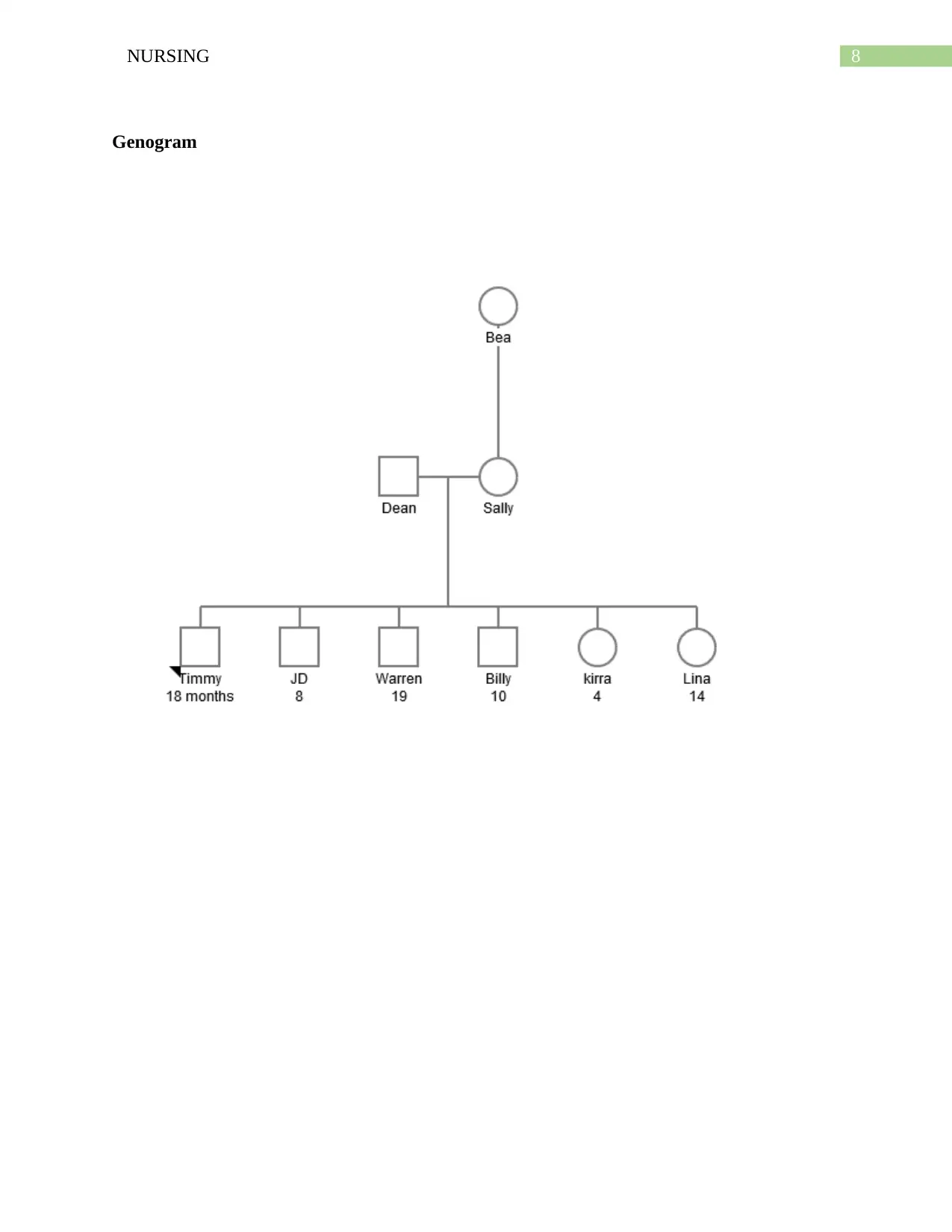
of the large family. Billy’s mother sally has a renal failure she requires haemodialysis three times
a week and she requires 2 buses to reach the hospital. Thus, it is important to note that the ailing
mother of Sally is diabetic and thus requires the attention of Billy and Lina. Thus, it can be said
that the family in which Billy resides is overcrowded with poor living conditions. The inability
of his parents to satisfy their needs and the needs of his other brothers and sisters proves that the
living conditions are below par. Billy’s mother and father are both unemployed and Billy’s father
Dean is incarcerated and thus the family has no earning members. Billy’s family members are
associated with domestic violence and the elder brother of Dean is associated with the drug
related affairs which has made it hard for the family members because there are no elder male
members in the family that can help them to earn a living. It is important to note that the
injustice, violence, exploitation, poverty and inequality are the root causes of ill health that
causes death to the marginalised and poor people. Billy has highlighted that the they are the
residents of Junjuwa and the community is facing issues of unemployment and poverty (Worku
& Woldesenbet, 2015).
Role of registered nurse in supporting Billy and his family
Research have shown that the people that are unable to afford proper housing as well as
the nutritious food have more chances of getting unhealthy. The poor people are more likely to
be unable to access the healthcare provisions and along with the mental issues the situation gets
worse. The role of the registered nurse will be to take the proper steps towards the addressing
homelessness and poverty (Flinter et al., 2017). The registered nurse can visit the Billy and his
family members or check whether they are able to access the healthcare provisions and are
having the ability to eat healthy food. The registered nurse can form collaboration with the local
support and the money received is less and makes it nearly impossible to cover all the expenses
of the large family. Billy’s mother sally has a renal failure she requires haemodialysis three times
a week and she requires 2 buses to reach the hospital. Thus, it is important to note that the ailing
mother of Sally is diabetic and thus requires the attention of Billy and Lina. Thus, it can be said
that the family in which Billy resides is overcrowded with poor living conditions. The inability
of his parents to satisfy their needs and the needs of his other brothers and sisters proves that the
living conditions are below par. Billy’s mother and father are both unemployed and Billy’s father
Dean is incarcerated and thus the family has no earning members. Billy’s family members are
associated with domestic violence and the elder brother of Dean is associated with the drug
related affairs which has made it hard for the family members because there are no elder male
members in the family that can help them to earn a living. It is important to note that the
injustice, violence, exploitation, poverty and inequality are the root causes of ill health that
causes death to the marginalised and poor people. Billy has highlighted that the they are the
residents of Junjuwa and the community is facing issues of unemployment and poverty (Worku
& Woldesenbet, 2015).
Role of registered nurse in supporting Billy and his family
Research have shown that the people that are unable to afford proper housing as well as
the nutritious food have more chances of getting unhealthy. The poor people are more likely to
be unable to access the healthcare provisions and along with the mental issues the situation gets
worse. The role of the registered nurse will be to take the proper steps towards the addressing
homelessness and poverty (Flinter et al., 2017). The registered nurse can visit the Billy and his
family members or check whether they are able to access the healthcare provisions and are
having the ability to eat healthy food. The registered nurse can form collaboration with the local
⊘ This is a preview!⊘
Do you want full access?
Subscribe today to unlock all pages.
Trusted by 1+ million students worldwide
6NURSING
NGOs to provide social and medical services for the aboriginal communities that do not have
sufficient amount of resources. In order to reduce the impact of the social determinants of health
arising from poverty. The exclusive role of the registered nurse will be including the services of
community development, advocacy and the monitoring of the health program. This will also
include the program evaluations, and proper monitoring of health of Billy and his family
members (Wittenauer et al., 2015).
The role of the registered nurse in addressing the social determinant of substance use-
tobacco and the alcohol usage can be harmful for the health of the individuals both in the short
and the long term. Therefore, it demands that the early detection and assessment is necessary. It
is important to mention that the people that are facing health issues do not get the proper primary
care. Thus, it is important to note that the access to the healthcare services will be a necessary
part for the family members of Billy because they are smoke cigarettes and the mother of billy
has a tendency to drink alcohol every night with her neighbours. Thus, it is necessary to have a
proper education for the family members of Billy so that the issues related to substance use can
be effectively managed (While, 2014).
Conclusion
From the above conclusion it can be concluded that, social determinants of health have
high levels of impact on the healthcare ratio of the healthcare spending and the social service
spending which results into an improved health of the population. The first social determinant in
relation to the health and wellbeing of the Billy, his family and the wider community includes is
the social determinant of substance use. The second determinant of health in relation to the
health and wellbeing of the Billy, is family member and the wider community is the social
determinant of poverty. The registered nurse can visit the Billy and his family members or check
NGOs to provide social and medical services for the aboriginal communities that do not have
sufficient amount of resources. In order to reduce the impact of the social determinants of health
arising from poverty. The exclusive role of the registered nurse will be including the services of
community development, advocacy and the monitoring of the health program. This will also
include the program evaluations, and proper monitoring of health of Billy and his family
members (Wittenauer et al., 2015).
The role of the registered nurse in addressing the social determinant of substance use-
tobacco and the alcohol usage can be harmful for the health of the individuals both in the short
and the long term. Therefore, it demands that the early detection and assessment is necessary. It
is important to mention that the people that are facing health issues do not get the proper primary
care. Thus, it is important to note that the access to the healthcare services will be a necessary
part for the family members of Billy because they are smoke cigarettes and the mother of billy
has a tendency to drink alcohol every night with her neighbours. Thus, it is necessary to have a
proper education for the family members of Billy so that the issues related to substance use can
be effectively managed (While, 2014).
Conclusion
From the above conclusion it can be concluded that, social determinants of health have
high levels of impact on the healthcare ratio of the healthcare spending and the social service
spending which results into an improved health of the population. The first social determinant in
relation to the health and wellbeing of the Billy, his family and the wider community includes is
the social determinant of substance use. The second determinant of health in relation to the
health and wellbeing of the Billy, is family member and the wider community is the social
determinant of poverty. The registered nurse can visit the Billy and his family members or check
Paraphrase This Document
Need a fresh take? Get an instant paraphrase of this document with our AI Paraphraser
7NURSING
whether they are able to access the healthcare provisions and are having the ability to eat healthy
food. the nurse will ensure that access to the healthcare services will be a necessary part for the
family members of Billy because they are smoke cigarettes and the mother of billy has a
tendency to drink alcohol every night with her neighbours.
whether they are able to access the healthcare provisions and are having the ability to eat healthy
food. the nurse will ensure that access to the healthcare services will be a necessary part for the
family members of Billy because they are smoke cigarettes and the mother of billy has a
tendency to drink alcohol every night with her neighbours.
8NURSING
Genogram
Genogram
⊘ This is a preview!⊘
Do you want full access?
Subscribe today to unlock all pages.
Trusted by 1+ million students worldwide
9NURSING
Reference
Braveman, P., & Gottlieb, L. (2014). The social determinants of health: it's time to consider the
causes of the causes. Public health reports, 129(1_suppl2), 19-31.
Chung, E. K., Siegel, B. S., Garg, A., Conroy, K., Gross, R. S., Long, D. A., ... & Yin, H. S.
(2016). Screening for social determinants of health among children and families living in
poverty: a guide for clinicians. Current problems in pediatric and adolescent health care,
46(5), 135-153.
Dasgupta, N., Beletsky, L., & Ciccarone, D. (2018). Opioid crisis: no easy fix to its social and
economic determinants. American journal of public health, 108(2), 182-186.
Douthit, N. T., & Alemu, H. K. (2016). Social determinants of health: poverty, national
infrastructure and investment. BMJ case reports, 2016, bcr2016215670.
Finch, K. A., Ramo, D. E., Delucchi, K. L., Liu, H., & Prochaska, J. J. (2013). Subjective social
status and substance use severity in a young adult sample. Psychology of Addictive
Behaviors, 27(3), 901.
Flinter, M., Hsu, C., Cromp, D., Ladden, M. D., & Wagner, E. H. (2017). Registered nurses in
primary care: Emerging new roles and contributions to team-based care in high-
performing practices. The Journal of ambulatory care management, 40(4), 287.
Garg, A., Boynton-Jarrett, R., & Dworkin, P. H. (2016). Avoiding the unintended consequences
of screening for social determinants of health. Jama, 316(8), 813-814.
Shahram, S. (2016). The social determinants of substance use for aboriginal women: A
systematic review. Women & health, 56(2), 157-176.
Reference
Braveman, P., & Gottlieb, L. (2014). The social determinants of health: it's time to consider the
causes of the causes. Public health reports, 129(1_suppl2), 19-31.
Chung, E. K., Siegel, B. S., Garg, A., Conroy, K., Gross, R. S., Long, D. A., ... & Yin, H. S.
(2016). Screening for social determinants of health among children and families living in
poverty: a guide for clinicians. Current problems in pediatric and adolescent health care,
46(5), 135-153.
Dasgupta, N., Beletsky, L., & Ciccarone, D. (2018). Opioid crisis: no easy fix to its social and
economic determinants. American journal of public health, 108(2), 182-186.
Douthit, N. T., & Alemu, H. K. (2016). Social determinants of health: poverty, national
infrastructure and investment. BMJ case reports, 2016, bcr2016215670.
Finch, K. A., Ramo, D. E., Delucchi, K. L., Liu, H., & Prochaska, J. J. (2013). Subjective social
status and substance use severity in a young adult sample. Psychology of Addictive
Behaviors, 27(3), 901.
Flinter, M., Hsu, C., Cromp, D., Ladden, M. D., & Wagner, E. H. (2017). Registered nurses in
primary care: Emerging new roles and contributions to team-based care in high-
performing practices. The Journal of ambulatory care management, 40(4), 287.
Garg, A., Boynton-Jarrett, R., & Dworkin, P. H. (2016). Avoiding the unintended consequences
of screening for social determinants of health. Jama, 316(8), 813-814.
Shahram, S. (2016). The social determinants of substance use for aboriginal women: A
systematic review. Women & health, 56(2), 157-176.
Paraphrase This Document
Need a fresh take? Get an instant paraphrase of this document with our AI Paraphraser
10NURSING
Soron, T. R., Siddike, P. M. A., Ahmed, H. U., & Chowdhury, C. A. (2017). Social and Family
Determinants of Substance Abuse among the Patients of Two Hospitals in Bangladesh. J
Addict Res Ther, 8(340), 2.
While, A. E. (2014). Are nurses fit for their public health role?. International journal of nursing
studies, 51(9), 1191-1194.
Wittenauer, J., Ludwick, R., Baughman, K., & Fishbein, R. (2015). Surveying the hidden
attitudes of hospital nurses’ towards poverty. Journal of clinical nursing, 24(15-16),
2184-2191.
Worku, E. B., & Woldesenbet, S. A. (2015). Poverty and inequality–but of what-as social
determinants of health in Africa?. African health sciences, 15(4), 1330-1338.
Soron, T. R., Siddike, P. M. A., Ahmed, H. U., & Chowdhury, C. A. (2017). Social and Family
Determinants of Substance Abuse among the Patients of Two Hospitals in Bangladesh. J
Addict Res Ther, 8(340), 2.
While, A. E. (2014). Are nurses fit for their public health role?. International journal of nursing
studies, 51(9), 1191-1194.
Wittenauer, J., Ludwick, R., Baughman, K., & Fishbein, R. (2015). Surveying the hidden
attitudes of hospital nurses’ towards poverty. Journal of clinical nursing, 24(15-16),
2184-2191.
Worku, E. B., & Woldesenbet, S. A. (2015). Poverty and inequality–but of what-as social
determinants of health in Africa?. African health sciences, 15(4), 1330-1338.

1 out of 11


Related Documents


Your All-in-One AI-Powered Toolkit for Academic Success.
+13062052269
info@desklib.com
Available 24*7 on WhatsApp / Email
![[object Object]](/_next/static/media/star-bottom.7253800d.svg)
Unlock your academic potential
Copyright © 2020–2026 A2Z Services. All Rights Reserved. Developed and managed by ZUCOL.