Griffith University: Cement Stabilized Soil Mortar Research Proposal
VerifiedAdded on 2022/11/24
|12
|4149
|2
Project
AI Summary
This research proposal, submitted as a final assignment for Griffith University's 7001ENG Research Methods for Engineers course, investigates the feasibility of using cement stabilized soil as a mortar in construction projects, particularly in developing nations. The study aims to determine the setting time and compressive strength of cement stabilized soil collected from Bonnie Corner Road, Donding, Australia, and to assess its potential as a sustainable and cost-effective alternative to traditional mortar. The proposal includes a comprehensive literature review, exploring the history, advantages, and disadvantages of soil-based mortars, as well as the environmental and economic benefits of utilizing such materials. It highlights the need for sustainable construction practices and emphasizes the potential of cement stabilized soil to address housing crises and environmental concerns. The research methodology involves laboratory testing to establish the properties of the soil-based mortar, enabling comparisons with conventional mortars. The proposal underscores the relevance of this research in promoting affordable and environmentally friendly construction practices and is expected to be beneficial to individuals and engineers seeking sustainable construction methods.
Griffith School of Engineering and Built Environment
7001ENG – Research Methods for Engineers
Trimester 01, 2019
Final Assignment – Research Proposal
AN INVESTIGATION INTO THE USE OF CEMENT STABILIZED SOIL AS A MORTAR FOR
CONSTRUCTION
PROJECT SUMMARY
In the developing nations, demand for housing must be met by utilizing available building materials
and depending on non-assisted construction procedures. Soil for quite a while has been the most
significant common construction material and gratitude to its abundance, in its different structures, it
is a standout amongst the most generally utilized structure materials known. This project sought to
examine a portion of the properties of cement stabilized soil with the view of demonstrating that soil-
based mortars can at present be put into utilization in development today similarly as they have been
utilized in the past. This project proposal plays out a progression of tests soil test that shall be
gathered at Bonnie Corner Road, Donding along in the Kumbatine National Park, New South Wales,
Australia. After settling it with conventional Portland cement. Its most basic properties in both the
fresh and solidified state shall be determined; that is setting time and compressive strength
respectively. Based on the results, cement stabilized soil may be adopted in future constructions.
KEYWORDS
Soil, setting time, compressive strength, mortar
7001ENG – Research Methods for Engineers, Trimester 01, 2019 Page 1
7001ENG – Research Methods for Engineers
Trimester 01, 2019
Final Assignment – Research Proposal
AN INVESTIGATION INTO THE USE OF CEMENT STABILIZED SOIL AS A MORTAR FOR
CONSTRUCTION
PROJECT SUMMARY
In the developing nations, demand for housing must be met by utilizing available building materials
and depending on non-assisted construction procedures. Soil for quite a while has been the most
significant common construction material and gratitude to its abundance, in its different structures, it
is a standout amongst the most generally utilized structure materials known. This project sought to
examine a portion of the properties of cement stabilized soil with the view of demonstrating that soil-
based mortars can at present be put into utilization in development today similarly as they have been
utilized in the past. This project proposal plays out a progression of tests soil test that shall be
gathered at Bonnie Corner Road, Donding along in the Kumbatine National Park, New South Wales,
Australia. After settling it with conventional Portland cement. Its most basic properties in both the
fresh and solidified state shall be determined; that is setting time and compressive strength
respectively. Based on the results, cement stabilized soil may be adopted in future constructions.
KEYWORDS
Soil, setting time, compressive strength, mortar
7001ENG – Research Methods for Engineers, Trimester 01, 2019 Page 1

Paraphrase This Document
Need a fresh take? Get an instant paraphrase of this document with our AI Paraphraser
CHAPTER ONE
1.0 INTRODUCTION
1.1 General introduction
Mortar is a serviceable glue used to bind construction stones, blocks or cinder blocks together and fill the
holes between them. A mortar joint goes about as a sealant, a direction cushion, which sticks the brick
work units together yet keeps them separated and, in this sense, executes as a gap filling adhesive‟.
Mortar turns out to be hard when it sets or dries (on account of soil-based mortars), bringing about an
inflexible solid structure. Mortar may represent as meager as 7% of the volume of a brick work divider;
yet the job that it plays and the impact that it has on execution are far more noteworthy than the extent it
shows (Zinn, 2015). The selection and utilization of different mortar fixings legitimately influences the
presentation and holding attributes of masonry ("Earth Masonry: Design and construction guidelines",
2018). Sprayed earth mortars are utilized for rounding out timber outline boards, for the assembling of
internal leaf coatings, inside dividers or as filling in floor holes. They are thinned with mineral or natural
added substances that are appropriate for use with a blender and shower gun. The fibers serve to tie the
mortar and decrease breaking as the material dries (Beckett & Ciancio, 2015). Due to their moisture
directing properties, soil-based mortars are especially appropriate for use in common construction works.
Soil cement mortars have been utilized as a minimal effort asphalt base for highways, private boulevards,
stopping territories, airplane terminals, shoulders, and materials-taking care of and capacity zones in
roads constructions. Its focal points of incredible quality and toughness join with low previously cost to
make it the remarkable incentive in its field. A flimsy bituminous surface is normally put on the soil
concrete to finish the asphalt. Soil-concrete is once in a while called cement balanced out base, or cement
treated total base. Notwithstanding the name, the standards overseeing its piece and development are the
same. The soil material in soil-concrete can be practically any mix of sand, residue, mud, rock, or
squashed stone. Locally available granular materials, for example, slag, caliche, lime rock, and scoria, in
addition to a wide assortment of waste materials including ashes, fly fiery debris, foundry sands, and
screenings from quarries and rock pits, would all be able to be used as soil material. Old granular-base
boulevards, with or without bituminous surfaces, can likewise be recovered to make incredible soil-
concrete. In a similar manner, soil-cement stabilization could be applied in buildings and construction
especially to achieve affordable and sustainable constructions.
1.2 Advantages of cement-soil mortars
It grants a synthetic set which happens before full shrinkage happens, consequently lessening the
danger of splitting
Layers might be developed all the more quickly, without the need to wait a long time for one to set
completely before applying another layer ("The feasibility of earth block masonry for building ...",
2018).
It is accessible in a selection of colors, valuable when it is important to coordinate the shade of a
current mortar.
7001ENG – Research Methods for Engineers, Trimester 01, 2019 Page 2
1.0 INTRODUCTION
1.1 General introduction
Mortar is a serviceable glue used to bind construction stones, blocks or cinder blocks together and fill the
holes between them. A mortar joint goes about as a sealant, a direction cushion, which sticks the brick
work units together yet keeps them separated and, in this sense, executes as a gap filling adhesive‟.
Mortar turns out to be hard when it sets or dries (on account of soil-based mortars), bringing about an
inflexible solid structure. Mortar may represent as meager as 7% of the volume of a brick work divider;
yet the job that it plays and the impact that it has on execution are far more noteworthy than the extent it
shows (Zinn, 2015). The selection and utilization of different mortar fixings legitimately influences the
presentation and holding attributes of masonry ("Earth Masonry: Design and construction guidelines",
2018). Sprayed earth mortars are utilized for rounding out timber outline boards, for the assembling of
internal leaf coatings, inside dividers or as filling in floor holes. They are thinned with mineral or natural
added substances that are appropriate for use with a blender and shower gun. The fibers serve to tie the
mortar and decrease breaking as the material dries (Beckett & Ciancio, 2015). Due to their moisture
directing properties, soil-based mortars are especially appropriate for use in common construction works.
Soil cement mortars have been utilized as a minimal effort asphalt base for highways, private boulevards,
stopping territories, airplane terminals, shoulders, and materials-taking care of and capacity zones in
roads constructions. Its focal points of incredible quality and toughness join with low previously cost to
make it the remarkable incentive in its field. A flimsy bituminous surface is normally put on the soil
concrete to finish the asphalt. Soil-concrete is once in a while called cement balanced out base, or cement
treated total base. Notwithstanding the name, the standards overseeing its piece and development are the
same. The soil material in soil-concrete can be practically any mix of sand, residue, mud, rock, or
squashed stone. Locally available granular materials, for example, slag, caliche, lime rock, and scoria, in
addition to a wide assortment of waste materials including ashes, fly fiery debris, foundry sands, and
screenings from quarries and rock pits, would all be able to be used as soil material. Old granular-base
boulevards, with or without bituminous surfaces, can likewise be recovered to make incredible soil-
concrete. In a similar manner, soil-cement stabilization could be applied in buildings and construction
especially to achieve affordable and sustainable constructions.
1.2 Advantages of cement-soil mortars
It grants a synthetic set which happens before full shrinkage happens, consequently lessening the
danger of splitting
Layers might be developed all the more quickly, without the need to wait a long time for one to set
completely before applying another layer ("The feasibility of earth block masonry for building ...",
2018).
It is accessible in a selection of colors, valuable when it is important to coordinate the shade of a
current mortar.
7001ENG – Research Methods for Engineers, Trimester 01, 2019 Page 2
It solidifies quickly, accordingly giving assurance from downpour before carbonation has been
finished. This beats the harsh British climate
Being a artificially modified substance produced under firmly controlled conditions, it is dependable
and conventional being used (Handy, 2019).
1.3 Disadvantages of cement-soil mortars
The fast setting time restrains the time accessible to the client in which to work with the checked
mortar
A few bonds contain apparent measures of solvent salts, specifically potassium sulfate, which may
turn into a wellspring of salt harm to stonework
The utilization of bond will in general lead to the client treating the checked soil mortar as though it
were a completely water driven soil or concrete. An excess of dependence on the underlying
compound set prompts disregard of the significance of the more drawn out term carbonation of the
non-pressure driven segment present
1.4 Problem statement
Soil has been, and keeps on being, the most generally utilized structure material all through most
developing nations: it is shoddy, accessible in wealth, and easy to shape into structure components.
Experience has demonstrated that soil remains a practical material, given exorbitant increments in
energy utilization brought about by the creation of current structure materials.
Environmental issues are a developing worry in the development business. New terms like "green
structures", "economical design", "encapsulated energy" and "building nature" have crawled into the
vocabularies of draftsmen, architects and engineers alike ("CE479: DESIGN OF BUILDING
COMPONENTS & SYSTEMS FALL 2012 J ...", 2018). The expense of vitality, crude materials and
strong and risky waste transfer are straightforwardly connected with gainfulness in any industry.
Contemporary earthen engineering indicates huge proof tackling housing crisis in the developing
nations and it can likewise address global warming and environmental change in developed nations
(Wright, Wilkins, & John, 2018). Environmental sustainability is a noteworthy test and built
environment discipline experts are confronting a colossal undertaking to handle this issue
everywhere throughout the world (Ukrainczyk & Rogina, 2013).
The proper utilization of soil-based construction produces financially savvy and agreeable structures
(Damme & Houben, 2018). In this way, contemporary cement stabilized soil is financially valuable
in the development of urban housing. This proposal is accordingly exceedingly advantageous to
destitute individuals who are not ready to bear the cost of concrete for development of their
structures. It will likewise be of some significance to engineers who are looking for approaches to
make structures all the more ecologically well disposed ("Stabilization of Soil Using Flyash, Lime &
Cement", 2016).
1.5 Scope and objective
As far back as the emergence of lime and bond-based mortars utilization of soil as a coupling
material in mortars has been retired. This once significant and broadly utilized mortar part has seen
its utilization in development totally soaked because of the spread of substantially more unrivaled
7001ENG – Research Methods for Engineers, Trimester 01, 2019 Page 3
finished. This beats the harsh British climate
Being a artificially modified substance produced under firmly controlled conditions, it is dependable
and conventional being used (Handy, 2019).
1.3 Disadvantages of cement-soil mortars
The fast setting time restrains the time accessible to the client in which to work with the checked
mortar
A few bonds contain apparent measures of solvent salts, specifically potassium sulfate, which may
turn into a wellspring of salt harm to stonework
The utilization of bond will in general lead to the client treating the checked soil mortar as though it
were a completely water driven soil or concrete. An excess of dependence on the underlying
compound set prompts disregard of the significance of the more drawn out term carbonation of the
non-pressure driven segment present
1.4 Problem statement
Soil has been, and keeps on being, the most generally utilized structure material all through most
developing nations: it is shoddy, accessible in wealth, and easy to shape into structure components.
Experience has demonstrated that soil remains a practical material, given exorbitant increments in
energy utilization brought about by the creation of current structure materials.
Environmental issues are a developing worry in the development business. New terms like "green
structures", "economical design", "encapsulated energy" and "building nature" have crawled into the
vocabularies of draftsmen, architects and engineers alike ("CE479: DESIGN OF BUILDING
COMPONENTS & SYSTEMS FALL 2012 J ...", 2018). The expense of vitality, crude materials and
strong and risky waste transfer are straightforwardly connected with gainfulness in any industry.
Contemporary earthen engineering indicates huge proof tackling housing crisis in the developing
nations and it can likewise address global warming and environmental change in developed nations
(Wright, Wilkins, & John, 2018). Environmental sustainability is a noteworthy test and built
environment discipline experts are confronting a colossal undertaking to handle this issue
everywhere throughout the world (Ukrainczyk & Rogina, 2013).
The proper utilization of soil-based construction produces financially savvy and agreeable structures
(Damme & Houben, 2018). In this way, contemporary cement stabilized soil is financially valuable
in the development of urban housing. This proposal is accordingly exceedingly advantageous to
destitute individuals who are not ready to bear the cost of concrete for development of their
structures. It will likewise be of some significance to engineers who are looking for approaches to
make structures all the more ecologically well disposed ("Stabilization of Soil Using Flyash, Lime &
Cement", 2016).
1.5 Scope and objective
As far back as the emergence of lime and bond-based mortars utilization of soil as a coupling
material in mortars has been retired. This once significant and broadly utilized mortar part has seen
its utilization in development totally soaked because of the spread of substantially more unrivaled
7001ENG – Research Methods for Engineers, Trimester 01, 2019 Page 3
⊘ This is a preview!⊘
Do you want full access?
Subscribe today to unlock all pages.

Trusted by 1+ million students worldwide
covers in the market. With this as a top priority, this investigation was set up with the point of
demonstrating that soil-based mortars can at present be pertinent in today’s development industry
(Das, 2013). The essential point of the examination was to research the new and solidified properties
of bond settled soil mortar. The undertaking was cultivated via doing escalated and broad research on
past composed and distributed material. It additionally included research center tests on the chose
soil-based mortar to set up its properties. This enables correlations to be made between the properties
of the soil-based mortar in the crisp and solidified state with those of perfect mortars.
CHAPTER TWO
2.1 LITERATURE REVIEW AND THEORETICAL ANALYSIS
2.1.1 History of soil-based mortars
Soil-based mortars – similarly referred to as soil mortars or earth mortars – have been exploited since
antediluvian times for innumerable bids: masonry mortars between blocks or stones, mortars as
partition finishing materials inside (mortar) or externally(use), mortars as formations for deck, rubble
mortars for the infillings of partitions, mortars as housings of water courses or jointing mixes from
earthenware channels, adornment mortars, etc. Mud, lime and gypsum had generally been the three
most regular fastener types amid the development history of humankind until around two centuries
prior, when their utilization was progressively supplanted by various common bond types and later
by Portland concrete ("Discussion", 2014).
Lime has regularly been idea of as the most "conventional" folio material in a mortar. Be that as it
may, history invalidates this case as many years before lime came into regular use; soil was in reality
utilized on lion's share of the structures. Soil is most likely the most seasoned binder type in mortars
(Cau-Dit-Coumes, 2012). According to roman Ghirshman, the primary proof of human beings
utilizing a type of mortar was at the ziggurat of Sialk in Iran, worked of sun-dried blocks in 2900 BC.
In early Egyptian pyramids established around 2600-2500 BC, the limestone slabs were bound by
mortar of clay and mud, or soil and sand ("soil-cement stabilization", 2014). The use of soil has
additionally been documented for illustration in Catal Huyuk in Turkey 6000 BC.
7001ENG – Research Methods for Engineers, Trimester 01, 2019 Page 4
demonstrating that soil-based mortars can at present be pertinent in today’s development industry
(Das, 2013). The essential point of the examination was to research the new and solidified properties
of bond settled soil mortar. The undertaking was cultivated via doing escalated and broad research on
past composed and distributed material. It additionally included research center tests on the chose
soil-based mortar to set up its properties. This enables correlations to be made between the properties
of the soil-based mortar in the crisp and solidified state with those of perfect mortars.
CHAPTER TWO
2.1 LITERATURE REVIEW AND THEORETICAL ANALYSIS
2.1.1 History of soil-based mortars
Soil-based mortars – similarly referred to as soil mortars or earth mortars – have been exploited since
antediluvian times for innumerable bids: masonry mortars between blocks or stones, mortars as
partition finishing materials inside (mortar) or externally(use), mortars as formations for deck, rubble
mortars for the infillings of partitions, mortars as housings of water courses or jointing mixes from
earthenware channels, adornment mortars, etc. Mud, lime and gypsum had generally been the three
most regular fastener types amid the development history of humankind until around two centuries
prior, when their utilization was progressively supplanted by various common bond types and later
by Portland concrete ("Discussion", 2014).
Lime has regularly been idea of as the most "conventional" folio material in a mortar. Be that as it
may, history invalidates this case as many years before lime came into regular use; soil was in reality
utilized on lion's share of the structures. Soil is most likely the most seasoned binder type in mortars
(Cau-Dit-Coumes, 2012). According to roman Ghirshman, the primary proof of human beings
utilizing a type of mortar was at the ziggurat of Sialk in Iran, worked of sun-dried blocks in 2900 BC.
In early Egyptian pyramids established around 2600-2500 BC, the limestone slabs were bound by
mortar of clay and mud, or soil and sand ("soil-cement stabilization", 2014). The use of soil has
additionally been documented for illustration in Catal Huyuk in Turkey 6000 BC.
7001ENG – Research Methods for Engineers, Trimester 01, 2019 Page 4
Paraphrase This Document
Need a fresh take? Get an instant paraphrase of this document with our AI Paraphraser
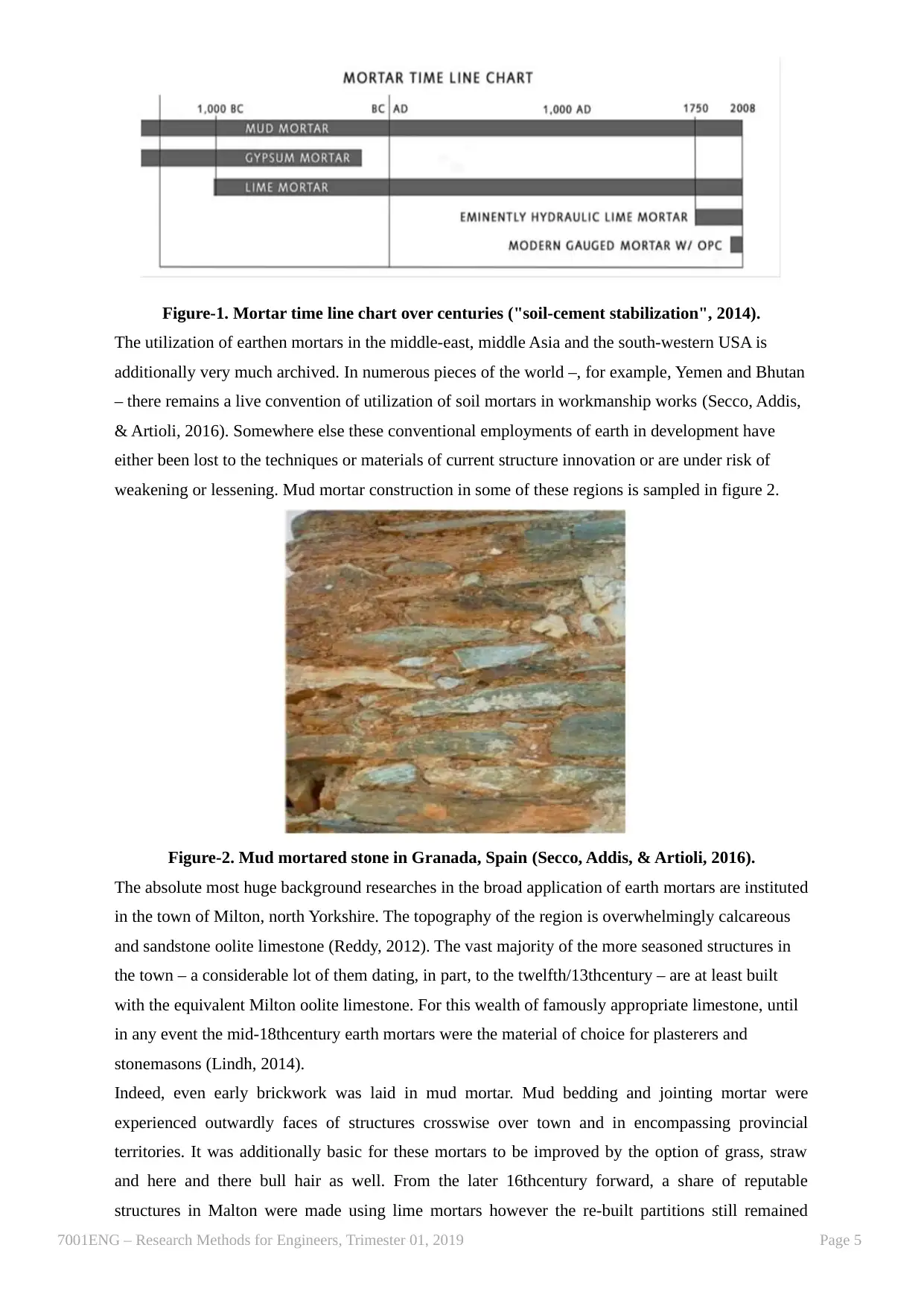
Figure-1. Mortar time line chart over centuries ("soil-cement stabilization", 2014).
The utilization of earthen mortars in the middle-east, middle Asia and the south-western USA is
additionally very much archived. In numerous pieces of the world –, for example, Yemen and Bhutan
– there remains a live convention of utilization of soil mortars in workmanship works (Secco, Addis,
& Artioli, 2016). Somewhere else these conventional employments of earth in development have
either been lost to the techniques or materials of current structure innovation or are under risk of
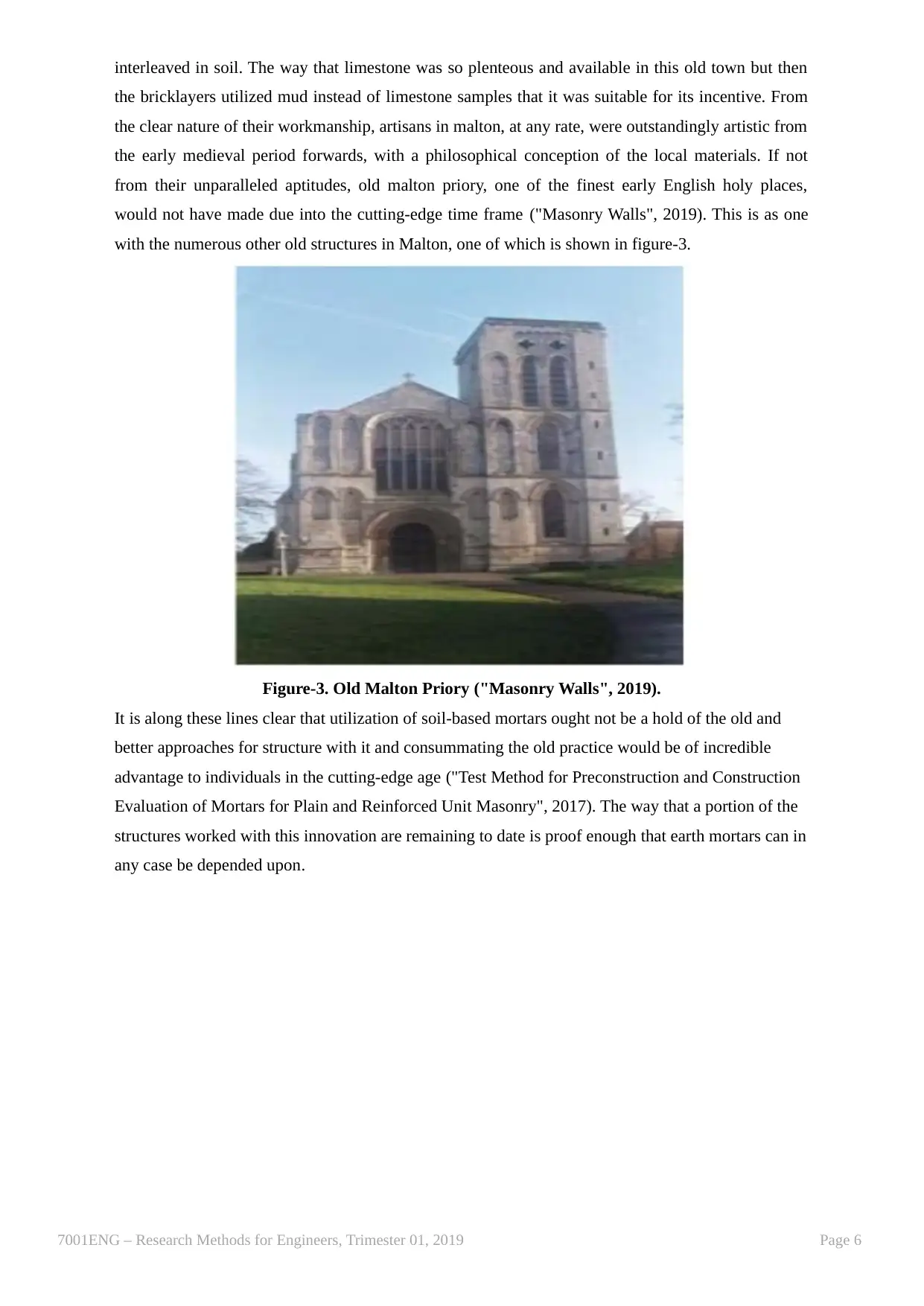
weakening or lessening. Mud mortar construction in some of these regions is sampled in figure 2.
Figure-2. Mud mortared stone in Granada, Spain (Secco, Addis, & Artioli, 2016).
The absolute most huge background researches in the broad application of earth mortars are instituted
in the town of Milton, north Yorkshire. The topography of the region is overwhelmingly calcareous
and sandstone oolite limestone (Reddy, 2012). The vast majority of the more seasoned structures in
the town – a considerable lot of them dating, in part, to the twelfth/13thcentury – are at least built
with the equivalent Milton oolite limestone. For this wealth of famously appropriate limestone, until
in any event the mid-18thcentury earth mortars were the material of choice for plasterers and
stonemasons (Lindh, 2014).
Indeed, even early brickwork was laid in mud mortar. Mud bedding and jointing mortar were
experienced outwardly faces of structures crosswise over town and in encompassing provincial
territories. It was additionally basic for these mortars to be improved by the option of grass, straw
and here and there bull hair as well. From the later 16thcentury forward, a share of reputable
structures in Malton were made using lime mortars however the re-built partitions still remained
7001ENG – Research Methods for Engineers, Trimester 01, 2019 Page 5
The utilization of earthen mortars in the middle-east, middle Asia and the south-western USA is
additionally very much archived. In numerous pieces of the world –, for example, Yemen and Bhutan
– there remains a live convention of utilization of soil mortars in workmanship works (Secco, Addis,
& Artioli, 2016). Somewhere else these conventional employments of earth in development have
either been lost to the techniques or materials of current structure innovation or are under risk of
weakening or lessening. Mud mortar construction in some of these regions is sampled in figure 2.
Figure-2. Mud mortared stone in Granada, Spain (Secco, Addis, & Artioli, 2016).
The absolute most huge background researches in the broad application of earth mortars are instituted
in the town of Milton, north Yorkshire. The topography of the region is overwhelmingly calcareous
and sandstone oolite limestone (Reddy, 2012). The vast majority of the more seasoned structures in
the town – a considerable lot of them dating, in part, to the twelfth/13thcentury – are at least built
with the equivalent Milton oolite limestone. For this wealth of famously appropriate limestone, until
in any event the mid-18thcentury earth mortars were the material of choice for plasterers and
stonemasons (Lindh, 2014).
Indeed, even early brickwork was laid in mud mortar. Mud bedding and jointing mortar were
experienced outwardly faces of structures crosswise over town and in encompassing provincial
territories. It was additionally basic for these mortars to be improved by the option of grass, straw
and here and there bull hair as well. From the later 16thcentury forward, a share of reputable
structures in Malton were made using lime mortars however the re-built partitions still remained
7001ENG – Research Methods for Engineers, Trimester 01, 2019 Page 5
interleaved in soil. The way that limestone was so plenteous and available in this old town but then
the bricklayers utilized mud instead of limestone samples that it was suitable for its incentive. From
the clear nature of their workmanship, artisans in malton, at any rate, were outstandingly artistic from
the early medieval period forwards, with a philosophical conception of the local materials. If not
from their unparalleled aptitudes, old malton priory, one of the finest early English holy places,
would not have made due into the cutting-edge time frame ("Masonry Walls", 2019). This is as one
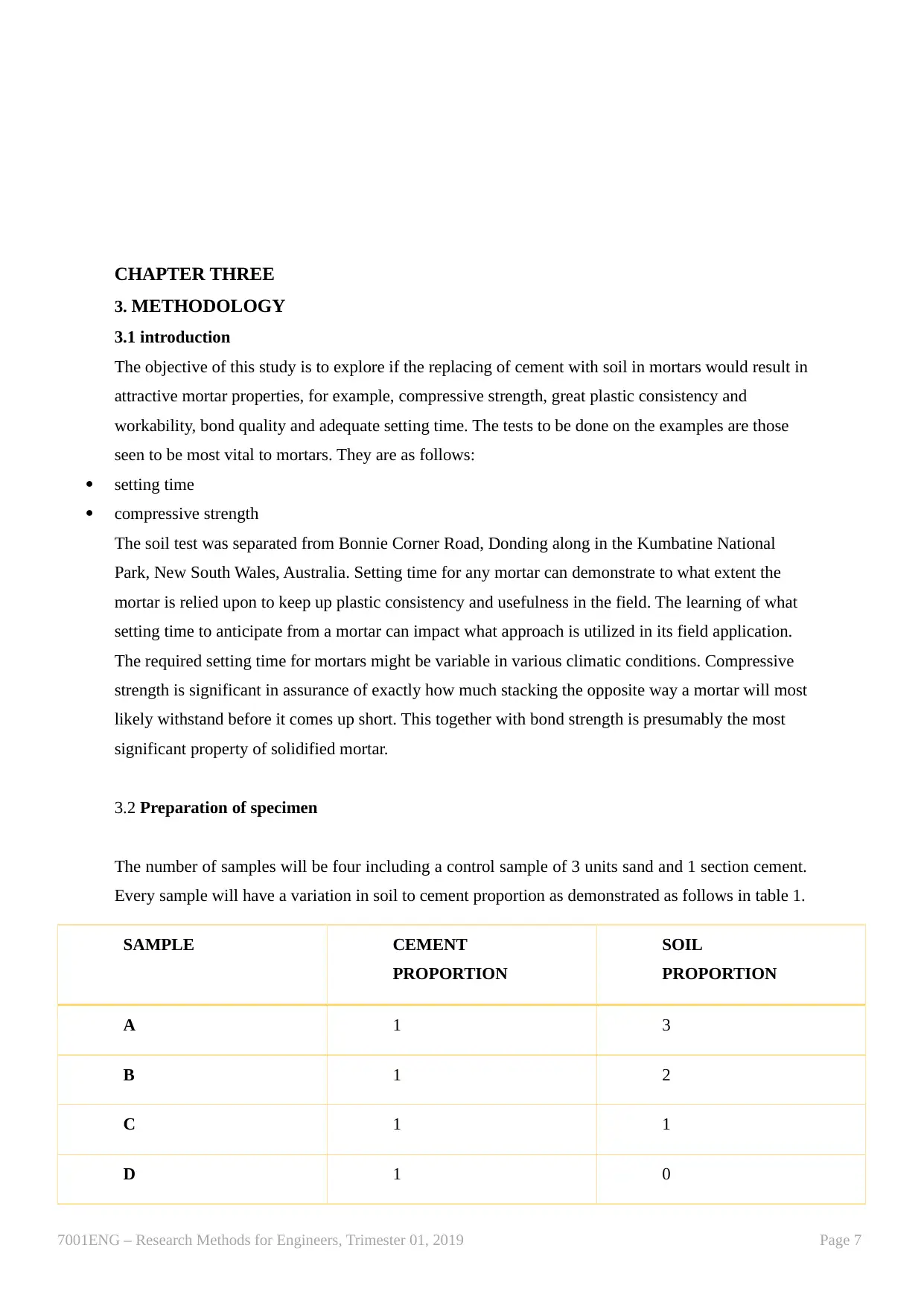
with the numerous other old structures in Malton, one of which is shown in figure-3.
Figure-3. Old Malton Priory ("Masonry Walls", 2019).
It is along these lines clear that utilization of soil-based mortars ought not be a hold of the old and
better approaches for structure with it and consummating the old practice would be of incredible
advantage to individuals in the cutting-edge age ("Test Method for Preconstruction and Construction
Evaluation of Mortars for Plain and Reinforced Unit Masonry", 2017). The way that a portion of the
structures worked with this innovation are remaining to date is proof enough that earth mortars can in
any case be depended upon.
7001ENG – Research Methods for Engineers, Trimester 01, 2019 Page 6
the bricklayers utilized mud instead of limestone samples that it was suitable for its incentive. From
the clear nature of their workmanship, artisans in malton, at any rate, were outstandingly artistic from
the early medieval period forwards, with a philosophical conception of the local materials. If not
from their unparalleled aptitudes, old malton priory, one of the finest early English holy places,
would not have made due into the cutting-edge time frame ("Masonry Walls", 2019). This is as one
with the numerous other old structures in Malton, one of which is shown in figure-3.
Figure-3. Old Malton Priory ("Masonry Walls", 2019).
It is along these lines clear that utilization of soil-based mortars ought not be a hold of the old and
better approaches for structure with it and consummating the old practice would be of incredible
advantage to individuals in the cutting-edge age ("Test Method for Preconstruction and Construction
Evaluation of Mortars for Plain and Reinforced Unit Masonry", 2017). The way that a portion of the
structures worked with this innovation are remaining to date is proof enough that earth mortars can in
any case be depended upon.
7001ENG – Research Methods for Engineers, Trimester 01, 2019 Page 6
⊘ This is a preview!⊘
Do you want full access?
Subscribe today to unlock all pages.
Trusted by 1+ million students worldwide
CHAPTER THREE
3. METHODOLOGY
3.1 introduction
The objective of this study is to explore if the replacing of cement with soil in mortars would result in
attractive mortar properties, for example, compressive strength, great plastic consistency and
workability, bond quality and adequate setting time. The tests to be done on the examples are those
seen to be most vital to mortars. They are as follows:
setting time
compressive strength
The soil test was separated from Bonnie Corner Road, Donding along in the Kumbatine National
Park, New South Wales, Australia. Setting time for any mortar can demonstrate to what extent the
mortar is relied upon to keep up plastic consistency and usefulness in the field. The learning of what
setting time to anticipate from a mortar can impact what approach is utilized in its field application.
The required setting time for mortars might be variable in various climatic conditions. Compressive
strength is significant in assurance of exactly how much stacking the opposite way a mortar will most
likely withstand before it comes up short. This together with bond strength is presumably the most
significant property of solidified mortar.
3.2 Preparation of specimen
The number of samples will be four including a control sample of 3 units sand and 1 section cement.
Every sample will have a variation in soil to cement proportion as demonstrated as follows in table 1.
SAMPLE CEMENT
PROPORTION
SOIL
PROPORTION
A 1 3
B 1 2
C 1 1
D 1 0
7001ENG – Research Methods for Engineers, Trimester 01, 2019 Page 7
3. METHODOLOGY
3.1 introduction
The objective of this study is to explore if the replacing of cement with soil in mortars would result in
attractive mortar properties, for example, compressive strength, great plastic consistency and
workability, bond quality and adequate setting time. The tests to be done on the examples are those
seen to be most vital to mortars. They are as follows:
setting time
compressive strength
The soil test was separated from Bonnie Corner Road, Donding along in the Kumbatine National
Park, New South Wales, Australia. Setting time for any mortar can demonstrate to what extent the
mortar is relied upon to keep up plastic consistency and usefulness in the field. The learning of what
setting time to anticipate from a mortar can impact what approach is utilized in its field application.
The required setting time for mortars might be variable in various climatic conditions. Compressive
strength is significant in assurance of exactly how much stacking the opposite way a mortar will most
likely withstand before it comes up short. This together with bond strength is presumably the most
significant property of solidified mortar.
3.2 Preparation of specimen
The number of samples will be four including a control sample of 3 units sand and 1 section cement.
Every sample will have a variation in soil to cement proportion as demonstrated as follows in table 1.
SAMPLE CEMENT
PROPORTION
SOIL
PROPORTION
A 1 3
B 1 2
C 1 1
D 1 0
7001ENG – Research Methods for Engineers, Trimester 01, 2019 Page 7
Paraphrase This Document
Need a fresh take? Get an instant paraphrase of this document with our AI Paraphraser
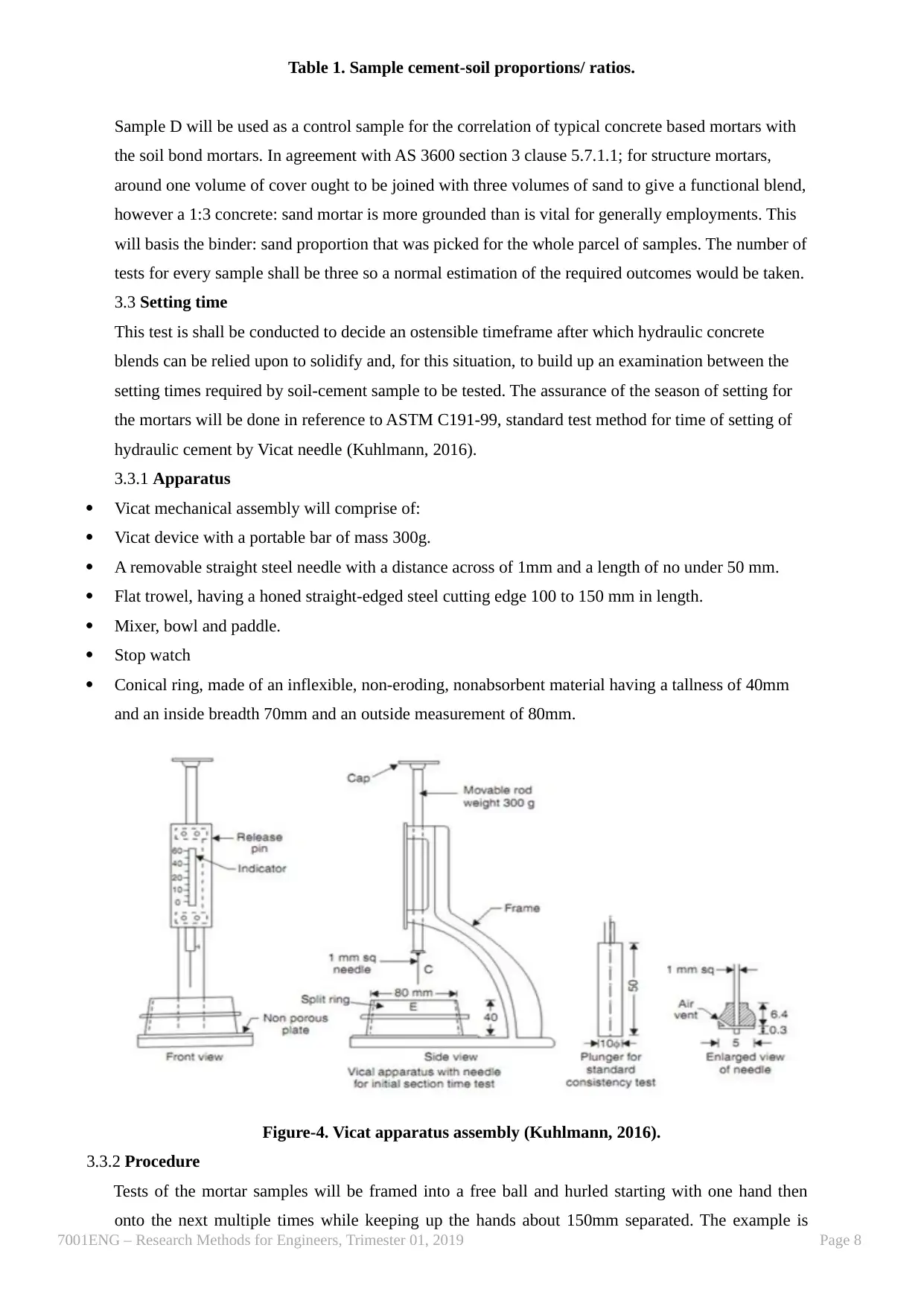
Table 1. Sample cement-soil proportions/ ratios.
Sample D will be used as a control sample for the correlation of typical concrete based mortars with
the soil bond mortars. In agreement with AS 3600 section 3 clause 5.7.1.1; for structure mortars,
around one volume of cover ought to be joined with three volumes of sand to give a functional blend,
however a 1:3 concrete: sand mortar is more grounded than is vital for generally employments. This
will basis the binder: sand proportion that was picked for the whole parcel of samples. The number of
tests for every sample shall be three so a normal estimation of the required outcomes would be taken.
3.3 Setting time
This test is shall be conducted to decide an ostensible timeframe after which hydraulic concrete
blends can be relied upon to solidify and, for this situation, to build up an examination between the
setting times required by soil-cement sample to be tested. The assurance of the season of setting for
the mortars will be done in reference to ASTM C191-99, standard test method for time of setting of
hydraulic cement by Vicat needle (Kuhlmann, 2016).
3.3.1 Apparatus
Vicat mechanical assembly will comprise of:
Vicat device with a portable bar of mass 300g.
A removable straight steel needle with a distance across of 1mm and a length of no under 50 mm.
Flat trowel, having a honed straight-edged steel cutting edge 100 to 150 mm in length.
Mixer, bowl and paddle.
Stop watch
Conical ring, made of an inflexible, non-eroding, nonabsorbent material having a tallness of 40mm
and an inside breadth 70mm and an outside measurement of 80mm.
Figure-4. Vicat apparatus assembly (Kuhlmann, 2016).
3.3.2 Procedure
Tests of the mortar samples will be framed into a free ball and hurled starting with one hand then
onto the next multiple times while keeping up the hands about 150mm separated. The example is
7001ENG – Research Methods for Engineers, Trimester 01, 2019 Page 8
Sample D will be used as a control sample for the correlation of typical concrete based mortars with
the soil bond mortars. In agreement with AS 3600 section 3 clause 5.7.1.1; for structure mortars,
around one volume of cover ought to be joined with three volumes of sand to give a functional blend,
however a 1:3 concrete: sand mortar is more grounded than is vital for generally employments. This
will basis the binder: sand proportion that was picked for the whole parcel of samples. The number of
tests for every sample shall be three so a normal estimation of the required outcomes would be taken.
3.3 Setting time
This test is shall be conducted to decide an ostensible timeframe after which hydraulic concrete
blends can be relied upon to solidify and, for this situation, to build up an examination between the
setting times required by soil-cement sample to be tested. The assurance of the season of setting for
the mortars will be done in reference to ASTM C191-99, standard test method for time of setting of
hydraulic cement by Vicat needle (Kuhlmann, 2016).
3.3.1 Apparatus
Vicat mechanical assembly will comprise of:
Vicat device with a portable bar of mass 300g.
A removable straight steel needle with a distance across of 1mm and a length of no under 50 mm.
Flat trowel, having a honed straight-edged steel cutting edge 100 to 150 mm in length.
Mixer, bowl and paddle.
Stop watch
Conical ring, made of an inflexible, non-eroding, nonabsorbent material having a tallness of 40mm
and an inside breadth 70mm and an outside measurement of 80mm.
Figure-4. Vicat apparatus assembly (Kuhlmann, 2016).
3.3.2 Procedure
Tests of the mortar samples will be framed into a free ball and hurled starting with one hand then
onto the next multiple times while keeping up the hands about 150mm separated. The example is
7001ENG – Research Methods for Engineers, Trimester 01, 2019 Page 8
then squeezed into a ring mold totally filling it without being compacted. Excess paste is cut off at
the highest point of the ring so it is flush with the ring. The highest point of the sample is then
smoothed with two light contacts of a trowel. The form with the example is then left undisturbed for
30 minutes before the test started. The samples are then set underneath the Vicat apparatus which
comprises of a 1mm needle connected to a penetrometer ready to show the degree of the needle’s
ingress into the sample to a profundity of 40mm for sample the profundity of the ring mold.
Test precautions
The Vicat apparatus should be kept free from vibrations during the tests
The 1mm needle to be kept straight and clean consistently. This is to keep bond from holding fast to
the sides of the needle and diminishing entrance, and to keep concrete from clinging to the point
hence expanding infiltration.
3.4 Compressive strength
ASTM C39 determines the compressive strength of concrete specimens cylindrically cast. It is
constrained to concrete having a unit weight more than 50 lb/ft3 (800 kg/m3). A compressive axial
load is connected to the sample specimen until failure happens. The compressive strength of the
samples shall therefore be determined by isolating the most extreme burden accomplished amid the
test by the cross-sectional section of the sample. The results obtained shall be used to identify
compressive strengths of the respective samples hence their effectiveness deduced.
3.4.1 Apparatus
A standard vibration machine agreeing to provisions 2 of KS 02-21: 1976 Appendix C "Test for
compressive strength of cement mortar cubes".
A compression testing machine consenting to provisions 58 of BS 1881: 1952 "Techniques for testing
concrete" and furthermore as stipulated in statement 4 of KS 02-21: 1976 Appendix C "Testing".
Cube molds for readiness of test examples fulfilling determinations given in provision 3b of KS 02-
21: 1976 Appendix C "3D cube Molds.
3.4.2 Procedure
The example is put in the machine in such a way, that the load is connected to the cube.
Care is taken to guarantee the 3D shape is put midway on the base plate of the machine.
Packing is utilized between the sample and the platens for the 100 x 100 x100mm solid shapes yet no
pressing is applied for the 150 x 150 x 150mm 3D shapes.
The mobile part of the loading device is then turned tenderly by hand until it contacts the top surface
of the sample.
The load is then connected steadily without stun and at a ceaseless ostensible rate inside the range
0.2N/mm2 to 0.4N/mm2per second until no more noteworthy load could be supported.
The greatest load applied to the shape for sample the load at failure is then recorded.
DISSEMINATION/ REPORTING OF FINDINGS
Upon completion of this project, the achieved outcomes shall be compiled and presented in graphs as
well as tables of results. Further analysis shall be conducted based on the results from which a list of
recommendations shall be identified as well as informative conclusion drawn. All these shall be
7001ENG – Research Methods for Engineers, Trimester 01, 2019 Page 9
the highest point of the ring so it is flush with the ring. The highest point of the sample is then
smoothed with two light contacts of a trowel. The form with the example is then left undisturbed for
30 minutes before the test started. The samples are then set underneath the Vicat apparatus which
comprises of a 1mm needle connected to a penetrometer ready to show the degree of the needle’s
ingress into the sample to a profundity of 40mm for sample the profundity of the ring mold.
Test precautions
The Vicat apparatus should be kept free from vibrations during the tests
The 1mm needle to be kept straight and clean consistently. This is to keep bond from holding fast to
the sides of the needle and diminishing entrance, and to keep concrete from clinging to the point
hence expanding infiltration.
3.4 Compressive strength
ASTM C39 determines the compressive strength of concrete specimens cylindrically cast. It is
constrained to concrete having a unit weight more than 50 lb/ft3 (800 kg/m3). A compressive axial
load is connected to the sample specimen until failure happens. The compressive strength of the
samples shall therefore be determined by isolating the most extreme burden accomplished amid the
test by the cross-sectional section of the sample. The results obtained shall be used to identify
compressive strengths of the respective samples hence their effectiveness deduced.
3.4.1 Apparatus
A standard vibration machine agreeing to provisions 2 of KS 02-21: 1976 Appendix C "Test for
compressive strength of cement mortar cubes".
A compression testing machine consenting to provisions 58 of BS 1881: 1952 "Techniques for testing
concrete" and furthermore as stipulated in statement 4 of KS 02-21: 1976 Appendix C "Testing".
Cube molds for readiness of test examples fulfilling determinations given in provision 3b of KS 02-
21: 1976 Appendix C "3D cube Molds.
3.4.2 Procedure
The example is put in the machine in such a way, that the load is connected to the cube.
Care is taken to guarantee the 3D shape is put midway on the base plate of the machine.
Packing is utilized between the sample and the platens for the 100 x 100 x100mm solid shapes yet no
pressing is applied for the 150 x 150 x 150mm 3D shapes.
The mobile part of the loading device is then turned tenderly by hand until it contacts the top surface
of the sample.
The load is then connected steadily without stun and at a ceaseless ostensible rate inside the range
0.2N/mm2 to 0.4N/mm2per second until no more noteworthy load could be supported.
The greatest load applied to the shape for sample the load at failure is then recorded.
DISSEMINATION/ REPORTING OF FINDINGS
Upon completion of this project, the achieved outcomes shall be compiled and presented in graphs as
well as tables of results. Further analysis shall be conducted based on the results from which a list of
recommendations shall be identified as well as informative conclusion drawn. All these shall be
7001ENG – Research Methods for Engineers, Trimester 01, 2019 Page 9
⊘ This is a preview!⊘
Do you want full access?
Subscribe today to unlock all pages.
Trusted by 1+ million students worldwide
compiled into a complete paper and be presented in academic forum or conference to a suitable
audience. The resulting document shall as well be published in peer reviewed journal in the field of
civil engineering as a research paper on concrete mortar technologies and alternatives for affordable,
green and sustainable constructions.
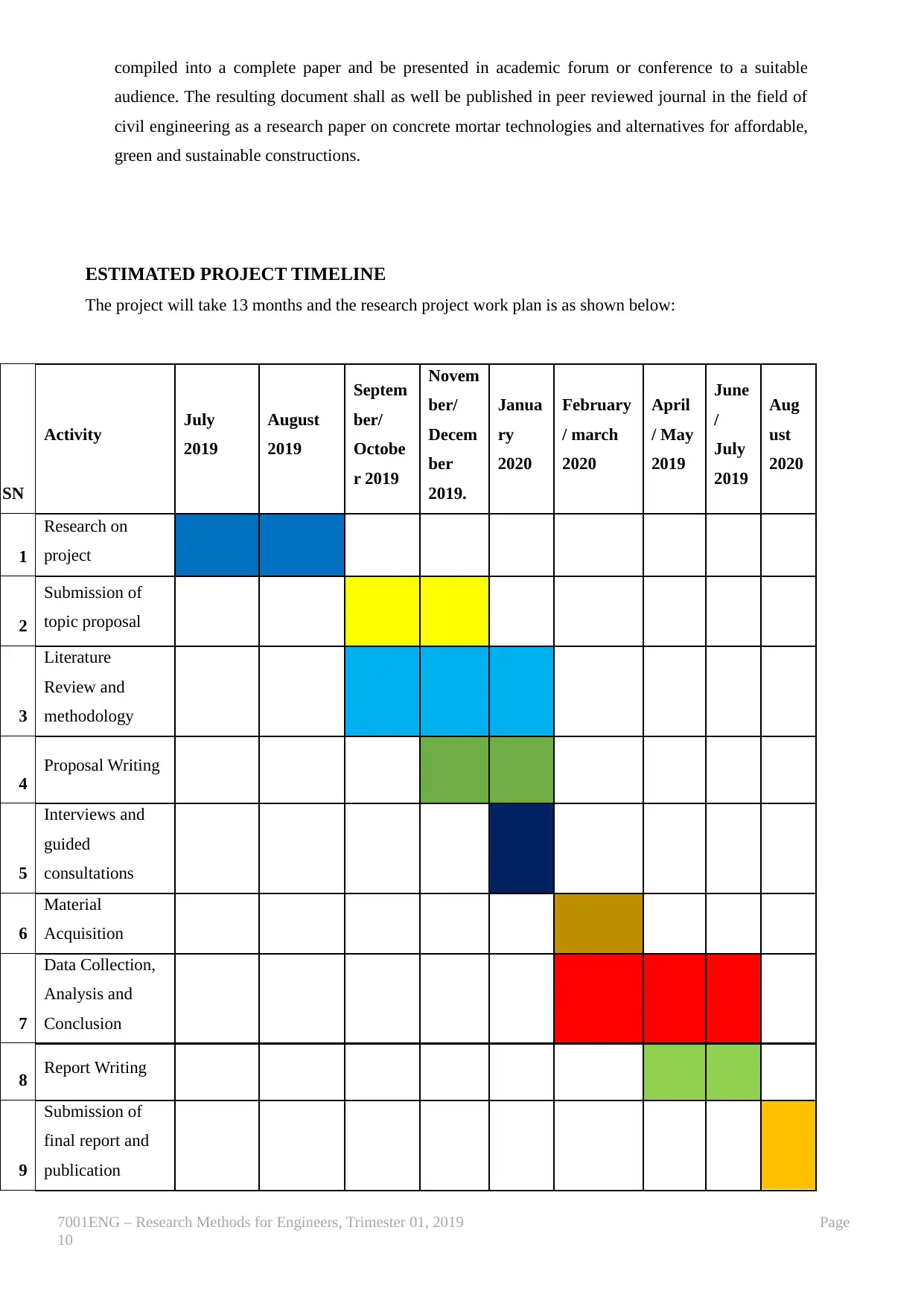
ESTIMATED PROJECT TIMELINE
The project will take 13 months and the research project work plan is as shown below:
SN
Activity July
2019
August
2019
Septem
ber/
Octobe
r 2019
Novem
ber/
Decem
ber
2019.
Janua
ry
2020
February
/ march
2020
April
/ May
2019
June
/
July
2019
Aug
ust
2020
1
Research on
project
2
Submission of
topic proposal
3
Literature
Review and
methodology
4
Proposal Writing
5
Interviews and
guided
consultations
6
Material
Acquisition
7
Data Collection,
Analysis and
Conclusion
8 Report Writing
9
Submission of
final report and
publication
7001ENG – Research Methods for Engineers, Trimester 01, 2019 Page
10
audience. The resulting document shall as well be published in peer reviewed journal in the field of
civil engineering as a research paper on concrete mortar technologies and alternatives for affordable,
green and sustainable constructions.
ESTIMATED PROJECT TIMELINE
The project will take 13 months and the research project work plan is as shown below:
SN
Activity July
2019
August
2019
Septem
ber/
Octobe
r 2019
Novem
ber/
Decem
ber
2019.
Janua
ry
2020
February
/ march
2020
April
/ May
2019
June
/
July
2019
Aug
ust
2020
1
Research on
project
2
Submission of
topic proposal
3
Literature
Review and
methodology
4
Proposal Writing
5
Interviews and
guided
consultations
6
Material
Acquisition
7
Data Collection,
Analysis and
Conclusion
8 Report Writing
9
Submission of
final report and
publication
7001ENG – Research Methods for Engineers, Trimester 01, 2019 Page
10
Paraphrase This Document
Need a fresh take? Get an instant paraphrase of this document with our AI Paraphraser
Research project work plan
REFERENCES
Beckett, C., & Ciancio, D. (2015). Rammed earth construction: Cutting-edge research on traditional and modern
rammed earth. Leiden: CRC Press, Taylor & Francis Group.
Cau-Dit-Coumes, C. (2012). Alternative Binders to Ordinary Portland Cement for Radwaste Solidification and
Stabilization. Cement-Based Materials for Nuclear Waste Storage, 171-191. doi:10.1007/978-1-4614-3445-0_16
CE479: DESIGN OF BUILDING COMPONENTS & SYSTEMS FALL 2012 J ... (2018). Retrieved May 21, 2019,
from https://engineering.purdue.edu/~jliu/courses/CE479/extras/CE479masonry12.pdf
Damme, H. V., & Houben, H. (2018). Earth concrete. Stabilization revisited. Cement and Concrete Research, 114,
90-102. doi:10.1016/j.cemconres.2017.02.035
Das, B. M. (2013). Fundamentals of geotechnical engineering. Stamford, CT: Cengage Learning.
Discussion. (2014). Masonry: Materials, Design, Construction, and Maintenance, 25-56. doi:10.1520/stp27262s
Earth Masonry : Design and constuction guidelines. (2018, November 11). Retrieved May 21, 2019, from
https://www.worldcat.org/title/earth-masonry-design-and-constuction-guidelines/oclc/246871399
Handy, R. L. (2019). Stabilization of Iowa loess with Portland cement. Soil Cement Satabilization, 25.
doi:10.31274/rtd-180813-15890
Kuhlmann, L. (2016). ASTM Specifications and Test Methods for Soil-Modified Mortar and Concrete — A Status
Report. Polymer-Modified Hydraulic-Cement Mixtures. doi:10.1520/stp25541s
Lindh, P. (2014). Compaction- and strength properties of stabilised and unstabilised fine-grained till. USA:
University of Pennsylvania.
Masonry Walls. (2019). Modern Construction Envelopes, 230-271. doi:10.1515/9783035617818-005
Reddy, B. V. (2012). Stabilised soil blocks for structural masonry in earth construction. Modern Earth Buildings, 324-
363. doi:10.1533/9780857096166.3.324
Secco, M., Addis, A., & Artioli, G. (2016). Characterization of lime-stabilized earthen mortars from historic masonry
structures. Brick and Block Masonry, 1889-1896. doi:10.1201/b21889-235
7001ENG – Research Methods for Engineers, Trimester 01, 2019 Page
11
REFERENCES
Beckett, C., & Ciancio, D. (2015). Rammed earth construction: Cutting-edge research on traditional and modern
rammed earth. Leiden: CRC Press, Taylor & Francis Group.
Cau-Dit-Coumes, C. (2012). Alternative Binders to Ordinary Portland Cement for Radwaste Solidification and
Stabilization. Cement-Based Materials for Nuclear Waste Storage, 171-191. doi:10.1007/978-1-4614-3445-0_16
CE479: DESIGN OF BUILDING COMPONENTS & SYSTEMS FALL 2012 J ... (2018). Retrieved May 21, 2019,
from https://engineering.purdue.edu/~jliu/courses/CE479/extras/CE479masonry12.pdf
Damme, H. V., & Houben, H. (2018). Earth concrete. Stabilization revisited. Cement and Concrete Research, 114,
90-102. doi:10.1016/j.cemconres.2017.02.035
Das, B. M. (2013). Fundamentals of geotechnical engineering. Stamford, CT: Cengage Learning.
Discussion. (2014). Masonry: Materials, Design, Construction, and Maintenance, 25-56. doi:10.1520/stp27262s
Earth Masonry : Design and constuction guidelines. (2018, November 11). Retrieved May 21, 2019, from
https://www.worldcat.org/title/earth-masonry-design-and-constuction-guidelines/oclc/246871399
Handy, R. L. (2019). Stabilization of Iowa loess with Portland cement. Soil Cement Satabilization, 25.
doi:10.31274/rtd-180813-15890
Kuhlmann, L. (2016). ASTM Specifications and Test Methods for Soil-Modified Mortar and Concrete — A Status
Report. Polymer-Modified Hydraulic-Cement Mixtures. doi:10.1520/stp25541s
Lindh, P. (2014). Compaction- and strength properties of stabilised and unstabilised fine-grained till. USA:
University of Pennsylvania.
Masonry Walls. (2019). Modern Construction Envelopes, 230-271. doi:10.1515/9783035617818-005
Reddy, B. V. (2012). Stabilised soil blocks for structural masonry in earth construction. Modern Earth Buildings, 324-
363. doi:10.1533/9780857096166.3.324
Secco, M., Addis, A., & Artioli, G. (2016). Characterization of lime-stabilized earthen mortars from historic masonry
structures. Brick and Block Masonry, 1889-1896. doi:10.1201/b21889-235
7001ENG – Research Methods for Engineers, Trimester 01, 2019 Page
11
Soil-cement stabilization. (2014). Dictionary Geotechnical Engineering/Wörterbuch GeoTechnik, 1263-1263.
doi:10.1007/978-3-642-41714-6_195079
Stabilization of Soil Using Flyash, Lime & Cement. (2016). International Journal of Science and Research (IJSR),
5(6), 527-529. doi:10.21275/v5i6.nov164333
Test Method for Preconstruction and Construction Evaluation of Mortars for Plain and Reinforced Unit Masonry.
(2017). Soil Based Mortar. doi:10.1520/c0780-10
The feasibility of earth block masonry for building ... (2018). Retrieved May 21, 2019, from
https://link.springer.com/content/pdf/10.1057/jba.2010.15.pdf
Ukrainczyk, N., & Rogina, A. (2013). Styrene–butadiene latex modified calcium aluminate cement mortar. Cement
and Concrete Composites, 41, 16-23. doi:10.1016/j.cemconcomp.2013.04.012
Wright, B., Wilkins, R., & John, G. (2018). Variables Affecting the Strength of Masonry Mortars. Masonry: Design
and Construction, Problems and Repair, 14-69. doi:10.1520/stp19615s
Zinn, W. A. (2015). Cement modified earthen mortar: An investigation of soil-cement performance characteristics at
three Southwestern national monuments. Sydney.
7001ENG – Research Methods for Engineers, Trimester 01, 2019 Page
12
doi:10.1007/978-3-642-41714-6_195079
Stabilization of Soil Using Flyash, Lime & Cement. (2016). International Journal of Science and Research (IJSR),
5(6), 527-529. doi:10.21275/v5i6.nov164333
Test Method for Preconstruction and Construction Evaluation of Mortars for Plain and Reinforced Unit Masonry.
(2017). Soil Based Mortar. doi:10.1520/c0780-10
The feasibility of earth block masonry for building ... (2018). Retrieved May 21, 2019, from
https://link.springer.com/content/pdf/10.1057/jba.2010.15.pdf
Ukrainczyk, N., & Rogina, A. (2013). Styrene–butadiene latex modified calcium aluminate cement mortar. Cement
and Concrete Composites, 41, 16-23. doi:10.1016/j.cemconcomp.2013.04.012
Wright, B., Wilkins, R., & John, G. (2018). Variables Affecting the Strength of Masonry Mortars. Masonry: Design
and Construction, Problems and Repair, 14-69. doi:10.1520/stp19615s
Zinn, W. A. (2015). Cement modified earthen mortar: An investigation of soil-cement performance characteristics at
three Southwestern national monuments. Sydney.
7001ENG – Research Methods for Engineers, Trimester 01, 2019 Page
12
⊘ This is a preview!⊘
Do you want full access?
Subscribe today to unlock all pages.
Trusted by 1+ million students worldwide

1 out of 12


Related Documents


Your All-in-One AI-Powered Toolkit for Academic Success.
+13062052269
info@desklib.com
Available 24*7 on WhatsApp / Email
![[object Object]](/_next/static/media/star-bottom.7253800d.svg)
Unlock your academic potential
Copyright © 2020–2026 A2Z Services. All Rights Reserved. Developed and managed by ZUCOL.