Future of the Tourism Industry: Key Challenges and Strategic Solutions
VerifiedAdded on 2023/06/18
|7
|1705
|137
Essay
AI Summary
This essay examines the multifaceted challenges confronting the future of the tourism industry. It identifies key issues such as environmental impact, the effects of pandemics like COVID-19, economic factors including cost and inflation, safety and security concerns, and the transformative role of technology. The essay highlights the industry's vulnerability to external factors and the necessity for adaptation and strategic planning. It discusses how environmental challenges, driven by greenhouse gas emissions and unchecked growth, necessitate greener technologies and better resource management. The COVID-19 pandemic has exposed risk management deficiencies and altered consumer behavior, emphasizing safety and precaution. Economic instability, marked by currency fluctuations and inflation, impacts pricing and service quality. Safety and security concerns, amplified by terrorism and natural disasters, affect tourist confidence. Finally, the essay acknowledges technology's pervasive influence, requiring companies to embrace digital marketing and innovative solutions to remain competitive. The conclusion underscores the need for the tourism industry to evolve and adapt to these challenges to ensure a sustainable and prosperous future.
Challenges for future of tourism
industry
industry
Paraphrase This Document
Need a fresh take? Get an instant paraphrase of this document with our AI Paraphraser

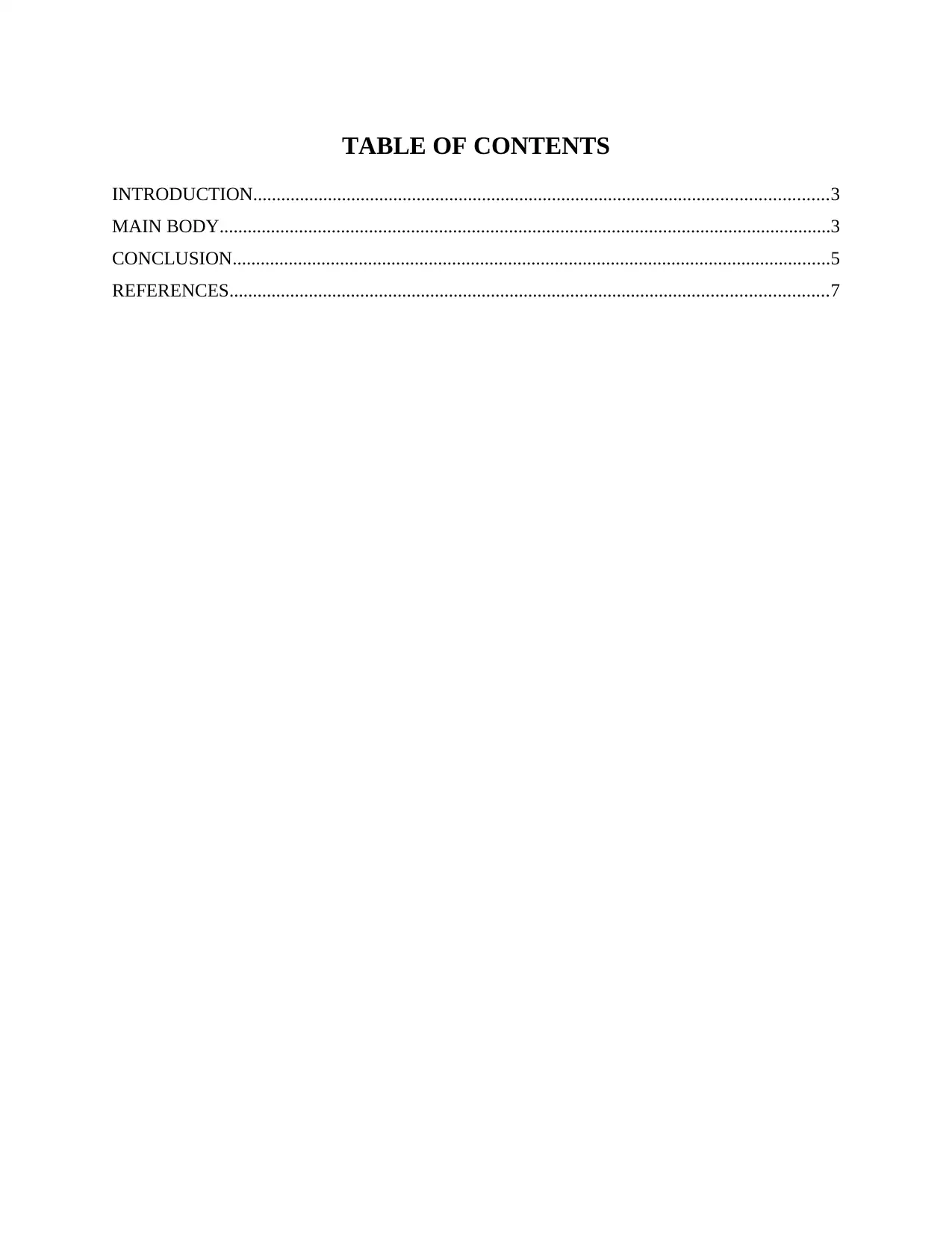
TABLE OF CONTENTS
INTRODUCTION...........................................................................................................................3
MAIN BODY...................................................................................................................................3
CONCLUSION................................................................................................................................5
REFERENCES................................................................................................................................7
INTRODUCTION...........................................................................................................................3
MAIN BODY...................................................................................................................................3
CONCLUSION................................................................................................................................5
REFERENCES................................................................................................................................7

INTRODUCTION
Travel and tourism industry sets a great example for being one of the volatile industry.
This sector is not immune to the political, social and economic changes having in the place of
business operations. These changing factors are not in the control of the travel organisations and
board of tourisms. It is important to be aware of the factors which influences the industry into
making more proactive and accordingly develop strategies. There is an increase in the tourism
activities, advancements in digital technologies and other innovations are the factors on which
the future of tourism will depend. Tourism industry is made with many different types of sectors
which are accommodation, travel and culture and is one of the fastest growing industry (Higgins-
Desbiolles, 2020). This sector reflects on the changes happening in the social models and to
sustain the future of this industry it is important to reflect on the models which can shape the
daily lives of people. There are many challenges faced by the tourism such as taxation, travel
marketing, infrastructure issues and many more. There are many places which are still not
prepared for the visitors while in some cases the marketing is done in an exaggerated form.
Another challenge faced is the rise in fluctuation of rates and these new changes are quickly
impacting the whole of the travel and tourism industry.
MAIN BODY
The future of tourism is there to share a global mission with respect to the destination
needs marking as the center of the new future of tourism. The growth of tourism has made the
treasured places of the world to come at risk in the sense of environment, culture and even
financially. This industry is now facing a unstable and uncertain future. It is important to re-
centre around the strong set of guiding principles to have sustainable growth. The future of
tourism industry is affected by the tourists, economical, technological and environmental factors
which are more likely to compel the managers into determining the new ways which will help
the industry in positioning strategically within the market (Seyfi and Hall, 2018). Targetting the
travellers in the future market involves the use of new approaches in the range of markets and
localities. The advancements in technology will drive the tourism industry into being more in the
era of cyber tourism. Some of the challenges faced by the future of tourism are:
Environmental challenges: This industry is responsible for a bit large amount of emissions of
green house gases. This is leading to the world and environmental problems to arise on local
Travel and tourism industry sets a great example for being one of the volatile industry.
This sector is not immune to the political, social and economic changes having in the place of
business operations. These changing factors are not in the control of the travel organisations and
board of tourisms. It is important to be aware of the factors which influences the industry into
making more proactive and accordingly develop strategies. There is an increase in the tourism
activities, advancements in digital technologies and other innovations are the factors on which
the future of tourism will depend. Tourism industry is made with many different types of sectors
which are accommodation, travel and culture and is one of the fastest growing industry (Higgins-
Desbiolles, 2020). This sector reflects on the changes happening in the social models and to
sustain the future of this industry it is important to reflect on the models which can shape the
daily lives of people. There are many challenges faced by the tourism such as taxation, travel
marketing, infrastructure issues and many more. There are many places which are still not
prepared for the visitors while in some cases the marketing is done in an exaggerated form.
Another challenge faced is the rise in fluctuation of rates and these new changes are quickly
impacting the whole of the travel and tourism industry.
MAIN BODY
The future of tourism is there to share a global mission with respect to the destination
needs marking as the center of the new future of tourism. The growth of tourism has made the
treasured places of the world to come at risk in the sense of environment, culture and even
financially. This industry is now facing a unstable and uncertain future. It is important to re-
centre around the strong set of guiding principles to have sustainable growth. The future of
tourism industry is affected by the tourists, economical, technological and environmental factors
which are more likely to compel the managers into determining the new ways which will help
the industry in positioning strategically within the market (Seyfi and Hall, 2018). Targetting the
travellers in the future market involves the use of new approaches in the range of markets and
localities. The advancements in technology will drive the tourism industry into being more in the
era of cyber tourism. Some of the challenges faced by the future of tourism are:
Environmental challenges: This industry is responsible for a bit large amount of emissions of
green house gases. This is leading to the world and environmental problems to arise on local
⊘ This is a preview!⊘
Do you want full access?
Subscribe today to unlock all pages.

Trusted by 1+ million students worldwide

grounds. This has lead to the closure of the sites like echo due to the excesses of unchecked
growth. Urban tourism has also affected numbers of pollution. It is important for the tourism
industry to rethink about the environmental changes. For the transport it has become important to
bring in innovation which includes the use of more greener technology as the base principle. The
hope or the future is that the data will help in providing more better monitoring, improved
understanding and better management of natural as well as heritage resources of the different
territories. The main challenge for tourism is to determine the ways to integrate digitalisation
which will help the industry to manage the business sustainably. This is not enough as it requires
more deeper changes with respect to the time, space and the patterns for production.
Pandemic: The outbreak of virus has resulted in major health crisis and took a hit on the global
economy and most of all tourism industry (Car, Stifanich and Šimunić, 2019). There is a drop in
tourism revenue in over the globe. It is challenging the practices of tourism industry and focusing
the attention on issues like poor risk management in this industry, viral globalisation and the
spread of diseases with the tourists going from one place to another ion cross borders. This also
marks as an opportunity to rethink the working of tourism industry from a critical perspective.
This pandemic has changed the behaviour of customers as they are not ready or sure to travel and
become the potential carrier of the virus. This Covid - 19 has created fear in the minds of people
which will live rent free for the future time. It will prevent them from having any travel plans
and even if they do, they will closely in the safety and precautions offered by the tourism
companies which is challenging for future tourism.
Cost and inflation: This is one of the main challenge faced by tourism industry which is
fluctuations and changes in currency rates. The inability to have the knowledge of value of the
currency will result in having long ranged prices for the tourism to be predicted in prior and have
a fallout from the effects of monetary instability which will impact the multiple tourism and
support systems. Tourism industry works on a seasonal basis and therefore does not guarantee
the annual flow of income and disrupts the overall setup of the business. There is a very sudden
rise in inflation which is alarming. This has resulted many restaurants to raise the prices and
decrease the services offered. The airline industry has take a hit and these has impacted the
tourism as tourism depends on travel and food both (Butler, 2018). This has given the tourism
industry no other option than cutting the services and increasing the prices. Travellers in the
growth. Urban tourism has also affected numbers of pollution. It is important for the tourism
industry to rethink about the environmental changes. For the transport it has become important to
bring in innovation which includes the use of more greener technology as the base principle. The
hope or the future is that the data will help in providing more better monitoring, improved
understanding and better management of natural as well as heritage resources of the different
territories. The main challenge for tourism is to determine the ways to integrate digitalisation
which will help the industry to manage the business sustainably. This is not enough as it requires
more deeper changes with respect to the time, space and the patterns for production.
Pandemic: The outbreak of virus has resulted in major health crisis and took a hit on the global
economy and most of all tourism industry (Car, Stifanich and Šimunić, 2019). There is a drop in
tourism revenue in over the globe. It is challenging the practices of tourism industry and focusing
the attention on issues like poor risk management in this industry, viral globalisation and the
spread of diseases with the tourists going from one place to another ion cross borders. This also
marks as an opportunity to rethink the working of tourism industry from a critical perspective.
This pandemic has changed the behaviour of customers as they are not ready or sure to travel and
become the potential carrier of the virus. This Covid - 19 has created fear in the minds of people
which will live rent free for the future time. It will prevent them from having any travel plans
and even if they do, they will closely in the safety and precautions offered by the tourism
companies which is challenging for future tourism.
Cost and inflation: This is one of the main challenge faced by tourism industry which is
fluctuations and changes in currency rates. The inability to have the knowledge of value of the
currency will result in having long ranged prices for the tourism to be predicted in prior and have
a fallout from the effects of monetary instability which will impact the multiple tourism and
support systems. Tourism industry works on a seasonal basis and therefore does not guarantee
the annual flow of income and disrupts the overall setup of the business. There is a very sudden
rise in inflation which is alarming. This has resulted many restaurants to raise the prices and
decrease the services offered. The airline industry has take a hit and these has impacted the
tourism as tourism depends on travel and food both (Butler, 2018). This has given the tourism
industry no other option than cutting the services and increasing the prices. Travellers in the
Paraphrase This Document
Need a fresh take? Get an instant paraphrase of this document with our AI Paraphraser

future will not opt for the expensive vacation options which in turn will hit the tourism industry
as it is the source to earn maximum profit rates.
Safety and security: Safety is always the key consideration for the tourists and travellers.
Security of the tourists are creating problems for the industry and acting as a barrier in its
growth. The future holds making of improper laws, increase in terrorists attacks, not proper
stability of the politics have affected the sentiments of foreign tourists. In the growth of
economy, the industry of tourism is facing backlash because of the unexpected events which
impacts the confidence of the customers in deciding the tourist destination (Peceny, and et.al.,
2019). The present events happening in all over the world have raised and put more focus on the
security risks which are associated with travelling. Examples for such events are terrorism and
political groups. In addition to this, tourism is also facing challenges due to the natural disasters
which includes pandemics, tsunami, earthquakes, volcanoes and many more. This crisis is more
unexpected which affects the mindset of travellers and tourists and interferes with the ability to
operate normally.
Technology: This factor is quickly penetrating in the lives of humans. The future of tourism is
allowed to be run and determined by the use of technology. Internet has increased the field of
area for the marketing in tourism industry. It will be mandatory for the companies to make good
and attractive websites which can make a small and remote destinations to compete equally with
the growth of tourism (Ardito, and et.al., 2019). The combination of information and
communication technologies will help the tourism companies to become more efficient and gain
the competitive advantage. Marketing has become an important practice to be followed by the
companies in the coming time as it will change the perception by working towards making some
creative and innovative marketing solutions.
CONCLUSION
It can be concluded that the tourism industry plays a huge contribution in the current
economy of the country. However, this industry has to face many challenges to sustain and
establish a future. Tourism industry have a bright future and achieving this has made it hard to
believe because of the rising concerns related to this industry. The pandemic has hit hard on the
industry with all the restrictions and imposing of precautionary laws. This marks the changes and
challenges for tourism and will keep on growing in the future. Tourists are now putting more
as it is the source to earn maximum profit rates.
Safety and security: Safety is always the key consideration for the tourists and travellers.
Security of the tourists are creating problems for the industry and acting as a barrier in its
growth. The future holds making of improper laws, increase in terrorists attacks, not proper
stability of the politics have affected the sentiments of foreign tourists. In the growth of
economy, the industry of tourism is facing backlash because of the unexpected events which
impacts the confidence of the customers in deciding the tourist destination (Peceny, and et.al.,
2019). The present events happening in all over the world have raised and put more focus on the
security risks which are associated with travelling. Examples for such events are terrorism and
political groups. In addition to this, tourism is also facing challenges due to the natural disasters
which includes pandemics, tsunami, earthquakes, volcanoes and many more. This crisis is more
unexpected which affects the mindset of travellers and tourists and interferes with the ability to
operate normally.
Technology: This factor is quickly penetrating in the lives of humans. The future of tourism is
allowed to be run and determined by the use of technology. Internet has increased the field of
area for the marketing in tourism industry. It will be mandatory for the companies to make good
and attractive websites which can make a small and remote destinations to compete equally with
the growth of tourism (Ardito, and et.al., 2019). The combination of information and
communication technologies will help the tourism companies to become more efficient and gain
the competitive advantage. Marketing has become an important practice to be followed by the
companies in the coming time as it will change the perception by working towards making some
creative and innovative marketing solutions.
CONCLUSION
It can be concluded that the tourism industry plays a huge contribution in the current
economy of the country. However, this industry has to face many challenges to sustain and
establish a future. Tourism industry have a bright future and achieving this has made it hard to
believe because of the rising concerns related to this industry. The pandemic has hit hard on the
industry with all the restrictions and imposing of precautionary laws. This marks the changes and
challenges for tourism and will keep on growing in the future. Tourists are now putting more

importance on the security and safety offered by the organisation. The future of tourism comes
with many new advancements which will help in providing better customer experience. This
sector is difficult to predict and each factor which marks the outline for future will be more
influential in its own different way. When these factors are combined, they will help in
delivering a powerful force which will shape the future of tourism. Some of these challenges can
be overcome by adapting and evolving according to the changing scenarios and trends.
with many new advancements which will help in providing better customer experience. This
sector is difficult to predict and each factor which marks the outline for future will be more
influential in its own different way. When these factors are combined, they will help in
delivering a powerful force which will shape the future of tourism. Some of these challenges can
be overcome by adapting and evolving according to the changing scenarios and trends.
⊘ This is a preview!⊘
Do you want full access?
Subscribe today to unlock all pages.

Trusted by 1+ million students worldwide

REFERENCES
Books and Journals
Ardito, and et.al., 2019. Big data in smart tourism: challenges, issues and opportunities.
Butler, R., 2018. Challenges and opportunities. Worldwide Hospitality and Tourism Themes.
Car, T., Stifanich, L.P. and Šimunić, M., 2019. Internet of things (iot) in tourism and hospitality:
Opportunities and challenges. Tourism in South East Europe....5. pp.163-175.
Higgins-Desbiolles, F., 2020. The “war over tourism”: challenges to sustainable tourism in the
tourism academy after COVID-19. Journal of Sustainable Tourism. 29(4). pp.551-569.
Peceny, and et.al., 2019. Tourism 4.0: challenges in marketing a paradigm shift. In Consumer
Behavior and Marketing. IntechOpen.
Seyfi, S. and Hall, C.M. eds., 2018. Tourism in Iran: Challenges, development and issues.
Routledge.
Books and Journals
Ardito, and et.al., 2019. Big data in smart tourism: challenges, issues and opportunities.
Butler, R., 2018. Challenges and opportunities. Worldwide Hospitality and Tourism Themes.
Car, T., Stifanich, L.P. and Šimunić, M., 2019. Internet of things (iot) in tourism and hospitality:
Opportunities and challenges. Tourism in South East Europe....5. pp.163-175.
Higgins-Desbiolles, F., 2020. The “war over tourism”: challenges to sustainable tourism in the
tourism academy after COVID-19. Journal of Sustainable Tourism. 29(4). pp.551-569.
Peceny, and et.al., 2019. Tourism 4.0: challenges in marketing a paradigm shift. In Consumer
Behavior and Marketing. IntechOpen.
Seyfi, S. and Hall, C.M. eds., 2018. Tourism in Iran: Challenges, development and issues.
Routledge.
1 out of 7
Related Documents
Your All-in-One AI-Powered Toolkit for Academic Success.
+13062052269
info@desklib.com
Available 24*7 on WhatsApp / Email
Unlock your academic potential
Copyright © 2020–2025 A2Z Services. All Rights Reserved. Developed and managed by ZUCOL.