MKG220 - Gen Y Shopping Behavior in the Changing Media in AU

Verified

Added on  2023/06/03

|8
|1749
|190
Case Study
AI Summary
This case study delves into the impact of the internet on the shopping behavior of Generation Y in Australia, a demographic comprising a significant portion of the population and wealth accumulators. It highlights how increased internet access has led Gen Y consumers to become more cautious and discerning, favoring online platforms and social media for product research and purchasing decisions over traditional advertising. The study uses examples such as online gaming, streaming services, and social media interactions to illustrate this shift. Furthermore, it addresses the challenges and opportunities presented to marketers in this evolving media environment, emphasizing the need for high-quality products, strong online presence, and personalized customer engagement to succeed in the digital age. The case study concludes that understanding these changes is crucial for marketers aiming to effectively reach and engage with Gen Y consumers in Australia.
Document Page
Name:
Case study 2: The changing media environment
University: Lucie Ozanne, University of Canterbury
tabler-icon-diamond-filled.svg

Paraphrase This Document

Need a fresh take? Get an instant paraphrase of this document with our AI Paraphraser
Document Page
Table of Contents
Introduction......................................................................................................................................3
The way the Internet has changed Australian Gen Y’s shopping behavior.....................................3
Examples for illustrating the discussion..........................................................................................4
Challenges and opportunities that are posed to marketers by this changing media environment...5
Conclusion.......................................................................................................................................6
References........................................................................................................................................7
Page 2 of 8
Document Page
Introduction
This assignment shall pay ahead into the discussion regarding the Generation Y of Australia and
keep trail of their buying behavior and subtle changes in them. Further, it shall also provide
examples related to the discussion and shall explain the challenges and opportunities that are
posed to marketers by this changing media environment.
The way the Internet has changed Australian Gen Y’s shopping behavior
The term ‘Gen Y’ of Australia is mainly used to denote group of people ranging from the age
group 22 years to 36 years. These people are the main wealth accumulators and comprise around
22% and 5.22 million out of the total population of Australia.
The internet has brought a revolution in the shopping behavior of the people of Australia. Almost
93% of the total population make use of the internet. On an average the Gen Y of Australia
spends around $600 billion a year and around $85 each day (Women, 2018). The average
spending per person on consumable good per person has increased to a great amount over two
decades. Due to this, consumers are growing increasingly cautious and choosy about the things
they are buying. They have adopted different kind of online platforms in order to conduct and
have their buying activities and experiences. They less rely upon the branded content on
traditional formats of promotion (Panjakajornsak et al. 2017). Rather, they make use of social
media and chatbots in order to know about different products and services and interact with the
companies and different kind of customers. From there, they also get to know about the buyer
experience, usability regarding a product from other consumer before even buying a specific
product (Lee and Cook, 2015).
The Gen Y people demands the more disclosure of any information related to any product. They
also want to compare between various of the process and the features that are offered by a kind
of products with the other similar kind of things. They want advertisements that are more
creative and have interesting content and stories in them which shall explain to them that why
they need a specific product (Pekerti and Arli, 2017).
Page 3 of 8
Document Page
Examples for illustrating the discussion
With the growth of internet facilities and online streaming, the number of online and
offline Gen Y Gamers have increased. Further, youngsters are buying a game after
checking its online reviews at different gaming and developer sites.
Consumers are watching different kind of TV series and episodes at a time with the help
of online subscription apps and sites such as YouTube. From 2016 to 2017, there has
been a rise in the watching hours from 17.2 to 17.5 on an average among the Australian
audience (Gardiner and King, 2015). The subscription for a serial are done by them based
on the reviews that are posted on behalf of each TV series by a group of daily viewers or
followers.
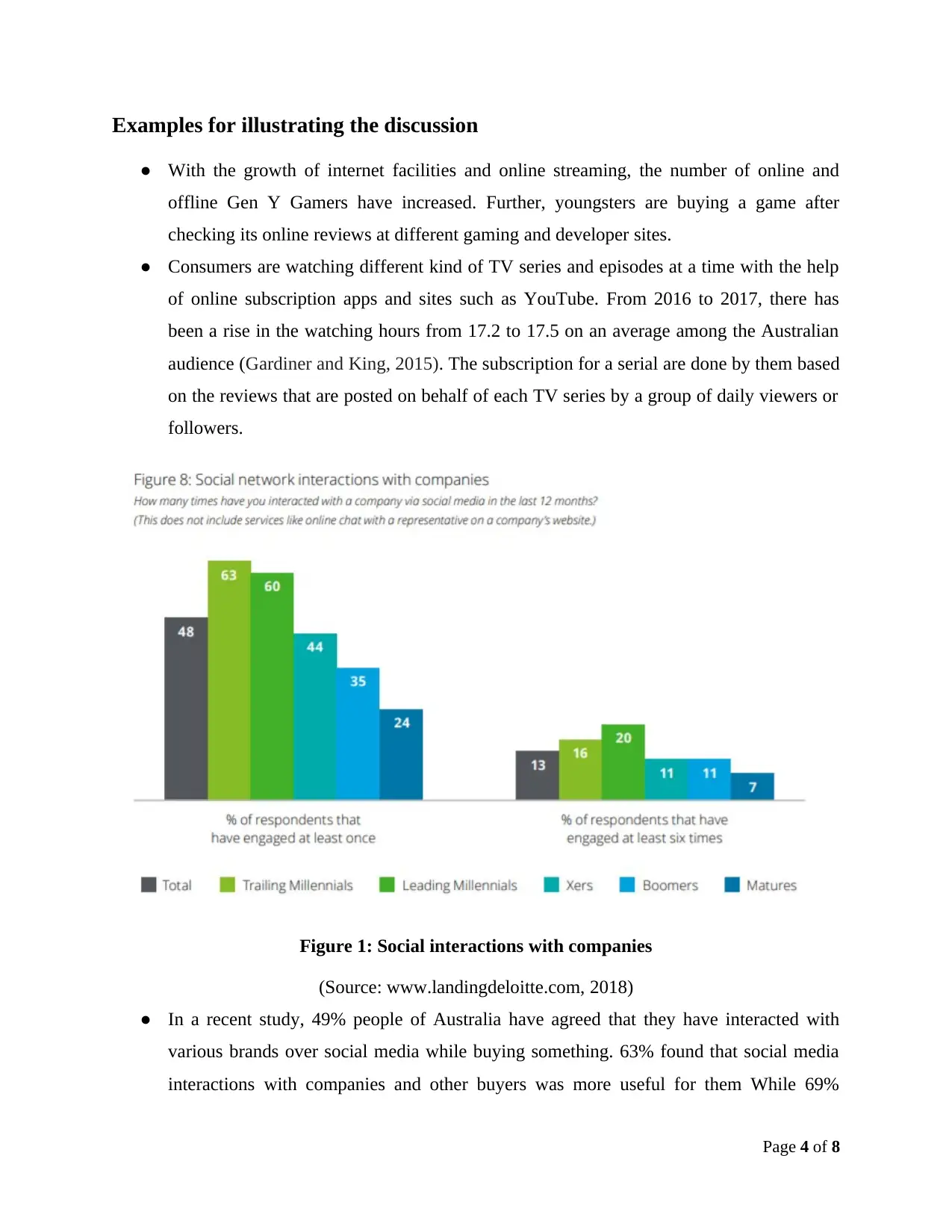
Figure 1: Social interactions with companies
(Source: www.landingdeloitte.com, 2018)
In a recent study, 49% people of Australia have agreed that they have interacted with
various brands over social media while buying something. 63% found that social media
interactions with companies and other buyers was more useful for them While 69%
Page 4 of 8
tabler-icon-diamond-filled.svg

Paraphrase This Document

Need a fresh take? Get an instant paraphrase of this document with our AI Paraphraser
Document Page
agreed that social media interactions could more quickly cater to their demand for
information and aided in shaping their buying decisions (www.landingdeloitte.com,
2018). It was more convenient rather than knowing things over a phone call.
90% of the Australians in 2017 were found much reluctant to pay for and buy newspapers
when they could get the same news in the online newspapers for free. However, 56%
were ready to pay for online newspapers, magazines and journals if there shall be present
more in depth analysis of the news theme and profound writing presented by the editor
and writer (Lim et al. 2016).
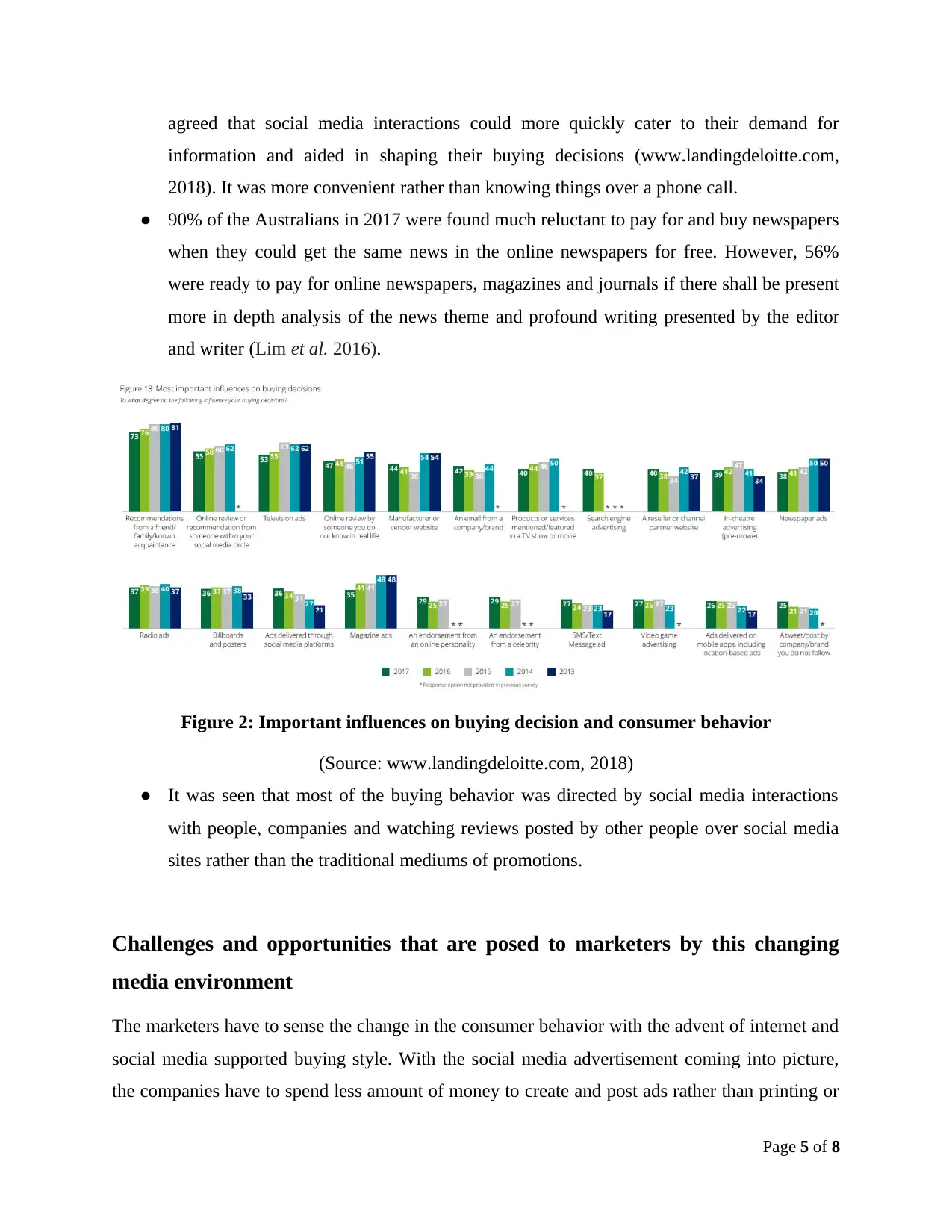
Figure 2: Important influences on buying decision and consumer behavior
(Source: www.landingdeloitte.com, 2018)
It was seen that most of the buying behavior was directed by social media interactions
with people, companies and watching reviews posted by other people over social media
sites rather than the traditional mediums of promotions.
Challenges and opportunities that are posed to marketers by this changing
media environment
The marketers have to sense the change in the consumer behavior with the advent of internet and
social media supported buying style. With the social media advertisement coming into picture,
the companies have to spend less amount of money to create and post ads rather than printing or
Page 5 of 8
Document Page
broadcasting ads on the traditional advertisements mediums (Laranjo et al. 2014). However, they
have to be very cautious regarding what they are shown in the ads and promising to the
customers. They are vulnerable to high criticism by customers over social media platforms if any
of their products or services turns out to be faulty or unpromising. Marketers applying social
media through selling and purchasing do not need to set up big establishment in order to carry on
with their business and attract customers (Dhanapal and Subramaniam, 2015). However, they
need to maintain good quality products and services so that customers give good rating and
reviews to them. These rating and review decided their overall popularity and brand resonance
among the minds of consumers. Brands which are technologically backwards and have poor
website maintenance cannot stand out in this competition and are sure to collapse (Chuah et al.
2017). They need to supply detailed data to the customers before they are buying anything which
requires time and cost for the business houses. However, it has also become somewhat easy for
them to reach out to individual customers to know about their demands and issues and can design
their products and services to specifically meet each of the demands of the consumers.
Conclusion
The study has given a backdrop and detailed impression regarding the overall aftermath of
internet on the consumer behavior in Australia. The examples regarding various products have
been mentioned here in order to get a better understanding of ways in which internet has affected
the behavior of buyers. The challenges and opportunities faced by marketers due to this change
in the media environment gives a detailed account of surrounding factors that have ultimately
brought in this change in the consumer choice, demand and consumption behavior.
Page 6 of 8
Document Page
References
Chuah, S.H.W., Marimuthu, M., Kandampully, J. and Bilgihan, A., 2017. What drives Gen Y
loyalty? Understanding the mediated moderating roles of switching costs and alternative
attractiveness in the value-satisfaction-loyalty chain. Journal of Retailing and Consumer
Services, 36, pp.124-136.
Dhanapal, S. and Subramaniam, T., 2015. Perceptions on the challenges of online purchasing: a
study from “baby boomers”, generation “X” and generation “Y” point of views. Contaduría y
Administración, 60, pp.107-132.
Gardiner, S. and King, C., 2015. Is the Australian domestic holiday a thing of the past?
Understanding baby boomer, Generation X and Generation Y perceptions and attitude to
domestic and international holidays. Journal of Vacation Marketing, 21(4), pp.336-350.
Landing.deloitte.com.au. (2018). Media Consumer Survey, 2017. [online] Available at:
http://landing.deloitte.com.au/rs/761-IBL-328/images/tmt-media-consumer-survey-final-
report.pdf [Accessed 16 Oct. 2018].
Laranjo, L., Arguel, A., Neves, A.L., Gallagher, A.M., Kaplan, R., Mortimer, N., Mendes, G.A.
and Lau, A.Y., 2014. The influence of social networking sites on health behavior change: a
systematic review and meta-analysis. Journal of the American Medical Informatics Association,
22(1), pp.243-256.
Lee, A. and Cook, P.S., 2015. The conditions of exposure and immediacy: Internet surveillance
and Generation Y. Journal of Sociology, 51(3), pp.674-688.
Lim, Y.J., Osman, A., Salahuddin, S.N., Romle, A.R. and Abdullah, S., 2016. Factors
influencing online shopping behavior: the mediating role of purchase intention. Procedia
Economics and Finance, 35, pp.401-410.
Panjakajornsak, V., Lin, M.C., Chiu, Y.P., Huang, C.H., Wu, Y.P., Liu, Z., Jiang, X.,
Kunnapapdeelert, S., Thepmongkorn, S., Yang, Y.L. and Hsueh, H.W., 2017. A Model of Thai
Consumers’ Behavioral Intention: A Study of Generations X and Y. International Journal of e-
Education, e-Business, e-Management and e-Learning, 7 (4). 219, 229.
Page 7 of 8
tabler-icon-diamond-filled.svg

Paraphrase This Document

Need a fresh take? Get an instant paraphrase of this document with our AI Paraphraser
Document Page
Pekerti, A.A. and Arli, D., 2017. Do cultural and generational cohorts matter to ideologies and
consumer ethics? A comparative study of Australians, Indonesians, and Indonesian migrants in
Australia. Journal of Business Ethics, 143(2), pp.387-404.
Women, Y. (2018). Generation Face-Off: Comparing Gen X, Y And Z Shopping Behaviors.
[online] Forbes. Available at: https://www.forbes.com/sites/yec/2018/05/17/generation-face-off-
comparing-gen-x-y-and-z-shopping-behaviors/#166f3fa1631d [Accessed 16 Oct. 2018].
Page 8 of 8
chevron_up_icon
1 out of 8
circle_padding
hide_on_mobile
zoom_out_icon
[object Object]