Charismatic Leadership Model Analysis for MGMT4431 (W20)

Verified

Added on  2022/09/06

|15
|812
|14
Presentation
AI Summary
This presentation analyzes the charismatic leadership model, focusing on its core components, historical context, and contemporary relevance. It defines charismatic leadership, highlighting the role of a leader as a representative, motivator, and ethical guide. The presentation explores the origins of the model, emphasizing the influence of Max Weber and Robert J. House, and its evolution over time. It details the strengths of charismatic leadership, such as creating emotional appeal and fostering shared identity, while also acknowledging its weaknesses, including leader dependency and potential for self-interest. The application of charismatic leadership is exemplified through the leadership of Pandit Jawaharlal Nehru, the first Prime Minister of India, illustrating his ability to communicate a vision and drive change. The presentation further examines how charismatic leadership promotes innovation, develops a learning culture, and motivates teams, ultimately fostering personal growth and self-awareness. The provided references include academic sources that support the analysis of charismatic leadership and its impact.
Document Page
CHARISMATIC LEADERSHIP MODEL
MGMT4431/267 Section A or B (W20)
Due date
Your full name
tabler-icon-diamond-filled.svg

Paraphrase This Document

Need a fresh take? Get an instant paraphrase of this document with our AI Paraphraser
Document Page
ROLE OF LEADER
Representative of a mass
Represent the concern, problem and needs of the
team
Reconciles the personal goals with the collective goal
Motivates the team to move forward
Is ethical and fosters ethical conditions and decisions
Different leadership styles propounded by theorists
Charismatic leadership makes use of the personality
and vision of leader.
Document Page
INTRODUCTION
Charismatic leadership style
Original researcher(s): German Sociologist Max Weber
Additional researchers who have made contributions: Robert J. House
Years first appearing and period of evolution: 1992
- In the book Economy and Society
Primary emphasis or original driving purpose:
self interest
vision
personality
appearance
Document Page
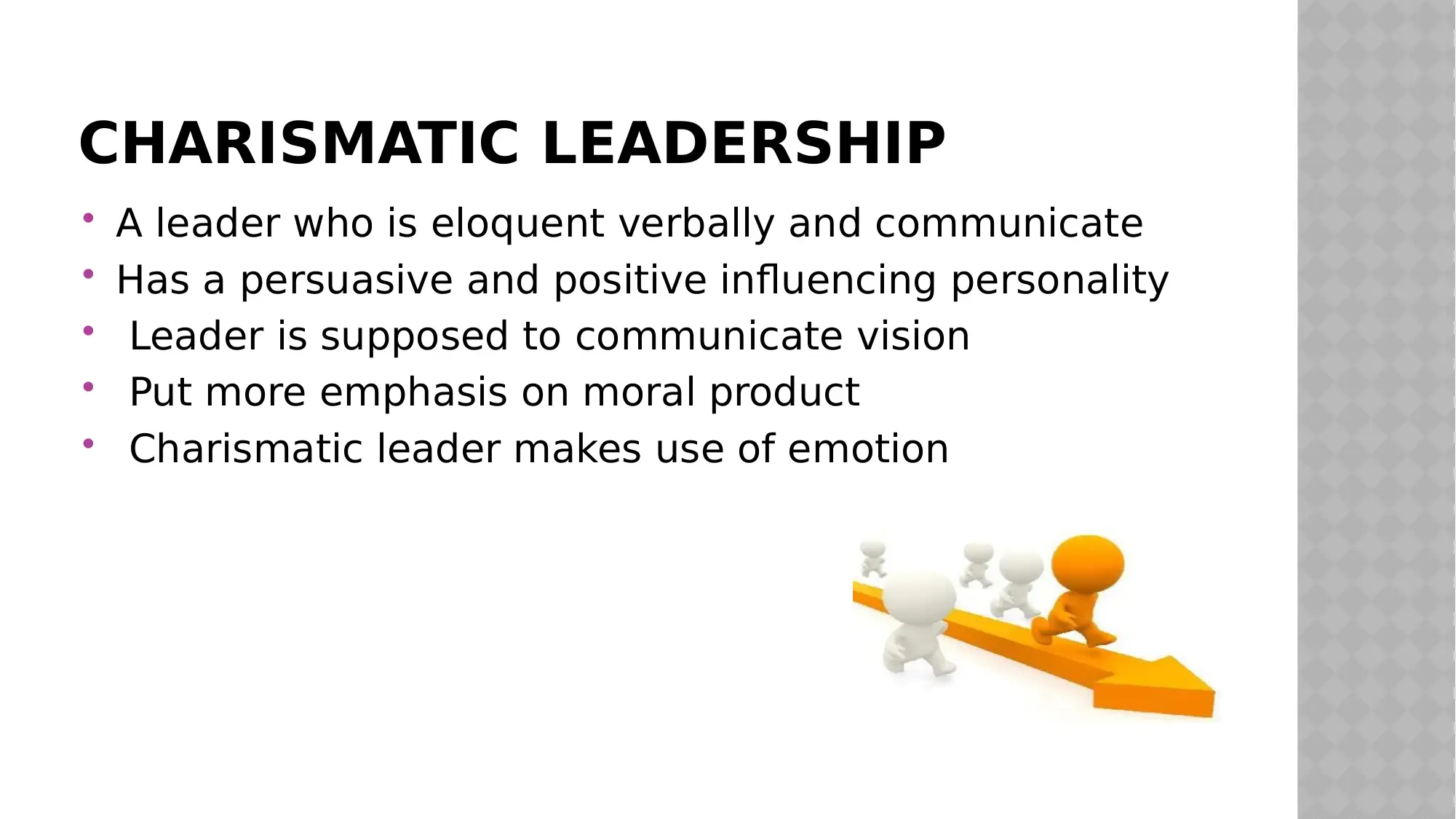
CHARISMATIC LEADERSHIP
A leader who is eloquent verbally and communicate
Has a persuasive and positive influencing personality
Leader is supposed to communicate vision
Put more emphasis on moral product
Charismatic leader makes use of emotion
tabler-icon-diamond-filled.svg

Paraphrase This Document

Need a fresh take? Get an instant paraphrase of this document with our AI Paraphraser
Document Page
ROLE OF VISION
an important component helping in the area of
providing inspiration and motivation for the part of
operating further.
Helps to keep in mind the end result
The vision acts as a guidance.
make the leader understand the importance and the
effect of a change.
Document Page
CONTEXTS OF ORIGIN
Historical Context:
idea of strong ad just leader
Ability to rule by means of influencing through charisma
the idealization of a benevolent king or administrator of great height
Modern Context:
strong personal as well as behavioral characteristics
to be able to communicate a vision.
the face of change
Document Page
FOREMOST EMPHASIS
Was introduced to describe a bureaucratic style of
organizational structure.
Such structure required a top down command flow
An effective leader was required for influencing the
people of organization.
the personality of the leader would motivate people to
allow changes in the organisation.
tabler-icon-diamond-filled.svg

Paraphrase This Document

Need a fresh take? Get an instant paraphrase of this document with our AI Paraphraser
Document Page
CHARISMATIC LEADERSHIP
STRENGTHS
the creation of emotional appeal is a great source of influence
renders a chance of thinking differently in the lens of the new
vision.
creates a shared identity.
Emphasize on the learning process
.
Document Page
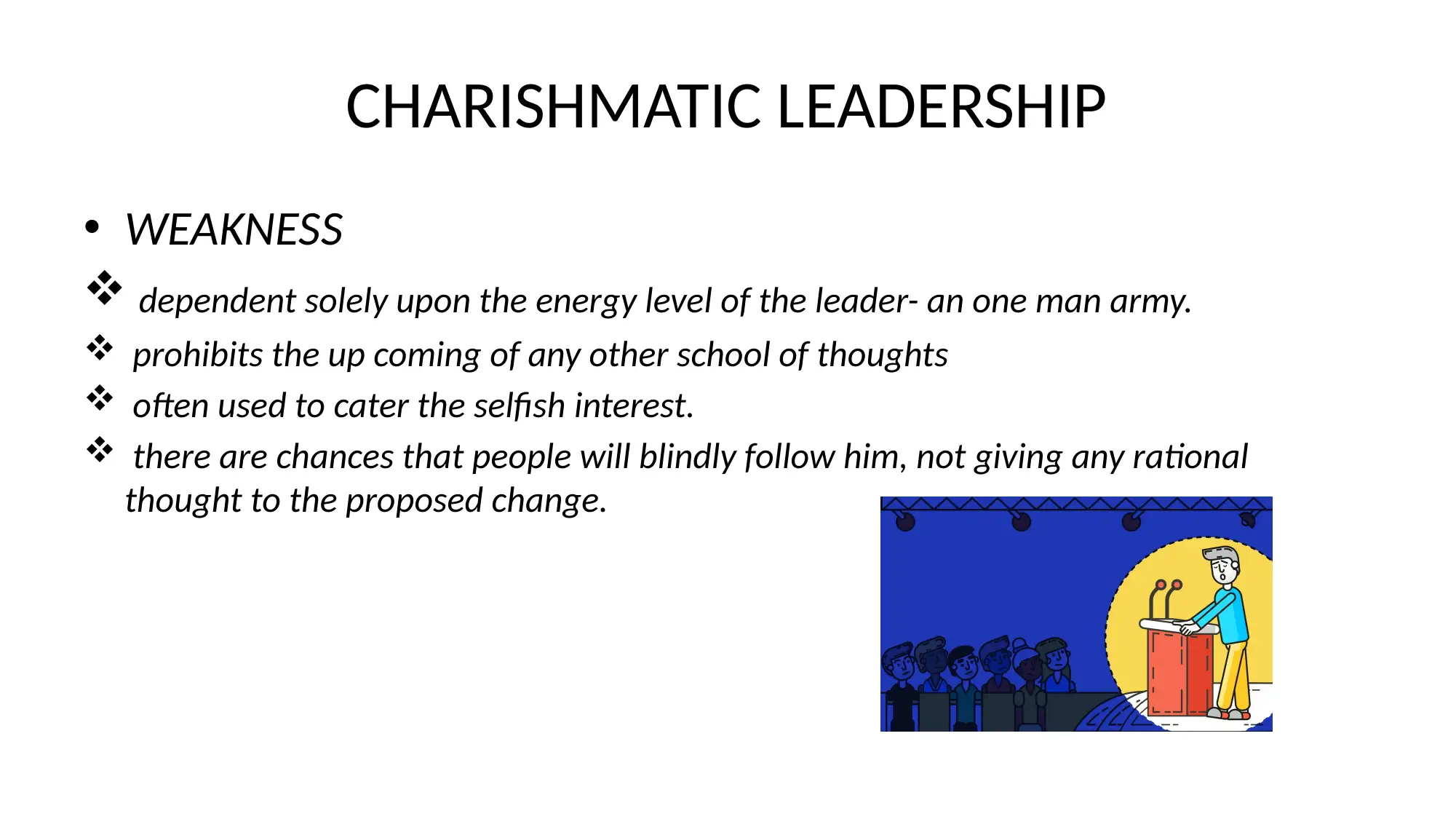
CHARISHMATIC LEADERSHIP
WEAKNESS
dependent solely upon the energy level of the leader- an one man army.
prohibits the up coming of any other school of thoughts
often used to cater the selfish interest.
there are chances that people will blindly follow him, not giving any rational
thought to the proposed change.
Document Page
Application
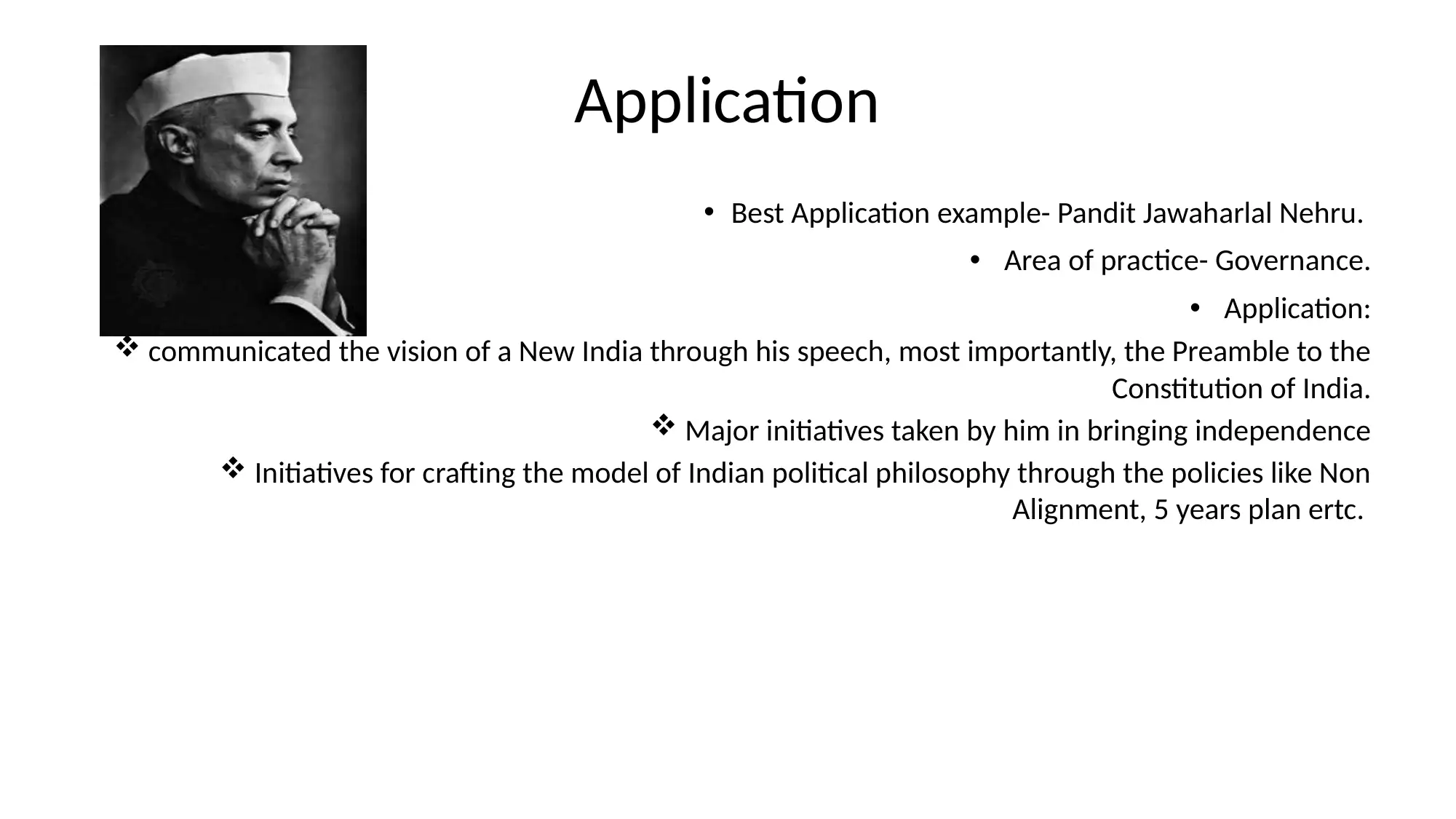
Best Application example- Pandit Jawaharlal Nehru.
Area of practice- Governance.
Application:
communicated the vision of a New India through his speech, most importantly, the Preamble to the
Constitution of India.
Major initiatives taken by him in bringing independence
Initiatives for crafting the model of Indian political philosophy through the policies like Non
Alignment, 5 years plan ertc.
tabler-icon-diamond-filled.svg

Paraphrase This Document

Need a fresh take? Get an instant paraphrase of this document with our AI Paraphraser
Document Page
PT. JAWAHARLAL NEHRU
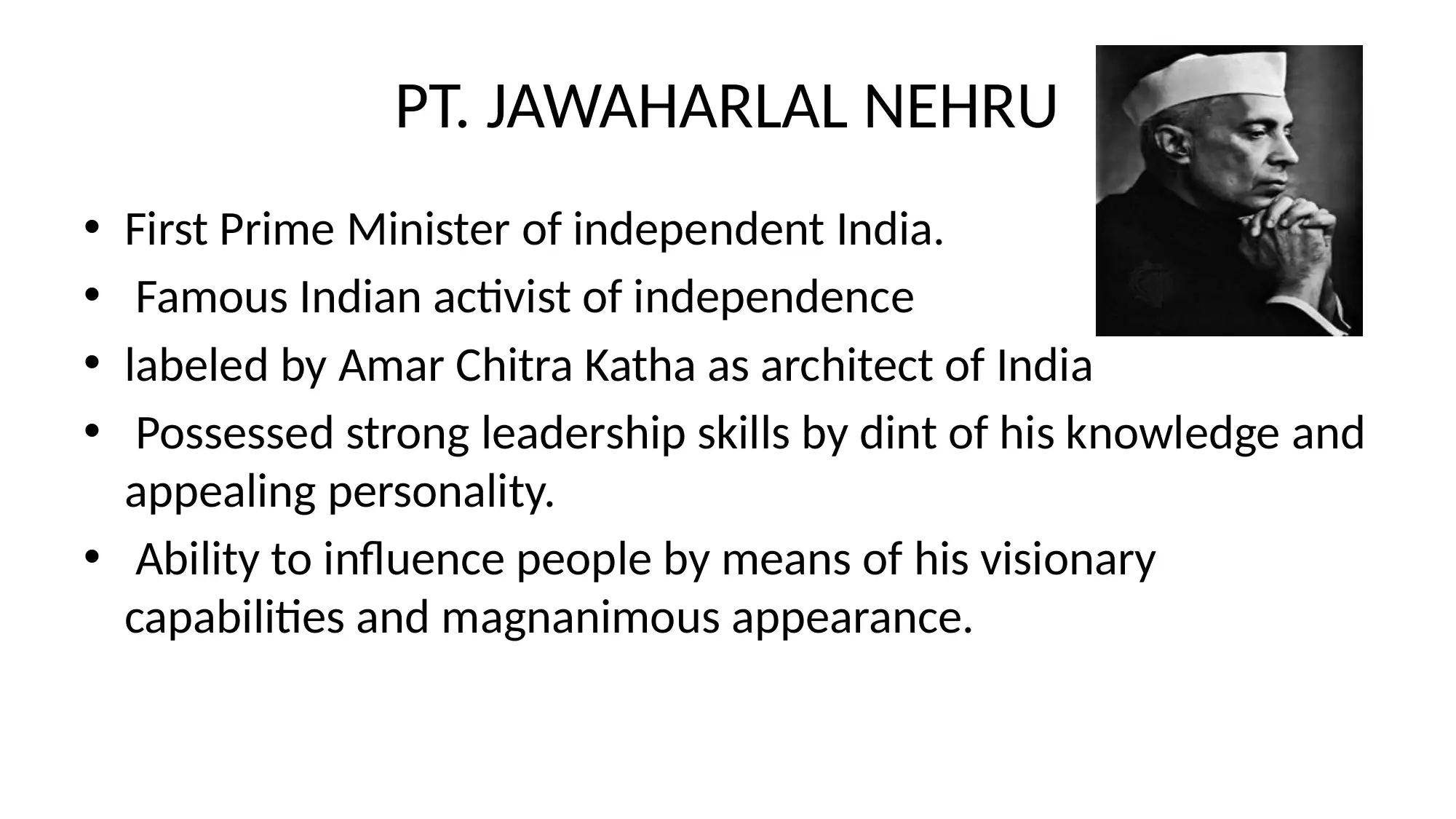
First Prime Minister of independent India.
Famous Indian activist of independence
labeled by Amar Chitra Katha as architect of India
Possessed strong leadership skills by dint of his knowledge and
appealing personality.
Ability to influence people by means of his visionary
capabilities and magnanimous appearance.
Document Page
PT. JAWAHARLAL NEHRU’S PROPAGATION OF CHANGE
Primarily focused on the humanitarian ground
His elegant personality acted as an influencer nationally as
well as internationally.
His approach towards the formulation of Indian polity
ushered various changes in India.
his vision about India as written in the Preamble is a guide to
Indian legislature and administration till now.
Incorporated the vision of Modernisation
chevron_up_icon
1 out of 15
circle_padding
hide_on_mobile
zoom_out_icon
[object Object]