CHCECE005 EIM Training Project: Baby & Toddler Development Booklet
VerifiedAdded on 2023/06/13
|22
|1381
|476
Project
AI Summary
This project presents an information booklet detailing the needs and development of babies and toddlers. It covers individual routines, signs of stress, dietary requirements, food safety guidelines, oral health recommendations, infection control, and safe practices. Furthermore, it summarizes emotional, social, physical, and language development, attachment theory, sudden infant death syndrome, and brain development. The booklet also references Australian policies and procedures related to child care, providing a comprehensive overview for caregivers and educators. This resource is designed to offer essential knowledge and practical guidance for those working with young children.
CHILD CARE
Information Booklet
Information Booklet
Paraphrase This Document
Need a fresh take? Get an instant paraphrase of this document with our AI Paraphraser

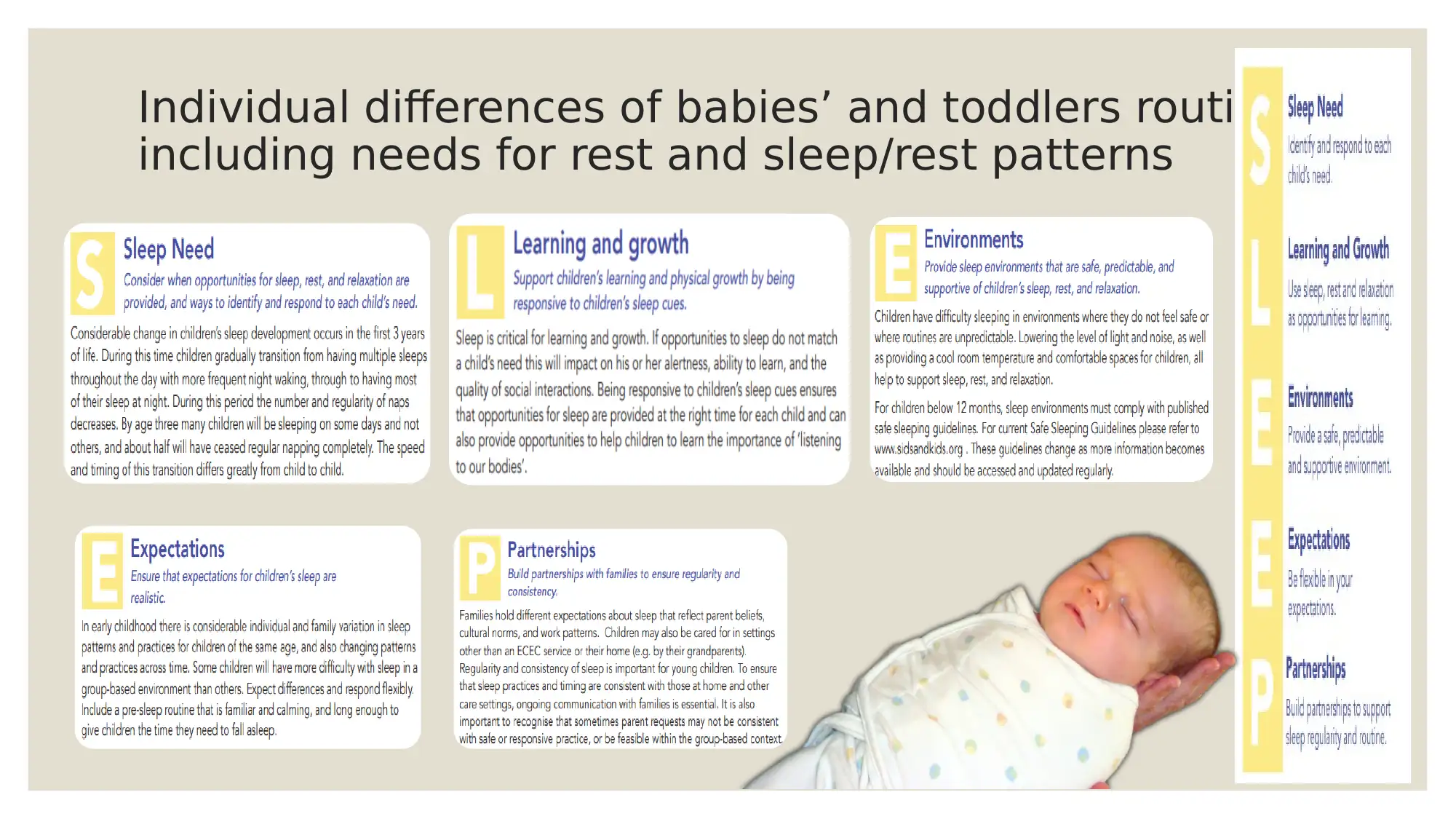
Individual differences of babies’ and toddlers routines
including needs for rest and sleep/rest patterns

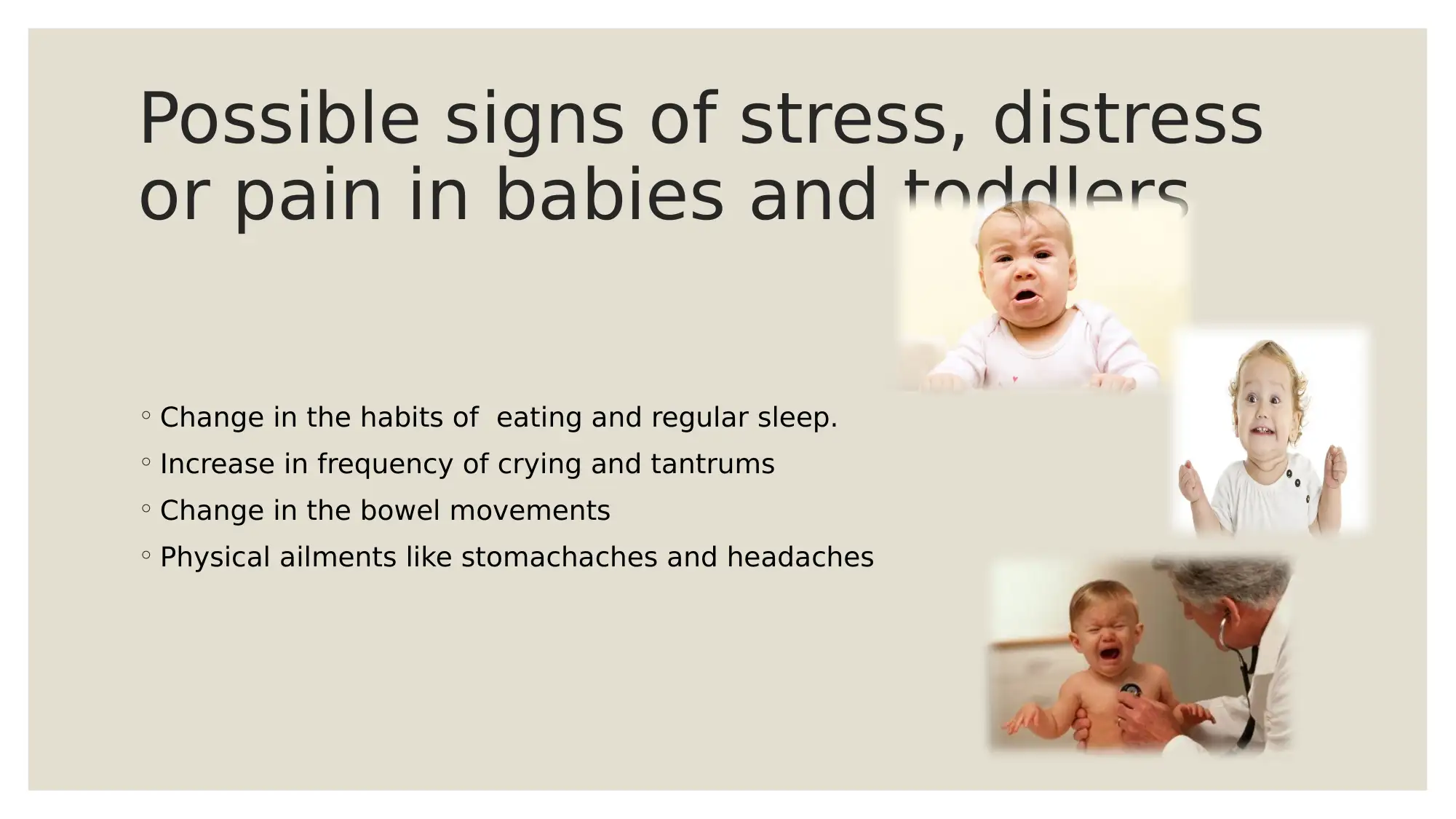
Possible signs of stress, distress
or pain in babies and toddlers
◦ Change in the habits of eating and regular sleep.
◦ Increase in frequency of crying and tantrums
◦ Change in the bowel movements
◦ Physical ailments like stomachaches and headaches
or pain in babies and toddlers
◦ Change in the habits of eating and regular sleep.
◦ Increase in frequency of crying and tantrums
◦ Change in the bowel movements
◦ Physical ailments like stomachaches and headaches
⊘ This is a preview!⊘
Do you want full access?
Subscribe today to unlock all pages.

Trusted by 1+ million students worldwide

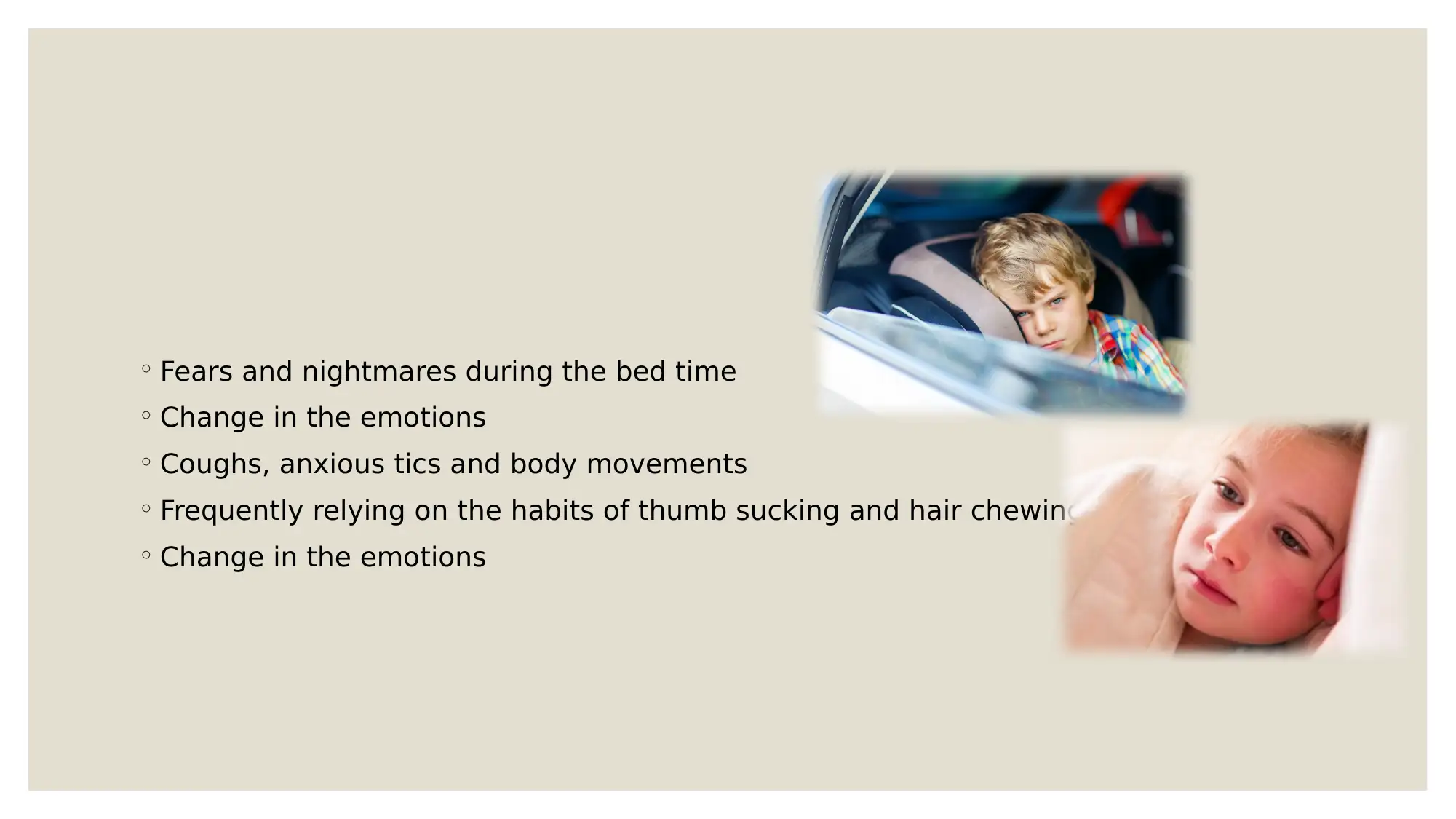
◦ Fears and nightmares during the bed time
◦ Change in the emotions
◦ Coughs, anxious tics and body movements
◦ Frequently relying on the habits of thumb sucking and hair chewing
◦ Change in the emotions
◦ Coughs, anxious tics and body movements
◦ Frequently relying on the habits of thumb sucking and hair chewing
◦ Change in the emotions
Paraphrase This Document
Need a fresh take? Get an instant paraphrase of this document with our AI Paraphraser

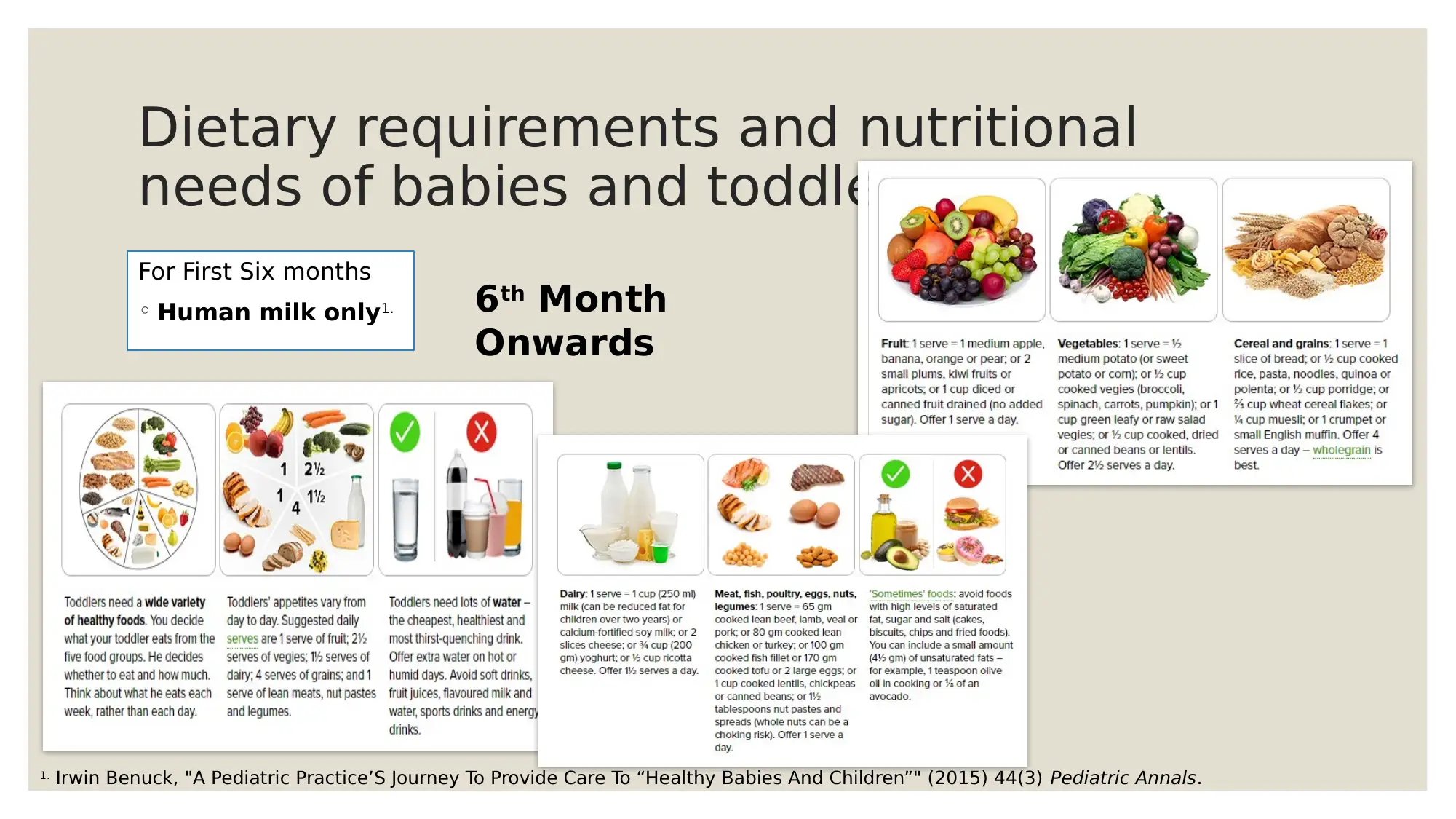
Dietary requirements and nutritional
needs of babies and toddlers
For First Six months
◦ Human milk only1. 6th Month
Onwards
1. Irwin Benuck, "A Pediatric Practice’S Journey To Provide Care To “Healthy Babies And Children”" (2015) 44(3) Pediatric Annals.
needs of babies and toddlers
For First Six months
◦ Human milk only1. 6th Month
Onwards
1. Irwin Benuck, "A Pediatric Practice’S Journey To Provide Care To “Healthy Babies And Children”" (2015) 44(3) Pediatric Annals.

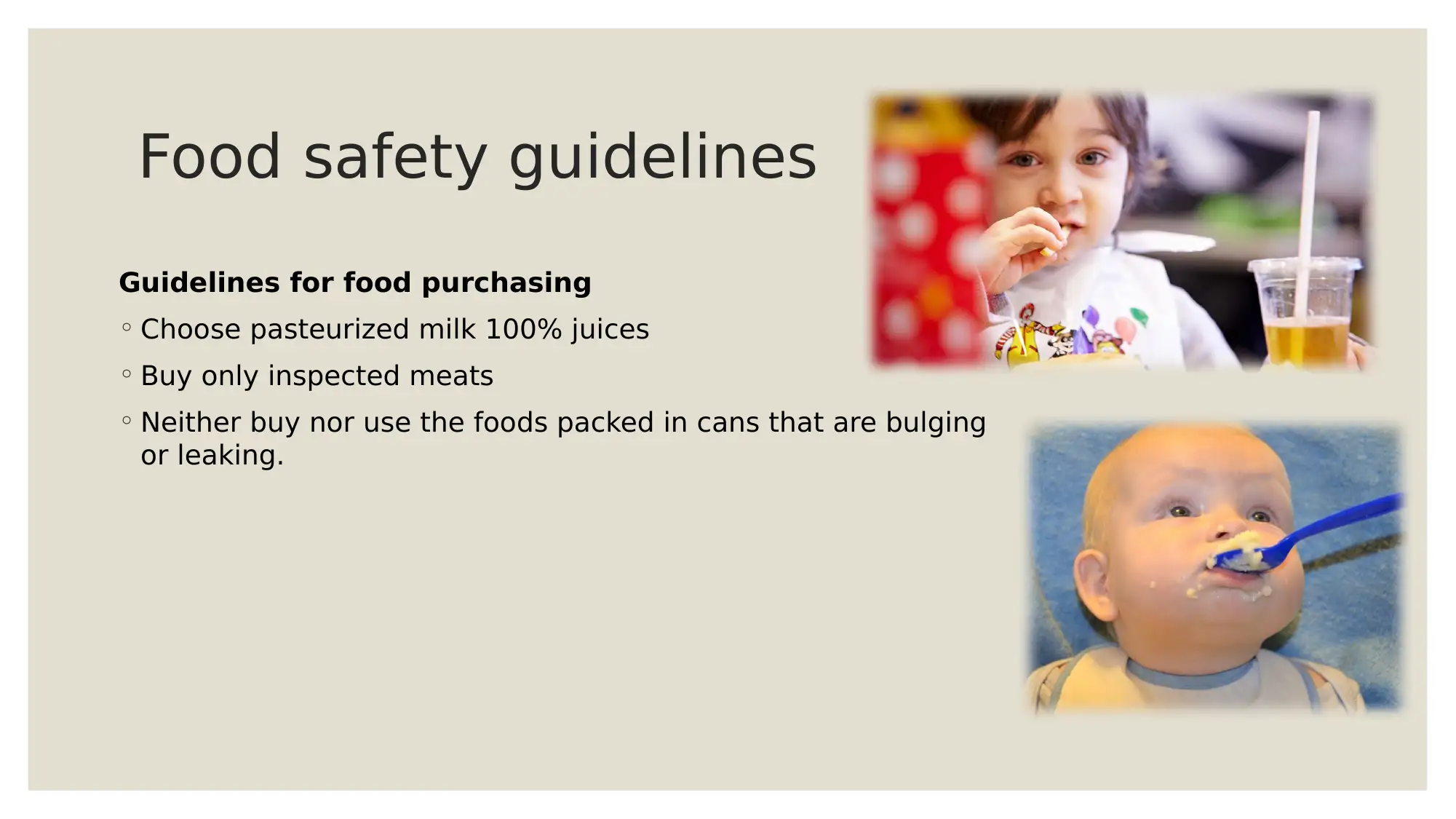
Food safety guidelines
Guidelines for food purchasing
◦ Choose pasteurized milk 100% juices
◦ Buy only inspected meats
◦ Neither buy nor use the foods packed in cans that are bulging
or leaking.
Guidelines for food purchasing
◦ Choose pasteurized milk 100% juices
◦ Buy only inspected meats
◦ Neither buy nor use the foods packed in cans that are bulging
or leaking.
⊘ This is a preview!⊘
Do you want full access?
Subscribe today to unlock all pages.

Trusted by 1+ million students worldwide

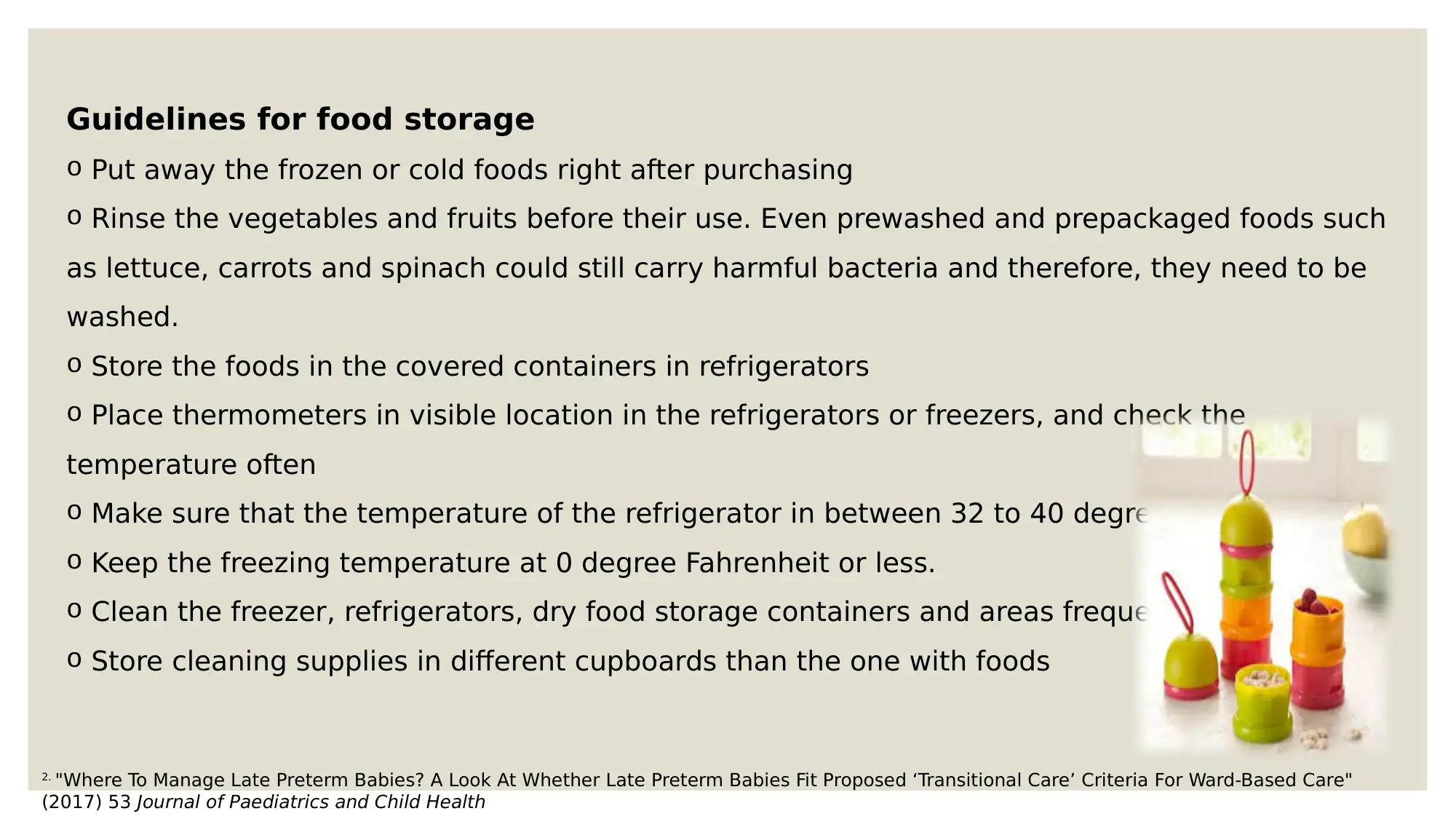
Guidelines for food storage
o Put away the frozen or cold foods right after purchasing
o Rinse the vegetables and fruits before their use. Even prewashed and prepackaged foods such
as lettuce, carrots and spinach could still carry harmful bacteria and therefore, they need to be
washed.
o Store the foods in the covered containers in refrigerators
o Place thermometers in visible location in the refrigerators or freezers, and check the
temperature often
o Make sure that the temperature of the refrigerator in between 32 to 40 degree F2.
o Keep the freezing temperature at 0 degree Fahrenheit or less.
o Clean the freezer, refrigerators, dry food storage containers and areas frequently
o Store cleaning supplies in different cupboards than the one with foods
2. "Where To Manage Late Preterm Babies? A Look At Whether Late Preterm Babies Fit Proposed ‘Transitional Care’ Criteria For Ward-Based Care"
(2017) 53 Journal of Paediatrics and Child Health
o Put away the frozen or cold foods right after purchasing
o Rinse the vegetables and fruits before their use. Even prewashed and prepackaged foods such
as lettuce, carrots and spinach could still carry harmful bacteria and therefore, they need to be
washed.
o Store the foods in the covered containers in refrigerators
o Place thermometers in visible location in the refrigerators or freezers, and check the
temperature often
o Make sure that the temperature of the refrigerator in between 32 to 40 degree F2.
o Keep the freezing temperature at 0 degree Fahrenheit or less.
o Clean the freezer, refrigerators, dry food storage containers and areas frequently
o Store cleaning supplies in different cupboards than the one with foods
2. "Where To Manage Late Preterm Babies? A Look At Whether Late Preterm Babies Fit Proposed ‘Transitional Care’ Criteria For Ward-Based Care"
(2017) 53 Journal of Paediatrics and Child Health
Paraphrase This Document
Need a fresh take? Get an instant paraphrase of this document with our AI Paraphraser

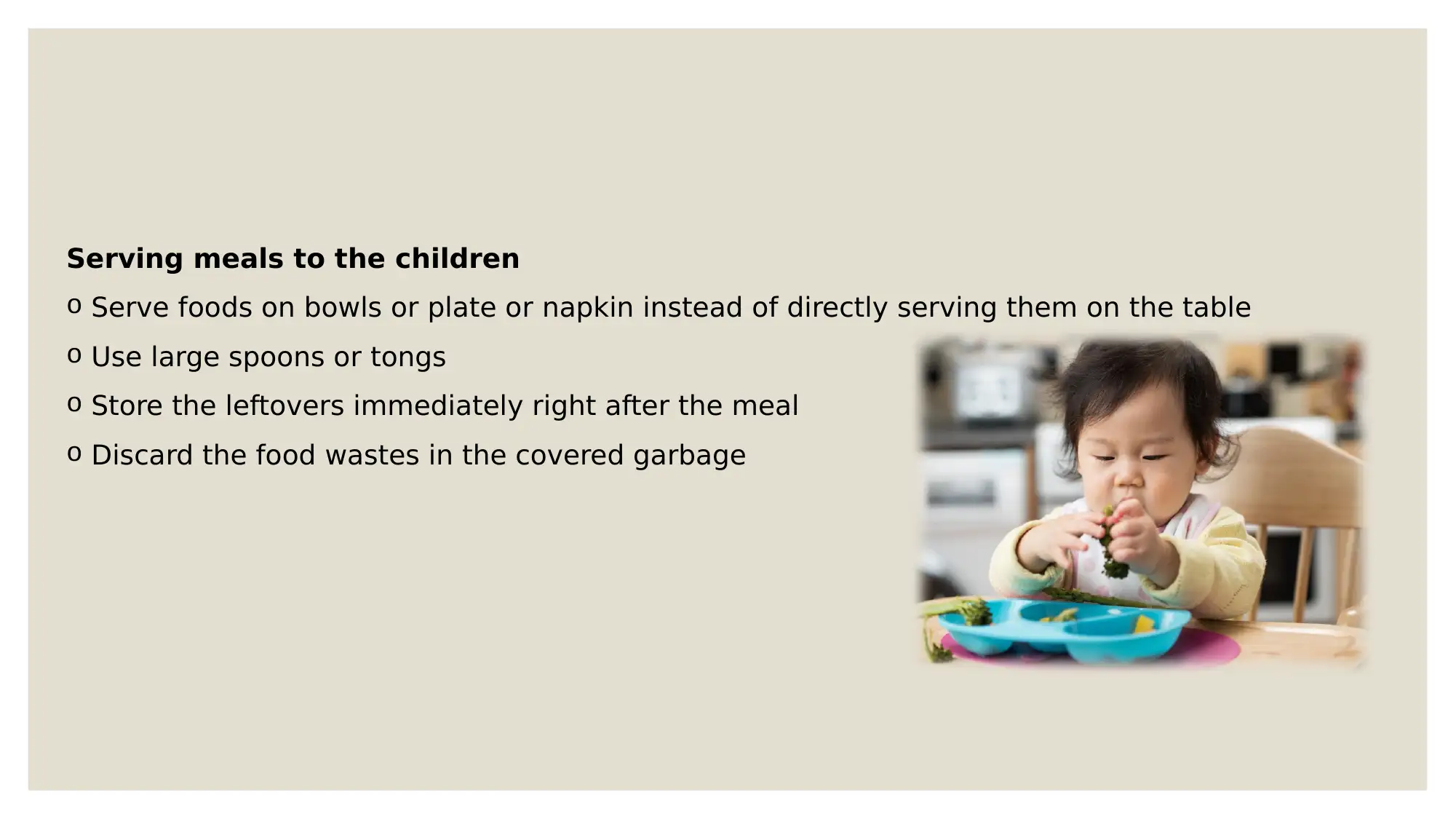
Serving meals to the children
o Serve foods on bowls or plate or napkin instead of directly serving them on the table
o Use large spoons or tongs
o Store the leftovers immediately right after the meal
o Discard the food wastes in the covered garbage
o Serve foods on bowls or plate or napkin instead of directly serving them on the table
o Use large spoons or tongs
o Store the leftovers immediately right after the meal
o Discard the food wastes in the covered garbage

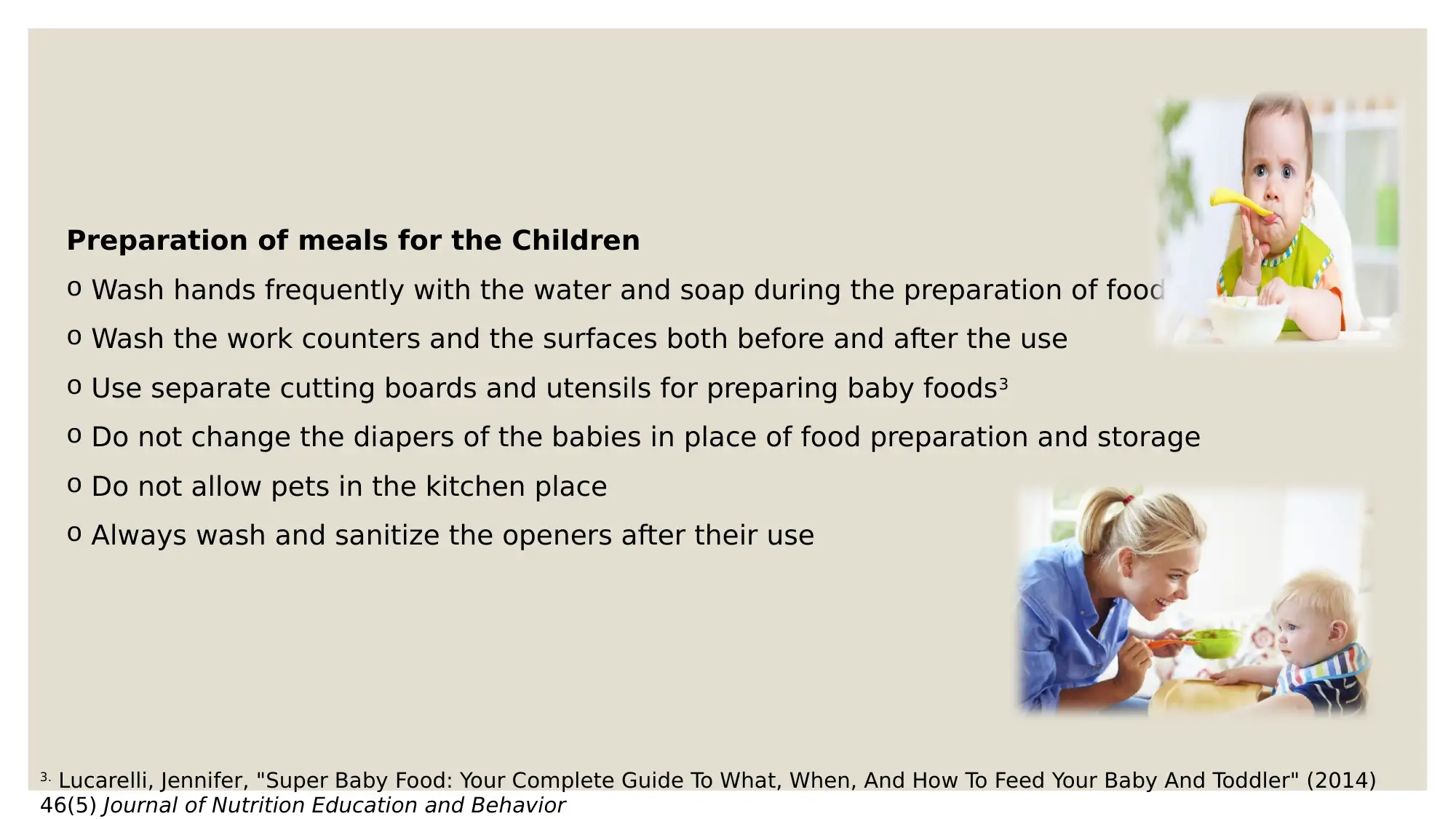
Preparation of meals for the Children
o Wash hands frequently with the water and soap during the preparation of food
o Wash the work counters and the surfaces both before and after the use
o Use separate cutting boards and utensils for preparing baby foods3
o Do not change the diapers of the babies in place of food preparation and storage
o Do not allow pets in the kitchen place
o Always wash and sanitize the openers after their use
3. Lucarelli, Jennifer, "Super Baby Food: Your Complete Guide To What, When, And How To Feed Your Baby And Toddler" (2014)
46(5) Journal of Nutrition Education and Behavior
o Wash hands frequently with the water and soap during the preparation of food
o Wash the work counters and the surfaces both before and after the use
o Use separate cutting boards and utensils for preparing baby foods3
o Do not change the diapers of the babies in place of food preparation and storage
o Do not allow pets in the kitchen place
o Always wash and sanitize the openers after their use
3. Lucarelli, Jennifer, "Super Baby Food: Your Complete Guide To What, When, And How To Feed Your Baby And Toddler" (2014)
46(5) Journal of Nutrition Education and Behavior
⊘ This is a preview!⊘
Do you want full access?
Subscribe today to unlock all pages.

Trusted by 1+ million students worldwide

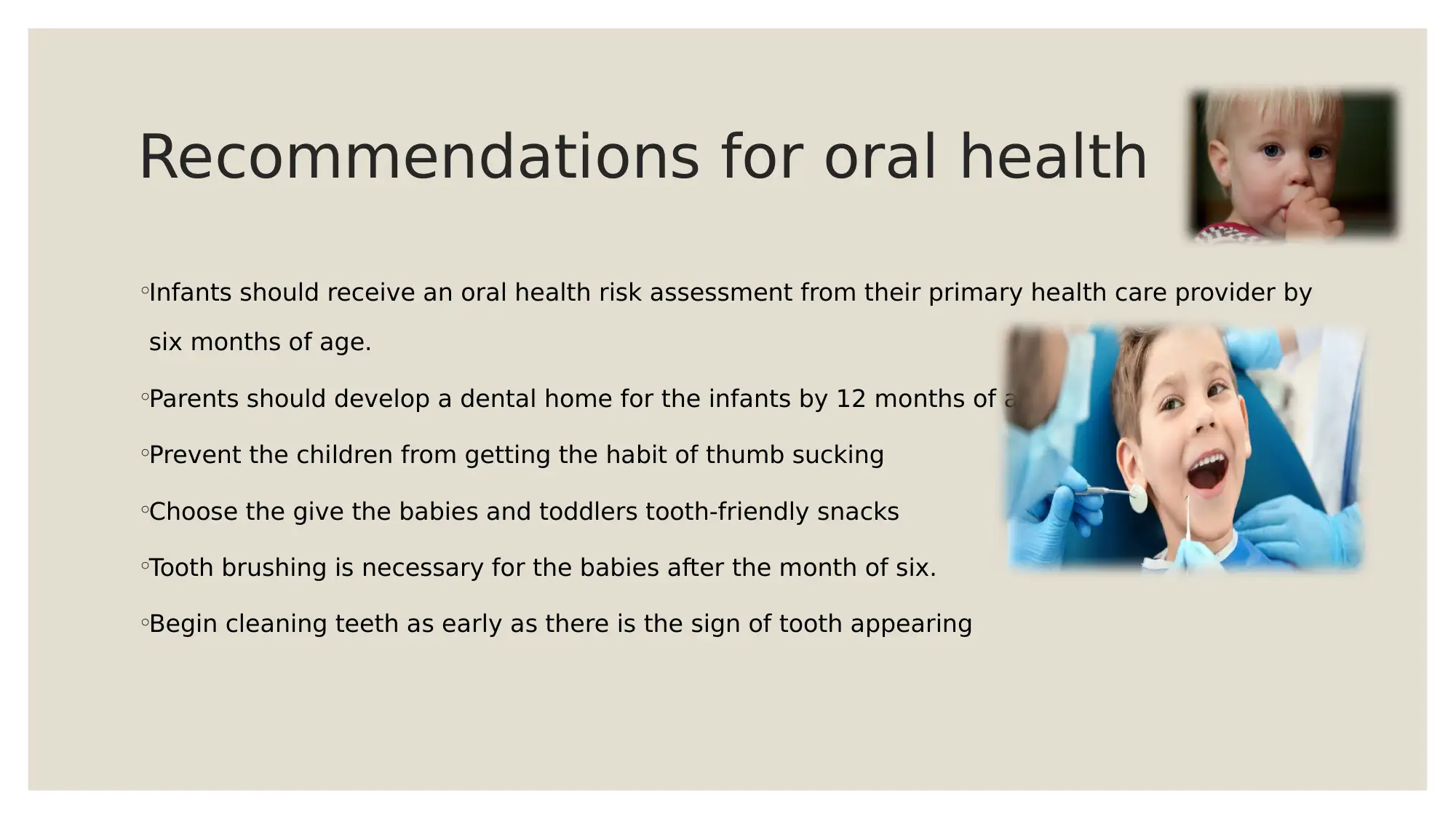
Recommendations for oral health
◦Infants should receive an oral health risk assessment from their primary health care provider by
six months of age.
◦Parents should develop a dental home for the infants by 12 months of age.
◦Prevent the children from getting the habit of thumb sucking
◦Choose the give the babies and toddlers tooth-friendly snacks
◦Tooth brushing is necessary for the babies after the month of six.
◦Begin cleaning teeth as early as there is the sign of tooth appearing
◦Infants should receive an oral health risk assessment from their primary health care provider by
six months of age.
◦Parents should develop a dental home for the infants by 12 months of age.
◦Prevent the children from getting the habit of thumb sucking
◦Choose the give the babies and toddlers tooth-friendly snacks
◦Tooth brushing is necessary for the babies after the month of six.
◦Begin cleaning teeth as early as there is the sign of tooth appearing
Paraphrase This Document
Need a fresh take? Get an instant paraphrase of this document with our AI Paraphraser

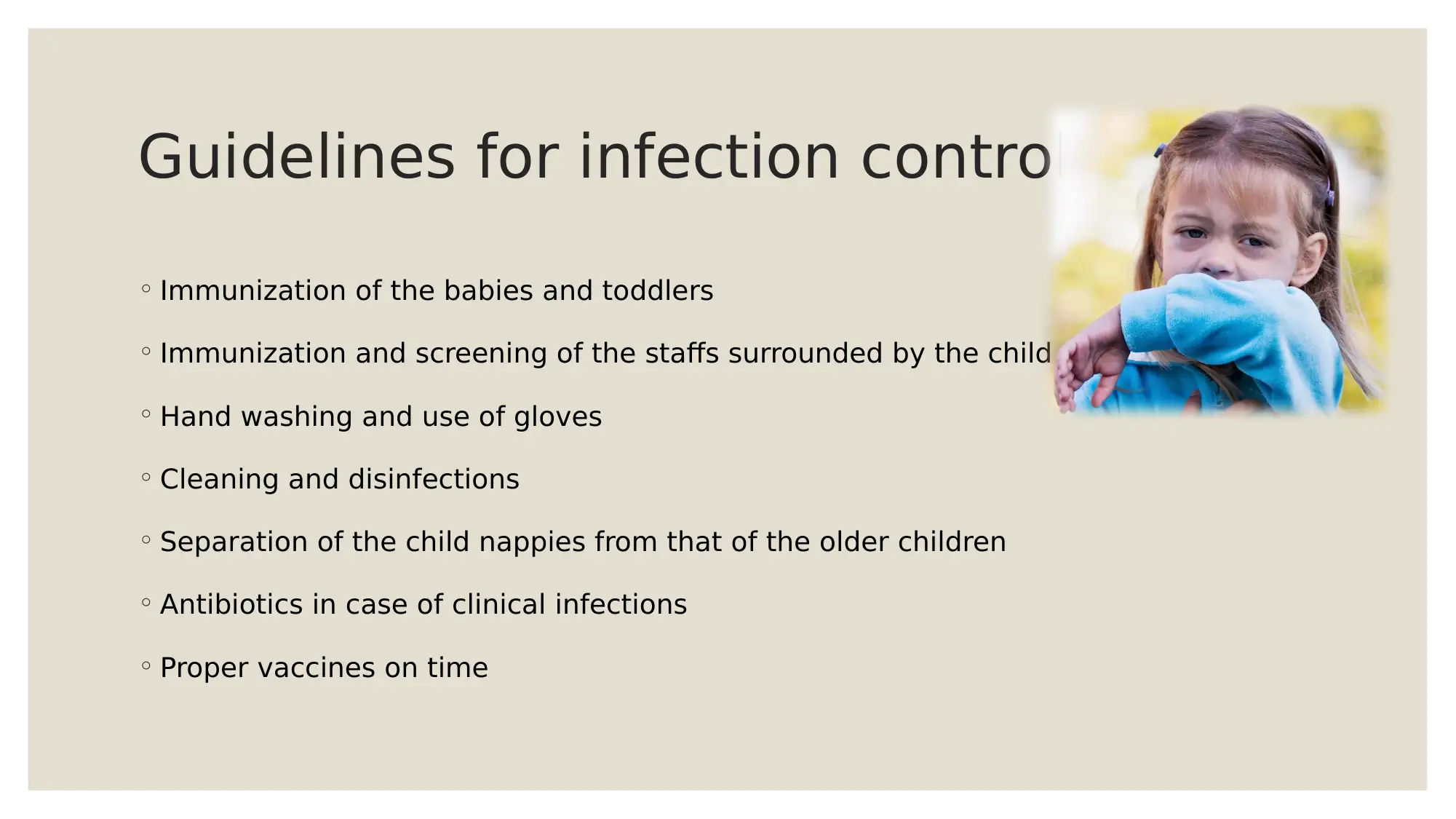
Guidelines for infection control
◦ Immunization of the babies and toddlers
◦ Immunization and screening of the staffs surrounded by the child
◦ Hand washing and use of gloves
◦ Cleaning and disinfections
◦ Separation of the child nappies from that of the older children
◦ Antibiotics in case of clinical infections
◦ Proper vaccines on time
◦ Immunization of the babies and toddlers
◦ Immunization and screening of the staffs surrounded by the child
◦ Hand washing and use of gloves
◦ Cleaning and disinfections
◦ Separation of the child nappies from that of the older children
◦ Antibiotics in case of clinical infections
◦ Proper vaccines on time

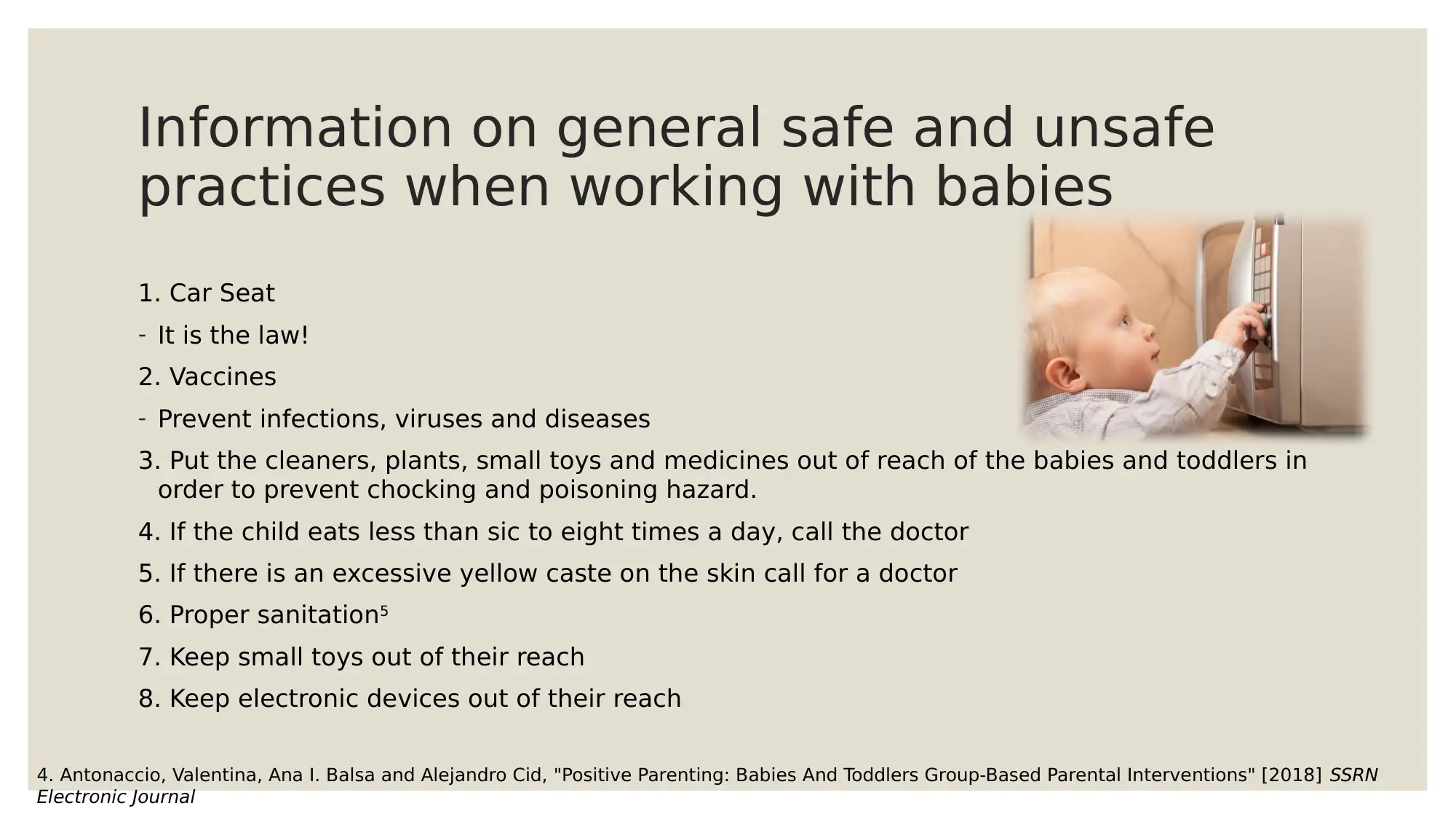
Information on general safe and unsafe
practices when working with babies
1. Car Seat
- It is the law!
2. Vaccines
- Prevent infections, viruses and diseases
3. Put the cleaners, plants, small toys and medicines out of reach of the babies and toddlers in
order to prevent chocking and poisoning hazard.
4. If the child eats less than sic to eight times a day, call the doctor
5. If there is an excessive yellow caste on the skin call for a doctor
6. Proper sanitation5
7. Keep small toys out of their reach
8. Keep electronic devices out of their reach
4. Antonaccio, Valentina, Ana I. Balsa and Alejandro Cid, "Positive Parenting: Babies And Toddlers Group-Based Parental Interventions" [2018] SSRN
Electronic Journal
practices when working with babies
1. Car Seat
- It is the law!
2. Vaccines
- Prevent infections, viruses and diseases
3. Put the cleaners, plants, small toys and medicines out of reach of the babies and toddlers in
order to prevent chocking and poisoning hazard.
4. If the child eats less than sic to eight times a day, call the doctor
5. If there is an excessive yellow caste on the skin call for a doctor
6. Proper sanitation5
7. Keep small toys out of their reach
8. Keep electronic devices out of their reach
4. Antonaccio, Valentina, Ana I. Balsa and Alejandro Cid, "Positive Parenting: Babies And Toddlers Group-Based Parental Interventions" [2018] SSRN
Electronic Journal
⊘ This is a preview!⊘
Do you want full access?
Subscribe today to unlock all pages.

Trusted by 1+ million students worldwide
1 out of 22
Related Documents
Your All-in-One AI-Powered Toolkit for Academic Success.
+13062052269
info@desklib.com
Available 24*7 on WhatsApp / Email
Unlock your academic potential
Copyright © 2020–2026 A2Z Services. All Rights Reserved. Developed and managed by ZUCOL.