The Path to Psychopathy: Childhood Trauma and Juvenile Delinquency
VerifiedAdded on 2022/08/28
|48
|20992
|10
Thesis and Dissertation
AI Summary
This dissertation delves into the intricate relationship between childhood trauma and the development of psychopathy, ultimately leading to juvenile delinquency. The research investigates the impact of adverse childhood experiences, such as abuse and neglect, on the formation of psychopathic personalities and criminal behaviors. Through a comprehensive literature review and analysis of various case studies, the study examines the perspectives of the criminal justice system on the issue, exploring its approaches to managing and addressing the challenges posed by young people exhibiting psychopathic traits. The dissertation poses key research questions, including the effectiveness of the criminal justice system and the relationship between childhood trauma and delinquency, aiming to provide insights into potential solutions and recommendations for mitigating the adverse effects of childhood trauma and reducing psychopathy-related juvenile offenses.
The path to psychopathy on serious juvenile delinquency: the harmful aftermath of
childhood trauma
childhood trauma

Paraphrase This Document
Need a fresh take? Get an instant paraphrase of this document with our AI Paraphraser
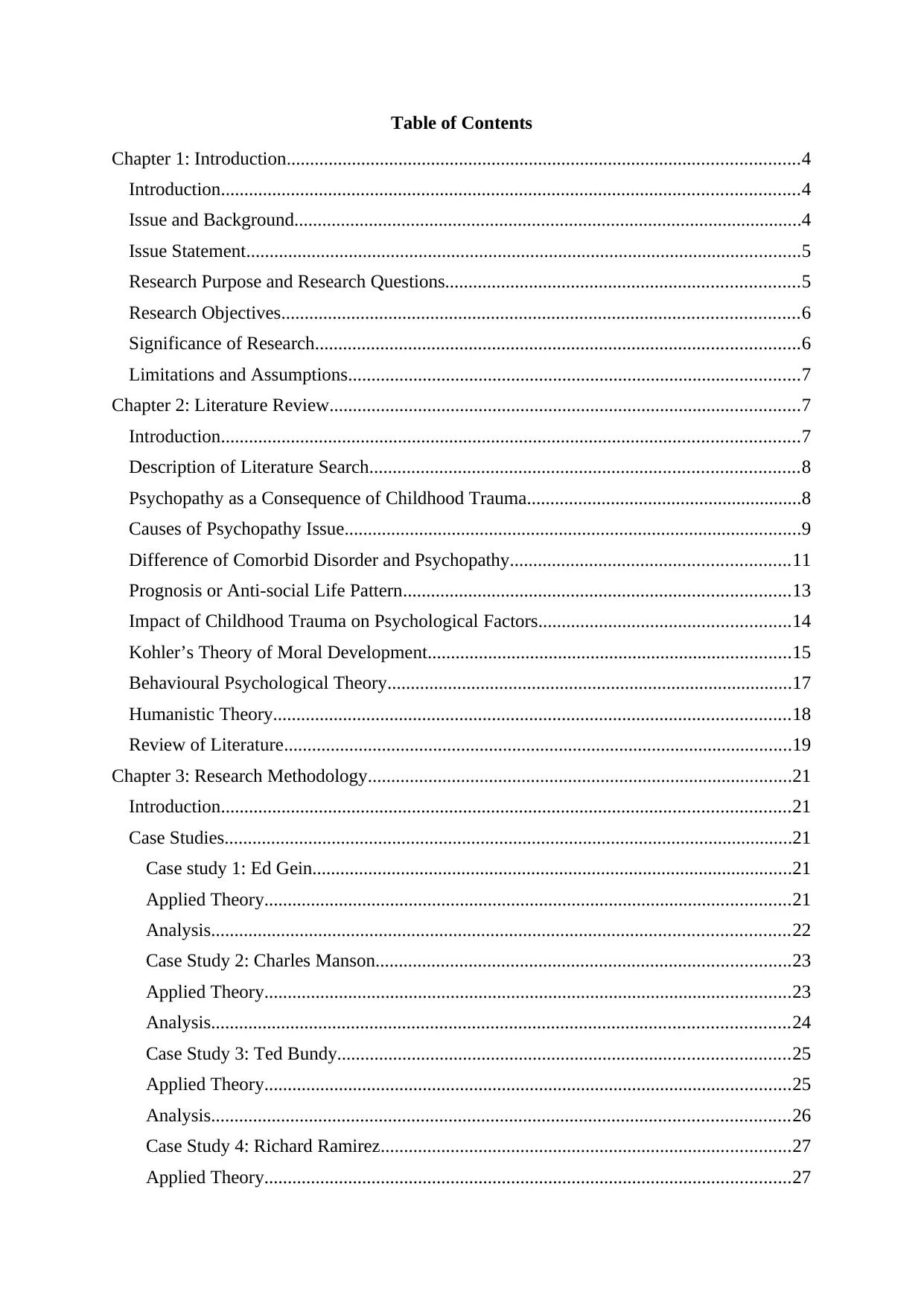
Table of Contents
Chapter 1: Introduction..............................................................................................................4
Introduction............................................................................................................................4
Issue and Background.............................................................................................................4
Issue Statement.......................................................................................................................5
Research Purpose and Research Questions............................................................................5
Research Objectives...............................................................................................................6
Significance of Research........................................................................................................6
Limitations and Assumptions.................................................................................................7
Chapter 2: Literature Review.....................................................................................................7
Introduction............................................................................................................................7
Description of Literature Search............................................................................................8
Psychopathy as a Consequence of Childhood Trauma...........................................................8
Causes of Psychopathy Issue..................................................................................................9
Difference of Comorbid Disorder and Psychopathy............................................................11
Prognosis or Anti-social Life Pattern...................................................................................13
Impact of Childhood Trauma on Psychological Factors......................................................14
Kohler’s Theory of Moral Development..............................................................................15
Behavioural Psychological Theory.......................................................................................17
Humanistic Theory...............................................................................................................18
Review of Literature.............................................................................................................19
Chapter 3: Research Methodology...........................................................................................21
Introduction..........................................................................................................................21
Case Studies..........................................................................................................................21
Case study 1: Ed Gein.......................................................................................................21
Applied Theory.................................................................................................................21
Analysis............................................................................................................................22
Case Study 2: Charles Manson.........................................................................................23
Applied Theory.................................................................................................................23
Analysis............................................................................................................................24
Case Study 3: Ted Bundy.................................................................................................25
Applied Theory.................................................................................................................25
Analysis............................................................................................................................26
Case Study 4: Richard Ramirez........................................................................................27
Applied Theory.................................................................................................................27
Chapter 1: Introduction..............................................................................................................4
Introduction............................................................................................................................4
Issue and Background.............................................................................................................4
Issue Statement.......................................................................................................................5
Research Purpose and Research Questions............................................................................5
Research Objectives...............................................................................................................6
Significance of Research........................................................................................................6
Limitations and Assumptions.................................................................................................7
Chapter 2: Literature Review.....................................................................................................7
Introduction............................................................................................................................7
Description of Literature Search............................................................................................8
Psychopathy as a Consequence of Childhood Trauma...........................................................8
Causes of Psychopathy Issue..................................................................................................9
Difference of Comorbid Disorder and Psychopathy............................................................11
Prognosis or Anti-social Life Pattern...................................................................................13
Impact of Childhood Trauma on Psychological Factors......................................................14
Kohler’s Theory of Moral Development..............................................................................15
Behavioural Psychological Theory.......................................................................................17
Humanistic Theory...............................................................................................................18
Review of Literature.............................................................................................................19
Chapter 3: Research Methodology...........................................................................................21
Introduction..........................................................................................................................21
Case Studies..........................................................................................................................21
Case study 1: Ed Gein.......................................................................................................21
Applied Theory.................................................................................................................21
Analysis............................................................................................................................22
Case Study 2: Charles Manson.........................................................................................23
Applied Theory.................................................................................................................23
Analysis............................................................................................................................24
Case Study 3: Ted Bundy.................................................................................................25
Applied Theory.................................................................................................................25
Analysis............................................................................................................................26
Case Study 4: Richard Ramirez........................................................................................27
Applied Theory.................................................................................................................27
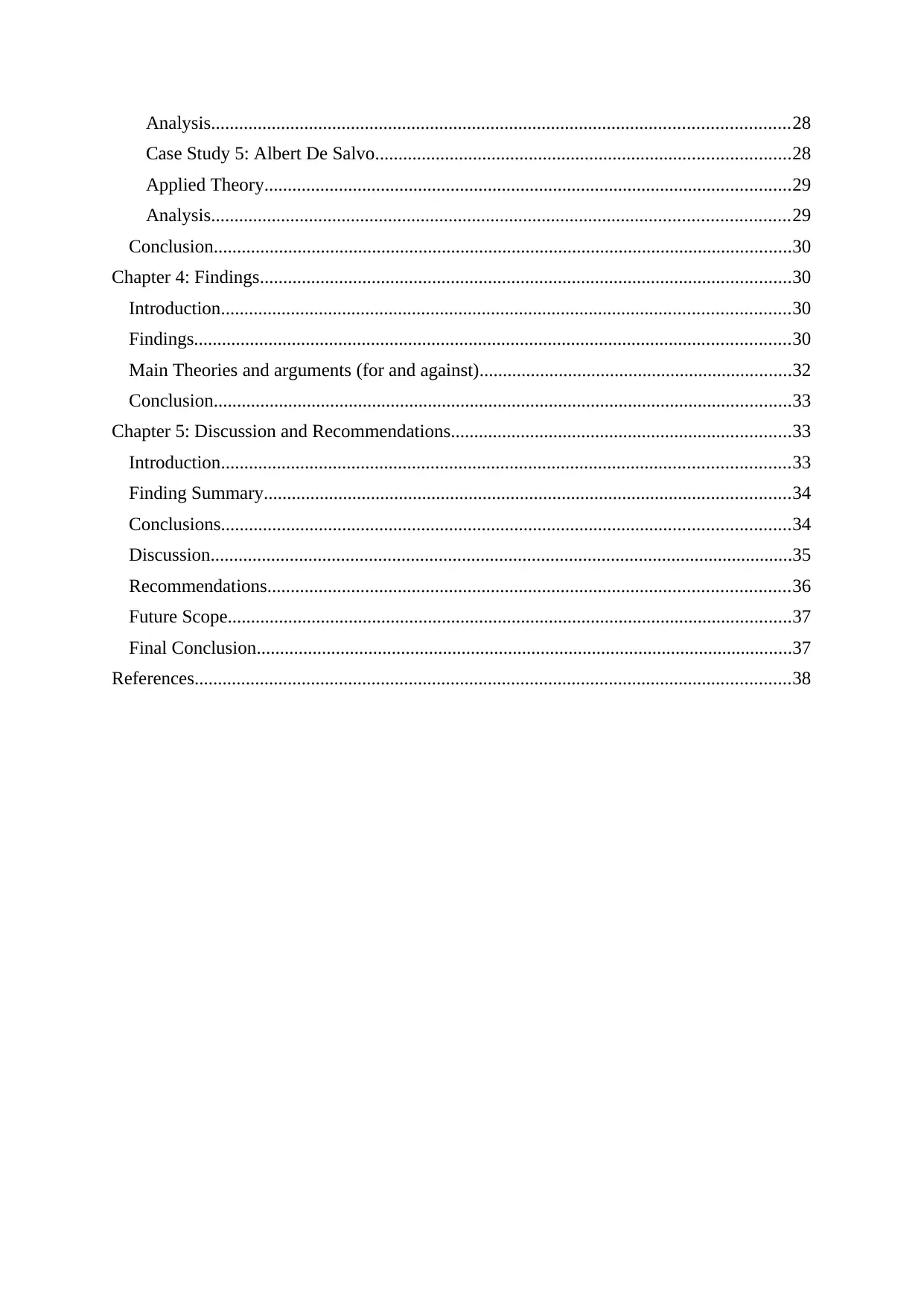
Analysis............................................................................................................................28
Case Study 5: Albert De Salvo.........................................................................................28
Applied Theory.................................................................................................................29
Analysis............................................................................................................................29
Conclusion............................................................................................................................30
Chapter 4: Findings..................................................................................................................30
Introduction..........................................................................................................................30
Findings................................................................................................................................30
Main Theories and arguments (for and against)...................................................................32
Conclusion............................................................................................................................33
Chapter 5: Discussion and Recommendations.........................................................................33
Introduction..........................................................................................................................33
Finding Summary.................................................................................................................34
Conclusions..........................................................................................................................34
Discussion.............................................................................................................................35
Recommendations................................................................................................................36
Future Scope.........................................................................................................................37
Final Conclusion...................................................................................................................37
References................................................................................................................................38
Case Study 5: Albert De Salvo.........................................................................................28
Applied Theory.................................................................................................................29
Analysis............................................................................................................................29
Conclusion............................................................................................................................30
Chapter 4: Findings..................................................................................................................30
Introduction..........................................................................................................................30
Findings................................................................................................................................30
Main Theories and arguments (for and against)...................................................................32
Conclusion............................................................................................................................33
Chapter 5: Discussion and Recommendations.........................................................................33
Introduction..........................................................................................................................33
Finding Summary.................................................................................................................34
Conclusions..........................................................................................................................34
Discussion.............................................................................................................................35
Recommendations................................................................................................................36
Future Scope.........................................................................................................................37
Final Conclusion...................................................................................................................37
References................................................................................................................................38
⊘ This is a preview!⊘
Do you want full access?
Subscribe today to unlock all pages.

Trusted by 1+ million students worldwide
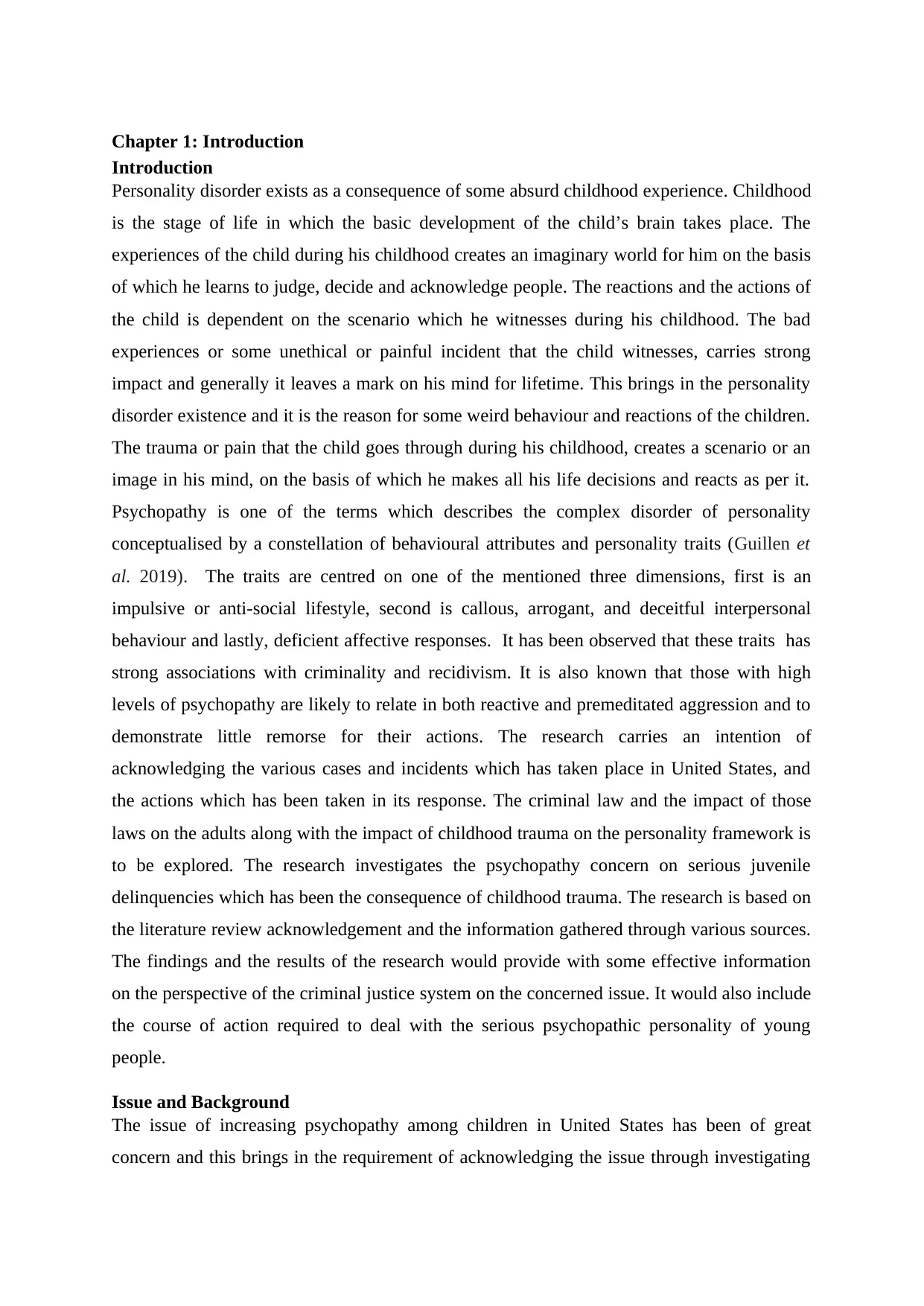
Chapter 1: Introduction
Introduction
Personality disorder exists as a consequence of some absurd childhood experience. Childhood
is the stage of life in which the basic development of the child’s brain takes place. The
experiences of the child during his childhood creates an imaginary world for him on the basis
of which he learns to judge, decide and acknowledge people. The reactions and the actions of
the child is dependent on the scenario which he witnesses during his childhood. The bad
experiences or some unethical or painful incident that the child witnesses, carries strong
impact and generally it leaves a mark on his mind for lifetime. This brings in the personality
disorder existence and it is the reason for some weird behaviour and reactions of the children.
The trauma or pain that the child goes through during his childhood, creates a scenario or an
image in his mind, on the basis of which he makes all his life decisions and reacts as per it.
Psychopathy is one of the terms which describes the complex disorder of personality
conceptualised by a constellation of behavioural attributes and personality traits (Guillen et
al. 2019). The traits are centred on one of the mentioned three dimensions, first is an
impulsive or anti-social lifestyle, second is callous, arrogant, and deceitful interpersonal
behaviour and lastly, deficient affective responses. It has been observed that these traits has
strong associations with criminality and recidivism. It is also known that those with high
levels of psychopathy are likely to relate in both reactive and premeditated aggression and to
demonstrate little remorse for their actions. The research carries an intention of
acknowledging the various cases and incidents which has taken place in United States, and
the actions which has been taken in its response. The criminal law and the impact of those
laws on the adults along with the impact of childhood trauma on the personality framework is
to be explored. The research investigates the psychopathy concern on serious juvenile
delinquencies which has been the consequence of childhood trauma. The research is based on
the literature review acknowledgement and the information gathered through various sources.
The findings and the results of the research would provide with some effective information
on the perspective of the criminal justice system on the concerned issue. It would also include
the course of action required to deal with the serious psychopathic personality of young
people.
Issue and Background
The issue of increasing psychopathy among children in United States has been of great
concern and this brings in the requirement of acknowledging the issue through investigating
Introduction
Personality disorder exists as a consequence of some absurd childhood experience. Childhood
is the stage of life in which the basic development of the child’s brain takes place. The
experiences of the child during his childhood creates an imaginary world for him on the basis
of which he learns to judge, decide and acknowledge people. The reactions and the actions of
the child is dependent on the scenario which he witnesses during his childhood. The bad
experiences or some unethical or painful incident that the child witnesses, carries strong
impact and generally it leaves a mark on his mind for lifetime. This brings in the personality
disorder existence and it is the reason for some weird behaviour and reactions of the children.
The trauma or pain that the child goes through during his childhood, creates a scenario or an
image in his mind, on the basis of which he makes all his life decisions and reacts as per it.
Psychopathy is one of the terms which describes the complex disorder of personality
conceptualised by a constellation of behavioural attributes and personality traits (Guillen et
al. 2019). The traits are centred on one of the mentioned three dimensions, first is an
impulsive or anti-social lifestyle, second is callous, arrogant, and deceitful interpersonal
behaviour and lastly, deficient affective responses. It has been observed that these traits has
strong associations with criminality and recidivism. It is also known that those with high
levels of psychopathy are likely to relate in both reactive and premeditated aggression and to
demonstrate little remorse for their actions. The research carries an intention of
acknowledging the various cases and incidents which has taken place in United States, and
the actions which has been taken in its response. The criminal law and the impact of those
laws on the adults along with the impact of childhood trauma on the personality framework is
to be explored. The research investigates the psychopathy concern on serious juvenile
delinquencies which has been the consequence of childhood trauma. The research is based on
the literature review acknowledgement and the information gathered through various sources.
The findings and the results of the research would provide with some effective information
on the perspective of the criminal justice system on the concerned issue. It would also include
the course of action required to deal with the serious psychopathic personality of young
people.
Issue and Background
The issue of increasing psychopathy among children in United States has been of great
concern and this brings in the requirement of acknowledging the issue through investigating
Paraphrase This Document
Need a fresh take? Get an instant paraphrase of this document with our AI Paraphraser
the theories behind the mentioned concern. The perspective of criminal justice system on the
issue and the actions which has been taken as a solution to it, is investigated through
acknowledging various case studies that has taken place in the country (Latzman, Patrick, and
Lilienfeld, 2019). The childhood trauma which has been impacting the basic mind set of
children is to be investigated and the way it could be checked and reduced would also be
provided through the research.
The issue of psychopathy and juvenile delinquency, could be acknowledge with conduct
problems (CP), which are commonly identified as either oppositional defiant disorder (ODD),
or conduct disorder (CD) has been observed to be comprised of 5-10% of youngsters lying in
the age group of 8-16 years (Saunders et al. 2019). In the pre-school populations of children
CP has been prevalent ranging from 7-25%. Through various studies and surveys it has been
concluded that among youngsters, the prevalence of psychopathy has been 21.5% while for
the adult psychopathy the percentage ranges from 15-30% (Konicar et al. 2017). In a
population of adolescents who are involved in criminal psychiatric services, through the use
of psychopathy checklist-Youth Version (PCL-YV), the cut off score has been greater than
30 psychopathy (Anestis et al. 2017). It has been acknowledged by Forth and Burke that
young people in the society care 3.5%, on probation the rate is 12%, and 28.3% in those
incarcerated. Psychopathy has been a great concern for the United States and the juvenile
delinquencies needs to be checked on the priority basis through working on the childhood
trauma (Kelley et al. 2019). The childhood is to be concentrated on and the kind of lifestyle
and family to which the children belong, needs to be worked on for reducing the problem of
psychopathy and enhancing the criminal justice system for juveniles.
Issue Statement
The issue statement for the research is that “the criminal justice system on the particular issue
of psychopathy and their course of action to deal with the serious psychopathic personality of
young people.” The problem statement needs to be worked on through investigating the
childhood trauma or background and taking effective steps for the same.
Research Purpose and Research Questions
Research Purpose
The relationship between childhood traumatic experience of abuse or neglect and the
development of psychopathic personality that form criminal behaviours among the youngster
has been widely demonstrated. The general aim of this study is to investigate the theory of
issue and the actions which has been taken as a solution to it, is investigated through
acknowledging various case studies that has taken place in the country (Latzman, Patrick, and
Lilienfeld, 2019). The childhood trauma which has been impacting the basic mind set of
children is to be investigated and the way it could be checked and reduced would also be
provided through the research.
The issue of psychopathy and juvenile delinquency, could be acknowledge with conduct
problems (CP), which are commonly identified as either oppositional defiant disorder (ODD),
or conduct disorder (CD) has been observed to be comprised of 5-10% of youngsters lying in
the age group of 8-16 years (Saunders et al. 2019). In the pre-school populations of children
CP has been prevalent ranging from 7-25%. Through various studies and surveys it has been
concluded that among youngsters, the prevalence of psychopathy has been 21.5% while for
the adult psychopathy the percentage ranges from 15-30% (Konicar et al. 2017). In a
population of adolescents who are involved in criminal psychiatric services, through the use
of psychopathy checklist-Youth Version (PCL-YV), the cut off score has been greater than
30 psychopathy (Anestis et al. 2017). It has been acknowledged by Forth and Burke that
young people in the society care 3.5%, on probation the rate is 12%, and 28.3% in those
incarcerated. Psychopathy has been a great concern for the United States and the juvenile
delinquencies needs to be checked on the priority basis through working on the childhood
trauma (Kelley et al. 2019). The childhood is to be concentrated on and the kind of lifestyle
and family to which the children belong, needs to be worked on for reducing the problem of
psychopathy and enhancing the criminal justice system for juveniles.
Issue Statement
The issue statement for the research is that “the criminal justice system on the particular issue
of psychopathy and their course of action to deal with the serious psychopathic personality of
young people.” The problem statement needs to be worked on through investigating the
childhood trauma or background and taking effective steps for the same.
Research Purpose and Research Questions
Research Purpose
The relationship between childhood traumatic experience of abuse or neglect and the
development of psychopathic personality that form criminal behaviours among the youngster
has been widely demonstrated. The general aim of this study is to investigate the theory of
this issue, this research will include some case studies as evidence to support the title. We
will cover the perspective of the criminal justice system on this particular issue and their
course of action to deal with the serious psychopathic personality of young people. This study
will uncover the ethnic groups in the Americas.
Research Question
The research question is “Does childhood trauma, has laid the path to psychopathy on serious
juvenile delinquencies? What has been the criminal justice system for such delinquencies,
how effective it has been?”
Research Objectives
The research questions could be met through investigating the research objectives a stated
below
To acknowledge the issue of psychopathy in United States and its divergence.
To bring out the relation between the childhood trauma and psychopathy occurrence
To investigate the criminal justice system and the juvenile delinquencies of
psychopathy survivors experienced childhood trauma
To provide recommendations on the actions and solutions for reducing psychopathy
issue.
Significance of Research
The increasing number of survivors of psychopathy in the United States, and the impact it has
on the lifestyle and the surroundings has been demanding some specific and effective
solution. The research would help in acknowledging the issue through various case studies
and practices which has been executed in the country. The childhood trauma and the impact
of it on the mind-set of the children, would help in understanding the actual reason for the
existence of psychopathy. The juvenile delinquencies need to be acknowledged through the
criminal justice system of the country and the impact it has on other people (Hampstead et al.
2017). The research carries a high significance as it acknowledges the serious issue of
childhood trauma and the long-term impact of it that is psychopathy. Psychopathy leads to
juvenile delinquencies and this has been impacting the lifestyle of the people. The research
carries a wide scope of being utilised by the country for gaining some effective and accurate
data on the number of cases that exists in the country. The case studies would provide the
research with some authentic and practical implications of psychopathy (Chan, 2019). The
practices of the authorities for dealing with such cases and its analysis would help in
will cover the perspective of the criminal justice system on this particular issue and their
course of action to deal with the serious psychopathic personality of young people. This study
will uncover the ethnic groups in the Americas.
Research Question
The research question is “Does childhood trauma, has laid the path to psychopathy on serious
juvenile delinquencies? What has been the criminal justice system for such delinquencies,
how effective it has been?”
Research Objectives
The research questions could be met through investigating the research objectives a stated
below
To acknowledge the issue of psychopathy in United States and its divergence.
To bring out the relation between the childhood trauma and psychopathy occurrence
To investigate the criminal justice system and the juvenile delinquencies of
psychopathy survivors experienced childhood trauma
To provide recommendations on the actions and solutions for reducing psychopathy
issue.
Significance of Research
The increasing number of survivors of psychopathy in the United States, and the impact it has
on the lifestyle and the surroundings has been demanding some specific and effective
solution. The research would help in acknowledging the issue through various case studies
and practices which has been executed in the country. The childhood trauma and the impact
of it on the mind-set of the children, would help in understanding the actual reason for the
existence of psychopathy. The juvenile delinquencies need to be acknowledged through the
criminal justice system of the country and the impact it has on other people (Hampstead et al.
2017). The research carries a high significance as it acknowledges the serious issue of
childhood trauma and the long-term impact of it that is psychopathy. Psychopathy leads to
juvenile delinquencies and this has been impacting the lifestyle of the people. The research
carries a wide scope of being utilised by the country for gaining some effective and accurate
data on the number of cases that exists in the country. The case studies would provide the
research with some authentic and practical implications of psychopathy (Chan, 2019). The
practices of the authorities for dealing with such cases and its analysis would help in
⊘ This is a preview!⊘
Do you want full access?
Subscribe today to unlock all pages.
Trusted by 1+ million students worldwide
understanding the aspect or view of the country on how it deals with such serious issues. The
research findings would also provide with a future scope or position of the youngsters and the
extent to which the concerned issue could be reduced. The aspect of criminal justice system
has been considered with a view to analyse the justice system of the country and the extent to
which the delinquencies impacts the criminal justice system (Lui et al. 2019). As
delinquencies could lead crimes in long term, effective solution at the initial stage could
reduce the increasing crime in the country. Through the research findings, the future
children’s would be saved from psychopathy as well as the current crimes would be reduced
too.
Limitations and Assumptions
Limitations
The research carries a limitation of acknowledging only the American issue of psychopathy,
whereas the issue has been spreading to the world as a whole. The research has included the
case studies of America and this has kept it confined to a specific area but the issue of
juvenile delinquency is not confined to any specific area. The problem has been increasing
around the globe and thus, the research could have included a global investigation rather than
a specific country. The global aspect of criminal justice system could have helped in
providing with some global solution and thus, the authenticity and applicability rate of the
research would have increased.
Assumptions
The research carries certain assumptions as acknowledging and providing solutions for each
and every issue could not be met. The assumptions of the research are as follows:
a. The foremost assumption is that the psychopathy issue is acknowledged on the basis
of childhood trauma.
b. The second assumption is that only American case studies is explored for keeping the
solution confined to the country.
c. The third assumption is that the criminal justice system of America is considered.
d. The fourth assumption is that the solutions or findings of the research would be
applicable as remedies for the psychopathy problem.
research findings would also provide with a future scope or position of the youngsters and the
extent to which the concerned issue could be reduced. The aspect of criminal justice system
has been considered with a view to analyse the justice system of the country and the extent to
which the delinquencies impacts the criminal justice system (Lui et al. 2019). As
delinquencies could lead crimes in long term, effective solution at the initial stage could
reduce the increasing crime in the country. Through the research findings, the future
children’s would be saved from psychopathy as well as the current crimes would be reduced
too.
Limitations and Assumptions
Limitations
The research carries a limitation of acknowledging only the American issue of psychopathy,
whereas the issue has been spreading to the world as a whole. The research has included the
case studies of America and this has kept it confined to a specific area but the issue of
juvenile delinquency is not confined to any specific area. The problem has been increasing
around the globe and thus, the research could have included a global investigation rather than
a specific country. The global aspect of criminal justice system could have helped in
providing with some global solution and thus, the authenticity and applicability rate of the
research would have increased.
Assumptions
The research carries certain assumptions as acknowledging and providing solutions for each
and every issue could not be met. The assumptions of the research are as follows:
a. The foremost assumption is that the psychopathy issue is acknowledged on the basis
of childhood trauma.
b. The second assumption is that only American case studies is explored for keeping the
solution confined to the country.
c. The third assumption is that the criminal justice system of America is considered.
d. The fourth assumption is that the solutions or findings of the research would be
applicable as remedies for the psychopathy problem.
Paraphrase This Document
Need a fresh take? Get an instant paraphrase of this document with our AI Paraphraser
Chapter 2: Literature Review
Introduction
The chapter includes the theoretical framework of the research. It states up the concepts and
the theories that plays a significant role in the concerned research. The research investigates
the psychopathy problem because of childhood trauma, this would be represented through
various aspects and the theories which supports the psychopathy problem or acts as a solution
would be stated. The description for the research literature, its framework and reviewing the
literature would be stated accurately. The chapter represents the basic concepts and
theoretical views of the issue investigated in the research.
Description of Literature Search
Psychopathy as a Consequence of Childhood Trauma
According to Vaurio et al. (2018), childhood is a significant stage of life and it is the time
during which the characteristics and the base of the personality is developed. Childhood is
one of the only stages in which the person could intake all the actions and reactions that he
witnesses or observes. The observing power in the childhood is quite high as the child has the
capability of acknowledging the minor actions which the adults could not observe. The
sensitivity of children is always higher than an adult and this makes the childhood stage one
of the most productive and at the same time most critical one. As per Remmel et al. (2019),
during childhood if a child captures some impactful actions or scenario, be it positive or
negative, the impact of that scenario is lifelong. It has been acknowledged by many people
that when a person witnesses some painful or dramatic scenario in his childhood by his close
ones, then the impact is much higher than when he witnesses such scenario of an unknown
person. The closed ones of the child has a direct and close impact on their personality and
mind-set, as the words they speak, their actions, reactions and decisions all gets closely
observed by the child and on the basis of these observations, the child builds up his
personality.
When a child witnesses some emotional family issues or problems, then he gets into a trauma
and this impacts him negatively to great extent (DeShong et al. 2016). The trauma builds a
wall around him within which the child confines himself and loses the capacity to think
beyond that situation. The negativity and the trauma overweighs his thoughts and his ability
to distinguish between right and wrong is weakened. The child loses his ability and capability
to understand the consequences of his negative and harmful thoughts, and gradually he gets
habituated to it (Ostrosky and Ardila, 2017). The family issues and problems, keeps on
impacting him and he gets more closer to his negativity and harmful thoughts. This grows
Introduction
The chapter includes the theoretical framework of the research. It states up the concepts and
the theories that plays a significant role in the concerned research. The research investigates
the psychopathy problem because of childhood trauma, this would be represented through
various aspects and the theories which supports the psychopathy problem or acts as a solution
would be stated. The description for the research literature, its framework and reviewing the
literature would be stated accurately. The chapter represents the basic concepts and
theoretical views of the issue investigated in the research.
Description of Literature Search
Psychopathy as a Consequence of Childhood Trauma
According to Vaurio et al. (2018), childhood is a significant stage of life and it is the time
during which the characteristics and the base of the personality is developed. Childhood is
one of the only stages in which the person could intake all the actions and reactions that he
witnesses or observes. The observing power in the childhood is quite high as the child has the
capability of acknowledging the minor actions which the adults could not observe. The
sensitivity of children is always higher than an adult and this makes the childhood stage one
of the most productive and at the same time most critical one. As per Remmel et al. (2019),
during childhood if a child captures some impactful actions or scenario, be it positive or
negative, the impact of that scenario is lifelong. It has been acknowledged by many people
that when a person witnesses some painful or dramatic scenario in his childhood by his close
ones, then the impact is much higher than when he witnesses such scenario of an unknown
person. The closed ones of the child has a direct and close impact on their personality and
mind-set, as the words they speak, their actions, reactions and decisions all gets closely
observed by the child and on the basis of these observations, the child builds up his
personality.
When a child witnesses some emotional family issues or problems, then he gets into a trauma
and this impacts him negatively to great extent (DeShong et al. 2016). The trauma builds a
wall around him within which the child confines himself and loses the capacity to think
beyond that situation. The negativity and the trauma overweighs his thoughts and his ability
to distinguish between right and wrong is weakened. The child loses his ability and capability
to understand the consequences of his negative and harmful thoughts, and gradually he gets
habituated to it (Ostrosky and Ardila, 2017). The family issues and problems, keeps on
impacting him and he gets more closer to his negativity and harmful thoughts. This grows
into a personality disorder and gradually he inculcates all the psychopathy features within
himself, that too unknowingly. The child didn’t had any intention of growing to be a person
of personality disorder but his circumstances and situations around him, moulds him into
such a negative person. As per Tucker et al. (2016), psychopathy needs to be acknowledged
by parents or guardians in a child, and proper channelization of child’s thoughts is to be done.
It is rightly said that “a child imitates more closely then he listens to you.” This concept is as
true as the relation of psychopathy and childhood. This identifies the role that parents and
guardians have in a child’s life. Psychopathy is a direct consequence of childhood trauma and
this has been stated by many analysts and observant. It has been stated by Williford and
Davis (2016), in order to reduce the psychopathy issue, childhood stage is to be targeted and
this could provide an enhancing and transforming scenario in a country. For transforming
childhood, it is required that the parents and the school authorities, all should take the
responsibility and execute it in a responsive manner. If the role and responsibilities are
executed well by the guardian’s ad the school authorities, then the child is half way safe and
secured from entering into the state of psychopathy. Guidance and channelizing the decisions
and actions of a child needs to be done through these two responsible concerns (Tsang et al.
2020). Family is the one which provides values to the child while school is the place where
the child applies his values and the reactions, he receives builds up the confidence on those
values and vice a versa. Family could check on his children on their initial negative reactions
and provide them with some enhancing and easy way to avoid the negative characteristics of
the disease. Personality disorder could impact the life of the people at large and this needs to
be revealed to the child as he grows (March, 2019). The ability to understand the right and
wrong, good and bad, and other concerns needs to be inculcated within the child through
various ways. Childhood trauma is one of the significant factors which impacts the child and
his personality abilities. Inculcating positive personality ingredients needs to be done through
surrounding the child with positive people or giving him the sense of acknowledging the
productive and good attributes of good personality.
Causes of Psychopathy Issue
In the words of Backman (2018), “Psychopathy is a complex personality disorder,
characterising individuals with emotional deficits who lack a regard for social norms,
empathy, and remorse.” The inability to participate in, or understand, the emotional aspects
of humanity as one of the fundamental factors in psychopathy:
himself, that too unknowingly. The child didn’t had any intention of growing to be a person
of personality disorder but his circumstances and situations around him, moulds him into
such a negative person. As per Tucker et al. (2016), psychopathy needs to be acknowledged
by parents or guardians in a child, and proper channelization of child’s thoughts is to be done.
It is rightly said that “a child imitates more closely then he listens to you.” This concept is as
true as the relation of psychopathy and childhood. This identifies the role that parents and
guardians have in a child’s life. Psychopathy is a direct consequence of childhood trauma and
this has been stated by many analysts and observant. It has been stated by Williford and
Davis (2016), in order to reduce the psychopathy issue, childhood stage is to be targeted and
this could provide an enhancing and transforming scenario in a country. For transforming
childhood, it is required that the parents and the school authorities, all should take the
responsibility and execute it in a responsive manner. If the role and responsibilities are
executed well by the guardian’s ad the school authorities, then the child is half way safe and
secured from entering into the state of psychopathy. Guidance and channelizing the decisions
and actions of a child needs to be done through these two responsible concerns (Tsang et al.
2020). Family is the one which provides values to the child while school is the place where
the child applies his values and the reactions, he receives builds up the confidence on those
values and vice a versa. Family could check on his children on their initial negative reactions
and provide them with some enhancing and easy way to avoid the negative characteristics of
the disease. Personality disorder could impact the life of the people at large and this needs to
be revealed to the child as he grows (March, 2019). The ability to understand the right and
wrong, good and bad, and other concerns needs to be inculcated within the child through
various ways. Childhood trauma is one of the significant factors which impacts the child and
his personality abilities. Inculcating positive personality ingredients needs to be done through
surrounding the child with positive people or giving him the sense of acknowledging the
productive and good attributes of good personality.
Causes of Psychopathy Issue
In the words of Backman (2018), “Psychopathy is a complex personality disorder,
characterising individuals with emotional deficits who lack a regard for social norms,
empathy, and remorse.” The inability to participate in, or understand, the emotional aspects
of humanity as one of the fundamental factors in psychopathy:
⊘ This is a preview!⊘
Do you want full access?
Subscribe today to unlock all pages.
Trusted by 1+ million students worldwide
Let us say that, despite his otherwise perfect functioning, the major emotional
accompaniments are absent or so attenuated as to count for little …. If we grant the existence
of a far reaching and persistent blocking, absence, deficit, or dissociation of this sort, we
have all that is needed, at the present level of our inquiry, to account for the psychopath.
The words reveal that emotional factor is one of the most significant factors which initialises
the psychopathy within a child (Frogner et al. 2018). There are multiple causes of
psychopathy and each factor is directly or indirectly connected with emotional concern.
Genetic Factor: The genetic factor has been quite relevant in psychopathy and it aligns with
the childhood trauma factor too. The genetic factor states that the child carries some
genetically influence from his parents or grandparents, who had the issue of psychopathy. It
could also be stated in a way that when a child witnesses his elders with some specific
behaviour, be it negative or positive, he gets influenced by it unintentionally. The influencing
factor and genetic factor could be stated side by side (Brzović et al. 2017). The genes of the
parents which carries the features of psychopathy, has been transferred to the child and this
maintains the cycle. The child unknowingly practices the negative or absurd behaviour of
which he has no intention. The genetic and influential factors work simultaneously and this
reveals that the child sometimes is influenced by his parents as well as he carries it in his
genes too.
Temperament and Personality: Fear is one of the concerns which a child is required to have,
the one who doesn’t have it in any form, then he carries the ability of being a psychopath.
Psychopath is the one who has no fear of losing anything and this brings in on an extreme
behaviour and reactions within his nature (Anton et al. 2018). On the other hand if the child
is extremely fearful of everything, then also he is a psychopath. The balance to maintain for
being fearful and non-fearful, brings in the role of the parents and the school authorities. The
personality of a person gets highly impacted by this one factor, as if the child is fearless, he
has no worries and he doesn’t care about anything (Roux, 2019). This extreme nature could
lead him to take selfish decisions which makes him a psychopath. Extreme of any behaviour
or reaction creates a psychopath.
Neurobiological Factors: Neurological disorder is one of the significant factors which
impacts the child. Any neurological disorder makes the child a psychopath. Though this
concern is not at all the child’s choice but he has been biologically incapable of being a
normal child. The personality disorder is not because of his family problems or any other
accompaniments are absent or so attenuated as to count for little …. If we grant the existence
of a far reaching and persistent blocking, absence, deficit, or dissociation of this sort, we
have all that is needed, at the present level of our inquiry, to account for the psychopath.
The words reveal that emotional factor is one of the most significant factors which initialises
the psychopathy within a child (Frogner et al. 2018). There are multiple causes of
psychopathy and each factor is directly or indirectly connected with emotional concern.
Genetic Factor: The genetic factor has been quite relevant in psychopathy and it aligns with
the childhood trauma factor too. The genetic factor states that the child carries some
genetically influence from his parents or grandparents, who had the issue of psychopathy. It
could also be stated in a way that when a child witnesses his elders with some specific
behaviour, be it negative or positive, he gets influenced by it unintentionally. The influencing
factor and genetic factor could be stated side by side (Brzović et al. 2017). The genes of the
parents which carries the features of psychopathy, has been transferred to the child and this
maintains the cycle. The child unknowingly practices the negative or absurd behaviour of
which he has no intention. The genetic and influential factors work simultaneously and this
reveals that the child sometimes is influenced by his parents as well as he carries it in his
genes too.
Temperament and Personality: Fear is one of the concerns which a child is required to have,
the one who doesn’t have it in any form, then he carries the ability of being a psychopath.
Psychopath is the one who has no fear of losing anything and this brings in on an extreme
behaviour and reactions within his nature (Anton et al. 2018). On the other hand if the child
is extremely fearful of everything, then also he is a psychopath. The balance to maintain for
being fearful and non-fearful, brings in the role of the parents and the school authorities. The
personality of a person gets highly impacted by this one factor, as if the child is fearless, he
has no worries and he doesn’t care about anything (Roux, 2019). This extreme nature could
lead him to take selfish decisions which makes him a psychopath. Extreme of any behaviour
or reaction creates a psychopath.
Neurobiological Factors: Neurological disorder is one of the significant factors which
impacts the child. Any neurological disorder makes the child a psychopath. Though this
concern is not at all the child’s choice but he has been biologically incapable of being a
normal child. The personality disorder is not because of his family problems or any other
Paraphrase This Document
Need a fresh take? Get an instant paraphrase of this document with our AI Paraphraser
personal issues but it is because of his biological disorder. This is a scientific concern and the
child needs to be treated by some authentic doctors. The biological concern of the child needs
to be treated at first instance in order to avoid the issue of personality disorder in his
adulthood (Salekin, 2016). Though it cannot be cured completely but through various actions,
the child could be provided with the knowledge of his inability. This information could be
utilised by him for checking is actions and reactions and thus, his inability could be changed
to his ability.
Cognitive Factors: Through multiple cognitive searches, one constant finding has been
acknowledged that the psychopaths carry an abnormality with the process of punishment. The
insensitivity to punishment has been on a higher scale then on the rewards responses.
Punishment is considered by the psychopaths in a sheer negative way and this impacts their
mind-set highly (Patrick, 2018). On comparing the impact of punishment and rewards, the
positive impact of a reward is quite low than the impact that a minor punishment has on the
psychopath (Engelstad et al. 2019). Through the emotional aspect when it was tested, the
child emotionally connected reacts in a more aggressive way than a child with low emotions.
The fear factor plays a significant role in this concern. Emotions are present within a
psychopath at extreme levels and this adds on to the sensitivity and seriousness of the issue.
Parenting and Environmental Factor: As stated by Dargis et al. (2016), parenting is one of
the concerns which has a direct and strong impact on children and it has been observed to be
one of the reasons for growing psychopathy. The problem with parenting which could be
harsh discipline, inconsistency in parenting practices, lack of parental warmth, are the factors
which could be the reason for inculcating a personality disorder in the children.
Communication is one of the factors which impacts the child immensely and a smooth and
frank communication between the child and parents provides the children with capability of
understanding the right and wrongs (Pauli et al. 2019). Children who receives consistent
guidance builds up their understanding and judging capability which provides them with a
distinctive power.
Psychopathy could be caused by the existence of any one of the factors and thus, sometimes
the disorder is a choice and sometimes its fate. The biological factors which causes the
disorder, could be treated and refined with time but there has been information that the
treatments are not impactful, sometimes. The genitival factor is another concern in which
neither the child nor the parents have any role to play, but still psychopathy exists (Fragkaki
child needs to be treated by some authentic doctors. The biological concern of the child needs
to be treated at first instance in order to avoid the issue of personality disorder in his
adulthood (Salekin, 2016). Though it cannot be cured completely but through various actions,
the child could be provided with the knowledge of his inability. This information could be
utilised by him for checking is actions and reactions and thus, his inability could be changed
to his ability.
Cognitive Factors: Through multiple cognitive searches, one constant finding has been
acknowledged that the psychopaths carry an abnormality with the process of punishment. The
insensitivity to punishment has been on a higher scale then on the rewards responses.
Punishment is considered by the psychopaths in a sheer negative way and this impacts their
mind-set highly (Patrick, 2018). On comparing the impact of punishment and rewards, the
positive impact of a reward is quite low than the impact that a minor punishment has on the
psychopath (Engelstad et al. 2019). Through the emotional aspect when it was tested, the
child emotionally connected reacts in a more aggressive way than a child with low emotions.
The fear factor plays a significant role in this concern. Emotions are present within a
psychopath at extreme levels and this adds on to the sensitivity and seriousness of the issue.
Parenting and Environmental Factor: As stated by Dargis et al. (2016), parenting is one of
the concerns which has a direct and strong impact on children and it has been observed to be
one of the reasons for growing psychopathy. The problem with parenting which could be
harsh discipline, inconsistency in parenting practices, lack of parental warmth, are the factors
which could be the reason for inculcating a personality disorder in the children.
Communication is one of the factors which impacts the child immensely and a smooth and
frank communication between the child and parents provides the children with capability of
understanding the right and wrongs (Pauli et al. 2019). Children who receives consistent
guidance builds up their understanding and judging capability which provides them with a
distinctive power.
Psychopathy could be caused by the existence of any one of the factors and thus, sometimes
the disorder is a choice and sometimes its fate. The biological factors which causes the
disorder, could be treated and refined with time but there has been information that the
treatments are not impactful, sometimes. The genitival factor is another concern in which
neither the child nor the parents have any role to play, but still psychopathy exists (Fragkaki
et al. 2019). The factors have been studied by and explored for gaining some additional
information on other issues which leads to psychopathy. Family concern is one of the most
impactful factors.
Difference of Comorbid Disorder and Psychopathy
As per Hollerbach et al. (2018), disorders in personality could be of various forms and
because of various different reasons, these variations distinguish all forms of disorders. As is
known that disorders frequently occur with some emotional and extreme reactions, the
differentiation among all the disorders could be made through acknowledging its source of
occurrence. The co-occurrence of disorders with comorbid disorder is generally witnessed
with the symptoms of depression, substance use, anxiety and attention problems. Though the
psychopathy disorder is also quite familiar with comorbid disorder, there exist a difference
between the two and the grey line needs to be identified for treating the disorder in an
effective way (Farina et al. 2018). The research on these concerns has helped in reaching to
some productive and unknown facts. Through this, significant relation between the two
mentioned disorders along with delinquent behaviours, narcissistic personality disorder and
substance abuse all has been known. The psychopathic youths carries wide range of
personality disorder or problems and they receive diagnosis for those multiple disorders
(Wahid et al. 2016). Through some research, it has been identified that mental disorders has
been the consequence of dependence on alcohol dependency, substance dependency, but the
concerns like anxiety and depression were not on the list. On acknowledging various studies
it could be said that mental illness and other disorders could be treated as a consequence of
psychopathic disease. It has been examined by DeLisi et al. (2018), through exploring 80
detained adolescent girls, and reached to the conclusion that psychopathy is significantly
associated with high number of psychiatric diagnosis and the coexisting disorders includes
alcohol dependency with 61%, dysthymia with 22%, drug dependency with 72%, depression
with 52% and PTSD with 19%. These data were reached after excluding mental illness from
the overall analysis (Hervé, 2017). The facts on comorbid disorder are not widely available
on the basis of which some predictions or statements could be made. Mental illness is a wide
concern and for treating it well and in an effective way, minor as well as major actions are to
be considered. Psychopathy among children needs to be checked on and provided with some
new and effective ways to reduce its occurrence (Kimonis et al. 2017). Family could check
on his children on their initial negative reactions and provide them with some enhancing and
easy way to avoid the negative characteristics of the disease. Personality disorder could
information on other issues which leads to psychopathy. Family concern is one of the most
impactful factors.
Difference of Comorbid Disorder and Psychopathy
As per Hollerbach et al. (2018), disorders in personality could be of various forms and
because of various different reasons, these variations distinguish all forms of disorders. As is
known that disorders frequently occur with some emotional and extreme reactions, the
differentiation among all the disorders could be made through acknowledging its source of
occurrence. The co-occurrence of disorders with comorbid disorder is generally witnessed
with the symptoms of depression, substance use, anxiety and attention problems. Though the
psychopathy disorder is also quite familiar with comorbid disorder, there exist a difference
between the two and the grey line needs to be identified for treating the disorder in an
effective way (Farina et al. 2018). The research on these concerns has helped in reaching to
some productive and unknown facts. Through this, significant relation between the two
mentioned disorders along with delinquent behaviours, narcissistic personality disorder and
substance abuse all has been known. The psychopathic youths carries wide range of
personality disorder or problems and they receive diagnosis for those multiple disorders
(Wahid et al. 2016). Through some research, it has been identified that mental disorders has
been the consequence of dependence on alcohol dependency, substance dependency, but the
concerns like anxiety and depression were not on the list. On acknowledging various studies
it could be said that mental illness and other disorders could be treated as a consequence of
psychopathic disease. It has been examined by DeLisi et al. (2018), through exploring 80
detained adolescent girls, and reached to the conclusion that psychopathy is significantly
associated with high number of psychiatric diagnosis and the coexisting disorders includes
alcohol dependency with 61%, dysthymia with 22%, drug dependency with 72%, depression
with 52% and PTSD with 19%. These data were reached after excluding mental illness from
the overall analysis (Hervé, 2017). The facts on comorbid disorder are not widely available
on the basis of which some predictions or statements could be made. Mental illness is a wide
concern and for treating it well and in an effective way, minor as well as major actions are to
be considered. Psychopathy among children needs to be checked on and provided with some
new and effective ways to reduce its occurrence (Kimonis et al. 2017). Family could check
on his children on their initial negative reactions and provide them with some enhancing and
easy way to avoid the negative characteristics of the disease. Personality disorder could
⊘ This is a preview!⊘
Do you want full access?
Subscribe today to unlock all pages.
Trusted by 1+ million students worldwide

1 out of 48


Related Documents


Your All-in-One AI-Powered Toolkit for Academic Success.
+13062052269
info@desklib.com
Available 24*7 on WhatsApp / Email
![[object Object]](/_next/static/media/star-bottom.7253800d.svg)
Unlock your academic potential
Copyright © 2020–2026 A2Z Services. All Rights Reserved. Developed and managed by ZUCOL.