Introduction to Christian Ethics: Wealth, Sexuality, Justice, and More
VerifiedAdded on 2023/06/03
|20
|4179
|340
Homework Assignment
AI Summary
This homework assignment delves into the core tenets of Christian ethics, exploring themes of wealth, poverty, and property through a scriptural lens, emphasizing the concept of God's ownership and human stewardship. It examines the creation story and the human responsibility to care for the environment. The assignment further explores the history of sexual ethics, discussing patriarchy, the factors shaping marriage in Africa, and contemporary theological views on homosexuality. It analyzes economic concepts like justice and labor within a biblical framework, referencing key texts like Mark 10:17–31 and Acts 2:42–3:10 to highlight principles of equality and communal living. The assignment also examines the complexities of sexuality, presenting an ethical dilemma involving teenage sexual activity and exploring decision-making methods within a Christian context. The assignment also analyzes the ethical considerations of teenage pregnancy and the impact of premarital sexual activity in the context of Christian teachings. The assignment provides a comprehensive overview of ethical principles and their application to various aspects of life, including economic and social issues.
Running head: INTRODUCTION TO CHRISTIAN ETHICS
INTRODUCTION TO CHRISTIAN ETHICS
Name of the Student
Name of the University
Author Note
INTRODUCTION TO CHRISTIAN ETHICS
Name of the Student
Name of the University
Author Note

Paraphrase This Document
Need a fresh take? Get an instant paraphrase of this document with our AI Paraphraser
1INTRODUCTION TO CHRISTIAN ETHICS
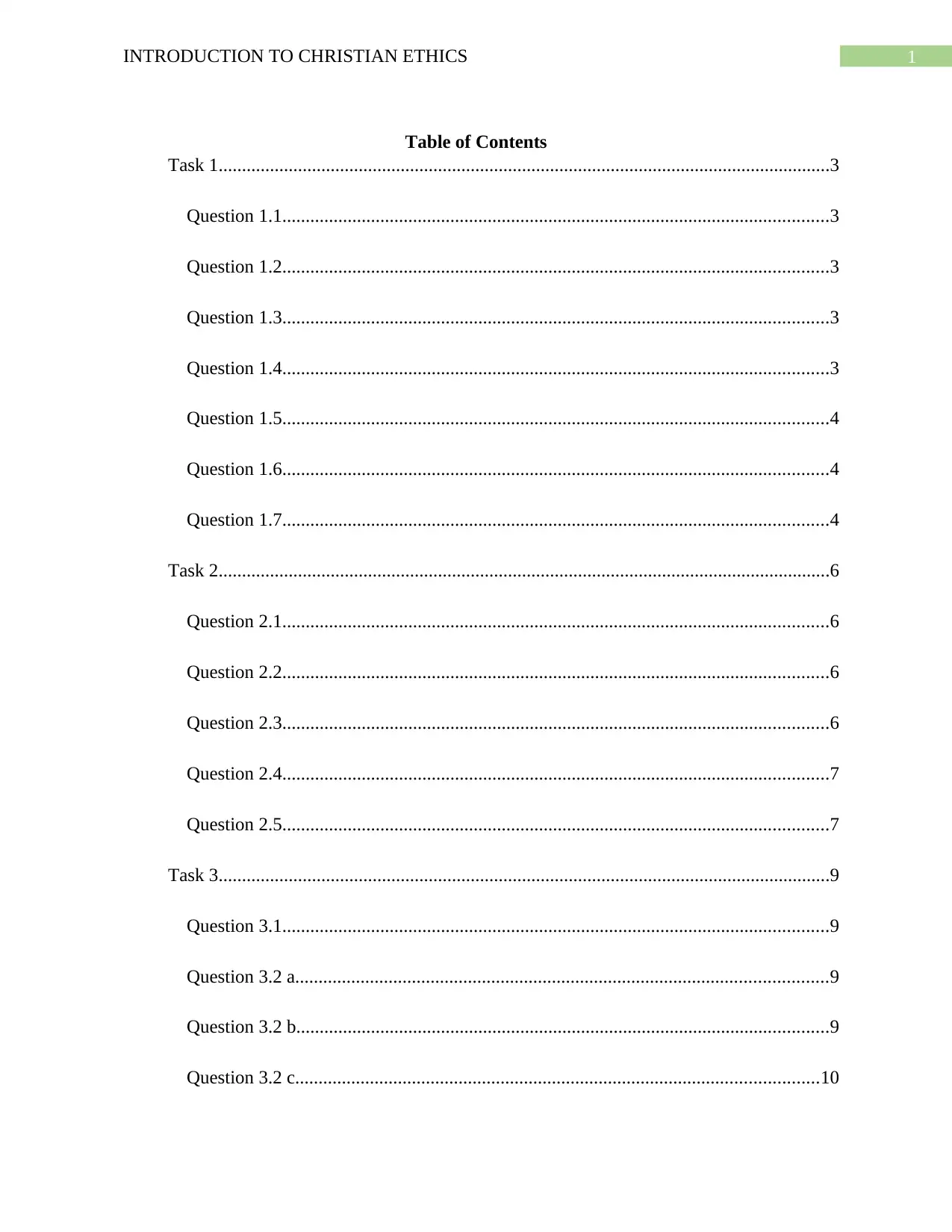
Table of Contents
Task 1...................................................................................................................................3
Question 1.1.....................................................................................................................3
Question 1.2.....................................................................................................................3
Question 1.3.....................................................................................................................3
Question 1.4.....................................................................................................................3
Question 1.5.....................................................................................................................4
Question 1.6.....................................................................................................................4
Question 1.7.....................................................................................................................4
Task 2...................................................................................................................................6
Question 2.1.....................................................................................................................6
Question 2.2.....................................................................................................................6
Question 2.3.....................................................................................................................6
Question 2.4.....................................................................................................................7
Question 2.5.....................................................................................................................7
Task 3...................................................................................................................................9
Question 3.1.....................................................................................................................9
Question 3.2 a..................................................................................................................9
Question 3.2 b..................................................................................................................9
Question 3.2 c................................................................................................................10
Table of Contents
Task 1...................................................................................................................................3
Question 1.1.....................................................................................................................3
Question 1.2.....................................................................................................................3
Question 1.3.....................................................................................................................3
Question 1.4.....................................................................................................................3
Question 1.5.....................................................................................................................4
Question 1.6.....................................................................................................................4
Question 1.7.....................................................................................................................4
Task 2...................................................................................................................................6
Question 2.1.....................................................................................................................6
Question 2.2.....................................................................................................................6
Question 2.3.....................................................................................................................6
Question 2.4.....................................................................................................................7
Question 2.5.....................................................................................................................7
Task 3...................................................................................................................................9
Question 3.1.....................................................................................................................9
Question 3.2 a..................................................................................................................9
Question 3.2 b..................................................................................................................9
Question 3.2 c................................................................................................................10
2INTRODUCTION TO CHRISTIAN ETHICS
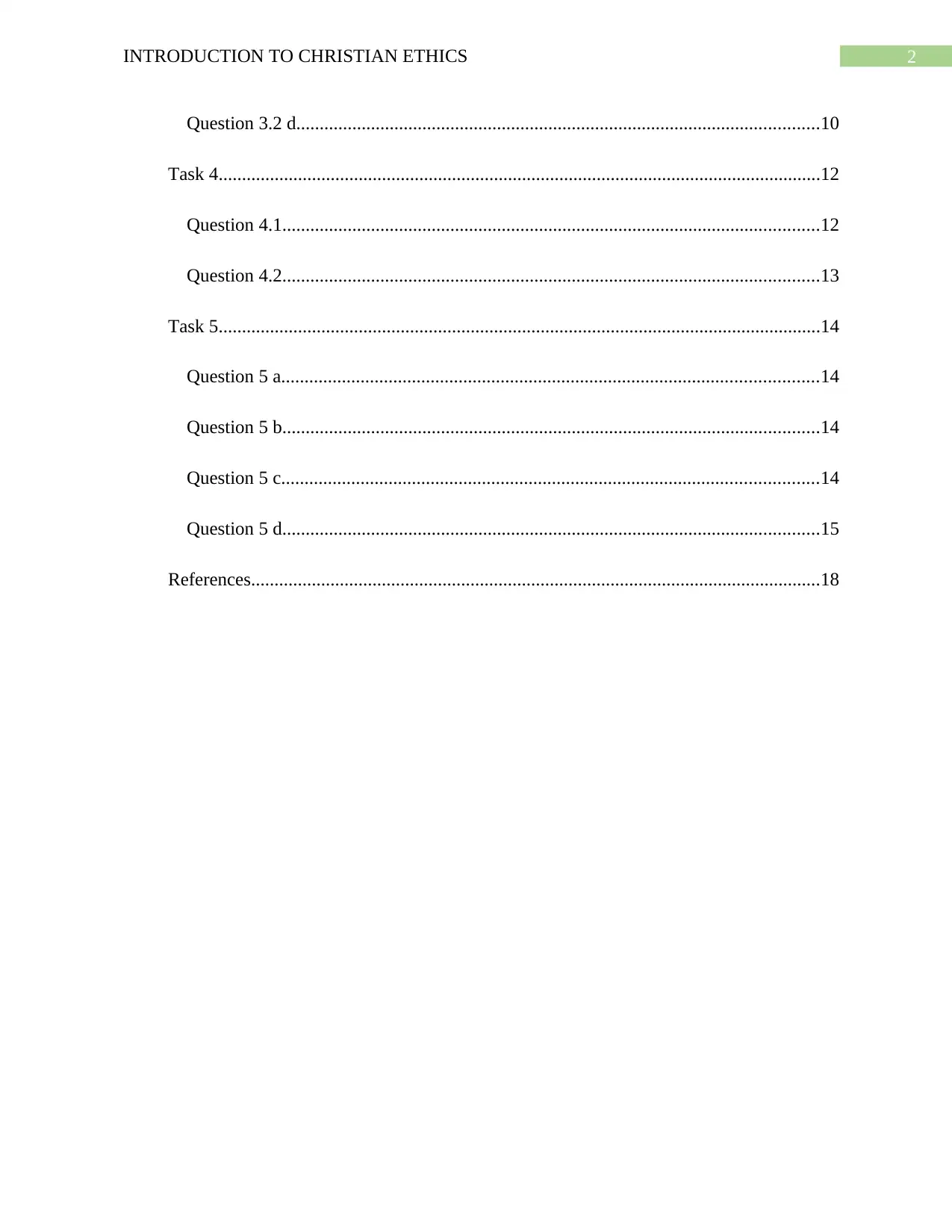
Question 3.2 d................................................................................................................10
Task 4.................................................................................................................................12
Question 4.1...................................................................................................................12
Question 4.2...................................................................................................................13
Task 5.................................................................................................................................14
Question 5 a...................................................................................................................14
Question 5 b...................................................................................................................14
Question 5 c...................................................................................................................14
Question 5 d...................................................................................................................15
References..........................................................................................................................18
Question 3.2 d................................................................................................................10
Task 4.................................................................................................................................12
Question 4.1...................................................................................................................12
Question 4.2...................................................................................................................13
Task 5.................................................................................................................................14
Question 5 a...................................................................................................................14
Question 5 b...................................................................................................................14
Question 5 c...................................................................................................................14
Question 5 d...................................................................................................................15
References..........................................................................................................................18
⊘ This is a preview!⊘
Do you want full access?
Subscribe today to unlock all pages.

Trusted by 1+ million students worldwide
3INTRODUCTION TO CHRISTIAN ETHICS
Task 1
Question 1.1
The central idea behind the scriptural teaching regarding the wealth, the poverty and the
property refers to the fact that all the things within the world as well as the world at large belongs
to the Almighty God. The concept further states that every single thing that is enjoyed by the
people living in the world should be considered to be a gift from the Almighty. The scriptures
stated that the people residing within the world were not the owners of anything. The scriptures
further stated that the people living in the world should bear respect towards the several things
that are being used by the people living in the world (TEEC 2017: 16.2).
Question 1.2
The creation story as according to the Christian faith is contained within the scriptures of
the religion. The first creation story is contained in the Genesis 1:1 – 2:4. The second creation
story is contained in the holy scripture of Genesis 2:4 – 2.25 (TEEC 2017: 17.3).
Question 1.3
The Genesis 1:28 states that the human beings were assigned with the responsibility of
caring for the creation. This means that the human beings have been entrusted with the duty of
caring for the various creations of the world. The human beings on the surface of the earth
should not be abusing the creations of the world for meeting their own short-term gains. The
human beings are expected to look after the fact that the all the other creatures of the earth are
being cared for in their daily lives (TEEC 2017:18.5).
Question 1.4
The five eras of the history of the sexual ethics are as enlisted below.
Task 1
Question 1.1
The central idea behind the scriptural teaching regarding the wealth, the poverty and the
property refers to the fact that all the things within the world as well as the world at large belongs
to the Almighty God. The concept further states that every single thing that is enjoyed by the
people living in the world should be considered to be a gift from the Almighty. The scriptures
stated that the people residing within the world were not the owners of anything. The scriptures
further stated that the people living in the world should bear respect towards the several things
that are being used by the people living in the world (TEEC 2017: 16.2).
Question 1.2
The creation story as according to the Christian faith is contained within the scriptures of
the religion. The first creation story is contained in the Genesis 1:1 – 2:4. The second creation
story is contained in the holy scripture of Genesis 2:4 – 2.25 (TEEC 2017: 17.3).
Question 1.3
The Genesis 1:28 states that the human beings were assigned with the responsibility of
caring for the creation. This means that the human beings have been entrusted with the duty of
caring for the various creations of the world. The human beings on the surface of the earth
should not be abusing the creations of the world for meeting their own short-term gains. The
human beings are expected to look after the fact that the all the other creatures of the earth are
being cared for in their daily lives (TEEC 2017:18.5).
Question 1.4
The five eras of the history of the sexual ethics are as enlisted below.
Paraphrase This Document
Need a fresh take? Get an instant paraphrase of this document with our AI Paraphraser
4INTRODUCTION TO CHRISTIAN ETHICS
The Old Testament Era
The New Testament Era
The transition from the Biblical times to the Reformation Era
The Reformation, and
The Modern Times (TEEC 2017: 19.3-19.5).
Question 1.5
The term ‘patriarchy’ is derived from the Latin word for ‘father’. The term refers to the
rule of the patriarchs. The term generally refers to the ideology that tends to deal with the closure
of the women from the public arena through the implementation of arrangements in the
economic, legal as well as political spheres. In a patriarchy the men are granted more power than
their female counterparts. The patriarchal societies tend to cater more power to the male
members of the society than to the female members of the society (TEEC 2017: 20.1).
Question 1.6
The various factors that tend to shape marriage in the continent of Africa are enlisted
below.
The traditional culture and the experience
The experiences of oppression and colonialism
The various religious experiences, majorly Christianity, and
The contemporary and modern experiences (TEEC 2017: 21.1).
Question 1.7
The four basic positions that are held by the contemporary theological opinions in regards
to homosexuality are enlisted below.
The Old Testament Era
The New Testament Era
The transition from the Biblical times to the Reformation Era
The Reformation, and
The Modern Times (TEEC 2017: 19.3-19.5).
Question 1.5
The term ‘patriarchy’ is derived from the Latin word for ‘father’. The term refers to the
rule of the patriarchs. The term generally refers to the ideology that tends to deal with the closure
of the women from the public arena through the implementation of arrangements in the
economic, legal as well as political spheres. In a patriarchy the men are granted more power than
their female counterparts. The patriarchal societies tend to cater more power to the male
members of the society than to the female members of the society (TEEC 2017: 20.1).
Question 1.6
The various factors that tend to shape marriage in the continent of Africa are enlisted
below.
The traditional culture and the experience
The experiences of oppression and colonialism
The various religious experiences, majorly Christianity, and
The contemporary and modern experiences (TEEC 2017: 21.1).
Question 1.7
The four basic positions that are held by the contemporary theological opinions in regards
to homosexuality are enlisted below.

5INTRODUCTION TO CHRISTIAN ETHICS
Rejecting, punitive
Rejecting, non-punitive
Qualified acceptance, and
Full acceptance (TEEC 2017: 22.11)
Rejecting, punitive
Rejecting, non-punitive
Qualified acceptance, and
Full acceptance (TEEC 2017: 22.11)
⊘ This is a preview!⊘
Do you want full access?
Subscribe today to unlock all pages.
Trusted by 1+ million students worldwide
6INTRODUCTION TO CHRISTIAN ETHICS
Task 2
Question 2.1
The economy refers to the study of the usage of the limited resources that are present on
the earth. The Biblical scriptures tend to discuss the various factors that are related to the value
of the labor, the concept of the work that is required for the preservation of the creation of the
Almighty (TEEC 2017:23.6).
Question 2.2
Justice refers to the activities that involve the protection of the poor and the disabled. The
Biblical view on justice states that the powerless and the voiceless need to be protected. The Old
Testament states that the widows should be protected from deprivation and let to live on the land
that they shared with their husband (TEEC 2017:23.8).
Question 2.3
The economic matters that have been highlighted in the gospel text Mark 10:17–31
discusses the factors that are related to the distribution of the wealth among the poor sections of
the concerned society. The concept of helping the poor would help in the establishment of the
equality among the various members of the society. The teachings of Jesus aimed to promote the
sense of the communal feeling among the various members of the society. The gospel text states
that the disciples who shared their belongings and adhered to the sense of community as
discussed by Jesus, were observed to have been more commodities and items then the ones who
have not been sharing (TEEC 2017: 16.9). The movement that had been started by the disciples
of the prophet helped in the establishment of the social conditions wherein all the members of the
society possessed enough to sustain their lives.
Task 2
Question 2.1
The economy refers to the study of the usage of the limited resources that are present on
the earth. The Biblical scriptures tend to discuss the various factors that are related to the value
of the labor, the concept of the work that is required for the preservation of the creation of the
Almighty (TEEC 2017:23.6).
Question 2.2
Justice refers to the activities that involve the protection of the poor and the disabled. The
Biblical view on justice states that the powerless and the voiceless need to be protected. The Old
Testament states that the widows should be protected from deprivation and let to live on the land
that they shared with their husband (TEEC 2017:23.8).
Question 2.3
The economic matters that have been highlighted in the gospel text Mark 10:17–31
discusses the factors that are related to the distribution of the wealth among the poor sections of
the concerned society. The concept of helping the poor would help in the establishment of the
equality among the various members of the society. The teachings of Jesus aimed to promote the
sense of the communal feeling among the various members of the society. The gospel text states
that the disciples who shared their belongings and adhered to the sense of community as
discussed by Jesus, were observed to have been more commodities and items then the ones who
have not been sharing (TEEC 2017: 16.9). The movement that had been started by the disciples
of the prophet helped in the establishment of the social conditions wherein all the members of the
society possessed enough to sustain their lives.
Paraphrase This Document
Need a fresh take? Get an instant paraphrase of this document with our AI Paraphraser
7INTRODUCTION TO CHRISTIAN ETHICS
Question 2.4
The economic teachings that were discussed within the Acts 2:42–3:10 discusses the
themes of equality within the community. The New Testament Text, Acts 2:42–3:10 deals with
the description of the formation of a new community among the disciples of Jesus Christ. This
community aimed to promote the equality among the various members of the community in
terms of finance as well as commodities (TEEC 2017: 23.11).
The New Testament Text, Galatians 2:1–10, attempt a discussion on the matters that are
related to the equality as well as the maintenance of the community principles. The Galatians
2:1–10 discusses the fact that the Almighty does not discriminate on the basis of the financial
conditions of the concerned disciple of the Almighty. The Galatians 2:1–10 further discuss the
promotion of the equality within the given community so as to help in the upliftment of poor
(TEEC 2017: 23.10).
Question 2.5
The Old Testament and the New Testament deal with the promotion of the equality
within the community. The concept of helping the poor would help in the establishment of the
equality among the various members of the society. The teachings of Jesus aimed to promote the
sense of the communal feeling among the various members of the society. The biblical texts tend
to discuss the reduction of the poverty within the given society. The resources tend to discuss
ways in which the biblical economies had aimed to discuss the various factors related to equality
within the community. The economic matters that have been highlighted in the gospel text Mark
10:17–31 discusses the factors that are related to the distribution of the wealth among the poor
sections of the concerned society. The concept of helping the poor would help in the
establishment of the equality among the various members of the society. The Biblical scriptures
Question 2.4
The economic teachings that were discussed within the Acts 2:42–3:10 discusses the
themes of equality within the community. The New Testament Text, Acts 2:42–3:10 deals with
the description of the formation of a new community among the disciples of Jesus Christ. This
community aimed to promote the equality among the various members of the community in
terms of finance as well as commodities (TEEC 2017: 23.11).
The New Testament Text, Galatians 2:1–10, attempt a discussion on the matters that are
related to the equality as well as the maintenance of the community principles. The Galatians
2:1–10 discusses the fact that the Almighty does not discriminate on the basis of the financial
conditions of the concerned disciple of the Almighty. The Galatians 2:1–10 further discuss the
promotion of the equality within the given community so as to help in the upliftment of poor
(TEEC 2017: 23.10).
Question 2.5
The Old Testament and the New Testament deal with the promotion of the equality
within the community. The concept of helping the poor would help in the establishment of the
equality among the various members of the society. The teachings of Jesus aimed to promote the
sense of the communal feeling among the various members of the society. The biblical texts tend
to discuss the reduction of the poverty within the given society. The resources tend to discuss
ways in which the biblical economies had aimed to discuss the various factors related to equality
within the community. The economic matters that have been highlighted in the gospel text Mark
10:17–31 discusses the factors that are related to the distribution of the wealth among the poor
sections of the concerned society. The concept of helping the poor would help in the
establishment of the equality among the various members of the society. The Biblical scriptures
8INTRODUCTION TO CHRISTIAN ETHICS
tend to discuss the various factors that are related to the value of the labor, the concept of the
work that is required for the preservation of the creation of the Almighty. The Deuteronomy
suggests that the Israelites should always be depicting the generosity towards the poor people
and those who need the generosity. The Deuteronomy suggests that the poor sections of the
society would always exist within the world. The Biblical texts advise that the Israelites should
always be helpful to the concerned poor people of the society. This might help in the promotion
of the equality of the various members within the given social boundaries. The story of Mark 14
upholds the view that the poverty exists within the society due to the negligence on the part of
the members of the society who are capable of assisting the poorer sections of the society (TEEC
2017: 23.7).
tend to discuss the various factors that are related to the value of the labor, the concept of the
work that is required for the preservation of the creation of the Almighty. The Deuteronomy
suggests that the Israelites should always be depicting the generosity towards the poor people
and those who need the generosity. The Deuteronomy suggests that the poor sections of the
society would always exist within the world. The Biblical texts advise that the Israelites should
always be helpful to the concerned poor people of the society. This might help in the promotion
of the equality of the various members within the given social boundaries. The story of Mark 14
upholds the view that the poverty exists within the society due to the negligence on the part of
the members of the society who are capable of assisting the poorer sections of the society (TEEC
2017: 23.7).
⊘ This is a preview!⊘
Do you want full access?
Subscribe today to unlock all pages.
Trusted by 1+ million students worldwide
9INTRODUCTION TO CHRISTIAN ETHICS
Task 3
Question 3.1
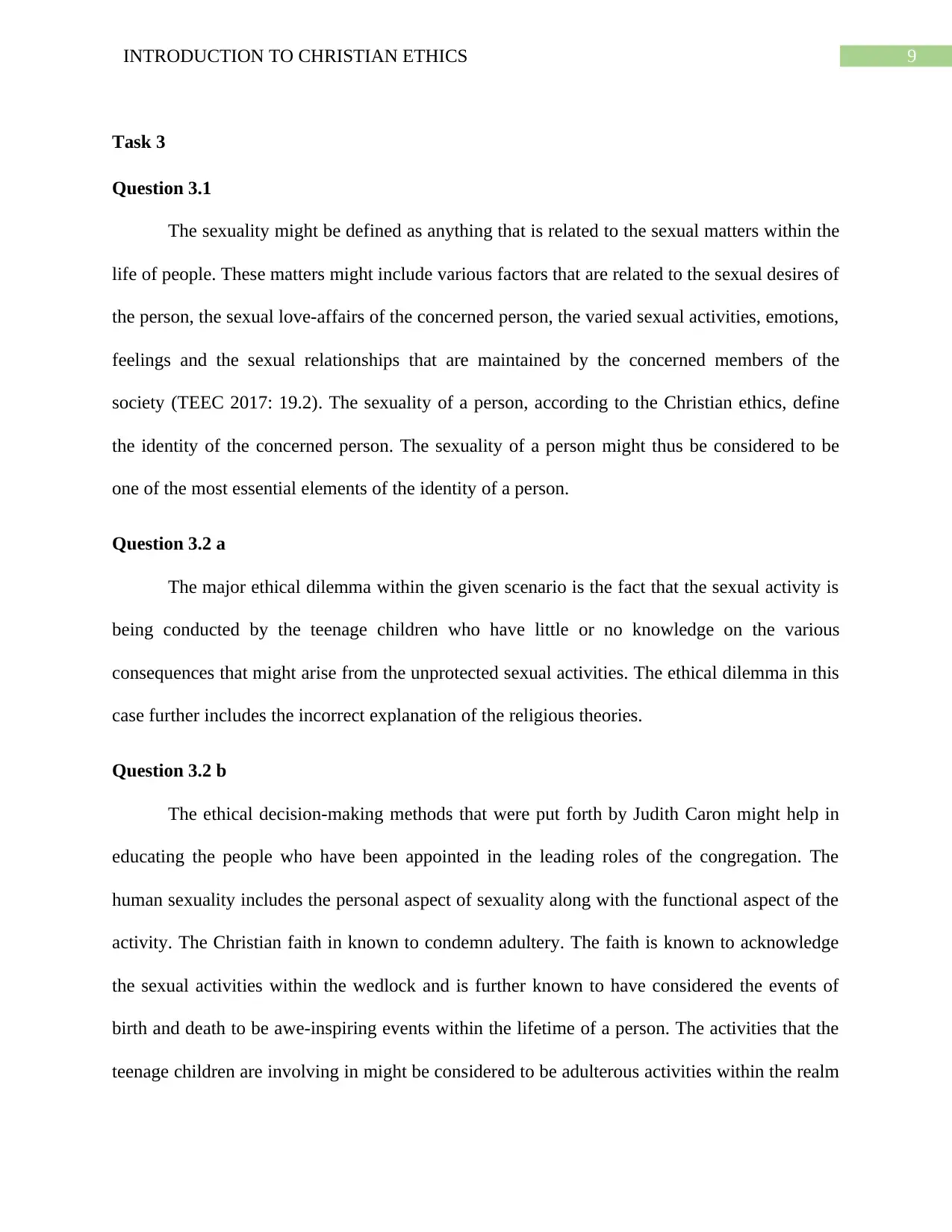
The sexuality might be defined as anything that is related to the sexual matters within the
life of people. These matters might include various factors that are related to the sexual desires of
the person, the sexual love-affairs of the concerned person, the varied sexual activities, emotions,
feelings and the sexual relationships that are maintained by the concerned members of the
society (TEEC 2017: 19.2). The sexuality of a person, according to the Christian ethics, define
the identity of the concerned person. The sexuality of a person might thus be considered to be
one of the most essential elements of the identity of a person.
Question 3.2 a
The major ethical dilemma within the given scenario is the fact that the sexual activity is
being conducted by the teenage children who have little or no knowledge on the various
consequences that might arise from the unprotected sexual activities. The ethical dilemma in this
case further includes the incorrect explanation of the religious theories.
Question 3.2 b
The ethical decision-making methods that were put forth by Judith Caron might help in
educating the people who have been appointed in the leading roles of the congregation. The
human sexuality includes the personal aspect of sexuality along with the functional aspect of the
activity. The Christian faith in known to condemn adultery. The faith is known to acknowledge
the sexual activities within the wedlock and is further known to have considered the events of
birth and death to be awe-inspiring events within the lifetime of a person. The activities that the
teenage children are involving in might be considered to be adulterous activities within the realm
Task 3
Question 3.1
The sexuality might be defined as anything that is related to the sexual matters within the
life of people. These matters might include various factors that are related to the sexual desires of
the person, the sexual love-affairs of the concerned person, the varied sexual activities, emotions,
feelings and the sexual relationships that are maintained by the concerned members of the
society (TEEC 2017: 19.2). The sexuality of a person, according to the Christian ethics, define
the identity of the concerned person. The sexuality of a person might thus be considered to be
one of the most essential elements of the identity of a person.
Question 3.2 a
The major ethical dilemma within the given scenario is the fact that the sexual activity is
being conducted by the teenage children who have little or no knowledge on the various
consequences that might arise from the unprotected sexual activities. The ethical dilemma in this
case further includes the incorrect explanation of the religious theories.
Question 3.2 b
The ethical decision-making methods that were put forth by Judith Caron might help in
educating the people who have been appointed in the leading roles of the congregation. The
human sexuality includes the personal aspect of sexuality along with the functional aspect of the
activity. The Christian faith in known to condemn adultery. The faith is known to acknowledge
the sexual activities within the wedlock and is further known to have considered the events of
birth and death to be awe-inspiring events within the lifetime of a person. The activities that the
teenage children are involving in might be considered to be adulterous activities within the realm
Paraphrase This Document
Need a fresh take? Get an instant paraphrase of this document with our AI Paraphraser
10INTRODUCTION TO CHRISTIAN ETHICS
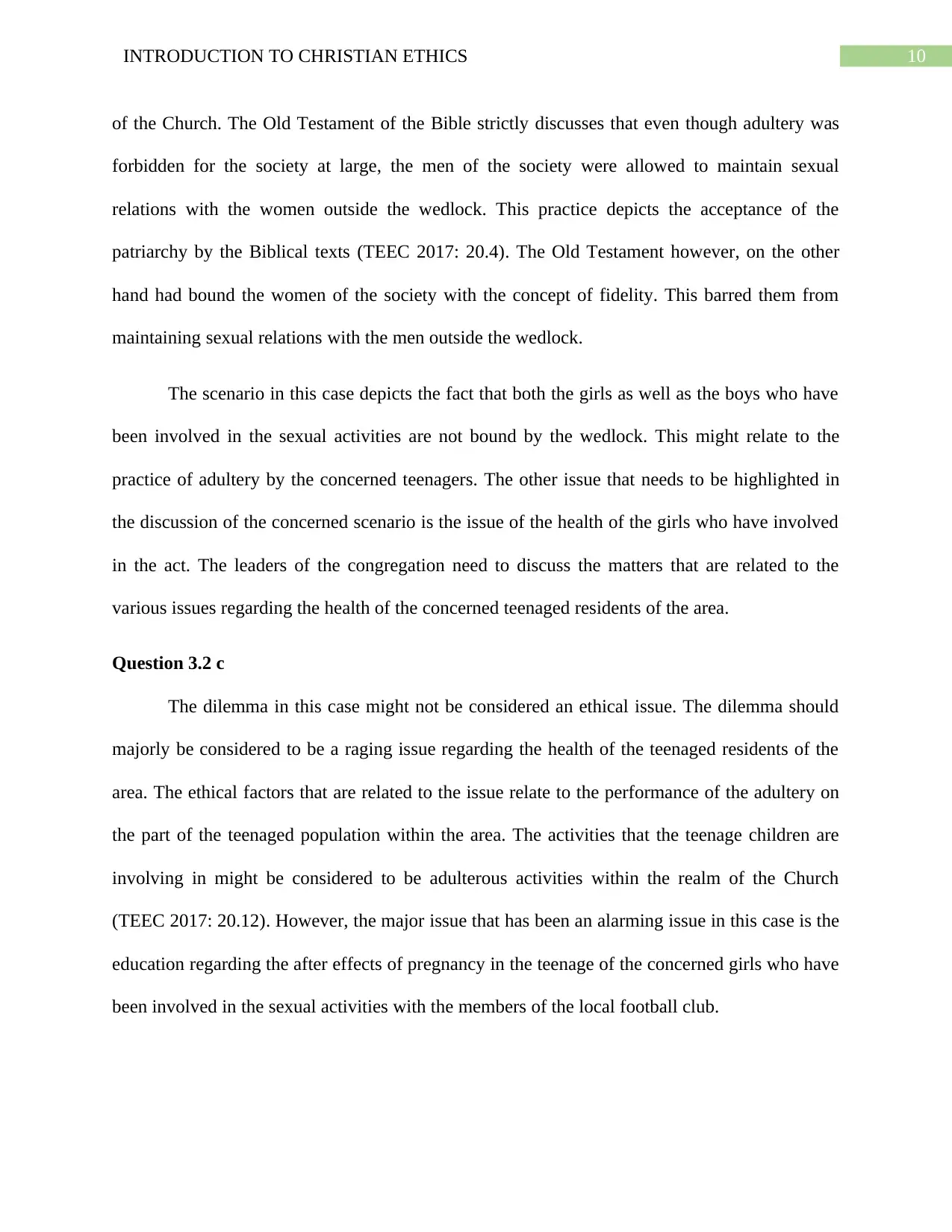
of the Church. The Old Testament of the Bible strictly discusses that even though adultery was
forbidden for the society at large, the men of the society were allowed to maintain sexual
relations with the women outside the wedlock. This practice depicts the acceptance of the
patriarchy by the Biblical texts (TEEC 2017: 20.4). The Old Testament however, on the other
hand had bound the women of the society with the concept of fidelity. This barred them from
maintaining sexual relations with the men outside the wedlock.
The scenario in this case depicts the fact that both the girls as well as the boys who have
been involved in the sexual activities are not bound by the wedlock. This might relate to the
practice of adultery by the concerned teenagers. The other issue that needs to be highlighted in
the discussion of the concerned scenario is the issue of the health of the girls who have involved
in the act. The leaders of the congregation need to discuss the matters that are related to the
various issues regarding the health of the concerned teenaged residents of the area.
Question 3.2 c
The dilemma in this case might not be considered an ethical issue. The dilemma should
majorly be considered to be a raging issue regarding the health of the teenaged residents of the
area. The ethical factors that are related to the issue relate to the performance of the adultery on
the part of the teenaged population within the area. The activities that the teenage children are
involving in might be considered to be adulterous activities within the realm of the Church
(TEEC 2017: 20.12). However, the major issue that has been an alarming issue in this case is the
education regarding the after effects of pregnancy in the teenage of the concerned girls who have
been involved in the sexual activities with the members of the local football club.
of the Church. The Old Testament of the Bible strictly discusses that even though adultery was
forbidden for the society at large, the men of the society were allowed to maintain sexual
relations with the women outside the wedlock. This practice depicts the acceptance of the
patriarchy by the Biblical texts (TEEC 2017: 20.4). The Old Testament however, on the other
hand had bound the women of the society with the concept of fidelity. This barred them from
maintaining sexual relations with the men outside the wedlock.
The scenario in this case depicts the fact that both the girls as well as the boys who have
been involved in the sexual activities are not bound by the wedlock. This might relate to the
practice of adultery by the concerned teenagers. The other issue that needs to be highlighted in
the discussion of the concerned scenario is the issue of the health of the girls who have involved
in the act. The leaders of the congregation need to discuss the matters that are related to the
various issues regarding the health of the concerned teenaged residents of the area.
Question 3.2 c
The dilemma in this case might not be considered an ethical issue. The dilemma should
majorly be considered to be a raging issue regarding the health of the teenaged residents of the
area. The ethical factors that are related to the issue relate to the performance of the adultery on
the part of the teenaged population within the area. The activities that the teenage children are
involving in might be considered to be adulterous activities within the realm of the Church
(TEEC 2017: 20.12). However, the major issue that has been an alarming issue in this case is the
education regarding the after effects of pregnancy in the teenage of the concerned girls who have
been involved in the sexual activities with the members of the local football club.
11INTRODUCTION TO CHRISTIAN ETHICS
Question 3.2 d
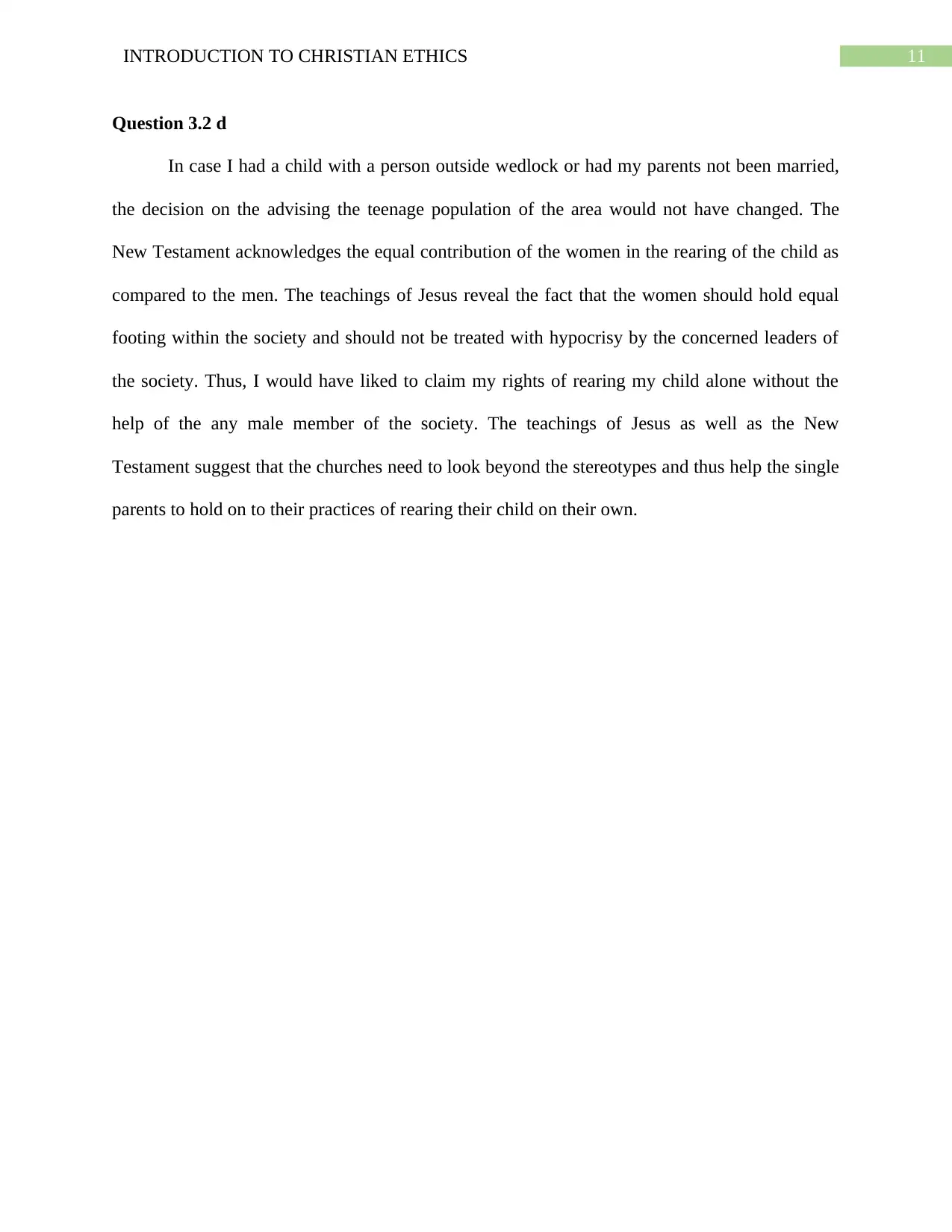
In case I had a child with a person outside wedlock or had my parents not been married,
the decision on the advising the teenage population of the area would not have changed. The
New Testament acknowledges the equal contribution of the women in the rearing of the child as
compared to the men. The teachings of Jesus reveal the fact that the women should hold equal
footing within the society and should not be treated with hypocrisy by the concerned leaders of
the society. Thus, I would have liked to claim my rights of rearing my child alone without the
help of the any male member of the society. The teachings of Jesus as well as the New
Testament suggest that the churches need to look beyond the stereotypes and thus help the single
parents to hold on to their practices of rearing their child on their own.
Question 3.2 d
In case I had a child with a person outside wedlock or had my parents not been married,
the decision on the advising the teenage population of the area would not have changed. The
New Testament acknowledges the equal contribution of the women in the rearing of the child as
compared to the men. The teachings of Jesus reveal the fact that the women should hold equal
footing within the society and should not be treated with hypocrisy by the concerned leaders of
the society. Thus, I would have liked to claim my rights of rearing my child alone without the
help of the any male member of the society. The teachings of Jesus as well as the New
Testament suggest that the churches need to look beyond the stereotypes and thus help the single
parents to hold on to their practices of rearing their child on their own.
⊘ This is a preview!⊘
Do you want full access?
Subscribe today to unlock all pages.
Trusted by 1+ million students worldwide

1 out of 20


Related Documents


Your All-in-One AI-Powered Toolkit for Academic Success.
+13062052269
info@desklib.com
Available 24*7 on WhatsApp / Email
![[object Object]](/_next/static/media/star-bottom.7253800d.svg)
Unlock your academic potential
Copyright © 2020–2026 A2Z Services. All Rights Reserved. Developed and managed by ZUCOL.