Report: Heritage Building Refurbishment and Regulations in Australia
VerifiedAdded on 2023/01/12
|20
|3483
|24
Report
AI Summary
This report provides a detailed analysis of heritage building refurbishment in Australia, emphasizing the importance of heritage preservation and conservation. The study covers various aspects, including the significance of heritage buildings, regulations at local, state, and national levels, and the process of listing heritage buildings. A condition survey is presented, including building details, description, and significance, along with a discussion of refurbishment strategies. The report identifies potential defects in heritage buildings, proposes solutions, and highlights the challenges contractors face during refurbishment projects. Furthermore, it explores the roles of the Australian Heritage Council, local councils, and building code requirements in ensuring successful refurbishment. The report concludes with a comprehensive overview of the key considerations for heritage building projects in Australia.
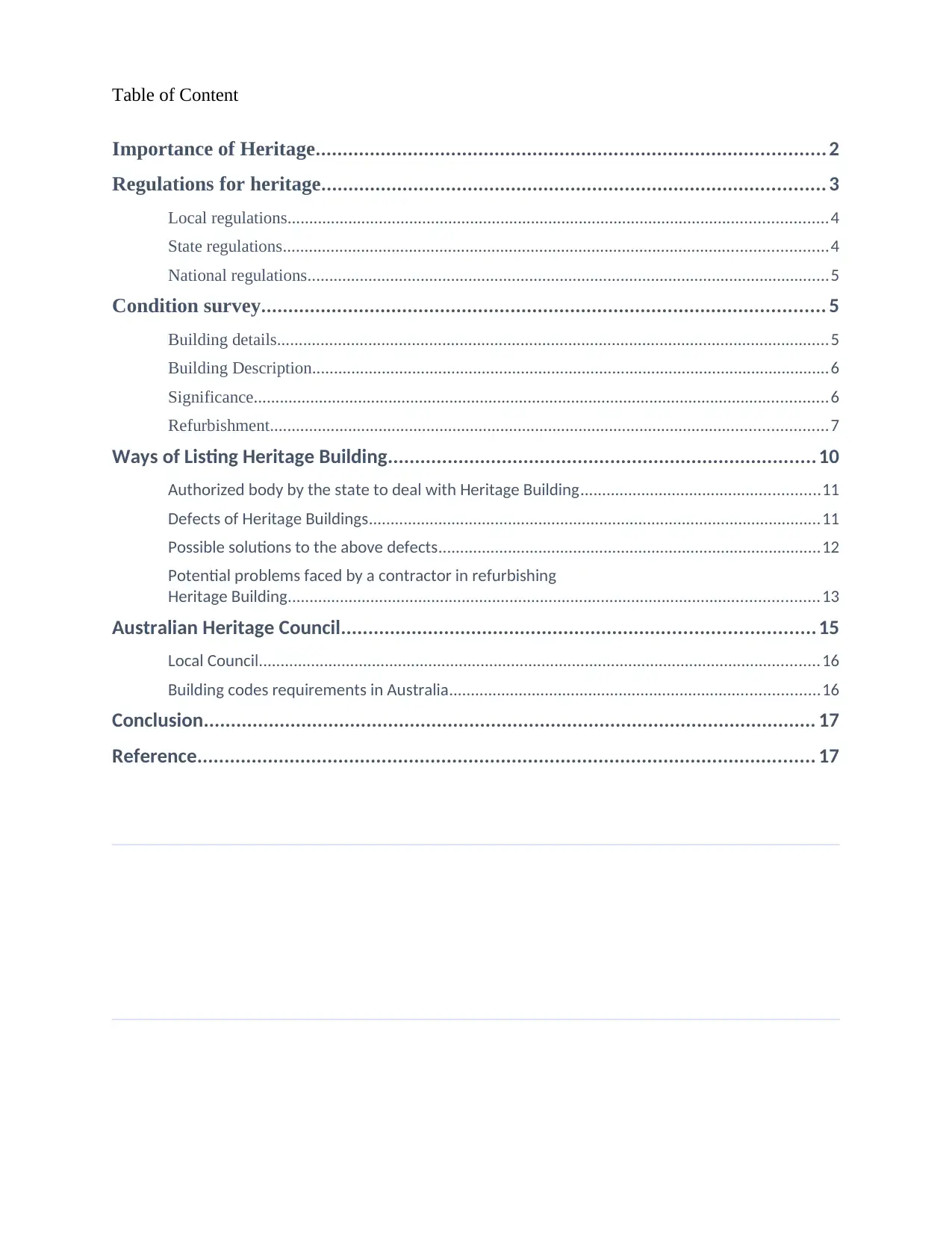
Table of Content
Importance of Heritage.............................................................................................. 2
Regulations for heritage............................................................................................. 3
Local regulations............................................................................................................................4
State regulations.............................................................................................................................4
National regulations........................................................................................................................5
Condition survey........................................................................................................ 5
Building details...............................................................................................................................5
Building Description.......................................................................................................................6
Significance....................................................................................................................................6
Refurbishment................................................................................................................................7
Ways of Listing Heritage Building............................................................................... 10
Authorized body by the state to deal with Heritage Building.......................................................11
Defects of Heritage Buildings........................................................................................................11
Possible solutions to the above defects........................................................................................12
Potential problems faced by a contractor in refurbishing
Heritage Building..........................................................................................................................13
Australian Heritage Council....................................................................................... 15
Local Council.................................................................................................................................16
Building codes requirements in Australia.....................................................................................16
Conclusion................................................................................................................. 17
Reference.................................................................................................................. 17
Importance of Heritage.............................................................................................. 2
Regulations for heritage............................................................................................. 3
Local regulations............................................................................................................................4
State regulations.............................................................................................................................4
National regulations........................................................................................................................5
Condition survey........................................................................................................ 5
Building details...............................................................................................................................5
Building Description.......................................................................................................................6
Significance....................................................................................................................................6
Refurbishment................................................................................................................................7
Ways of Listing Heritage Building............................................................................... 10
Authorized body by the state to deal with Heritage Building.......................................................11
Defects of Heritage Buildings........................................................................................................11
Possible solutions to the above defects........................................................................................12
Potential problems faced by a contractor in refurbishing
Heritage Building..........................................................................................................................13
Australian Heritage Council....................................................................................... 15
Local Council.................................................................................................................................16
Building codes requirements in Australia.....................................................................................16
Conclusion................................................................................................................. 17
Reference.................................................................................................................. 17

Paraphrase This Document
Need a fresh take? Get an instant paraphrase of this document with our AI Paraphraser
Abstract
The study emphasizes on the need to protect the heritage building in Australia, their significance,
listing and regulations affecting them, ways of refurbishing and appropriate mitigations required
to deal with building defects. This is the basis of preservation and conservation in Australia.
Introduction
The study emphasizes on the need to protect the heritage building in Australia, their significance,
listing and regulations affecting them, ways of refurbishing and appropriate mitigations required
to deal with building defects. This is the basis of preservation and conservation in Australia.
Introduction
Heritage building is a very important in Australia and form part of historic sites. This makes
them to be considered as country’s national heritage. Therefore, protection and conservation of
heritage building is key in Australia. There has a considerable growth of heritage buildings
which has prompted the conservation of historical cultural heritage protection.
Importance of Heritage
There are various types and forms of heritage, which can include buildings, places, and even
traditions, that have helped bring the society and community we live in to its current position.
Through the history of the past, heritage and culture has aided in the development and progress
to define the present and future. Cultural heritage is an inheritance from the past and a valuable
asset that needs to be properly conserved to convey stories to the next generations.
Heritage places have various roles in the society. The existence of heritage places contributes
vastly to the cultural identify of communities and bringing together societies. There are countless
heritage places that consist of churches, halls, gardens and other public gathering areas, hence
contributing to the quality of life in many communities. In addition, heritage places and buildings
provide an enhanced and unique aesthetic to the streetscapes and becomes a focal point in
providing a sense of belonging.
On a second note, it should be noted that heritage buildings contribute to the saving in embodied
energy since it reduced the creation of waste from building new infrastructure using materials. In
addition, various heritage places help improve the economy by providing employment
opportunities and generating revenue through tourism.
In Australia, there are countless built heritages, historic buildings which include various types
and classes of building, within all states. These heritage buildings have significant history to the
them to be considered as country’s national heritage. Therefore, protection and conservation of
heritage building is key in Australia. There has a considerable growth of heritage buildings
which has prompted the conservation of historical cultural heritage protection.
Importance of Heritage
There are various types and forms of heritage, which can include buildings, places, and even
traditions, that have helped bring the society and community we live in to its current position.
Through the history of the past, heritage and culture has aided in the development and progress
to define the present and future. Cultural heritage is an inheritance from the past and a valuable
asset that needs to be properly conserved to convey stories to the next generations.
Heritage places have various roles in the society. The existence of heritage places contributes
vastly to the cultural identify of communities and bringing together societies. There are countless
heritage places that consist of churches, halls, gardens and other public gathering areas, hence
contributing to the quality of life in many communities. In addition, heritage places and buildings
provide an enhanced and unique aesthetic to the streetscapes and becomes a focal point in
providing a sense of belonging.
On a second note, it should be noted that heritage buildings contribute to the saving in embodied
energy since it reduced the creation of waste from building new infrastructure using materials. In
addition, various heritage places help improve the economy by providing employment
opportunities and generating revenue through tourism.
In Australia, there are countless built heritages, historic buildings which include various types
and classes of building, within all states. These heritage buildings have significant history to the
⊘ This is a preview!⊘
Do you want full access?
Subscribe today to unlock all pages.

Trusted by 1+ million students worldwide
Australian culture and are crucial in providing a sense of attachment to the communities
throughout the states. Many heritage buildings have different functions such as cathedrals,
museums, hotels or even serve as residential houses, while other heritage buildings have been
refurbished to become venues for businesses such as cafes, pubs and so on.
There are 9 distinct types of heritage building architecture in Australia, most of which were
inspired from European colonial times;
1788 – 1840 Colonial
1840 – 1870 Mid-Victorian
1870 - 1895 Late Victorian
1895- 1925 Federation
1925- 1938 Californian Bungalow
1918 -1939 Inter-War buildings
1935 – 1960 Modern movement buildings
1950 – 1975 Postmodern buildings
1968 – 1975 Brutalists buildings
Regulations for heritage
Due to the critical significance heritage buildings and places possess in societies and
communities, State governments, local governments and other members of the community all
play crucial roles in protecting, respecting and promoting the value and infrastructure of those
buildings.
In Australia, heritage buildings are protected through local, state and national governments. In
addition, there are various groups and stakeholders who collaborate to ensure the protection of
throughout the states. Many heritage buildings have different functions such as cathedrals,
museums, hotels or even serve as residential houses, while other heritage buildings have been
refurbished to become venues for businesses such as cafes, pubs and so on.
There are 9 distinct types of heritage building architecture in Australia, most of which were
inspired from European colonial times;
1788 – 1840 Colonial
1840 – 1870 Mid-Victorian
1870 - 1895 Late Victorian
1895- 1925 Federation
1925- 1938 Californian Bungalow
1918 -1939 Inter-War buildings
1935 – 1960 Modern movement buildings
1950 – 1975 Postmodern buildings
1968 – 1975 Brutalists buildings
Regulations for heritage
Due to the critical significance heritage buildings and places possess in societies and
communities, State governments, local governments and other members of the community all
play crucial roles in protecting, respecting and promoting the value and infrastructure of those
buildings.
In Australia, heritage buildings are protected through local, state and national governments. In
addition, there are various groups and stakeholders who collaborate to ensure the protection of
Paraphrase This Document
Need a fresh take? Get an instant paraphrase of this document with our AI Paraphraser
Australia’s cultural heritage, some of them include the UNESCO World Heritage and the Burra
Charter.
Each state in Australia has different types of statutory listings to define heritage places or
buildings. An item/building is classified as heritage if it is listed in the Heritage schedule of a
local council, in the State heritage register of that particular state, or in the National Heritage list
which is established by the Australian Government.
Local regulations
Each state has Heritage Overlays which is crucial when planning construction project. These
overlays provide information on places and buildings of local heritage significance and provide
construction professionals with the necessary information on whether or not construction
activities can be carried out in those areas without penalties. The Planning and Environment
Act 1987 is the piece of legislation governing planning controls in all municipalities.
State regulations
The Heritage Act 2017 is an act that helps promote the understanding and conservation of
cultural heritage in Australian states. The act helps in the identification and registration of
heritage items and buildings, along with the significance of those items/buildings to the
communities. As such, the Heritage Act 2017 works in conjunction with the Heritage
Regulations 2012 to help in the conservation of heritage by the prescription of standards of
maintenance for buildings, and ensuring compliance in the protection requirements.
National regulations
The Environment Protection Biodiversity and Conservation Act 1999 is an Act administered
by the Commonwealth which aims at the protection and conservation of Australian cultural
Charter.
Each state in Australia has different types of statutory listings to define heritage places or
buildings. An item/building is classified as heritage if it is listed in the Heritage schedule of a
local council, in the State heritage register of that particular state, or in the National Heritage list
which is established by the Australian Government.
Local regulations
Each state has Heritage Overlays which is crucial when planning construction project. These
overlays provide information on places and buildings of local heritage significance and provide
construction professionals with the necessary information on whether or not construction
activities can be carried out in those areas without penalties. The Planning and Environment
Act 1987 is the piece of legislation governing planning controls in all municipalities.
State regulations
The Heritage Act 2017 is an act that helps promote the understanding and conservation of
cultural heritage in Australian states. The act helps in the identification and registration of
heritage items and buildings, along with the significance of those items/buildings to the
communities. As such, the Heritage Act 2017 works in conjunction with the Heritage
Regulations 2012 to help in the conservation of heritage by the prescription of standards of
maintenance for buildings, and ensuring compliance in the protection requirements.
National regulations
The Environment Protection Biodiversity and Conservation Act 1999 is an Act administered
by the Commonwealth which aims at the protection and conservation of Australian cultural
heritage through the development, implementation and enforcement of national policies and
legislation. The Australian Heritage Council is also the principal advisor of the Australian
Government and minister on matters pertaining to heritage.
Condition survey
Building details
Name Paddington Town Hall
Address 249 Oxford Street, Paddington, NSW 2021
Local Government area Sydney
Local Aboriginal land Council La Perouse
Owner Category Private
Designer John Edward Kemp
Built in 1890-1891
Current use Venue hire
Former use Town Hall
Building Description
External:
legislation. The Australian Heritage Council is also the principal advisor of the Australian
Government and minister on matters pertaining to heritage.
Condition survey
Building details
Name Paddington Town Hall
Address 249 Oxford Street, Paddington, NSW 2021
Local Government area Sydney
Local Aboriginal land Council La Perouse
Owner Category Private
Designer John Edward Kemp
Built in 1890-1891
Current use Venue hire
Former use Town Hall
Building Description
External:
⊘ This is a preview!⊘
Do you want full access?
Subscribe today to unlock all pages.
Trusted by 1+ million students worldwide
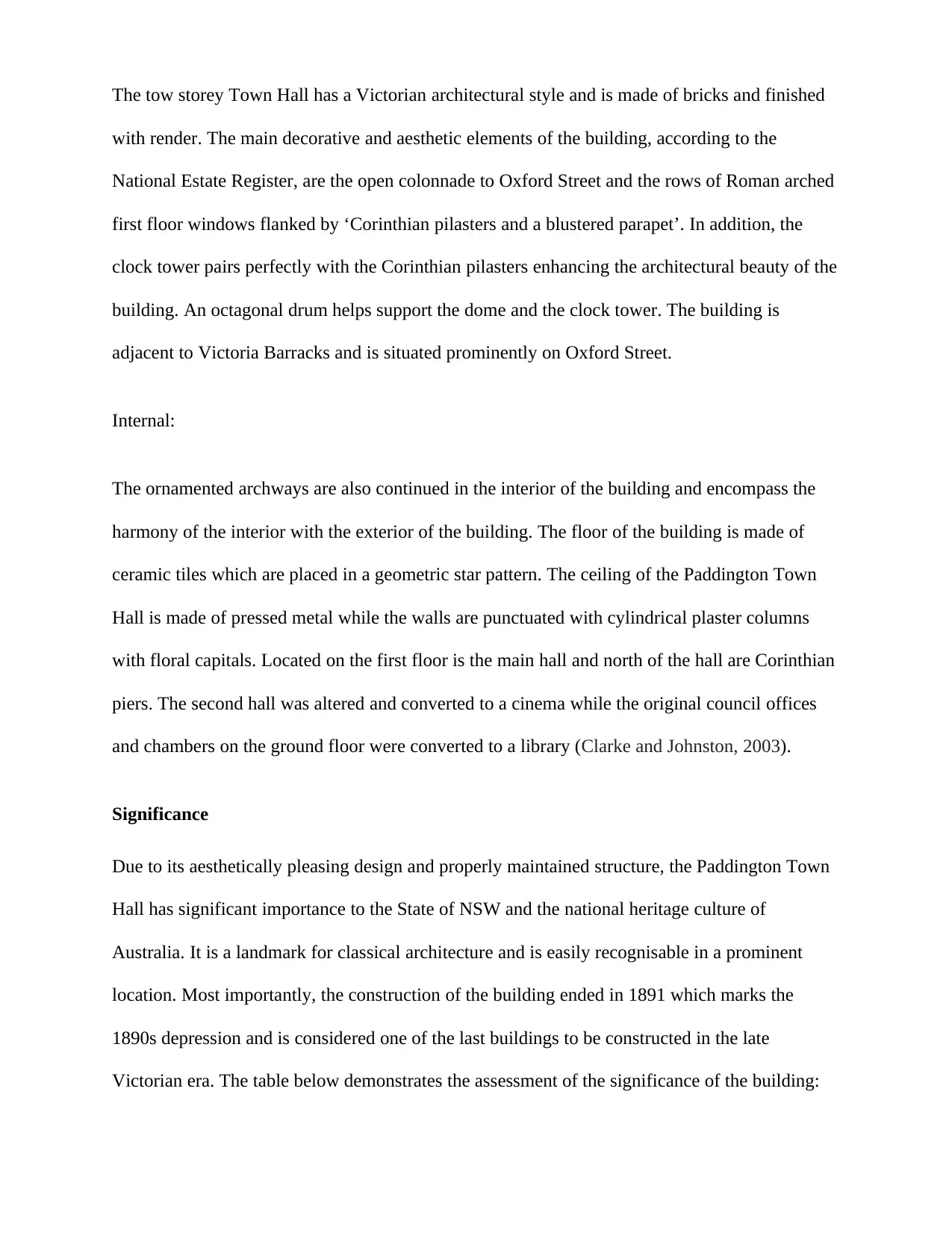
The tow storey Town Hall has a Victorian architectural style and is made of bricks and finished
with render. The main decorative and aesthetic elements of the building, according to the
National Estate Register, are the open colonnade to Oxford Street and the rows of Roman arched
first floor windows flanked by ‘Corinthian pilasters and a blustered parapet’. In addition, the
clock tower pairs perfectly with the Corinthian pilasters enhancing the architectural beauty of the
building. An octagonal drum helps support the dome and the clock tower. The building is
adjacent to Victoria Barracks and is situated prominently on Oxford Street.
Internal:
The ornamented archways are also continued in the interior of the building and encompass the
harmony of the interior with the exterior of the building. The floor of the building is made of
ceramic tiles which are placed in a geometric star pattern. The ceiling of the Paddington Town
Hall is made of pressed metal while the walls are punctuated with cylindrical plaster columns
with floral capitals. Located on the first floor is the main hall and north of the hall are Corinthian
piers. The second hall was altered and converted to a cinema while the original council offices
and chambers on the ground floor were converted to a library (Clarke and Johnston, 2003).
Significance
Due to its aesthetically pleasing design and properly maintained structure, the Paddington Town
Hall has significant importance to the State of NSW and the national heritage culture of
Australia. It is a landmark for classical architecture and is easily recognisable in a prominent
location. Most importantly, the construction of the building ended in 1891 which marks the
1890s depression and is considered one of the last buildings to be constructed in the late
Victorian era. The table below demonstrates the assessment of the significance of the building:
with render. The main decorative and aesthetic elements of the building, according to the
National Estate Register, are the open colonnade to Oxford Street and the rows of Roman arched
first floor windows flanked by ‘Corinthian pilasters and a blustered parapet’. In addition, the
clock tower pairs perfectly with the Corinthian pilasters enhancing the architectural beauty of the
building. An octagonal drum helps support the dome and the clock tower. The building is
adjacent to Victoria Barracks and is situated prominently on Oxford Street.
Internal:
The ornamented archways are also continued in the interior of the building and encompass the
harmony of the interior with the exterior of the building. The floor of the building is made of
ceramic tiles which are placed in a geometric star pattern. The ceiling of the Paddington Town
Hall is made of pressed metal while the walls are punctuated with cylindrical plaster columns
with floral capitals. Located on the first floor is the main hall and north of the hall are Corinthian
piers. The second hall was altered and converted to a cinema while the original council offices
and chambers on the ground floor were converted to a library (Clarke and Johnston, 2003).
Significance
Due to its aesthetically pleasing design and properly maintained structure, the Paddington Town
Hall has significant importance to the State of NSW and the national heritage culture of
Australia. It is a landmark for classical architecture and is easily recognisable in a prominent
location. Most importantly, the construction of the building ended in 1891 which marks the
1890s depression and is considered one of the last buildings to be constructed in the late
Victorian era. The table below demonstrates the assessment of the significance of the building:
Paraphrase This Document
Need a fresh take? Get an instant paraphrase of this document with our AI Paraphraser
Historical significance Considered one of the last buildings construction before the
depression of 1890s, the Paddington Town Hall holds state
significance
Aesthetic significance Considered one of the last Victorian Free classical public
buildings with a late Victorian architectural style, the
Paddington Town Hall holds state significance
Social significance Through its location and its services such as a venue hire and a
library, the Paddington Town Hall holds local significance
Throughout the years, the Paddington Town Hall has had several modifications as shown in the
table below:
Date Modification
1904 Addition of clock tower
1927 Extension to west and south of building
1928 Redecoration of hall
1933 Renovations to main hall to introduce Art
Deco style
1976 Transfer of library from Oatley road to
Oxford Street
1977 Renovations to build cinema, video and radio
facilities
Refurbishment
The condition survey demonstrated various remediation work to be undertaken. Some of the
remedial work includes:
Restoring ornate façade (desalinate façade, painting façade, internal roof parapets)
Restoring slate
Restoring roof (corrugated iron)
Upgrading air-conditioning and ventilation systems
Upgrading platforms and walkways
Waterproofing works
depression of 1890s, the Paddington Town Hall holds state
significance
Aesthetic significance Considered one of the last Victorian Free classical public
buildings with a late Victorian architectural style, the
Paddington Town Hall holds state significance
Social significance Through its location and its services such as a venue hire and a
library, the Paddington Town Hall holds local significance
Throughout the years, the Paddington Town Hall has had several modifications as shown in the
table below:
Date Modification
1904 Addition of clock tower
1927 Extension to west and south of building
1928 Redecoration of hall
1933 Renovations to main hall to introduce Art
Deco style
1976 Transfer of library from Oatley road to
Oxford Street
1977 Renovations to build cinema, video and radio
facilities
Refurbishment
The condition survey demonstrated various remediation work to be undertaken. Some of the
remedial work includes:
Restoring ornate façade (desalinate façade, painting façade, internal roof parapets)
Restoring slate
Restoring roof (corrugated iron)
Upgrading air-conditioning and ventilation systems
Upgrading platforms and walkways
Waterproofing works
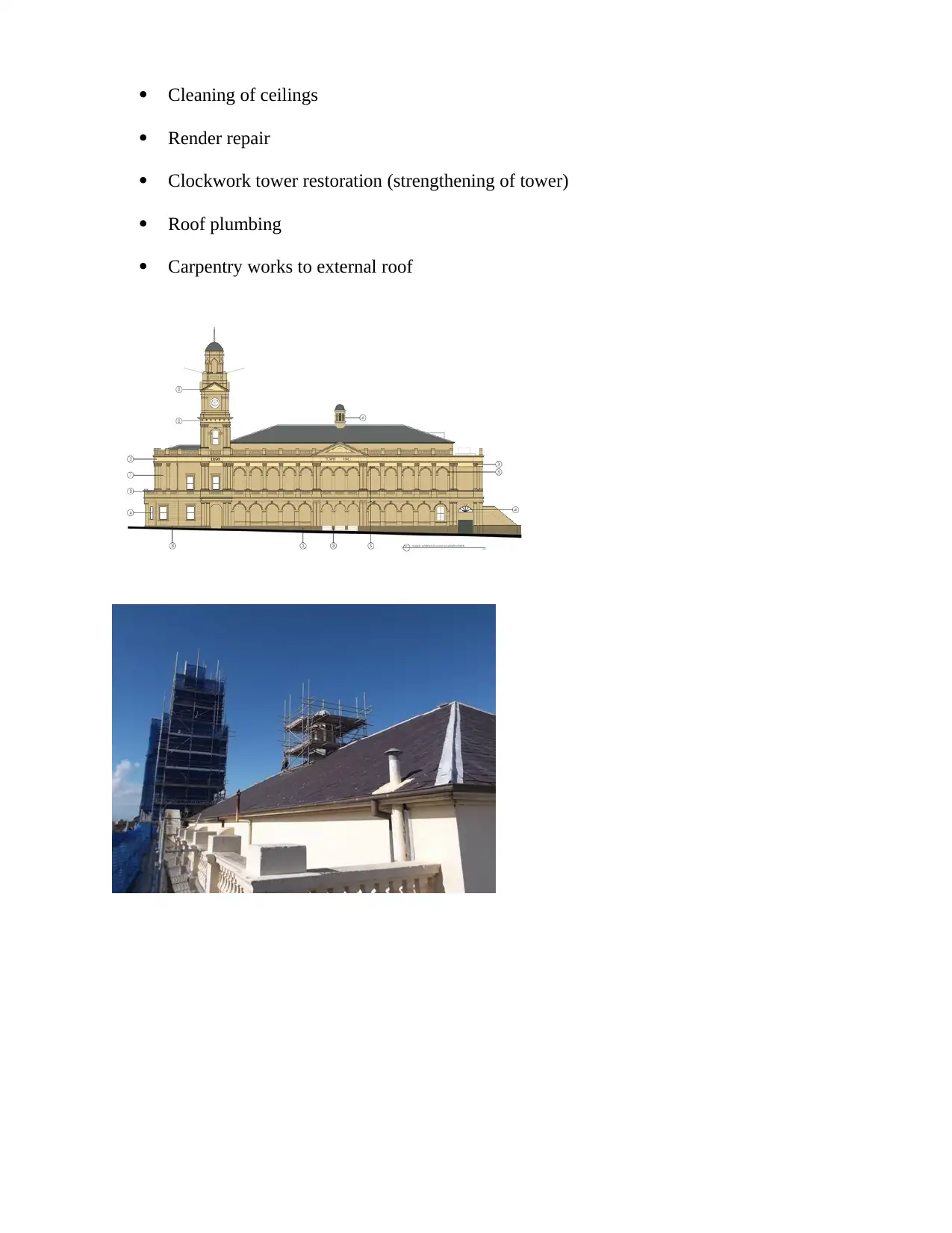
Cleaning of ceilings
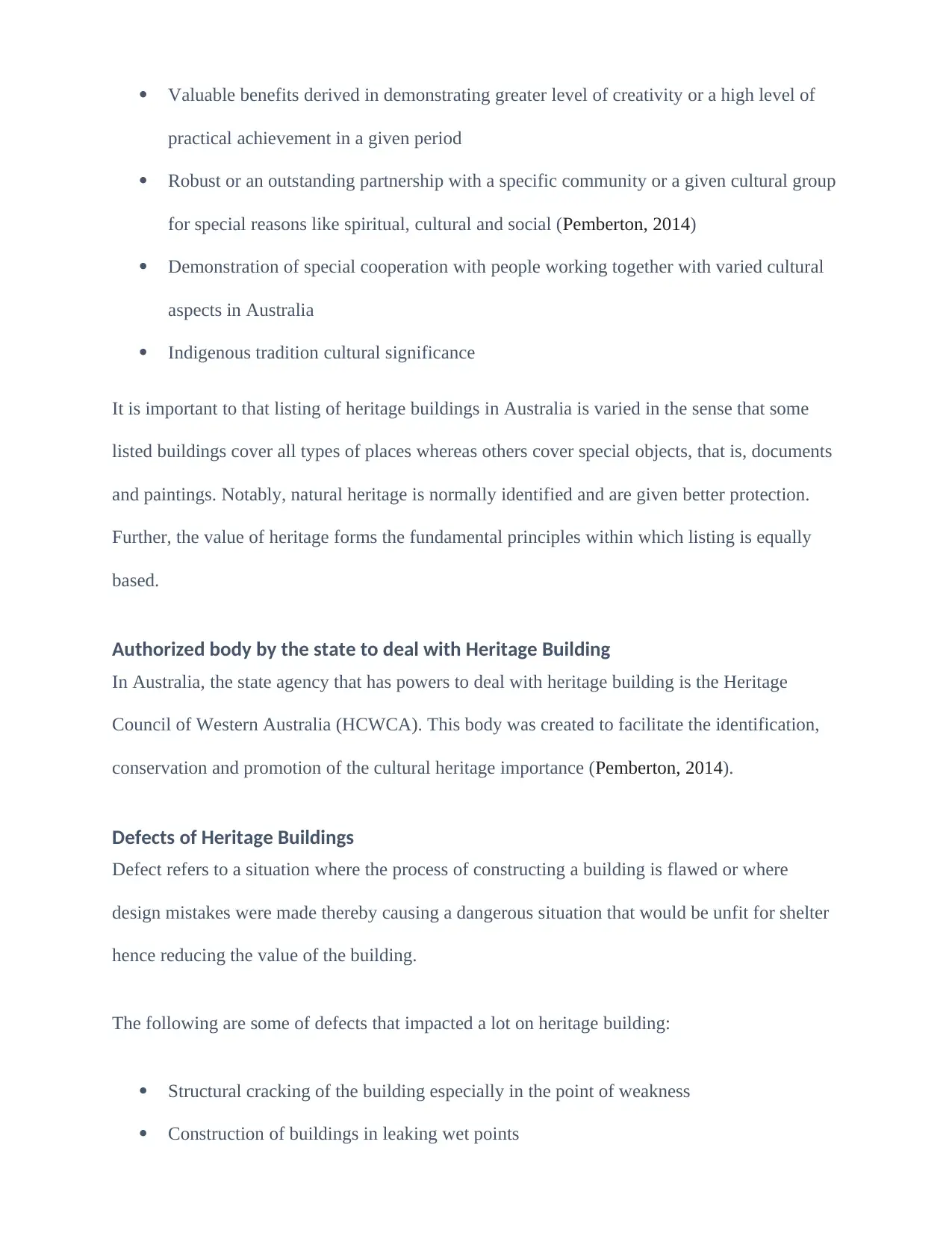
Render repair
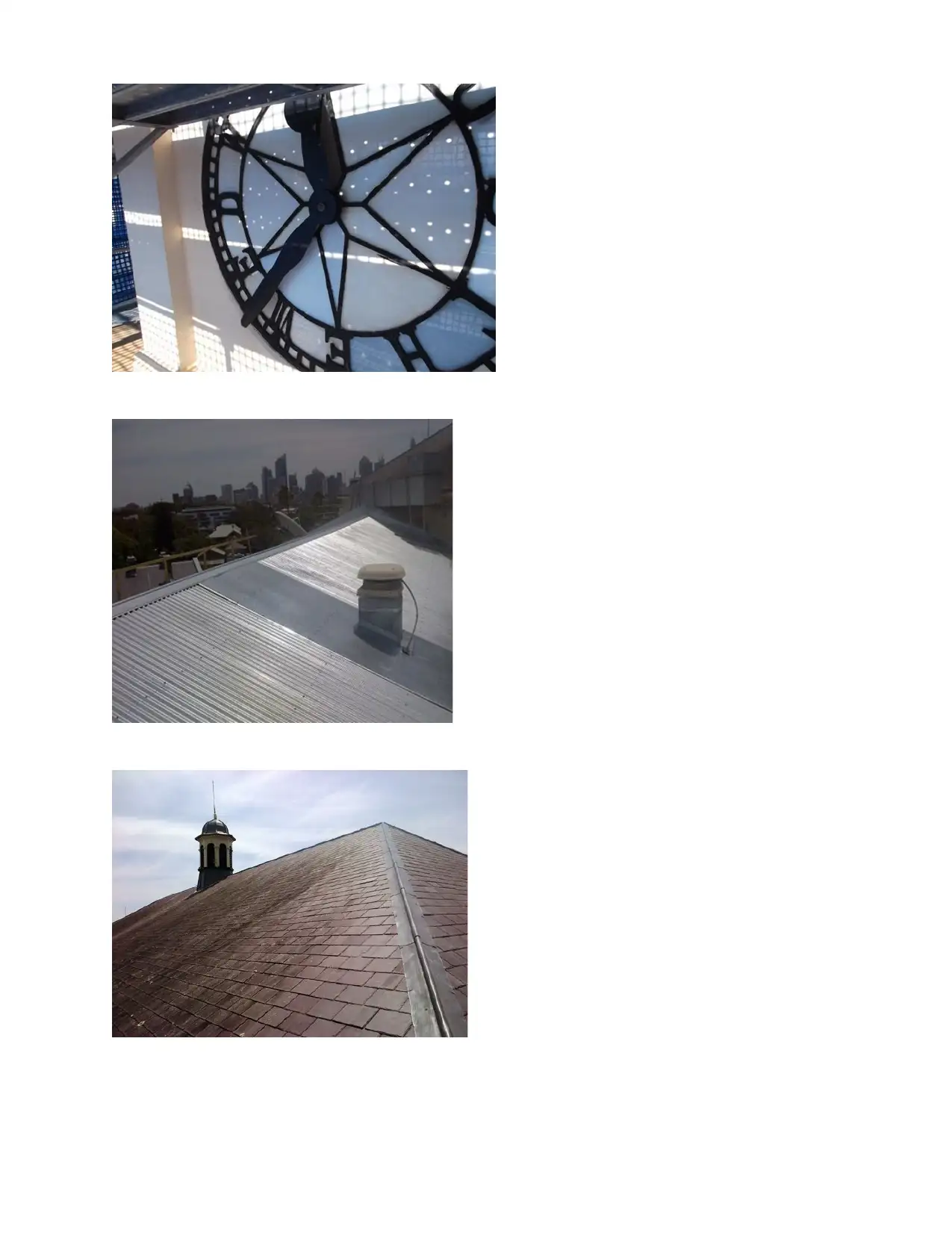
Clockwork tower restoration (strengthening of tower)
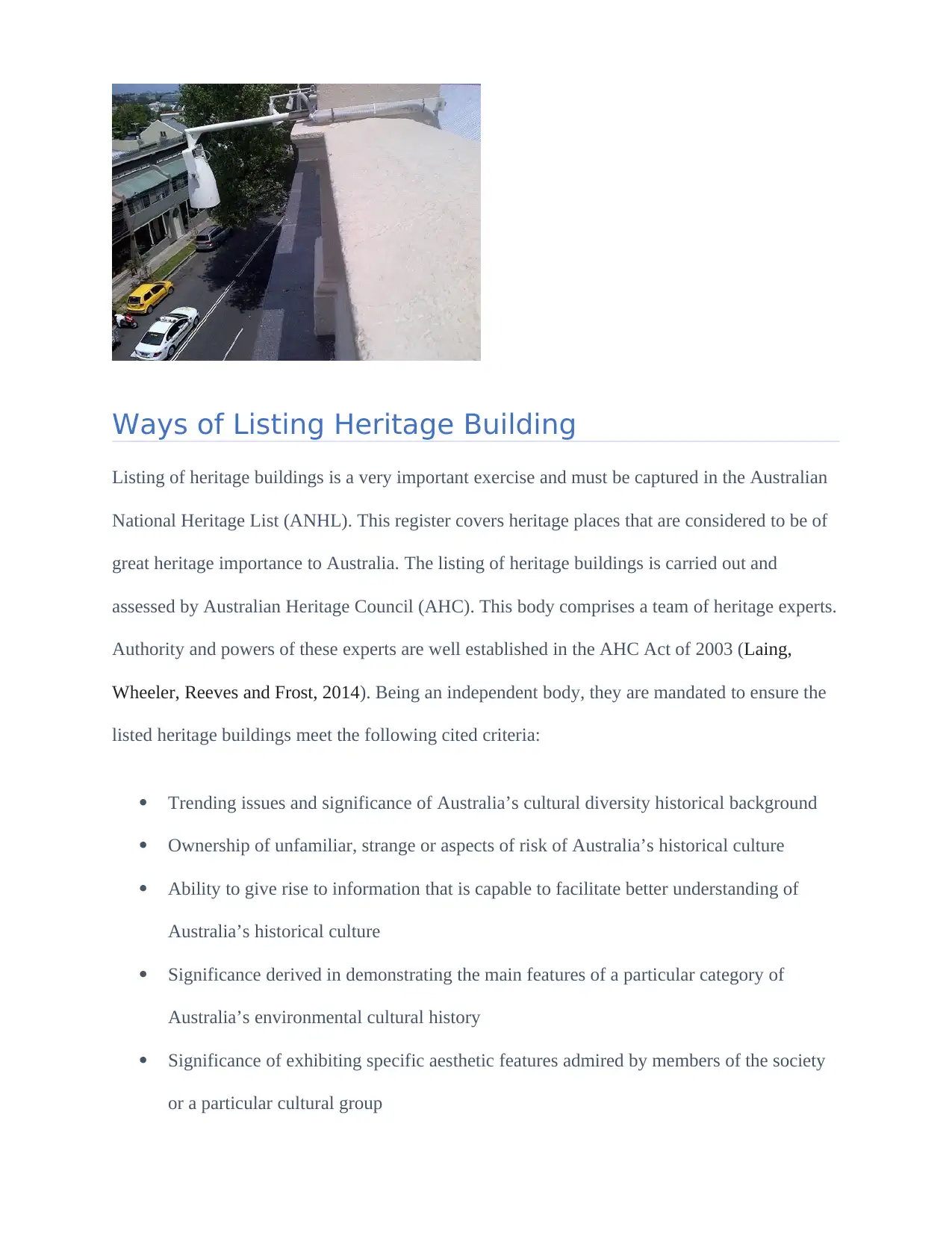
Roof plumbing
Carpentry works to external roof
Render repair
Clockwork tower restoration (strengthening of tower)
Roof plumbing
Carpentry works to external roof
⊘ This is a preview!⊘
Do you want full access?
Subscribe today to unlock all pages.
Trusted by 1+ million students worldwide
Paraphrase This Document
Need a fresh take? Get an instant paraphrase of this document with our AI Paraphraser
Ways of Listing Heritage Building
Listing of heritage buildings is a very important exercise and must be captured in the Australian
National Heritage List (ANHL). This register covers heritage places that are considered to be of
great heritage importance to Australia. The listing of heritage buildings is carried out and
assessed by Australian Heritage Council (AHC). This body comprises a team of heritage experts.
Authority and powers of these experts are well established in the AHC Act of 2003 (Laing,
Wheeler, Reeves and Frost, 2014). Being an independent body, they are mandated to ensure the
listed heritage buildings meet the following cited criteria:
Trending issues and significance of Australia’s cultural diversity historical background
Ownership of unfamiliar, strange or aspects of risk of Australia’s historical culture
Ability to give rise to information that is capable to facilitate better understanding of
Australia’s historical culture
Significance derived in demonstrating the main features of a particular category of
Australia’s environmental cultural history
Significance of exhibiting specific aesthetic features admired by members of the society
or a particular cultural group
Listing of heritage buildings is a very important exercise and must be captured in the Australian
National Heritage List (ANHL). This register covers heritage places that are considered to be of
great heritage importance to Australia. The listing of heritage buildings is carried out and
assessed by Australian Heritage Council (AHC). This body comprises a team of heritage experts.
Authority and powers of these experts are well established in the AHC Act of 2003 (Laing,
Wheeler, Reeves and Frost, 2014). Being an independent body, they are mandated to ensure the
listed heritage buildings meet the following cited criteria:
Trending issues and significance of Australia’s cultural diversity historical background
Ownership of unfamiliar, strange or aspects of risk of Australia’s historical culture
Ability to give rise to information that is capable to facilitate better understanding of
Australia’s historical culture
Significance derived in demonstrating the main features of a particular category of
Australia’s environmental cultural history
Significance of exhibiting specific aesthetic features admired by members of the society
or a particular cultural group
Valuable benefits derived in demonstrating greater level of creativity or a high level of
practical achievement in a given period
Robust or an outstanding partnership with a specific community or a given cultural group
for special reasons like spiritual, cultural and social (Pemberton, 2014)
Demonstration of special cooperation with people working together with varied cultural
aspects in Australia
Indigenous tradition cultural significance
It is important to that listing of heritage buildings in Australia is varied in the sense that some
listed buildings cover all types of places whereas others cover special objects, that is, documents
and paintings. Notably, natural heritage is normally identified and are given better protection.
Further, the value of heritage forms the fundamental principles within which listing is equally
based.
Authorized body by the state to deal with Heritage Building
In Australia, the state agency that has powers to deal with heritage building is the Heritage
Council of Western Australia (HCWCA). This body was created to facilitate the identification,
conservation and promotion of the cultural heritage importance (Pemberton, 2014).
Defects of Heritage Buildings
Defect refers to a situation where the process of constructing a building is flawed or where
design mistakes were made thereby causing a dangerous situation that would be unfit for shelter
hence reducing the value of the building.
The following are some of defects that impacted a lot on heritage building:
Structural cracking of the building especially in the point of weakness
Construction of buildings in leaking wet points
practical achievement in a given period
Robust or an outstanding partnership with a specific community or a given cultural group
for special reasons like spiritual, cultural and social (Pemberton, 2014)
Demonstration of special cooperation with people working together with varied cultural
aspects in Australia
Indigenous tradition cultural significance
It is important to that listing of heritage buildings in Australia is varied in the sense that some
listed buildings cover all types of places whereas others cover special objects, that is, documents
and paintings. Notably, natural heritage is normally identified and are given better protection.
Further, the value of heritage forms the fundamental principles within which listing is equally
based.
Authorized body by the state to deal with Heritage Building
In Australia, the state agency that has powers to deal with heritage building is the Heritage
Council of Western Australia (HCWCA). This body was created to facilitate the identification,
conservation and promotion of the cultural heritage importance (Pemberton, 2014).
Defects of Heritage Buildings
Defect refers to a situation where the process of constructing a building is flawed or where
design mistakes were made thereby causing a dangerous situation that would be unfit for shelter
hence reducing the value of the building.
The following are some of defects that impacted a lot on heritage building:
Structural cracking of the building especially in the point of weakness
Construction of buildings in leaking wet points
⊘ This is a preview!⊘
Do you want full access?
Subscribe today to unlock all pages.
Trusted by 1+ million students worldwide

1 out of 20


Related Documents


Your All-in-One AI-Powered Toolkit for Academic Success.
+13062052269
info@desklib.com
Available 24*7 on WhatsApp / Email
![[object Object]](/_next/static/media/star-bottom.7253800d.svg)
Unlock your academic potential
Copyright © 2020–2026 A2Z Services. All Rights Reserved. Developed and managed by ZUCOL.