CHC33015: Australian Centre HLTWHS002 Client Care Safety Practices
VerifiedAdded on 2022/08/22
|18
|3192
|15
Homework Assignment
AI Summary
This document presents a comprehensive solution to an assignment focused on HLTWHS002, emphasizing safe practices for direct client care within a healthcare setting. The assignment encompasses various aspects of workplace safety, including hazard management, incident reporting, infection control, and manual handling. It addresses responsibilities of employers and employees, control measures for minimizing risks, and the importance of following safety procedures. The solution includes responses to questions, and case studies addressing scenarios like MRSA infections and client incidents, to ensure the safety and wellbeing of both clients and healthcare workers. The document also covers topics such as stress management, emergency procedures, and the use of personal protective equipment (PPE). The student provides detailed answers, demonstrating an understanding of the procedures, policies, and legal obligations related to maintaining a safe environment for direct client care.
Follow safe practices
for direct client care
1
for direct client care
1

Paraphrase This Document
Need a fresh take? Get an instant paraphrase of this document with our AI Paraphraser
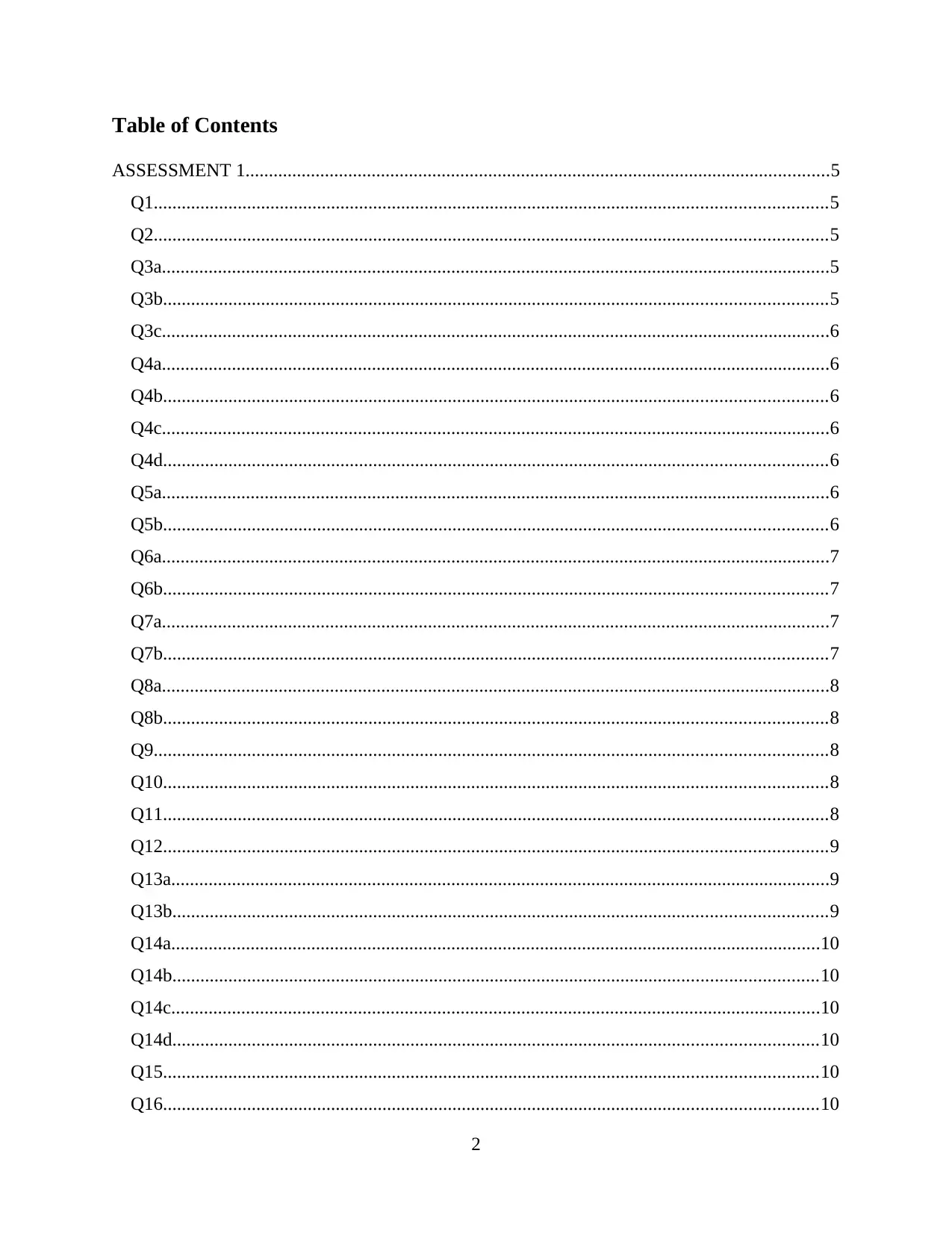
Table of Contents
ASSESSMENT 1.............................................................................................................................5
Q1................................................................................................................................................5
Q2................................................................................................................................................5
Q3a...............................................................................................................................................5
Q3b..............................................................................................................................................5
Q3c...............................................................................................................................................6
Q4a...............................................................................................................................................6
Q4b..............................................................................................................................................6
Q4c...............................................................................................................................................6
Q4d..............................................................................................................................................6
Q5a...............................................................................................................................................6
Q5b..............................................................................................................................................6
Q6a...............................................................................................................................................7
Q6b..............................................................................................................................................7
Q7a...............................................................................................................................................7
Q7b..............................................................................................................................................7
Q8a...............................................................................................................................................8
Q8b..............................................................................................................................................8
Q9................................................................................................................................................8
Q10..............................................................................................................................................8
Q11..............................................................................................................................................8
Q12..............................................................................................................................................9
Q13a.............................................................................................................................................9
Q13b............................................................................................................................................9
Q14a...........................................................................................................................................10
Q14b..........................................................................................................................................10
Q14c...........................................................................................................................................10
Q14d..........................................................................................................................................10
Q15............................................................................................................................................10
Q16............................................................................................................................................10
2
ASSESSMENT 1.............................................................................................................................5
Q1................................................................................................................................................5
Q2................................................................................................................................................5
Q3a...............................................................................................................................................5
Q3b..............................................................................................................................................5
Q3c...............................................................................................................................................6
Q4a...............................................................................................................................................6
Q4b..............................................................................................................................................6
Q4c...............................................................................................................................................6
Q4d..............................................................................................................................................6
Q5a...............................................................................................................................................6
Q5b..............................................................................................................................................6
Q6a...............................................................................................................................................7
Q6b..............................................................................................................................................7
Q7a...............................................................................................................................................7
Q7b..............................................................................................................................................7
Q8a...............................................................................................................................................8
Q8b..............................................................................................................................................8
Q9................................................................................................................................................8
Q10..............................................................................................................................................8
Q11..............................................................................................................................................8
Q12..............................................................................................................................................9
Q13a.............................................................................................................................................9
Q13b............................................................................................................................................9
Q14a...........................................................................................................................................10
Q14b..........................................................................................................................................10
Q14c...........................................................................................................................................10
Q14d..........................................................................................................................................10
Q15............................................................................................................................................10
Q16............................................................................................................................................10
2
Q17a...........................................................................................................................................10
Q17b..........................................................................................................................................11
Q18a...........................................................................................................................................11
Q18b..........................................................................................................................................11
Q19............................................................................................................................................11
Q20............................................................................................................................................12
Q21............................................................................................................................................12
Q22............................................................................................................................................12
Q23............................................................................................................................................12
Q24............................................................................................................................................12
ASSESSMENT 2...........................................................................................................................13
CASE STUDY 1............................................................................................................................13
Q1..............................................................................................................................................13
Q2..............................................................................................................................................13
Q3..............................................................................................................................................13
Q4..............................................................................................................................................13
Q5..............................................................................................................................................13
Q6..............................................................................................................................................13
Q7..............................................................................................................................................13
Q8..............................................................................................................................................13
Q9..............................................................................................................................................13
Q10............................................................................................................................................14
CASE STUDY 2............................................................................................................................14
Q1..............................................................................................................................................14
Q2..............................................................................................................................................14
Q3..............................................................................................................................................14
Q4..............................................................................................................................................14
Q5..............................................................................................................................................14
Q6..............................................................................................................................................14
Q7..............................................................................................................................................15
CASE STUDY 3............................................................................................................................15
3
Q17b..........................................................................................................................................11
Q18a...........................................................................................................................................11
Q18b..........................................................................................................................................11
Q19............................................................................................................................................11
Q20............................................................................................................................................12
Q21............................................................................................................................................12
Q22............................................................................................................................................12
Q23............................................................................................................................................12
Q24............................................................................................................................................12
ASSESSMENT 2...........................................................................................................................13
CASE STUDY 1............................................................................................................................13
Q1..............................................................................................................................................13
Q2..............................................................................................................................................13
Q3..............................................................................................................................................13
Q4..............................................................................................................................................13
Q5..............................................................................................................................................13
Q6..............................................................................................................................................13
Q7..............................................................................................................................................13
Q8..............................................................................................................................................13
Q9..............................................................................................................................................13
Q10............................................................................................................................................14
CASE STUDY 2............................................................................................................................14
Q1..............................................................................................................................................14
Q2..............................................................................................................................................14
Q3..............................................................................................................................................14
Q4..............................................................................................................................................14
Q5..............................................................................................................................................14
Q6..............................................................................................................................................14
Q7..............................................................................................................................................15
CASE STUDY 3............................................................................................................................15
3
⊘ This is a preview!⊘
Do you want full access?
Subscribe today to unlock all pages.

Trusted by 1+ million students worldwide

REFERENCES..............................................................................................................................17
4
4
Paraphrase This Document
Need a fresh take? Get an instant paraphrase of this document with our AI Paraphraser
ASSESSMENT 1
Q1
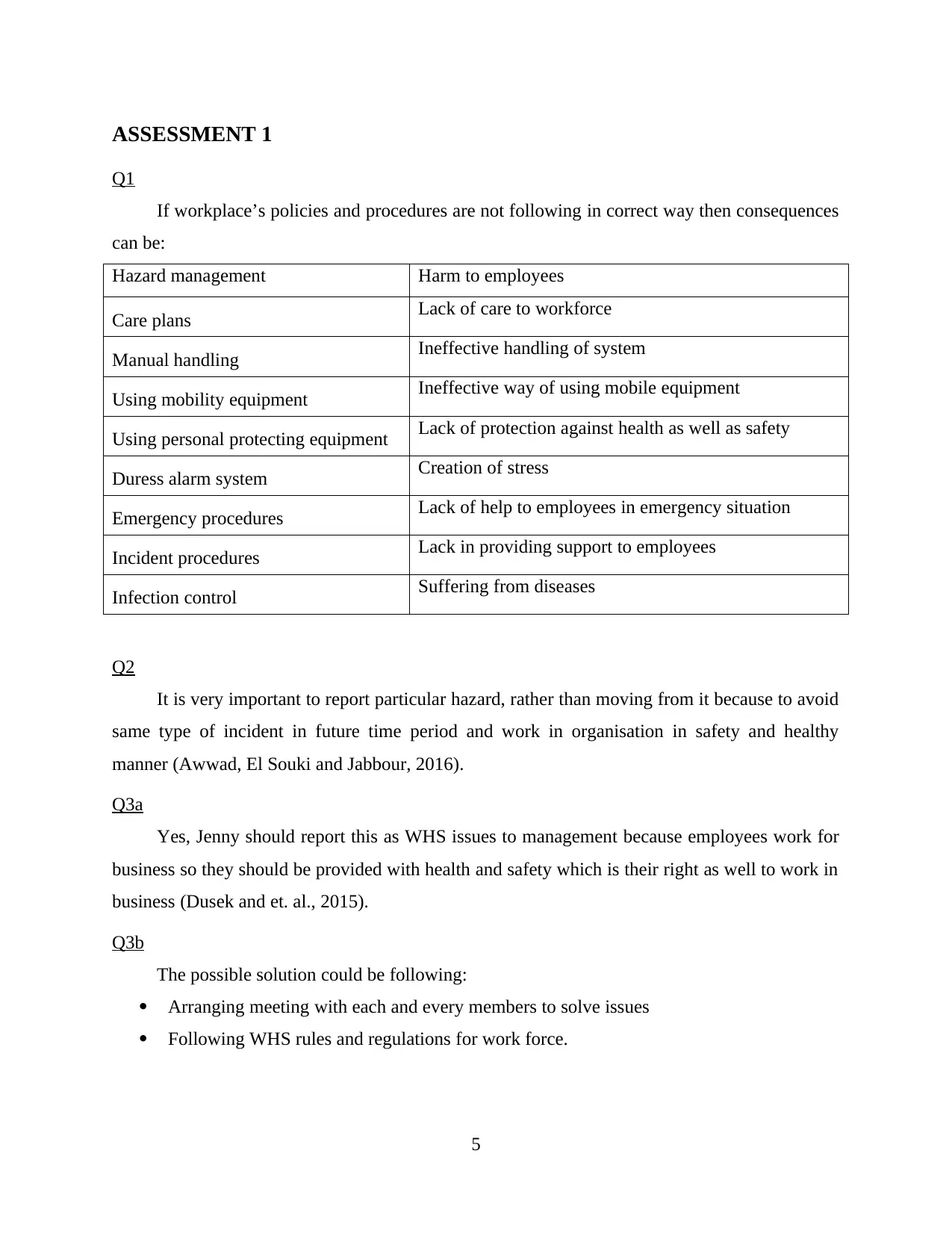
If workplace’s policies and procedures are not following in correct way then consequences
can be:
Hazard management Harm to employees
Care plans Lack of care to workforce
Manual handling Ineffective handling of system
Using mobility equipment Ineffective way of using mobile equipment
Using personal protecting equipment Lack of protection against health as well as safety
Duress alarm system Creation of stress
Emergency procedures Lack of help to employees in emergency situation
Incident procedures Lack in providing support to employees
Infection control Suffering from diseases
Q2
It is very important to report particular hazard, rather than moving from it because to avoid
same type of incident in future time period and work in organisation in safety and healthy
manner (Awwad, El Souki and Jabbour, 2016).
Q3a
Yes, Jenny should report this as WHS issues to management because employees work for
business so they should be provided with health and safety which is their right as well to work in
business (Dusek and et. al., 2015).
Q3b
The possible solution could be following:
Arranging meeting with each and every members to solve issues
Following WHS rules and regulations for work force.
5
Q1
If workplace’s policies and procedures are not following in correct way then consequences
can be:
Hazard management Harm to employees
Care plans Lack of care to workforce
Manual handling Ineffective handling of system
Using mobility equipment Ineffective way of using mobile equipment
Using personal protecting equipment Lack of protection against health as well as safety
Duress alarm system Creation of stress
Emergency procedures Lack of help to employees in emergency situation
Incident procedures Lack in providing support to employees
Infection control Suffering from diseases
Q2
It is very important to report particular hazard, rather than moving from it because to avoid
same type of incident in future time period and work in organisation in safety and healthy
manner (Awwad, El Souki and Jabbour, 2016).
Q3a
Yes, Jenny should report this as WHS issues to management because employees work for
business so they should be provided with health and safety which is their right as well to work in
business (Dusek and et. al., 2015).
Q3b
The possible solution could be following:
Arranging meeting with each and every members to solve issues
Following WHS rules and regulations for work force.
5
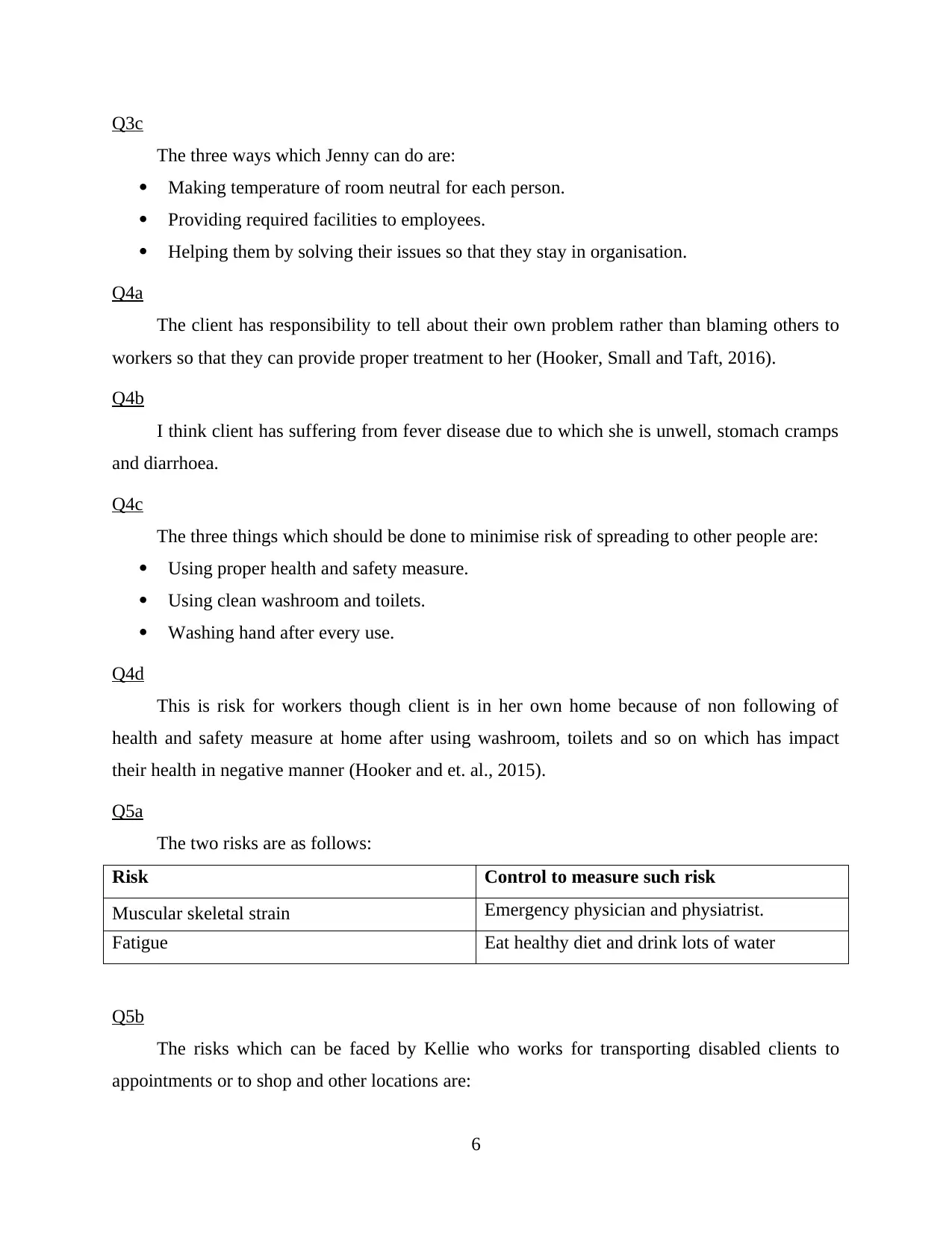
Q3c
The three ways which Jenny can do are:
Making temperature of room neutral for each person.
Providing required facilities to employees.
Helping them by solving their issues so that they stay in organisation.
Q4a
The client has responsibility to tell about their own problem rather than blaming others to
workers so that they can provide proper treatment to her (Hooker, Small and Taft, 2016).
Q4b
I think client has suffering from fever disease due to which she is unwell, stomach cramps
and diarrhoea.
Q4c
The three things which should be done to minimise risk of spreading to other people are:
Using proper health and safety measure.
Using clean washroom and toilets.
Washing hand after every use.
Q4d
This is risk for workers though client is in her own home because of non following of
health and safety measure at home after using washroom, toilets and so on which has impact
their health in negative manner (Hooker and et. al., 2015).
Q5a
The two risks are as follows:
Risk Control to measure such risk
Muscular skeletal strain Emergency physician and physiatrist.
Fatigue Eat healthy diet and drink lots of water
Q5b
The risks which can be faced by Kellie who works for transporting disabled clients to
appointments or to shop and other locations are:
6
The three ways which Jenny can do are:
Making temperature of room neutral for each person.
Providing required facilities to employees.
Helping them by solving their issues so that they stay in organisation.
Q4a
The client has responsibility to tell about their own problem rather than blaming others to
workers so that they can provide proper treatment to her (Hooker, Small and Taft, 2016).
Q4b
I think client has suffering from fever disease due to which she is unwell, stomach cramps
and diarrhoea.
Q4c
The three things which should be done to minimise risk of spreading to other people are:
Using proper health and safety measure.
Using clean washroom and toilets.
Washing hand after every use.
Q4d
This is risk for workers though client is in her own home because of non following of
health and safety measure at home after using washroom, toilets and so on which has impact
their health in negative manner (Hooker and et. al., 2015).
Q5a
The two risks are as follows:
Risk Control to measure such risk
Muscular skeletal strain Emergency physician and physiatrist.
Fatigue Eat healthy diet and drink lots of water
Q5b
The risks which can be faced by Kellie who works for transporting disabled clients to
appointments or to shop and other locations are:
6
⊘ This is a preview!⊘
Do you want full access?
Subscribe today to unlock all pages.
Trusted by 1+ million students worldwide
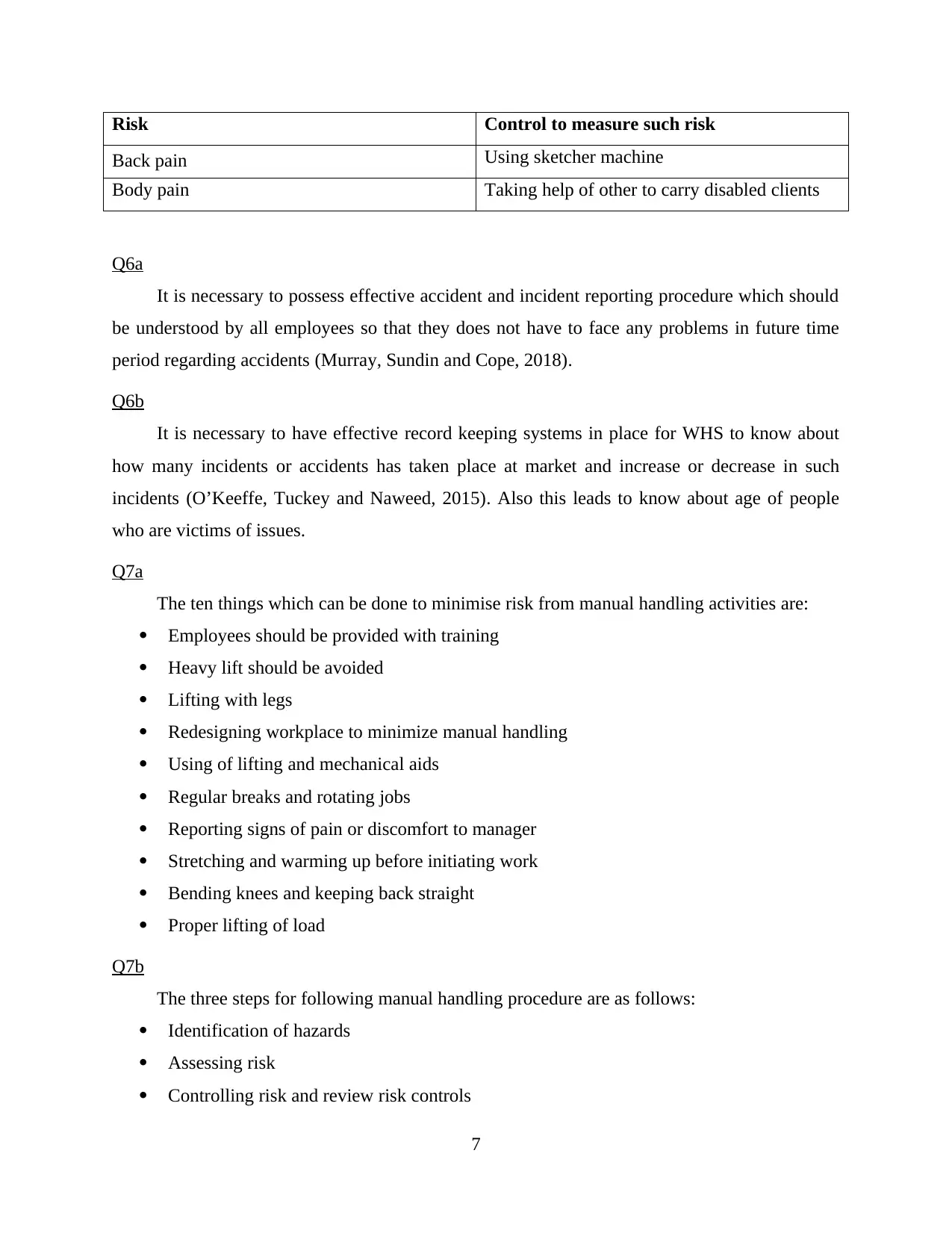
Risk Control to measure such risk
Back pain Using sketcher machine
Body pain Taking help of other to carry disabled clients
Q6a
It is necessary to possess effective accident and incident reporting procedure which should
be understood by all employees so that they does not have to face any problems in future time
period regarding accidents (Murray, Sundin and Cope, 2018).
Q6b
It is necessary to have effective record keeping systems in place for WHS to know about
how many incidents or accidents has taken place at market and increase or decrease in such
incidents (O’Keeffe, Tuckey and Naweed, 2015). Also this leads to know about age of people
who are victims of issues.
Q7a
The ten things which can be done to minimise risk from manual handling activities are:
Employees should be provided with training
Heavy lift should be avoided
Lifting with legs
Redesigning workplace to minimize manual handling
Using of lifting and mechanical aids
Regular breaks and rotating jobs
Reporting signs of pain or discomfort to manager
Stretching and warming up before initiating work
Bending knees and keeping back straight
Proper lifting of load
Q7b
The three steps for following manual handling procedure are as follows:
Identification of hazards
Assessing risk
Controlling risk and review risk controls
7
Back pain Using sketcher machine
Body pain Taking help of other to carry disabled clients
Q6a
It is necessary to possess effective accident and incident reporting procedure which should
be understood by all employees so that they does not have to face any problems in future time
period regarding accidents (Murray, Sundin and Cope, 2018).
Q6b
It is necessary to have effective record keeping systems in place for WHS to know about
how many incidents or accidents has taken place at market and increase or decrease in such
incidents (O’Keeffe, Tuckey and Naweed, 2015). Also this leads to know about age of people
who are victims of issues.
Q7a
The ten things which can be done to minimise risk from manual handling activities are:
Employees should be provided with training
Heavy lift should be avoided
Lifting with legs
Redesigning workplace to minimize manual handling
Using of lifting and mechanical aids
Regular breaks and rotating jobs
Reporting signs of pain or discomfort to manager
Stretching and warming up before initiating work
Bending knees and keeping back straight
Proper lifting of load
Q7b
The three steps for following manual handling procedure are as follows:
Identification of hazards
Assessing risk
Controlling risk and review risk controls
7
Paraphrase This Document
Need a fresh take? Get an instant paraphrase of this document with our AI Paraphraser
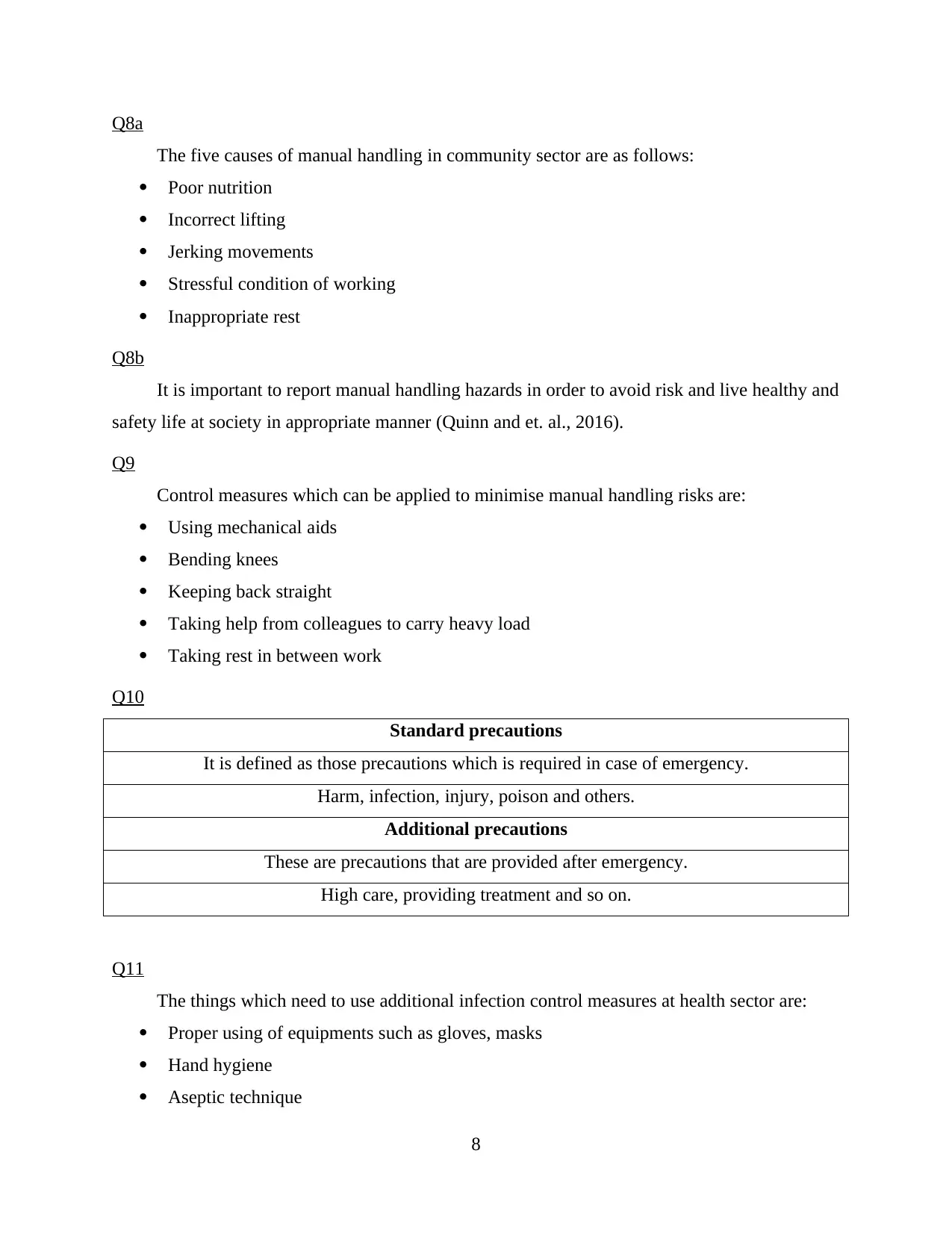
Q8a
The five causes of manual handling in community sector are as follows:
Poor nutrition
Incorrect lifting
Jerking movements
Stressful condition of working
Inappropriate rest
Q8b
It is important to report manual handling hazards in order to avoid risk and live healthy and
safety life at society in appropriate manner (Quinn and et. al., 2016).
Q9
Control measures which can be applied to minimise manual handling risks are:
Using mechanical aids
Bending knees
Keeping back straight
Taking help from colleagues to carry heavy load
Taking rest in between work
Q10
Standard precautions
It is defined as those precautions which is required in case of emergency.
Harm, infection, injury, poison and others.
Additional precautions
These are precautions that are provided after emergency.
High care, providing treatment and so on.
Q11
The things which need to use additional infection control measures at health sector are:
Proper using of equipments such as gloves, masks
Hand hygiene
Aseptic technique
8
The five causes of manual handling in community sector are as follows:
Poor nutrition
Incorrect lifting
Jerking movements
Stressful condition of working
Inappropriate rest
Q8b
It is important to report manual handling hazards in order to avoid risk and live healthy and
safety life at society in appropriate manner (Quinn and et. al., 2016).
Q9
Control measures which can be applied to minimise manual handling risks are:
Using mechanical aids
Bending knees
Keeping back straight
Taking help from colleagues to carry heavy load
Taking rest in between work
Q10
Standard precautions
It is defined as those precautions which is required in case of emergency.
Harm, infection, injury, poison and others.
Additional precautions
These are precautions that are provided after emergency.
High care, providing treatment and so on.
Q11
The things which need to use additional infection control measures at health sector are:
Proper using of equipments such as gloves, masks
Hand hygiene
Aseptic technique
8
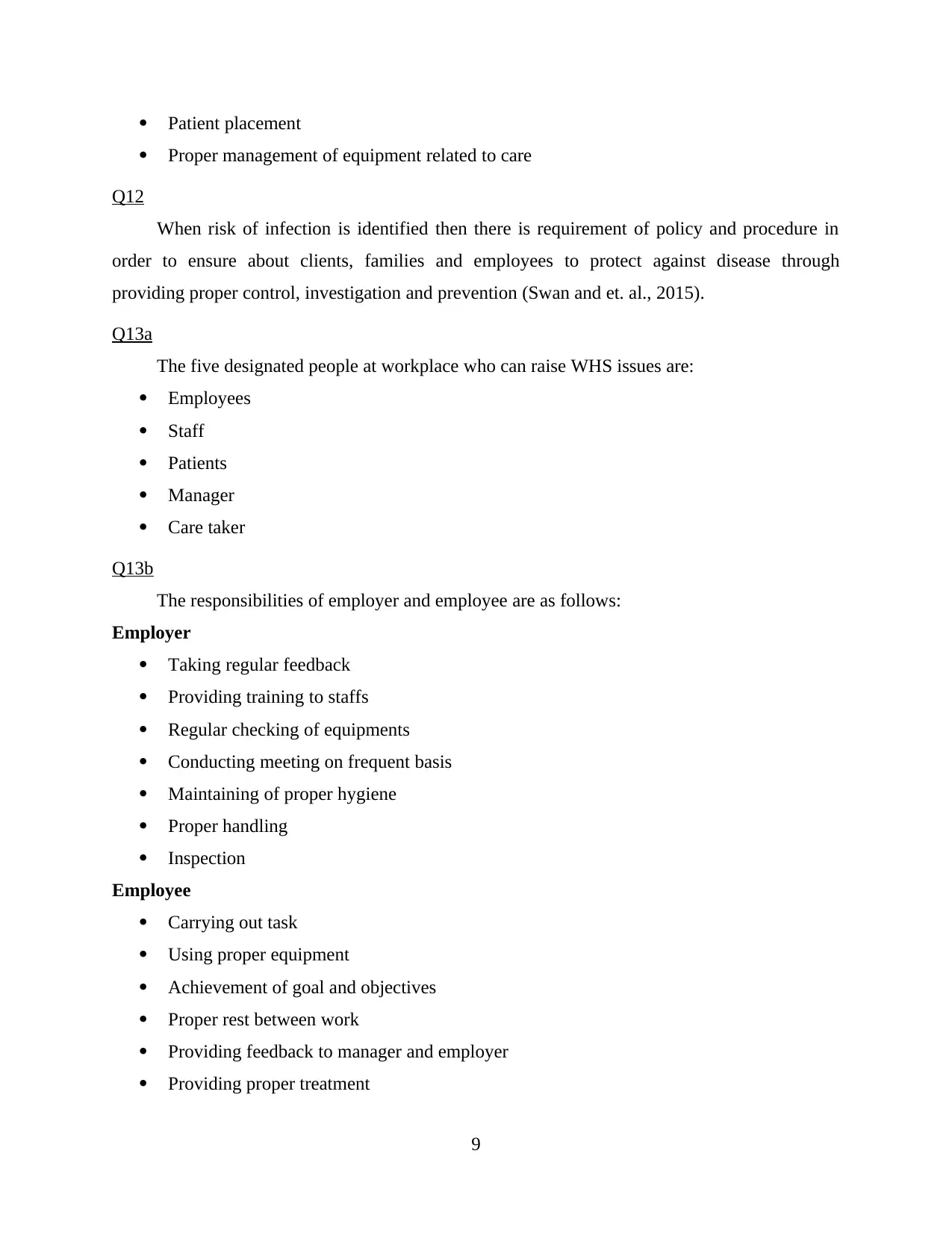
Patient placement
Proper management of equipment related to care
Q12
When risk of infection is identified then there is requirement of policy and procedure in
order to ensure about clients, families and employees to protect against disease through
providing proper control, investigation and prevention (Swan and et. al., 2015).
Q13a
The five designated people at workplace who can raise WHS issues are:
Employees
Staff
Patients
Manager
Care taker
Q13b
The responsibilities of employer and employee are as follows:
Employer
Taking regular feedback
Providing training to staffs
Regular checking of equipments
Conducting meeting on frequent basis
Maintaining of proper hygiene
Proper handling
Inspection
Employee
Carrying out task
Using proper equipment
Achievement of goal and objectives
Proper rest between work
Providing feedback to manager and employer
Providing proper treatment
9
Proper management of equipment related to care
Q12
When risk of infection is identified then there is requirement of policy and procedure in
order to ensure about clients, families and employees to protect against disease through
providing proper control, investigation and prevention (Swan and et. al., 2015).
Q13a
The five designated people at workplace who can raise WHS issues are:
Employees
Staff
Patients
Manager
Care taker
Q13b
The responsibilities of employer and employee are as follows:
Employer
Taking regular feedback
Providing training to staffs
Regular checking of equipments
Conducting meeting on frequent basis
Maintaining of proper hygiene
Proper handling
Inspection
Employee
Carrying out task
Using proper equipment
Achievement of goal and objectives
Proper rest between work
Providing feedback to manager and employer
Providing proper treatment
9
⊘ This is a preview!⊘
Do you want full access?
Subscribe today to unlock all pages.
Trusted by 1+ million students worldwide
Considering each and every aspects while providing treatment
Q14a
It is important for participating in workplace safety meeting to learn about health and
safety at workplace and work accordingly for positive outcome (Townsend and Morgan, 2017).
Q14b
It is importance for business to conduct routine inspections in order to avoid or prevent
injuries, illnesses and incidents. This helps in identification as well as recording hazards for
corrective action.
Q14c
It is importance for organisation to ensure about staff participate in consultative activities
in order to ensure that both worker as well as management are working collectively for creation
of safety and healthy workplace.
Q14d
As an employee, I can contribute by working in proper manner and participating in each
and every activities of business for positive results (Trotter, 2015). I should follow all legal laws
and procedure at workplace.
Q15
The main benefits of staff in contribution of development as well as implementation of
policies and procedure of business are reinforcing and clarifying standards which are expected
by them and using company property policy.
Q16
Being employee, I would maintain currency organisation work health safety, system,
equipment and processes through guiding them and following of rules and regulations.
Q17a
The symptoms of stress include:
Headaches
Low energy
Diarrhoea
Constipation
10
Q14a
It is important for participating in workplace safety meeting to learn about health and
safety at workplace and work accordingly for positive outcome (Townsend and Morgan, 2017).
Q14b
It is importance for business to conduct routine inspections in order to avoid or prevent
injuries, illnesses and incidents. This helps in identification as well as recording hazards for
corrective action.
Q14c
It is importance for organisation to ensure about staff participate in consultative activities
in order to ensure that both worker as well as management are working collectively for creation
of safety and healthy workplace.
Q14d
As an employee, I can contribute by working in proper manner and participating in each
and every activities of business for positive results (Trotter, 2015). I should follow all legal laws
and procedure at workplace.
Q15
The main benefits of staff in contribution of development as well as implementation of
policies and procedure of business are reinforcing and clarifying standards which are expected
by them and using company property policy.
Q16
Being employee, I would maintain currency organisation work health safety, system,
equipment and processes through guiding them and following of rules and regulations.
Q17a
The symptoms of stress include:
Headaches
Low energy
Diarrhoea
Constipation
10
Paraphrase This Document
Need a fresh take? Get an instant paraphrase of this document with our AI Paraphraser
Nausea
Tense muscles
Chest pain
Hearbeat
Upset stomach
Insomnia
Infections
Cold
Loss of sexual desire
Q17b
I should consult doctor if I experience stress related symptoms so that treatment can be
provided timely in best manner (Warmelink and et. al., 2015).
Q18a
Debrief is the way of controlling oneself for better performance so that goal and objectives
are attained.
Q18b
Debrief might be indicated about traumatic event happened to increase method of
effectiveness. It occurs within 24 to 72 hours for providing support to trauma survivor.
Q19
Poisons is defined as substance which causes death, harm, injury to organs by chemical
reactions or other activity on scales of molecular.
Emergency Equipment are defined as emergency lighting, fire sprinklers, smoke detection
that are installed at time of emergency to protect oneself.
Personal Protective Equipment is defined as protective helmets, clothing’s, garments,
goggles and other that are designed for protecting body from harm, injury or infection.
Specific Hazards are those which harm individual in negative manner in terms of sharps
and radiation.
11
Tense muscles
Chest pain
Hearbeat
Upset stomach
Insomnia
Infections
Cold
Loss of sexual desire
Q17b
I should consult doctor if I experience stress related symptoms so that treatment can be
provided timely in best manner (Warmelink and et. al., 2015).
Q18a
Debrief is the way of controlling oneself for better performance so that goal and objectives
are attained.
Q18b
Debrief might be indicated about traumatic event happened to increase method of
effectiveness. It occurs within 24 to 72 hours for providing support to trauma survivor.
Q19
Poisons is defined as substance which causes death, harm, injury to organs by chemical
reactions or other activity on scales of molecular.
Emergency Equipment are defined as emergency lighting, fire sprinklers, smoke detection
that are installed at time of emergency to protect oneself.
Personal Protective Equipment is defined as protective helmets, clothing’s, garments,
goggles and other that are designed for protecting body from harm, injury or infection.
Specific Hazards are those which harm individual in negative manner in terms of sharps
and radiation.
11
Q20
Risk is defined as high, low or chance that will cause harm to someone or somebody
whereas hazard is something which is causing harm to people.
Q21
The manager working in place or reporting person to whom all responsibility and duties
are given for employers. It should be reported to authorise person so that they will provide
solution to hazardous person.
Q22
The organisation meets their obligations under health and safety legislation by setting
standard and allocating duties and responsibility to people. They have to make workplace
policies, procedures, codes of practice, duty of care and industry standards.
Q23
The safety consideration when working in home based environment are following of all
practices, rules, regulations and so on for positive outcomes.
Q24
An organisation should have health and safety procedure such as:
Assessment of risks
Consulting with employees
Maintaining plant as well as equipment
Safe handling
Using substances
Delegation of authority
Worker training
Information and instruction
ASSESSMENT 2
CASE STUDY 1
Q1
MRSA’s is defined as disease which is transferred from infections through direct contact
with discharge, wounds and soiled areas and so on.
12
Risk is defined as high, low or chance that will cause harm to someone or somebody
whereas hazard is something which is causing harm to people.
Q21
The manager working in place or reporting person to whom all responsibility and duties
are given for employers. It should be reported to authorise person so that they will provide
solution to hazardous person.
Q22
The organisation meets their obligations under health and safety legislation by setting
standard and allocating duties and responsibility to people. They have to make workplace
policies, procedures, codes of practice, duty of care and industry standards.
Q23
The safety consideration when working in home based environment are following of all
practices, rules, regulations and so on for positive outcomes.
Q24
An organisation should have health and safety procedure such as:
Assessment of risks
Consulting with employees
Maintaining plant as well as equipment
Safe handling
Using substances
Delegation of authority
Worker training
Information and instruction
ASSESSMENT 2
CASE STUDY 1
Q1
MRSA’s is defined as disease which is transferred from infections through direct contact
with discharge, wounds and soiled areas and so on.
12
⊘ This is a preview!⊘
Do you want full access?
Subscribe today to unlock all pages.
Trusted by 1+ million students worldwide

1 out of 18


Related Documents


Your All-in-One AI-Powered Toolkit for Academic Success.
+13062052269
info@desklib.com
Available 24*7 on WhatsApp / Email
![[object Object]](/_next/static/media/star-bottom.7253800d.svg)
Unlock your academic potential
Copyright © 2020–2026 A2Z Services. All Rights Reserved. Developed and managed by ZUCOL.