Detailed Review of the Book 'Climate Change' and its Global Impact
VerifiedAdded on 2023/05/31
|8
|2192
|159
Report
AI Summary
This report provides a comprehensive review of the book "Climate Change" (2nd ed.) edited by DiMento and Doughman. The review summarizes the book's exploration of climate change's impact on humanity, including effects on housing prices and unemployment, while also covering the scientific principles involved. The book is praised for its accessible language and discussion of actions by governments, businesses, and citizens to mitigate climate change. The review highlights the book's incorporation of current scientific research, policy initiatives, and the role of social media. It also analyzes the book's discussion of the impact on vulnerable populations and recommendations for stakeholders. The report assesses the book's strengths, including its informative nature for a general audience, and its limitations, such as a lack of innovative solutions. The author's perspective is analyzed, emphasizing the book's focus on the causes and effects of climate change, particularly global warming and its implications for global policy changes. The report concludes that the book's data is aligned with its conclusions, with a focus on the importance of curbing anthropogenic climate change.
Running Header: Review of the book- “Climate Change”
Title: Review of the Book – “Climate Change”
Student Name and Id:
Course Name and Id:
University Affiliation
Date: 6/11/2018
Authors Note
The report is presented as part of the requirements to complete the course work.
Title: Review of the Book – “Climate Change”
Student Name and Id:
Course Name and Id:
University Affiliation
Date: 6/11/2018
Authors Note
The report is presented as part of the requirements to complete the course work.
Paraphrase This Document
Need a fresh take? Get an instant paraphrase of this document with our AI Paraphraser

Review of the book “Climate Change”
Summary of the Book:
DiMento, J. F. C.; Doughman, P., Eds. (2014) Climate Change: What It Means for Us, Our
Children, and Our Grandchildren 2nd ed." Is the book selected for review in the current
report. There are several books available about climate change, which are mostly related with
giving information of what makes up the climate changes. However DiMento’s current book
is quite informative in the sense, it gave lot of information about how the climate change
affect the mankind and more typically the pressing concerns like how the climate change is
going to impact the housing prices, unemployment rates etc are discussed in the book. Further
the book also comprehends the science of the climate changes along with the principles
contained in it. The most interesting part of the write-up is that the language is very lucid and
employed non technical language, so that any reader can get best understanding of the
content. Further there is also information about the government, business, citizens and the
actions which these stakeholders can take up in controlling the climate changes is well
presented in the book(DiMento et al,2014). Further the book incorporated the current state of
art scientific research going on, on the subject; as well there is also detailed information about
the policy initiatives which the government is taking on the climate changes. Also there is
updated information about the recent major legislative actions taken up. Discussion is
presented on different federal initiatives in United States as well as in other developing
nations across the world. The implications of the social media in effective curbing of the
Climate changes are presented in the book. While indicating the impact which climate
change can have on the most vulnerable population on the global scale, a range of
recommendations are provided to diverse stakeholders in the world. Paleo computer data
models are employed to understand the climate change process and to draw meaningful
predictions out of the study(Erickson). First three chapters of the book explains the basic
information about the climate change, the scientific information about that and further there is
2
Summary of the Book:
DiMento, J. F. C.; Doughman, P., Eds. (2014) Climate Change: What It Means for Us, Our
Children, and Our Grandchildren 2nd ed." Is the book selected for review in the current
report. There are several books available about climate change, which are mostly related with
giving information of what makes up the climate changes. However DiMento’s current book
is quite informative in the sense, it gave lot of information about how the climate change
affect the mankind and more typically the pressing concerns like how the climate change is
going to impact the housing prices, unemployment rates etc are discussed in the book. Further
the book also comprehends the science of the climate changes along with the principles
contained in it. The most interesting part of the write-up is that the language is very lucid and
employed non technical language, so that any reader can get best understanding of the
content. Further there is also information about the government, business, citizens and the
actions which these stakeholders can take up in controlling the climate changes is well
presented in the book(DiMento et al,2014). Further the book incorporated the current state of
art scientific research going on, on the subject; as well there is also detailed information about
the policy initiatives which the government is taking on the climate changes. Also there is
updated information about the recent major legislative actions taken up. Discussion is
presented on different federal initiatives in United States as well as in other developing
nations across the world. The implications of the social media in effective curbing of the
Climate changes are presented in the book. While indicating the impact which climate
change can have on the most vulnerable population on the global scale, a range of
recommendations are provided to diverse stakeholders in the world. Paleo computer data
models are employed to understand the climate change process and to draw meaningful
predictions out of the study(Erickson). First three chapters of the book explains the basic
information about the climate change, the scientific information about that and further there is
2

Review of the book “Climate Change”
also information about the impact of the climate change on the ecological systems and the
mankind as well. Chapter 4 is written to explain why the scientists are right about the climate
change and about the rise of temperature as well. Chapter 5 is review of the history of the
protocols, policies and legislations made for mitigating the climate change. Some
recommendations are included in the later chapters to constrain the anthropogenic climate
change conditions (Abatzoglou et al., 2014).
Discussion and Analysis:
(i) Overall the book is good informative resources for those who are interested to
know what it makes by climate change. What is the possible impact of the same
on ecology and mankind? What type of implications it can have to us etc. Further
there is also detailed information about the policies and procedures being in place
along with few recommendations to curb the climate change. However still the
book is not very exhaustive and there are no any very interesting and innovative
solutions to the problem. Though it cannot be denied that the information
presented is valuable to a new reader, it is of not much use to the advanced learner
on the subject. There are some computer based data analytics employed in the
book to introduce the simulation of the climate change conditions and to derive
predictions from them. However it is truly said in the book that the practical
procedures in use for prediction of the climate change are of limited use
(Gallagher, 2009).
(ii) The author main argument is that climate change is to be averted as the ill effects
of the same on the ecology (Germini) and thereby to the several perspectives of
the human civilization are quite detrimental to their existence. After introducing
3
also information about the impact of the climate change on the ecological systems and the
mankind as well. Chapter 4 is written to explain why the scientists are right about the climate
change and about the rise of temperature as well. Chapter 5 is review of the history of the
protocols, policies and legislations made for mitigating the climate change. Some
recommendations are included in the later chapters to constrain the anthropogenic climate
change conditions (Abatzoglou et al., 2014).
Discussion and Analysis:
(i) Overall the book is good informative resources for those who are interested to
know what it makes by climate change. What is the possible impact of the same
on ecology and mankind? What type of implications it can have to us etc. Further
there is also detailed information about the policies and procedures being in place
along with few recommendations to curb the climate change. However still the
book is not very exhaustive and there are no any very interesting and innovative
solutions to the problem. Though it cannot be denied that the information
presented is valuable to a new reader, it is of not much use to the advanced learner
on the subject. There are some computer based data analytics employed in the
book to introduce the simulation of the climate change conditions and to derive
predictions from them. However it is truly said in the book that the practical
procedures in use for prediction of the climate change are of limited use
(Gallagher, 2009).
(ii) The author main argument is that climate change is to be averted as the ill effects
of the same on the ecology (Germini) and thereby to the several perspectives of
the human civilization are quite detrimental to their existence. After introducing
3
⊘ This is a preview!⊘
Do you want full access?
Subscribe today to unlock all pages.

Trusted by 1+ million students worldwide

Review of the book “Climate Change”
the content scientifically and explaining the underlying principles, the author has
provided with some recommendations to constrain the anthropogenic climatic
changes. Though the procedures are not very exhaustive in curbing the changes,
they do have reasonable implications to the climate change.
(iii) The history of the climate change in specific aspects like increase in the planet
temperature presented in the booklet. More specifically there is information about
the implications of the temperature change over the mankind. Other aspects like
climate change how it can impact human critical issues like employment rates fall
rise in the housing prices are illustrated with good insights and illustrations of the
actual scenario. Also correlations of the anthropogenic activities and the climate
change implications related insights and data presented in the book. The most
important point of the book is to present the causes and the effects of the climate
changes. The focus is given to the global warming and the implications of the
same to the global policy changes.
(iv) Definitely the data presented in the book is in line with the conclusions prepared
there in the book. It is concluded that if proper actions are taken to curb at least
the anthropogenic climate change factors, definitely it will curb the change to
some extent and yes it is true of course. The data presented in the book is true as it
was given with several reliable evidences and factual references to the content.
Further all the predications are based on Paleo data-sets. The data as well as some
of the inferences drawn from the data like the social and environmental impacts of
the climate change are not evenly distributed is very correct. They do vary from
region to region as well from the country to country is very correct.
4
the content scientifically and explaining the underlying principles, the author has
provided with some recommendations to constrain the anthropogenic climatic
changes. Though the procedures are not very exhaustive in curbing the changes,
they do have reasonable implications to the climate change.
(iii) The history of the climate change in specific aspects like increase in the planet
temperature presented in the booklet. More specifically there is information about
the implications of the temperature change over the mankind. Other aspects like
climate change how it can impact human critical issues like employment rates fall
rise in the housing prices are illustrated with good insights and illustrations of the
actual scenario. Also correlations of the anthropogenic activities and the climate
change implications related insights and data presented in the book. The most
important point of the book is to present the causes and the effects of the climate
changes. The focus is given to the global warming and the implications of the
same to the global policy changes.
(iv) Definitely the data presented in the book is in line with the conclusions prepared
there in the book. It is concluded that if proper actions are taken to curb at least
the anthropogenic climate change factors, definitely it will curb the change to
some extent and yes it is true of course. The data presented in the book is true as it
was given with several reliable evidences and factual references to the content.
Further all the predications are based on Paleo data-sets. The data as well as some
of the inferences drawn from the data like the social and environmental impacts of
the climate change are not evenly distributed is very correct. They do vary from
region to region as well from the country to country is very correct.
4
Paraphrase This Document
Need a fresh take? Get an instant paraphrase of this document with our AI Paraphraser

Review of the book “Climate Change”
(v) The main author Di Mento JFC is a professor and authority in International law,
environmental law (Klinsky, 2014), international environmental law, urban
planning. He wrote several books on these topics and has good grasp on the
legislations and the policies related with the environmental sciences. Author’s
view point is to focus on the significance on the topic as well to provide the
audience with all the necessary fundamental knowledge over the subject (O’Lear,
2015). He is qualified lawyer as well environmentalist. His main specialization is
in the policy studies and legislator related studies on the subject and hence he can
be considered as authority over this topic particularly in relation to the legalities
and other related aspects (Pazhoohi, 2015).
(vi) It can be said that the book is very much effective in providing the information to
the general audience. For that matter, rather than for specialist audience, the book
is more helpful for the general audience and hence it can be considered that the
author is successful in reaching the general audience (Perch, 2011). The content
preparation and the presentation of different chapters in the book are done in
accordance to the needs of presenting the subject to the general audience in the
proper format. The content presented is very lucid; any reader can understand the
policy discussions presented in the booklet. Further the information presented in
the book regarding aspects such as clean development mechanisms and green
house gases their intensity and implications to the society are presented in detail in
the booklet. Also the book discusses the nature of the science and the consensus
on the climate change in detail. These things are presented understandable to a
common reader. The recommendations provided in the book in terms of public
5
(v) The main author Di Mento JFC is a professor and authority in International law,
environmental law (Klinsky, 2014), international environmental law, urban
planning. He wrote several books on these topics and has good grasp on the
legislations and the policies related with the environmental sciences. Author’s
view point is to focus on the significance on the topic as well to provide the
audience with all the necessary fundamental knowledge over the subject (O’Lear,
2015). He is qualified lawyer as well environmentalist. His main specialization is
in the policy studies and legislator related studies on the subject and hence he can
be considered as authority over this topic particularly in relation to the legalities
and other related aspects (Pazhoohi, 2015).
(vi) It can be said that the book is very much effective in providing the information to
the general audience. For that matter, rather than for specialist audience, the book
is more helpful for the general audience and hence it can be considered that the
author is successful in reaching the general audience (Perch, 2011). The content
preparation and the presentation of different chapters in the book are done in
accordance to the needs of presenting the subject to the general audience in the
proper format. The content presented is very lucid; any reader can understand the
policy discussions presented in the booklet. Further the information presented in
the book regarding aspects such as clean development mechanisms and green
house gases their intensity and implications to the society are presented in detail in
the booklet. Also the book discusses the nature of the science and the consensus
on the climate change in detail. These things are presented understandable to a
common reader. The recommendations provided in the book in terms of public
5

Review of the book “Climate Change”
and private partnership requirements, the need for consideration of the ways
regarding how to improve the scientific findings are well presented in the booklet
(Rawles, 2010). The risk zones identified in the book, like the vulnerable areas in
the developing countries as well as the United States is detailed well in detail in
the booklet. General audience can be deeply impacted with the recommendations
and there is likely possibility that with the earned awareness they can even take
active participation in pressurizing the government to enable them to take proper
action (Tennant, 2008). Two things that the author said, that there is sufficient
information now available to proceed with a proper action and secondly the
obligation there existing to take care of the next generations is very much true.
(vii) As such there is nothing i see not reliable or distant from the reality. The facts and
the simulations drawn are all true, however I will agree with the comment, that the
predictions and simulations are limited in terms of providing more meaningful
predictions. However the opinions and the content presented in the book is totally
realistic and the author’s view and the recommendations presented are correct.
Yes though the sole intention of the book is not to well educate the reader about
the science and related information on the climate change topic, to enable the
reader to understand the basics of the subject, author has done enough
presentation of the content in terms of the scientific backup and support to the
theoretical explanation. This is definitely of use to any reader to understand the
science behind the climate change. The focus on the aspects like what makes up
the global warming is very clearly mentioned with proper reasoning as well as the
history of first identification of that as a concern and a social problem. For
example consideration to the anthropogenic factors like fossil fuel burning and
6
and private partnership requirements, the need for consideration of the ways
regarding how to improve the scientific findings are well presented in the booklet
(Rawles, 2010). The risk zones identified in the book, like the vulnerable areas in
the developing countries as well as the United States is detailed well in detail in
the booklet. General audience can be deeply impacted with the recommendations
and there is likely possibility that with the earned awareness they can even take
active participation in pressurizing the government to enable them to take proper
action (Tennant, 2008). Two things that the author said, that there is sufficient
information now available to proceed with a proper action and secondly the
obligation there existing to take care of the next generations is very much true.
(vii) As such there is nothing i see not reliable or distant from the reality. The facts and
the simulations drawn are all true, however I will agree with the comment, that the
predictions and simulations are limited in terms of providing more meaningful
predictions. However the opinions and the content presented in the book is totally
realistic and the author’s view and the recommendations presented are correct.
Yes though the sole intention of the book is not to well educate the reader about
the science and related information on the climate change topic, to enable the
reader to understand the basics of the subject, author has done enough
presentation of the content in terms of the scientific backup and support to the
theoretical explanation. This is definitely of use to any reader to understand the
science behind the climate change. The focus on the aspects like what makes up
the global warming is very clearly mentioned with proper reasoning as well as the
history of first identification of that as a concern and a social problem. For
example consideration to the anthropogenic factors like fossil fuel burning and
6
⊘ This is a preview!⊘
Do you want full access?
Subscribe today to unlock all pages.

Trusted by 1+ million students worldwide

Review of the book “Climate Change”
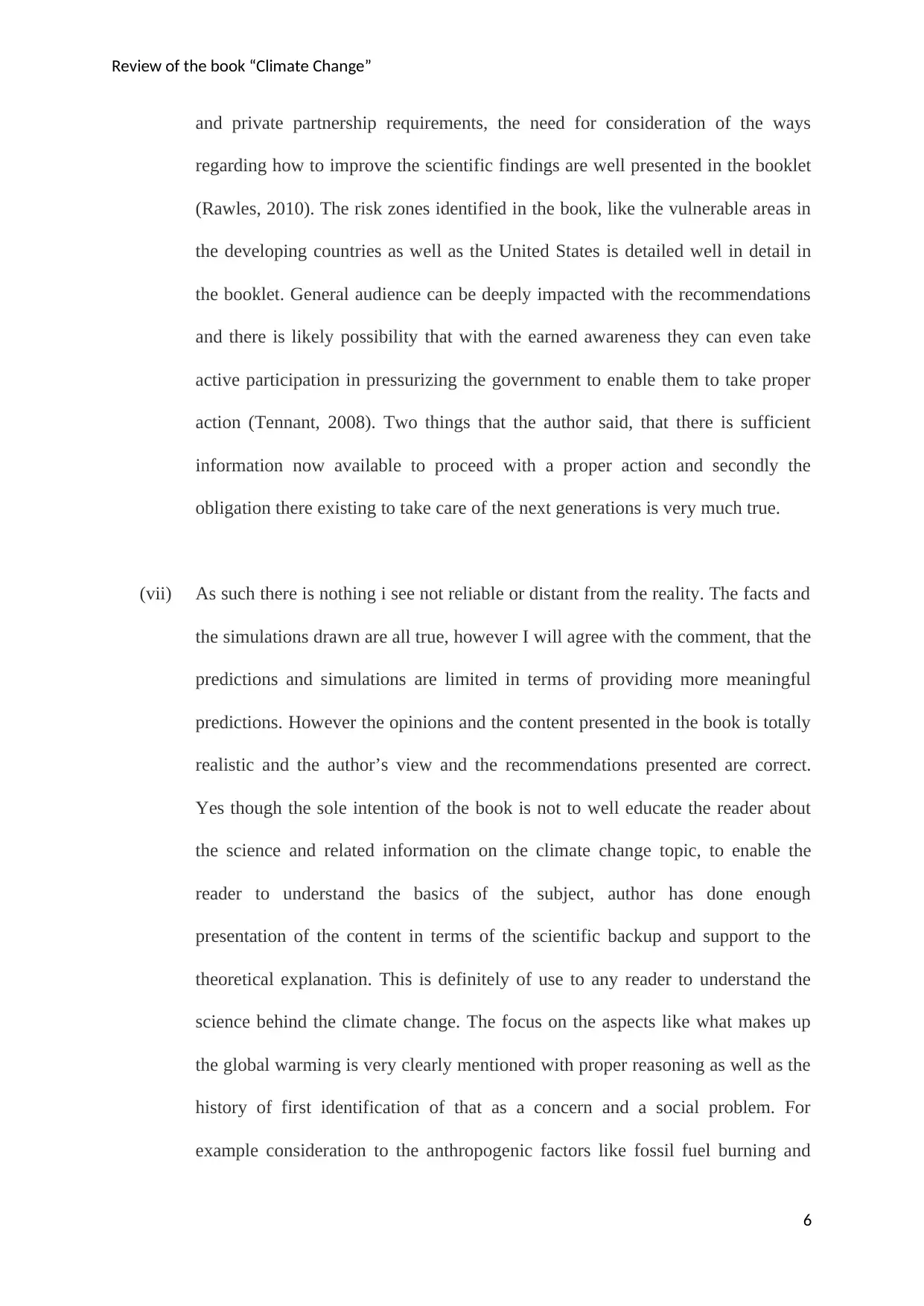
implications of the same to the global climate changes is recognized in 1970s
itself(Venkataraman,2008) and the progress occurring in this regard etc, provides
a comprehensive information and motivation to the reader to take up appropriate
actions in this regard.
7
implications of the same to the global climate changes is recognized in 1970s
itself(Venkataraman,2008) and the progress occurring in this regard etc, provides
a comprehensive information and motivation to the reader to take up appropriate
actions in this regard.
7
Paraphrase This Document
Need a fresh take? Get an instant paraphrase of this document with our AI Paraphraser

Review of the book “Climate Change”
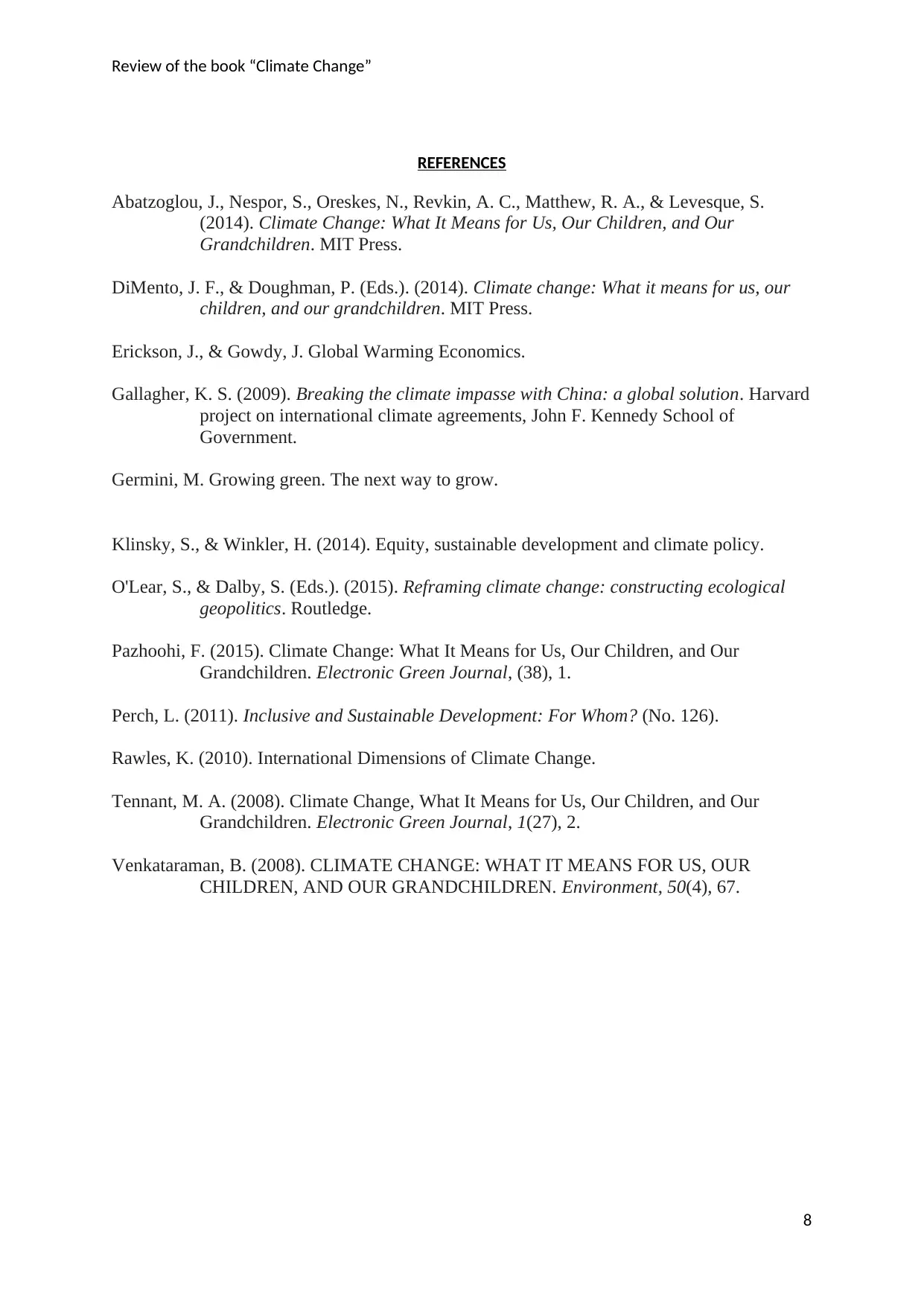
REFERENCES
Abatzoglou, J., Nespor, S., Oreskes, N., Revkin, A. C., Matthew, R. A., & Levesque, S.
(2014). Climate Change: What It Means for Us, Our Children, and Our
Grandchildren. MIT Press.
DiMento, J. F., & Doughman, P. (Eds.). (2014). Climate change: What it means for us, our
children, and our grandchildren. MIT Press.
Erickson, J., & Gowdy, J. Global Warming Economics.
Gallagher, K. S. (2009). Breaking the climate impasse with China: a global solution. Harvard
project on international climate agreements, John F. Kennedy School of
Government.
Germini, M. Growing green. The next way to grow.
Klinsky, S., & Winkler, H. (2014). Equity, sustainable development and climate policy.
O'Lear, S., & Dalby, S. (Eds.). (2015). Reframing climate change: constructing ecological
geopolitics. Routledge.
Pazhoohi, F. (2015). Climate Change: What It Means for Us, Our Children, and Our
Grandchildren. Electronic Green Journal, (38), 1.
Perch, L. (2011). Inclusive and Sustainable Development: For Whom? (No. 126).
Rawles, K. (2010). International Dimensions of Climate Change.
Tennant, M. A. (2008). Climate Change, What It Means for Us, Our Children, and Our
Grandchildren. Electronic Green Journal, 1(27), 2.
Venkataraman, B. (2008). CLIMATE CHANGE: WHAT IT MEANS FOR US, OUR
CHILDREN, AND OUR GRANDCHILDREN. Environment, 50(4), 67.
8
REFERENCES
Abatzoglou, J., Nespor, S., Oreskes, N., Revkin, A. C., Matthew, R. A., & Levesque, S.
(2014). Climate Change: What It Means for Us, Our Children, and Our
Grandchildren. MIT Press.
DiMento, J. F., & Doughman, P. (Eds.). (2014). Climate change: What it means for us, our
children, and our grandchildren. MIT Press.
Erickson, J., & Gowdy, J. Global Warming Economics.
Gallagher, K. S. (2009). Breaking the climate impasse with China: a global solution. Harvard
project on international climate agreements, John F. Kennedy School of
Government.
Germini, M. Growing green. The next way to grow.
Klinsky, S., & Winkler, H. (2014). Equity, sustainable development and climate policy.
O'Lear, S., & Dalby, S. (Eds.). (2015). Reframing climate change: constructing ecological
geopolitics. Routledge.
Pazhoohi, F. (2015). Climate Change: What It Means for Us, Our Children, and Our
Grandchildren. Electronic Green Journal, (38), 1.
Perch, L. (2011). Inclusive and Sustainable Development: For Whom? (No. 126).
Rawles, K. (2010). International Dimensions of Climate Change.
Tennant, M. A. (2008). Climate Change, What It Means for Us, Our Children, and Our
Grandchildren. Electronic Green Journal, 1(27), 2.
Venkataraman, B. (2008). CLIMATE CHANGE: WHAT IT MEANS FOR US, OUR
CHILDREN, AND OUR GRANDCHILDREN. Environment, 50(4), 67.
8
1 out of 8
Related Documents
Your All-in-One AI-Powered Toolkit for Academic Success.
+13062052269
info@desklib.com
Available 24*7 on WhatsApp / Email
Unlock your academic potential
Copyright © 2020–2025 A2Z Services. All Rights Reserved. Developed and managed by ZUCOL.