Project Proposal: Extreme Weather and Infectious Diseases in Australia
VerifiedAdded on 2022/08/17
|19
|2492
|14
Project
AI Summary
This project proposal investigates the significant impact of extreme weather events on the proliferation of infectious diseases within the Northern Territory of Australia. The study delves into the background, aims, and objectives, exploring research questions focused on climate change's influence. The structure includes a literature review examining the theoretical underpinnings and existing research on the subject. The methodology section outlines the research approach, data collection methods, and research techniques employed. The proposal concludes with a discussion of the findings, limitations, and recommendations. It emphasizes the critical role of climate change in disease transmission, considering factors like rising temperatures and extreme weather events, and their effects on public health. The project includes an introduction, literature review, research methodology, conclusion, and references to support the analysis. The research is based on secondary data and is designed to provide a comprehensive understanding of the subject.
Management 1
Environmental Health and
Management
Title: Impact of extreme weather in spreading of infectious diseases in Northern Territory,
Australia.
Environmental Health and
Management
Title: Impact of extreme weather in spreading of infectious diseases in Northern Territory,
Australia.
Paraphrase This Document
Need a fresh take? Get an instant paraphrase of this document with our AI Paraphraser

Management 2
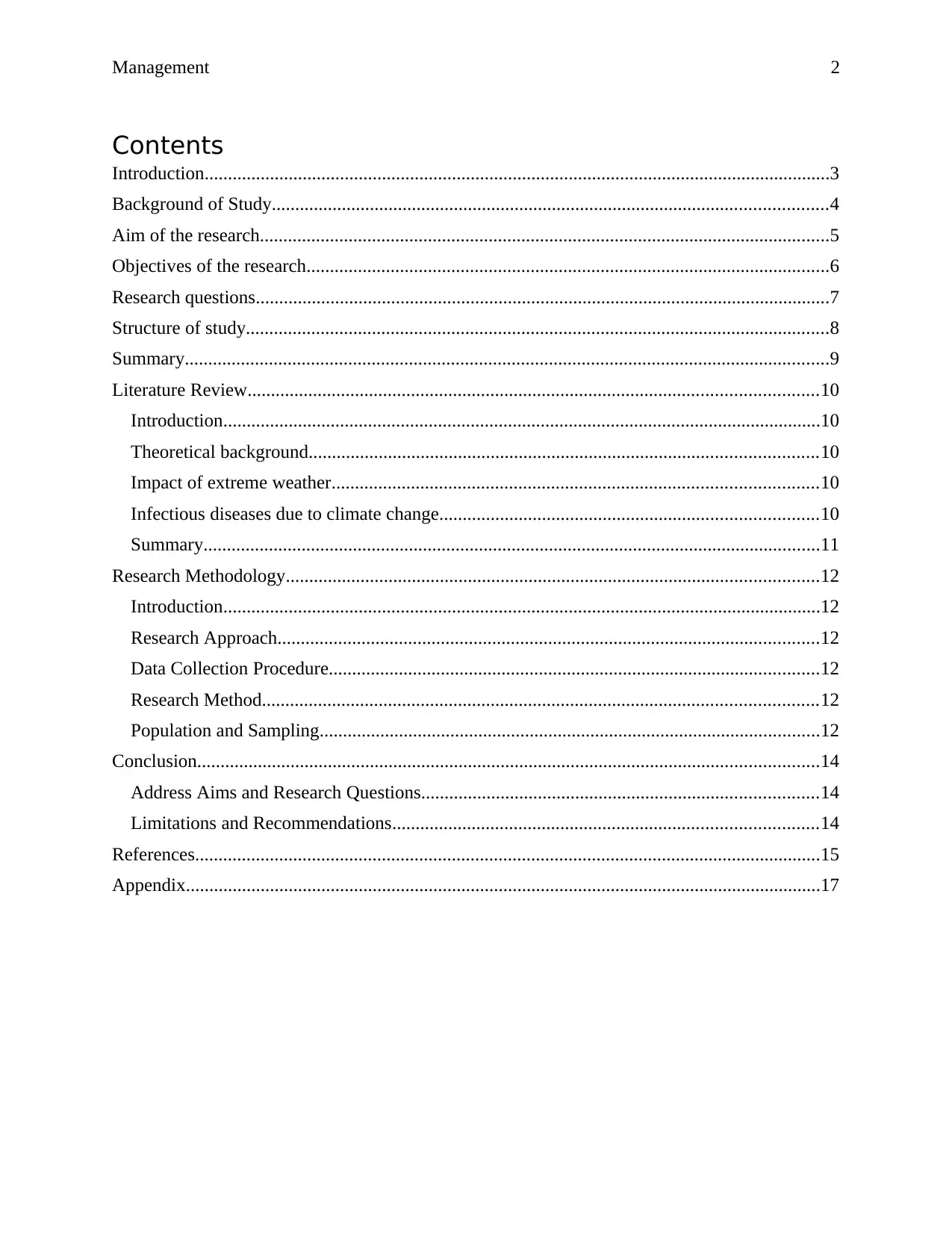
Contents
Introduction......................................................................................................................................3
Background of Study.......................................................................................................................4
Aim of the research..........................................................................................................................5
Objectives of the research................................................................................................................6
Research questions...........................................................................................................................7
Structure of study.............................................................................................................................8
Summary..........................................................................................................................................9
Literature Review..........................................................................................................................10
Introduction................................................................................................................................10
Theoretical background.............................................................................................................10
Impact of extreme weather........................................................................................................10
Infectious diseases due to climate change.................................................................................10
Summary....................................................................................................................................11
Research Methodology..................................................................................................................12
Introduction................................................................................................................................12
Research Approach....................................................................................................................12
Data Collection Procedure.........................................................................................................12
Research Method.......................................................................................................................12
Population and Sampling...........................................................................................................12
Conclusion.....................................................................................................................................14
Address Aims and Research Questions.....................................................................................14
Limitations and Recommendations...........................................................................................14
References......................................................................................................................................15
Appendix........................................................................................................................................17
Contents
Introduction......................................................................................................................................3
Background of Study.......................................................................................................................4
Aim of the research..........................................................................................................................5
Objectives of the research................................................................................................................6
Research questions...........................................................................................................................7
Structure of study.............................................................................................................................8
Summary..........................................................................................................................................9
Literature Review..........................................................................................................................10
Introduction................................................................................................................................10
Theoretical background.............................................................................................................10
Impact of extreme weather........................................................................................................10
Infectious diseases due to climate change.................................................................................10
Summary....................................................................................................................................11
Research Methodology..................................................................................................................12
Introduction................................................................................................................................12
Research Approach....................................................................................................................12
Data Collection Procedure.........................................................................................................12
Research Method.......................................................................................................................12
Population and Sampling...........................................................................................................12
Conclusion.....................................................................................................................................14
Address Aims and Research Questions.....................................................................................14
Limitations and Recommendations...........................................................................................14
References......................................................................................................................................15
Appendix........................................................................................................................................17

Management 3
Introduction
This proposal includes a detailed description regarding the impact of climate in spreading
of several diseases in the Northern Territory, Australia. The weather conditions are greatly
impacting the overall climate and due to these conditions, several infectious diseases occurred in
the environment (Khan, et al., 2015). This research study includes the overall aims and
objectives and background of the study. The methodology will also briefly be described in this
research project. The various approaches and methods of research will also be included in this
paper.
Introduction
This proposal includes a detailed description regarding the impact of climate in spreading
of several diseases in the Northern Territory, Australia. The weather conditions are greatly
impacting the overall climate and due to these conditions, several infectious diseases occurred in
the environment (Khan, et al., 2015). This research study includes the overall aims and
objectives and background of the study. The methodology will also briefly be described in this
research project. The various approaches and methods of research will also be included in this
paper.
⊘ This is a preview!⊘
Do you want full access?
Subscribe today to unlock all pages.

Trusted by 1+ million students worldwide

Management 4
Background of the Study
This research study includes the proper background as it gives several descriptions
regarding infectious diseases. Climate change is one of the main reasons that create infectious
diseases in the human environment (Davies, et al., 2015). This research includes a deep study
regarding the impact of the weather that create several infectious diseases in Australia (Chretien,
et al., 2015). Climate change impacts the overall environment of Australia by spreading several
infectious diseases as these diseases are created due to the changes occurred in the weather.
Background of the Study
This research study includes the proper background as it gives several descriptions
regarding infectious diseases. Climate change is one of the main reasons that create infectious
diseases in the human environment (Davies, et al., 2015). This research includes a deep study
regarding the impact of the weather that create several infectious diseases in Australia (Chretien,
et al., 2015). Climate change impacts the overall environment of Australia by spreading several
infectious diseases as these diseases are created due to the changes occurred in the weather.
Paraphrase This Document
Need a fresh take? Get an instant paraphrase of this document with our AI Paraphraser

Management 5
Aim of the research
The aim of this paper includes the analysis of the effect of extreme weather in spreading
of infectious diseases in Northern Territory, Australia. This gives the analysis of the infectious
diseases in Australia.
Aim of the research
The aim of this paper includes the analysis of the effect of extreme weather in spreading
of infectious diseases in Northern Territory, Australia. This gives the analysis of the infectious
diseases in Australia.

Management 6
Objectives of the research
The several objectives of the project are:
To determine the extreme weather in Australia.
To analyse the infectious diseases due to extreme weather.
To understand the effect of changes in weather on the spreading of diseases in Australia.
Objectives of the research
The several objectives of the project are:
To determine the extreme weather in Australia.
To analyse the infectious diseases due to extreme weather.
To understand the effect of changes in weather on the spreading of diseases in Australia.
⊘ This is a preview!⊘
Do you want full access?
Subscribe today to unlock all pages.

Trusted by 1+ million students worldwide

Management 7
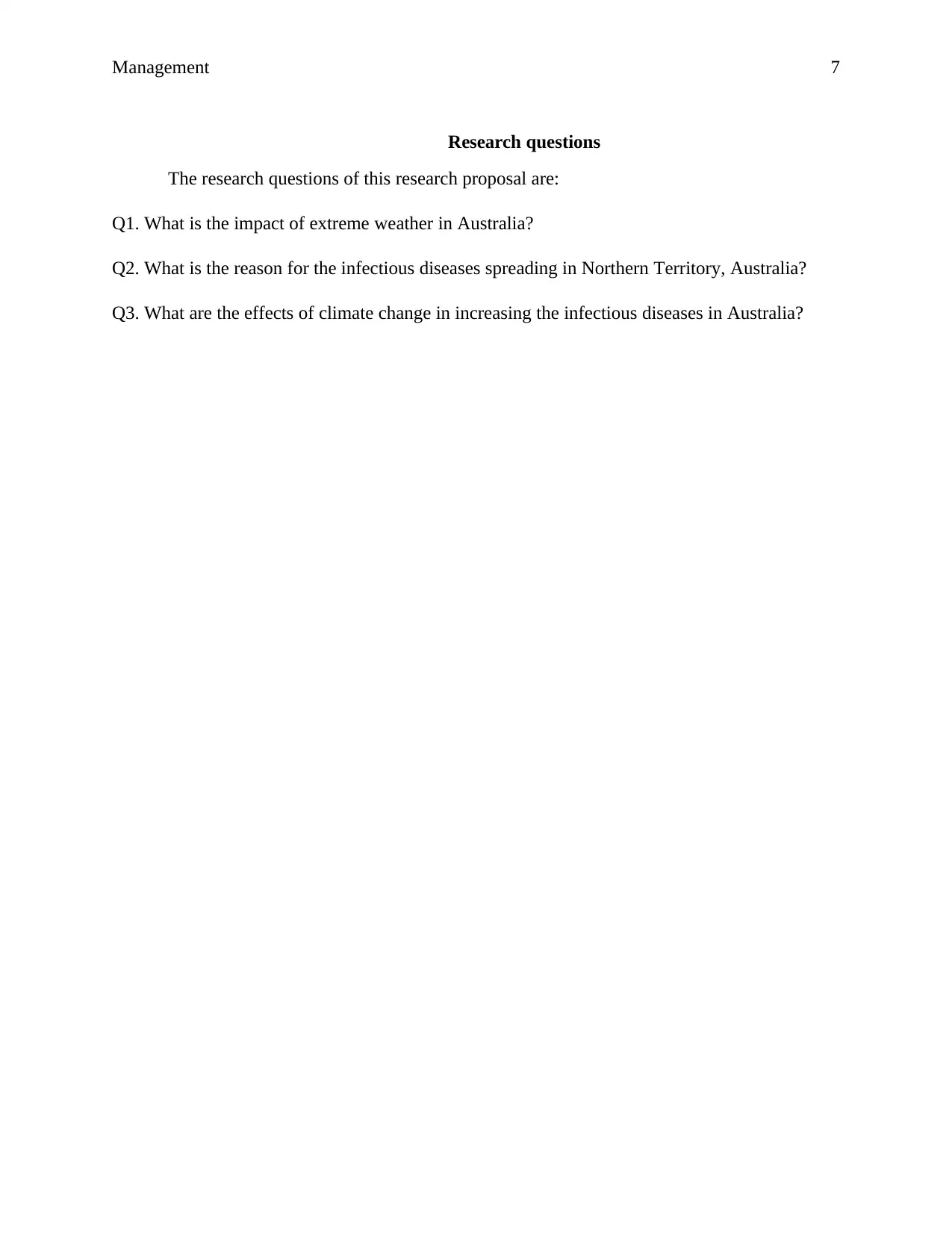
Research questions
The research questions of this research proposal are:
Q1. What is the impact of extreme weather in Australia?
Q2. What is the reason for the infectious diseases spreading in Northern Territory, Australia?
Q3. What are the effects of climate change in increasing the infectious diseases in Australia?
Research questions
The research questions of this research proposal are:
Q1. What is the impact of extreme weather in Australia?
Q2. What is the reason for the infectious diseases spreading in Northern Territory, Australia?
Q3. What are the effects of climate change in increasing the infectious diseases in Australia?
Paraphrase This Document
Need a fresh take? Get an instant paraphrase of this document with our AI Paraphraser

Management 8
Structure of the study
This study includes different structure as it gives several aspects related to the impact of
weather on the infectious diseases in Australia. The structure of the study includes the different
aspects like it includes the literature review that gives the description of the title. After doing a
review, the proper process of research methodology is also included in the structure of the study.
Structure of the study
This study includes different structure as it gives several aspects related to the impact of
weather on the infectious diseases in Australia. The structure of the study includes the different
aspects like it includes the literature review that gives the description of the title. After doing a
review, the proper process of research methodology is also included in the structure of the study.

Management 9
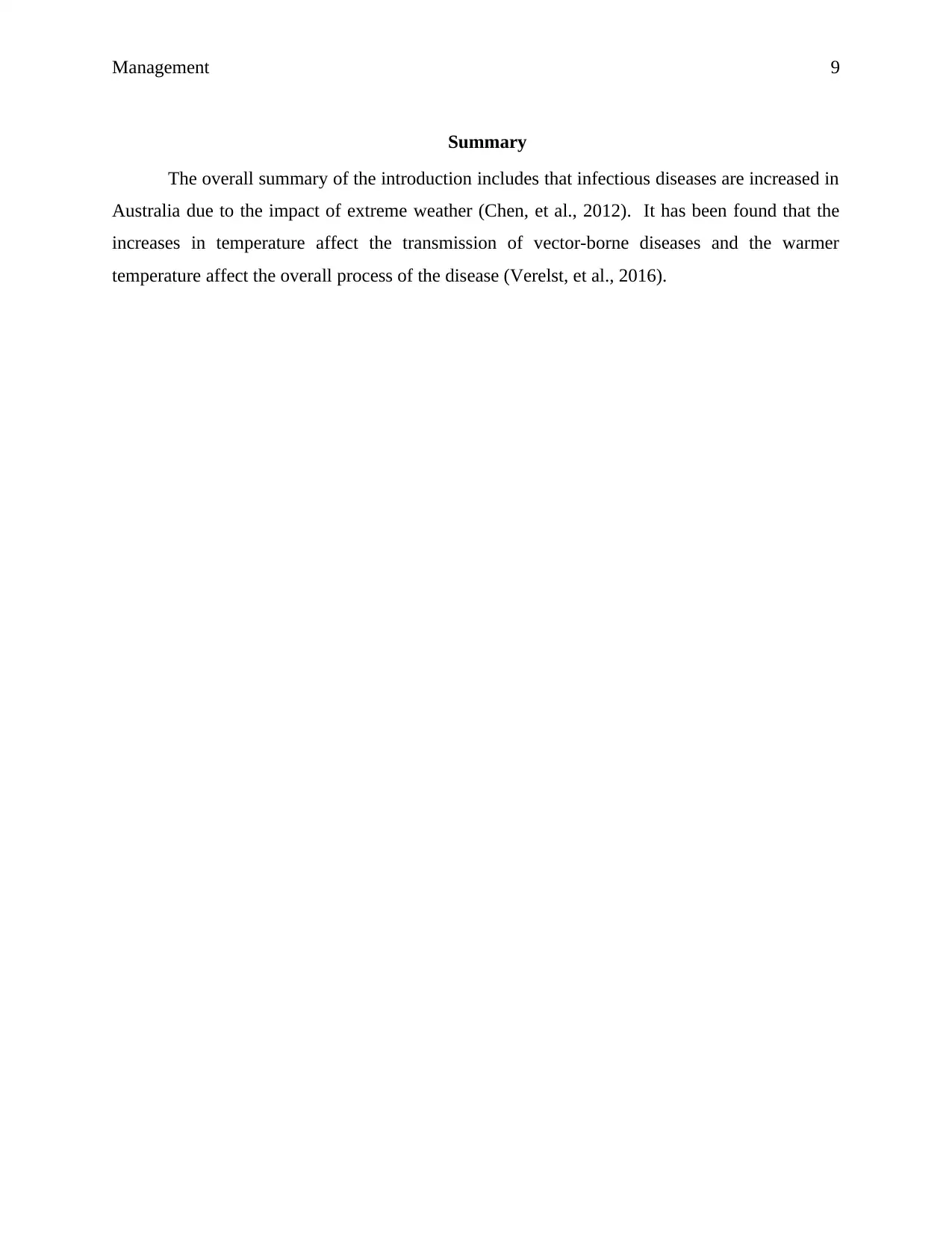
Summary
The overall summary of the introduction includes that infectious diseases are increased in
Australia due to the impact of extreme weather (Chen, et al., 2012). It has been found that the
increases in temperature affect the transmission of vector-borne diseases and the warmer
temperature affect the overall process of the disease (Verelst, et al., 2016).
Summary
The overall summary of the introduction includes that infectious diseases are increased in
Australia due to the impact of extreme weather (Chen, et al., 2012). It has been found that the
increases in temperature affect the transmission of vector-borne diseases and the warmer
temperature affect the overall process of the disease (Verelst, et al., 2016).
⊘ This is a preview!⊘
Do you want full access?
Subscribe today to unlock all pages.

Trusted by 1+ million students worldwide

Management 10
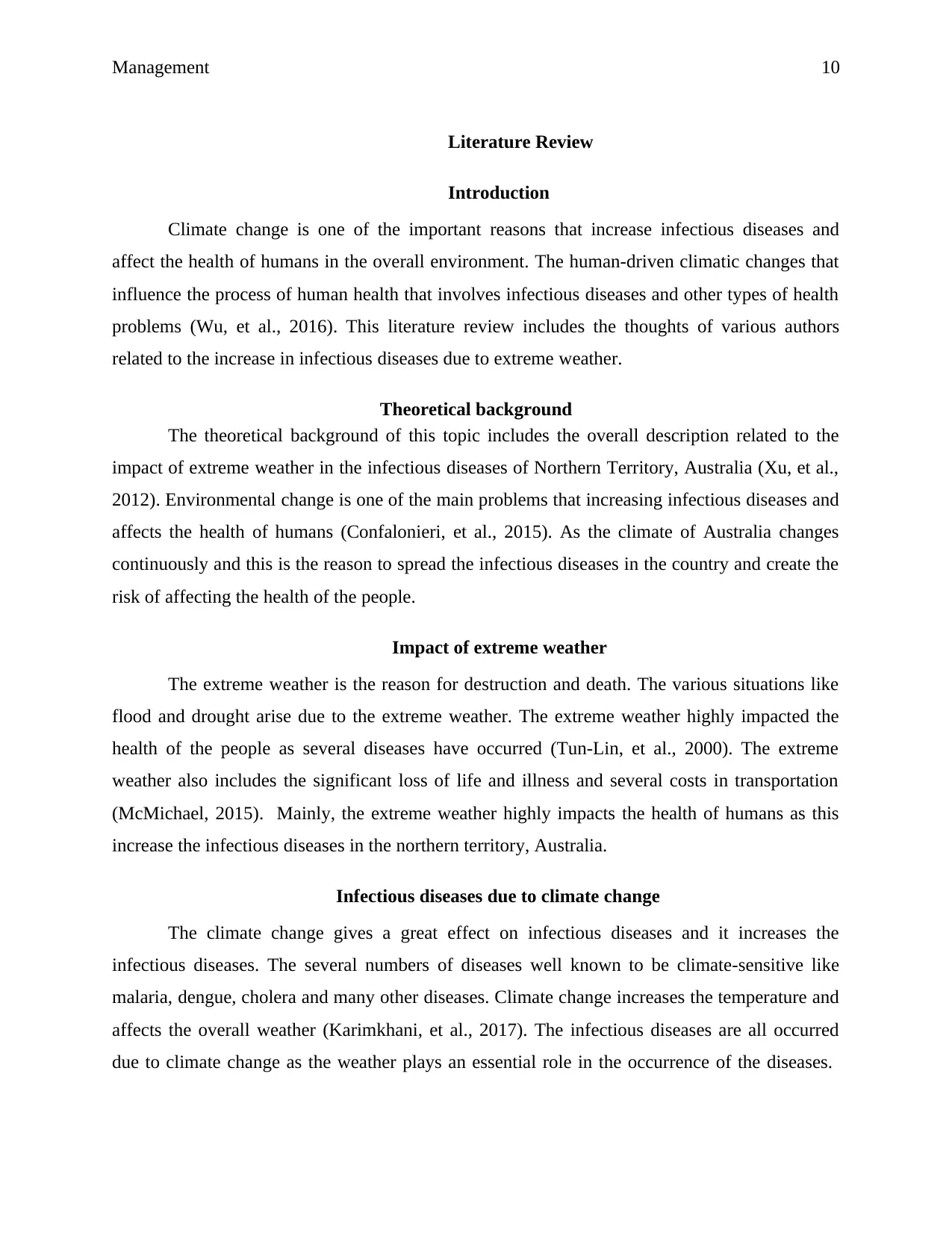
Literature Review
Introduction
Climate change is one of the important reasons that increase infectious diseases and
affect the health of humans in the overall environment. The human-driven climatic changes that
influence the process of human health that involves infectious diseases and other types of health
problems (Wu, et al., 2016). This literature review includes the thoughts of various authors
related to the increase in infectious diseases due to extreme weather.
Theoretical background
The theoretical background of this topic includes the overall description related to the
impact of extreme weather in the infectious diseases of Northern Territory, Australia (Xu, et al.,
2012). Environmental change is one of the main problems that increasing infectious diseases and
affects the health of humans (Confalonieri, et al., 2015). As the climate of Australia changes
continuously and this is the reason to spread the infectious diseases in the country and create the
risk of affecting the health of the people.
Impact of extreme weather
The extreme weather is the reason for destruction and death. The various situations like
flood and drought arise due to the extreme weather. The extreme weather highly impacted the
health of the people as several diseases have occurred (Tun-Lin, et al., 2000). The extreme
weather also includes the significant loss of life and illness and several costs in transportation
(McMichael, 2015). Mainly, the extreme weather highly impacts the health of humans as this
increase the infectious diseases in the northern territory, Australia.
Infectious diseases due to climate change
The climate change gives a great effect on infectious diseases and it increases the
infectious diseases. The several numbers of diseases well known to be climate-sensitive like
malaria, dengue, cholera and many other diseases. Climate change increases the temperature and
affects the overall weather (Karimkhani, et al., 2017). The infectious diseases are all occurred
due to climate change as the weather plays an essential role in the occurrence of the diseases.
Literature Review
Introduction
Climate change is one of the important reasons that increase infectious diseases and
affect the health of humans in the overall environment. The human-driven climatic changes that
influence the process of human health that involves infectious diseases and other types of health
problems (Wu, et al., 2016). This literature review includes the thoughts of various authors
related to the increase in infectious diseases due to extreme weather.
Theoretical background
The theoretical background of this topic includes the overall description related to the
impact of extreme weather in the infectious diseases of Northern Territory, Australia (Xu, et al.,
2012). Environmental change is one of the main problems that increasing infectious diseases and
affects the health of humans (Confalonieri, et al., 2015). As the climate of Australia changes
continuously and this is the reason to spread the infectious diseases in the country and create the
risk of affecting the health of the people.
Impact of extreme weather
The extreme weather is the reason for destruction and death. The various situations like
flood and drought arise due to the extreme weather. The extreme weather highly impacted the
health of the people as several diseases have occurred (Tun-Lin, et al., 2000). The extreme
weather also includes the significant loss of life and illness and several costs in transportation
(McMichael, 2015). Mainly, the extreme weather highly impacts the health of humans as this
increase the infectious diseases in the northern territory, Australia.
Infectious diseases due to climate change
The climate change gives a great effect on infectious diseases and it increases the
infectious diseases. The several numbers of diseases well known to be climate-sensitive like
malaria, dengue, cholera and many other diseases. Climate change increases the temperature and
affects the overall weather (Karimkhani, et al., 2017). The infectious diseases are all occurred
due to climate change as the weather plays an essential role in the occurrence of the diseases.
Paraphrase This Document
Need a fresh take? Get an instant paraphrase of this document with our AI Paraphraser

Management 11
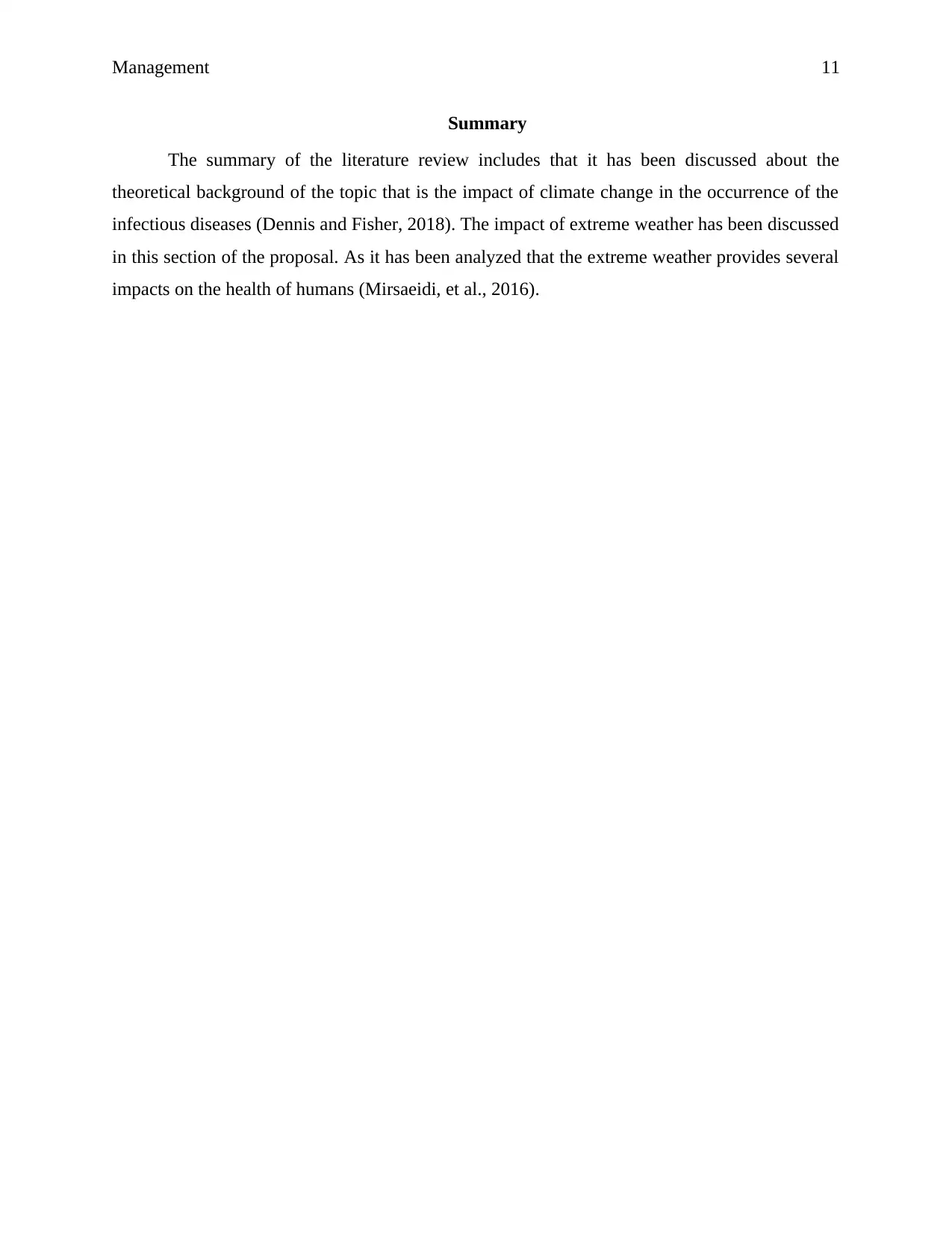
Summary
The summary of the literature review includes that it has been discussed about the
theoretical background of the topic that is the impact of climate change in the occurrence of the
infectious diseases (Dennis and Fisher, 2018). The impact of extreme weather has been discussed
in this section of the proposal. As it has been analyzed that the extreme weather provides several
impacts on the health of humans (Mirsaeidi, et al., 2016).
Summary
The summary of the literature review includes that it has been discussed about the
theoretical background of the topic that is the impact of climate change in the occurrence of the
infectious diseases (Dennis and Fisher, 2018). The impact of extreme weather has been discussed
in this section of the proposal. As it has been analyzed that the extreme weather provides several
impacts on the health of humans (Mirsaeidi, et al., 2016).

Management 12
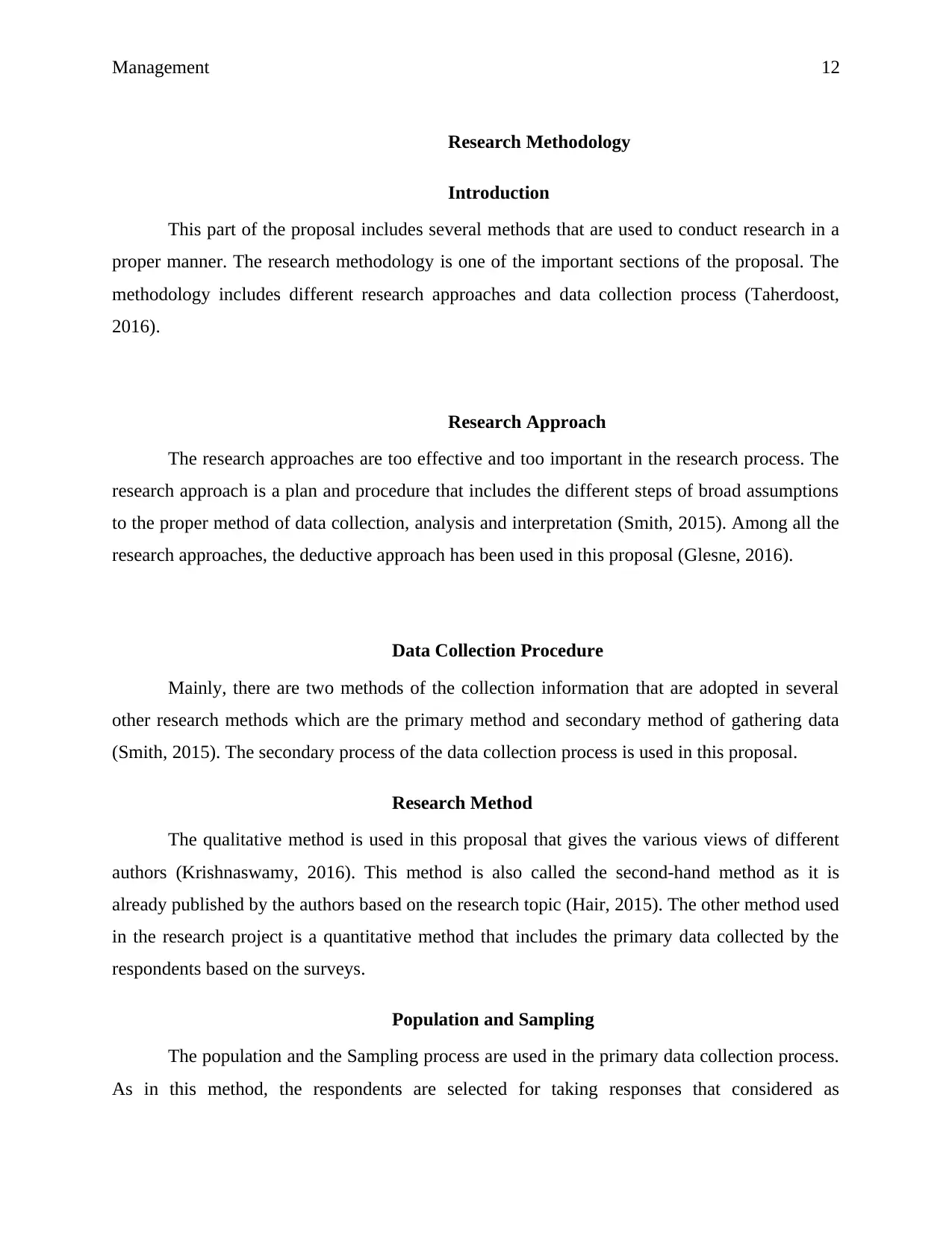
Research Methodology
Introduction
This part of the proposal includes several methods that are used to conduct research in a
proper manner. The research methodology is one of the important sections of the proposal. The
methodology includes different research approaches and data collection process (Taherdoost,
2016).
Research Approach
The research approaches are too effective and too important in the research process. The
research approach is a plan and procedure that includes the different steps of broad assumptions
to the proper method of data collection, analysis and interpretation (Smith, 2015). Among all the
research approaches, the deductive approach has been used in this proposal (Glesne, 2016).
Data Collection Procedure
Mainly, there are two methods of the collection information that are adopted in several
other research methods which are the primary method and secondary method of gathering data
(Smith, 2015). The secondary process of the data collection process is used in this proposal.
Research Method
The qualitative method is used in this proposal that gives the various views of different
authors (Krishnaswamy, 2016). This method is also called the second-hand method as it is
already published by the authors based on the research topic (Hair, 2015). The other method used
in the research project is a quantitative method that includes the primary data collected by the
respondents based on the surveys.
Population and Sampling
The population and the Sampling process are used in the primary data collection process.
As in this method, the respondents are selected for taking responses that considered as
Research Methodology
Introduction
This part of the proposal includes several methods that are used to conduct research in a
proper manner. The research methodology is one of the important sections of the proposal. The
methodology includes different research approaches and data collection process (Taherdoost,
2016).
Research Approach
The research approaches are too effective and too important in the research process. The
research approach is a plan and procedure that includes the different steps of broad assumptions
to the proper method of data collection, analysis and interpretation (Smith, 2015). Among all the
research approaches, the deductive approach has been used in this proposal (Glesne, 2016).
Data Collection Procedure
Mainly, there are two methods of the collection information that are adopted in several
other research methods which are the primary method and secondary method of gathering data
(Smith, 2015). The secondary process of the data collection process is used in this proposal.
Research Method
The qualitative method is used in this proposal that gives the various views of different
authors (Krishnaswamy, 2016). This method is also called the second-hand method as it is
already published by the authors based on the research topic (Hair, 2015). The other method used
in the research project is a quantitative method that includes the primary data collected by the
respondents based on the surveys.
Population and Sampling
The population and the Sampling process are used in the primary data collection process.
As in this method, the respondents are selected for taking responses that considered as
⊘ This is a preview!⊘
Do you want full access?
Subscribe today to unlock all pages.

Trusted by 1+ million students worldwide
1 out of 19
Related Documents
Your All-in-One AI-Powered Toolkit for Academic Success.
+13062052269
info@desklib.com
Available 24*7 on WhatsApp / Email
Unlock your academic potential
Copyright © 2020–2025 A2Z Services. All Rights Reserved. Developed and managed by ZUCOL.