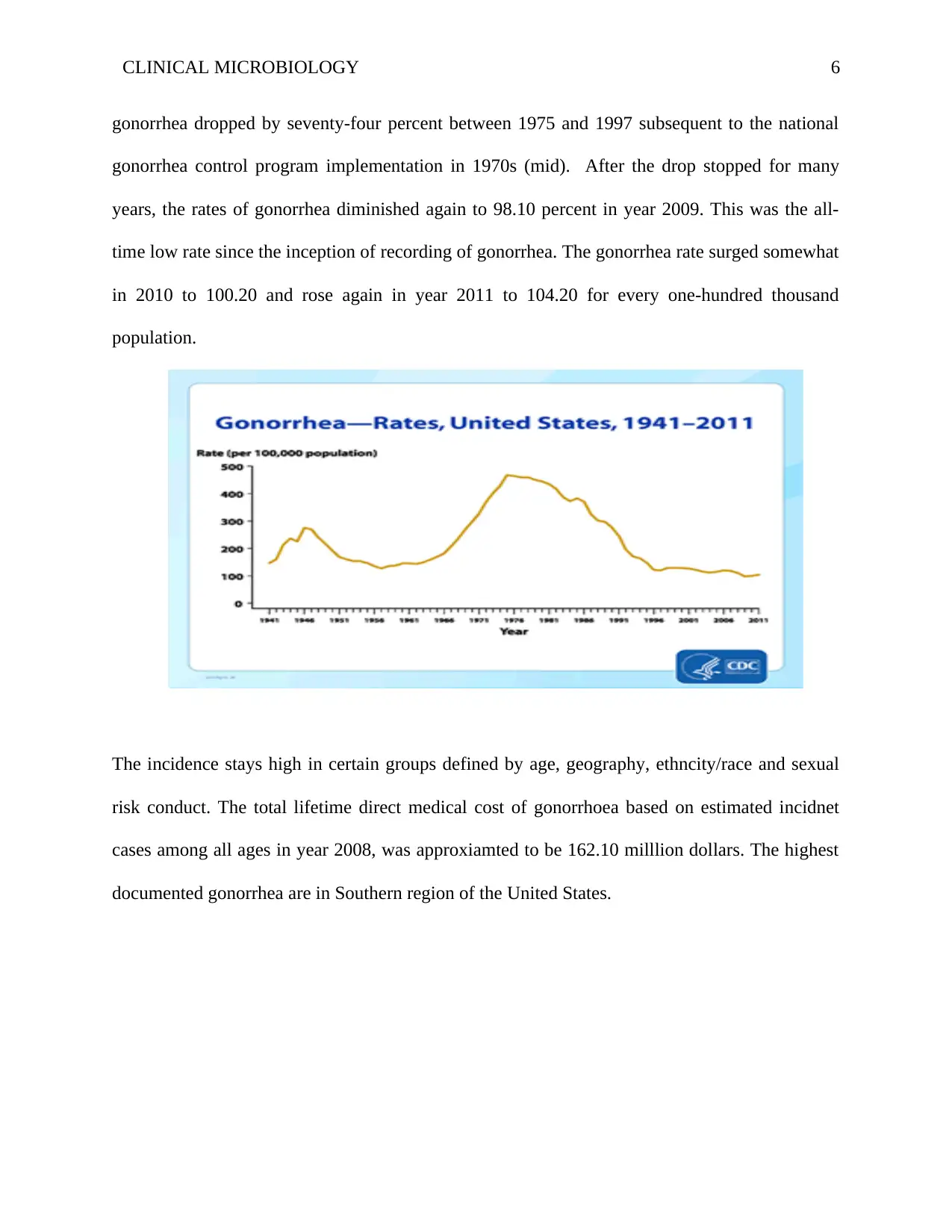
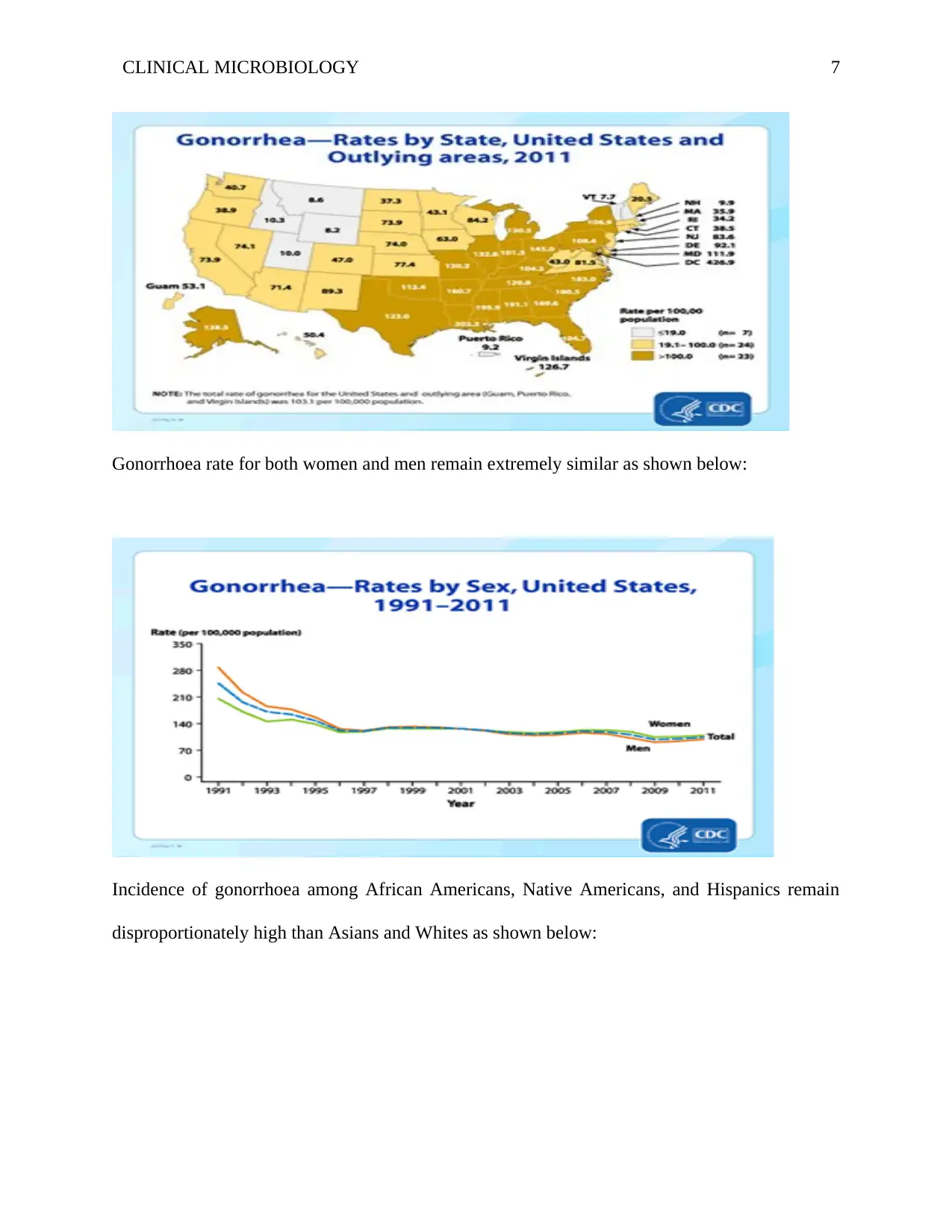
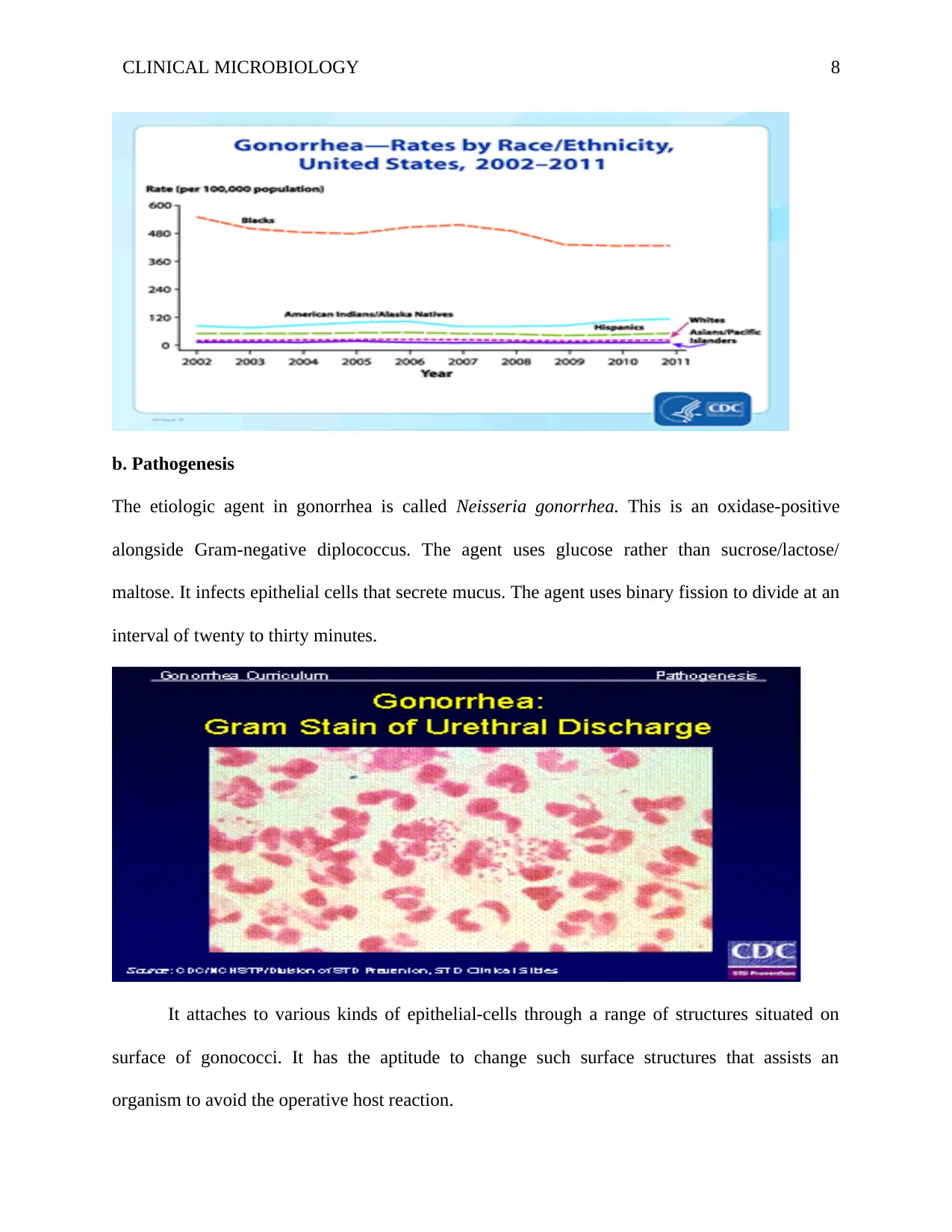
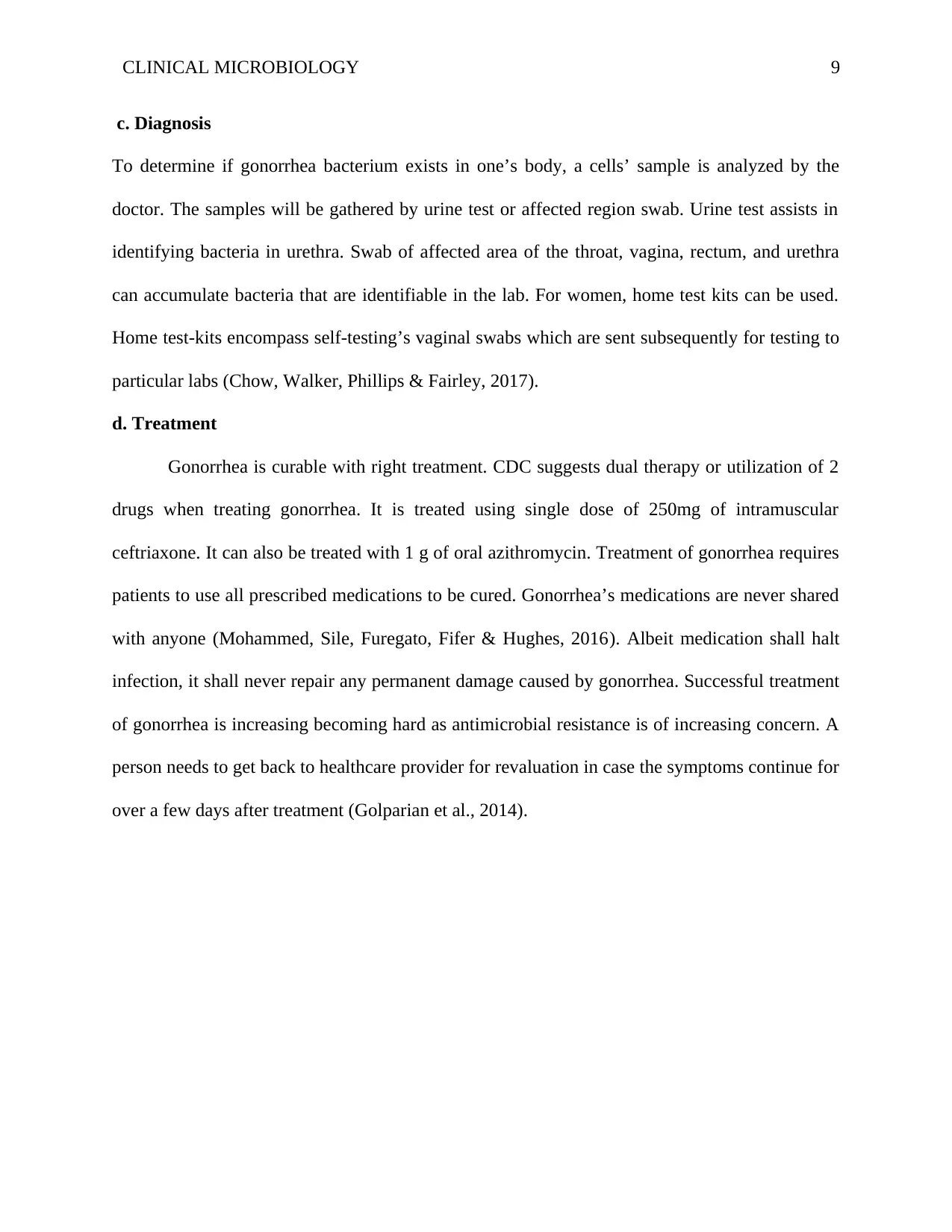
Report on Clinical Microbiology: Syphilis, Gonorrhea, and Treatment

Verified

Added on  2020/04/13

|11
|1678
|53
Report
AI Summary
This report offers a detailed examination of two significant sexually transmitted infections: Syphilis and Gonorrhea. The report begins by providing an overview of the epidemiology of Syphilis, caused by Treponema pallidum, and Gonorrhea, caused by Neisseria gonorrhoeae. It outlines the transmission routes, prevalence, and affected populations of each disease. The pathogenesis section details how these bacteria infect the body, including their mechanisms of penetration, dissemination, and the body's response. The report then describes the diagnostic methods used for each infection, such as physical examinations, laboratory tests like darkfield microscopy for Syphilis, and urine or swab tests for Gonorrhea. Finally, it covers the current treatment options, emphasizing the use of Penicillin G for Syphilis and dual therapy with ceftriaxone and azithromycin for Gonorrhea, while also addressing the growing concern of antimicrobial resistance. The report also includes references to support the information presented.

Document Page
Running head: CLINICAL MICROBIOLOGY 1
Clinical Microbiology
Name
Institution
tabler-icon-diamond-filled.svg

Paraphrase This Document

Need a fresh take? Get an instant paraphrase of this document with our AI Paraphraser
Document Page
CLINICAL MICROBIOLOGY 2
CLINICAL MICROBIOLOGY
1) SYPHILIS
a. Epidemiology
Syphilis is the systemic sexually-transmitted infection. Its etiologic agent is called Treponema
pallidum. It is a chronic disease in absence of treatment. It develops in phases marred with active
illness episodes interrupted by latent infections episodes. The duration for incubation is
approximated to range between ten and ninety days (3-weeks on average). It has often been
known as “the great imitator” since much of its symptoms and signs could be quite challenging
to differentiate from the ones of illnesses (Smolak et al. 2017). Early clinical display (primary
and secondary phases) mainly encompass mucosal and skin surfaces, albeit secondary illness is a
systemic. Latent illness lacks clinical symptoms or signs. Delayed display might impact nearly
all organ systems. Neurosyphilis is able to take place irrespective of syphilis’ stage. The primary
transmission routes include vertical (in utero from infected expectant female to her fetus via
hematogenous) and sexual. The ill person is mainly transmissible to sex associates in the course
of both secondary and primary infection phases. Here, infectious lesions or rash remain
available. Syphilis is increasing especially amongst bisexual, gay and other men who have sex
with men.
b. Pathogenesis
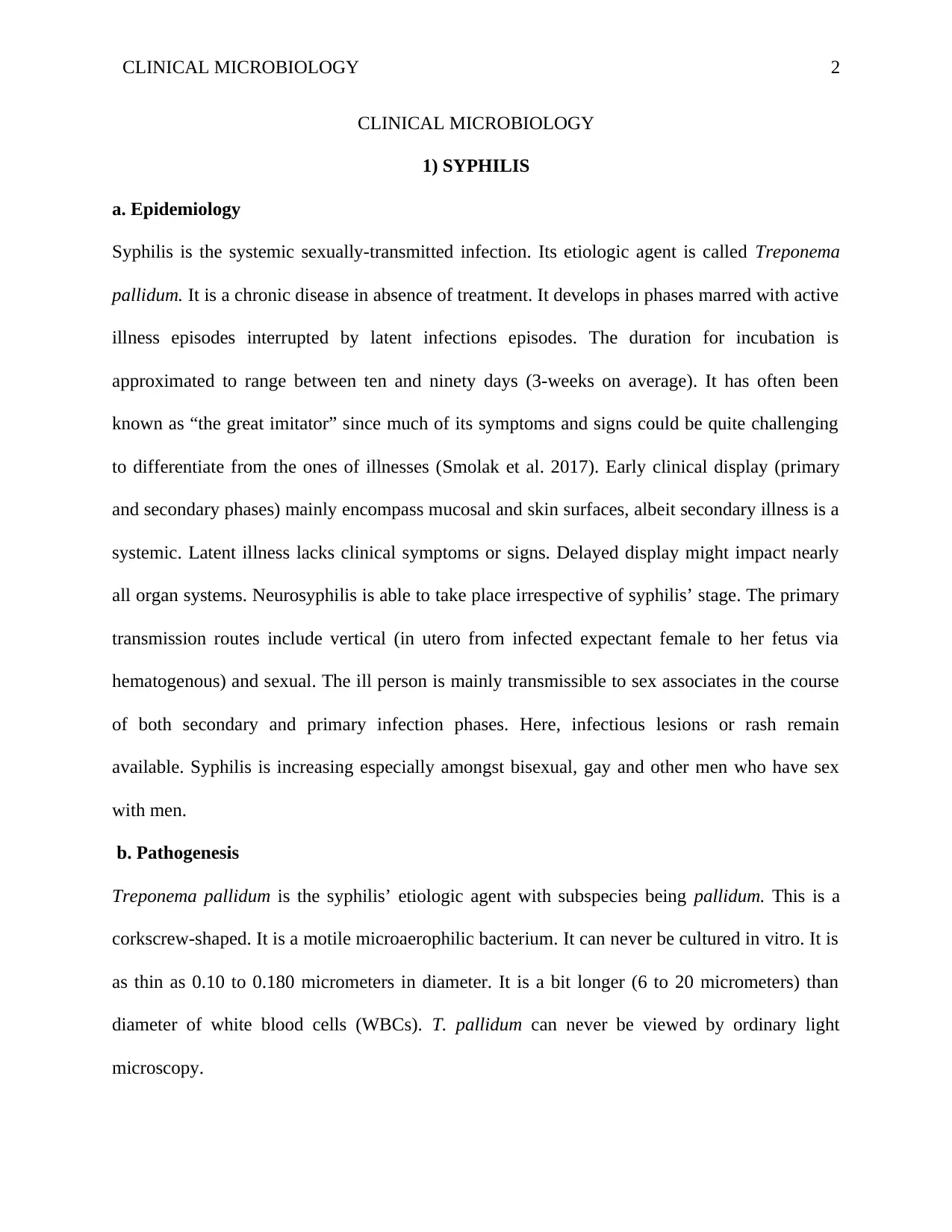
Treponema pallidum is the syphilis’ etiologic agent with subspecies being pallidum. This is a
corkscrew-shaped. It is a motile microaerophilic bacterium. It can never be cultured in vitro. It is
as thin as 0.10 to 0.180 micrometers in diameter. It is a bit longer (6 to 20 micrometers) than
diameter of white blood cells (WBCs). T. pallidum can never be viewed by ordinary light
microscopy.
Document Page
CLINICAL MICROBIOLOGY 3
In terms of penetration, it getts into human body via skin alongside muccous membrane throuh
abrasions macroscopically and microscopically in the course of sexual intercouse. It can further
be transplacentally trasnmitted to fetus from mother in course of pregnancy. In respect of
dissemination, T. palidum access circulatory system (regional lymph nodes and lymphatic
system) before clinical signs/symptoms appear (first hours to days of infection). Central nervious
system’s inverson can ensue in the course of any phase of syphilis.
c. Diagnosis
Document Page
CLINICAL MICROBIOLOGY 4
Physical Examination: A comprehensive exam entails checking oral cavity, skin of torso,
lymph nodes, genitalia/perianal area, soles and palms for infection signs. Examination of pelvic
needs to be undertaken on female patients (Newman et al., 2013). A neurologic examination
needs to be completed with concentration on cranial nerves. Such nerves include optic (II),
oculomotor (III), facial (VI, VII) and auditory (VIII). Examination of abdomen is done for
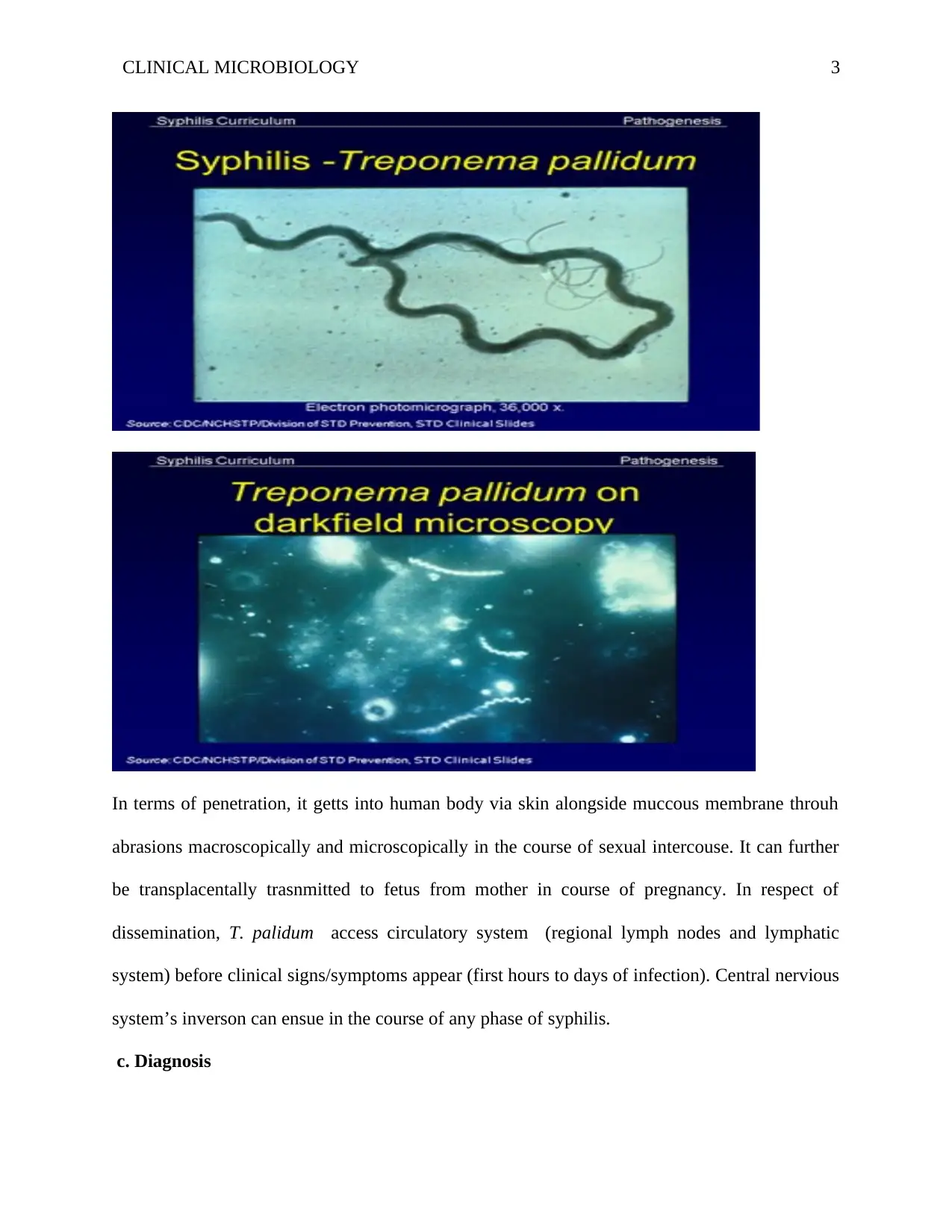
tenderness of liver. Lab: Early syphilis diagnoses are done through darkfield microscopy test for
lesion tissue of exudate. Here, T. pallidum is identified with its spiral shape.
d. Treatment
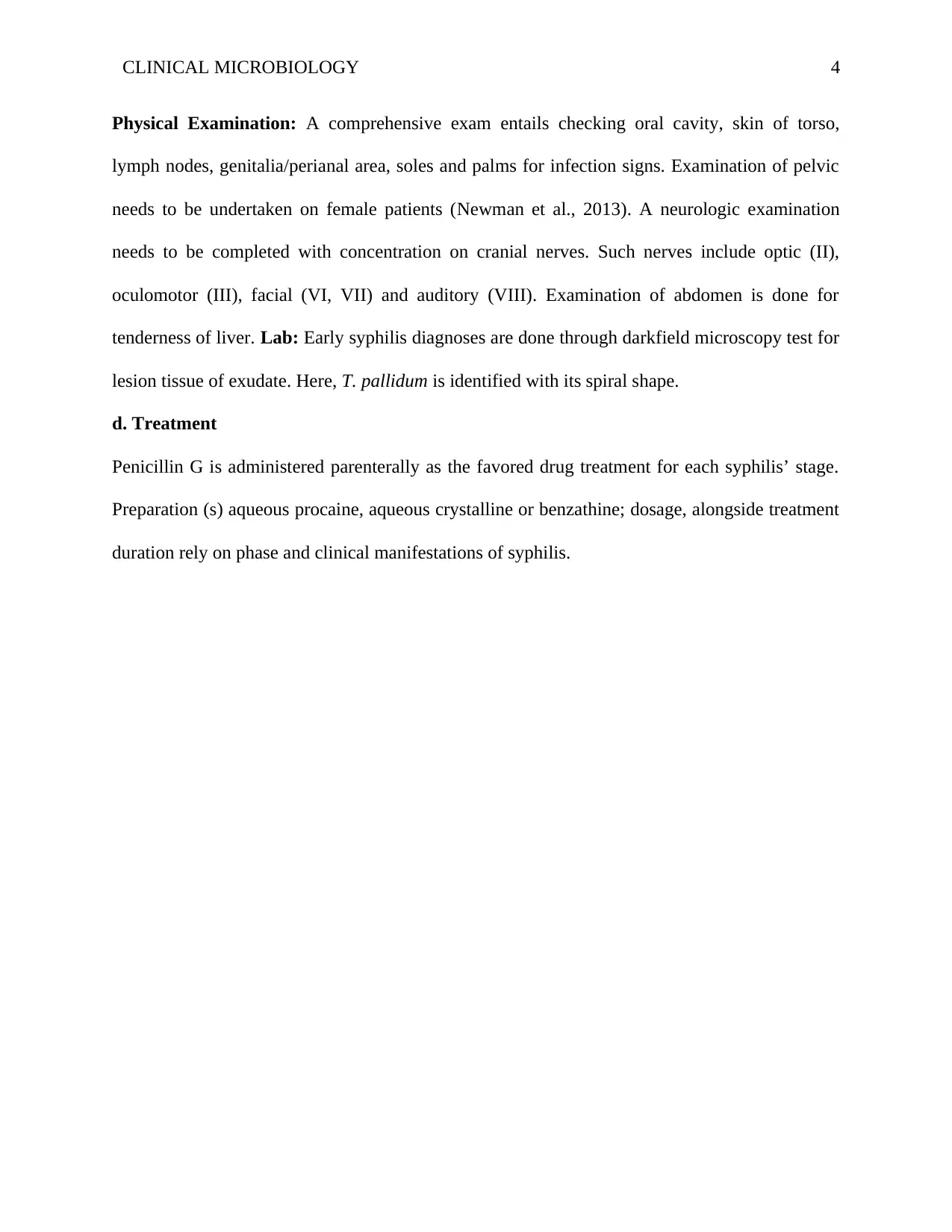
Penicillin G is administered parenterally as the favored drug treatment for each syphilis’ stage.
Preparation (s) aqueous procaine, aqueous crystalline or benzathine; dosage, alongside treatment
duration rely on phase and clinical manifestations of syphilis.
tabler-icon-diamond-filled.svg

Paraphrase This Document

Need a fresh take? Get an instant paraphrase of this document with our AI Paraphraser
Document Page
CLINICAL MICROBIOLOGY 5
2) GONORRHEA
a. Epidemiology
Initially regarded as a public nuisance of advanced nations, gonorrhea is presently
established as a leading global public health issue. Swift increase reported in 60s and 70s has
been proceeded by sturdy/diminishing illness rates (Bignell, Unemo & European STI Guidelines
Editorial Board. 2013). This is a reflection of improved control program and fluctuation in sexual
conduct. Gonorrhea is substantial public health concern and the second solely to chlamydia in
many incidences reported to CDC (Turner et al., 2016). The number of gonorrhea instances is
suspected to underestimate gonorrhea incidences by approximately fifty percent. The rate of
Document Page
CLINICAL MICROBIOLOGY 6
gonorrhea dropped by seventy-four percent between 1975 and 1997 subsequent to the national
gonorrhea control program implementation in 1970s (mid). After the drop stopped for many
years, the rates of gonorrhea diminished again to 98.10 percent in year 2009. This was the all-
time low rate since the inception of recording of gonorrhea. The gonorrhea rate surged somewhat
in 2010 to 100.20 and rose again in year 2011 to 104.20 for every one-hundred thousand
population.
The incidence stays high in certain groups defined by age, geography, ethncity/race and sexual
risk conduct. The total lifetime direct medical cost of gonorrhoea based on estimated incidnet
cases among all ages in year 2008, was approxiamted to be 162.10 milllion dollars. The highest
documented gonorrhea are in Southern region of the United States.
Document Page
CLINICAL MICROBIOLOGY 7
Gonorrhoea rate for both women and men remain extremely similar as shown below:
Incidence of gonorrhoea among African Americans, Native Americans, and Hispanics remain
disproportionately high than Asians and Whites as shown below:
tabler-icon-diamond-filled.svg

Paraphrase This Document

Need a fresh take? Get an instant paraphrase of this document with our AI Paraphraser
Document Page
CLINICAL MICROBIOLOGY 8
b. Pathogenesis
The etiologic agent in gonorrhea is called Neisseria gonorrhea. This is an oxidase-positive
alongside Gram-negative diplococcus. The agent uses glucose rather than sucrose/lactose/
maltose. It infects epithelial cells that secrete mucus. The agent uses binary fission to divide at an
interval of twenty to thirty minutes.
It attaches to various kinds of epithelial-cells through a range of structures situated on
surface of gonococci. It has the aptitude to change such surface structures that assists an
organism to avoid the operative host reaction.
Document Page
CLINICAL MICROBIOLOGY 9
c. Diagnosis
To determine if gonorrhea bacterium exists in one’s body, a cells’ sample is analyzed by the
doctor. The samples will be gathered by urine test or affected region swab. Urine test assists in
identifying bacteria in urethra. Swab of affected area of the throat, vagina, rectum, and urethra
can accumulate bacteria that are identifiable in the lab. For women, home test kits can be used.
Home test-kits encompass self-testing’s vaginal swabs which are sent subsequently for testing to
particular labs (Chow, Walker, Phillips & Fairley, 2017).
d. Treatment
Gonorrhea is curable with right treatment. CDC suggests dual therapy or utilization of 2
drugs when treating gonorrhea. It is treated using single dose of 250mg of intramuscular
ceftriaxone. It can also be treated with 1 g of oral azithromycin. Treatment of gonorrhea requires
patients to use all prescribed medications to be cured. Gonorrhea’s medications are never shared
with anyone (Mohammed, Sile, Furegato, Fifer & Hughes, 2016). Albeit medication shall halt
infection, it shall never repair any permanent damage caused by gonorrhea. Successful treatment
of gonorrhea is increasing becoming hard as antimicrobial resistance is of increasing concern. A
person needs to get back to healthcare provider for revaluation in case the symptoms continue for
over a few days after treatment (Golparian et al., 2014).
Document Page
CLINICAL MICROBIOLOGY 10
References
Bignell, C., Unemo, M., & European STI Guidelines Editorial Board. (2013). 2012 European
guideline on the diagnosis and treatment of gonorrhoea in adults. International journal of
STD & AIDS, 24(2), 85-92.
Chow, E., Walker, S., Phillips, T., & Fairley, C. (2017). Behavioural Change to Reduce the Risk
of Pharyngeal Gonorrhoea in Men Who Have Sex With Men. The Journal of Sexual
Medicine, 14(5), e319.
Golparian, D., Ohlsson, A. K., Janson, H., Lidbrink, P., Richtner, T., Ekelund, O., ... & Unemo,
M. (2014). Four treatment failures of pharyngeal gonorrhoea with ceftriaxone (500 mg)
or cefotaxime (500 mg), Sweden, 2013 and 2014. Eurosurveillance, 19(30), 20862.
Mohammed, H., Sile, B., Furegato, M., Fifer, H., & Hughes, G. (2016). Poor adherence to
gonorrhoea treatment guidelines in general practice in England. Br J Gen Pract, 66(648),
352-352.
Newman, L., Kamb, M., Hawkes, S., Gomez, G., Say, L., Seuc, A., & Broutet, N. (2013). Global
estimates of syphilis in pregnancy and associated adverse outcomes: analysis of
multinational antenatal surveillance data. PLoS medicine, 10(2), e1001396.
Patton, M. E., Su, J. R., Nelson, R., Weinstock, H., & Centers for Disease Control and
Prevention (CDC). (2014). Primary and secondary syphilis—United States, 2005–2013.
MMWR Morb Mortal Wkly Rep, 63(18), 402-406.
Smolak, A., Rowley, J., Nagelkerke, N., Kassebaum, N. J., Chico, R. M., Korenromp, E. L., &
Abu-Raddad, L. J. (2017). Trends and predictors of syphilis prevalence in the general
population: Global pooled analyses of 1103 prevalence measures including 136 million
syphilis tests. Clinical Infectious Diseases.
tabler-icon-diamond-filled.svg

Paraphrase This Document

Need a fresh take? Get an instant paraphrase of this document with our AI Paraphraser
Document Page
CLINICAL MICROBIOLOGY 11
Turner, K., Christensen, H., Adams, E., McAdams, D., Fifer, H., McDonnell, A., & Woodford,
N. (2016). Analysis of the potential impact of a point-of-care test to distinguish
gonorrhoea cases caused by antimicrobial-resistant and susceptible strains of Neisseria
gonorrhoeae.
chevron_up_icon
1 out of 11
circle_padding
hide_on_mobile
zoom_out_icon
[object Object]