Discussion: IRB, Aging Physician, and Clinical Trial Outcomes

Verified

Added on  2020/05/11

|4
|485
|82
Discussion Board Post
AI Summary
This discussion post examines the role of the Institutional Review Board (IRB) and the challenges posed by an aging physician in clinical research, focusing on the ethical implications of research protocols and patient safety. The author discusses a scenario involving adverse outcomes in clinical trials due to non-compliance with established protocols and the potential impact of an aging medical director. The post emphasizes the importance of IRB oversight, protocol reviews, and the prioritization of patient safety. It highlights the need for updated procedures, informed consent, and regular monitoring of subjects. The author also stresses the importance of scientific peer reviews and the ethical considerations surrounding the use of placebos. The post outlines the key functions of the IRB, including thorough reviews, reporting of findings, and verification of research protocols to ensure the protection of human subjects. The author concludes by emphasizing the crucial role of the IRB in safeguarding the well-being of participants in clinical research.
Document Page
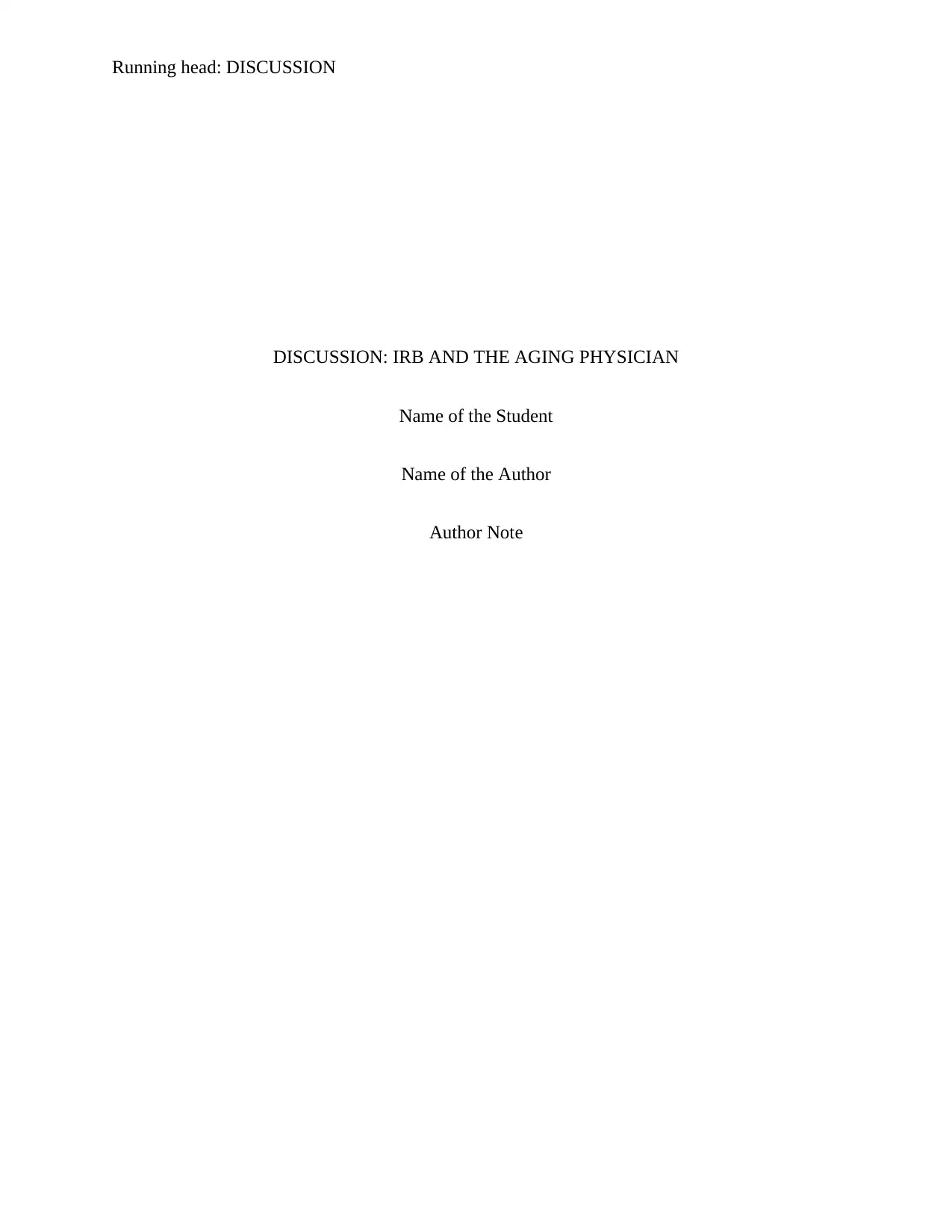
Running head: DISCUSSION
DISCUSSION: IRB AND THE AGING PHYSICIAN
Name of the Student
Name of the Author
Author Note
tabler-icon-diamond-filled.svg

Paraphrase This Document

Need a fresh take? Get an instant paraphrase of this document with our AI Paraphraser
Document Page
1DISCUSSION
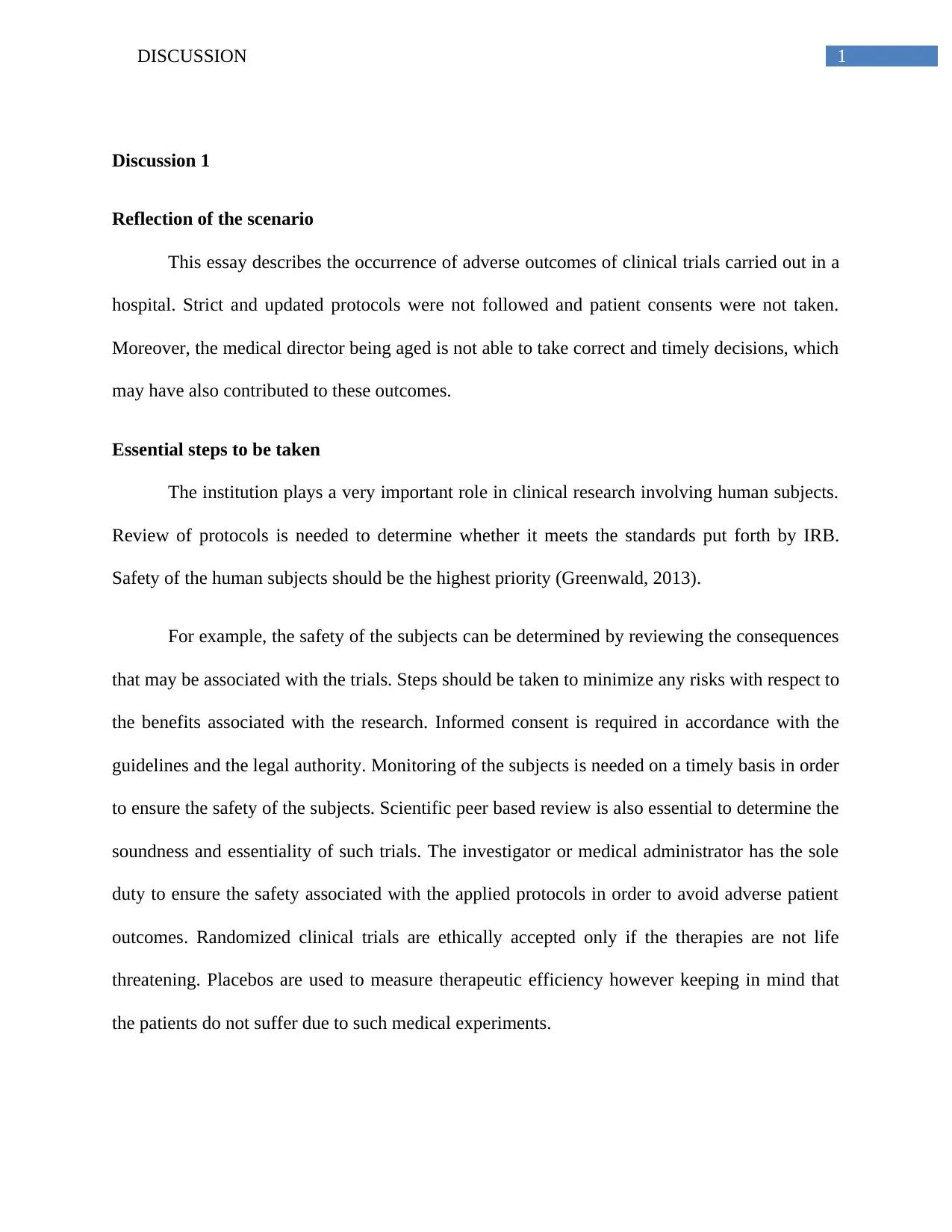
Discussion 1
Reflection of the scenario
This essay describes the occurrence of adverse outcomes of clinical trials carried out in a
hospital. Strict and updated protocols were not followed and patient consents were not taken.
Moreover, the medical director being aged is not able to take correct and timely decisions, which
may have also contributed to these outcomes.
Essential steps to be taken
The institution plays a very important role in clinical research involving human subjects.
Review of protocols is needed to determine whether it meets the standards put forth by IRB.
Safety of the human subjects should be the highest priority (Greenwald, 2013).
For example, the safety of the subjects can be determined by reviewing the consequences
that may be associated with the trials. Steps should be taken to minimize any risks with respect to
the benefits associated with the research. Informed consent is required in accordance with the
guidelines and the legal authority. Monitoring of the subjects is needed on a timely basis in order
to ensure the safety of the subjects. Scientific peer based review is also essential to determine the
soundness and essentiality of such trials. The investigator or medical administrator has the sole
duty to ensure the safety associated with the applied protocols in order to avoid adverse patient
outcomes. Randomized clinical trials are ethically accepted only if the therapies are not life
threatening. Placebos are used to measure therapeutic efficiency however keeping in mind that
the patients do not suffer due to such medical experiments.
Document Page
2DISCUSSION
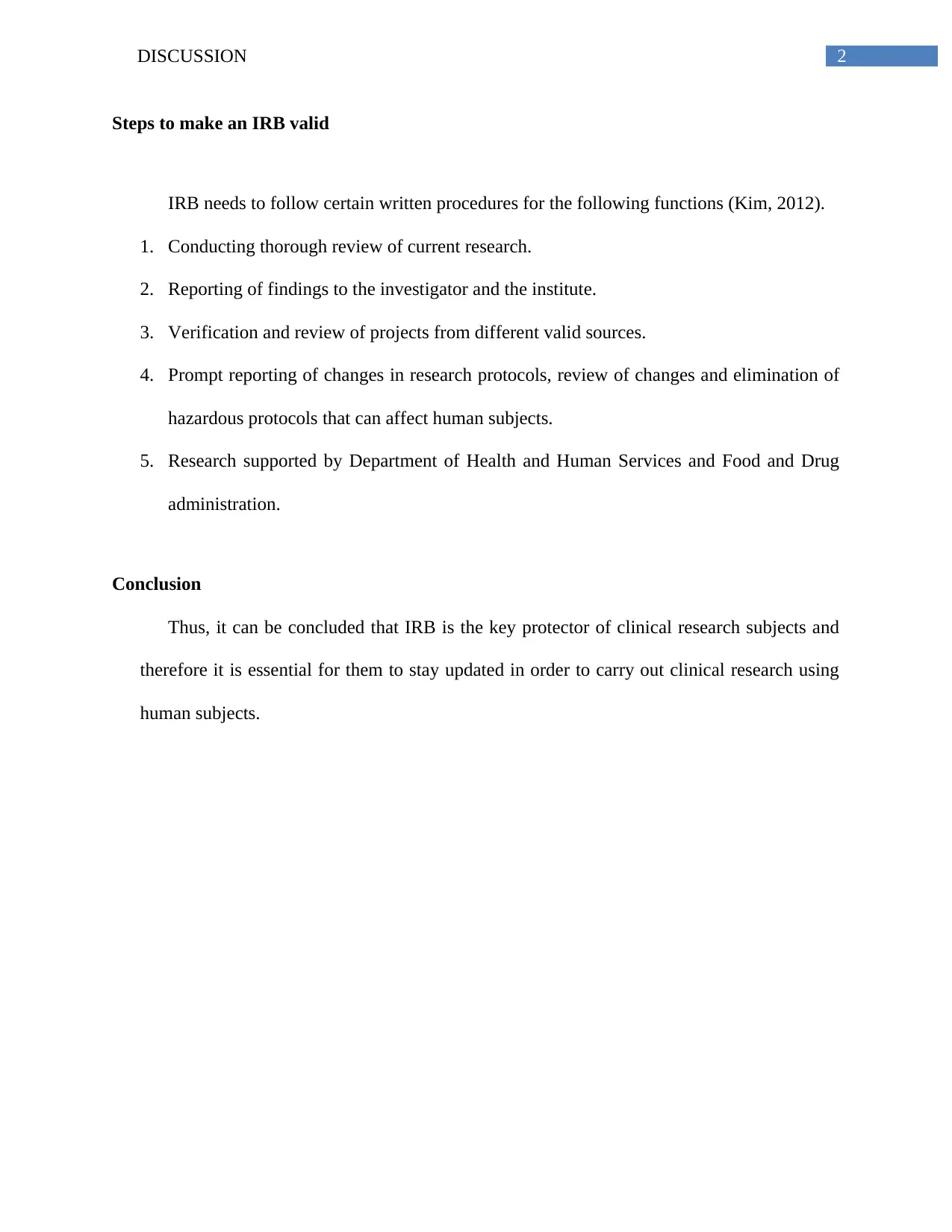
Steps to make an IRB valid
IRB needs to follow certain written procedures for the following functions (Kim, 2012).
1. Conducting thorough review of current research.
2. Reporting of findings to the investigator and the institute.
3. Verification and review of projects from different valid sources.
4. Prompt reporting of changes in research protocols, review of changes and elimination of
hazardous protocols that can affect human subjects.
5. Research supported by Department of Health and Human Services and Food and Drug
administration.
Conclusion
Thus, it can be concluded that IRB is the key protector of clinical research subjects and
therefore it is essential for them to stay updated in order to carry out clinical research using
human subjects.
Document Page
3DISCUSSION
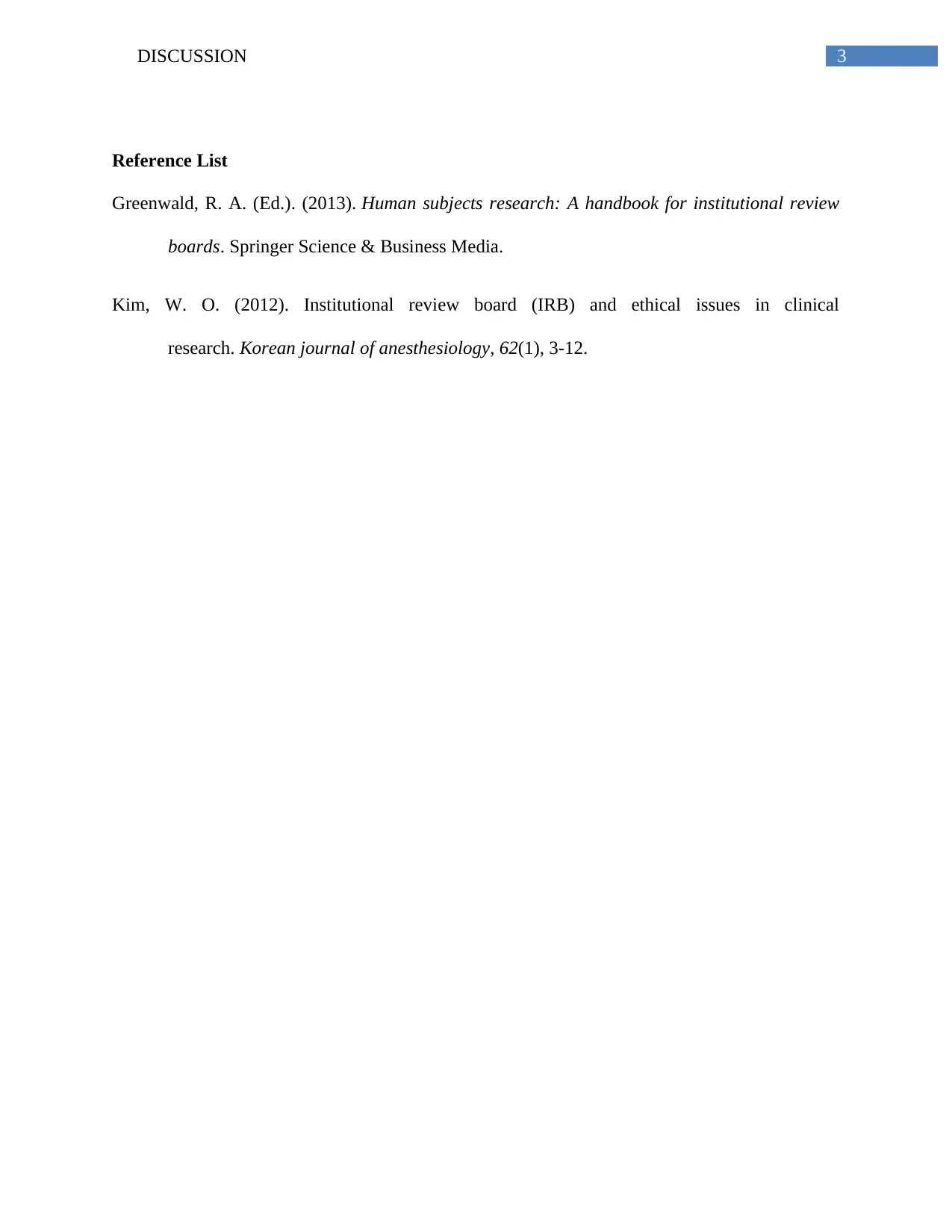
Reference List
Greenwald, R. A. (Ed.). (2013). Human subjects research: A handbook for institutional review
boards. Springer Science & Business Media.
Kim, W. O. (2012). Institutional review board (IRB) and ethical issues in clinical
research. Korean journal of anesthesiology, 62(1), 3-12.
chevron_up_icon
1 out of 4
circle_padding
hide_on_mobile
zoom_out_icon
[object Object]