Cloud Computing: A Critical Analysis of Advantages and Disadvantages
VerifiedAdded on 2020/03/04
|14
|3619
|47
Report
AI Summary
This report provides a comprehensive overview of cloud computing, exploring its evolution, conceptual framework, and various service models including IaaS, PaaS, and SaaS. It critically analyzes the advantages, such as cost efficiency, speed, and scalability, alongside the disadvantages, including security concerns, cost implications, and lack of flexibility. The report also examines different deployment models like public, private, community, and hybrid clouds. Furthermore, it identifies the gaps in current policies and practices related to cloud computing, offering a balanced perspective on its benefits and challenges in the modern technological landscape. The report concludes by summarizing the key findings and implications of cloud computing in the context of information and communication technology.
ADVANTAGES AND DISADVANTAGES OF CLOUD
COMPUTING
1
COMPUTING
1

Paraphrase This Document
Need a fresh take? Get an instant paraphrase of this document with our AI Paraphraser
Table of Contents
Introduction................................................................................................................................3
Conceptual framework...............................................................................................................3
Defining cloud computing..........................................................................................................3
Exploring the evolution of cloud computing.............................................................................4
Critically analysing the theoretical underpinnings of cloud computing....................................5
Infrastructure as a service (IaaS)............................................................................................6
Platform as a service (PaaS)...................................................................................................6
Software as a service (SaaS)...................................................................................................7
Critically evaluating the advantages and disadvantages of cloud computing............................9
Advantages of cloud computing.............................................................................................9
Disadvantages of cloud computing......................................................................................10
Identifying the gaps in policies and practices..........................................................................12
Conclusion................................................................................................................................12
Reference list............................................................................................................................13
2
Introduction................................................................................................................................3
Conceptual framework...............................................................................................................3
Defining cloud computing..........................................................................................................3
Exploring the evolution of cloud computing.............................................................................4
Critically analysing the theoretical underpinnings of cloud computing....................................5
Infrastructure as a service (IaaS)............................................................................................6
Platform as a service (PaaS)...................................................................................................6
Software as a service (SaaS)...................................................................................................7
Critically evaluating the advantages and disadvantages of cloud computing............................9
Advantages of cloud computing.............................................................................................9
Disadvantages of cloud computing......................................................................................10
Identifying the gaps in policies and practices..........................................................................12
Conclusion................................................................................................................................12
Reference list............................................................................................................................13
2
Introduction
With the paradigm shift experienced in information and communication technology (ICT or
IT), cloud computing has emerged as a global phenomenon, spreading its wing over a wide
horizon. The term ‘cloud computing’ has become a part-and-parcel of modern multinational
business corporations (MNCs) such as Apple, IBM, Google, and Amazon and so on. With the
monumental development of internet and computational technologies, coupled with mobile
technologies, cloud computing has emerged as an omnipotent and omnipresent phenomena.
Keeping aside the commercial intent, cloud computing has also ushered significant benefits
for general utility, for example in healthcare sector. Therefore, the following sections will
critically discuss in detail the different modes of use and the beneficial as well as negative
outcomes yielded by cloud computing.
Conceptual framework
Figure 1: Conceptual Framework
(Source: Kavis, 20144, p.242)
Defining cloud computing
Kavis (2014, p.129) has defined cloud computing as delivering the computing services
through the internet. In other words, cloud computing is involved in delivering on-demand
3
With the paradigm shift experienced in information and communication technology (ICT or
IT), cloud computing has emerged as a global phenomenon, spreading its wing over a wide
horizon. The term ‘cloud computing’ has become a part-and-parcel of modern multinational
business corporations (MNCs) such as Apple, IBM, Google, and Amazon and so on. With the
monumental development of internet and computational technologies, coupled with mobile
technologies, cloud computing has emerged as an omnipotent and omnipresent phenomena.
Keeping aside the commercial intent, cloud computing has also ushered significant benefits
for general utility, for example in healthcare sector. Therefore, the following sections will
critically discuss in detail the different modes of use and the beneficial as well as negative
outcomes yielded by cloud computing.
Conceptual framework
Figure 1: Conceptual Framework
(Source: Kavis, 20144, p.242)
Defining cloud computing
Kavis (2014, p.129) has defined cloud computing as delivering the computing services
through the internet. In other words, cloud computing is involved in delivering on-demand
3
⊘ This is a preview!⊘
Do you want full access?
Subscribe today to unlock all pages.

Trusted by 1+ million students worldwide
computing resources through internet on a pay-for-use contract. Generally, the services
provided through cloud computing spans over a wide horizon such as servers, databases,
storages, analytics, storages, software application and many more. Pearson (2013, p.18) has
mentioned core elements of cloud computing as-
Pay-per-use
Using as per the nature and time of requirement
Third-party provided service
Zero change in ownership of the original property (intellectual or physical)
Figure 2: Core elements of cloud computing
(Source: Pearson 2013, p.12)
From this perspective, cloud computing can be termed as an unique service that can allow
multiple users to gain access in a specific project simultaneously without jeopardising the
functionality or security protocols of a network infrastructure, that too irrespective of
geographical borders or time.
Exploring the evolution of cloud computing
The origin of term ‘cloud computing’ is itself shrouded in cloud as there is no specific
mention of this term in history. The initial schematics of cloud computing referred to the use
of internet in connecting several computers and the term ‘cloud’ was used there as a
metaphor for inter-connectivity irrespective of space and time (Rittinghouse and Ransome,
2016, p.177). The cloud symbol was fort formally used in ARPANET in the early 1977s and
4
provided through cloud computing spans over a wide horizon such as servers, databases,
storages, analytics, storages, software application and many more. Pearson (2013, p.18) has
mentioned core elements of cloud computing as-
Pay-per-use
Using as per the nature and time of requirement
Third-party provided service
Zero change in ownership of the original property (intellectual or physical)
Figure 2: Core elements of cloud computing
(Source: Pearson 2013, p.12)
From this perspective, cloud computing can be termed as an unique service that can allow
multiple users to gain access in a specific project simultaneously without jeopardising the
functionality or security protocols of a network infrastructure, that too irrespective of
geographical borders or time.
Exploring the evolution of cloud computing
The origin of term ‘cloud computing’ is itself shrouded in cloud as there is no specific
mention of this term in history. The initial schematics of cloud computing referred to the use
of internet in connecting several computers and the term ‘cloud’ was used there as a
metaphor for inter-connectivity irrespective of space and time (Rittinghouse and Ransome,
2016, p.177). The cloud symbol was fort formally used in ARPANET in the early 1977s and
4
Paraphrase This Document
Need a fresh take? Get an instant paraphrase of this document with our AI Paraphraser
later service resembling cloud computing was also used by CSNET in 1981. However, both
these instances predate the formal origin of internet, therefore scholars are sceptic whether to
define such usage as a proper ‘cloud computing’ or not.
A major step in the evolutionary landscape of cloud computing was realised during 1960s
with the popularisation of Remote Job Entry (RJE). Remote service providing vendors such
as IBM and DEC popularised this terminology (Ibm.com, 2017). Later, in the 1990s, offering
of Virtual Private Network services by telecommunications companies gained significance
popularity. Such services were available at a lower cost and allowed users to switch traffic for
maintaining the balance of servers (Fernández et al. 2014, p.385). The first modern
appearances of term ‘cloud computing’ traced in a Compaq internal document.
Since 2000, cloud computing service ballooned and started to be used for commercial
purpose, which was earlier used by governmental agencies such as NASA. Finally, with the
introduction of Elastic Compute Cloud by Amazon in 2006, this computing service was
introduced to common public and since then cloud computing has gained continuous
momentum (Hwang et al. 2013, p.167).
Critically analysing the theoretical underpinnings of cloud computing
The theoretical standpoint of cloud computing can be best understood through a critical
evaluation of major cloud service models. It can also help to ascertain the types of cloud
services and thus comprehend the benefits and challenges associated with each of them.
Fernando et al (2013, p.86) has identified three major types of cloud services frequently used
in contemporary world - IaaS, SaaS and PaaS model. However, it should be noted that there
are also several other services models used in the arena of cloud computing. Data Analytics
as a service is one major example in this regard.
5
these instances predate the formal origin of internet, therefore scholars are sceptic whether to
define such usage as a proper ‘cloud computing’ or not.
A major step in the evolutionary landscape of cloud computing was realised during 1960s
with the popularisation of Remote Job Entry (RJE). Remote service providing vendors such
as IBM and DEC popularised this terminology (Ibm.com, 2017). Later, in the 1990s, offering
of Virtual Private Network services by telecommunications companies gained significance
popularity. Such services were available at a lower cost and allowed users to switch traffic for
maintaining the balance of servers (Fernández et al. 2014, p.385). The first modern
appearances of term ‘cloud computing’ traced in a Compaq internal document.
Since 2000, cloud computing service ballooned and started to be used for commercial
purpose, which was earlier used by governmental agencies such as NASA. Finally, with the
introduction of Elastic Compute Cloud by Amazon in 2006, this computing service was
introduced to common public and since then cloud computing has gained continuous
momentum (Hwang et al. 2013, p.167).
Critically analysing the theoretical underpinnings of cloud computing
The theoretical standpoint of cloud computing can be best understood through a critical
evaluation of major cloud service models. It can also help to ascertain the types of cloud
services and thus comprehend the benefits and challenges associated with each of them.
Fernando et al (2013, p.86) has identified three major types of cloud services frequently used
in contemporary world - IaaS, SaaS and PaaS model. However, it should be noted that there
are also several other services models used in the arena of cloud computing. Data Analytics
as a service is one major example in this regard.
5
Figure 4: Three Major Cloud Service Models
(Source: Fernando et al. 2013, p.85)
Infrastructure as a service (IaaS)
One of the most rudimentary form of cloud computing, IaaS allows users to rent information
technology infrastructure such as servers and networks, storage, operating system, virtual
machines tec. As per Kavis (2014, p.165), IaaS involves a pay-per-use service and is the main
benefit lies in the absence of investing a large amount of resource for building hardware. In
addition, as the services are available for rent, the providers can supply flexible as well as
informative services based on clients’ demands.
Despite the advantages, IaaS is the most expensive mode of cloud computing and the client
has to take care of backup system regularly. A prominent example of this type of cloud
service is Amazon WS service.
Platform as a service (PaaS)
In the opinion of Al-Roomi et al. (2013, p.95), PaaS is a special type of cloud computing
service that provides on-demand cloud -based environment to clients where they can develop,
test, deliver and manage a wide range of software applications. Such service is beneficial for
developers as it allows them to freely develop applications minus the headache over
managing entire infrastructure. One major drawback of PaaS is that the user has virtually no
control over the platform and has to depend solely on cloud provider.
6
(Source: Fernando et al. 2013, p.85)
Infrastructure as a service (IaaS)
One of the most rudimentary form of cloud computing, IaaS allows users to rent information
technology infrastructure such as servers and networks, storage, operating system, virtual
machines tec. As per Kavis (2014, p.165), IaaS involves a pay-per-use service and is the main
benefit lies in the absence of investing a large amount of resource for building hardware. In
addition, as the services are available for rent, the providers can supply flexible as well as
informative services based on clients’ demands.
Despite the advantages, IaaS is the most expensive mode of cloud computing and the client
has to take care of backup system regularly. A prominent example of this type of cloud
service is Amazon WS service.
Platform as a service (PaaS)
In the opinion of Al-Roomi et al. (2013, p.95), PaaS is a special type of cloud computing
service that provides on-demand cloud -based environment to clients where they can develop,
test, deliver and manage a wide range of software applications. Such service is beneficial for
developers as it allows them to freely develop applications minus the headache over
managing entire infrastructure. One major drawback of PaaS is that the user has virtually no
control over the platform and has to depend solely on cloud provider.
6
⊘ This is a preview!⊘
Do you want full access?
Subscribe today to unlock all pages.
Trusted by 1+ million students worldwide
Google’s App Engine can be cited as a suitable example for this type of cloud computing
service.
Software as a service (SaaS)
As per Dinh et al. (2013, p.1589), SaaS allows the delivery of software applications through
internet, generally in a subscription based mode. In this type of service, cloud service
providers host, manage and undertakes the maintenance of software application and
associated infrastructure. In this way, users can relish the benefits of using upgraded software
applications without worrying about information loss. Hashem et al. (2015, p.99) has
criticises this platform as the user is not authorised to add or modify any features, thus posing
a limitation in application. Google Docs, a cloud-based document editor application is one
famous example of SaaS.
Public Cloud Private Cloud Hybrid Cloud
0%
10%
20%
30%
40%
50%
60%
70%
80%
90%
88%
63%
58%59%
77%
71%
2015
2016
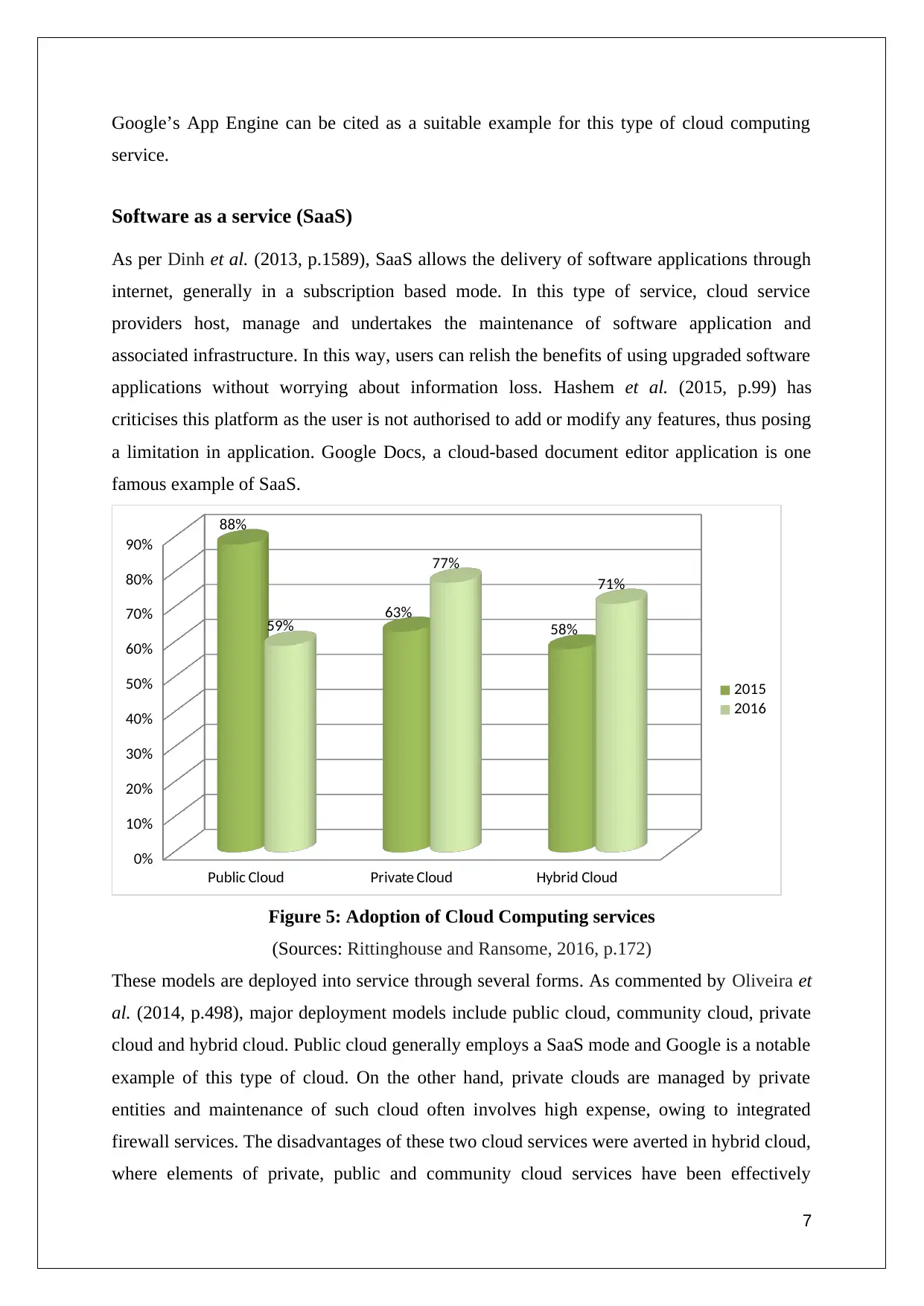
Figure 5: Adoption of Cloud Computing services
(Sources: Rittinghouse and Ransome, 2016, p.172)
These models are deployed into service through several forms. As commented by Oliveira et
al. (2014, p.498), major deployment models include public cloud, community cloud, private
cloud and hybrid cloud. Public cloud generally employs a SaaS mode and Google is a notable
example of this type of cloud. On the other hand, private clouds are managed by private
entities and maintenance of such cloud often involves high expense, owing to integrated
firewall services. The disadvantages of these two cloud services were averted in hybrid cloud,
where elements of private, public and community cloud services have been effectively
7
service.
Software as a service (SaaS)
As per Dinh et al. (2013, p.1589), SaaS allows the delivery of software applications through
internet, generally in a subscription based mode. In this type of service, cloud service
providers host, manage and undertakes the maintenance of software application and
associated infrastructure. In this way, users can relish the benefits of using upgraded software
applications without worrying about information loss. Hashem et al. (2015, p.99) has
criticises this platform as the user is not authorised to add or modify any features, thus posing
a limitation in application. Google Docs, a cloud-based document editor application is one
famous example of SaaS.
Public Cloud Private Cloud Hybrid Cloud
0%
10%
20%
30%
40%
50%
60%
70%
80%
90%
88%
63%
58%59%
77%
71%
2015
2016
Figure 5: Adoption of Cloud Computing services
(Sources: Rittinghouse and Ransome, 2016, p.172)
These models are deployed into service through several forms. As commented by Oliveira et
al. (2014, p.498), major deployment models include public cloud, community cloud, private
cloud and hybrid cloud. Public cloud generally employs a SaaS mode and Google is a notable
example of this type of cloud. On the other hand, private clouds are managed by private
entities and maintenance of such cloud often involves high expense, owing to integrated
firewall services. The disadvantages of these two cloud services were averted in hybrid cloud,
where elements of private, public and community cloud services have been effectively
7
Paraphrase This Document
Need a fresh take? Get an instant paraphrase of this document with our AI Paraphraser
blended in (Avram, 2014, p.530). This type of cloud service allows the movement of
information an application between public and private clouds. CRM software platforms can
be cited as an example of hybrid cloud.
8
information an application between public and private clouds. CRM software platforms can
be cited as an example of hybrid cloud.
8
Critically evaluating the advantages and disadvantages of cloud computing
Now that most commonly used models of cloud computing and associated cloud services has
been critically discussed, it is imperative to speculate the benefits provided by those cloud
services, along with the challenges posed by them.
Advantages of cloud computing
As Avram (2014, p.529) has commented, cloud computing has revolutionised the business
process by incorporating IT resources into it. As a result, contemporary organisations,
irrespective of their nature and purpose, churn huge benefit from implementing cloud
computing. Major benefits have been penned down in the following points-
Cost efficiency
As per Sicari et al. (2014, p.148), cloud computing is undoubtedly the most cost-effective
mode of technology to be used in wide array of scenarios. Cloud computing has enabled
organisation to cut down their capital expense involved in setting up IT infrastructure and its
maintenance. Consequently, the costs for ensuring continuous power and cooling have also
been transferred in other productive purposes. Furthermore, this service is also available at
comparatively cheaper rate and clients can render this service as per their specific needs and
requirements, thus saving cost from investing in unnecessary applications.
Speed
As most of cloud computing service providers supply self-service features, vast amount of
information of resources can be processesed within a very short span of time. Sultan (2014,
p.180) has stated that the added speed available in cloud computing service grants medical
business greater flexibility and thus reduces the pressure associated with capacity planning.
Global presence
cloud computing services, not being limited to any physical IT infrastructure, grants greater
elasticity to business in terms of scaling (Ibm.com, 2015). This helps individuals working
from different corners of the world to smoothly collaborate with each other without much
hassle.
Increased productivity and performance
IT industry often involves typical time consuming IT chores such as setting up hardware,
software patching and so on. Fortunately, cloud computing has reduced the need for such
9
Now that most commonly used models of cloud computing and associated cloud services has
been critically discussed, it is imperative to speculate the benefits provided by those cloud
services, along with the challenges posed by them.
Advantages of cloud computing
As Avram (2014, p.529) has commented, cloud computing has revolutionised the business
process by incorporating IT resources into it. As a result, contemporary organisations,
irrespective of their nature and purpose, churn huge benefit from implementing cloud
computing. Major benefits have been penned down in the following points-
Cost efficiency
As per Sicari et al. (2014, p.148), cloud computing is undoubtedly the most cost-effective
mode of technology to be used in wide array of scenarios. Cloud computing has enabled
organisation to cut down their capital expense involved in setting up IT infrastructure and its
maintenance. Consequently, the costs for ensuring continuous power and cooling have also
been transferred in other productive purposes. Furthermore, this service is also available at
comparatively cheaper rate and clients can render this service as per their specific needs and
requirements, thus saving cost from investing in unnecessary applications.
Speed
As most of cloud computing service providers supply self-service features, vast amount of
information of resources can be processesed within a very short span of time. Sultan (2014,
p.180) has stated that the added speed available in cloud computing service grants medical
business greater flexibility and thus reduces the pressure associated with capacity planning.
Global presence
cloud computing services, not being limited to any physical IT infrastructure, grants greater
elasticity to business in terms of scaling (Ibm.com, 2015). This helps individuals working
from different corners of the world to smoothly collaborate with each other without much
hassle.
Increased productivity and performance
IT industry often involves typical time consuming IT chores such as setting up hardware,
software patching and so on. Fortunately, cloud computing has reduced the need for such
9
⊘ This is a preview!⊘
Do you want full access?
Subscribe today to unlock all pages.
Trusted by 1+ million students worldwide
activities and allowed IT organizations to focus on pursuing their business goals - thus
increasing both organisational performance and productivity.
Better reliability
With the options of online storage, backup and recovery, cloud computing has increased the
reliability and security of information (Azure.microsoft.com, 2017). As cloud service
providers are responsible manage the security patching, user can store sensitive information
without worrying much. Furthermore, the provision of data mirroring also grants additional
layer of security in case information is lost from one host.
Automated software upgradation and integration
Another major benefit associated with cloud computing is that software used by users are
automatically integrated in the cloud platforms, thus removing the additional effort of an
user to customise the application s per personal requirement.
Scalability and flexibility
Assunção et al. (2014, p.12) has stated that cloud computing assist organisations to utilize
additional resources as per their requirements, this amplifying the organisational productivity.
Through the provision of easy resource sharing, organizational activities become more
flexible and management can easily scale the outcomes of every activity efficiently.
Automated and focussed approach
Dinh et al. (2013, p.1595) has commented that cloud computing has enabled organisations to
automate their processes so that data management requirements are addressed effectively. In
turn, this has allowed resource sharing smoother and organisations can now focus on their
productive activities such as research and development (R&D) more effectively.
Disadvantages of cloud computing
Contrary to numerous advantages, cloud computing also incorporates several major threats
that can be considered as it disadvantages. They are-
10
increasing both organisational performance and productivity.
Better reliability
With the options of online storage, backup and recovery, cloud computing has increased the
reliability and security of information (Azure.microsoft.com, 2017). As cloud service
providers are responsible manage the security patching, user can store sensitive information
without worrying much. Furthermore, the provision of data mirroring also grants additional
layer of security in case information is lost from one host.
Automated software upgradation and integration
Another major benefit associated with cloud computing is that software used by users are
automatically integrated in the cloud platforms, thus removing the additional effort of an
user to customise the application s per personal requirement.
Scalability and flexibility
Assunção et al. (2014, p.12) has stated that cloud computing assist organisations to utilize
additional resources as per their requirements, this amplifying the organisational productivity.
Through the provision of easy resource sharing, organizational activities become more
flexible and management can easily scale the outcomes of every activity efficiently.
Automated and focussed approach
Dinh et al. (2013, p.1595) has commented that cloud computing has enabled organisations to
automate their processes so that data management requirements are addressed effectively. In
turn, this has allowed resource sharing smoother and organisations can now focus on their
productive activities such as research and development (R&D) more effectively.
Disadvantages of cloud computing
Contrary to numerous advantages, cloud computing also incorporates several major threats
that can be considered as it disadvantages. They are-
10
Paraphrase This Document
Need a fresh take? Get an instant paraphrase of this document with our AI Paraphraser
Figure 5: Major disadvantages of cloud computing
(Source: Kshetri 2013, p.372)
Security issue
In the opinion of Kshetri (2013, p.373), security concern is the major drawback of cloud
computing. As in most of cases users cannot put additional encryption to the stored
information, any malicious agent such as hacker can easily gain access to that information.
Such cases are more prevalent where cloud service providers are not capable of augmenting
highly efficient firewall mechanism. Furthermore, cloud-service provide a by a third-party
provider often involves the risk of entire data loss if the service provider runs into any cyber-
attack. Therefore it is recommended to the beneficiaries to carefully evaluate the security
service provided in the cloud platform.
Cost
Although cloud computing may appear as cost-effective from the surface, it is often just tip-
of-the-iceberg. Once an organisation shifts into cloud computing, it is virtually impossible to
revert back to conventional mode. As a result, the organisation has to continually spend
financial resources for hiring and maintaining the cloud service (Patel et al. 2013, p.27). In
this way, cloud computing can become much costlier in the long run.
Lack of flexibility
As contradicted by Stojmenovic et al. (2016, p.2995), opting for cloud computing can
permanently lock the bones procedure of an organisation into that mode, thus preventing
additional formats or applications to be used in the future. For example, an organisation
11
(Source: Kshetri 2013, p.372)
Security issue
In the opinion of Kshetri (2013, p.373), security concern is the major drawback of cloud
computing. As in most of cases users cannot put additional encryption to the stored
information, any malicious agent such as hacker can easily gain access to that information.
Such cases are more prevalent where cloud service providers are not capable of augmenting
highly efficient firewall mechanism. Furthermore, cloud-service provide a by a third-party
provider often involves the risk of entire data loss if the service provider runs into any cyber-
attack. Therefore it is recommended to the beneficiaries to carefully evaluate the security
service provided in the cloud platform.
Cost
Although cloud computing may appear as cost-effective from the surface, it is often just tip-
of-the-iceberg. Once an organisation shifts into cloud computing, it is virtually impossible to
revert back to conventional mode. As a result, the organisation has to continually spend
financial resources for hiring and maintaining the cloud service (Patel et al. 2013, p.27). In
this way, cloud computing can become much costlier in the long run.
Lack of flexibility
As contradicted by Stojmenovic et al. (2016, p.2995), opting for cloud computing can
permanently lock the bones procedure of an organisation into that mode, thus preventing
additional formats or applications to be used in the future. For example, an organisation
11
cannot use document made from another application in the Google Docs platform, as it
simply would not support. Thus, cloud computing essentially hinders flexibility in operations.
Apart from these major disadvantages, other drawbacks of cloud computing include lack of
support (difficulty in obtaining customer service promptly), probability of breaching the
confidentiality of sensitive information (breaching the data privacy protocols), backdated
encryption technology (leading to major interception), lack of fixed and scheduled backup
service, lack of control over data (as cloud platform is maintained by third-party vendor),
malicious intents of intermediary agencies, lack of valid information over data storage
location (data often stored in remote servers) and last but not the least lack of provision of
audit (Sun et al. 2014, p.192).
Identifying the gaps in policies and practices
From the discussion made above, it is clear that major gaps associated with cloud computing
involves involvement of high cost, lack of security and absence of any specific cloud
computation policy. Absence of any robust policy allows misuse of cloud computing
technology for malicious practices, thus bring the sensitive and valuable information stored
into cloud at stake.
Conclusion
This paper has critically evaluated the advantages endowed and disadvantages posed by cloud
computing (CC). For this purpose, an operational definition of cloud computing was
furnished in the beginning of this paper. After that, the evolutionary perspective of cloud
computing was penned down which depicted the origin of cloud in 1970s and its gradual
development through the years. In the next section, most frequently used three models of
cloud computing, namely IaaS, PaaS and SaaS were briefly discussed. The discussion
followed by critical evaluation of the advantages and the disadvantages yielded by cloud
computing. While the major advantages include increased speed, performance, productivity
and reduction of cost; negative aspects include concern over data security and lack of
effective control. Finally, gaps were identified from the discussion and it can be concluded
that cloud computing is an effective tool of digital technology that can be used in different
contexts and usher significant benefits. However, the entity implementing cloud computing
should be aware of the challenges and adopt necessary preventive steps. In this way, the
paper has presented a holistic account on different aspects of cloud computing.
12
simply would not support. Thus, cloud computing essentially hinders flexibility in operations.
Apart from these major disadvantages, other drawbacks of cloud computing include lack of
support (difficulty in obtaining customer service promptly), probability of breaching the
confidentiality of sensitive information (breaching the data privacy protocols), backdated
encryption technology (leading to major interception), lack of fixed and scheduled backup
service, lack of control over data (as cloud platform is maintained by third-party vendor),
malicious intents of intermediary agencies, lack of valid information over data storage
location (data often stored in remote servers) and last but not the least lack of provision of
audit (Sun et al. 2014, p.192).
Identifying the gaps in policies and practices
From the discussion made above, it is clear that major gaps associated with cloud computing
involves involvement of high cost, lack of security and absence of any specific cloud
computation policy. Absence of any robust policy allows misuse of cloud computing
technology for malicious practices, thus bring the sensitive and valuable information stored
into cloud at stake.
Conclusion
This paper has critically evaluated the advantages endowed and disadvantages posed by cloud
computing (CC). For this purpose, an operational definition of cloud computing was
furnished in the beginning of this paper. After that, the evolutionary perspective of cloud
computing was penned down which depicted the origin of cloud in 1970s and its gradual
development through the years. In the next section, most frequently used three models of
cloud computing, namely IaaS, PaaS and SaaS were briefly discussed. The discussion
followed by critical evaluation of the advantages and the disadvantages yielded by cloud
computing. While the major advantages include increased speed, performance, productivity
and reduction of cost; negative aspects include concern over data security and lack of
effective control. Finally, gaps were identified from the discussion and it can be concluded
that cloud computing is an effective tool of digital technology that can be used in different
contexts and usher significant benefits. However, the entity implementing cloud computing
should be aware of the challenges and adopt necessary preventive steps. In this way, the
paper has presented a holistic account on different aspects of cloud computing.
12
⊘ This is a preview!⊘
Do you want full access?
Subscribe today to unlock all pages.
Trusted by 1+ million students worldwide

1 out of 14


Related Documents


Your All-in-One AI-Powered Toolkit for Academic Success.
+13062052269
info@desklib.com
Available 24*7 on WhatsApp / Email
![[object Object]](/_next/static/media/star-bottom.7253800d.svg)
Unlock your academic potential
Copyright © 2020–2026 A2Z Services. All Rights Reserved. Developed and managed by ZUCOL.