Cloud Computing Security Management and Hybrid Cloud Migration Report
VerifiedAdded on 2021/06/17
|24
|4990
|81
Report
AI Summary
This report provides a comprehensive analysis of cloud computing security, focusing on migration strategies and risk assessment within a hybrid cloud environment. It begins with an introduction to cloud architecture, emphasizing the benefits of cloud computing for Regional Gardens, including scalability, flexibility, and cost reduction. The report details various cloud architectures, such as workload distribution and resource pooling, and discusses their deployment reasons and associated benefits and issues. It highlights the use of Amazon Web Services (AWS) Hybrid Cloud, examining its advantages and disadvantages. The core of the report addresses the risks associated with a hybrid cloud and micro-services strategy, including security breaches, performance risks, and learning curve challenges, along with mitigation strategies for each. The report concludes by discussing the importance of communication, performance validation, and training to successfully manage these risks.
Cloud computing
Security management and migration
MAY 7, 2018
Student name
Course ID
Security management and migration
MAY 7, 2018
Student name
Course ID

Paraphrase This Document
Need a fresh take? Get an instant paraphrase of this document with our AI Paraphraser
Student Name Student Number
1.0 Introduction.
Cloud architecture is a very key area that need to be carefully administered
and before one think of choosing any of it in all areas. The regional gardens
will need to know the benefits they will encounter when they migrate from
the physical way of doing things to the cloud computing way of storing their
information’s. The main idea here is that Regional Gardens is in need of
migrating its active directories and the data storage infrastructure in to the
cloud. The main idea was moving only the web services but after the
understanding of what the entire package entails they decided to move all
their activities from the line of business, micro services, and all their data as
it is flexible and scalable and much more there is high availability making it
to reduce the cost of maintenance unlike in others. The report is based on
explaining all the risk assessment that Metasoft will encounter while
migrating to the Hybrid cloud strategy as explained using the following
questions as explained here below.
2.0 Cloud architectures that would meet Regional Gardens Strategy
The way the use of cloud computing has trended in the current technology
has led us to have an urge of knowing what it entails and much what we
need to do achieve it. Cloud computing has been known to offer plenty of
advantages which are highly flexible in terms of sharing and much more
ease of accessibility. Cloud computing architectures can be defined to all the
major components and their sub-components that are constituted in the
system structure. The cloud architecture consists of four basic architectures
namely the.
Front End which is visible interface (VI) that is used by the computer end
users in encountering through their devices that are enabled on the web.
This is known for its inclusion of the fat and thin clients and much more the
mobile services. The other one is the Backend which simply the platforms
1
1.0 Introduction.
Cloud architecture is a very key area that need to be carefully administered
and before one think of choosing any of it in all areas. The regional gardens
will need to know the benefits they will encounter when they migrate from
the physical way of doing things to the cloud computing way of storing their
information’s. The main idea here is that Regional Gardens is in need of
migrating its active directories and the data storage infrastructure in to the
cloud. The main idea was moving only the web services but after the
understanding of what the entire package entails they decided to move all
their activities from the line of business, micro services, and all their data as
it is flexible and scalable and much more there is high availability making it
to reduce the cost of maintenance unlike in others. The report is based on
explaining all the risk assessment that Metasoft will encounter while
migrating to the Hybrid cloud strategy as explained using the following
questions as explained here below.
2.0 Cloud architectures that would meet Regional Gardens Strategy
The way the use of cloud computing has trended in the current technology
has led us to have an urge of knowing what it entails and much what we
need to do achieve it. Cloud computing has been known to offer plenty of
advantages which are highly flexible in terms of sharing and much more
ease of accessibility. Cloud computing architectures can be defined to all the
major components and their sub-components that are constituted in the
system structure. The cloud architecture consists of four basic architectures
namely the.
Front End which is visible interface (VI) that is used by the computer end
users in encountering through their devices that are enabled on the web.
This is known for its inclusion of the fat and thin clients and much more the
mobile services. The other one is the Backend which simply the platforms
1
Student Name Student Number
such as the servers and the storage. This where we get the term cloud as
part of cloud computing architecture as in this one it will comprise of all the
required resources needed in delivering the cloud services (Simplilearn,
2018). All the devices integrates in one way or another with an aim of
providing services to their clients. The other two are named as the cloud
based delivery and the network itself (SEAGRAVE, 2014)
The concept of the utility computing has been explained in so many ways
depending on the requirements features and needs of the organization that
has been a vision innovated by many scientists in the ICT world (SALEEM,
2011). Based on what many industry has been asking and in need of
computer utility and cloud computing have been defined in a standard way
using the national institute of Standards and technology (NIST) a model that
is use for enabling an environment that is convenient when it comes to
accessing the on-demand networks in a shared pool which is configured with
the use of networks, servers and the storage applications and services. This
has been known provisioned rapidly and being released with management’s
efforts that are very minimal.
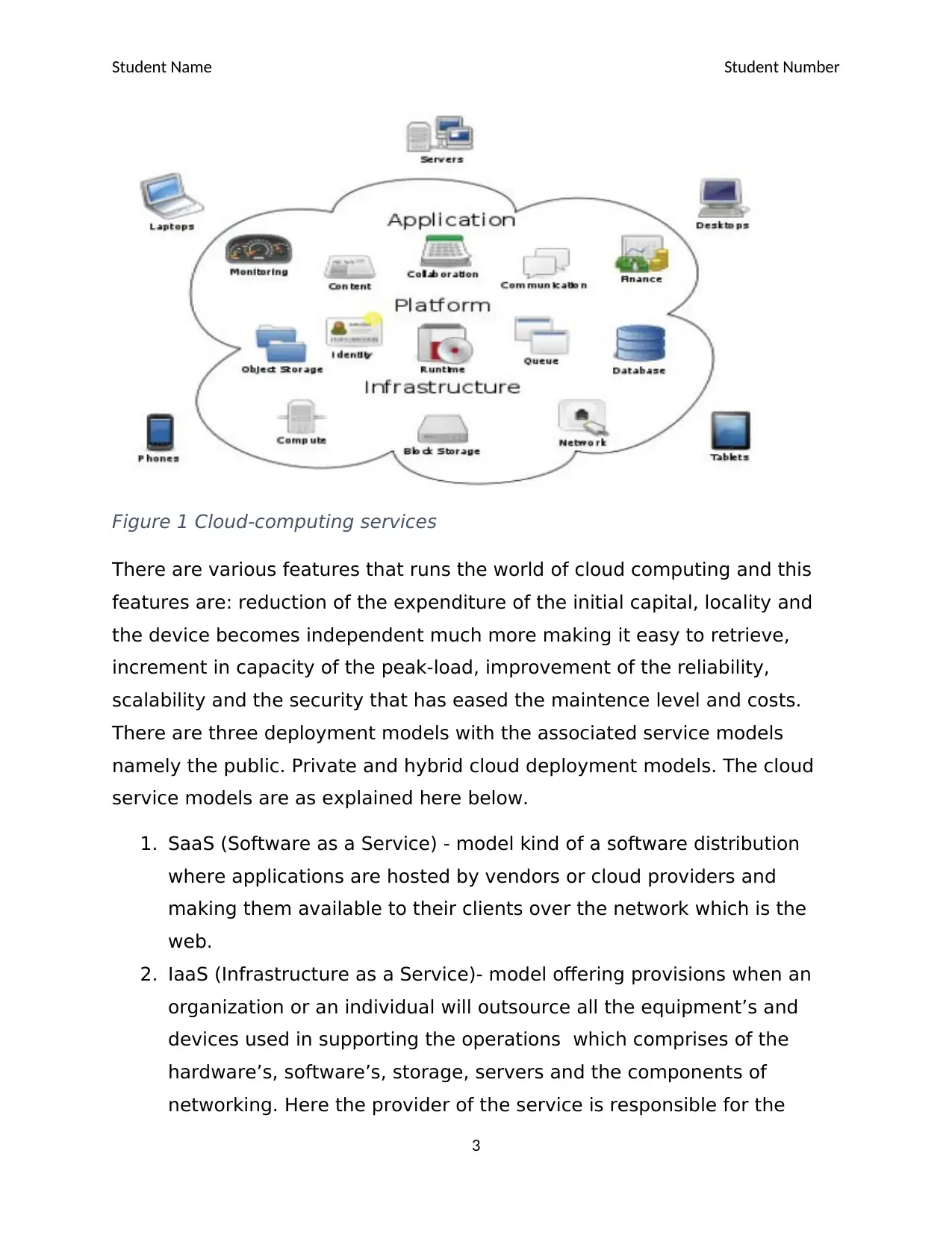
Cloud computing has been on the frontline in in promotion of the availability
which comprises of the stated characteristics and deployment models as
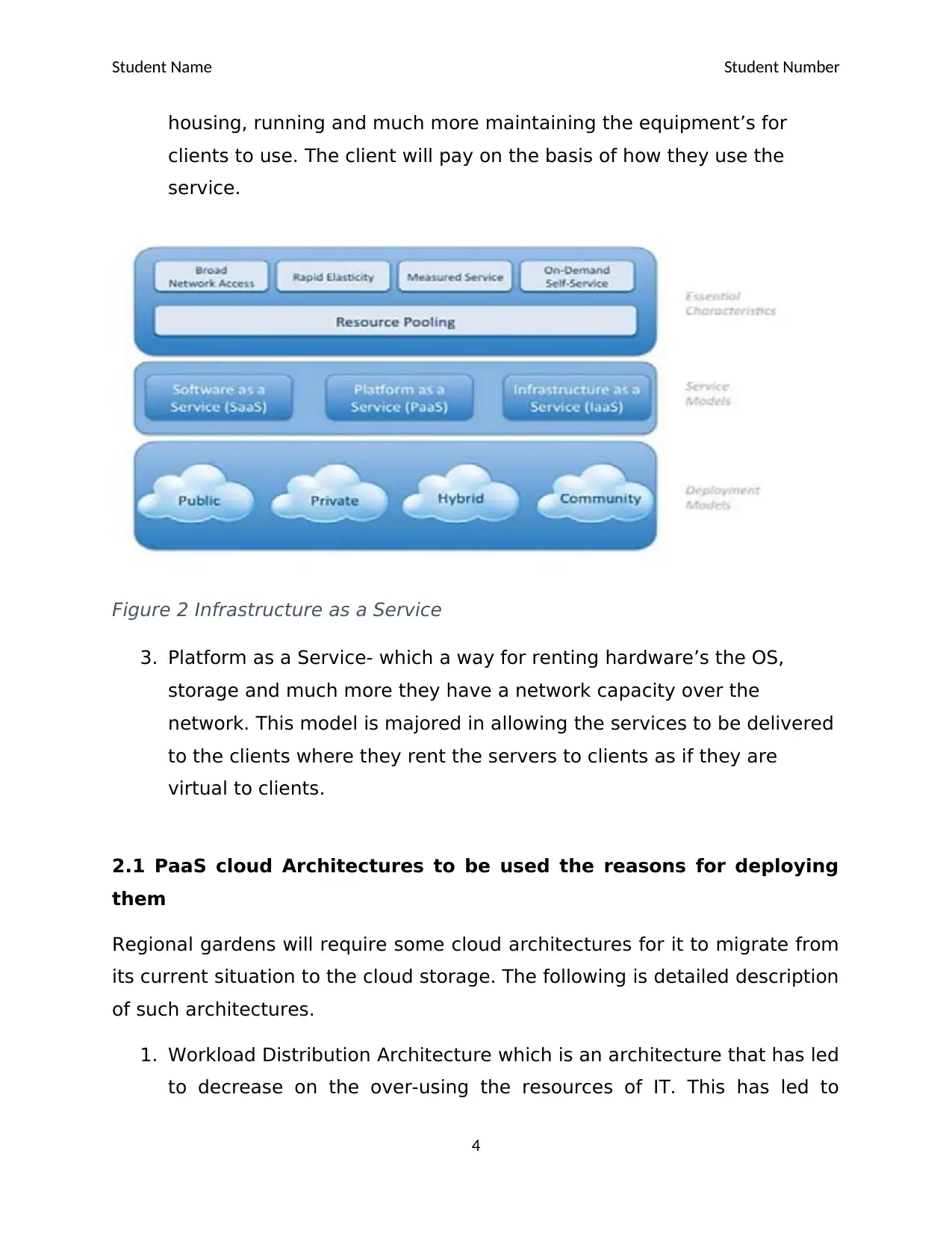
explained in the diagram below.
2
such as the servers and the storage. This where we get the term cloud as
part of cloud computing architecture as in this one it will comprise of all the
required resources needed in delivering the cloud services (Simplilearn,
2018). All the devices integrates in one way or another with an aim of
providing services to their clients. The other two are named as the cloud
based delivery and the network itself (SEAGRAVE, 2014)
The concept of the utility computing has been explained in so many ways
depending on the requirements features and needs of the organization that
has been a vision innovated by many scientists in the ICT world (SALEEM,
2011). Based on what many industry has been asking and in need of
computer utility and cloud computing have been defined in a standard way
using the national institute of Standards and technology (NIST) a model that
is use for enabling an environment that is convenient when it comes to
accessing the on-demand networks in a shared pool which is configured with
the use of networks, servers and the storage applications and services. This
has been known provisioned rapidly and being released with management’s
efforts that are very minimal.
Cloud computing has been on the frontline in in promotion of the availability
which comprises of the stated characteristics and deployment models as
explained in the diagram below.
2
⊘ This is a preview!⊘
Do you want full access?
Subscribe today to unlock all pages.

Trusted by 1+ million students worldwide
Student Name Student Number
Figure 1 Cloud-computing services
There are various features that runs the world of cloud computing and this
features are: reduction of the expenditure of the initial capital, locality and
the device becomes independent much more making it easy to retrieve,
increment in capacity of the peak-load, improvement of the reliability,
scalability and the security that has eased the maintence level and costs.
There are three deployment models with the associated service models
namely the public. Private and hybrid cloud deployment models. The cloud
service models are as explained here below.
1. SaaS (Software as a Service) - model kind of a software distribution
where applications are hosted by vendors or cloud providers and
making them available to their clients over the network which is the
web.
2. IaaS (Infrastructure as a Service)- model offering provisions when an
organization or an individual will outsource all the equipment’s and
devices used in supporting the operations which comprises of the
hardware’s, software’s, storage, servers and the components of
networking. Here the provider of the service is responsible for the
3
Figure 1 Cloud-computing services
There are various features that runs the world of cloud computing and this
features are: reduction of the expenditure of the initial capital, locality and
the device becomes independent much more making it easy to retrieve,
increment in capacity of the peak-load, improvement of the reliability,
scalability and the security that has eased the maintence level and costs.
There are three deployment models with the associated service models
namely the public. Private and hybrid cloud deployment models. The cloud
service models are as explained here below.
1. SaaS (Software as a Service) - model kind of a software distribution
where applications are hosted by vendors or cloud providers and
making them available to their clients over the network which is the
web.
2. IaaS (Infrastructure as a Service)- model offering provisions when an
organization or an individual will outsource all the equipment’s and
devices used in supporting the operations which comprises of the
hardware’s, software’s, storage, servers and the components of
networking. Here the provider of the service is responsible for the
3
Paraphrase This Document
Need a fresh take? Get an instant paraphrase of this document with our AI Paraphraser
Student Name Student Number
housing, running and much more maintaining the equipment’s for
clients to use. The client will pay on the basis of how they use the
service.
Figure 2 Infrastructure as a Service
3. Platform as a Service- which a way for renting hardware’s the OS,
storage and much more they have a network capacity over the
network. This model is majored in allowing the services to be delivered
to the clients where they rent the servers to clients as if they are
virtual to clients.
2.1 PaaS cloud Architectures to be used the reasons for deploying
them
Regional gardens will require some cloud architectures for it to migrate from
its current situation to the cloud storage. The following is detailed description
of such architectures.
1. Workload Distribution Architecture which is an architecture that has led
to decrease on the over-using the resources of IT. This has led to
4
housing, running and much more maintaining the equipment’s for
clients to use. The client will pay on the basis of how they use the
service.
Figure 2 Infrastructure as a Service
3. Platform as a Service- which a way for renting hardware’s the OS,
storage and much more they have a network capacity over the
network. This model is majored in allowing the services to be delivered
to the clients where they rent the servers to clients as if they are
virtual to clients.
2.1 PaaS cloud Architectures to be used the reasons for deploying
them
Regional gardens will require some cloud architectures for it to migrate from
its current situation to the cloud storage. The following is detailed description
of such architectures.
1. Workload Distribution Architecture which is an architecture that has led
to decrease on the over-using the resources of IT. This has led to
4
Student Name Student Number
consideration of this factor that it is underutilized (Wei, 2014). This
architecture relies on the capability of runtime logics and the
algorithms when load balancing in some extents. The reason for
deploying workload distribution architecture is because we have a
cloud usage monitor in here. It is performed by carrying the track of
runtime workload. This architecture is important when processing info.
2. Resource Pooling Architecture which is a cloud architecture that lies on
the ground where we have pool of resources. We group similar
resources of IT. In this architecture we can have some control on the
system (Buyya, 2013). This is also known for ensuring the
synchronization of the system automatically. The reasons for deploying
this architecture is because during runtime we have the cloud usage
monitors. This cloud usage monitor tracks and synchronize the
elements that are needed by the pooled resources of information
technology. We may consider other systems that lies in the
management.
3. Dynamic Scalability Architecture which is considered to be a model
that lies on the logics of the systems that predefined during scaling.
They trigger the IT resources allocation dynamically. This is done from
the resource pool. Just like in RPA we have specifics monitors that are
able to track the runtime utilization.
4. Elastic Resource Capacity architecture which is a cloud architecture
that relates with the provision of a virtual server which is in a dynamic
manner where it utilizes the systems where it allocate and reclaim the
RAM and the CPU (Toosi, 2014). The reason for its deployment is
because its usage has been known for gathering its data with the used
resources with regards to the previous and last scale done.
5
consideration of this factor that it is underutilized (Wei, 2014). This
architecture relies on the capability of runtime logics and the
algorithms when load balancing in some extents. The reason for
deploying workload distribution architecture is because we have a
cloud usage monitor in here. It is performed by carrying the track of
runtime workload. This architecture is important when processing info.
2. Resource Pooling Architecture which is a cloud architecture that lies on
the ground where we have pool of resources. We group similar
resources of IT. In this architecture we can have some control on the
system (Buyya, 2013). This is also known for ensuring the
synchronization of the system automatically. The reasons for deploying
this architecture is because during runtime we have the cloud usage
monitors. This cloud usage monitor tracks and synchronize the
elements that are needed by the pooled resources of information
technology. We may consider other systems that lies in the
management.
3. Dynamic Scalability Architecture which is considered to be a model
that lies on the logics of the systems that predefined during scaling.
They trigger the IT resources allocation dynamically. This is done from
the resource pool. Just like in RPA we have specifics monitors that are
able to track the runtime utilization.
4. Elastic Resource Capacity architecture which is a cloud architecture
that relates with the provision of a virtual server which is in a dynamic
manner where it utilizes the systems where it allocate and reclaim the
RAM and the CPU (Toosi, 2014). The reason for its deployment is
because its usage has been known for gathering its data with the used
resources with regards to the previous and last scale done.
5
⊘ This is a preview!⊘
Do you want full access?
Subscribe today to unlock all pages.
Trusted by 1+ million students worldwide
Student Name Student Number
2.2 Benefits and Issues of above PaaS cloud architectures if they are
deployed.
Depending on the requirements like that of updating the active directory and
data storage infrastructure and migration of the web service we select
Amazon Web service Hybrid Cloud for regional Gardens in migrating its line
of business, reducing the cost of maintenance and much more the speed of
responsiveness.
The summary of the benefits of such architectures is based on the four areas
namely.
1. Cost- there are no need for hardware’s and resources for computing
which leads to such cost being absent.
2. Scale- it is flexible and elastic as one can transfer data from the private
network to public networks for testing of all applications that are
trending.
3. Speed- this is where we use resources which are virtual where they
adopts the requirements of the objectives of the business very easily.
The expansion of speed in terms of the bandwidth has made it
possible.
4. Integration- this benefit by helping to deliver an access that is easy to
traditional SQL Dbs. It is giving an analysis of opportunities in limiting
the requirements of the business (Toosi, 2014).
6
2.2 Benefits and Issues of above PaaS cloud architectures if they are
deployed.
Depending on the requirements like that of updating the active directory and
data storage infrastructure and migration of the web service we select
Amazon Web service Hybrid Cloud for regional Gardens in migrating its line
of business, reducing the cost of maintenance and much more the speed of
responsiveness.
The summary of the benefits of such architectures is based on the four areas
namely.
1. Cost- there are no need for hardware’s and resources for computing
which leads to such cost being absent.
2. Scale- it is flexible and elastic as one can transfer data from the private
network to public networks for testing of all applications that are
trending.
3. Speed- this is where we use resources which are virtual where they
adopts the requirements of the objectives of the business very easily.
The expansion of speed in terms of the bandwidth has made it
possible.
4. Integration- this benefit by helping to deliver an access that is easy to
traditional SQL Dbs. It is giving an analysis of opportunities in limiting
the requirements of the business (Toosi, 2014).
6
Paraphrase This Document
Need a fresh take? Get an instant paraphrase of this document with our AI Paraphraser
Student Name Student Number
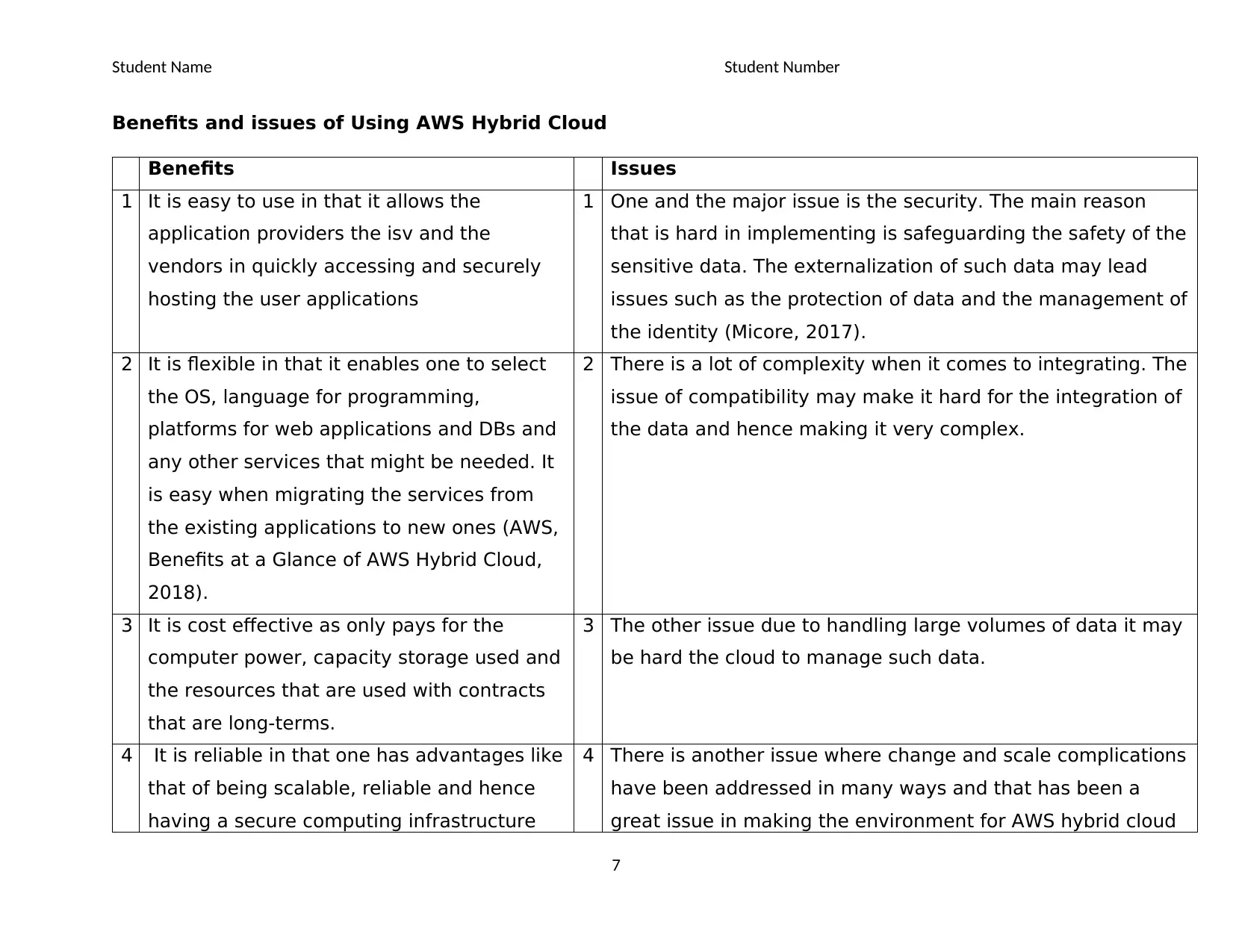
Benefits and issues of Using AWS Hybrid Cloud
Benefits Issues
1 It is easy to use in that it allows the
application providers the isv and the
vendors in quickly accessing and securely
hosting the user applications
1 One and the major issue is the security. The main reason
that is hard in implementing is safeguarding the safety of the
sensitive data. The externalization of such data may lead
issues such as the protection of data and the management of
the identity (Micore, 2017).
2 It is flexible in that it enables one to select
the OS, language for programming,
platforms for web applications and DBs and
any other services that might be needed. It
is easy when migrating the services from
the existing applications to new ones (AWS,
Benefits at a Glance of AWS Hybrid Cloud,
2018).
2 There is a lot of complexity when it comes to integrating. The
issue of compatibility may make it hard for the integration of
the data and hence making it very complex.
3 It is cost effective as only pays for the
computer power, capacity storage used and
the resources that are used with contracts
that are long-terms.
3 The other issue due to handling large volumes of data it may
be hard the cloud to manage such data.
4 It is reliable in that one has advantages like
that of being scalable, reliable and hence
having a secure computing infrastructure
4 There is another issue where change and scale complications
have been addressed in many ways and that has been a
great issue in making the environment for AWS hybrid cloud
7
Benefits and issues of Using AWS Hybrid Cloud
Benefits Issues
1 It is easy to use in that it allows the
application providers the isv and the
vendors in quickly accessing and securely
hosting the user applications
1 One and the major issue is the security. The main reason
that is hard in implementing is safeguarding the safety of the
sensitive data. The externalization of such data may lead
issues such as the protection of data and the management of
the identity (Micore, 2017).
2 It is flexible in that it enables one to select
the OS, language for programming,
platforms for web applications and DBs and
any other services that might be needed. It
is easy when migrating the services from
the existing applications to new ones (AWS,
Benefits at a Glance of AWS Hybrid Cloud,
2018).
2 There is a lot of complexity when it comes to integrating. The
issue of compatibility may make it hard for the integration of
the data and hence making it very complex.
3 It is cost effective as only pays for the
computer power, capacity storage used and
the resources that are used with contracts
that are long-terms.
3 The other issue due to handling large volumes of data it may
be hard the cloud to manage such data.
4 It is reliable in that one has advantages like
that of being scalable, reliable and hence
having a secure computing infrastructure
4 There is another issue where change and scale complications
have been addressed in many ways and that has been a
great issue in making the environment for AWS hybrid cloud
7
Student Name Student Number
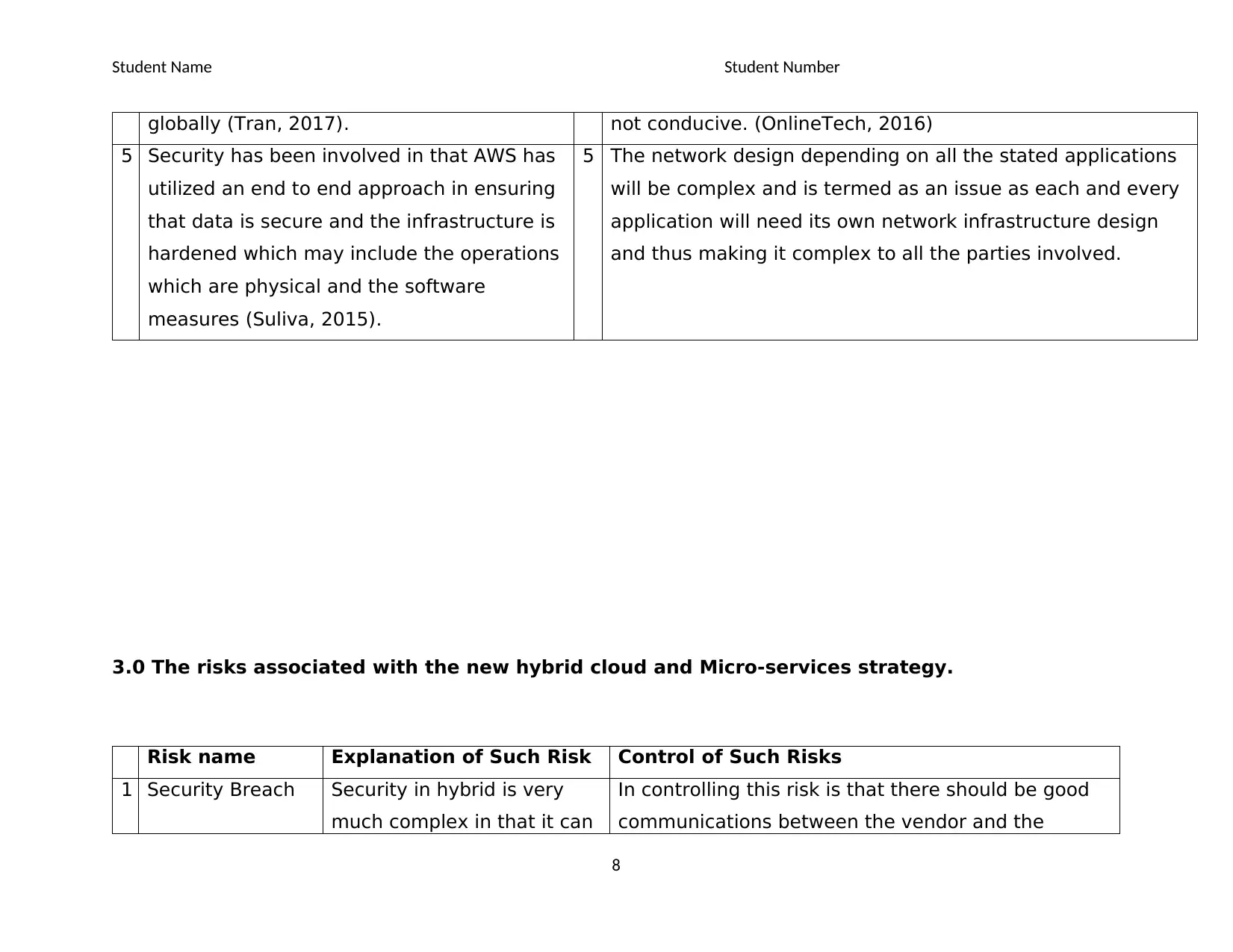
globally (Tran, 2017). not conducive. (OnlineTech, 2016)
5 Security has been involved in that AWS has
utilized an end to end approach in ensuring
that data is secure and the infrastructure is
hardened which may include the operations
which are physical and the software
measures (Suliva, 2015).
5 The network design depending on all the stated applications
will be complex and is termed as an issue as each and every
application will need its own network infrastructure design
and thus making it complex to all the parties involved.
3.0 The risks associated with the new hybrid cloud and Micro-services strategy.
Risk name Explanation of Such Risk Control of Such Risks
1 Security Breach Security in hybrid is very
much complex in that it can
In controlling this risk is that there should be good
communications between the vendor and the
8
globally (Tran, 2017). not conducive. (OnlineTech, 2016)
5 Security has been involved in that AWS has
utilized an end to end approach in ensuring
that data is secure and the infrastructure is
hardened which may include the operations
which are physical and the software
measures (Suliva, 2015).
5 The network design depending on all the stated applications
will be complex and is termed as an issue as each and every
application will need its own network infrastructure design
and thus making it complex to all the parties involved.
3.0 The risks associated with the new hybrid cloud and Micro-services strategy.
Risk name Explanation of Such Risk Control of Such Risks
1 Security Breach Security in hybrid is very
much complex in that it can
In controlling this risk is that there should be good
communications between the vendor and the
8
⊘ This is a preview!⊘
Do you want full access?
Subscribe today to unlock all pages.
Trusted by 1+ million students worldwide
Student Name Student Number
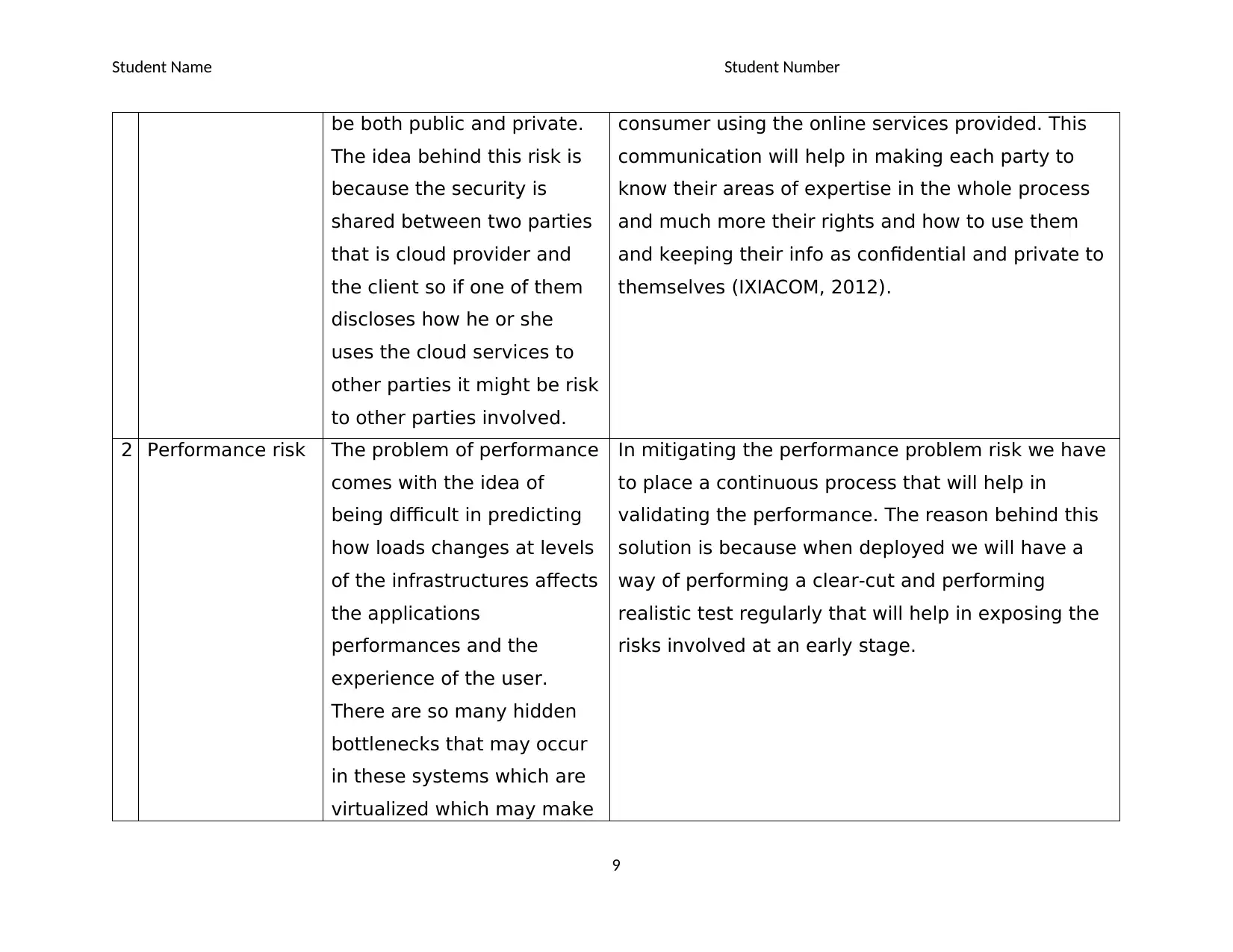
be both public and private.
The idea behind this risk is
because the security is
shared between two parties
that is cloud provider and
the client so if one of them
discloses how he or she
uses the cloud services to
other parties it might be risk
to other parties involved.
consumer using the online services provided. This
communication will help in making each party to
know their areas of expertise in the whole process
and much more their rights and how to use them
and keeping their info as confidential and private to
themselves (IXIACOM, 2012).
2 Performance risk The problem of performance
comes with the idea of
being difficult in predicting
how loads changes at levels
of the infrastructures affects
the applications
performances and the
experience of the user.
There are so many hidden
bottlenecks that may occur
in these systems which are
virtualized which may make
In mitigating the performance problem risk we have
to place a continuous process that will help in
validating the performance. The reason behind this
solution is because when deployed we will have a
way of performing a clear-cut and performing
realistic test regularly that will help in exposing the
risks involved at an early stage.
9
be both public and private.
The idea behind this risk is
because the security is
shared between two parties
that is cloud provider and
the client so if one of them
discloses how he or she
uses the cloud services to
other parties it might be risk
to other parties involved.
consumer using the online services provided. This
communication will help in making each party to
know their areas of expertise in the whole process
and much more their rights and how to use them
and keeping their info as confidential and private to
themselves (IXIACOM, 2012).
2 Performance risk The problem of performance
comes with the idea of
being difficult in predicting
how loads changes at levels
of the infrastructures affects
the applications
performances and the
experience of the user.
There are so many hidden
bottlenecks that may occur
in these systems which are
virtualized which may make
In mitigating the performance problem risk we have
to place a continuous process that will help in
validating the performance. The reason behind this
solution is because when deployed we will have a
way of performing a clear-cut and performing
realistic test regularly that will help in exposing the
risks involved at an early stage.
9
Paraphrase This Document
Need a fresh take? Get an instant paraphrase of this document with our AI Paraphraser
Student Name Student Number
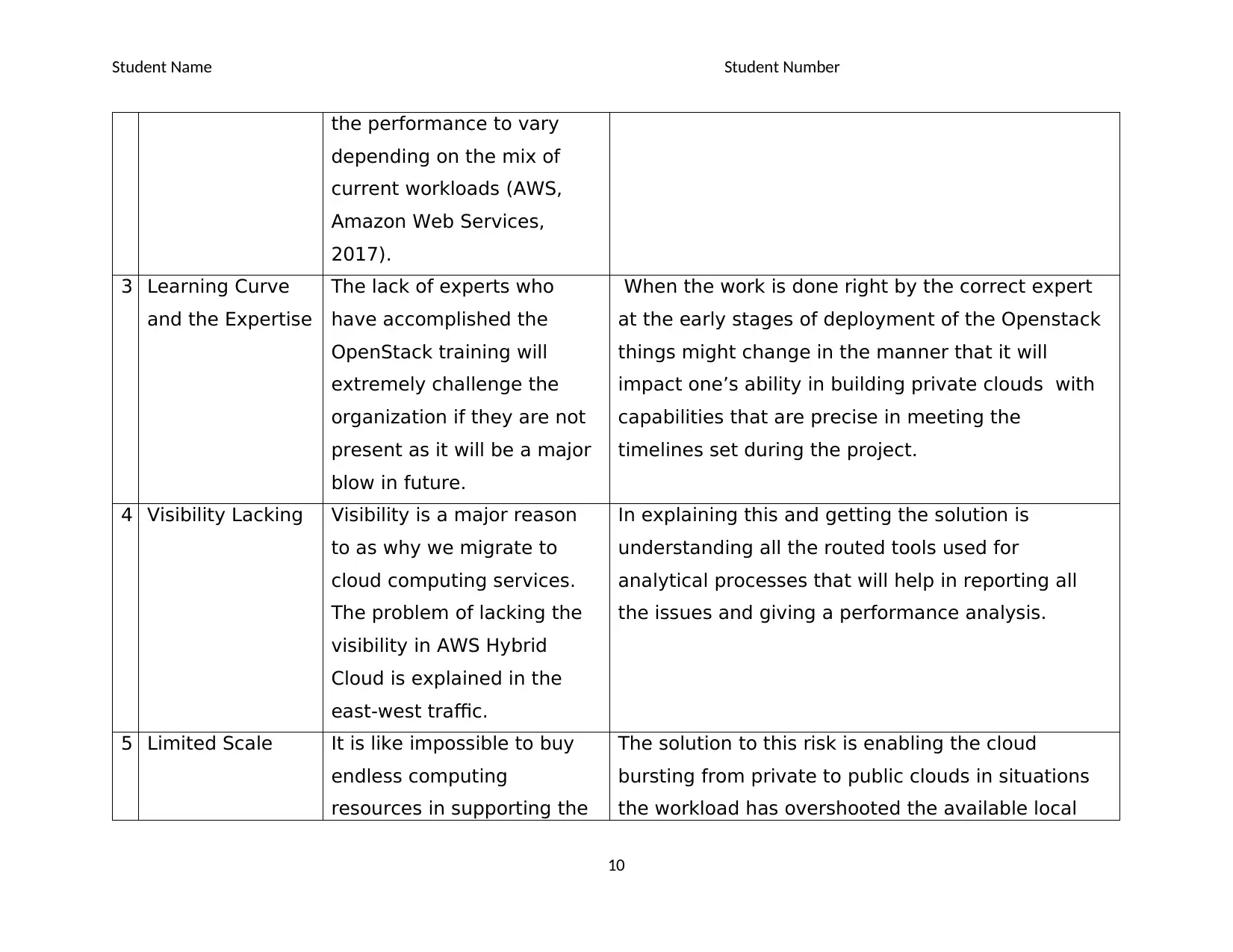
the performance to vary
depending on the mix of
current workloads (AWS,
Amazon Web Services,
2017).
3 Learning Curve
and the Expertise
The lack of experts who
have accomplished the
OpenStack training will
extremely challenge the
organization if they are not
present as it will be a major
blow in future.
When the work is done right by the correct expert
at the early stages of deployment of the Openstack
things might change in the manner that it will
impact one’s ability in building private clouds with
capabilities that are precise in meeting the
timelines set during the project.
4 Visibility Lacking Visibility is a major reason
to as why we migrate to
cloud computing services.
The problem of lacking the
visibility in AWS Hybrid
Cloud is explained in the
east-west traffic.
In explaining this and getting the solution is
understanding all the routed tools used for
analytical processes that will help in reporting all
the issues and giving a performance analysis.
5 Limited Scale It is like impossible to buy
endless computing
resources in supporting the
The solution to this risk is enabling the cloud
bursting from private to public clouds in situations
the workload has overshooted the available local
10
the performance to vary
depending on the mix of
current workloads (AWS,
Amazon Web Services,
2017).
3 Learning Curve
and the Expertise
The lack of experts who
have accomplished the
OpenStack training will
extremely challenge the
organization if they are not
present as it will be a major
blow in future.
When the work is done right by the correct expert
at the early stages of deployment of the Openstack
things might change in the manner that it will
impact one’s ability in building private clouds with
capabilities that are precise in meeting the
timelines set during the project.
4 Visibility Lacking Visibility is a major reason
to as why we migrate to
cloud computing services.
The problem of lacking the
visibility in AWS Hybrid
Cloud is explained in the
east-west traffic.
In explaining this and getting the solution is
understanding all the routed tools used for
analytical processes that will help in reporting all
the issues and giving a performance analysis.
5 Limited Scale It is like impossible to buy
endless computing
resources in supporting the
The solution to this risk is enabling the cloud
bursting from private to public clouds in situations
the workload has overshooted the available local
10
Student Name Student Number
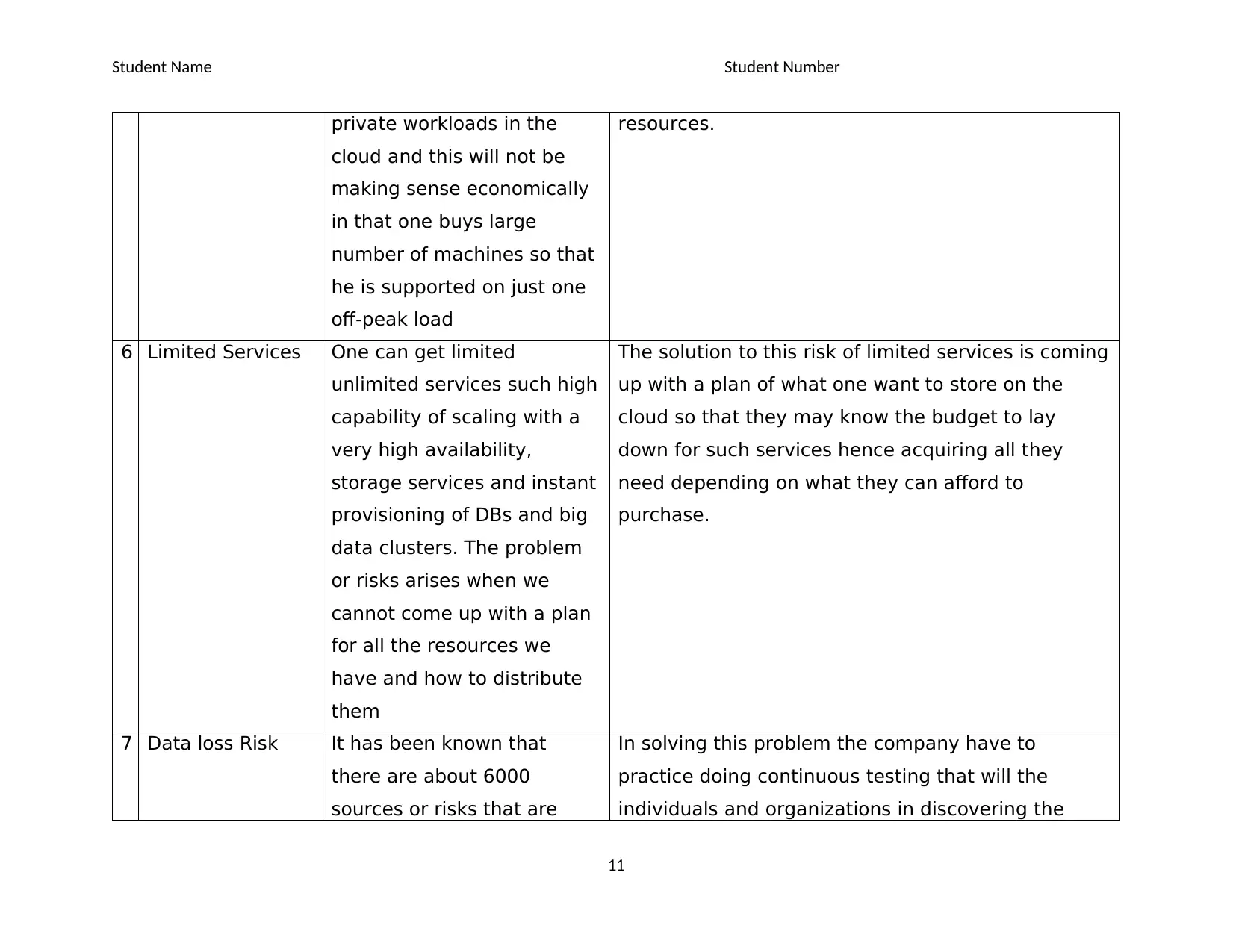
private workloads in the
cloud and this will not be
making sense economically
in that one buys large
number of machines so that
he is supported on just one
off-peak load
resources.
6 Limited Services One can get limited
unlimited services such high
capability of scaling with a
very high availability,
storage services and instant
provisioning of DBs and big
data clusters. The problem
or risks arises when we
cannot come up with a plan
for all the resources we
have and how to distribute
them
The solution to this risk of limited services is coming
up with a plan of what one want to store on the
cloud so that they may know the budget to lay
down for such services hence acquiring all they
need depending on what they can afford to
purchase.
7 Data loss Risk It has been known that
there are about 6000
sources or risks that are
In solving this problem the company have to
practice doing continuous testing that will the
individuals and organizations in discovering the
11
private workloads in the
cloud and this will not be
making sense economically
in that one buys large
number of machines so that
he is supported on just one
off-peak load
resources.
6 Limited Services One can get limited
unlimited services such high
capability of scaling with a
very high availability,
storage services and instant
provisioning of DBs and big
data clusters. The problem
or risks arises when we
cannot come up with a plan
for all the resources we
have and how to distribute
them
The solution to this risk of limited services is coming
up with a plan of what one want to store on the
cloud so that they may know the budget to lay
down for such services hence acquiring all they
need depending on what they can afford to
purchase.
7 Data loss Risk It has been known that
there are about 6000
sources or risks that are
In solving this problem the company have to
practice doing continuous testing that will the
individuals and organizations in discovering the
11
⊘ This is a preview!⊘
Do you want full access?
Subscribe today to unlock all pages.
Trusted by 1+ million students worldwide

1 out of 24


Related Documents


Your All-in-One AI-Powered Toolkit for Academic Success.
+13062052269
info@desklib.com
Available 24*7 on WhatsApp / Email
![[object Object]](/_next/static/media/star-bottom.7253800d.svg)
Unlock your academic potential
Copyright © 2020–2026 A2Z Services. All Rights Reserved. Developed and managed by ZUCOL.