Cocaine Policy Design: Scheduling, Medical Use, Harms & Benefits
VerifiedAdded on 2023/06/15
|7
|2127
|146
Report
AI Summary
This report provides a comprehensive analysis of cocaine policy, examining its current scheduling under national and international legislation, its medical applications and benefits, the extent of its use in both medical and recreational contexts, and the associated harms, including morbidity, mortality, social, and environmental impacts. The report also explores the potential benefits of cocaine use, drawing from academic literature and self-report studies. It concludes that while cocaine has some medical benefits, particularly as a local anesthetic, its potential for harm, including addiction and severe health complications, necessitates strict regulation and control. Desklib provides access to similar solved assignments and study resources for students.

Drug policy design portfolio

Paraphrase This Document
Need a fresh take? Get an instant paraphrase of this document with our AI Paraphraser
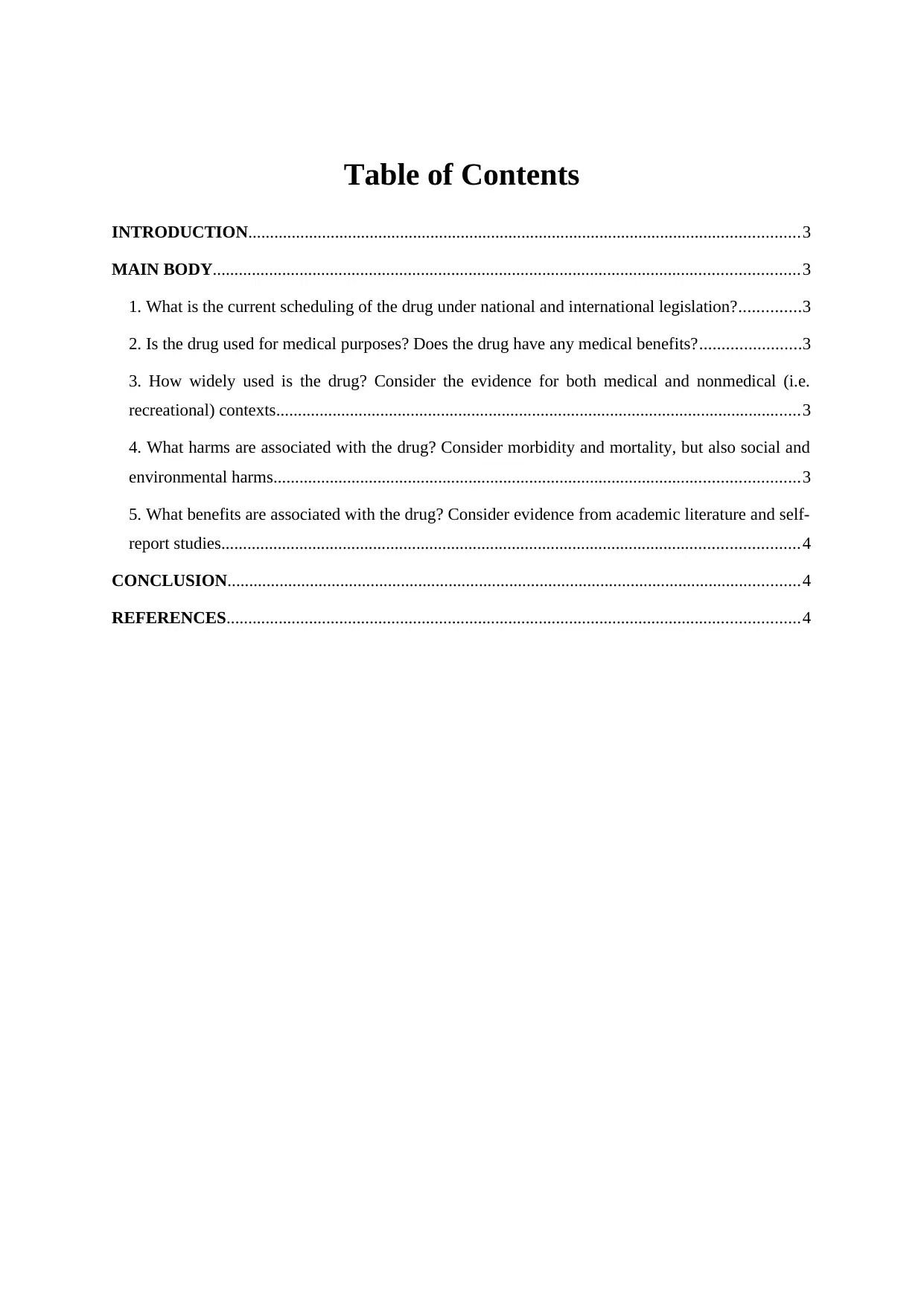
Table of Contents
INTRODUCTION...............................................................................................................................3
MAIN BODY.......................................................................................................................................3
1. What is the current scheduling of the drug under national and international legislation?..............3
2. Is the drug used for medical purposes? Does the drug have any medical benefits?.......................3
3. How widely used is the drug? Consider the evidence for both medical and nonmedical (i.e.
recreational) contexts.........................................................................................................................3
4. What harms are associated with the drug? Consider morbidity and mortality, but also social and
environmental harms.........................................................................................................................3
5. What benefits are associated with the drug? Consider evidence from academic literature and self-
report studies.....................................................................................................................................4
CONCLUSION....................................................................................................................................4
REFERENCES....................................................................................................................................4
INTRODUCTION...............................................................................................................................3
MAIN BODY.......................................................................................................................................3
1. What is the current scheduling of the drug under national and international legislation?..............3
2. Is the drug used for medical purposes? Does the drug have any medical benefits?.......................3
3. How widely used is the drug? Consider the evidence for both medical and nonmedical (i.e.
recreational) contexts.........................................................................................................................3
4. What harms are associated with the drug? Consider morbidity and mortality, but also social and
environmental harms.........................................................................................................................3
5. What benefits are associated with the drug? Consider evidence from academic literature and self-
report studies.....................................................................................................................................4
CONCLUSION....................................................................................................................................4
REFERENCES....................................................................................................................................4
INTRODUCTION
The concept of drug is generally a substance which can be taken into the human body
as well as it can be once taken, can alter some of the processes inside the body. In this, the
drug can be used in several diagnosis, prevention or it can used in the treatment of a
particular illness. Some of the drugs are specifically used to kill the bacteria as well as can aid
the human body to recover from such infections. In this, some of the drugs contains an
example such as cocaine. It is particularly a powerful addictive stimulant drug which is
generally, made form the leaves of the coca plant. Although the care professionals can
particularly use it for the valid medical purpose like the local anaesthesia for various
procedures, the recreational cocaine use is quite illegal. In this, there is a discussion about the
various current scheduling national as well as the international legislations which can aid the
people to restrict the illegal use of cocaine. There is also a discussion about the medical as
well as the non-medical use of the cocaine as well as its impact over the functions of the body
(Jaffe and et. al., 2021).
MAIN BODY
1. What is the current scheduling of the drug under national and international
legislation?
In this, the drug production as well as its use is not new. The humans generally have been
using the psychoactive, the mind affecting, substances such as the cocaine as well as for
diverse purpose particularly ranging from the social and the spiritual towards the nutritional
or the medicinal. The very recent legal as well as the administrative framework for the
international drug control is generally laid on the very three international conventions
generally negotiated under the auspices across the nation. It can involve such as Convention
on Psychotropic Substances 1971, Single Convention on Narcotic Drugs, 1961, Psychoactive
Substances Act 2016. In context with the single convention on Narcotic Drugs, 1961, it
generally aims to combat the drug abuse by the coordinated international actions. It
specifically seeks to limit the possession, distribution, the imports as well as the exports of
the drugs exclusively towards the scientific or medical purposes. The key legislations can
specifically forbid the production as well as the supply of the specific narcotic substances as
The concept of drug is generally a substance which can be taken into the human body
as well as it can be once taken, can alter some of the processes inside the body. In this, the
drug can be used in several diagnosis, prevention or it can used in the treatment of a
particular illness. Some of the drugs are specifically used to kill the bacteria as well as can aid
the human body to recover from such infections. In this, some of the drugs contains an
example such as cocaine. It is particularly a powerful addictive stimulant drug which is
generally, made form the leaves of the coca plant. Although the care professionals can
particularly use it for the valid medical purpose like the local anaesthesia for various
procedures, the recreational cocaine use is quite illegal. In this, there is a discussion about the
various current scheduling national as well as the international legislations which can aid the
people to restrict the illegal use of cocaine. There is also a discussion about the medical as
well as the non-medical use of the cocaine as well as its impact over the functions of the body
(Jaffe and et. al., 2021).
MAIN BODY
1. What is the current scheduling of the drug under national and international
legislation?
In this, the drug production as well as its use is not new. The humans generally have been
using the psychoactive, the mind affecting, substances such as the cocaine as well as for
diverse purpose particularly ranging from the social and the spiritual towards the nutritional
or the medicinal. The very recent legal as well as the administrative framework for the
international drug control is generally laid on the very three international conventions
generally negotiated under the auspices across the nation. It can involve such as Convention
on Psychotropic Substances 1971, Single Convention on Narcotic Drugs, 1961, Psychoactive
Substances Act 2016. In context with the single convention on Narcotic Drugs, 1961, it
generally aims to combat the drug abuse by the coordinated international actions. It
specifically seeks to limit the possession, distribution, the imports as well as the exports of
the drugs exclusively towards the scientific or medical purposes. The key legislations can
specifically forbid the production as well as the supply of the specific narcotic substances as
⊘ This is a preview!⊘
Do you want full access?
Subscribe today to unlock all pages.

Trusted by 1+ million students worldwide
well as the licenses the other drugs having the same impacts for both the research as well as
the medical treatments (Subeliani and et. al., 2020).
2. Is the drug used for medical purposes? Does the drug have any medical benefits?
Cocaine is used for many medical purposes as it is an alkaloid derivative and refined from
the coca leaves. In this, there are various ways in which the healthcare professionals can use
the cocaine during the operations or can be used to treat various severe conditions. Cocaine is
generally an excellent topical and effective anaesthetic which particularly works by blocking
the nerve impulses. Particularly by blocking the uptake of norepinephrine, the cocaine can
cause vasoconstriction as well as the anaesthesia. The drug is available as a solution for some
of the eyes, ear as well as the throat surgeries but it can be infrequently used because of the
safer alternatives like the lidocaine or the benzocaine. In this, nasal solutions are also used for
the induction of the local anaesthesia for the mucous membranes when performing the
diagnostic operations as well as the surgeries or it can be through the nasal cavities in the
adults. The drug is also used during the operations consisting the upper respiratory tract. In
addition to this, anaesthesia as well as the vasoconstriction of the upper respiratory tract, the
drug also shrinks the mucous and the mucosa membrane as well. The drug specifically used
during the medical operations comes in the form of a topical solution. The drugs
hydrochloride solution can come in the three various concentration such as 1%, 4%, as well
as 10%. It is because of the potential toxicity, usually only 1% or 4% of the solutions can be
used (Szymanska and Gonkowski, 2018).
3. How widely used is the drug? Consider the evidence for both medical and nonmedical
(i.e. recreational) contexts
The cocaine is generally broadly used in both the terms such as medical as well as the
non-medical contexts in a specific manner. In the terms of medical, the topical cocaine is
generally being used as a local numbing agent to aid with the painful operations in the nose
as well as the mouth. The cocaine is particularly used for the both lacrimal duct or the nasal
surgery. In this, the major disadvantage of using the cocaine is the toxicity of the
cardiovascular disorder, and many more. In this, the medicinal use of cocaine has generally
reduced as the other synthetic local anaesthetic like the benzocaine, proparacaine and many
others are more often used. In context with the recreational, the cocaine is specifically the
the medical treatments (Subeliani and et. al., 2020).
2. Is the drug used for medical purposes? Does the drug have any medical benefits?
Cocaine is used for many medical purposes as it is an alkaloid derivative and refined from
the coca leaves. In this, there are various ways in which the healthcare professionals can use
the cocaine during the operations or can be used to treat various severe conditions. Cocaine is
generally an excellent topical and effective anaesthetic which particularly works by blocking
the nerve impulses. Particularly by blocking the uptake of norepinephrine, the cocaine can
cause vasoconstriction as well as the anaesthesia. The drug is available as a solution for some
of the eyes, ear as well as the throat surgeries but it can be infrequently used because of the
safer alternatives like the lidocaine or the benzocaine. In this, nasal solutions are also used for
the induction of the local anaesthesia for the mucous membranes when performing the
diagnostic operations as well as the surgeries or it can be through the nasal cavities in the
adults. The drug is also used during the operations consisting the upper respiratory tract. In
addition to this, anaesthesia as well as the vasoconstriction of the upper respiratory tract, the
drug also shrinks the mucous and the mucosa membrane as well. The drug specifically used
during the medical operations comes in the form of a topical solution. The drugs
hydrochloride solution can come in the three various concentration such as 1%, 4%, as well
as 10%. It is because of the potential toxicity, usually only 1% or 4% of the solutions can be
used (Szymanska and Gonkowski, 2018).
3. How widely used is the drug? Consider the evidence for both medical and nonmedical
(i.e. recreational) contexts
The cocaine is generally broadly used in both the terms such as medical as well as the
non-medical contexts in a specific manner. In the terms of medical, the topical cocaine is
generally being used as a local numbing agent to aid with the painful operations in the nose
as well as the mouth. The cocaine is particularly used for the both lacrimal duct or the nasal
surgery. In this, the major disadvantage of using the cocaine is the toxicity of the
cardiovascular disorder, and many more. In this, the medicinal use of cocaine has generally
reduced as the other synthetic local anaesthetic like the benzocaine, proparacaine and many
others are more often used. In context with the recreational, the cocaine is specifically the
Paraphrase This Document
Need a fresh take? Get an instant paraphrase of this document with our AI Paraphraser
stimulant of the nervous system. The duration of the effects of the cocaine generally depends
over the amount taken as well as the route of its administration. The drug can be in the form
of fine powder as well as bitter to the taste.
4. What harms are associated with the drug? Consider morbidity and mortality, but also
social and environmental harms
The consumption of cocaine generally creates a very strong physical addiction and is
particularly becoming recognized as one of the most harmful illicit drugs that is being abused
nowadays. there is a myth that cocaine is generally harmless or non-addictive. In this there
are multiple medical examinations which reveals that the acute myocardial infarction or the
cerebrovascular accidents with the temporal is generally associated with the use of cocaine. It
is generally linked with the acute rupture of the aorta, the cardiac arrhythmia as well as the
sudden death. The drug can involve a multisystem toxicity which can includes the neurologic,
obstetric, the pulmonary as well as the gastrointestinal systems. In this, when the use of
cocaine becomes more compulsive, the dysfunction of psychosocial, the deviant behaviours
as well as the broad spectrum of the social, family issues, the financial can results invariably.
In this, the major medical complications, addictions as well as the deaths are the very true
harms that are particularly cause by the excessive use of cocaine. Furthermore, it is
considered relatively benign by most of the people, the use of cocaine can specifically cause
various unpleasant as well as the potentially hazardous impacts over the human body. By the
use of excessive or more frequent, the cocaine can ultimately cause the increase of heart beat,
the hallucinations as well as the delusions. In addition to this, ingesting the overdose of a
cocaine can effectively leads to the more potential lethal complications consisting the cardiac
arrhythmias or the hyperthermia that is specifically an increased temperature of the body. The
chronic use of cocaine can enhance the developing risk of heart attacks, depression or may
cause the mood disorders that are particularly brought on by the chronic increase of the
dopamine in the human brain (Niasar and et. al., 2018).
5. What benefits are associated with the drug? Consider evidence from academic
literature and self-report studies.
There are some of the benefits which are generally linked with the use of cocaine such as
enhancing the physical performance among the people. It can effectively enhance the heart
over the amount taken as well as the route of its administration. The drug can be in the form
of fine powder as well as bitter to the taste.
4. What harms are associated with the drug? Consider morbidity and mortality, but also
social and environmental harms
The consumption of cocaine generally creates a very strong physical addiction and is
particularly becoming recognized as one of the most harmful illicit drugs that is being abused
nowadays. there is a myth that cocaine is generally harmless or non-addictive. In this there
are multiple medical examinations which reveals that the acute myocardial infarction or the
cerebrovascular accidents with the temporal is generally associated with the use of cocaine. It
is generally linked with the acute rupture of the aorta, the cardiac arrhythmia as well as the
sudden death. The drug can involve a multisystem toxicity which can includes the neurologic,
obstetric, the pulmonary as well as the gastrointestinal systems. In this, when the use of
cocaine becomes more compulsive, the dysfunction of psychosocial, the deviant behaviours
as well as the broad spectrum of the social, family issues, the financial can results invariably.
In this, the major medical complications, addictions as well as the deaths are the very true
harms that are particularly cause by the excessive use of cocaine. Furthermore, it is
considered relatively benign by most of the people, the use of cocaine can specifically cause
various unpleasant as well as the potentially hazardous impacts over the human body. By the
use of excessive or more frequent, the cocaine can ultimately cause the increase of heart beat,
the hallucinations as well as the delusions. In addition to this, ingesting the overdose of a
cocaine can effectively leads to the more potential lethal complications consisting the cardiac
arrhythmias or the hyperthermia that is specifically an increased temperature of the body. The
chronic use of cocaine can enhance the developing risk of heart attacks, depression or may
cause the mood disorders that are particularly brought on by the chronic increase of the
dopamine in the human brain (Niasar and et. al., 2018).
5. What benefits are associated with the drug? Consider evidence from academic
literature and self-report studies.
There are some of the benefits which are generally linked with the use of cocaine such as
enhancing the physical performance among the people. It can effectively enhance the heart
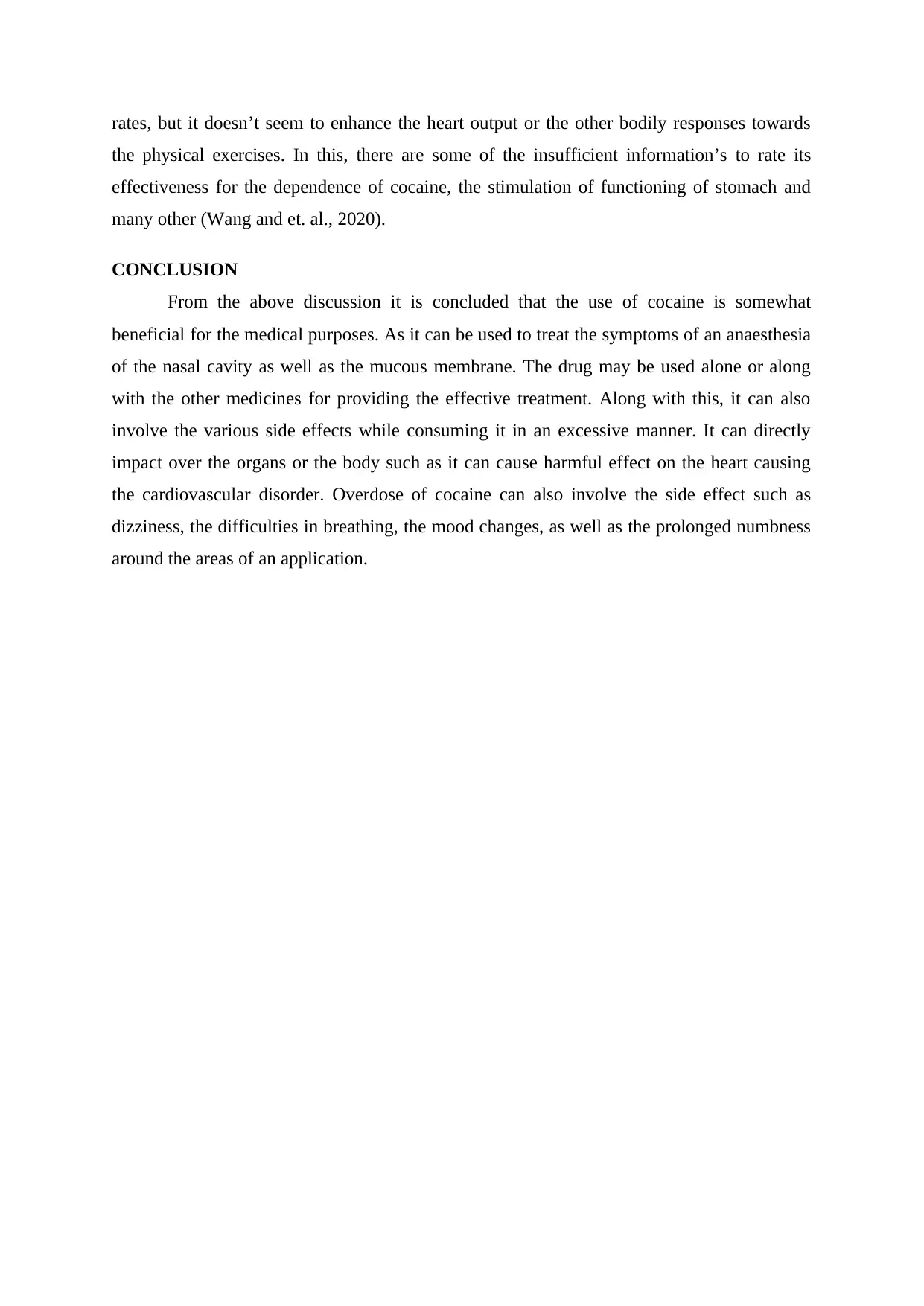
rates, but it doesn’t seem to enhance the heart output or the other bodily responses towards
the physical exercises. In this, there are some of the insufficient information’s to rate its
effectiveness for the dependence of cocaine, the stimulation of functioning of stomach and
many other (Wang and et. al., 2020).
CONCLUSION
From the above discussion it is concluded that the use of cocaine is somewhat
beneficial for the medical purposes. As it can be used to treat the symptoms of an anaesthesia
of the nasal cavity as well as the mucous membrane. The drug may be used alone or along
with the other medicines for providing the effective treatment. Along with this, it can also
involve the various side effects while consuming it in an excessive manner. It can directly
impact over the organs or the body such as it can cause harmful effect on the heart causing
the cardiovascular disorder. Overdose of cocaine can also involve the side effect such as
dizziness, the difficulties in breathing, the mood changes, as well as the prolonged numbness
around the areas of an application.
the physical exercises. In this, there are some of the insufficient information’s to rate its
effectiveness for the dependence of cocaine, the stimulation of functioning of stomach and
many other (Wang and et. al., 2020).
CONCLUSION
From the above discussion it is concluded that the use of cocaine is somewhat
beneficial for the medical purposes. As it can be used to treat the symptoms of an anaesthesia
of the nasal cavity as well as the mucous membrane. The drug may be used alone or along
with the other medicines for providing the effective treatment. Along with this, it can also
involve the various side effects while consuming it in an excessive manner. It can directly
impact over the organs or the body such as it can cause harmful effect on the heart causing
the cardiovascular disorder. Overdose of cocaine can also involve the side effect such as
dizziness, the difficulties in breathing, the mood changes, as well as the prolonged numbness
around the areas of an application.
⊘ This is a preview!⊘
Do you want full access?
Subscribe today to unlock all pages.
Trusted by 1+ million students worldwide
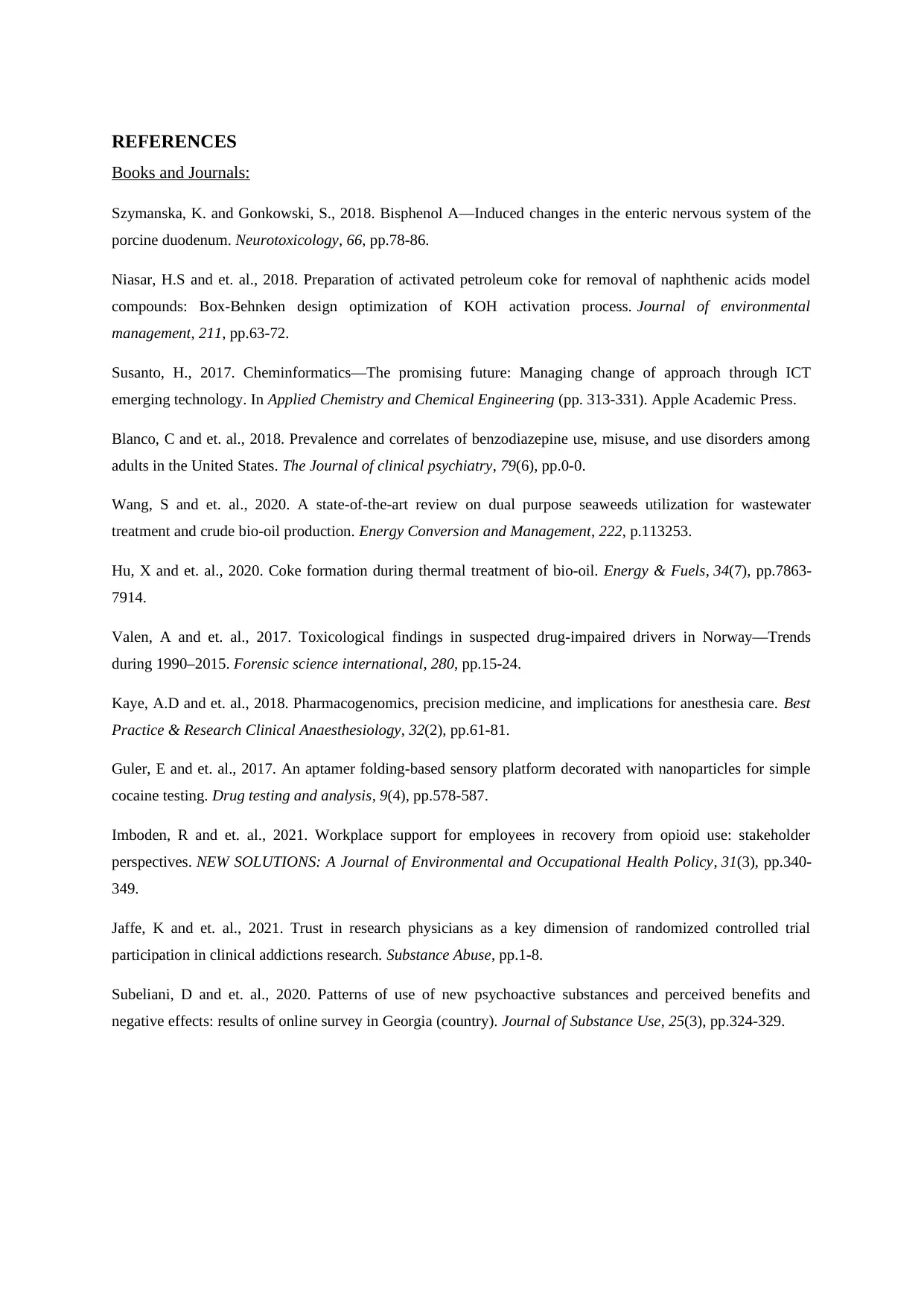
REFERENCES
Books and Journals:
Szymanska, K. and Gonkowski, S., 2018. Bisphenol A—Induced changes in the enteric nervous system of the
porcine duodenum. Neurotoxicology, 66, pp.78-86.
Niasar, H.S and et. al., 2018. Preparation of activated petroleum coke for removal of naphthenic acids model
compounds: Box-Behnken design optimization of KOH activation process. Journal of environmental
management, 211, pp.63-72.
Susanto, H., 2017. Cheminformatics—The promising future: Managing change of approach through ICT
emerging technology. In Applied Chemistry and Chemical Engineering (pp. 313-331). Apple Academic Press.
Blanco, C and et. al., 2018. Prevalence and correlates of benzodiazepine use, misuse, and use disorders among
adults in the United States. The Journal of clinical psychiatry, 79(6), pp.0-0.
Wang, S and et. al., 2020. A state-of-the-art review on dual purpose seaweeds utilization for wastewater
treatment and crude bio-oil production. Energy Conversion and Management, 222, p.113253.
Hu, X and et. al., 2020. Coke formation during thermal treatment of bio-oil. Energy & Fuels, 34(7), pp.7863-
7914.
Valen, A and et. al., 2017. Toxicological findings in suspected drug-impaired drivers in Norway—Trends
during 1990–2015. Forensic science international, 280, pp.15-24.
Kaye, A.D and et. al., 2018. Pharmacogenomics, precision medicine, and implications for anesthesia care. Best
Practice & Research Clinical Anaesthesiology, 32(2), pp.61-81.
Guler, E and et. al., 2017. An aptamer folding‐based sensory platform decorated with nanoparticles for simple
cocaine testing. Drug testing and analysis, 9(4), pp.578-587.
Imboden, R and et. al., 2021. Workplace support for employees in recovery from opioid use: stakeholder
perspectives. NEW SOLUTIONS: A Journal of Environmental and Occupational Health Policy, 31(3), pp.340-
349.
Jaffe, K and et. al., 2021. Trust in research physicians as a key dimension of randomized controlled trial
participation in clinical addictions research. Substance Abuse, pp.1-8.
Subeliani, D and et. al., 2020. Patterns of use of new psychoactive substances and perceived benefits and
negative effects: results of online survey in Georgia (country). Journal of Substance Use, 25(3), pp.324-329.
Books and Journals:
Szymanska, K. and Gonkowski, S., 2018. Bisphenol A—Induced changes in the enteric nervous system of the
porcine duodenum. Neurotoxicology, 66, pp.78-86.
Niasar, H.S and et. al., 2018. Preparation of activated petroleum coke for removal of naphthenic acids model
compounds: Box-Behnken design optimization of KOH activation process. Journal of environmental
management, 211, pp.63-72.
Susanto, H., 2017. Cheminformatics—The promising future: Managing change of approach through ICT
emerging technology. In Applied Chemistry and Chemical Engineering (pp. 313-331). Apple Academic Press.
Blanco, C and et. al., 2018. Prevalence and correlates of benzodiazepine use, misuse, and use disorders among
adults in the United States. The Journal of clinical psychiatry, 79(6), pp.0-0.
Wang, S and et. al., 2020. A state-of-the-art review on dual purpose seaweeds utilization for wastewater
treatment and crude bio-oil production. Energy Conversion and Management, 222, p.113253.
Hu, X and et. al., 2020. Coke formation during thermal treatment of bio-oil. Energy & Fuels, 34(7), pp.7863-
7914.
Valen, A and et. al., 2017. Toxicological findings in suspected drug-impaired drivers in Norway—Trends
during 1990–2015. Forensic science international, 280, pp.15-24.
Kaye, A.D and et. al., 2018. Pharmacogenomics, precision medicine, and implications for anesthesia care. Best
Practice & Research Clinical Anaesthesiology, 32(2), pp.61-81.
Guler, E and et. al., 2017. An aptamer folding‐based sensory platform decorated with nanoparticles for simple
cocaine testing. Drug testing and analysis, 9(4), pp.578-587.
Imboden, R and et. al., 2021. Workplace support for employees in recovery from opioid use: stakeholder
perspectives. NEW SOLUTIONS: A Journal of Environmental and Occupational Health Policy, 31(3), pp.340-
349.
Jaffe, K and et. al., 2021. Trust in research physicians as a key dimension of randomized controlled trial
participation in clinical addictions research. Substance Abuse, pp.1-8.
Subeliani, D and et. al., 2020. Patterns of use of new psychoactive substances and perceived benefits and
negative effects: results of online survey in Georgia (country). Journal of Substance Use, 25(3), pp.324-329.

1 out of 7


Related Documents


Your All-in-One AI-Powered Toolkit for Academic Success.
+13062052269
info@desklib.com
Available 24*7 on WhatsApp / Email
![[object Object]](/_next/static/media/star-bottom.7253800d.svg)
Unlock your academic potential
Copyright © 2020–2026 A2Z Services. All Rights Reserved. Developed and managed by ZUCOL.