Clinical Pathway: Colon Cancer - Assessment, Treatment, and Discharge

Verified

Added on  2022/09/14

|10
|1314
|14
Report
AI Summary
This clinical pathway report details the comprehensive management of colon cancer, encompassing various aspects of patient care from initial assessment to discharge planning. The report outlines the areas of concern, including vital signs monitoring, which is crucial throughout the entire process, along with assessment tools such as colonoscopy, blood tests, and imaging techniques like CT scans. It also discusses treatment options, including surgery, radiation therapy, immunotherapy, and chemotherapy. Patient education is emphasized, covering pre- and post-procedure instructions, medication administration, and dietary recommendations, such as avoiding red meat, refined sugars, and alcohol, and increasing plant-derived foods. Psychological support is addressed, acknowledging the psychosocial challenges faced by cancer survivors. Finally, the discharge plan is detailed, including follow-up care, medication instructions, and lifestyle modifications. The report references multiple studies supporting the described clinical pathway. This clinical pathway provides a structured approach to managing colon cancer, ensuring comprehensive and coordinated patient care.
Document Page
Running head:CLINICAL PATHWAY
CLINICAL PATHWAY
Name of the student
Name of the university
Author note
tabler-icon-diamond-filled.svg

Paraphrase This Document

Need a fresh take? Get an instant paraphrase of this document with our AI Paraphraser
Document Page
1
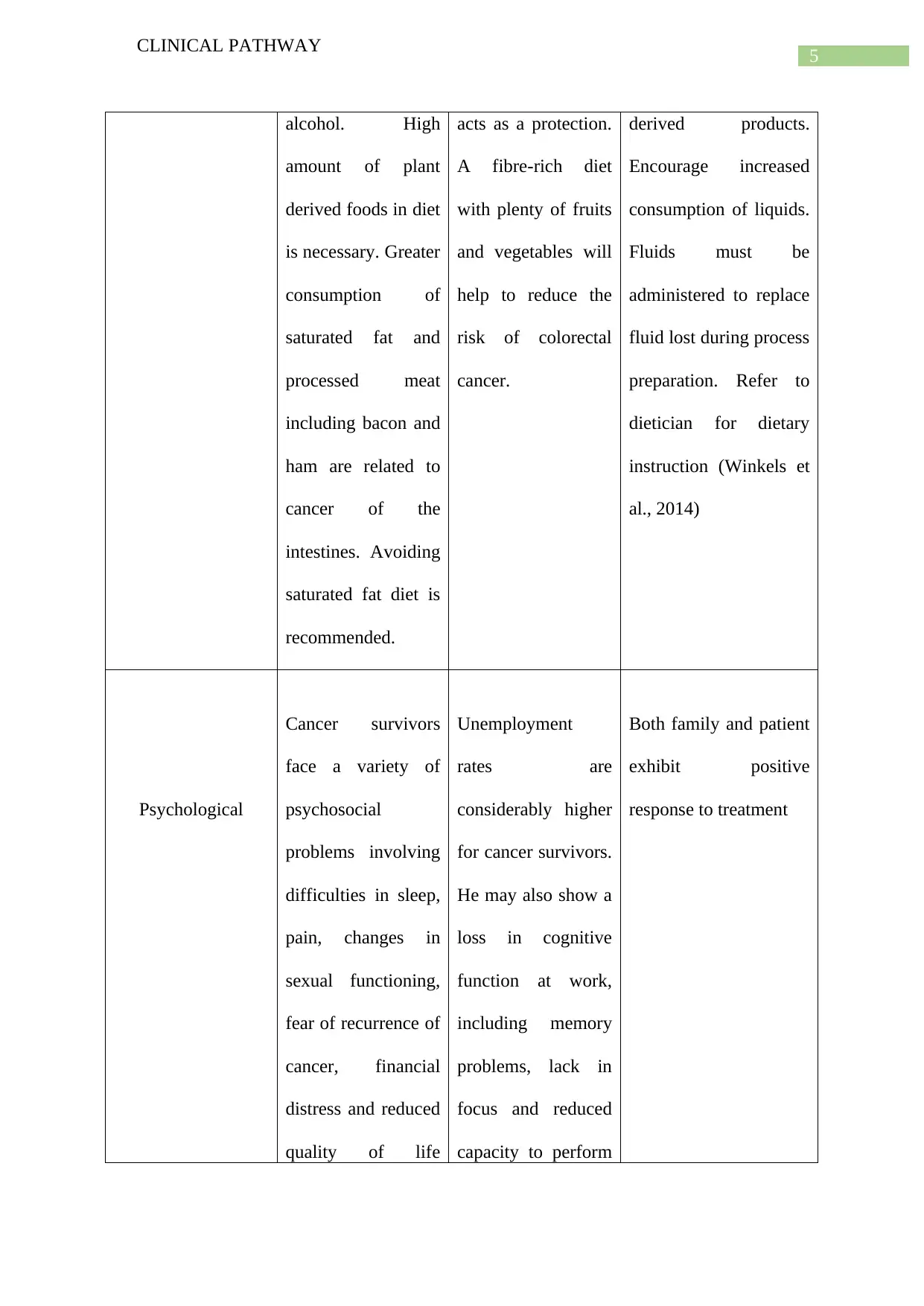
CLINICAL PATHWAY
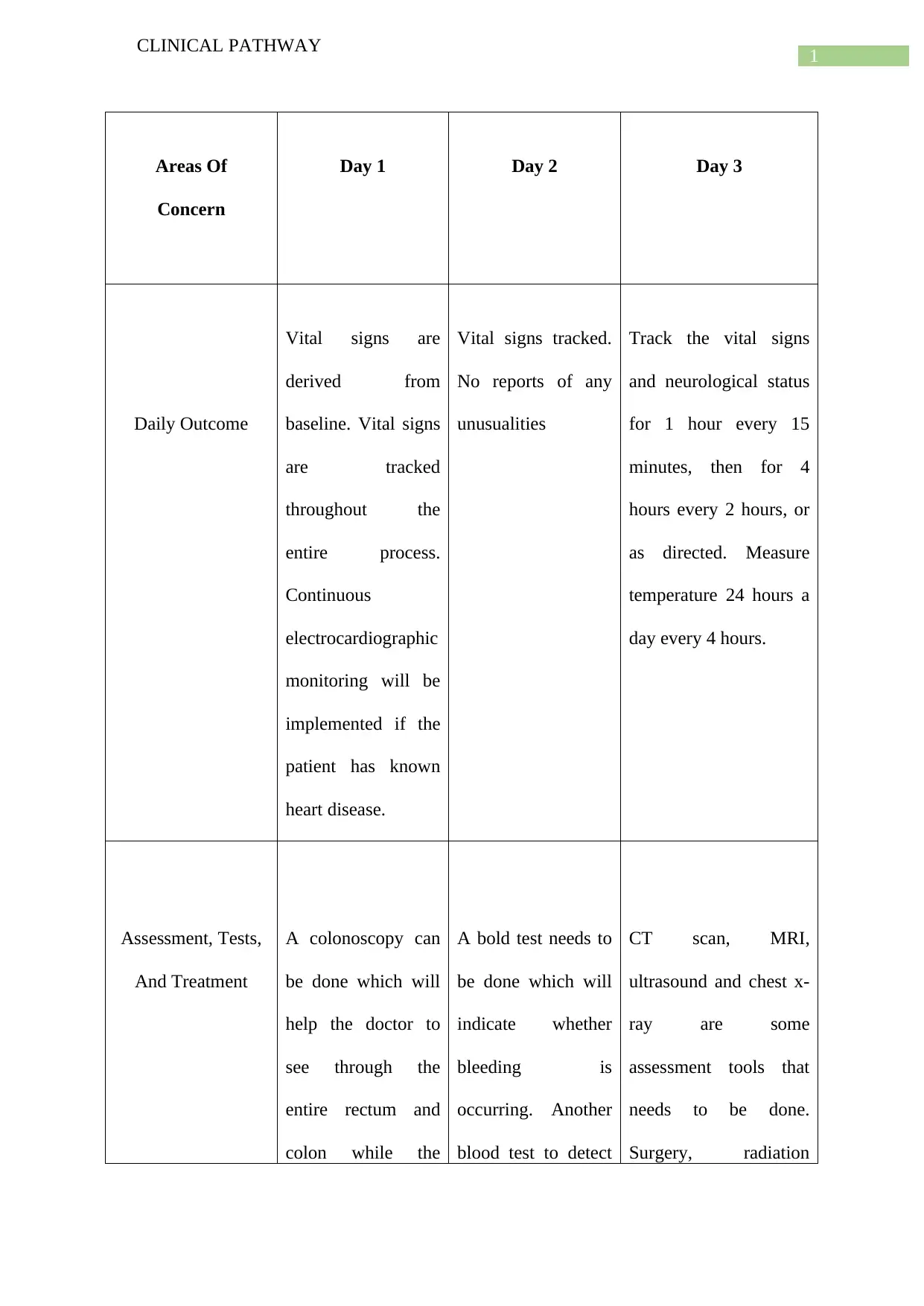
Areas Of
Concern
Day 1 Day 2 Day 3
Daily Outcome
Vital signs are
derived from
baseline. Vital signs
are tracked
throughout the
entire process.
Continuous
electrocardiographic
monitoring will be
implemented if the
patient has known
heart disease.
Vital signs tracked.
No reports of any
unusualities
Track the vital signs
and neurological status
for 1 hour every 15
minutes, then for 4
hours every 2 hours, or
as directed. Measure
temperature 24 hours a
day every 4 hours.
Assessment, Tests,
And Treatment
A colonoscopy can
be done which will
help the doctor to
see through the
entire rectum and
colon while the
A bold test needs to
be done which will
indicate whether
bleeding is
occurring. Another
blood test to detect
CT scan, MRI,
ultrasound and chest x-
ray are some
assessment tools that
needs to be done.
Surgery, radiation
Document Page
2
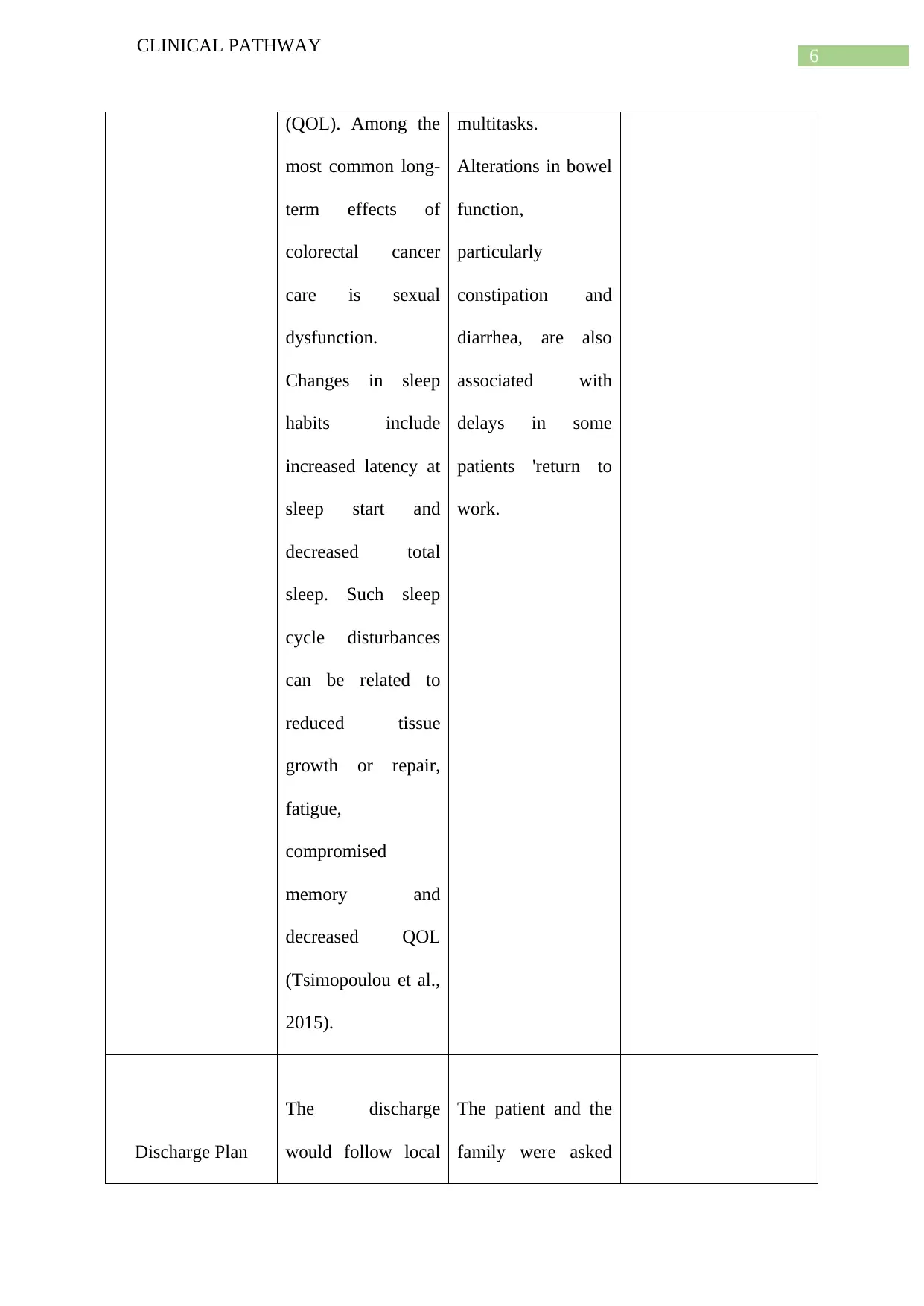
CLINICAL PATHWAY
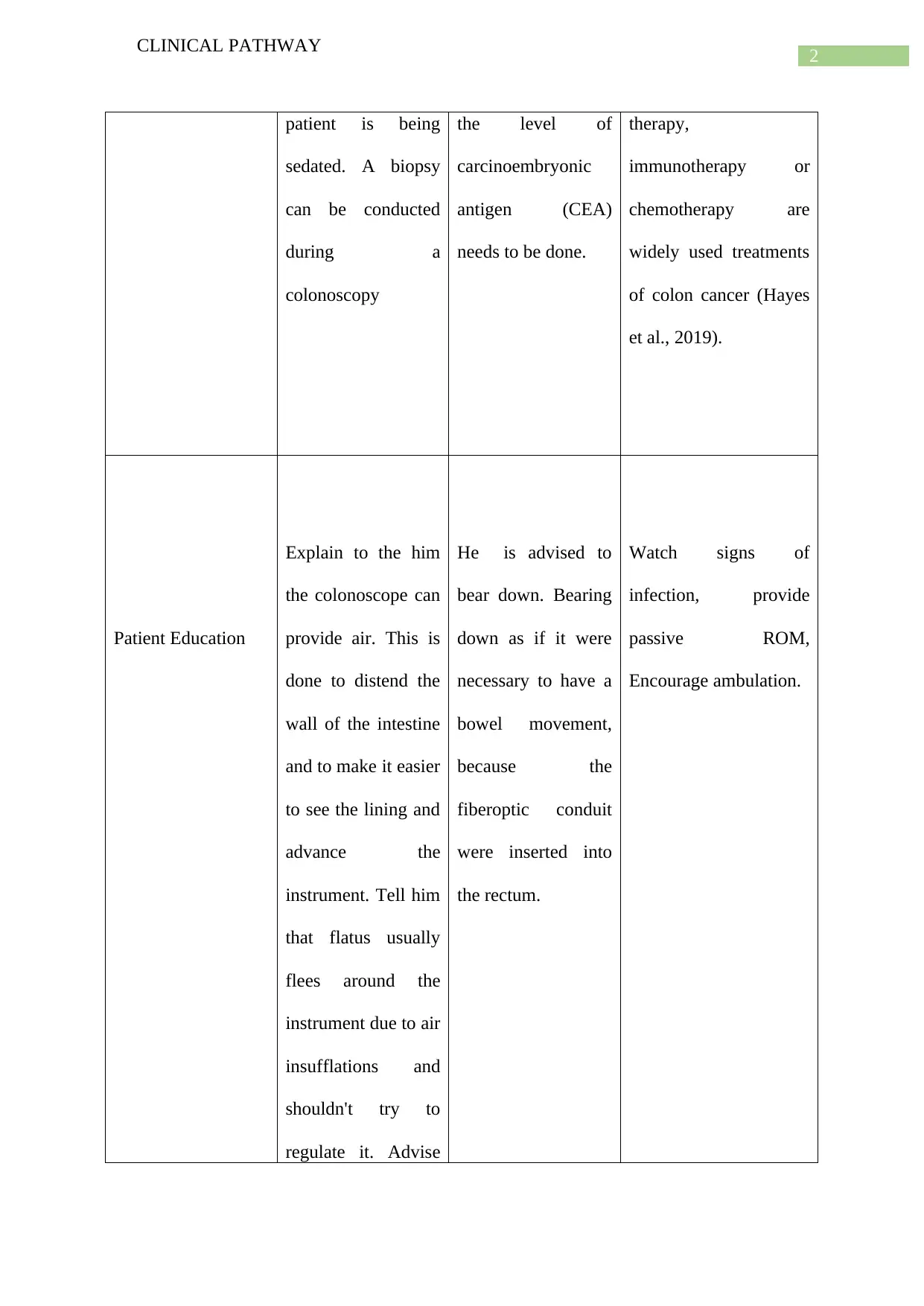
patient is being
sedated. A biopsy
can be conducted
during a
colonoscopy
the level of
carcinoembryonic
antigen (CEA)
needs to be done.
therapy,
immunotherapy or
chemotherapy are
widely used treatments
of colon cancer (Hayes
et al., 2019).
Patient Education
Explain to the him
the colonoscope can
provide air. This is
done to distend the
wall of the intestine
and to make it easier
to see the lining and
advance the
instrument. Tell him
that flatus usually
flees around the
instrument due to air
insufflations and
shouldn't try to
regulate it. Advise
He is advised to
bear down. Bearing
down as if it were
necessary to have a
bowel movement,
because the
fiberoptic conduit
were inserted into
the rectum.
Watch signs of
infection, provide
passive ROM,
Encourage ambulation.
Document Page
3
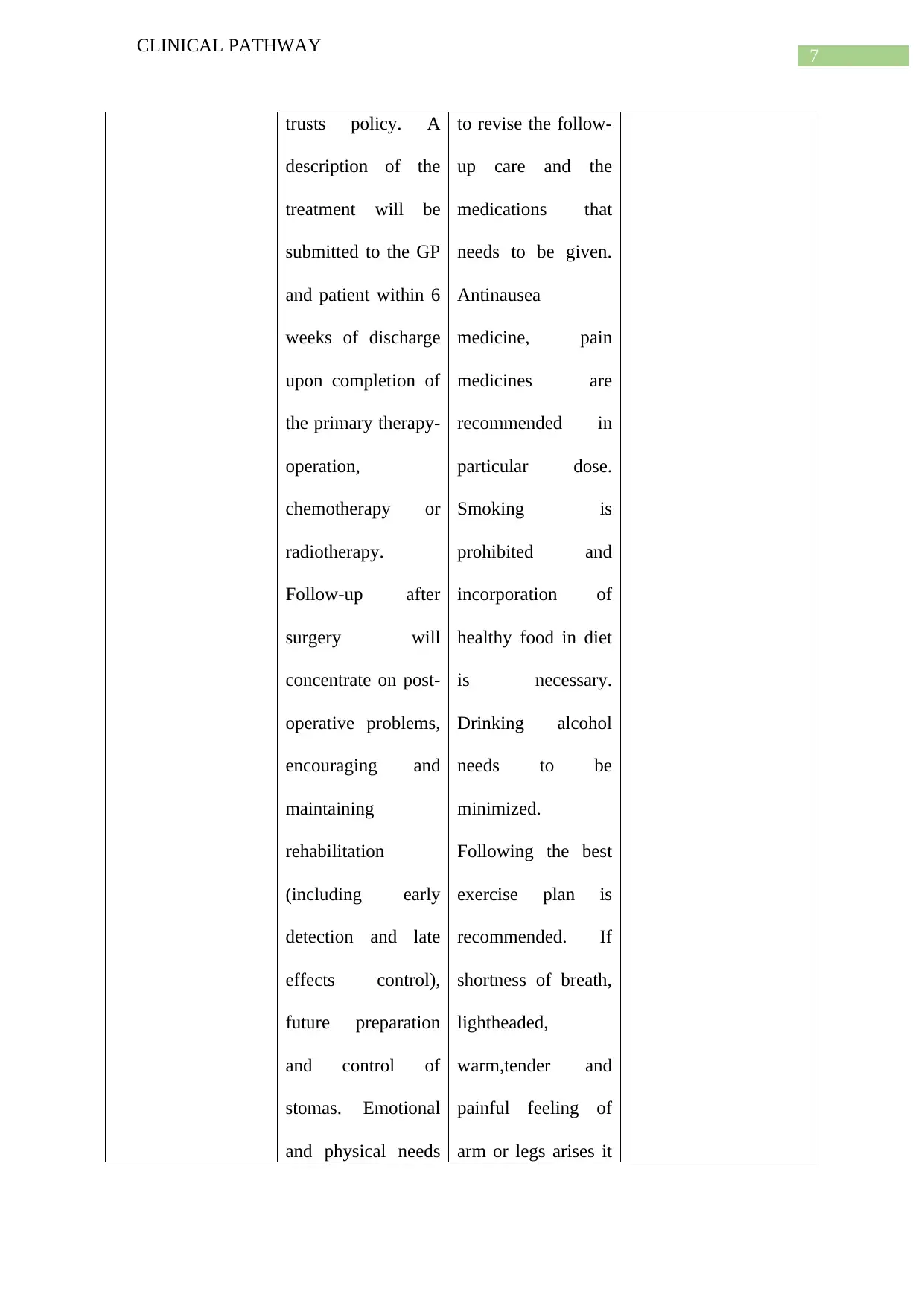
CLINICAL PATHWAY
the patient to have
bladder drained
before the operation.
Ask the patient to
clear all metallic
items from the
testing area.
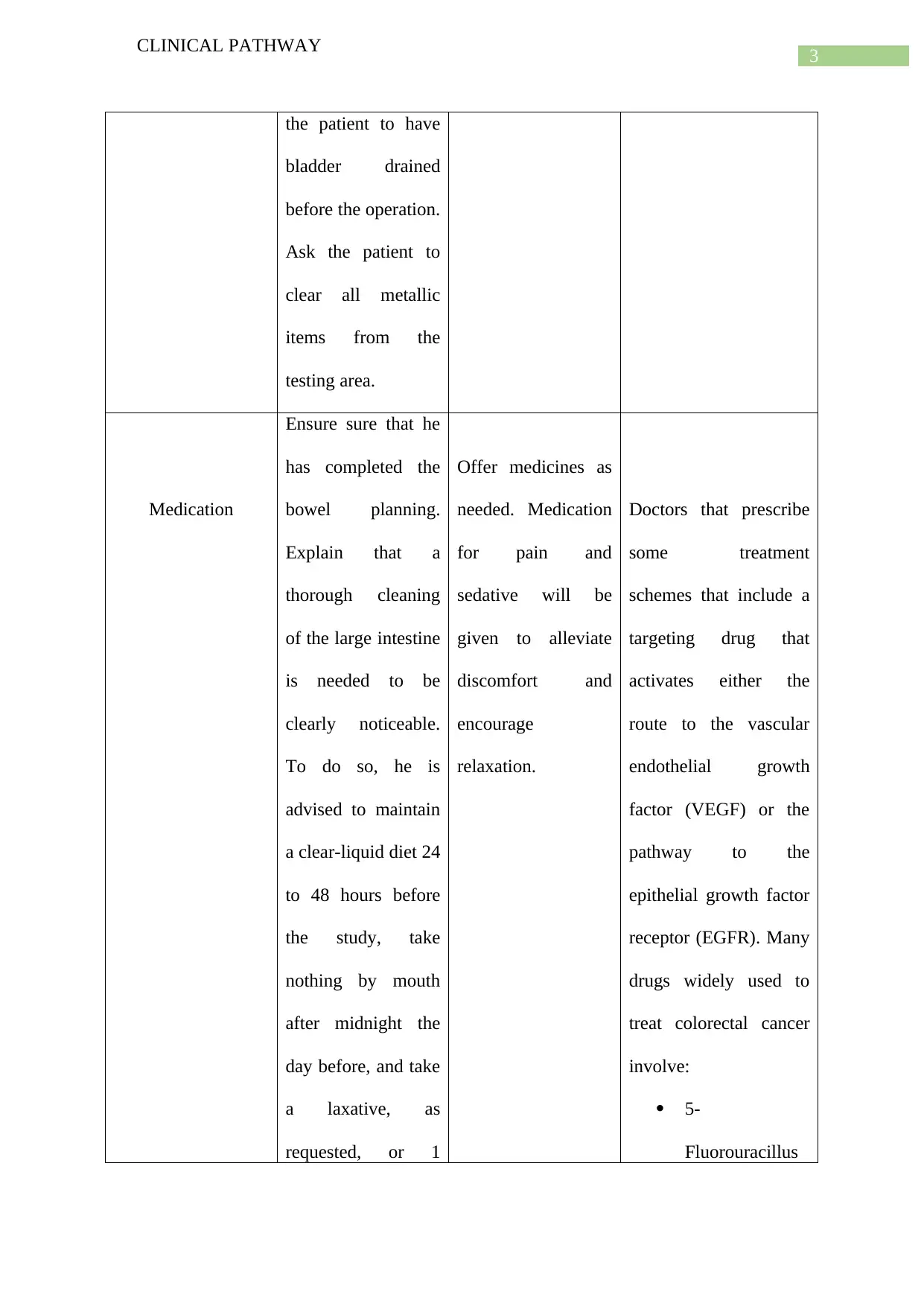
Medication
Ensure sure that he
has completed the
bowel planning.
Explain that a
thorough cleaning
of the large intestine
is needed to be
clearly noticeable.
To do so, he is
advised to maintain
a clear-liquid diet 24
to 48 hours before
the study, take
nothing by mouth
after midnight the
day before, and take
a laxative, as
requested, or 1
Offer medicines as
needed. Medication
for pain and
sedative will be
given to alleviate
discomfort and
encourage
relaxation.
Doctors that prescribe
some treatment
schemes that include a
targeting drug that
activates either the
route to the vascular
endothelial growth
factor (VEGF) or the
pathway to the
epithelial growth factor
receptor (EGFR). Many
drugs widely used to
treat colorectal cancer
involve:
5-
Fluorouracillus
tabler-icon-diamond-filled.svg

Paraphrase This Document

Need a fresh take? Get an instant paraphrase of this document with our AI Paraphraser
Document Page
4
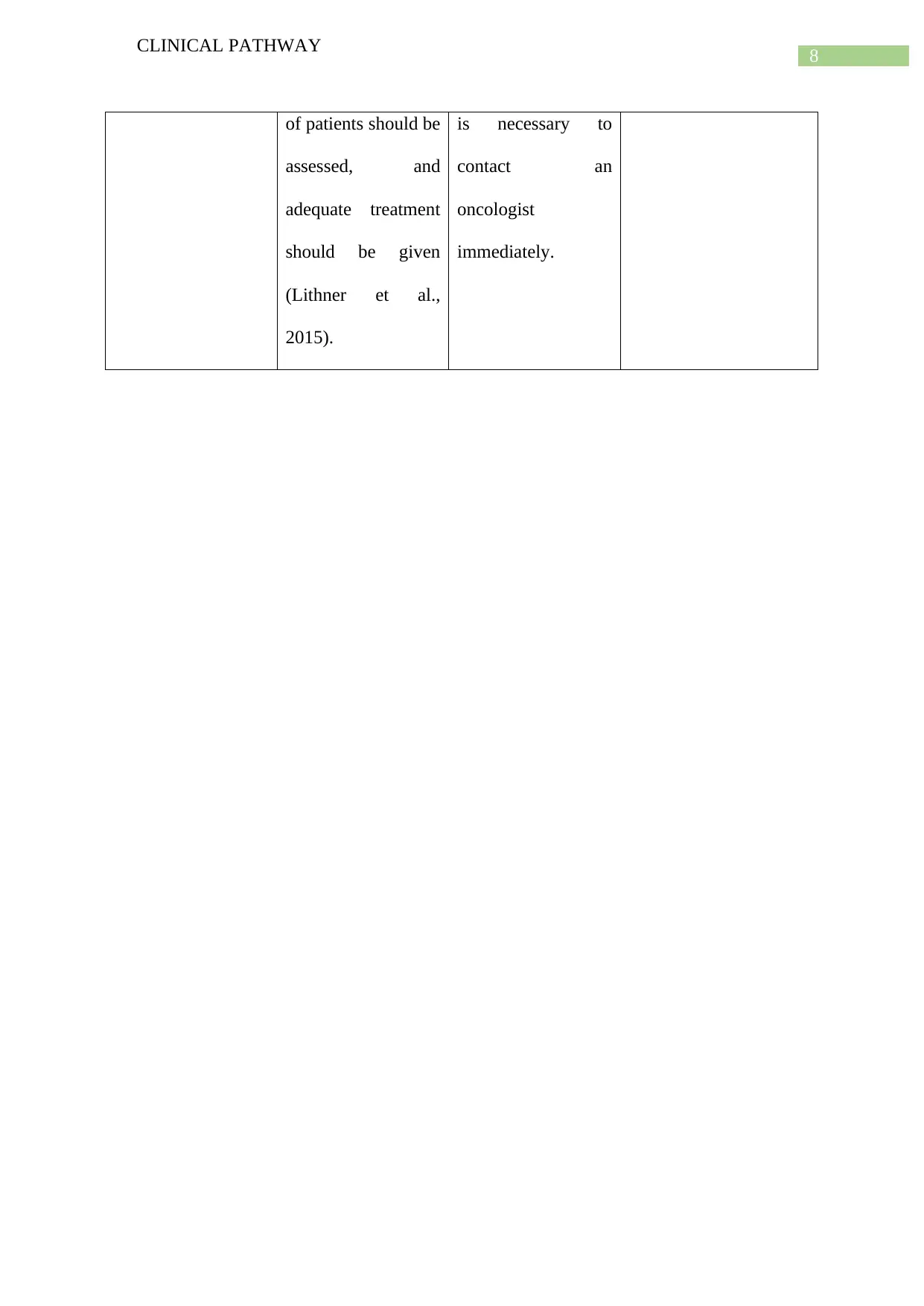
CLINICAL PATHWAY
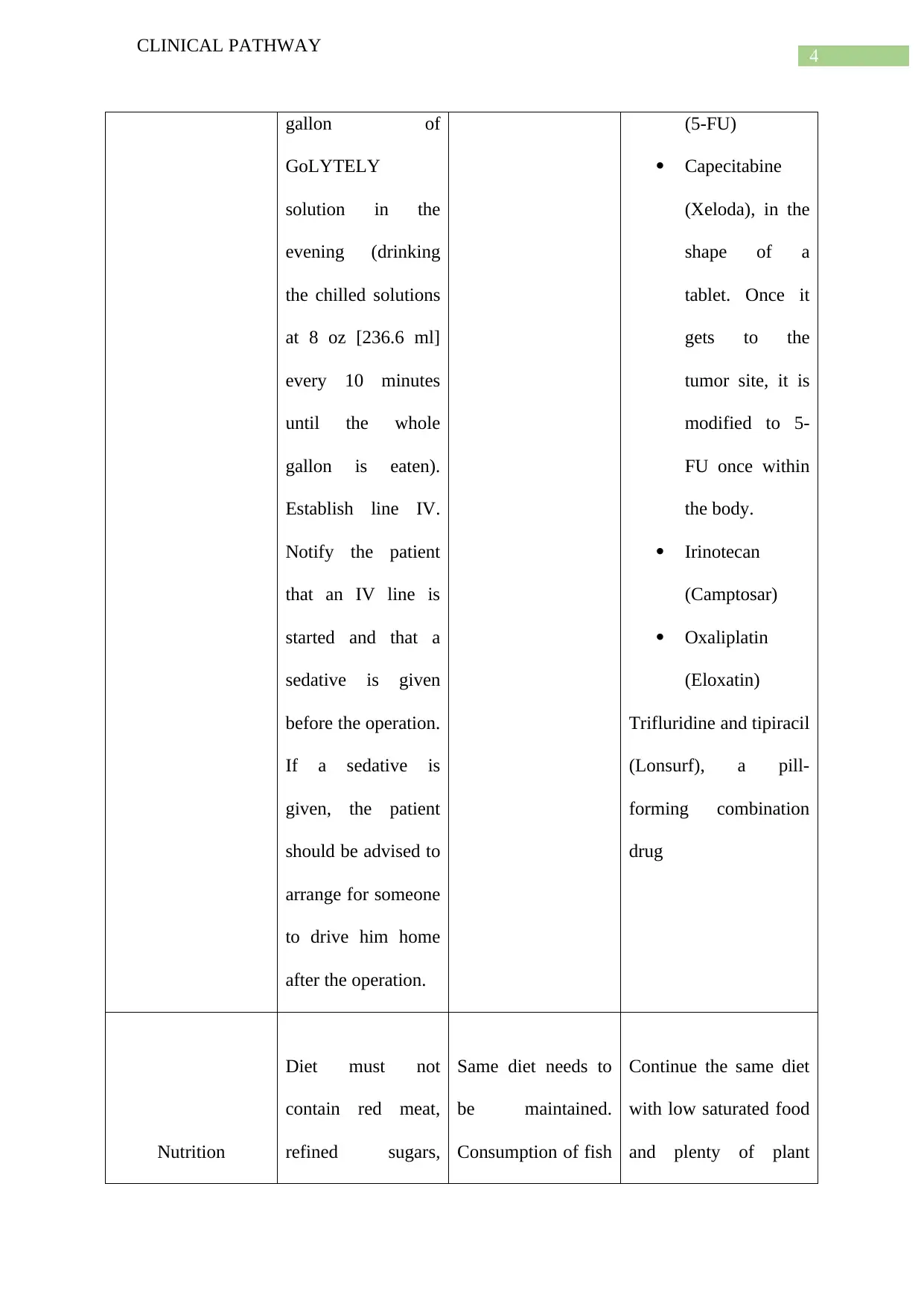
gallon of
GoLYTELY
solution in the
evening (drinking
the chilled solutions
at 8 oz [236.6 ml]
every 10 minutes
until the whole
gallon is eaten).
Establish line IV.
Notify the patient
that an IV line is
started and that a
sedative is given
before the operation.
If a sedative is
given, the patient
should be advised to
arrange for someone
to drive him home
after the operation.
(5-FU)
Capecitabine
(Xeloda), in the
shape of a
tablet. Once it
gets to the
tumor site, it is
modified to 5-
FU once within
the body.
Irinotecan
(Camptosar)
Oxaliplatin
(Eloxatin)
Trifluridine and tipiracil
(Lonsurf), a pill-
forming combination
drug
Nutrition
Diet must not
contain red meat,
refined sugars,
Same diet needs to
be maintained.
Consumption of fish
Continue the same diet
with low saturated food
and plenty of plant
Document Page
5
CLINICAL PATHWAY
alcohol. High
amount of plant
derived foods in diet
is necessary. Greater
consumption of
saturated fat and
processed meat
including bacon and
ham are related to
cancer of the
intestines. Avoiding
saturated fat diet is
recommended.
acts as a protection.
A fibre-rich diet
with plenty of fruits
and vegetables will
help to reduce the
risk of colorectal
cancer.
derived products.
Encourage increased
consumption of liquids.
Fluids must be
administered to replace
fluid lost during process
preparation. Refer to
dietician for dietary
instruction (Winkels et
al., 2014)
Psychological
Cancer survivors
face a variety of
psychosocial
problems involving
difficulties in sleep,
pain, changes in
sexual functioning,
fear of recurrence of
cancer, financial
distress and reduced
quality of life
Unemployment
rates are
considerably higher
for cancer survivors.
He may also show a
loss in cognitive
function at work,
including memory
problems, lack in
focus and reduced
capacity to perform
Both family and patient
exhibit positive
response to treatment
Document Page
6
CLINICAL PATHWAY
(QOL). Among the
most common long-
term effects of
colorectal cancer
care is sexual
dysfunction.
Changes in sleep
habits include
increased latency at
sleep start and
decreased total
sleep. Such sleep
cycle disturbances
can be related to
reduced tissue
growth or repair,
fatigue,
compromised
memory and
decreased QOL
(Tsimopoulou et al.,
2015).
multitasks.
Alterations in bowel
function,
particularly
constipation and
diarrhea, are also
associated with
delays in some
patients 'return to
work.
Discharge Plan
The discharge
would follow local
The patient and the
family were asked
tabler-icon-diamond-filled.svg

Paraphrase This Document

Need a fresh take? Get an instant paraphrase of this document with our AI Paraphraser
Document Page
7
CLINICAL PATHWAY
trusts policy. A
description of the
treatment will be
submitted to the GP
and patient within 6
weeks of discharge
upon completion of
the primary therapy-
operation,
chemotherapy or
radiotherapy.
Follow-up after
surgery will
concentrate on post-
operative problems,
encouraging and
maintaining
rehabilitation
(including early
detection and late
effects control),
future preparation
and control of
stomas. Emotional
and physical needs
to revise the follow-
up care and the
medications that
needs to be given.
Antinausea
medicine, pain
medicines are
recommended in
particular dose.
Smoking is
prohibited and
incorporation of
healthy food in diet
is necessary.
Drinking alcohol
needs to be
minimized.
Following the best
exercise plan is
recommended. If
shortness of breath,
lightheaded,
warm,tender and
painful feeling of
arm or legs arises it
Document Page
8
CLINICAL PATHWAY
of patients should be
assessed, and
adequate treatment
should be given
(Lithner et al.,
2015).
is necessary to
contact an
oncologist
immediately.
Document Page
9
CLINICAL PATHWAY
References
Hayes, L., Forrest, L., Adams, J., Hidajat, M., Ben-Shlomo, Y., White, M., & Sharp, L.
(2019). Age-related inequalities in colon cancer treatment persist over time: a
population-based analysis. J Epidemiol Community Health, 73(1), 34-41.
Lithner, M., Klefsgard, R., Johansson, J., & Andersson, E. (2015). The significance of
information after discharge for colorectal cancer surgery–a qualitative study. BMC
nursing, 14(1), 36.
Tsimopoulou, I., Pasquali, S., Howard, R., Desai, A., Gourevitch, D., Tolosa, I., & Vohra, R.
(2015). Psychological prehabilitation before cancer surgery: a systematic
review. Annals of surgical oncology, 22(13), 4117-4123.
Winkels, R. M., Heine-Bröring, R. C., Van Zutphen, M., van Harten-Gerritsen, S., Kok, D.
E., Van Duijnhoven, F. J., & Kampman, E. (2014). The COLON study: Colorectal
cancer: Longitudinal, Observational study on Nutritional and lifestyle factors that may
influence colorectal tumour recurrence, survival and quality of life. BMC
cancer, 14(1), 374.
chevron_up_icon
1 out of 10
circle_padding
hide_on_mobile
zoom_out_icon
[object Object]