Molarity vs. Parts per Million: Comparing Solutions in Chemistry
VerifiedAdded on 2022/09/06
|4
|426
|15
Homework Assignment
AI Summary
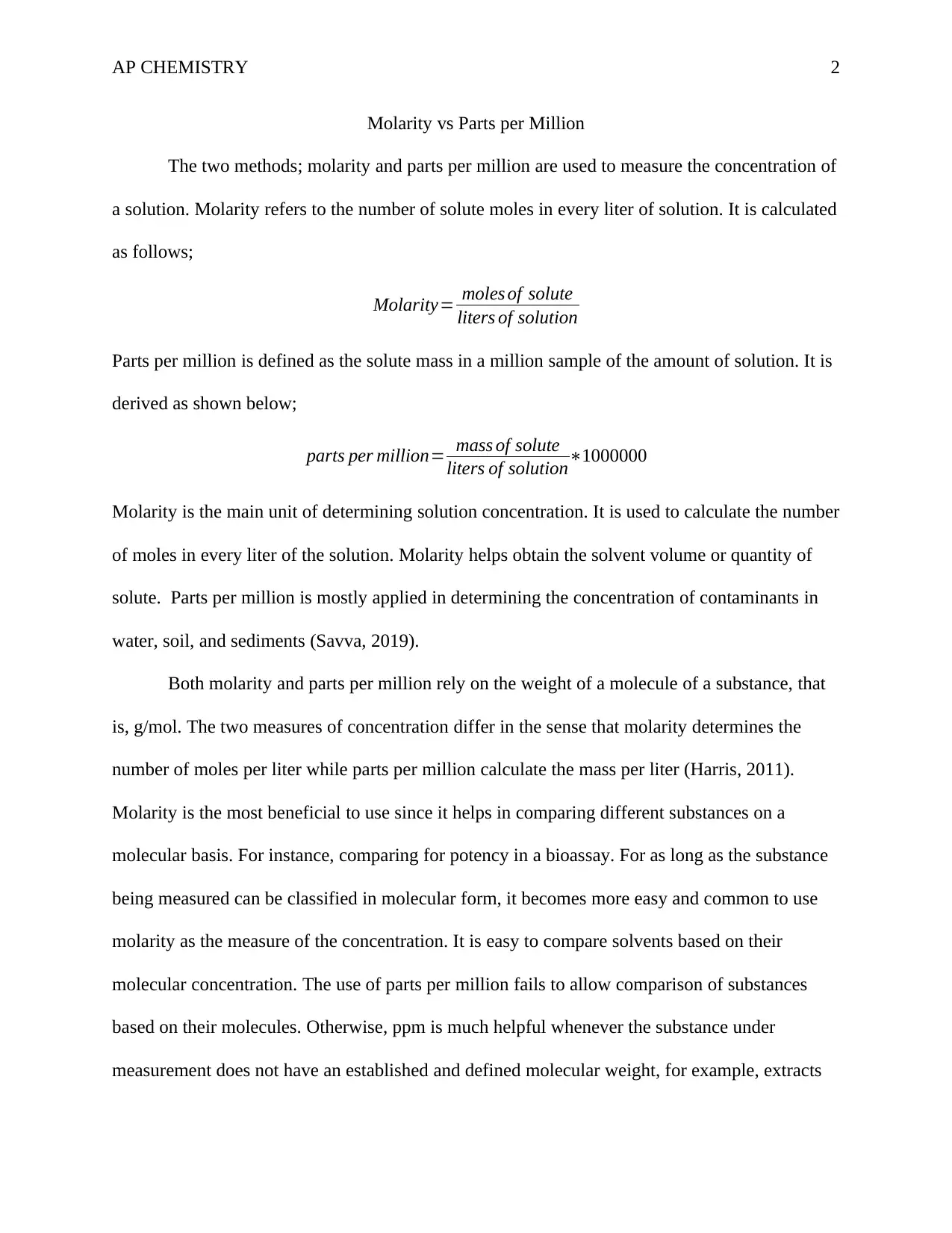
This assignment compares Molarity and Parts per Million (ppm), two fundamental concepts in chemistry used to measure solution concentrations. Molarity, expressed as moles per liter, is used to determine the number of moles in a solution and is useful for comparing substances on a molecular basis. Parts per million, on the other hand, is the mass of a solute in a million parts of a solution, commonly used for measuring contaminants in water and soil. The assignment highlights that while molarity is beneficial for comparing substances based on their molecular concentrations, ppm is useful when dealing with substances without a defined molecular weight. It emphasizes the importance of molarity for bioassays and the application of ppm in measuring plant hormones, offering a clear distinction between the two measurement methods and their appropriate uses. References are provided to support the concepts discussed.



1 out of 4


Related Documents


Your All-in-One AI-Powered Toolkit for Academic Success.
+13062052269
info@desklib.com
Available 24*7 on WhatsApp / Email
![[object Object]](/_next/static/media/star-bottom.7253800d.svg)
Copyright © 2020–2026 A2Z Services. All Rights Reserved. Developed and managed by ZUCOL.