Configuration of OSPF, DHCP, and VLANs in Data and Computer Networking

Verified

Added on  2023/06/11

|22
|1045
|337
Practical Assignment
AI Summary
This document presents a solution to a practical assignment focused on data and computer networking. The project involves configuring a network using OSPF for dynamic routing and distributing a default route. It also covers configuring RSTP, port security, EtherChannel, DHCP, VLANs, and trunking, as well as routing between VLANs. The solution includes initial switch configuration, securing switch ports, and creating SVIs. Specific steps detail the planning and implementation of OSPF router configuration, including addressing, interface configuration, inter-VLAN setup, default routing, and OSPFv2 multiarea customization. Furthermore, it addresses switching and DHCP configuration, covering VLAN creation, port assignment, SVIs configuration, EtherChannel and trunking, Rapid PVST+, switch security, and DHCP server setup for hosts. The configuration is completed by manually setting up addressing on each workstation, ensuring full network communication. Desklib offers many resources for students looking for solved assignments and past papers.
Document Page
Data and Computer Networking 1
Data and Computer Networking
Student Name
Student ID
Course
Date
tabler-icon-diamond-filled.svg

Paraphrase This Document

Need a fresh take? Get an instant paraphrase of this document with our AI Paraphraser
Document Page
Data and Computer Networking 2
Table of Contents
OSPF Router Configuration............................................................................................................3
Step 1: Plan the Addressing.........................................................................................................3
Step 2: Building 1 Configuration.................................................................................................3
Step 3: Router Interface Configuration........................................................................................5
Step 4: Inter-VLAN Configuration on Building 2.......................................................................6
Step 5: Default Routing Configuration........................................................................................6
Step 6: OSPF Routing Configuration...........................................................................................7
Step 7: OSPFv2 Multiarea Customization...................................................................................9
Switching and DHCP Configuration.............................................................................................12
Step 1: Creating and Naming VLANs.......................................................................................12
Step 2: Assigning VLANs Switch Ports....................................................................................13
Step 3: SVIs Configuration........................................................................................................14
Step 4: EtherChannel and Trunking Configuration...................................................................15
Step 5: Rapid PVST+ Configuration.........................................................................................16
Step 6: Switch Security Configuration.......................................................................................18
Step 7: DHCP Server Configuration on Building 2 for hosts attached to FL-C and FL-A
switches......................................................................................................................................19
Step 8: Configure host addressing.............................................................................................20
Reference List................................................................................................................................21
Document Page
Data and Computer Networking 3
OSPF Router Configuration
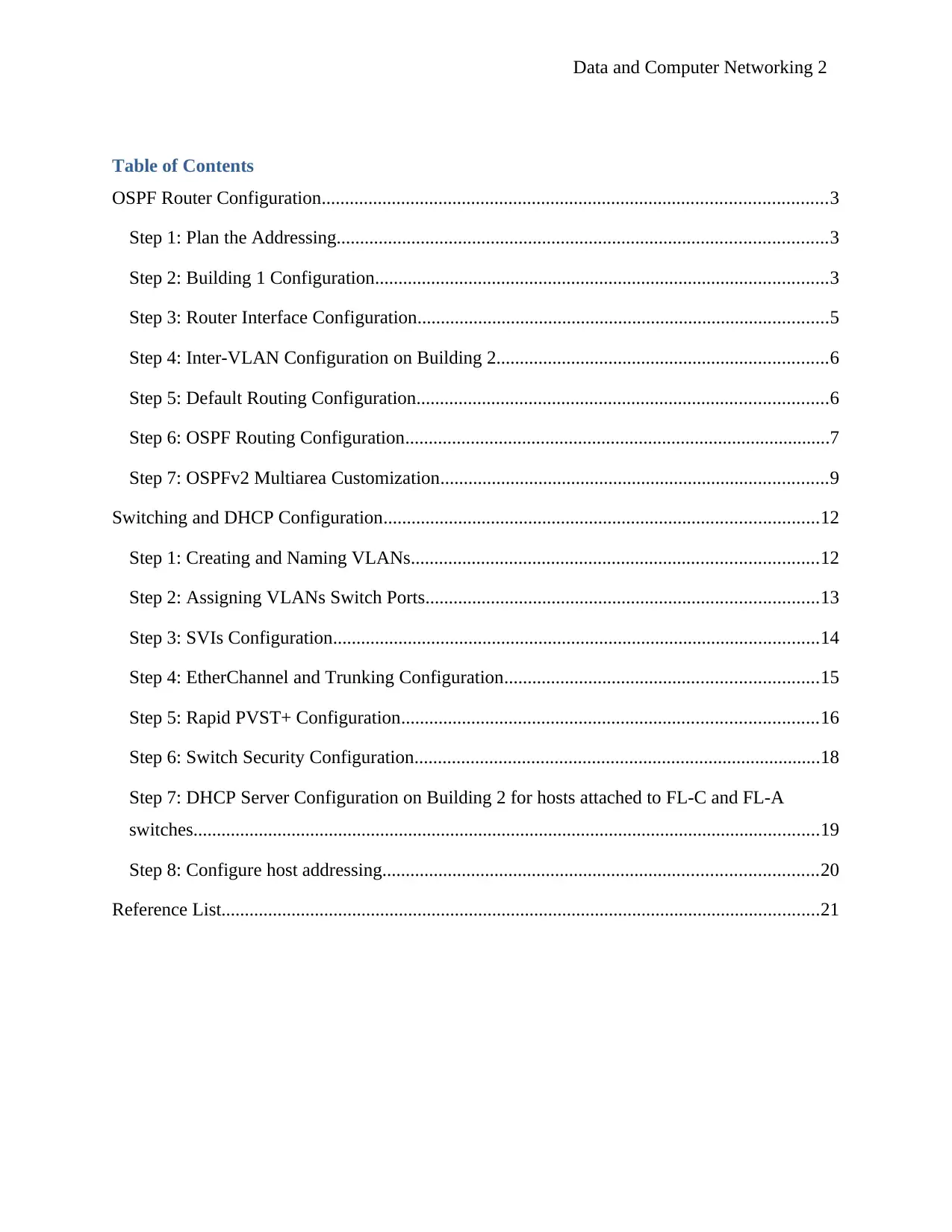
Step 1: Plan the Addressing
Step 2: Building 1 Configuration
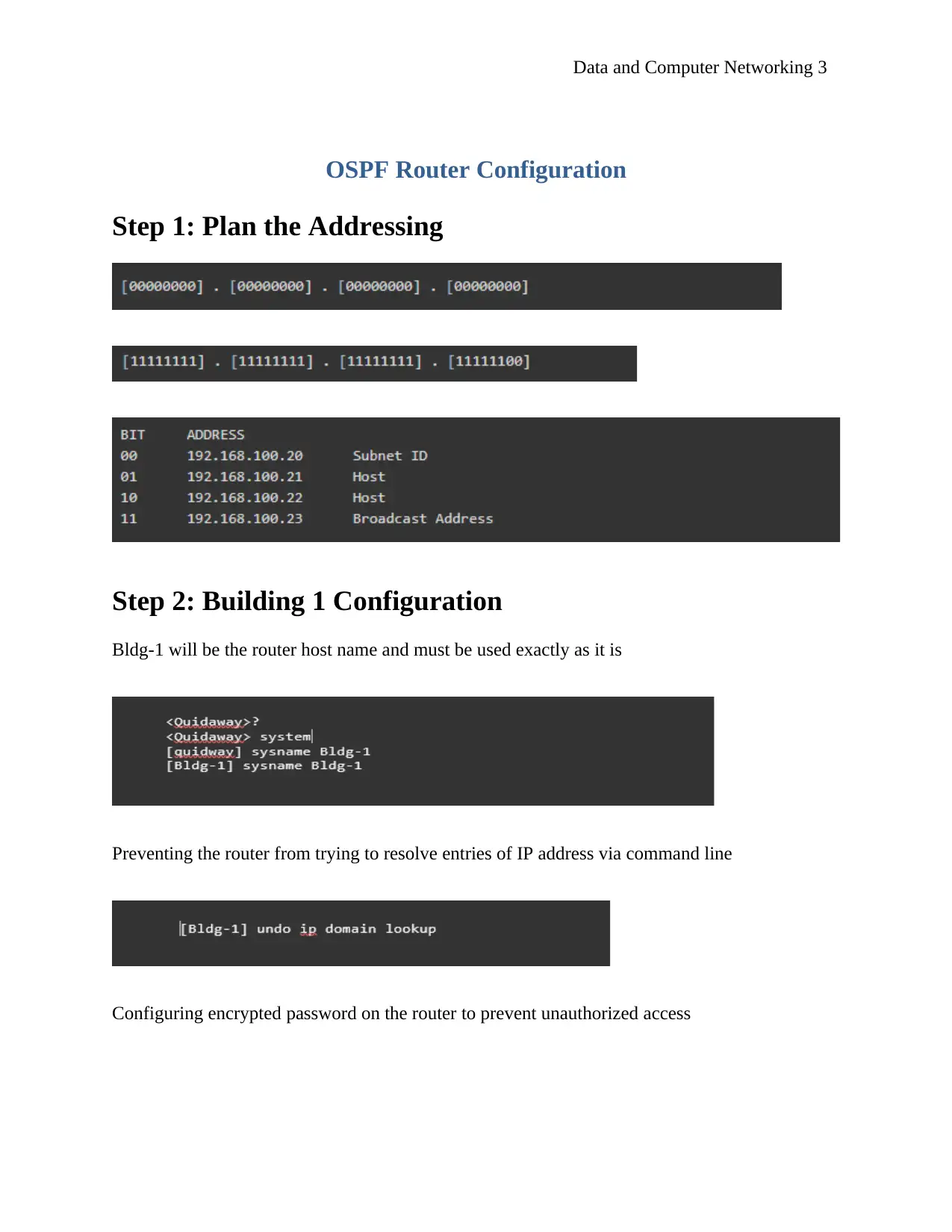
Bldg-1 will be the router host name and must be used exactly as it is
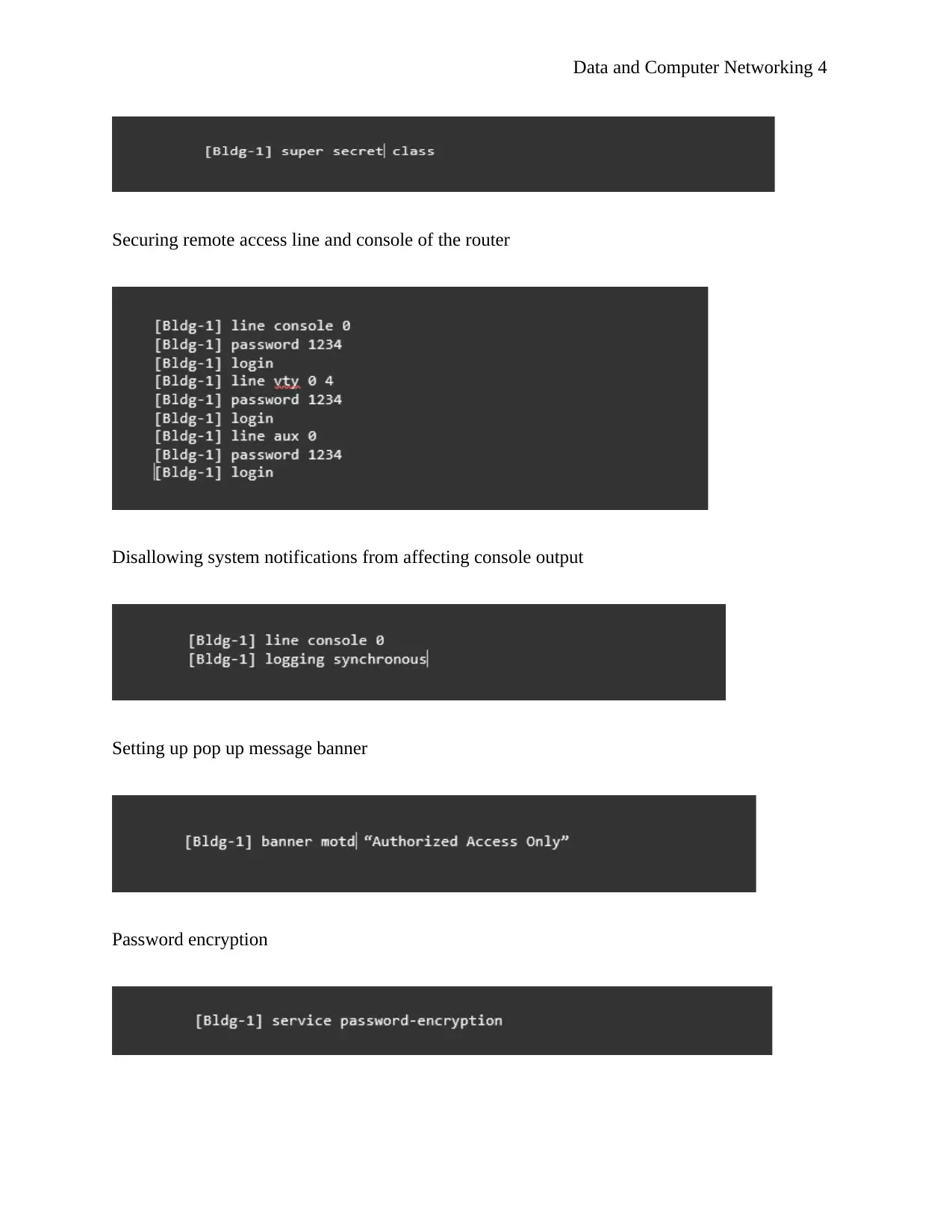
Preventing the router from trying to resolve entries of IP address via command line
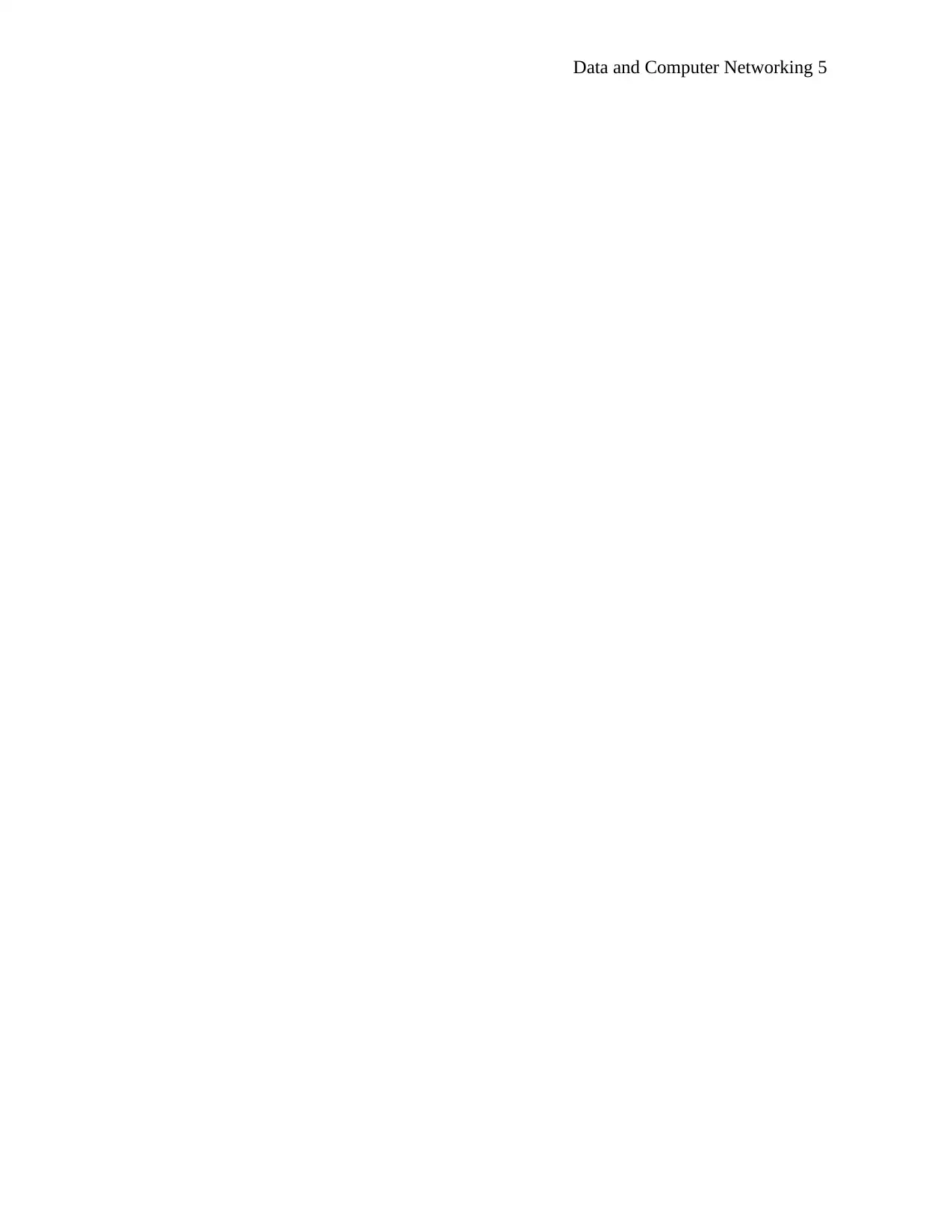
Configuring encrypted password on the router to prevent unauthorized access
Document Page
Data and Computer Networking 4
Securing remote access line and console of the router
Disallowing system notifications from affecting console output
Setting up pop up message banner
Password encryption
tabler-icon-diamond-filled.svg

Paraphrase This Document

Need a fresh take? Get an instant paraphrase of this document with our AI Paraphraser
Document Page
Data and Computer Networking 5
Document Page
Data and Computer Networking 6
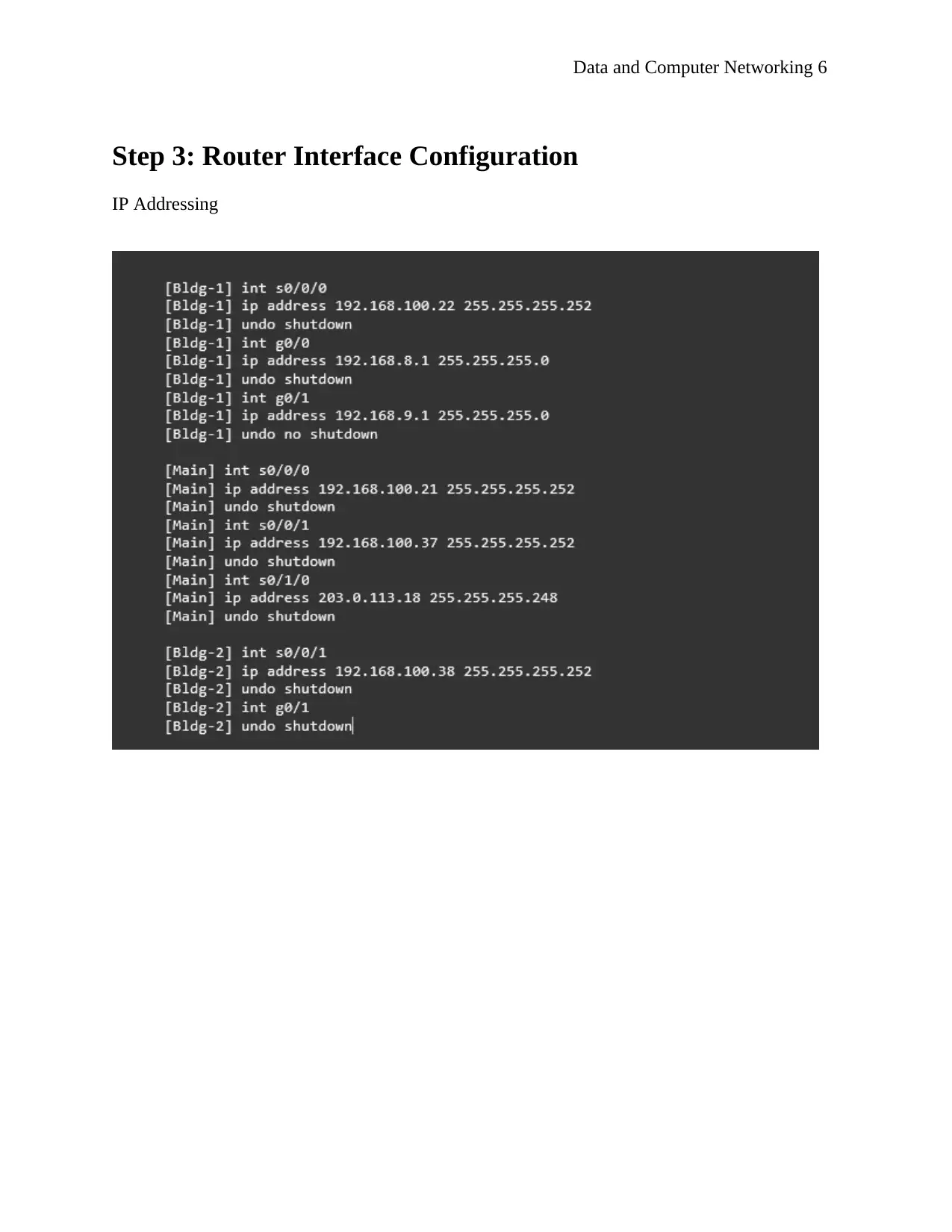
Step 3: Router Interface Configuration
IP Addressing
Document Page
Data and Computer Networking 7
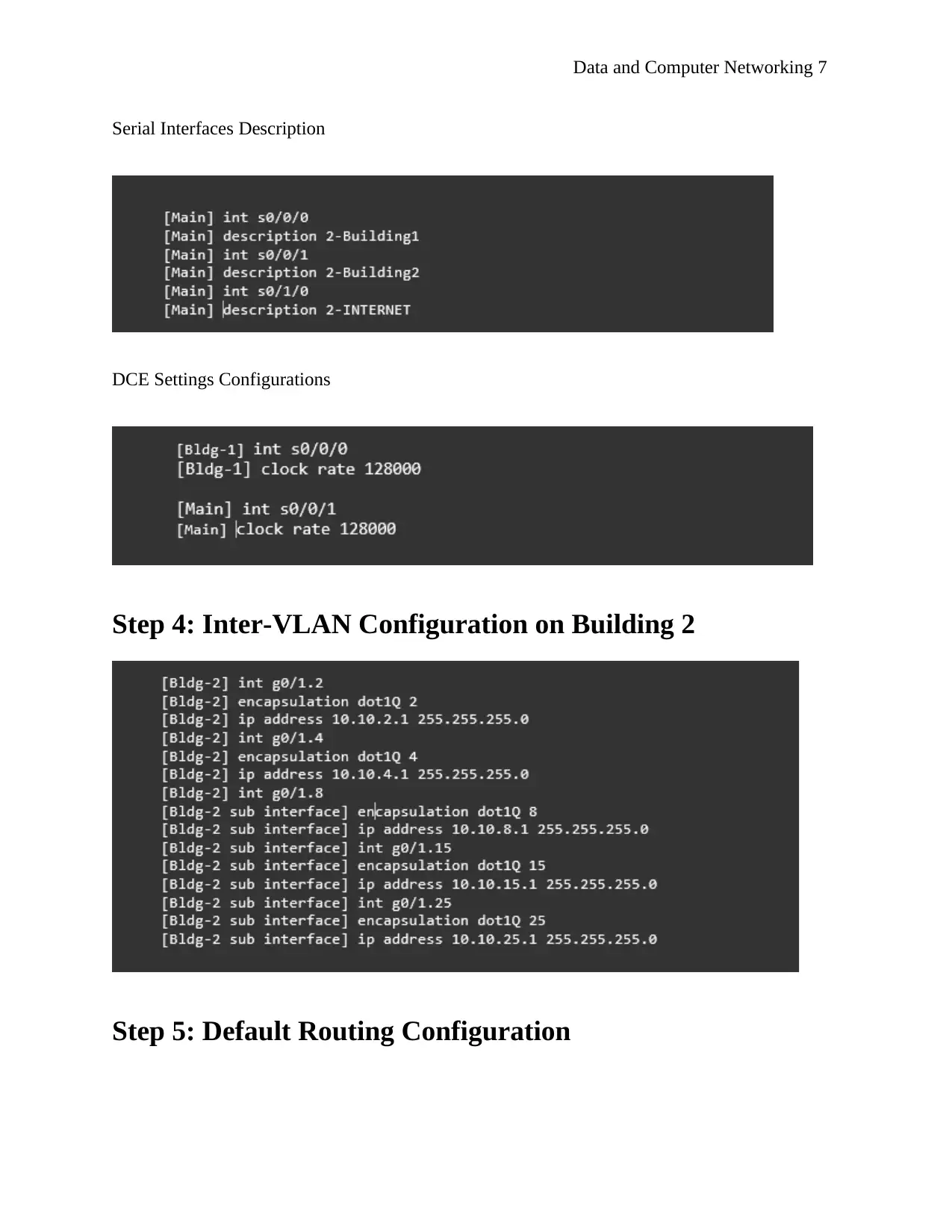
Serial Interfaces Description
DCE Settings Configurations
Step 4: Inter-VLAN Configuration on Building 2
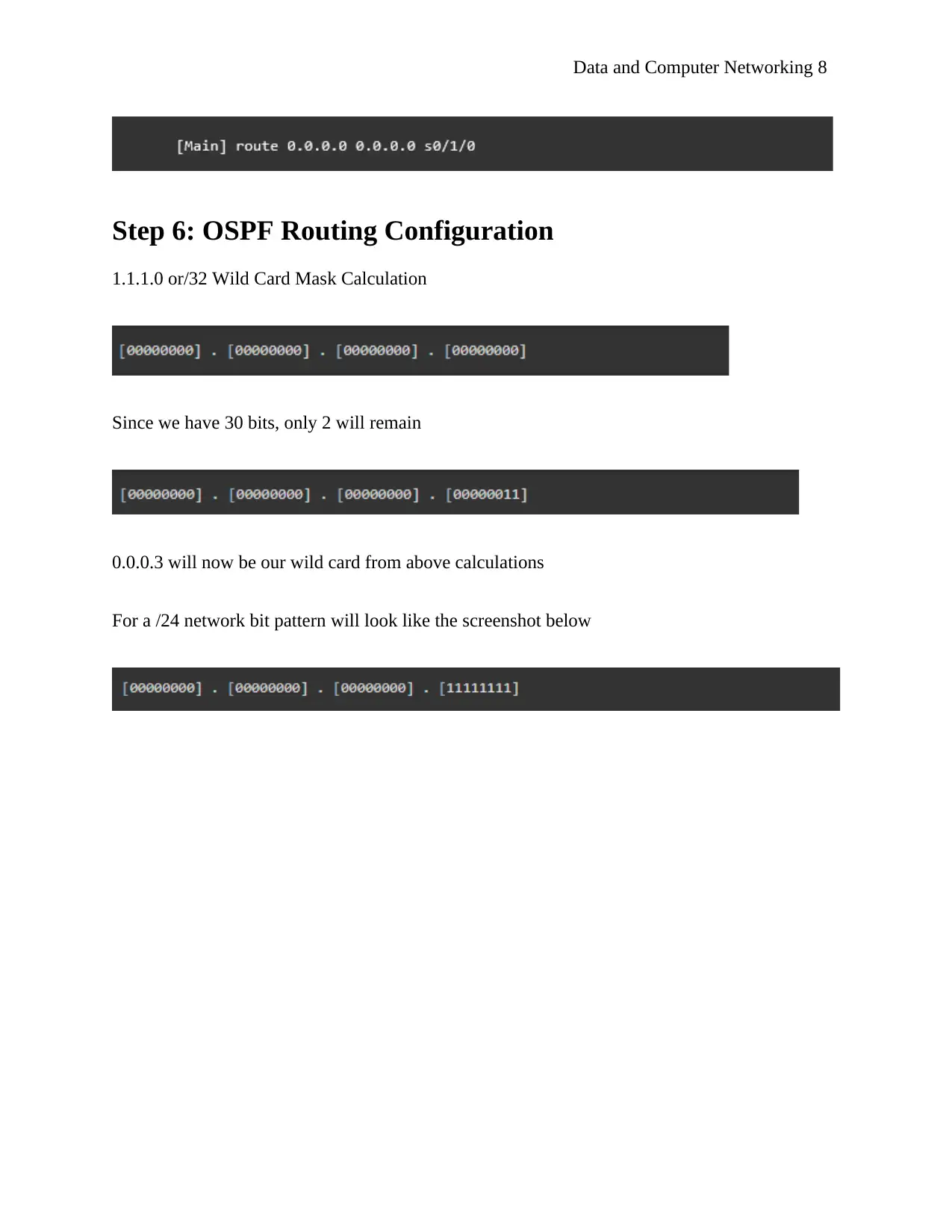
Step 5: Default Routing Configuration
tabler-icon-diamond-filled.svg

Paraphrase This Document

Need a fresh take? Get an instant paraphrase of this document with our AI Paraphraser
Document Page
Data and Computer Networking 8
Step 6: OSPF Routing Configuration
1.1.1.0 or/32 Wild Card Mask Calculation
Since we have 30 bits, only 2 will remain
0.0.0.3 will now be our wild card from above calculations
For a /24 network bit pattern will look like the screenshot below
Document Page
Data and Computer Networking 9
Thus, 0.0.0.255 will be /24 wildcard
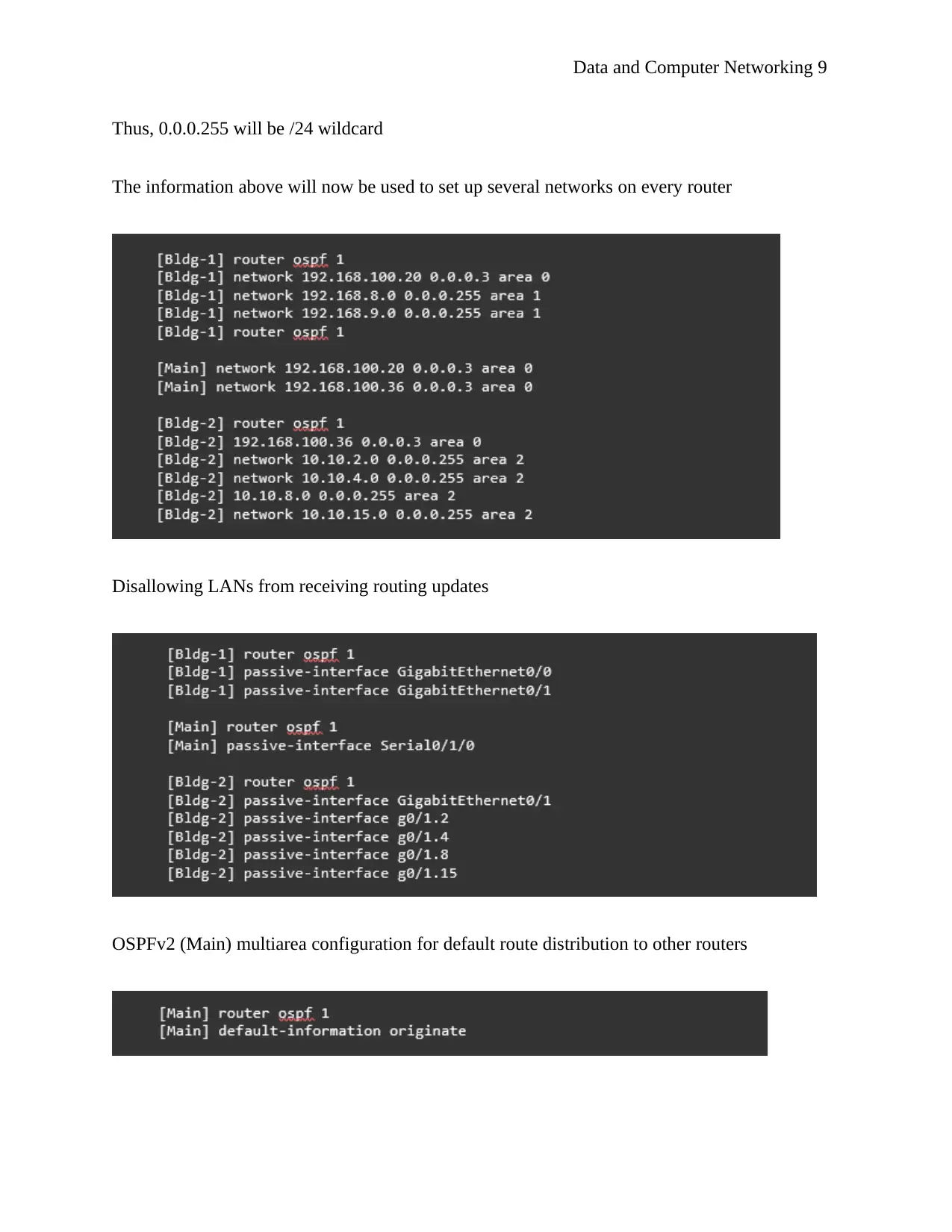
The information above will now be used to set up several networks on every router
Disallowing LANs from receiving routing updates
OSPFv2 (Main) multiarea configuration for default route distribution to other routers
Document Page
Data and Computer Networking 10
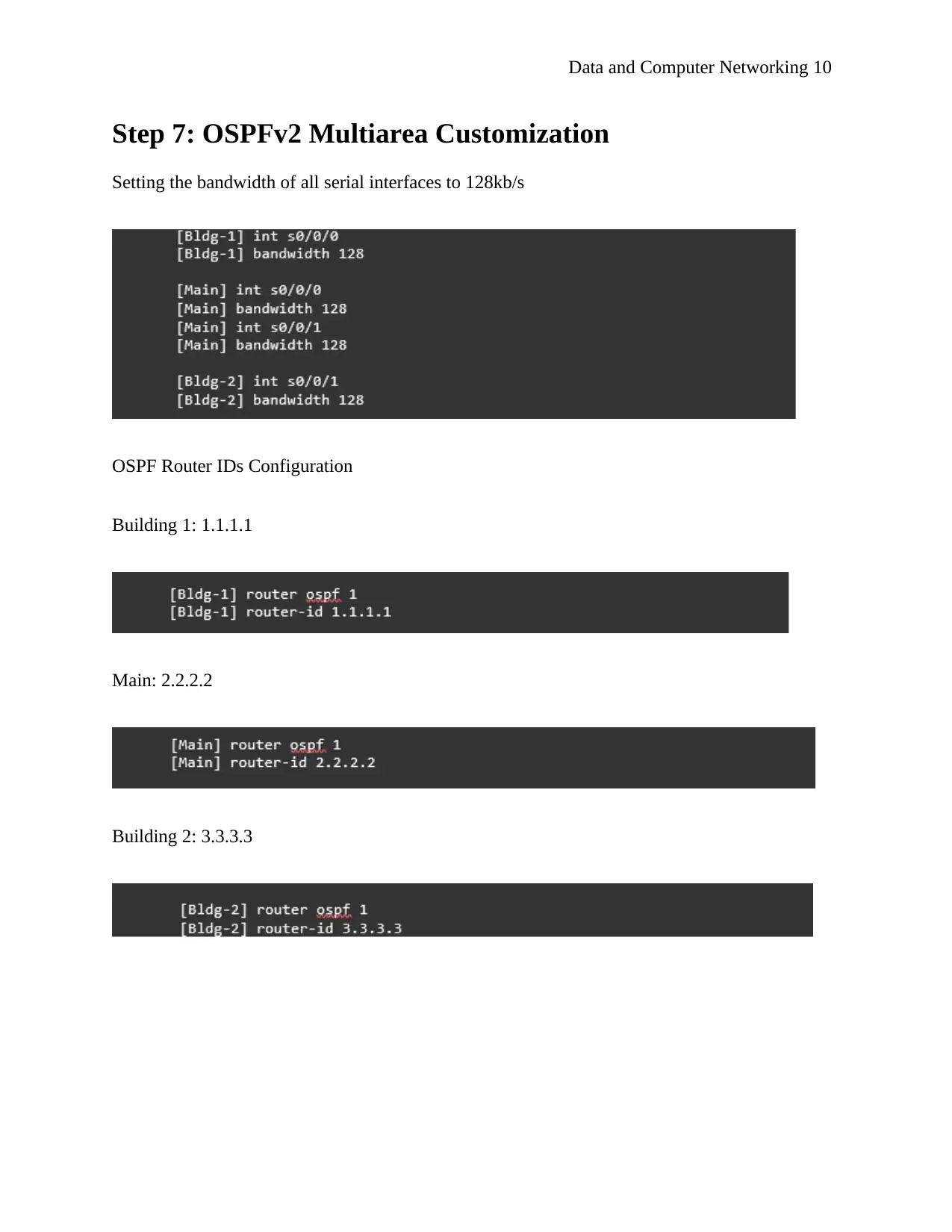
Step 7: OSPFv2 Multiarea Customization
Setting the bandwidth of all serial interfaces to 128kb/s
OSPF Router IDs Configuration
Building 1: 1.1.1.1
Main: 2.2.2.2
Building 2: 3.3.3.3
tabler-icon-diamond-filled.svg

Paraphrase This Document

Need a fresh take? Get an instant paraphrase of this document with our AI Paraphraser
Document Page
Data and Computer Networking 11
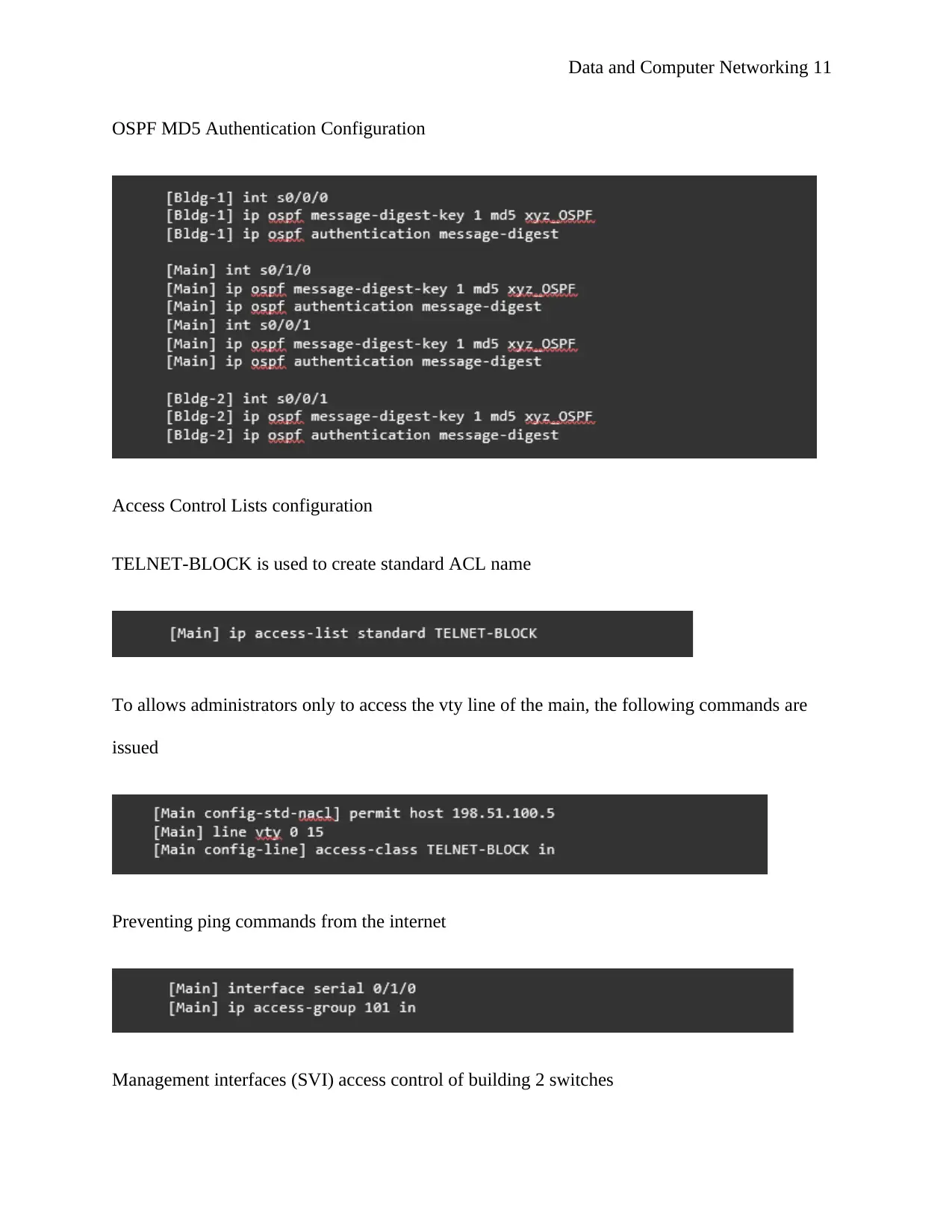
OSPF MD5 Authentication Configuration
Access Control Lists configuration
TELNET-BLOCK is used to create standard ACL name
To allows administrators only to access the vty line of the main, the following commands are
issued
Preventing ping commands from the internet
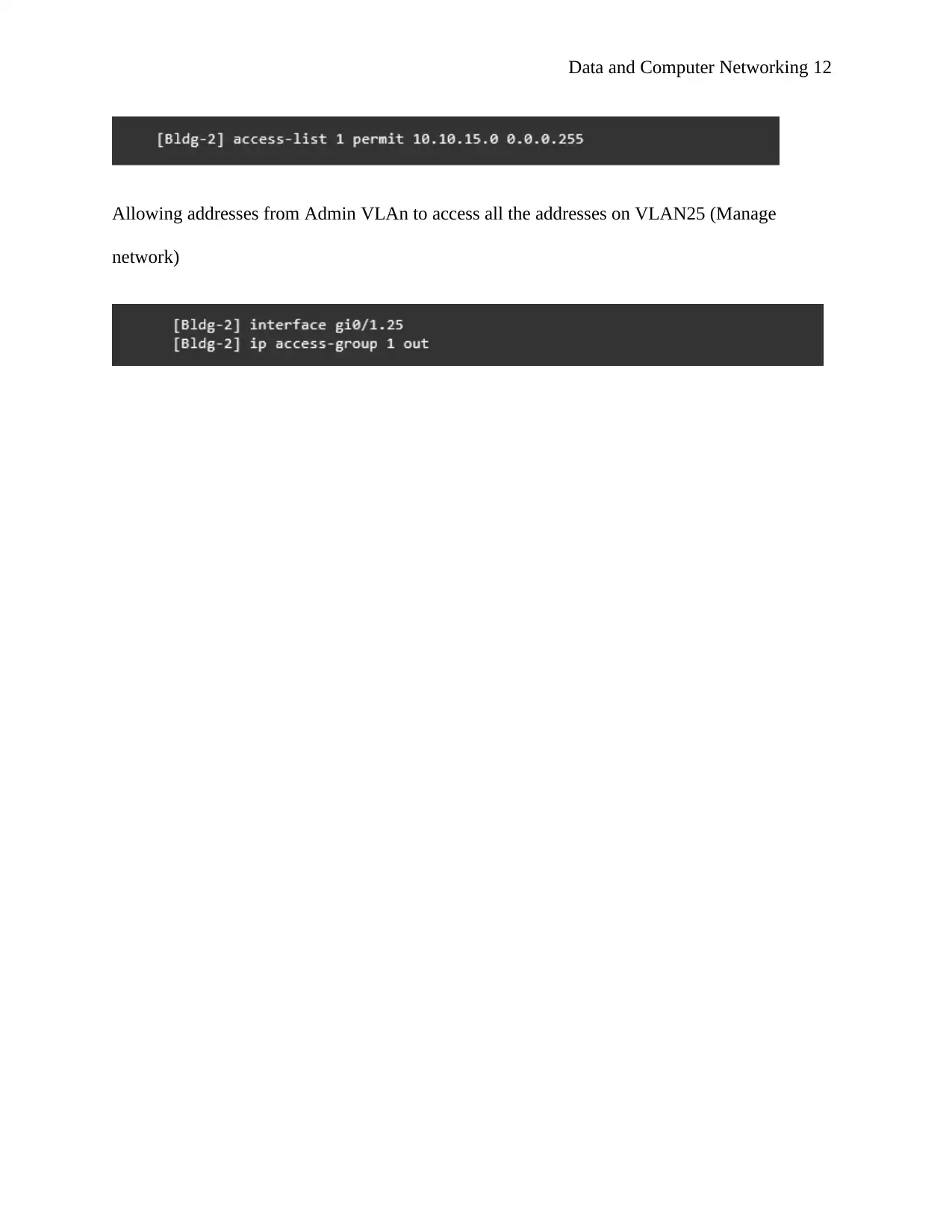
Management interfaces (SVI) access control of building 2 switches
Document Page
Data and Computer Networking 12
Allowing addresses from Admin VLAn to access all the addresses on VLAN25 (Manage
network)
chevron_up_icon
1 out of 22
circle_padding
hide_on_mobile
zoom_out_icon
[object Object]