Report: Conflict Management Strategies for Happy Sailing Adventures
VerifiedAdded on 2020/01/07
|10
|4073
|201
Report
AI Summary
This report analyzes conflict management within Happy Sailing Adventures, identifying the root causes of workplace conflicts and proposing effective resolutions. The report explores various stages of conflict, from latent to aftermath, and suggests practical strategies like open forums, negotiation, and action plans. It examines factors such as personality differences, communication gaps, and differing values that contribute to conflict. The report provides a detailed action plan with timelines and resources for addressing issues, including the implementation of modern networking systems. It emphasizes the importance of gathering client feedback and stakeholder input to develop customer-centric solutions. The report also highlights the significance of employee training and equal information sharing to maintain coordination and enhance the company's competitive advantage. The report concludes with a discussion on the importance of information access and the need for reliable resources in today's competitive environment.
FIRST NAME:
SURNAME:
STUDENT NUMBER:
COURSE CODE NUMBER:
TOTAL NUMBER OF PAGES: 9
ASSIGNMENT TITLE: CONFLICT MANAGEMENT
1
SURNAME:
STUDENT NUMBER:
COURSE CODE NUMBER:
TOTAL NUMBER OF PAGES: 9
ASSIGNMENT TITLE: CONFLICT MANAGEMENT
1

Paraphrase This Document
Need a fresh take? Get an instant paraphrase of this document with our AI Paraphraser
Table of Contents
Introduction....................................................................................................................................3
Discussion.....................................................................................................................................3
Conclusion.....................................................................................................................................7
Reference List................................................................................................................................8
2
Introduction....................................................................................................................................3
Discussion.....................................................................................................................................3
Conclusion.....................................................................................................................................7
Reference List................................................................................................................................8
2
Introduction
Within an organisation, several employees work towards the achievement of a common goal,
that is, the achievement of success. The plurality of the previous sentence can be correlated to
the fact that these employees belong to the different socio-cultural background. The variation in
the earlier sentence, “different”, can be converted into “difference”, which is reflected through
the opinions of the employees. This differentiation assumes the shape of conflicts, which
destroys the professional ambience of the workplace. This assignment attempts to speculate
the root cause of the conflictual problems and apply suitable resolutions for solving the problem
from its root. The question answer format of the assignment eases out the process of
achievement of effective resolutions.
Discussion
Lack of modern and technological networking system at cheaper rates has stalled the smooth
functioning of the business activities of Happy Sailing Adventures. Lackadaisical attitude in
taking spontaneous actions by the systems operating manager reflects a compromise with the
recreational needs of the clients (Ericsson and Hastie, 2013: 43).
Adopting means, such as, surveys, feedbacks and customer portals helps the management
authority in identifying and specifying the issues faced by the clients. The responses provided
by the clients through these means acts as an agent for the company in terms of awareness
about the opinions of the clients, that is, the customers. These means strengthens the
relationship between the company and their customers, which is an essential component of
customer loyalty (Bardach and Patashnik, 2015: 90). The word “happy” in the name of the
company projects the attempts undertaken by the company for the achievement of large scale
customer satisfaction.
There are generally five stages of conflict which may occur in a conflict process in an
organisation. The five stages of conflict are hereby discussed:
1. Latent Stage: In the latent stage the participants to the conflict remains unaware to the
occurrence of the conflict.
2. Perceived level: In this perceived level or stage of conflict it can be said that all the
participants become aware regarding the occurrence of the conflict. In this stage, the
management of the entity addresses the employees to the conflict.
3. Felt stage: in the felt stage the conflict takes the image of stress, anxiety and anger on
part of the participants. In this stage, the management of the company feels insecure
regarding the conflict.
4. Manifest level: In the manifest, all the conflicts between the employees become open to
all and the progression of the conflict can be easily observed by the management of the
concern.
5. Stage of Aftermath: In the stage of the aftermath, the results of the conflict are
overcome. In this stage either the conflict will be resolved or it will be dissolved. In this,
the management of the entity is required to take appropriate action in order to effectively
resolve the issues.
3
Within an organisation, several employees work towards the achievement of a common goal,
that is, the achievement of success. The plurality of the previous sentence can be correlated to
the fact that these employees belong to the different socio-cultural background. The variation in
the earlier sentence, “different”, can be converted into “difference”, which is reflected through
the opinions of the employees. This differentiation assumes the shape of conflicts, which
destroys the professional ambience of the workplace. This assignment attempts to speculate
the root cause of the conflictual problems and apply suitable resolutions for solving the problem
from its root. The question answer format of the assignment eases out the process of
achievement of effective resolutions.
Discussion
Lack of modern and technological networking system at cheaper rates has stalled the smooth
functioning of the business activities of Happy Sailing Adventures. Lackadaisical attitude in
taking spontaneous actions by the systems operating manager reflects a compromise with the
recreational needs of the clients (Ericsson and Hastie, 2013: 43).
Adopting means, such as, surveys, feedbacks and customer portals helps the management
authority in identifying and specifying the issues faced by the clients. The responses provided
by the clients through these means acts as an agent for the company in terms of awareness
about the opinions of the clients, that is, the customers. These means strengthens the
relationship between the company and their customers, which is an essential component of
customer loyalty (Bardach and Patashnik, 2015: 90). The word “happy” in the name of the
company projects the attempts undertaken by the company for the achievement of large scale
customer satisfaction.
There are generally five stages of conflict which may occur in a conflict process in an
organisation. The five stages of conflict are hereby discussed:
1. Latent Stage: In the latent stage the participants to the conflict remains unaware to the
occurrence of the conflict.
2. Perceived level: In this perceived level or stage of conflict it can be said that all the
participants become aware regarding the occurrence of the conflict. In this stage, the
management of the entity addresses the employees to the conflict.
3. Felt stage: in the felt stage the conflict takes the image of stress, anxiety and anger on
part of the participants. In this stage, the management of the company feels insecure
regarding the conflict.
4. Manifest level: In the manifest, all the conflicts between the employees become open to
all and the progression of the conflict can be easily observed by the management of the
concern.
5. Stage of Aftermath: In the stage of the aftermath, the results of the conflict are
overcome. In this stage either the conflict will be resolved or it will be dissolved. In this,
the management of the entity is required to take appropriate action in order to effectively
resolve the issues.
3
⊘ This is a preview!⊘
Do you want full access?
Subscribe today to unlock all pages.

Trusted by 1+ million students worldwide
Organising discussion sessions with the clients help the managerial authority of Happy Sailing
Adventures to identify the potential issues. These discussions provide an opportunity to the
clients as well as the company officials to voice out their opinions. This way of communication
proves beneficial as it solves half of the problem. Along with this, discussion of the problems
paves the way of resolutions (Saundry et al. 2014: 14). These discussions might result in
difference of opinions, which increases the stock of possible solutions. However, possession of
correct and appropriate means eases out the process of achieving resolutions.
Arrangement of open forums for discussion and negotiation can be enlisted as two possible
alternatives for the identified problem. Instead of negotiation, open forums help the company to
become aware of the approaches of the customers towards the problem, which assists in
solving the problem (Ash, 2014: 78).
It is to be understood that behind every type of conflict there exists a common background for
the occurrence of the background. The background behind the occurrence of the conflict may
be due to the variety of reasons which is mentioned as stated below:
1. The difference in Personalities: One of the most vital reasons behind the occurrence of
conflict is a difference in the personalities of the employees. As the employees belong
to different background, sectors which actually shape the personality of the individual.
This also intends the employees to offend each other.
2. The difference in values: The workplaces of the entity may have employees of different
personalities if various backgrounds. The values in the employees may get differ due to
the generation gap between the employees.
3. Lack of effective communication: The poor communication may take place due to the
difference in the communication styles among the employees.
The prelude:
The prelude in the context of conflict management may be referred to as a situation whereby the
pre-conditions relating to the occurrence of conflicts which may help the management to
forecast the conflict. The prelude can also be concluded as those events which give rise to the
occurrence of the conflict. In this stage, all the happenings related to the misunderstanding of
the issues takes place among the workforce. At this point, the entire participant to the conflict
behaves in a differential manner and the conflict comes into existence (Chan et al. 2014, p.934)
The flashpoint:
The flashpoint can be referred to as the situation whereby all the disagreements between the
parties to the conflict reach at its maximum level. Here in this stage, all the conflicted parties
argue against each other and therefore a situation of the unacceptable environment comes into
effect. All the unacceptable acts are affected within the enterprise among the people of the
company.
Taking into consideration the solutions provided by the clients enriches the stock of possible
resolutions for the company. As a sequential step, indulging in meetings with the stakeholders
and shareholders would be a wise step towards the achievement of resolutions. The means of
meetings and conferences helps the management officials to match the available solution with
the business requirement of the company. The solution that emerges to be most relevant can be
chosen for solving the identified problem (Mitchell, 2013: 33). This process possesses enough
flexibility to maintain the decorum and ethics of the workplace environment of the company.
4
Adventures to identify the potential issues. These discussions provide an opportunity to the
clients as well as the company officials to voice out their opinions. This way of communication
proves beneficial as it solves half of the problem. Along with this, discussion of the problems
paves the way of resolutions (Saundry et al. 2014: 14). These discussions might result in
difference of opinions, which increases the stock of possible solutions. However, possession of
correct and appropriate means eases out the process of achieving resolutions.
Arrangement of open forums for discussion and negotiation can be enlisted as two possible
alternatives for the identified problem. Instead of negotiation, open forums help the company to
become aware of the approaches of the customers towards the problem, which assists in
solving the problem (Ash, 2014: 78).
It is to be understood that behind every type of conflict there exists a common background for
the occurrence of the background. The background behind the occurrence of the conflict may
be due to the variety of reasons which is mentioned as stated below:
1. The difference in Personalities: One of the most vital reasons behind the occurrence of
conflict is a difference in the personalities of the employees. As the employees belong
to different background, sectors which actually shape the personality of the individual.
This also intends the employees to offend each other.
2. The difference in values: The workplaces of the entity may have employees of different
personalities if various backgrounds. The values in the employees may get differ due to
the generation gap between the employees.
3. Lack of effective communication: The poor communication may take place due to the
difference in the communication styles among the employees.
The prelude:
The prelude in the context of conflict management may be referred to as a situation whereby the
pre-conditions relating to the occurrence of conflicts which may help the management to
forecast the conflict. The prelude can also be concluded as those events which give rise to the
occurrence of the conflict. In this stage, all the happenings related to the misunderstanding of
the issues takes place among the workforce. At this point, the entire participant to the conflict
behaves in a differential manner and the conflict comes into existence (Chan et al. 2014, p.934)
The flashpoint:
The flashpoint can be referred to as the situation whereby all the disagreements between the
parties to the conflict reach at its maximum level. Here in this stage, all the conflicted parties
argue against each other and therefore a situation of the unacceptable environment comes into
effect. All the unacceptable acts are affected within the enterprise among the people of the
company.
Taking into consideration the solutions provided by the clients enriches the stock of possible
resolutions for the company. As a sequential step, indulging in meetings with the stakeholders
and shareholders would be a wise step towards the achievement of resolutions. The means of
meetings and conferences helps the management officials to match the available solution with
the business requirement of the company. The solution that emerges to be most relevant can be
chosen for solving the identified problem (Mitchell, 2013: 33). This process possesses enough
flexibility to maintain the decorum and ethics of the workplace environment of the company.
4
Paraphrase This Document
Need a fresh take? Get an instant paraphrase of this document with our AI Paraphraser
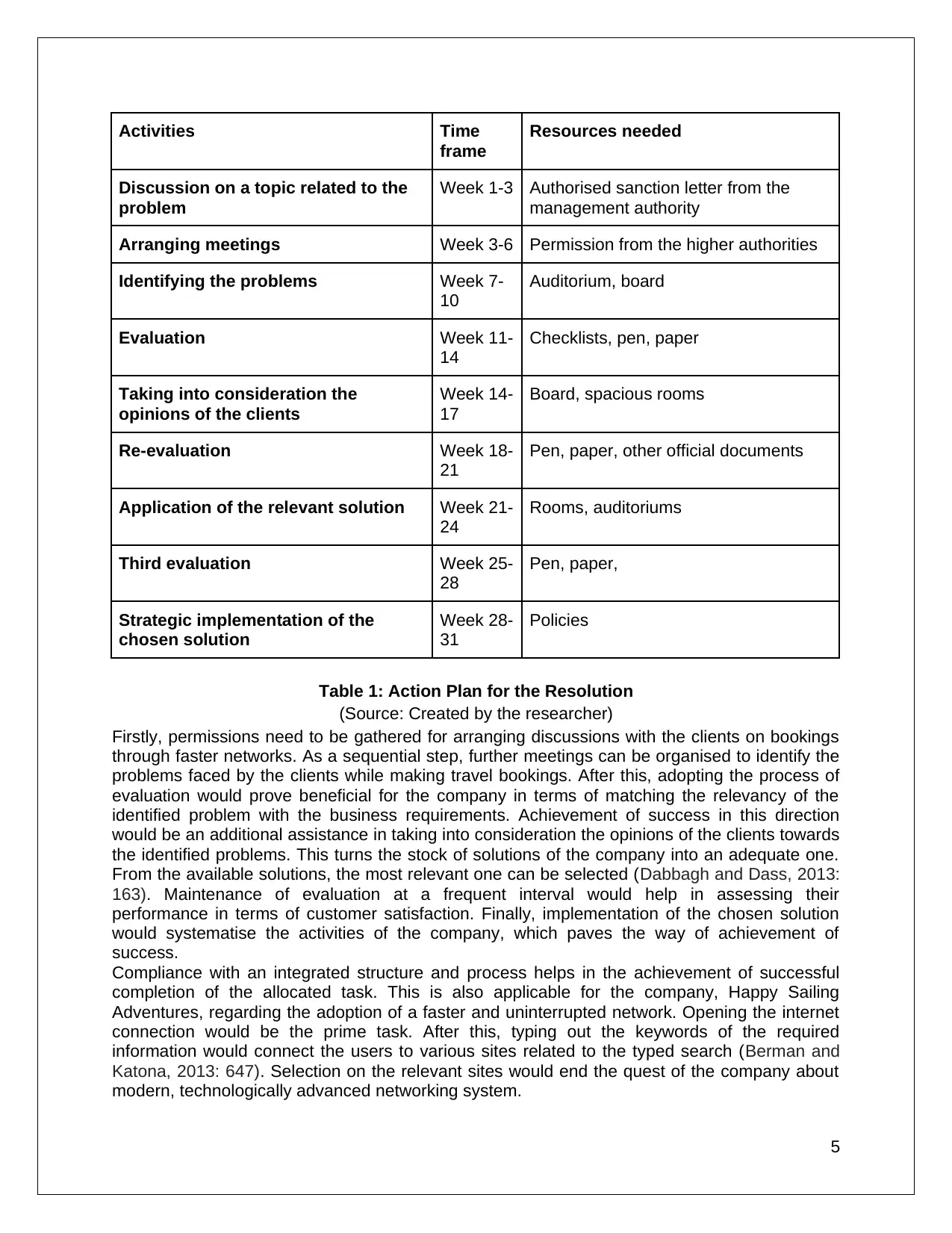
Activities Time
frame
Resources needed
Discussion on a topic related to the
problem
Week 1-3 Authorised sanction letter from the
management authority
Arranging meetings Week 3-6 Permission from the higher authorities
Identifying the problems Week 7-
10
Auditorium, board
Evaluation Week 11-
14
Checklists, pen, paper
Taking into consideration the
opinions of the clients
Week 14-
17
Board, spacious rooms
Re-evaluation Week 18-
21
Pen, paper, other official documents
Application of the relevant solution Week 21-
24
Rooms, auditoriums
Third evaluation Week 25-
28
Pen, paper,
Strategic implementation of the
chosen solution
Week 28-
31
Policies
Table 1: Action Plan for the Resolution
(Source: Created by the researcher)
Firstly, permissions need to be gathered for arranging discussions with the clients on bookings
through faster networks. As a sequential step, further meetings can be organised to identify the
problems faced by the clients while making travel bookings. After this, adopting the process of
evaluation would prove beneficial for the company in terms of matching the relevancy of the
identified problem with the business requirements. Achievement of success in this direction
would be an additional assistance in taking into consideration the opinions of the clients towards
the identified problems. This turns the stock of solutions of the company into an adequate one.
From the available solutions, the most relevant one can be selected (Dabbagh and Dass, 2013:
163). Maintenance of evaluation at a frequent interval would help in assessing their
performance in terms of customer satisfaction. Finally, implementation of the chosen solution
would systematise the activities of the company, which paves the way of achievement of
success.
Compliance with an integrated structure and process helps in the achievement of successful
completion of the allocated task. This is also applicable for the company, Happy Sailing
Adventures, regarding the adoption of a faster and uninterrupted network. Opening the internet
connection would be the prime task. After this, typing out the keywords of the required
information would connect the users to various sites related to the typed search (Berman and
Katona, 2013: 647). Selection on the relevant sites would end the quest of the company about
modern, technologically advanced networking system.
5
frame
Resources needed
Discussion on a topic related to the
problem
Week 1-3 Authorised sanction letter from the
management authority
Arranging meetings Week 3-6 Permission from the higher authorities
Identifying the problems Week 7-
10
Auditorium, board
Evaluation Week 11-
14
Checklists, pen, paper
Taking into consideration the
opinions of the clients
Week 14-
17
Board, spacious rooms
Re-evaluation Week 18-
21
Pen, paper, other official documents
Application of the relevant solution Week 21-
24
Rooms, auditoriums
Third evaluation Week 25-
28
Pen, paper,
Strategic implementation of the
chosen solution
Week 28-
31
Policies
Table 1: Action Plan for the Resolution
(Source: Created by the researcher)
Firstly, permissions need to be gathered for arranging discussions with the clients on bookings
through faster networks. As a sequential step, further meetings can be organised to identify the
problems faced by the clients while making travel bookings. After this, adopting the process of
evaluation would prove beneficial for the company in terms of matching the relevancy of the
identified problem with the business requirements. Achievement of success in this direction
would be an additional assistance in taking into consideration the opinions of the clients towards
the identified problems. This turns the stock of solutions of the company into an adequate one.
From the available solutions, the most relevant one can be selected (Dabbagh and Dass, 2013:
163). Maintenance of evaluation at a frequent interval would help in assessing their
performance in terms of customer satisfaction. Finally, implementation of the chosen solution
would systematise the activities of the company, which paves the way of achievement of
success.
Compliance with an integrated structure and process helps in the achievement of successful
completion of the allocated task. This is also applicable for the company, Happy Sailing
Adventures, regarding the adoption of a faster and uninterrupted network. Opening the internet
connection would be the prime task. After this, typing out the keywords of the required
information would connect the users to various sites related to the typed search (Berman and
Katona, 2013: 647). Selection on the relevant sites would end the quest of the company about
modern, technologically advanced networking system.
5
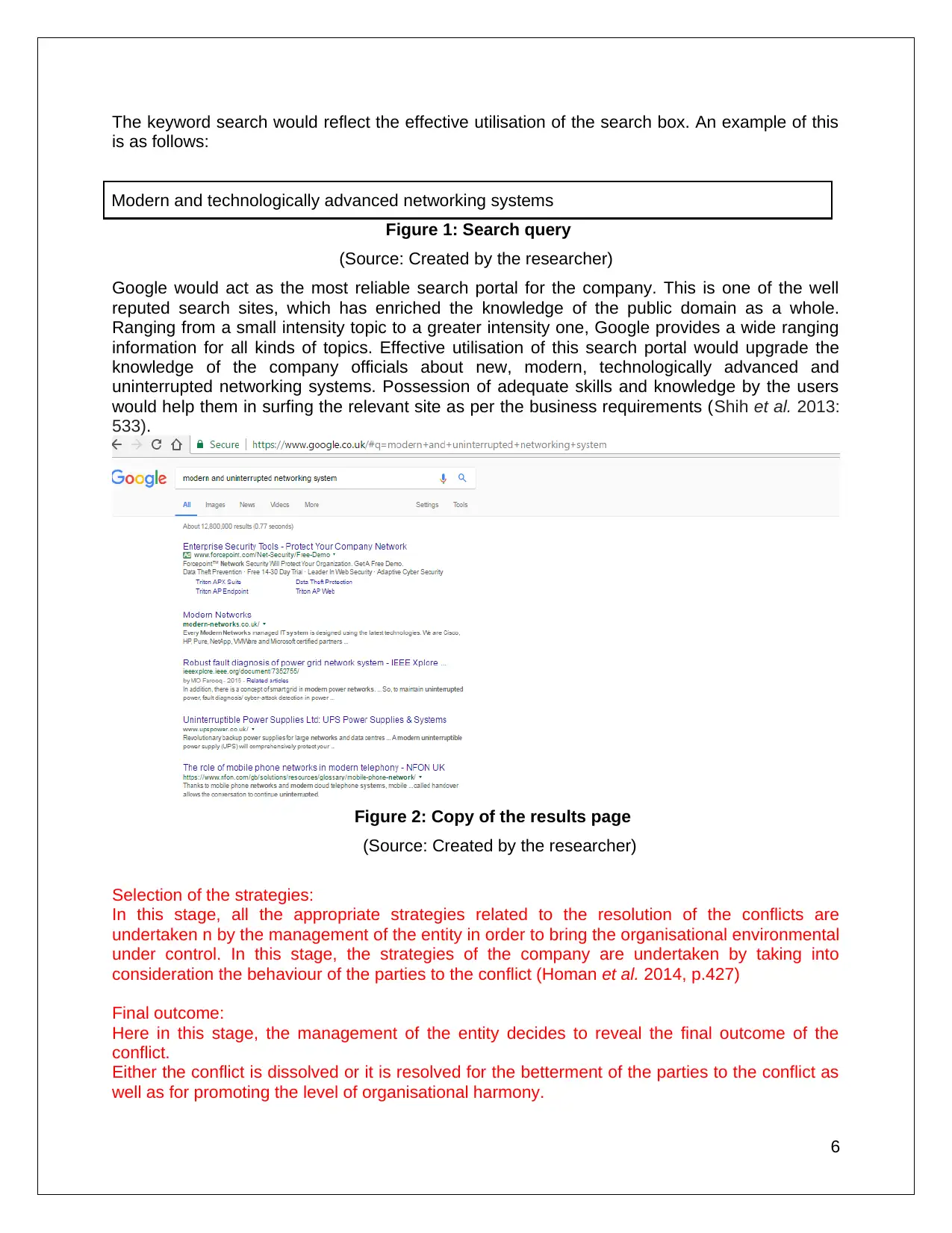
The keyword search would reflect the effective utilisation of the search box. An example of this
is as follows:
Modern and technologically advanced networking systems
Figure 1: Search query
(Source: Created by the researcher)
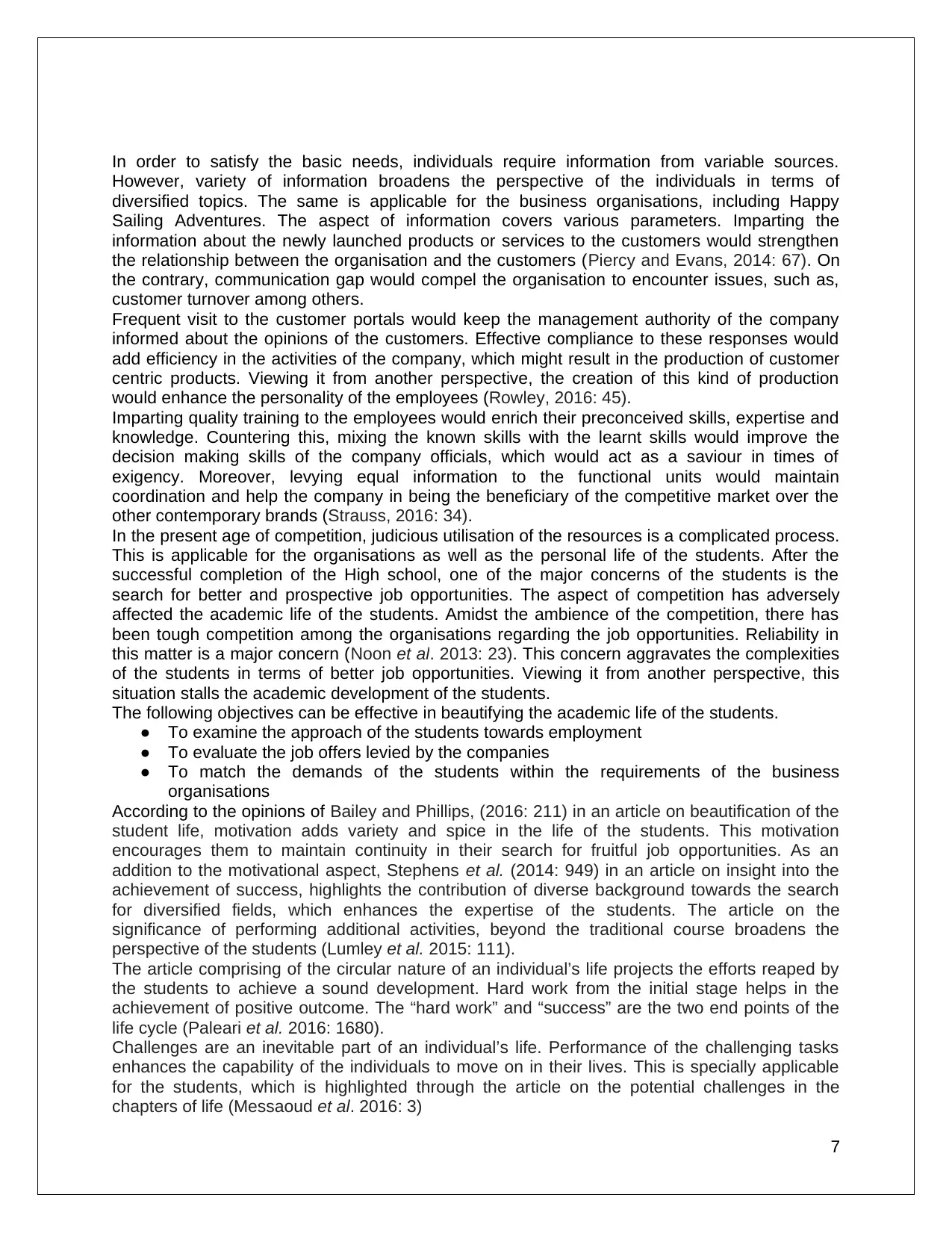
Google would act as the most reliable search portal for the company. This is one of the well
reputed search sites, which has enriched the knowledge of the public domain as a whole.
Ranging from a small intensity topic to a greater intensity one, Google provides a wide ranging
information for all kinds of topics. Effective utilisation of this search portal would upgrade the
knowledge of the company officials about new, modern, technologically advanced and
uninterrupted networking systems. Possession of adequate skills and knowledge by the users
would help them in surfing the relevant site as per the business requirements (Shih et al. 2013:
533).
Figure 2: Copy of the results page
(Source: Created by the researcher)
Selection of the strategies:
In this stage, all the appropriate strategies related to the resolution of the conflicts are
undertaken n by the management of the entity in order to bring the organisational environmental
under control. In this stage, the strategies of the company are undertaken by taking into
consideration the behaviour of the parties to the conflict (Homan et al. 2014, p.427)
Final outcome:
Here in this stage, the management of the entity decides to reveal the final outcome of the
conflict.
Either the conflict is dissolved or it is resolved for the betterment of the parties to the conflict as
well as for promoting the level of organisational harmony.
6
is as follows:
Modern and technologically advanced networking systems
Figure 1: Search query
(Source: Created by the researcher)
Google would act as the most reliable search portal for the company. This is one of the well
reputed search sites, which has enriched the knowledge of the public domain as a whole.
Ranging from a small intensity topic to a greater intensity one, Google provides a wide ranging
information for all kinds of topics. Effective utilisation of this search portal would upgrade the
knowledge of the company officials about new, modern, technologically advanced and
uninterrupted networking systems. Possession of adequate skills and knowledge by the users
would help them in surfing the relevant site as per the business requirements (Shih et al. 2013:
533).
Figure 2: Copy of the results page
(Source: Created by the researcher)
Selection of the strategies:
In this stage, all the appropriate strategies related to the resolution of the conflicts are
undertaken n by the management of the entity in order to bring the organisational environmental
under control. In this stage, the strategies of the company are undertaken by taking into
consideration the behaviour of the parties to the conflict (Homan et al. 2014, p.427)
Final outcome:
Here in this stage, the management of the entity decides to reveal the final outcome of the
conflict.
Either the conflict is dissolved or it is resolved for the betterment of the parties to the conflict as
well as for promoting the level of organisational harmony.
6
⊘ This is a preview!⊘
Do you want full access?
Subscribe today to unlock all pages.
Trusted by 1+ million students worldwide
In order to satisfy the basic needs, individuals require information from variable sources.
However, variety of information broadens the perspective of the individuals in terms of
diversified topics. The same is applicable for the business organisations, including Happy
Sailing Adventures. The aspect of information covers various parameters. Imparting the
information about the newly launched products or services to the customers would strengthen
the relationship between the organisation and the customers (Piercy and Evans, 2014: 67). On
the contrary, communication gap would compel the organisation to encounter issues, such as,
customer turnover among others.
Frequent visit to the customer portals would keep the management authority of the company
informed about the opinions of the customers. Effective compliance to these responses would
add efficiency in the activities of the company, which might result in the production of customer
centric products. Viewing it from another perspective, the creation of this kind of production
would enhance the personality of the employees (Rowley, 2016: 45).
Imparting quality training to the employees would enrich their preconceived skills, expertise and
knowledge. Countering this, mixing the known skills with the learnt skills would improve the
decision making skills of the company officials, which would act as a saviour in times of
exigency. Moreover, levying equal information to the functional units would maintain
coordination and help the company in being the beneficiary of the competitive market over the
other contemporary brands (Strauss, 2016: 34).
In the present age of competition, judicious utilisation of the resources is a complicated process.
This is applicable for the organisations as well as the personal life of the students. After the
successful completion of the High school, one of the major concerns of the students is the
search for better and prospective job opportunities. The aspect of competition has adversely
affected the academic life of the students. Amidst the ambience of the competition, there has
been tough competition among the organisations regarding the job opportunities. Reliability in
this matter is a major concern (Noon et al. 2013: 23). This concern aggravates the complexities
of the students in terms of better job opportunities. Viewing it from another perspective, this
situation stalls the academic development of the students.
The following objectives can be effective in beautifying the academic life of the students.
● To examine the approach of the students towards employment
● To evaluate the job offers levied by the companies
● To match the demands of the students within the requirements of the business
organisations
According to the opinions of Bailey and Phillips, (2016: 211) in an article on beautification of the
student life, motivation adds variety and spice in the life of the students. This motivation
encourages them to maintain continuity in their search for fruitful job opportunities. As an
addition to the motivational aspect, Stephens et al. (2014: 949) in an article on insight into the
achievement of success, highlights the contribution of diverse background towards the search
for diversified fields, which enhances the expertise of the students. The article on the
significance of performing additional activities, beyond the traditional course broadens the
perspective of the students (Lumley et al. 2015: 111).
The article comprising of the circular nature of an individual’s life projects the efforts reaped by
the students to achieve a sound development. Hard work from the initial stage helps in the
achievement of positive outcome. The “hard work” and “success” are the two end points of the
life cycle (Paleari et al. 2016: 1680).
Challenges are an inevitable part of an individual’s life. Performance of the challenging tasks
enhances the capability of the individuals to move on in their lives. This is specially applicable
for the students, which is highlighted through the article on the potential challenges in the
chapters of life (Messaoud et al. 2016: 3)
7
However, variety of information broadens the perspective of the individuals in terms of
diversified topics. The same is applicable for the business organisations, including Happy
Sailing Adventures. The aspect of information covers various parameters. Imparting the
information about the newly launched products or services to the customers would strengthen
the relationship between the organisation and the customers (Piercy and Evans, 2014: 67). On
the contrary, communication gap would compel the organisation to encounter issues, such as,
customer turnover among others.
Frequent visit to the customer portals would keep the management authority of the company
informed about the opinions of the customers. Effective compliance to these responses would
add efficiency in the activities of the company, which might result in the production of customer
centric products. Viewing it from another perspective, the creation of this kind of production
would enhance the personality of the employees (Rowley, 2016: 45).
Imparting quality training to the employees would enrich their preconceived skills, expertise and
knowledge. Countering this, mixing the known skills with the learnt skills would improve the
decision making skills of the company officials, which would act as a saviour in times of
exigency. Moreover, levying equal information to the functional units would maintain
coordination and help the company in being the beneficiary of the competitive market over the
other contemporary brands (Strauss, 2016: 34).
In the present age of competition, judicious utilisation of the resources is a complicated process.
This is applicable for the organisations as well as the personal life of the students. After the
successful completion of the High school, one of the major concerns of the students is the
search for better and prospective job opportunities. The aspect of competition has adversely
affected the academic life of the students. Amidst the ambience of the competition, there has
been tough competition among the organisations regarding the job opportunities. Reliability in
this matter is a major concern (Noon et al. 2013: 23). This concern aggravates the complexities
of the students in terms of better job opportunities. Viewing it from another perspective, this
situation stalls the academic development of the students.
The following objectives can be effective in beautifying the academic life of the students.
● To examine the approach of the students towards employment
● To evaluate the job offers levied by the companies
● To match the demands of the students within the requirements of the business
organisations
According to the opinions of Bailey and Phillips, (2016: 211) in an article on beautification of the
student life, motivation adds variety and spice in the life of the students. This motivation
encourages them to maintain continuity in their search for fruitful job opportunities. As an
addition to the motivational aspect, Stephens et al. (2014: 949) in an article on insight into the
achievement of success, highlights the contribution of diverse background towards the search
for diversified fields, which enhances the expertise of the students. The article on the
significance of performing additional activities, beyond the traditional course broadens the
perspective of the students (Lumley et al. 2015: 111).
The article comprising of the circular nature of an individual’s life projects the efforts reaped by
the students to achieve a sound development. Hard work from the initial stage helps in the
achievement of positive outcome. The “hard work” and “success” are the two end points of the
life cycle (Paleari et al. 2016: 1680).
Challenges are an inevitable part of an individual’s life. Performance of the challenging tasks
enhances the capability of the individuals to move on in their lives. This is specially applicable
for the students, which is highlighted through the article on the potential challenges in the
chapters of life (Messaoud et al. 2016: 3)
7
Paraphrase This Document
Need a fresh take? Get an instant paraphrase of this document with our AI Paraphraser
Undertaking quantitative methodology would prove appropriate in this direction. Within this,
conducting survey on 10 students, who are in search of better employment opportunities, would
be an additional assistance in solving the problem. As a sequential step, analysing the
anticipated findings of the survey, through tables, charts and graphs would aid in carrying out
the project in a descriptive manner. The in-depth researcher would further be assistance in
deducing relevant conclusions (Flick, 2015: 21). During the process of the survey, the
researcher would abide by the ethical issues , which would safeguard the individual rights of the
students.
With the advent of civilisation, the organisations have undergone a radical transformation in
their performance. The credit for this goes to the social media, which has turned the mere
audience into the active customers. Specifically, this medium has enhanced the customer
satisfaction for the organisations. Along with these benefits, the social media has compelled the
organisations to encounter issues, such as loss of the important official data. This reflects the
overpowering of the hackers, which makes the IT parameter insecure (Aral et al. 2013: 8). This
reflects the need for privacy software, which ensures the safety and security of the personal
data and information of the employees as well as the customers. Effective adherence to the
Data Protection Act (1998) helps the organisations to achieve positive outcome in this direction.
Along with this, ignoring unwanted or warned sites strengthens the security of the official
matters.
Email is a cost effective means of conveying information from one person to another. The
presentation of the subject matter in a precise format helps the receiver to understand the
requirements of the sender and take necessary actions (Bawm and Nath, 2014: 254).
Possession of a faster and uninterrupted network connection proves helpful for the
organisations in delivering the necessary information within a short time. This action helps in the
achievement of successful completion of the allocated tasks. Email provides the opportunity to
attach documents along with the letter, which saves a lot of time of the organisations.
Possession of inadequate skills in terms of email usage is a loss for the organisations. This
situation results in missing the targets, which degrades the reputation of the organisations. Slow
internet connection deprives the shareholders and stakeholders of the company of important
notifications. Replying to unauthorised emails or emails from unknown sources entraps the
organisation within the power of the hackers (Hartemo and Hartemo, 2016: 216). Sometimes
the attachments sent with the emails consist of virus, which exempts the organisations from
essential information.
Conclusion
This assignment emerges successful in providing an insight into various conflicts and their
management. This action has been carried out through several parameters. Identification of the
problem is a crucial parameter, which helps in the achievement of effective resolutions. As a
sequential step, application of a methodology assists in systematic progression with the
research project. One of the other parameters of the assignment is on the speculation of the
various perspectives of the parameters, which helps in deducing relevant conclusions and
results in the suggestion of appropriate recommendations.
8
conducting survey on 10 students, who are in search of better employment opportunities, would
be an additional assistance in solving the problem. As a sequential step, analysing the
anticipated findings of the survey, through tables, charts and graphs would aid in carrying out
the project in a descriptive manner. The in-depth researcher would further be assistance in
deducing relevant conclusions (Flick, 2015: 21). During the process of the survey, the
researcher would abide by the ethical issues , which would safeguard the individual rights of the
students.
With the advent of civilisation, the organisations have undergone a radical transformation in
their performance. The credit for this goes to the social media, which has turned the mere
audience into the active customers. Specifically, this medium has enhanced the customer
satisfaction for the organisations. Along with these benefits, the social media has compelled the
organisations to encounter issues, such as loss of the important official data. This reflects the
overpowering of the hackers, which makes the IT parameter insecure (Aral et al. 2013: 8). This
reflects the need for privacy software, which ensures the safety and security of the personal
data and information of the employees as well as the customers. Effective adherence to the
Data Protection Act (1998) helps the organisations to achieve positive outcome in this direction.
Along with this, ignoring unwanted or warned sites strengthens the security of the official
matters.
Email is a cost effective means of conveying information from one person to another. The
presentation of the subject matter in a precise format helps the receiver to understand the
requirements of the sender and take necessary actions (Bawm and Nath, 2014: 254).
Possession of a faster and uninterrupted network connection proves helpful for the
organisations in delivering the necessary information within a short time. This action helps in the
achievement of successful completion of the allocated tasks. Email provides the opportunity to
attach documents along with the letter, which saves a lot of time of the organisations.
Possession of inadequate skills in terms of email usage is a loss for the organisations. This
situation results in missing the targets, which degrades the reputation of the organisations. Slow
internet connection deprives the shareholders and stakeholders of the company of important
notifications. Replying to unauthorised emails or emails from unknown sources entraps the
organisation within the power of the hackers (Hartemo and Hartemo, 2016: 216). Sometimes
the attachments sent with the emails consist of virus, which exempts the organisations from
essential information.
Conclusion
This assignment emerges successful in providing an insight into various conflicts and their
management. This action has been carried out through several parameters. Identification of the
problem is a crucial parameter, which helps in the achievement of effective resolutions. As a
sequential step, application of a methodology assists in systematic progression with the
research project. One of the other parameters of the assignment is on the speculation of the
various perspectives of the parameters, which helps in deducing relevant conclusions and
results in the suggestion of appropriate recommendations.
8
Reference List
Aral, S., Dellarocas, C. and Godes, D., (2013). Introduction to the special issue—social media
and business transformation: a framework for research. Information Systems Research, 24(1),
pp.3-13.
Ash, R.P., (2014). Real Analysis and Probability: Solutions to Problems. Massachusetts:
Academic press.
Bailey, T.H. and Phillips, L.J., (2016). The influence of motivation and adaptation on students’
subjective well-being, meaning in life and academic performance. Higher Education Research &
Development, 35(2), pp.201-216.
Bardach, E. and Patashnik, E.M., (2015). A practical guide for policy analysis: The eightfold
path to more effective problem solving. US: CQ press.
Bawm, Z.L. and Nath, R.P.D., (2014), December. A Conceptual Model for effective email
marketing. In Computer and Information Technology (ICCIT), 2014 17th International
Conference on Computer and technology, 17(2), pp. 250-256
Berman, R. and Katona, Z., (2013). The role of search engine optimization in search marketing.
Marketing Science, 32(4), pp.644-651.
Dabbagh, N. and Dass, S., (2013). Case problems for problem-based pedagogical approaches:
A comparative analysis. Computers & Education, 64, pp.161-174.
Ericsson, K.A. and Hastie, R., (2013). Contemporary approaches to the study of thinleing and
problem-solving. Thinking and problem solving, 2(3), pp.37-50.
Flick, U., (2015). Introducing research methodology: A beginner's guide to doing a research
project. London: Sage.
Hartemo, M. and Hartemo, M., (2016). Email marketing in the era of the empowered consumer.
Journal of Research in Interactive Marketing, 10(3), pp.212-230.
Lumley, S., Ward, P., Roberts, L. and Mann, J.P., (2015). Self-reported extracurricular activity,
academic success, and quality of life in UK medical students. International journal of medical
education, 6(5), p.111.
Messaoud, B.I., Guennoun, K., Wahbi, M. and Sadik, M., (2016), October. Advanced Persistent
Threat: New analysis driven by life cycle phases and their challenges. In Advanced
Communication Systems and Information Security (ACOSIS), International Conference on (pp.
1-6)
9
Aral, S., Dellarocas, C. and Godes, D., (2013). Introduction to the special issue—social media
and business transformation: a framework for research. Information Systems Research, 24(1),
pp.3-13.
Ash, R.P., (2014). Real Analysis and Probability: Solutions to Problems. Massachusetts:
Academic press.
Bailey, T.H. and Phillips, L.J., (2016). The influence of motivation and adaptation on students’
subjective well-being, meaning in life and academic performance. Higher Education Research &
Development, 35(2), pp.201-216.
Bardach, E. and Patashnik, E.M., (2015). A practical guide for policy analysis: The eightfold
path to more effective problem solving. US: CQ press.
Bawm, Z.L. and Nath, R.P.D., (2014), December. A Conceptual Model for effective email
marketing. In Computer and Information Technology (ICCIT), 2014 17th International
Conference on Computer and technology, 17(2), pp. 250-256
Berman, R. and Katona, Z., (2013). The role of search engine optimization in search marketing.
Marketing Science, 32(4), pp.644-651.
Dabbagh, N. and Dass, S., (2013). Case problems for problem-based pedagogical approaches:
A comparative analysis. Computers & Education, 64, pp.161-174.
Ericsson, K.A. and Hastie, R., (2013). Contemporary approaches to the study of thinleing and
problem-solving. Thinking and problem solving, 2(3), pp.37-50.
Flick, U., (2015). Introducing research methodology: A beginner's guide to doing a research
project. London: Sage.
Hartemo, M. and Hartemo, M., (2016). Email marketing in the era of the empowered consumer.
Journal of Research in Interactive Marketing, 10(3), pp.212-230.
Lumley, S., Ward, P., Roberts, L. and Mann, J.P., (2015). Self-reported extracurricular activity,
academic success, and quality of life in UK medical students. International journal of medical
education, 6(5), p.111.
Messaoud, B.I., Guennoun, K., Wahbi, M. and Sadik, M., (2016), October. Advanced Persistent
Threat: New analysis driven by life cycle phases and their challenges. In Advanced
Communication Systems and Information Security (ACOSIS), International Conference on (pp.
1-6)
9
⊘ This is a preview!⊘
Do you want full access?
Subscribe today to unlock all pages.
Trusted by 1+ million students worldwide
Mitchell, G., (2013). Selecting the best theory to implement planned change: Improving the
workplace requires staff to be involved and innovations to be maintained. Gary Mitchell
discusses the theories that can help achieve this. Nursing Management, 20(1), pp.32-37.
Noon, M., Blyton, P. and Morrell, K., (2013). The realities of work: Experiencing work and
employment in contemporary society. UK: Palgrave Macmillan.
Paleari, M., Lavagna, M. and Campioli, A., (2016). The assessment of the relevance of building
components and life phases for the environmental profile of nearly zero-energy buildings: life
cycle assessment of a multifamily building in Italy. The International Journal of Life Cycle
Assessment, 21(12), pp.1667-1690.
Piercy, N. and Evans, M., (2014). Managing marketing information (rle marketing) (Vol. 17).
Abingdon: Routledge.
Rowley, J., (2016). Information marketing. Abingdon: Routledge.
Saundry, R.A., Latreille, P., Dickens, L., Irvine, C., Teague, P., Urwin, P. and Wibberley, G.,
(2014). Reframing Resolution-Managing Conflict and Resolving Individual Employment Disputes
in the Contemporary Workplace. Acas Policy Discussion Papers, pp.1-21.
Shih, B.Y., Chen, C.Y. and Chen, Z.S., (2013). An empirical study of an internet marketing
strategy for search engine optimization. Human Factors and Ergonomics in Manufacturing &
Service Industries, 23(6), pp.528-540.
Stephens, N.M., Hamedani, M.G. and Destin, M., (2014). Closing the social-class achievement
gap a difference-education intervention improves first-generation students’ academic
performance and all students’ college transition. Psychological science, 25(4), pp.943-953.
Strauss, J., (2016). E-marketing. Abingdon: Routledge.
Chan, J.C., Sit, E.N. and Lau, W.M., (2014). Conflict management styles, emotional intelligence
and implicit theories of personality of nursing students: A cross-sectional study. Nurse education
today, 34(6), pp.934-939.
Homan, A.C., Redeker, M., de Vries, R.E., Ayoko, O.B., Ashkanasy, N.M. and Jehn, K.A.,
(2014). Intragroup conflict and the interpersonal leadership circumplex: Matching leadership
behaviors to conflict types. Handbook of Conflict Management Research, 427.
10
workplace requires staff to be involved and innovations to be maintained. Gary Mitchell
discusses the theories that can help achieve this. Nursing Management, 20(1), pp.32-37.
Noon, M., Blyton, P. and Morrell, K., (2013). The realities of work: Experiencing work and
employment in contemporary society. UK: Palgrave Macmillan.
Paleari, M., Lavagna, M. and Campioli, A., (2016). The assessment of the relevance of building
components and life phases for the environmental profile of nearly zero-energy buildings: life
cycle assessment of a multifamily building in Italy. The International Journal of Life Cycle
Assessment, 21(12), pp.1667-1690.
Piercy, N. and Evans, M., (2014). Managing marketing information (rle marketing) (Vol. 17).
Abingdon: Routledge.
Rowley, J., (2016). Information marketing. Abingdon: Routledge.
Saundry, R.A., Latreille, P., Dickens, L., Irvine, C., Teague, P., Urwin, P. and Wibberley, G.,
(2014). Reframing Resolution-Managing Conflict and Resolving Individual Employment Disputes
in the Contemporary Workplace. Acas Policy Discussion Papers, pp.1-21.
Shih, B.Y., Chen, C.Y. and Chen, Z.S., (2013). An empirical study of an internet marketing
strategy for search engine optimization. Human Factors and Ergonomics in Manufacturing &
Service Industries, 23(6), pp.528-540.
Stephens, N.M., Hamedani, M.G. and Destin, M., (2014). Closing the social-class achievement
gap a difference-education intervention improves first-generation students’ academic
performance and all students’ college transition. Psychological science, 25(4), pp.943-953.
Strauss, J., (2016). E-marketing. Abingdon: Routledge.
Chan, J.C., Sit, E.N. and Lau, W.M., (2014). Conflict management styles, emotional intelligence
and implicit theories of personality of nursing students: A cross-sectional study. Nurse education
today, 34(6), pp.934-939.
Homan, A.C., Redeker, M., de Vries, R.E., Ayoko, O.B., Ashkanasy, N.M. and Jehn, K.A.,
(2014). Intragroup conflict and the interpersonal leadership circumplex: Matching leadership
behaviors to conflict types. Handbook of Conflict Management Research, 427.
10

1 out of 10


Related Documents


Your All-in-One AI-Powered Toolkit for Academic Success.
+13062052269
info@desklib.com
Available 24*7 on WhatsApp / Email
![[object Object]](/_next/static/media/star-bottom.7253800d.svg)
Unlock your academic potential
Copyright © 2020–2026 A2Z Services. All Rights Reserved. Developed and managed by ZUCOL.