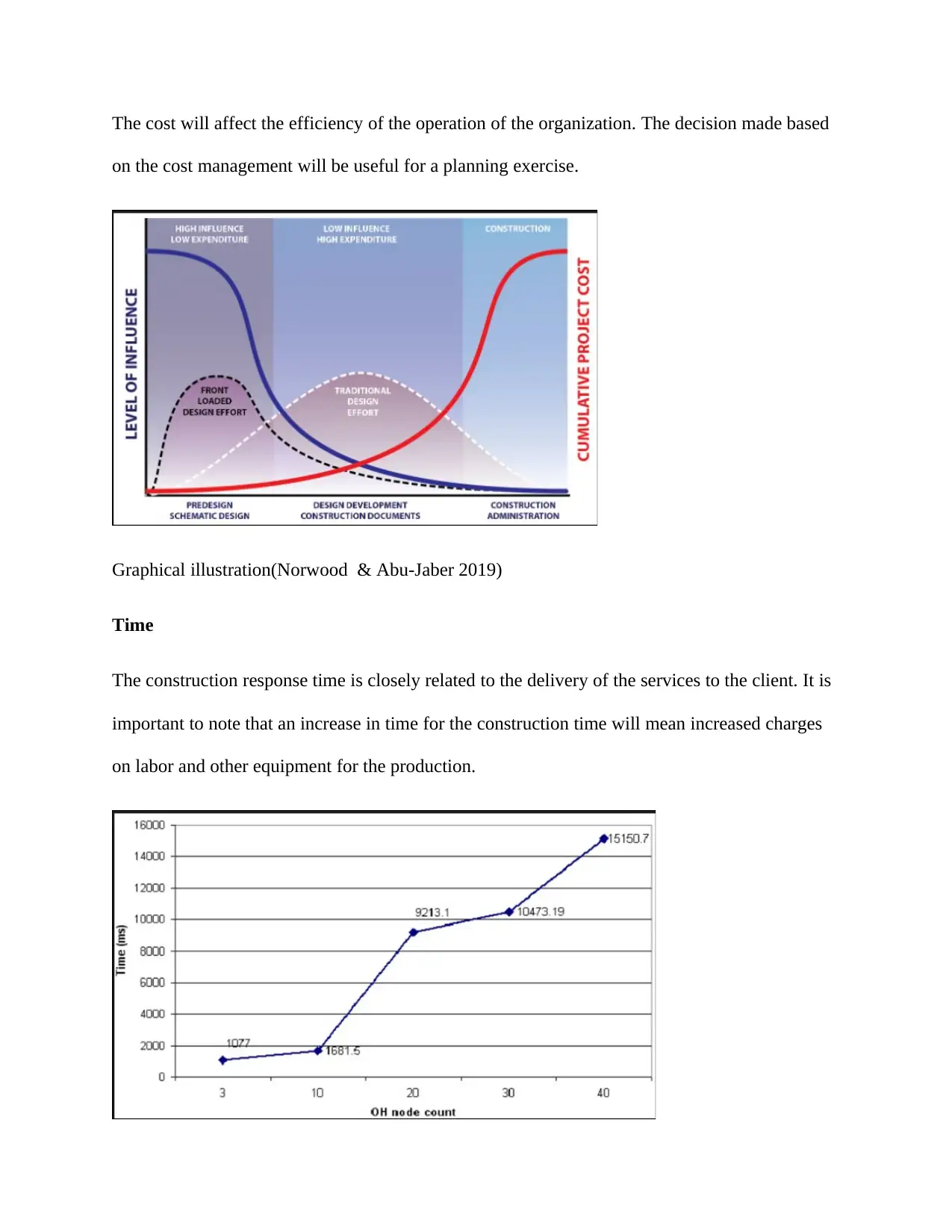
Report on Construction Technology: Multi-Storey Building Analysis
VerifiedAdded on 2023/04/04
|15
|2187
|311
Report
AI Summary
This comprehensive report delves into the intricacies of multi-storey building construction, covering a wide array of topics essential for civil engineering students. It begins by exploring various construction technologies, including dewatering systems like eductor wells and displacement piles, and then moves on to different basement construction methods such as poured concrete and masonry wall basements, along with their waterproofing techniques. The report also examines the environmental impact of multi-storey buildings and strategies to mitigate these effects, including the use of wood construction. A significant portion is dedicated to cladding systems, analyzing the properties of wood and stone cladding, their environmental impacts, and the advantages and disadvantages of different cladding materials. Furthermore, the report addresses waterproofing and fire rating of panels, cost-benefit analysis, and recommendations to clients based on factors like durability, aesthetic value, and maintenance costs. It also covers site access, material handling, and quality improvement strategies. The report concludes with a discussion on building durability, safety, and construction season factors, offering valuable insights for professionals in the construction industry.
CONSTRUCTION TECHNOLOGY: MULTI STOREY
By Name
Course
Instructor
Institution
Location
Date
By Name
Course
Instructor
Institution
Location
Date
Paraphrase This Document
Need a fresh take? Get an instant paraphrase of this document with our AI Paraphraser

Introduction
It is important to note that the construction industry deals with very diverse materials for the
processes of the construction other than dealing with the specific challenges. Depending on the
type of the requirement of the construction, materials will be selected based best quality.
Dewatering system
Eductor wells: this is a type of dewatering for regulating the pressures of the pore water in
materials characterized by low permeability like clay areas. In this type, there is a circulation of
the water under high pressure to facilitate drainage by providing a vacuum by the circulation past
the eductors.
- This dewatering method is of more importance as it facilitates faster drainage.
Displacement piles: piling harmer is used in this case to hammer the precast through the ground
causing earth displacement.
- It helps in property underpinning for the properties affected by subsidence cases resulting
in instability
Types of basement construction
Poured concrete wall basements: this is the commonly used method of basement construction
since the concrete used in the construction is highly resistant to fire.
Masonry wall basements: in this type of basement construction, block units of masonry are
used to build the walls. This construction type requires a comprehensive reinforcement as there
are numerous points of connections so as to make the walls waterproof(Negro & Tornaghi 2017).
It is important to note that the construction industry deals with very diverse materials for the
processes of the construction other than dealing with the specific challenges. Depending on the
type of the requirement of the construction, materials will be selected based best quality.
Dewatering system
Eductor wells: this is a type of dewatering for regulating the pressures of the pore water in
materials characterized by low permeability like clay areas. In this type, there is a circulation of
the water under high pressure to facilitate drainage by providing a vacuum by the circulation past
the eductors.
- This dewatering method is of more importance as it facilitates faster drainage.
Displacement piles: piling harmer is used in this case to hammer the precast through the ground
causing earth displacement.
- It helps in property underpinning for the properties affected by subsidence cases resulting
in instability
Types of basement construction
Poured concrete wall basements: this is the commonly used method of basement construction
since the concrete used in the construction is highly resistant to fire.
Masonry wall basements: in this type of basement construction, block units of masonry are
used to build the walls. This construction type requires a comprehensive reinforcement as there
are numerous points of connections so as to make the walls waterproof(Negro & Tornaghi 2017).

- The spaces within the unit blocks are moderate and therefore the walls are somehow
resistant to water.
Waterproofing: this is the process of in the construction of a storey building where an
impervious material layer is applied to prevent water seepage into the building as a result making
the structure waterproof.
The two types of concrete basement walls waterproofing areas discussed below;
Cementitious waterproofing: this type is usually applied in wet conditions like bathrooms and
toilets of the multi-storey building. It is always stiff and usually not subjected to sunlight and
weathering. The materials that are generally used on waterproofing are easily applicable to the
construction.
Membrane type waterproofing: this waterproofing method involves self-adhesive membrane
waterproofing and the torch seal. Torch seal is the most common waterproofing method applied
at the site generally for podium and external development. When weighed to the self-adhesive
membrane waterproofing type, it is found to be long-lasting and its development saves on
cost(Herbsommer & Haroun 2016).
Reducing the effect of the multi-storey building on the environment
The effects of the multi-storey building to the environment can be reduced by wood construction
method where the structural part of the frame of the load-bearing is a product of wood. The wood
construction of storey building is more beneficial to the environment as it reduces the emissions
of the greenhouse gasses such as carbon dioxide and also reduces the consumption of energy in
the manufacturing process of the materials for construction. Wood construction facilitates a
resistant to water.
Waterproofing: this is the process of in the construction of a storey building where an
impervious material layer is applied to prevent water seepage into the building as a result making
the structure waterproof.
The two types of concrete basement walls waterproofing areas discussed below;
Cementitious waterproofing: this type is usually applied in wet conditions like bathrooms and
toilets of the multi-storey building. It is always stiff and usually not subjected to sunlight and
weathering. The materials that are generally used on waterproofing are easily applicable to the
construction.
Membrane type waterproofing: this waterproofing method involves self-adhesive membrane
waterproofing and the torch seal. Torch seal is the most common waterproofing method applied
at the site generally for podium and external development. When weighed to the self-adhesive
membrane waterproofing type, it is found to be long-lasting and its development saves on
cost(Herbsommer & Haroun 2016).
Reducing the effect of the multi-storey building on the environment
The effects of the multi-storey building to the environment can be reduced by wood construction
method where the structural part of the frame of the load-bearing is a product of wood. The wood
construction of storey building is more beneficial to the environment as it reduces the emissions
of the greenhouse gasses such as carbon dioxide and also reduces the consumption of energy in
the manufacturing process of the materials for construction. Wood construction facilitates a
⊘ This is a preview!⊘
Do you want full access?
Subscribe today to unlock all pages.

Trusted by 1+ million students worldwide

reduction on the materials that are generally used in construction and therefore reduce the
amount of waste that results from the construction sector(Chen et al 2016).
Characteristics of the cladding system
Properties of cladding materials
Wood cladding
Wood is the most commonly used cladding material. It is generally preferred due to its
overwhelming properties. These properties include the durability, pretty light in weight,
insulation, and reduced environmental effects as discussed below.
Friendly to the environment: wood is a biodegradable and a renewable source of construction
material, therefore, it does not produce a lot of pollutants to the environment. Materials like
metals and concrete which are used in cladding consume a lot of energy during their production
and manufacturing processes. This makes wood cladding to remain the best cladding method in
construction(Herbsommer & Haroun 2016).
Light in weight: ferrying of timber from place to place is made easy since wood is a fairly light
material. This makes timber cladding more appealing than other cladding methods. The
installation requirements are also substandard not as in other cladding materials such as metals
since it is of less weight.
Durability: this type of cladding is long lasting more particularly when constructed by cedar
which is strong and also when an intermittent treatment and proper installation is done. To make
it better, timber is capable of resisting factors like heat, corrosion, pollution, and frost but can be
affected by moisture which can possibly be prevented(Liu et al 2018).
amount of waste that results from the construction sector(Chen et al 2016).
Characteristics of the cladding system
Properties of cladding materials
Wood cladding
Wood is the most commonly used cladding material. It is generally preferred due to its
overwhelming properties. These properties include the durability, pretty light in weight,
insulation, and reduced environmental effects as discussed below.
Friendly to the environment: wood is a biodegradable and a renewable source of construction
material, therefore, it does not produce a lot of pollutants to the environment. Materials like
metals and concrete which are used in cladding consume a lot of energy during their production
and manufacturing processes. This makes wood cladding to remain the best cladding method in
construction(Herbsommer & Haroun 2016).
Light in weight: ferrying of timber from place to place is made easy since wood is a fairly light
material. This makes timber cladding more appealing than other cladding methods. The
installation requirements are also substandard not as in other cladding materials such as metals
since it is of less weight.
Durability: this type of cladding is long lasting more particularly when constructed by cedar
which is strong and also when an intermittent treatment and proper installation is done. To make
it better, timber is capable of resisting factors like heat, corrosion, pollution, and frost but can be
affected by moisture which can possibly be prevented(Liu et al 2018).
Paraphrase This Document
Need a fresh take? Get an instant paraphrase of this document with our AI Paraphraser

Insulating property: timber is an insulation material by nature and for that reason, it will help in
the retention of heat during the cold winter seasons when used in cladding construction.
Stone cladding
With stone cladding, there are various benefits delivered based on the characteristics or features
which include structural stability, installation, durability, versatility, and cost-effectiveness as
illustrated below;
Structural stability: natural stone cladding is not as heavy as other cladding structures like
metal. It provides support and therefore enhances the stability of the building(Alat et al 2016).
Installation: the installation property of the natural stone cladding is very easy making the
operations on stone cladding to be easy too.
Durability: stone is a stronger material compared to timber therefore cladding constructed of
stone is likely to persist for a longer period of time as the stone is also resistance to factors like
corrosion, heat, and moisture. The stone cladding construction only needs protection by the Tier
sealer.
Cost-effective: the costs that may be incurred on the installations of stone cladding ant the
transportation are less and also the sills which may be required are not technical.
Impacts of Cladding Materials to the Environment
Wood
Timber which is used as a cladding material in construction is renewable.
the retention of heat during the cold winter seasons when used in cladding construction.
Stone cladding
With stone cladding, there are various benefits delivered based on the characteristics or features
which include structural stability, installation, durability, versatility, and cost-effectiveness as
illustrated below;
Structural stability: natural stone cladding is not as heavy as other cladding structures like
metal. It provides support and therefore enhances the stability of the building(Alat et al 2016).
Installation: the installation property of the natural stone cladding is very easy making the
operations on stone cladding to be easy too.
Durability: stone is a stronger material compared to timber therefore cladding constructed of
stone is likely to persist for a longer period of time as the stone is also resistance to factors like
corrosion, heat, and moisture. The stone cladding construction only needs protection by the Tier
sealer.
Cost-effective: the costs that may be incurred on the installations of stone cladding ant the
transportation are less and also the sills which may be required are not technical.
Impacts of Cladding Materials to the Environment
Wood
Timber which is used as a cladding material in construction is renewable.

Timber production does not consume as much energy as other cladding materials in its
manufacturing and production processes as a result of reducing the level of carbon
dioxide emissions to the atmosphere.
In fact, trees biologically help reduce the accumulation of carbon dioxide in the
atmosphere by absorbing excess amounts.
Timber as a cladding material can possibly be recycled or re-used.
Stone
Natural stone cladding does not involve the industrial processes which may result in the
production of harmful chemicals to the environment.
The cladding of stone also does not incorporate the chemical reaction process capable of
polluting the environment
The system of installation provided currently for the stone cladding requires less energy
and the transportation of the materials have also been reduced.
Advantages and disadvantages of cladding systems
Disadvantages of cladding
Wood cladding requires painting regularly which is very expensive
The cases of fire when using fire cladding is very high
The wood being a natural material will easily rot hence regular replacement
Advantages
Cladding gives aesthetic and cool finish
Wood is a poor conductor of heat hence it will be useful in the preservation of energy.
manufacturing and production processes as a result of reducing the level of carbon
dioxide emissions to the atmosphere.
In fact, trees biologically help reduce the accumulation of carbon dioxide in the
atmosphere by absorbing excess amounts.
Timber as a cladding material can possibly be recycled or re-used.
Stone
Natural stone cladding does not involve the industrial processes which may result in the
production of harmful chemicals to the environment.
The cladding of stone also does not incorporate the chemical reaction process capable of
polluting the environment
The system of installation provided currently for the stone cladding requires less energy
and the transportation of the materials have also been reduced.
Advantages and disadvantages of cladding systems
Disadvantages of cladding
Wood cladding requires painting regularly which is very expensive
The cases of fire when using fire cladding is very high
The wood being a natural material will easily rot hence regular replacement
Advantages
Cladding gives aesthetic and cool finish
Wood is a poor conductor of heat hence it will be useful in the preservation of energy.
⊘ This is a preview!⊘
Do you want full access?
Subscribe today to unlock all pages.

Trusted by 1+ million students worldwide

Waterproofing and Fire Rating of the panels
The panels that have been made from the precast concrete are usually very highly resistant to the
effects of fire. In fact, they have zero flammability on both internal as well as internal surfaces.
Stone panels are usually required to comply with the following properties:
Integrity: They should attain the same level as the structural insulation of FRP(Chen & Yuan
2017)
Adequacy: the wood cladding can be used with reinforced concretes to ensure that they are
weatherproof.
The panels that have been made from the stone, as well as the concrete, are usually resistant to
fire.
Cost Benefits Analysis
The construction of any structure usually depends on very many factors including the size of the
structure to be constructed. The material characteristic to be used in the process of construction.
Wood is readily available hence the construction cost is not expected to be as high as such.
Similarly, the construction process by the use of stone is expected to be relatively cheaper since
the stone is readily available.
Maintenance cost
Buildings or structures that have been constructed by the use of the stone will generally need
very little maintenance. This is because they are least affected by the weather as well as fire. The
structures that have erected by the use of wood will need regular maintenance since wood is
susceptible to termite and do rot when exposed to too much moisture.
The panels that have been made from the precast concrete are usually very highly resistant to the
effects of fire. In fact, they have zero flammability on both internal as well as internal surfaces.
Stone panels are usually required to comply with the following properties:
Integrity: They should attain the same level as the structural insulation of FRP(Chen & Yuan
2017)
Adequacy: the wood cladding can be used with reinforced concretes to ensure that they are
weatherproof.
The panels that have been made from the stone, as well as the concrete, are usually resistant to
fire.
Cost Benefits Analysis
The construction of any structure usually depends on very many factors including the size of the
structure to be constructed. The material characteristic to be used in the process of construction.
Wood is readily available hence the construction cost is not expected to be as high as such.
Similarly, the construction process by the use of stone is expected to be relatively cheaper since
the stone is readily available.
Maintenance cost
Buildings or structures that have been constructed by the use of the stone will generally need
very little maintenance. This is because they are least affected by the weather as well as fire. The
structures that have erected by the use of wood will need regular maintenance since wood is
susceptible to termite and do rot when exposed to too much moisture.
Paraphrase This Document
Need a fresh take? Get an instant paraphrase of this document with our AI Paraphraser

Recommendation to the Client
Factors to be considered:
Durability
Aesthetic Value
Cost of the construction
Required Maintenance
Availability of the material
Justification
In any construction industry, safety is usually given priority over any other factor. In this regard,
clients should be advised based on the safety requirements of the building. In the selection of the
cladding material, the client should be advised to pick on stone. This is because the material will
be durable and guarantee safety when it is properly used. Also, the cost of maintenance will be
low even if the acquisition will be high(Codina, Ambrosini & de Borbón 2017).
Sketches
Factors to be considered:
Durability
Aesthetic Value
Cost of the construction
Required Maintenance
Availability of the material
Justification
In any construction industry, safety is usually given priority over any other factor. In this regard,
clients should be advised based on the safety requirements of the building. In the selection of the
cladding material, the client should be advised to pick on stone. This is because the material will
be durable and guarantee safety when it is properly used. Also, the cost of maintenance will be
low even if the acquisition will be high(Codina, Ambrosini & de Borbón 2017).
Sketches

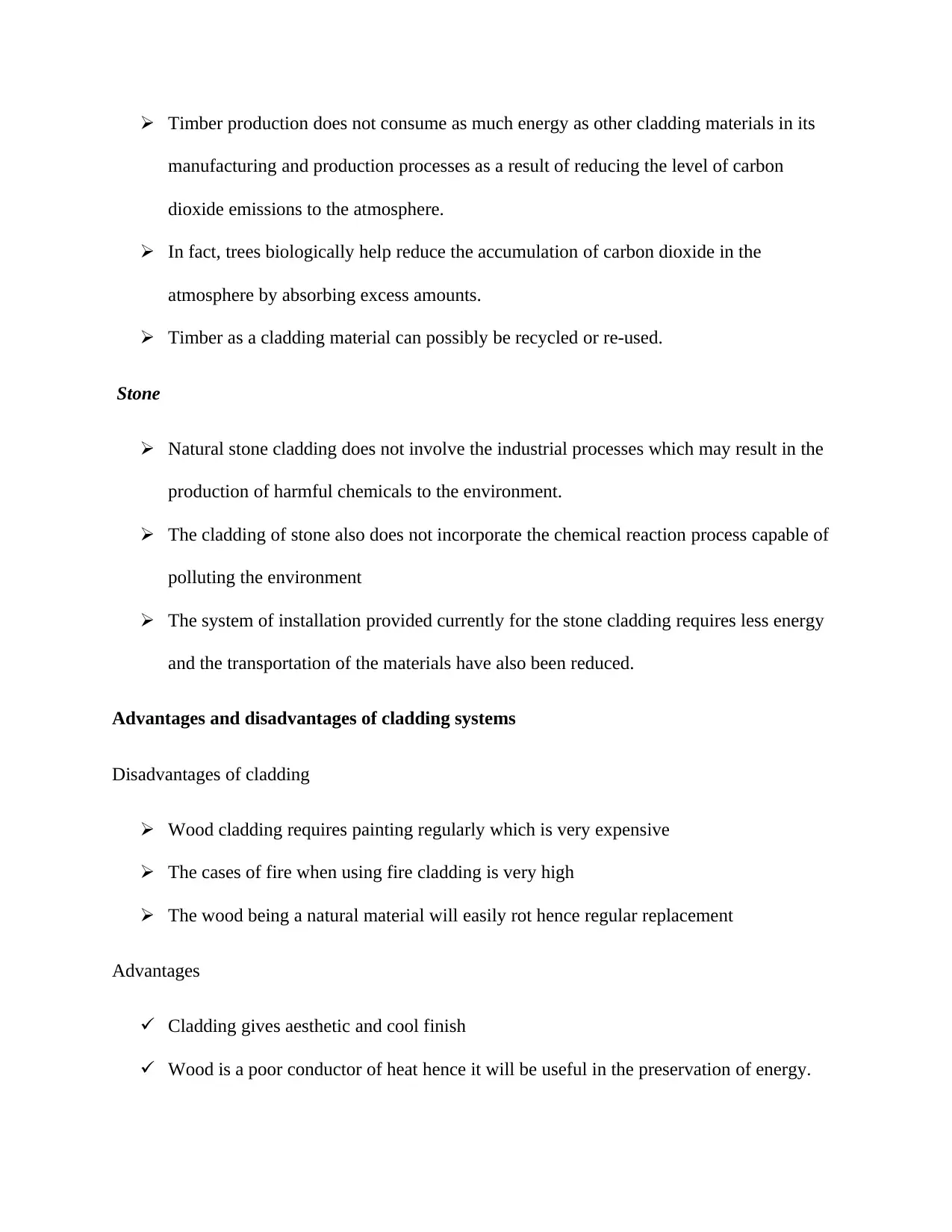
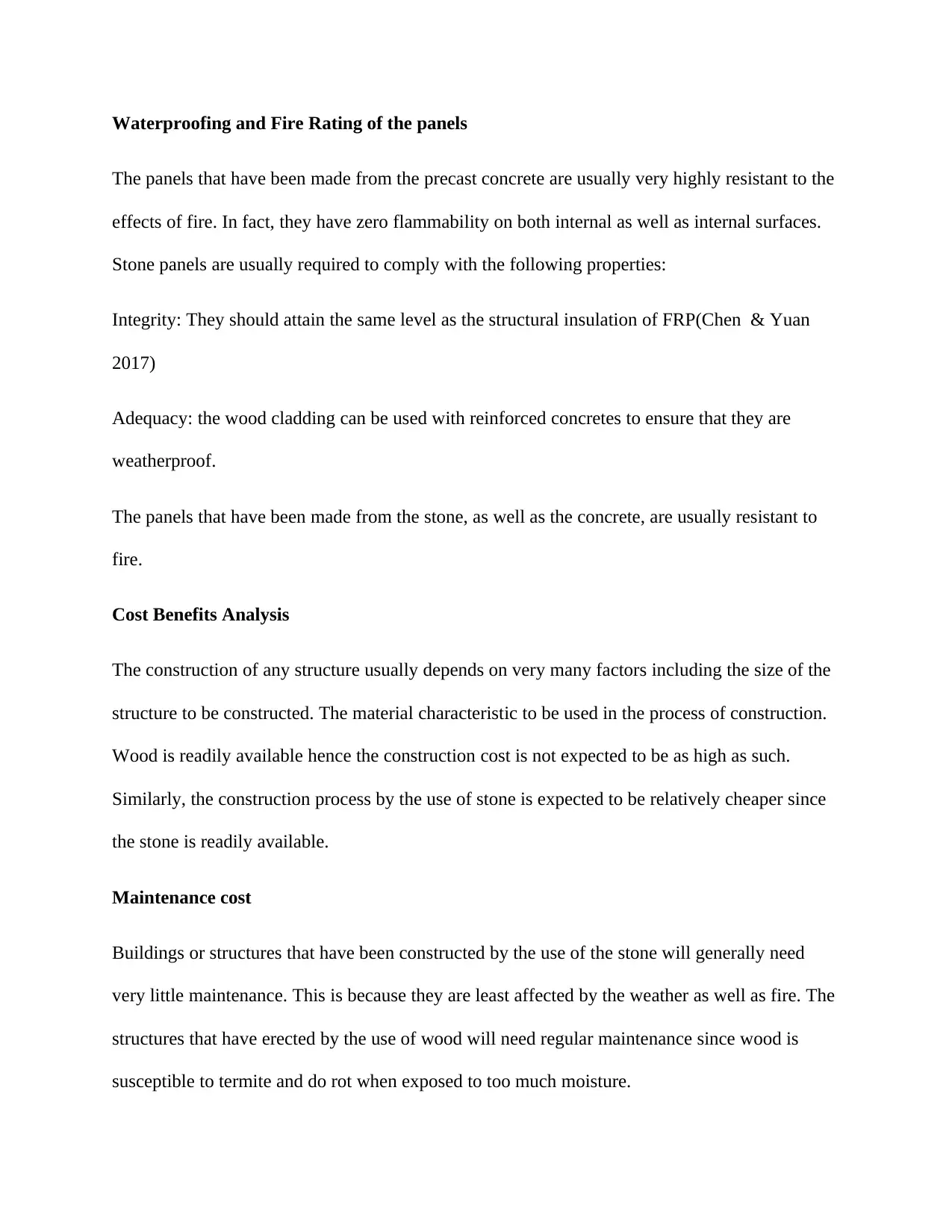
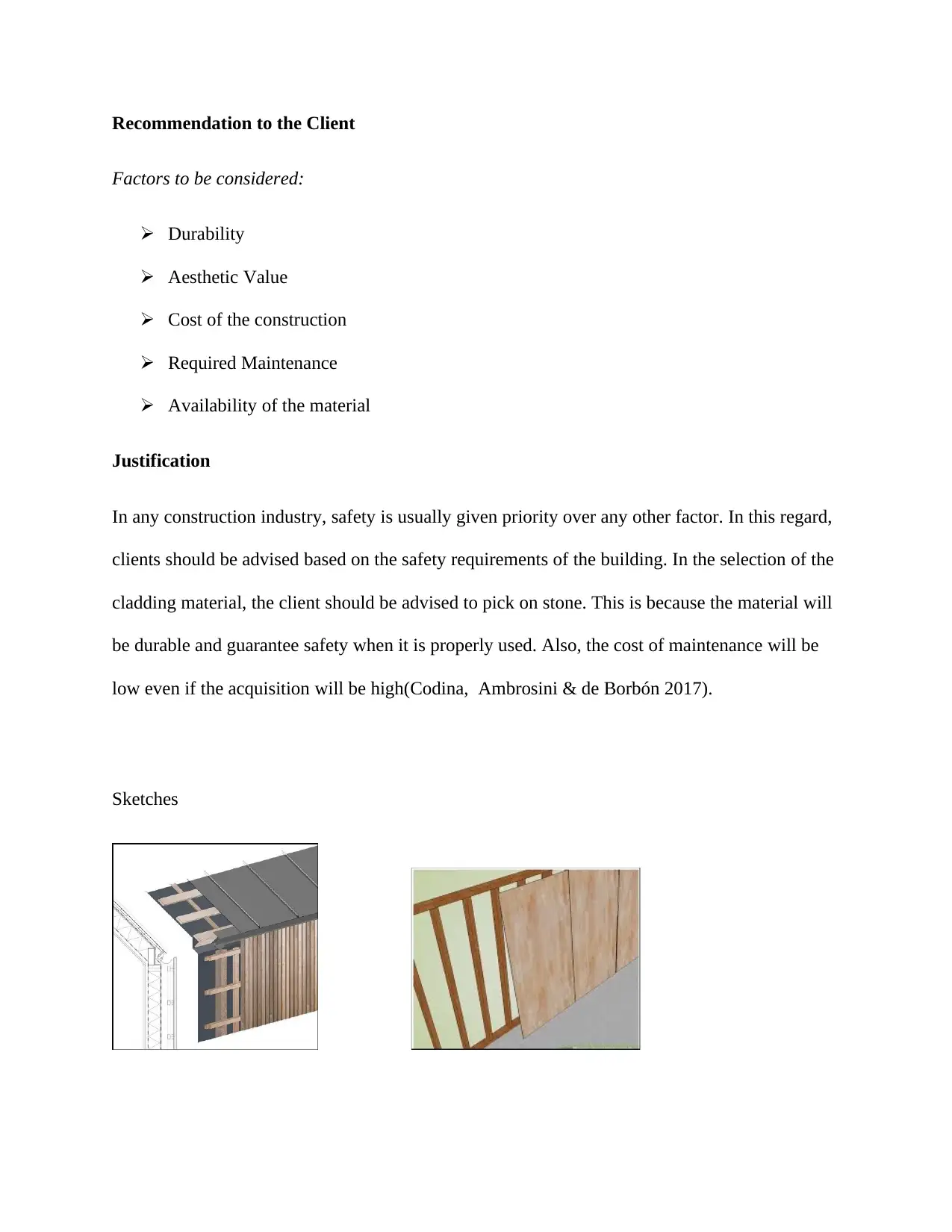
Wood cladding outline (Chen & Yuan 2017) Wood cladding using plywood (Chen &
Yuan 2017)
Sizes and tolerance(Riquelme et al 2016)
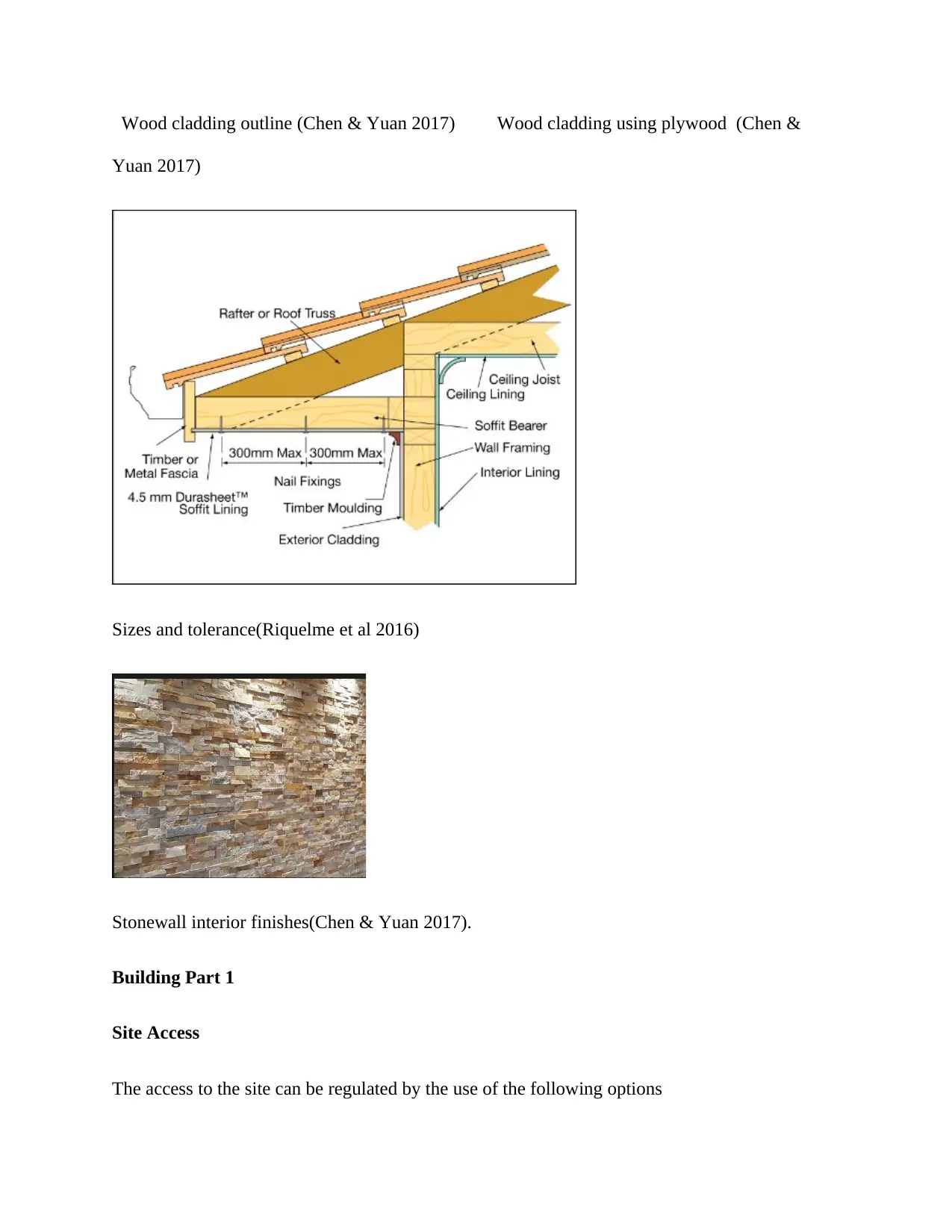
Stonewall interior finishes(Chen & Yuan 2017).
Building Part 1
Site Access
The access to the site can be regulated by the use of the following options
Yuan 2017)
Sizes and tolerance(Riquelme et al 2016)
Stonewall interior finishes(Chen & Yuan 2017).
Building Part 1
Site Access
The access to the site can be regulated by the use of the following options
⊘ This is a preview!⊘
Do you want full access?
Subscribe today to unlock all pages.

Trusted by 1+ million students worldwide

Biometric Authorization that uses biometric Identification
This system will require that all individuals accessing the site of the construction have their
biometric details taken as stored within the biometric system.
Access to the site (Riquelme et al 2016)
Specified visitor and Contractor access
The visitors may be issued with the entry Card just to ensure that unauthorized people do not
access the site itself.
An automated log which captures automatically site visitors as well as their duration of
the stay.
Material Handling
In order to ensure effective material handling in the site, the site manager will avail all the PPE
to the workers. Hoisting machines must have proper ropes(McBride 2016).
This system will require that all individuals accessing the site of the construction have their
biometric details taken as stored within the biometric system.
Access to the site (Riquelme et al 2016)
Specified visitor and Contractor access
The visitors may be issued with the entry Card just to ensure that unauthorized people do not
access the site itself.
An automated log which captures automatically site visitors as well as their duration of
the stay.
Material Handling
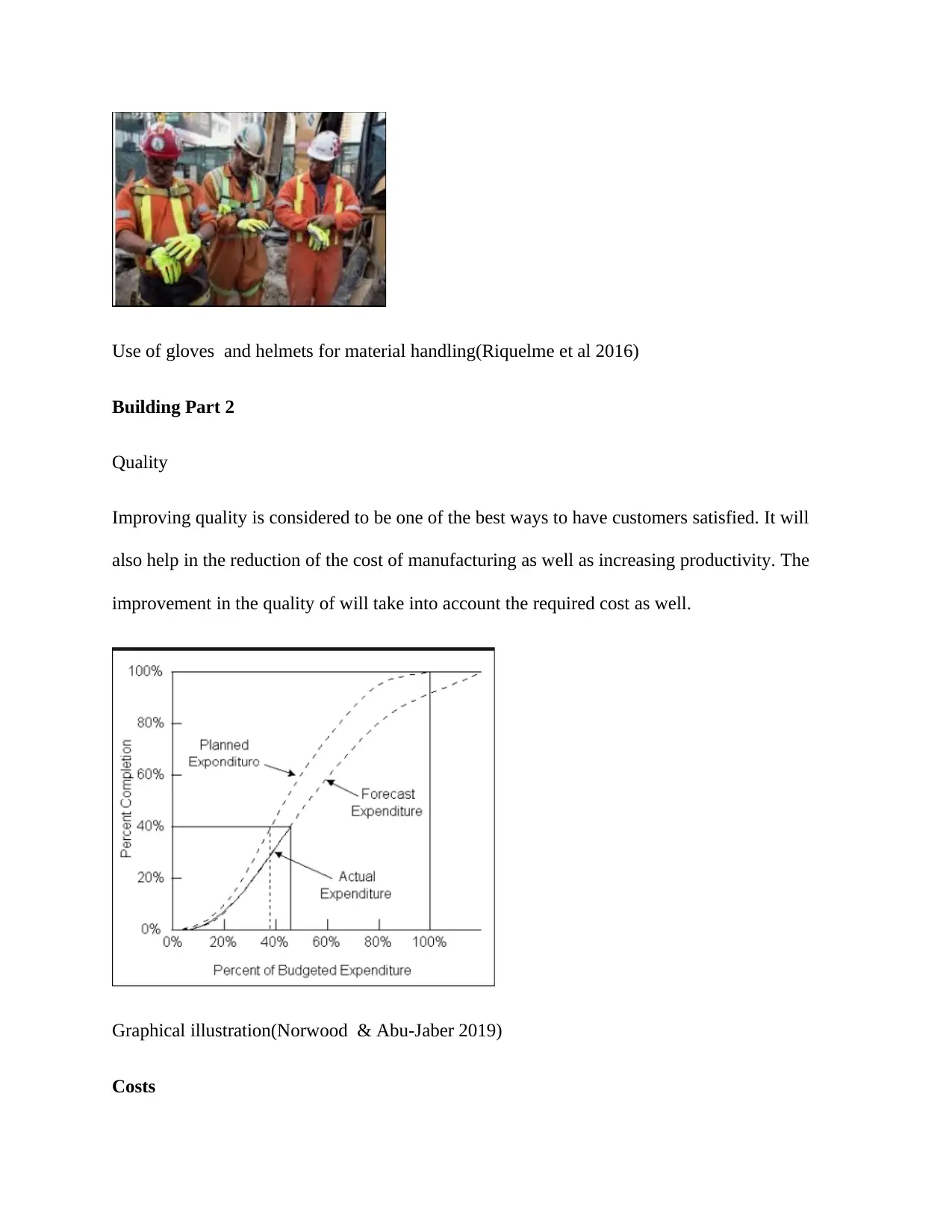
In order to ensure effective material handling in the site, the site manager will avail all the PPE
to the workers. Hoisting machines must have proper ropes(McBride 2016).
Paraphrase This Document
Need a fresh take? Get an instant paraphrase of this document with our AI Paraphraser

Use of gloves and helmets for material handling(Riquelme et al 2016)
Building Part 2
Quality
Improving quality is considered to be one of the best ways to have customers satisfied. It will
also help in the reduction of the cost of manufacturing as well as increasing productivity. The
improvement in the quality of will take into account the required cost as well.
Graphical illustration(Norwood & Abu-Jaber 2019)
Costs
Building Part 2
Quality
Improving quality is considered to be one of the best ways to have customers satisfied. It will
also help in the reduction of the cost of manufacturing as well as increasing productivity. The
improvement in the quality of will take into account the required cost as well.
Graphical illustration(Norwood & Abu-Jaber 2019)
Costs

The cost will affect the efficiency of the operation of the organization. The decision made based
on the cost management will be useful for a planning exercise.
Graphical illustration(Norwood & Abu-Jaber 2019)
Time
The construction response time is closely related to the delivery of the services to the client. It is
important to note that an increase in time for the construction time will mean increased charges
on labor and other equipment for the production.
on the cost management will be useful for a planning exercise.
Graphical illustration(Norwood & Abu-Jaber 2019)
Time
The construction response time is closely related to the delivery of the services to the client. It is
important to note that an increase in time for the construction time will mean increased charges
on labor and other equipment for the production.
⊘ This is a preview!⊘
Do you want full access?
Subscribe today to unlock all pages.

Trusted by 1+ million students worldwide
1 out of 15
Related Documents
Your All-in-One AI-Powered Toolkit for Academic Success.
+13062052269
info@desklib.com
Available 24*7 on WhatsApp / Email
Unlock your academic potential
Copyright © 2020–2025 A2Z Services. All Rights Reserved. Developed and managed by ZUCOL.