Analyzing Consumer Behavior Towards Organic Personal Care Products
VerifiedAdded on 2023/05/30
|19
|6085
|234
Literature Review
AI Summary
This literature review examines consumer behavior concerning organic personal care products, focusing on the Chinese market. It begins by defining consumer behavior and its importance in strategic brand marketing, highlighting key concepts, theories, frameworks, and models. The review discusses the factors influencing buying decisions, including social, psychological, cultural, and personal factors. It then explores the specific context of organic personal care products in China, noting the growing consumer interest and the challenges faced by companies due to concerns about product authenticity. The review emphasizes the importance of understanding consumer behavior for marketers to gain a competitive advantage and satisfy consumer demands. The document is available on Desklib, where students can find a wide range of study resources including past papers and solved assignments.
1
Chapter 2: Literature Review
2.1 Introduction
Bamossy & Solomon (2016) observed that consumers are the group of people that have
been targeted to consume or purchase a particular service for all products. They are a critical
part of an organization that leads to an understanding of consumer behavior toward a
particular product. Understanding the behavior of customers is critical because it provides an
answer to the questions related to why and how customers decide to buy a particular product.
Therefore, the organizations often start to invest efforts and money to analyse and evaluate
the behavior of a particular group of customers so that it can finally lead them to success.
This particular literature is certainly about the consumer behavior toward organic personal
care products of the particular company in China.
The concern with organic personal care products has been common among the
consumers in China. Many individuals see organic products as a safer option for their
utilization. Such aspects are possible because many individuals perceive organic products to
be free from questionable ingredients and other chemicals. At present state, the organizations
are usually driven by consumers. However, a decision was taken by the consumer concerning
organic personal care products and individual consumption experience that plays a primary
role (Kalafatis et al., 1999).
It is observed that five-dimensional values namely emotional, epistemic, functional,
social and conditional, has been able to affect the decision of consumers. However, the
assessment of products by the consumers is based not only on performance and quality but
also on the factors related to pleasure and enjoyment. Such dimensional values are often
found to be independent which thoroughly influence the choice of the customers. Wilson et
al. (2012) identified for distinct values that affect the consumer decision concerning personal
care products and organic aspects. These include social, performance, price or value for
money, and emotional factors. Such factors support consumer behavior and attitude during
purchase. These factors are also able to support the perception of the consumer toward a
particular product related to premium price. However, Solomon (2010) claimed that the
purchasing attitude of a specific product depends highly on factors such as personal beliefs
and expectations of the consumers.
Such factors state that perceived values are the critical factor that enables the consumers
Chapter 2: Literature Review
2.1 Introduction
Bamossy & Solomon (2016) observed that consumers are the group of people that have
been targeted to consume or purchase a particular service for all products. They are a critical
part of an organization that leads to an understanding of consumer behavior toward a
particular product. Understanding the behavior of customers is critical because it provides an
answer to the questions related to why and how customers decide to buy a particular product.
Therefore, the organizations often start to invest efforts and money to analyse and evaluate
the behavior of a particular group of customers so that it can finally lead them to success.
This particular literature is certainly about the consumer behavior toward organic personal
care products of the particular company in China.
The concern with organic personal care products has been common among the
consumers in China. Many individuals see organic products as a safer option for their
utilization. Such aspects are possible because many individuals perceive organic products to
be free from questionable ingredients and other chemicals. At present state, the organizations
are usually driven by consumers. However, a decision was taken by the consumer concerning
organic personal care products and individual consumption experience that plays a primary
role (Kalafatis et al., 1999).
It is observed that five-dimensional values namely emotional, epistemic, functional,
social and conditional, has been able to affect the decision of consumers. However, the
assessment of products by the consumers is based not only on performance and quality but
also on the factors related to pleasure and enjoyment. Such dimensional values are often
found to be independent which thoroughly influence the choice of the customers. Wilson et
al. (2012) identified for distinct values that affect the consumer decision concerning personal
care products and organic aspects. These include social, performance, price or value for
money, and emotional factors. Such factors support consumer behavior and attitude during
purchase. These factors are also able to support the perception of the consumer toward a
particular product related to premium price. However, Solomon (2010) claimed that the
purchasing attitude of a specific product depends highly on factors such as personal beliefs
and expectations of the consumers.
Such factors state that perceived values are the critical factor that enables the consumers

Paraphrase This Document
Need a fresh take? Get an instant paraphrase of this document with our AI Paraphraser
2
to make a judgment regarding a particular product. Indeed the customer and product
interaction have significant value that determines the post-purchase attitudes and behaviours
of the individual. Thus, it can be understood that consumer behavior is a critical path of a
business related to product or service (Solomon et al., 2014).
2.2 Consumer Behaviour (key concepts, theories, frameworks and models in practice)
The concept of consumer behavior has many definitions. Argyriou & Melewar, (2011)
defines it as the display of attitude toward purchasing, disposing, and evaluating the products
that can satisfy their demands. Another definition is the study of behavior or attitude
concerning the examination of services or products that are purchased by the consumers and
how the individuals are influenced by it daily (Schiffman & Wisenblit, 2015). However, the
before understanding the concept, it is vital to recognise the primary factor behind it: the
decision-making process of the consumer.
Source: (Mihart, 2012)
The decision-making process has been described by Kotler in 2001 (Mihart, 2012). The
first step of the decision-making process starts with the recognition of desire or problem. The
initial step is critical because it provides a clear picture of the consumers and the need to
purchase a particular product. The individuals are required to take action to satisfy the
observed need or desire. After the recognition of the need who purchase, the individuals go
ahead to the second state, which is searching for information (Carlile, 2002). In this stage, the
individuals are required to show an effort to fulfill the need of purchase for searching for the
source of information about it. At this time, the consumer is likely to go through different
series of information such as advertisements, websites, and stores (Young et al., 2010).
to make a judgment regarding a particular product. Indeed the customer and product
interaction have significant value that determines the post-purchase attitudes and behaviours
of the individual. Thus, it can be understood that consumer behavior is a critical path of a
business related to product or service (Solomon et al., 2014).
2.2 Consumer Behaviour (key concepts, theories, frameworks and models in practice)
The concept of consumer behavior has many definitions. Argyriou & Melewar, (2011)
defines it as the display of attitude toward purchasing, disposing, and evaluating the products
that can satisfy their demands. Another definition is the study of behavior or attitude
concerning the examination of services or products that are purchased by the consumers and
how the individuals are influenced by it daily (Schiffman & Wisenblit, 2015). However, the
before understanding the concept, it is vital to recognise the primary factor behind it: the
decision-making process of the consumer.
Source: (Mihart, 2012)
The decision-making process has been described by Kotler in 2001 (Mihart, 2012). The
first step of the decision-making process starts with the recognition of desire or problem. The
initial step is critical because it provides a clear picture of the consumers and the need to
purchase a particular product. The individuals are required to take action to satisfy the
observed need or desire. After the recognition of the need who purchase, the individuals go
ahead to the second state, which is searching for information (Carlile, 2002). In this stage, the
individuals are required to show an effort to fulfill the need of purchase for searching for the
source of information about it. At this time, the consumer is likely to go through different
series of information such as advertisements, websites, and stores (Young et al., 2010).
3
The third step involved the evaluation process where the individuals search for
alternatives of the product. At this stage, the consumer starts comparing the products and the
brands such that they can meet the appropriate criteria and their head. The next option is the
purchase decision that is made by the consumer. In this aspect, the prevention of the actual
purchase can be done by the negative review that the individual can read or hear from another
person. This stage shows that the individuals actually strive to read the feedback about the
chosen product before making a particular decision. The actual purchasing just done by the
consumer is the fifth stage (Parsons, Maclaran & Chatzidakis, 2017).
2.2.1 Factors Influencing Buying Decisions of Consumers
East et al., (2016) shows that consumer buying behavior is influenced by four group
factors such as social, psychological, cultural, and personal factors. Among them, social
factors unable to have higher influence over the consumer behavior toward buying. The
social groups include reference groups, status, family and other friends. Family members
profoundly influence the buying behavior of the consumer along with the reference groups.
The attitude of the consumer towards purchase is formed by individuals leaning on a
particular person or group of people for making a decision (Keller, 2013). It shows that
individuals act differently concerning the decision-making process.
The psychological factors pose a higher impact on the behavior of an individual to add
the purchase of a particular product. Such psychological impact is usually inspired by a
particular individual, celebrity in most cases. It shows that the buying behavior is generally
determined by the particular individual or idol. The individuals identify with the idols or the
role models and make the important decision regarding purchase (Same & Larimo, 2012).
The most critical role is played by the cultural factor concerning the buying behavior of
the consumer. Even to the consumer behavior has been studied by many scholars that usually
determined that cultural factors affect it a lot. The cultural aspect has various factors such as
geographical location, nationalities, and religion that can further influence the individual
behavior of the consumer (Keller, Paramemeswaren & Jacob, 2011). Social classes are
another existence of cultural factors that promote own buying behaviour. For instance, a
particular individual would not likely to purchase a specific product if it's against their
cultural regulations or background. The last is the personal factors that are determined by
personality, economic situation, occupation lifestyles, and age. The consumers determine the
behavior based on personal factors depending on current occupation (Carrington, Neville &
The third step involved the evaluation process where the individuals search for
alternatives of the product. At this stage, the consumer starts comparing the products and the
brands such that they can meet the appropriate criteria and their head. The next option is the
purchase decision that is made by the consumer. In this aspect, the prevention of the actual
purchase can be done by the negative review that the individual can read or hear from another
person. This stage shows that the individuals actually strive to read the feedback about the
chosen product before making a particular decision. The actual purchasing just done by the
consumer is the fifth stage (Parsons, Maclaran & Chatzidakis, 2017).
2.2.1 Factors Influencing Buying Decisions of Consumers
East et al., (2016) shows that consumer buying behavior is influenced by four group
factors such as social, psychological, cultural, and personal factors. Among them, social
factors unable to have higher influence over the consumer behavior toward buying. The
social groups include reference groups, status, family and other friends. Family members
profoundly influence the buying behavior of the consumer along with the reference groups.
The attitude of the consumer towards purchase is formed by individuals leaning on a
particular person or group of people for making a decision (Keller, 2013). It shows that
individuals act differently concerning the decision-making process.
The psychological factors pose a higher impact on the behavior of an individual to add
the purchase of a particular product. Such psychological impact is usually inspired by a
particular individual, celebrity in most cases. It shows that the buying behavior is generally
determined by the particular individual or idol. The individuals identify with the idols or the
role models and make the important decision regarding purchase (Same & Larimo, 2012).
The most critical role is played by the cultural factor concerning the buying behavior of
the consumer. Even to the consumer behavior has been studied by many scholars that usually
determined that cultural factors affect it a lot. The cultural aspect has various factors such as
geographical location, nationalities, and religion that can further influence the individual
behavior of the consumer (Keller, Paramemeswaren & Jacob, 2011). Social classes are
another existence of cultural factors that promote own buying behaviour. For instance, a
particular individual would not likely to purchase a specific product if it's against their
cultural regulations or background. The last is the personal factors that are determined by
personality, economic situation, occupation lifestyles, and age. The consumers determine the
behavior based on personal factors depending on current occupation (Carrington, Neville &
⊘ This is a preview!⊘
Do you want full access?
Subscribe today to unlock all pages.

Trusted by 1+ million students worldwide
4
Whitwell, 2010).
Furthermore, several models are also related to the consumer behavior that motivates the
individual to purchase a particular product. Such aspects involved expectancy value, need
achievement, and equity models. It has been observed that consumers are profoundly affected
by the difference in perception and equity factors. It has been observed that the motivational
has a profound impact on the behavior of the customer related to price sensitivity and quality
(Bu et al., 2013).
Other than that the knowledge of individual consumers plays a vital role in altering
behavior and attitude toward a particular product. Therefore, the consumers that have
prepared knowledge about organic personal care products are likely to choose such brands. It
has been observed that consumers having more knowledge about organic products are likely
to go for such brands rather than non-organic consumers. Information about organic products
observed to be taken from past experiences of the individual that affects the consumer
purchase decision (Carrington, Neville & Whitwell, 2010).
2.3 Importance of Consumer Behaviour in Strategic Brand Marketing
The primary purpose behind the marketing of the particular product is the satisfaction of
the consumer demands. Since the consumers are the critical person for any marketer, it is
essential that the individual dislikes and likes are recognised. It is dome so that the
organization can attain competitive advantage and the consumers would be ultimately
satisfied. The marketers usually predict the consumer behavior before they can sell any
service or product out in the market (Kotler, 2013). Such factors help the brand in gaining
more loyal consumers, targeting the group of individuals that are interested in the service or
product. Several individuals have made efforts to ensure and forecast consumer behavior so
that they can attain a higher benefit (Jansson-Boyd, 2010).
The consumer behavior and studies related to it helps in understanding the ability of
individuals to have a potential impact on the organization. The marketers are explicitly
aiming to ensure that organizations face higher benefit by getting more information about
consumer behaviour (Yeon Kim & Chung, 2011).
Such aspects promote the need to have an understanding of consumer behavior that is
also acquired by many companies all around the world. More often, it is observed that
consumer behavior has been complex that announced the need to have an appropriate
Whitwell, 2010).
Furthermore, several models are also related to the consumer behavior that motivates the
individual to purchase a particular product. Such aspects involved expectancy value, need
achievement, and equity models. It has been observed that consumers are profoundly affected
by the difference in perception and equity factors. It has been observed that the motivational
has a profound impact on the behavior of the customer related to price sensitivity and quality
(Bu et al., 2013).
Other than that the knowledge of individual consumers plays a vital role in altering
behavior and attitude toward a particular product. Therefore, the consumers that have
prepared knowledge about organic personal care products are likely to choose such brands. It
has been observed that consumers having more knowledge about organic products are likely
to go for such brands rather than non-organic consumers. Information about organic products
observed to be taken from past experiences of the individual that affects the consumer
purchase decision (Carrington, Neville & Whitwell, 2010).
2.3 Importance of Consumer Behaviour in Strategic Brand Marketing
The primary purpose behind the marketing of the particular product is the satisfaction of
the consumer demands. Since the consumers are the critical person for any marketer, it is
essential that the individual dislikes and likes are recognised. It is dome so that the
organization can attain competitive advantage and the consumers would be ultimately
satisfied. The marketers usually predict the consumer behavior before they can sell any
service or product out in the market (Kotler, 2013). Such factors help the brand in gaining
more loyal consumers, targeting the group of individuals that are interested in the service or
product. Several individuals have made efforts to ensure and forecast consumer behavior so
that they can attain a higher benefit (Jansson-Boyd, 2010).
The consumer behavior and studies related to it helps in understanding the ability of
individuals to have a potential impact on the organization. The marketers are explicitly
aiming to ensure that organizations face higher benefit by getting more information about
consumer behaviour (Yeon Kim & Chung, 2011).
Such aspects promote the need to have an understanding of consumer behavior that is
also acquired by many companies all around the world. More often, it is observed that
consumer behavior has been complex that announced the need to have an appropriate
Paraphrase This Document
Need a fresh take? Get an instant paraphrase of this document with our AI Paraphraser
5
understanding of it. In a recent study, it has been observed that shoppers are only able to
cover 33% of the entire area of the store in 20 minutes. However, about 58% purchases
observed in the stores and markets remain unplanned (Schütte & Ciarlante, 2016). That's
what forces many marketers to find out the primary compelling aspect that forces individual
customers toward making an instant decision about purchasing the product.
It has been observed that individual consumers influenced by their needs and desires for
purchasing. However, the customers are also often seen to make decisions on a random basis.
Zarantonello & Schmitt, (2010) observe that everything decision that the consumers take
concerning the purchase of a particular product has a reason behind it depending on social
personal or any other factors mentioned above. The purchase can be done in many ways, but
the decisions are usually taken related to physical, security, affection, self-esteem, self-
performance, and other reasons.
2.4 Consumer Behaviour on Organic Personal Care Products in China
Natural and organic skin care and other personal care products are not new to Chinese
consumers. However, new research shows that consumers are a motorcycle for organic
personal care products in China and Hong Kong. In the research, it is observed that 69% of
the consumers had been belonging to the Chinese and Hong Kong area that chose organic
personal care products. A sudden shift towards spending on natural products has been
observed to be a recent change in the cosmetic industry (Gordon, Carrigan & Hastings,
2011).
Even though the consumers have shown recent alertness toward the purchasing of
organic products in Chinese and Hong Kong area, the unfortunate events about doubtfulness
of organic material have acted as obstacles for the companies. In 2012, one such company
was going to be labeled as organic, but the certification was canceled by China Food and
Drug Administration (CFDA). Such aspects created problems for the organizations in China
related to natural personal care products. For that, the marketers need to identify the
consumer behavior factors that lead them initially toward the organization at first place
(Akehurst, Afonso & Martins Gonçalves, 2012).
However, the growing market of Chinese customers concerning organic personal care
products cannot be ignored. Certainly, consumer behavior has affected the decision to be
made by individual customers. Such a decision has been affected either by the past behaviour,
understanding of it. In a recent study, it has been observed that shoppers are only able to
cover 33% of the entire area of the store in 20 minutes. However, about 58% purchases
observed in the stores and markets remain unplanned (Schütte & Ciarlante, 2016). That's
what forces many marketers to find out the primary compelling aspect that forces individual
customers toward making an instant decision about purchasing the product.
It has been observed that individual consumers influenced by their needs and desires for
purchasing. However, the customers are also often seen to make decisions on a random basis.
Zarantonello & Schmitt, (2010) observe that everything decision that the consumers take
concerning the purchase of a particular product has a reason behind it depending on social
personal or any other factors mentioned above. The purchase can be done in many ways, but
the decisions are usually taken related to physical, security, affection, self-esteem, self-
performance, and other reasons.
2.4 Consumer Behaviour on Organic Personal Care Products in China
Natural and organic skin care and other personal care products are not new to Chinese
consumers. However, new research shows that consumers are a motorcycle for organic
personal care products in China and Hong Kong. In the research, it is observed that 69% of
the consumers had been belonging to the Chinese and Hong Kong area that chose organic
personal care products. A sudden shift towards spending on natural products has been
observed to be a recent change in the cosmetic industry (Gordon, Carrigan & Hastings,
2011).
Even though the consumers have shown recent alertness toward the purchasing of
organic products in Chinese and Hong Kong area, the unfortunate events about doubtfulness
of organic material have acted as obstacles for the companies. In 2012, one such company
was going to be labeled as organic, but the certification was canceled by China Food and
Drug Administration (CFDA). Such aspects created problems for the organizations in China
related to natural personal care products. For that, the marketers need to identify the
consumer behavior factors that lead them initially toward the organization at first place
(Akehurst, Afonso & Martins Gonçalves, 2012).
However, the growing market of Chinese customers concerning organic personal care
products cannot be ignored. Certainly, consumer behavior has affected the decision to be
made by individual customers. Such a decision has been affected either by the past behaviour,
6
or present scenario concerning the growing market of cosmetic products that harm the skin.
Something organic is likely to have a positive image on the consumers in Hong Kong and
Chinese area. Certainly, personal care products hold a high value concerning customer
behaviour. At this time the organizations make unique strategies to gain competitive
advantage (Albert & Merunka, 2013)
2.5 Factors influencing the buying behavior of consumers of Organic Personal Care
Product
With each passing day, the personal care product and cosmetic industry are growing to
be the most lucrative, profit earning and stable industry. There is a broad opening for
successful launching of organic personal care products which lately is witnessing a rise in its
demand in the global market. Organic Trade Associations present across the world are
finding a rise in the ‘go green’ spree among the consumers of cosmetic and personal care
products, as the later is getting more educated regarding environmental ethics and hazards of
the destruction of natural resources (Yeon Kim & Chung, 2011). In the USA, a rise in the
demand for organic personal care commodities is the second burgeoning sector just after the
well-established organic food market.
To frame effective marketing strategies for widespread acceptance of organic personal
care products, market researchers might need to engage themselves in in-depth understanding
and analyzing of changing consumer behavior in this segment (Solomon, 2014). A great
number of studies has been based on the theory of planned behavior (TBD) by Ajzen (1985).
The planned buying behavior of a consumer is determined by the nature of the existing value
system of the consumer. The value system of a consumer is highly controlled by the
psychological functioning of an individual’s fundamental belief system (Ali, Said & Salleh,
2016). To some consumers value may stand for what one is getting in exchange for what he is
giving while to others it can be the essence of achieving the desired result.
or present scenario concerning the growing market of cosmetic products that harm the skin.
Something organic is likely to have a positive image on the consumers in Hong Kong and
Chinese area. Certainly, personal care products hold a high value concerning customer
behaviour. At this time the organizations make unique strategies to gain competitive
advantage (Albert & Merunka, 2013)
2.5 Factors influencing the buying behavior of consumers of Organic Personal Care
Product
With each passing day, the personal care product and cosmetic industry are growing to
be the most lucrative, profit earning and stable industry. There is a broad opening for
successful launching of organic personal care products which lately is witnessing a rise in its
demand in the global market. Organic Trade Associations present across the world are
finding a rise in the ‘go green’ spree among the consumers of cosmetic and personal care
products, as the later is getting more educated regarding environmental ethics and hazards of
the destruction of natural resources (Yeon Kim & Chung, 2011). In the USA, a rise in the
demand for organic personal care commodities is the second burgeoning sector just after the
well-established organic food market.
To frame effective marketing strategies for widespread acceptance of organic personal
care products, market researchers might need to engage themselves in in-depth understanding
and analyzing of changing consumer behavior in this segment (Solomon, 2014). A great
number of studies has been based on the theory of planned behavior (TBD) by Ajzen (1985).
The planned buying behavior of a consumer is determined by the nature of the existing value
system of the consumer. The value system of a consumer is highly controlled by the
psychological functioning of an individual’s fundamental belief system (Ali, Said & Salleh,
2016). To some consumers value may stand for what one is getting in exchange for what he is
giving while to others it can be the essence of achieving the desired result.
⊘ This is a preview!⊘
Do you want full access?
Subscribe today to unlock all pages.
Trusted by 1+ million students worldwide
7
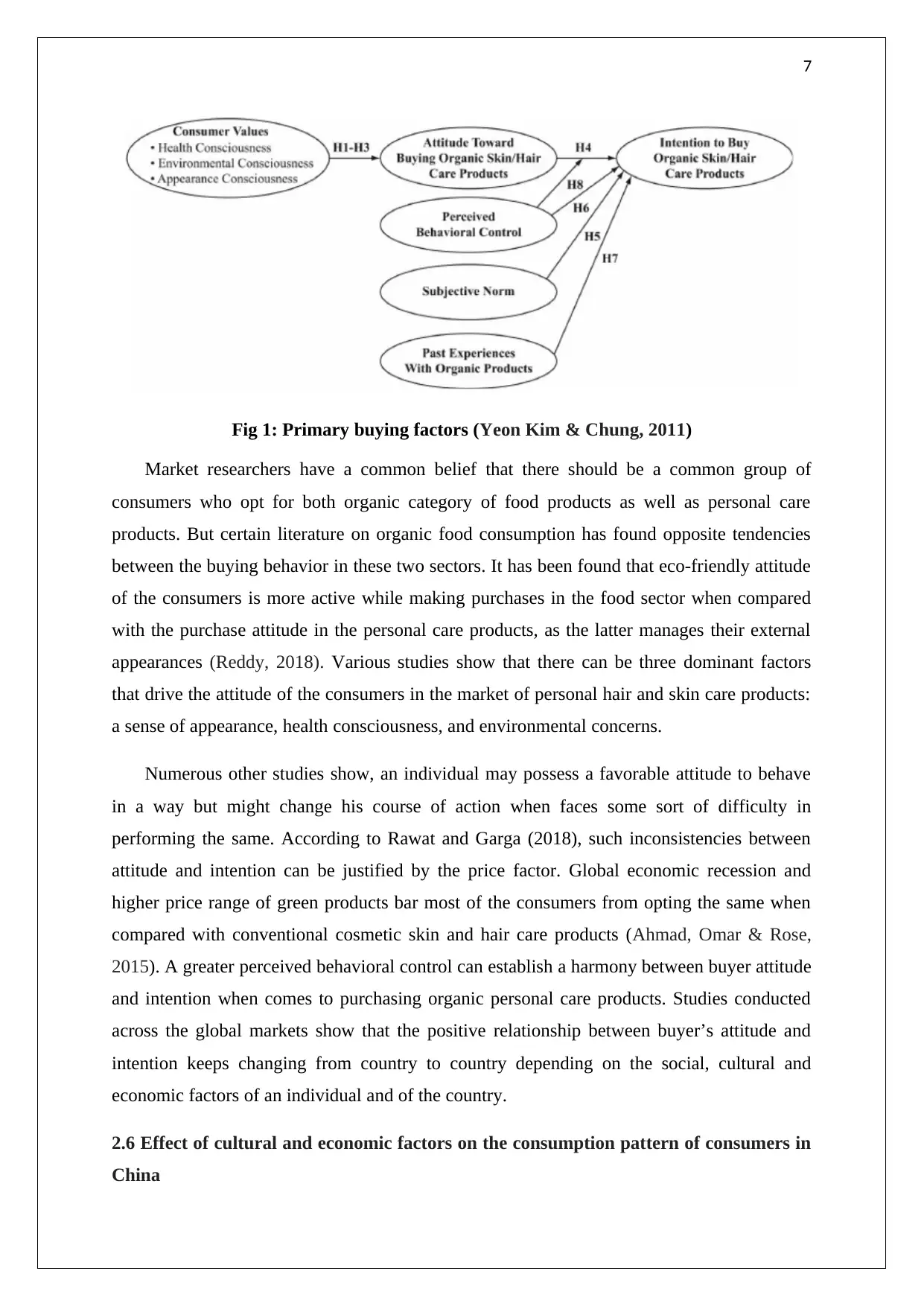
Fig 1: Primary buying factors (Yeon Kim & Chung, 2011)
Market researchers have a common belief that there should be a common group of
consumers who opt for both organic category of food products as well as personal care
products. But certain literature on organic food consumption has found opposite tendencies
between the buying behavior in these two sectors. It has been found that eco-friendly attitude
of the consumers is more active while making purchases in the food sector when compared
with the purchase attitude in the personal care products, as the latter manages their external
appearances (Reddy, 2018). Various studies show that there can be three dominant factors
that drive the attitude of the consumers in the market of personal hair and skin care products:
a sense of appearance, health consciousness, and environmental concerns.
Numerous other studies show, an individual may possess a favorable attitude to behave
in a way but might change his course of action when faces some sort of difficulty in
performing the same. According to Rawat and Garga (2018), such inconsistencies between
attitude and intention can be justified by the price factor. Global economic recession and
higher price range of green products bar most of the consumers from opting the same when
compared with conventional cosmetic skin and hair care products (Ahmad, Omar & Rose,
2015). A greater perceived behavioral control can establish a harmony between buyer attitude
and intention when comes to purchasing organic personal care products. Studies conducted
across the global markets show that the positive relationship between buyer’s attitude and
intention keeps changing from country to country depending on the social, cultural and
economic factors of an individual and of the country.
2.6 Effect of cultural and economic factors on the consumption pattern of consumers in
China
Fig 1: Primary buying factors (Yeon Kim & Chung, 2011)
Market researchers have a common belief that there should be a common group of
consumers who opt for both organic category of food products as well as personal care
products. But certain literature on organic food consumption has found opposite tendencies
between the buying behavior in these two sectors. It has been found that eco-friendly attitude
of the consumers is more active while making purchases in the food sector when compared
with the purchase attitude in the personal care products, as the latter manages their external
appearances (Reddy, 2018). Various studies show that there can be three dominant factors
that drive the attitude of the consumers in the market of personal hair and skin care products:
a sense of appearance, health consciousness, and environmental concerns.
Numerous other studies show, an individual may possess a favorable attitude to behave
in a way but might change his course of action when faces some sort of difficulty in
performing the same. According to Rawat and Garga (2018), such inconsistencies between
attitude and intention can be justified by the price factor. Global economic recession and
higher price range of green products bar most of the consumers from opting the same when
compared with conventional cosmetic skin and hair care products (Ahmad, Omar & Rose,
2015). A greater perceived behavioral control can establish a harmony between buyer attitude
and intention when comes to purchasing organic personal care products. Studies conducted
across the global markets show that the positive relationship between buyer’s attitude and
intention keeps changing from country to country depending on the social, cultural and
economic factors of an individual and of the country.
2.6 Effect of cultural and economic factors on the consumption pattern of consumers in
China
Paraphrase This Document
Need a fresh take? Get an instant paraphrase of this document with our AI Paraphraser
8
Consumerism in China has evolved with every passing decade since the formation of the
Peoples Republic of China and various mechanisms like geopolitical location, values, and
norms of Chinese culture and ideology and ongoing socio-political changes form the
background in shaping the consumption pattern of consumers in present China. The
marketers know people of China have an all-pervading tendency to achieve self-actualization
by magnifying their consumption pattern to signify their social status and wealth possession
(Kapferer, 2010).
A thorough examination of Chinese culture and economy will help to understand the
pattern of consumer behavior. The vast geographical expansion of the country of China has
given rise to various subcultures apart from a dominant Chinese culture, which in turn
characterise market mix price, brand name identification, product positioning and
promotional proceedings. Similar form of lifestyle patterns give birth to social classes which
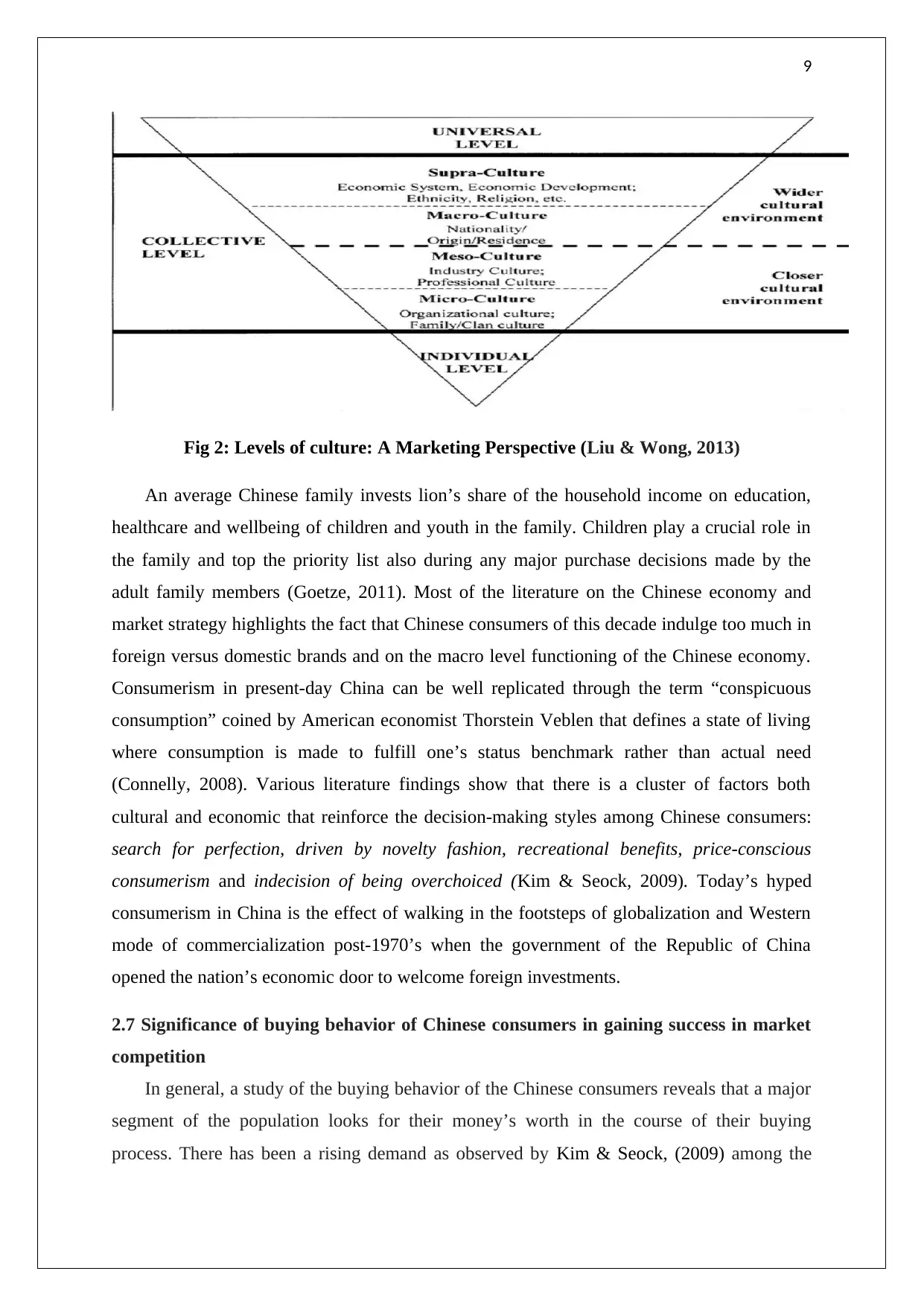
in turn characterize the educational levels and values and communication styles (Liu &
Wong, 2013). Apart from social and cultural factors, economic factors like household
income, residential location, and local economic zones directly impact the consumption style
and standards of consumers in China.
Preferences towards home furnishings, clothing, modes of entertainment and gaming
consoles and automobiles are the outcome of the joint influences of the social, economic and
cultural background of an individual. There are various sources like personal, public,
commercial and experiential from where a buyer can gain knowledge regarding his future
purchase plan. A comprehensive market study will help market researchers to identify the
most dominant source of information.
Consumerism in China has evolved with every passing decade since the formation of the
Peoples Republic of China and various mechanisms like geopolitical location, values, and
norms of Chinese culture and ideology and ongoing socio-political changes form the
background in shaping the consumption pattern of consumers in present China. The
marketers know people of China have an all-pervading tendency to achieve self-actualization
by magnifying their consumption pattern to signify their social status and wealth possession
(Kapferer, 2010).
A thorough examination of Chinese culture and economy will help to understand the
pattern of consumer behavior. The vast geographical expansion of the country of China has
given rise to various subcultures apart from a dominant Chinese culture, which in turn
characterise market mix price, brand name identification, product positioning and
promotional proceedings. Similar form of lifestyle patterns give birth to social classes which
in turn characterize the educational levels and values and communication styles (Liu &
Wong, 2013). Apart from social and cultural factors, economic factors like household
income, residential location, and local economic zones directly impact the consumption style
and standards of consumers in China.
Preferences towards home furnishings, clothing, modes of entertainment and gaming
consoles and automobiles are the outcome of the joint influences of the social, economic and
cultural background of an individual. There are various sources like personal, public,
commercial and experiential from where a buyer can gain knowledge regarding his future
purchase plan. A comprehensive market study will help market researchers to identify the
most dominant source of information.
9
Fig 2: Levels of culture: A Marketing Perspective (Liu & Wong, 2013)
An average Chinese family invests lion’s share of the household income on education,
healthcare and wellbeing of children and youth in the family. Children play a crucial role in
the family and top the priority list also during any major purchase decisions made by the
adult family members (Goetze, 2011). Most of the literature on the Chinese economy and
market strategy highlights the fact that Chinese consumers of this decade indulge too much in
foreign versus domestic brands and on the macro level functioning of the Chinese economy.
Consumerism in present-day China can be well replicated through the term “conspicuous
consumption” coined by American economist Thorstein Veblen that defines a state of living
where consumption is made to fulfill one’s status benchmark rather than actual need
(Connelly, 2008). Various literature findings show that there is a cluster of factors both
cultural and economic that reinforce the decision-making styles among Chinese consumers:
search for perfection, driven by novelty fashion, recreational benefits, price-conscious
consumerism and indecision of being overchoiced (Kim & Seock, 2009). Today’s hyped
consumerism in China is the effect of walking in the footsteps of globalization and Western
mode of commercialization post-1970’s when the government of the Republic of China
opened the nation’s economic door to welcome foreign investments.
2.7 Significance of buying behavior of Chinese consumers in gaining success in market
competition
In general, a study of the buying behavior of the Chinese consumers reveals that a major
segment of the population looks for their money’s worth in the course of their buying
process. There has been a rising demand as observed by Kim & Seock, (2009) among the
Fig 2: Levels of culture: A Marketing Perspective (Liu & Wong, 2013)
An average Chinese family invests lion’s share of the household income on education,
healthcare and wellbeing of children and youth in the family. Children play a crucial role in
the family and top the priority list also during any major purchase decisions made by the
adult family members (Goetze, 2011). Most of the literature on the Chinese economy and
market strategy highlights the fact that Chinese consumers of this decade indulge too much in
foreign versus domestic brands and on the macro level functioning of the Chinese economy.
Consumerism in present-day China can be well replicated through the term “conspicuous
consumption” coined by American economist Thorstein Veblen that defines a state of living
where consumption is made to fulfill one’s status benchmark rather than actual need
(Connelly, 2008). Various literature findings show that there is a cluster of factors both
cultural and economic that reinforce the decision-making styles among Chinese consumers:
search for perfection, driven by novelty fashion, recreational benefits, price-conscious
consumerism and indecision of being overchoiced (Kim & Seock, 2009). Today’s hyped
consumerism in China is the effect of walking in the footsteps of globalization and Western
mode of commercialization post-1970’s when the government of the Republic of China
opened the nation’s economic door to welcome foreign investments.
2.7 Significance of buying behavior of Chinese consumers in gaining success in market
competition
In general, a study of the buying behavior of the Chinese consumers reveals that a major
segment of the population looks for their money’s worth in the course of their buying
process. There has been a rising demand as observed by Kim & Seock, (2009) among the
⊘ This is a preview!⊘
Do you want full access?
Subscribe today to unlock all pages.
Trusted by 1+ million students worldwide
10
present day consumers to adapt to a western pattern of product consumption with a declining
preference towards the traditional Chinese products. High levels of disposable income and a
need for higher levels of education especially amongst the members of the young generation
has led them to adapt to healthy lifestyles with a growing concern to protect and conserve the
environment which has eventually made them aware of the need of consuming organic
products in their daily lives. As per the report of International & International, (2018), 40% of
organic consumers constitute this segment of the Chinese population. The foreigners staying
in the country as indicated by (Goetze, 2011), due to a relatively higher rate of remuneration
and prior knowledge about its benefits are being able to afford organic product for daily care
increasingly with time. They have been found to be more interested in buying imported
organic products from their home country over the local products thus constituting almost 7%
of organic product market share in the competition. The rapid spate of globalization has led
the young Chinese population even with moderate earnings to opt for organic daily care
products simply out of a growing concern to survive in a healthier and environmentally
friendly manner ("Understanding Chinese Consumers - China Business Review", 2018). This
group has been observed by the study of Ghazali, Soon, Mutum & Nguyen, (2017) to have a
3% market share in the organic product segment.
present day consumers to adapt to a western pattern of product consumption with a declining
preference towards the traditional Chinese products. High levels of disposable income and a
need for higher levels of education especially amongst the members of the young generation
has led them to adapt to healthy lifestyles with a growing concern to protect and conserve the
environment which has eventually made them aware of the need of consuming organic
products in their daily lives. As per the report of International & International, (2018), 40% of
organic consumers constitute this segment of the Chinese population. The foreigners staying
in the country as indicated by (Goetze, 2011), due to a relatively higher rate of remuneration
and prior knowledge about its benefits are being able to afford organic product for daily care
increasingly with time. They have been found to be more interested in buying imported
organic products from their home country over the local products thus constituting almost 7%
of organic product market share in the competition. The rapid spate of globalization has led
the young Chinese population even with moderate earnings to opt for organic daily care
products simply out of a growing concern to survive in a healthier and environmentally
friendly manner ("Understanding Chinese Consumers - China Business Review", 2018). This
group has been observed by the study of Ghazali, Soon, Mutum & Nguyen, (2017) to have a
3% market share in the organic product segment.
Paraphrase This Document
Need a fresh take? Get an instant paraphrase of this document with our AI Paraphraser
11
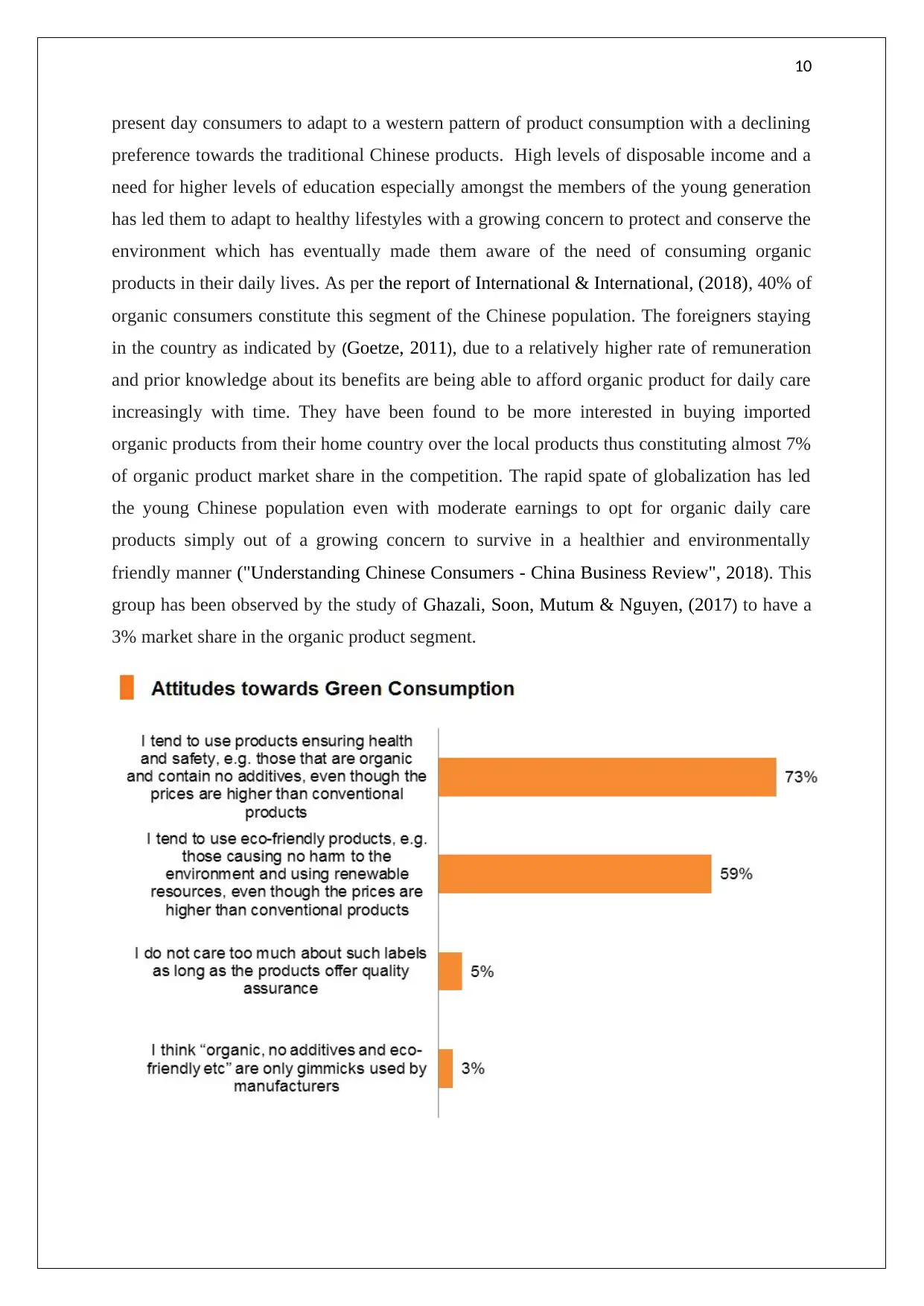
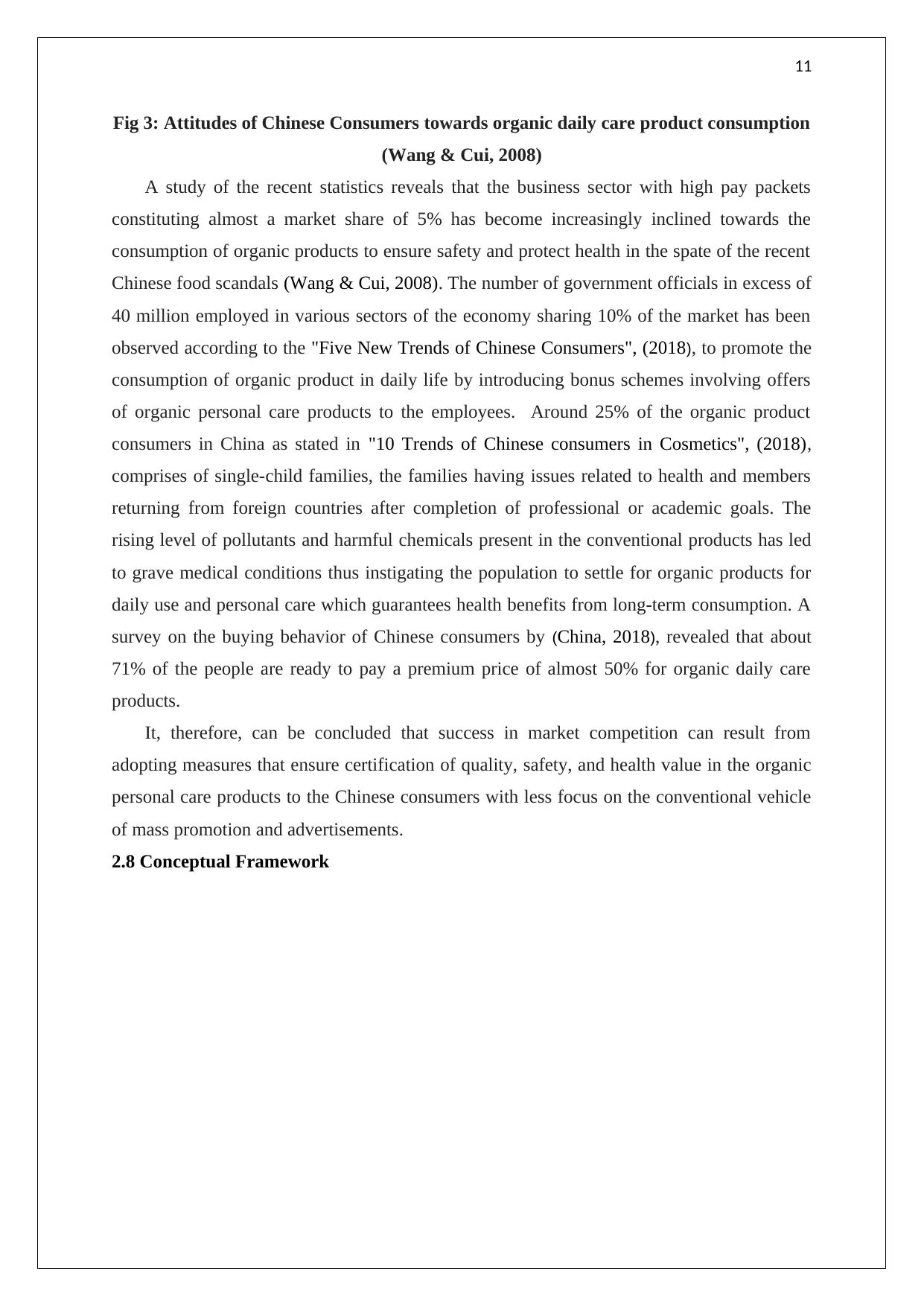
Fig 3: Attitudes of Chinese Consumers towards organic daily care product consumption
(Wang & Cui, 2008)
A study of the recent statistics reveals that the business sector with high pay packets
constituting almost a market share of 5% has become increasingly inclined towards the
consumption of organic products to ensure safety and protect health in the spate of the recent
Chinese food scandals (Wang & Cui, 2008). The number of government officials in excess of
40 million employed in various sectors of the economy sharing 10% of the market has been
observed according to the "Five New Trends of Chinese Consumers", (2018), to promote the
consumption of organic product in daily life by introducing bonus schemes involving offers
of organic personal care products to the employees. Around 25% of the organic product
consumers in China as stated in "10 Trends of Chinese consumers in Cosmetics", (2018),
comprises of single-child families, the families having issues related to health and members
returning from foreign countries after completion of professional or academic goals. The
rising level of pollutants and harmful chemicals present in the conventional products has led
to grave medical conditions thus instigating the population to settle for organic products for
daily use and personal care which guarantees health benefits from long-term consumption. A
survey on the buying behavior of Chinese consumers by (China, 2018), revealed that about
71% of the people are ready to pay a premium price of almost 50% for organic daily care
products.
It, therefore, can be concluded that success in market competition can result from
adopting measures that ensure certification of quality, safety, and health value in the organic
personal care products to the Chinese consumers with less focus on the conventional vehicle
of mass promotion and advertisements.
2.8 Conceptual Framework
Fig 3: Attitudes of Chinese Consumers towards organic daily care product consumption
(Wang & Cui, 2008)
A study of the recent statistics reveals that the business sector with high pay packets
constituting almost a market share of 5% has become increasingly inclined towards the
consumption of organic products to ensure safety and protect health in the spate of the recent
Chinese food scandals (Wang & Cui, 2008). The number of government officials in excess of
40 million employed in various sectors of the economy sharing 10% of the market has been
observed according to the "Five New Trends of Chinese Consumers", (2018), to promote the
consumption of organic product in daily life by introducing bonus schemes involving offers
of organic personal care products to the employees. Around 25% of the organic product
consumers in China as stated in "10 Trends of Chinese consumers in Cosmetics", (2018),
comprises of single-child families, the families having issues related to health and members
returning from foreign countries after completion of professional or academic goals. The
rising level of pollutants and harmful chemicals present in the conventional products has led
to grave medical conditions thus instigating the population to settle for organic products for
daily use and personal care which guarantees health benefits from long-term consumption. A
survey on the buying behavior of Chinese consumers by (China, 2018), revealed that about
71% of the people are ready to pay a premium price of almost 50% for organic daily care
products.
It, therefore, can be concluded that success in market competition can result from
adopting measures that ensure certification of quality, safety, and health value in the organic
personal care products to the Chinese consumers with less focus on the conventional vehicle
of mass promotion and advertisements.
2.8 Conceptual Framework
12
Fig 4. Conceptual Framework
On the basis of the above framework, it is clearly evident that the consumer buying
behavior of the Chinese population in the organic personal care product segment has been
largely dependent on the economic, cultural, health and environmental factors which have led
to its increased rate of consumption over the recent years. Although the Chinese consumers
are traditional and conventional in product preferences, however, in recent times with an
increase in the disposable income amongst the younger generation and a growing concern of
leading a healthier and environmentally responsible lifestyle has led to a major paradigm shift
in the buying behaviour causing an escalated inclination towards consumption of organic care
products (Rawat & Garga, 2018). Globalization has widened the scope of the domestic
market to offer a large number of imported products produced by organic farms guaranteeing
chemical-free, healthier substitutes which are being accepted widely even at a premium price
(Goetze, 2011). A large section of Chinese consumers as had been suggested by various
surveys and studies, over time have shifted their loyalty towards the consumption of certified
organic daily care products to ensure a superior quality, disease-free and safe life.
2.9 Conclusion
The study of the secondary literature on the factors affecting the buying behavior of the
Chinese consumers in the organic personal care product segment has revealed a number of
Chineseconsumerbehaviourfororganicpersonalcareproduct
Fig 4. Conceptual Framework
On the basis of the above framework, it is clearly evident that the consumer buying
behavior of the Chinese population in the organic personal care product segment has been
largely dependent on the economic, cultural, health and environmental factors which have led
to its increased rate of consumption over the recent years. Although the Chinese consumers
are traditional and conventional in product preferences, however, in recent times with an
increase in the disposable income amongst the younger generation and a growing concern of
leading a healthier and environmentally responsible lifestyle has led to a major paradigm shift
in the buying behaviour causing an escalated inclination towards consumption of organic care
products (Rawat & Garga, 2018). Globalization has widened the scope of the domestic
market to offer a large number of imported products produced by organic farms guaranteeing
chemical-free, healthier substitutes which are being accepted widely even at a premium price
(Goetze, 2011). A large section of Chinese consumers as had been suggested by various
surveys and studies, over time have shifted their loyalty towards the consumption of certified
organic daily care products to ensure a superior quality, disease-free and safe life.
2.9 Conclusion
The study of the secondary literature on the factors affecting the buying behavior of the
Chinese consumers in the organic personal care product segment has revealed a number of
Chineseconsumerbehaviourfororganicpersonalcareproduct
⊘ This is a preview!⊘
Do you want full access?
Subscribe today to unlock all pages.
Trusted by 1+ million students worldwide

1 out of 19


Related Documents


Your All-in-One AI-Powered Toolkit for Academic Success.
+13062052269
info@desklib.com
Available 24*7 on WhatsApp / Email
![[object Object]](/_next/static/media/star-bottom.7253800d.svg)
Unlock your academic potential
Copyright © 2020–2026 A2Z Services. All Rights Reserved. Developed and managed by ZUCOL.