Economic Analysis of Demand and Supply: BM533 Module Report

Verified

Added on Ā 2023/06/10

|9
|1942
|314
Report
AI Summary
This report provides a comprehensive analysis of contemporary economic principles, focusing on the laws of demand and supply within the context of the retail business, using Morrison as a case study. It elaborates on the law of demand, illustrating its movement with diagrams and detailing factors influencing the demand curve, such as taste, income, advertising expenditure, and changes in related goods' prices, consumer expectations, and market size. The report also defines the law of supply and the supply curve, explaining how the quantity supplied changes with price and other determinants, including the number of sellers, production costs, taxes, subsidies, and technology. The analysis includes diagrams to visualize the shifts in demand and supply curves. The report concludes by summarizing the impact of demand and supply on the retail sector. This report aims to provide a good understanding of the fundamental concepts of economics.
Document Page
Module code and
titleBM533
Contemporary
Economic Analysis
Contents
tabler-icon-diamond-filled.svg

Paraphrase This Document

Need a fresh take? Get an instant paraphrase of this document with our AI Paraphraser
Document Page
INTRODUCTION...........................................................................................................................3
TASK 1............................................................................................................................................3
1.1 Elaborate the law of demand along with its movement with the help of the diagrams. Also
describe the factors which influence the demand curve..............................................................3
1.2 Define law of supply and supply curve with the reasons of change in the supply curve......6
CONCLUSION................................................................................................................................8
REFERENCES................................................................................................................................9
Document Page
INTRODUCTION
Contemporary Business Economics is a branch and model of economic which deals with the
modern tools and concepts of economics. The economics is a comes where the individual’s
choice, attitude and behaviour can influence the market conditions of demand and supply. The
demand and supply depends on the purchase and supply of the products and service which exists
and are available to the consumers (Adusah-Poku, Dramani and Adjei-Mantey, 2021). In the
following report, the company chosen is Morrison which is into the retail business and deals in
supermarket in UK. It is a well – known brand in UK and also runs its operation across various
other countries. The report consists of the concepts of demand and supply in relation to the
organisation with the help of the diagrams.
TASK 1
1.1 Elaborate the law of demand along with its movement with the help of the diagrams. Also
describe the factors which influence the demand curve.
The law of demand is a concept which states that the quantity of goods which are purchased and
the prices of those products are inversely related to each other. From this it can be analysed that
higher is the price the lower is the demand of the product. This happens due to the concept of
diminishing marginal utility. Caused due to this, the demand quantity of the goods changes
which the change in price (Bekaert, Engstrom and Ermolov, 2021).
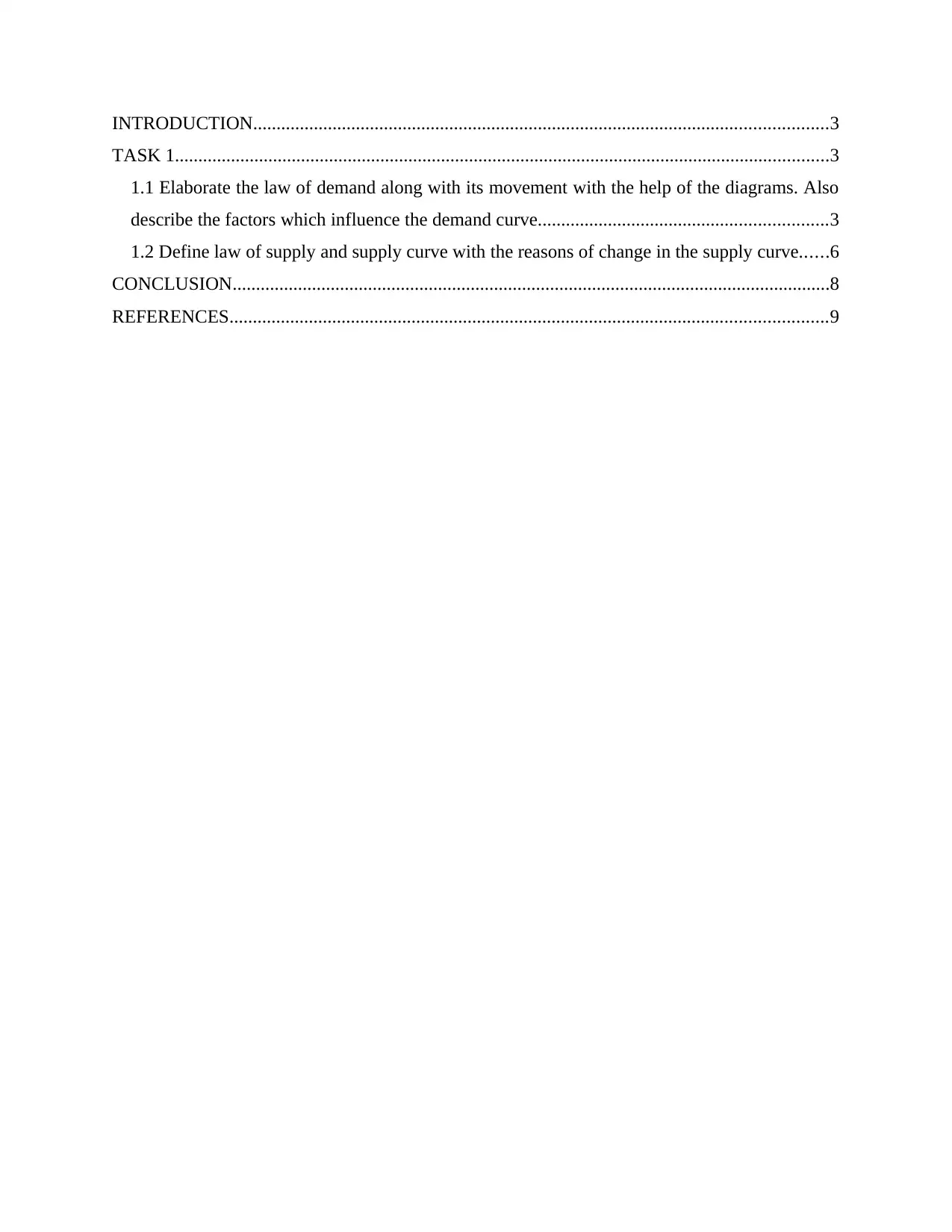
Demand Curve for the Morrison Products:
When interest in an item changes, customers respond by reducing the purchasing power of their
item. This happens when various elements other than cost and quantity remain consistent.
Document Page
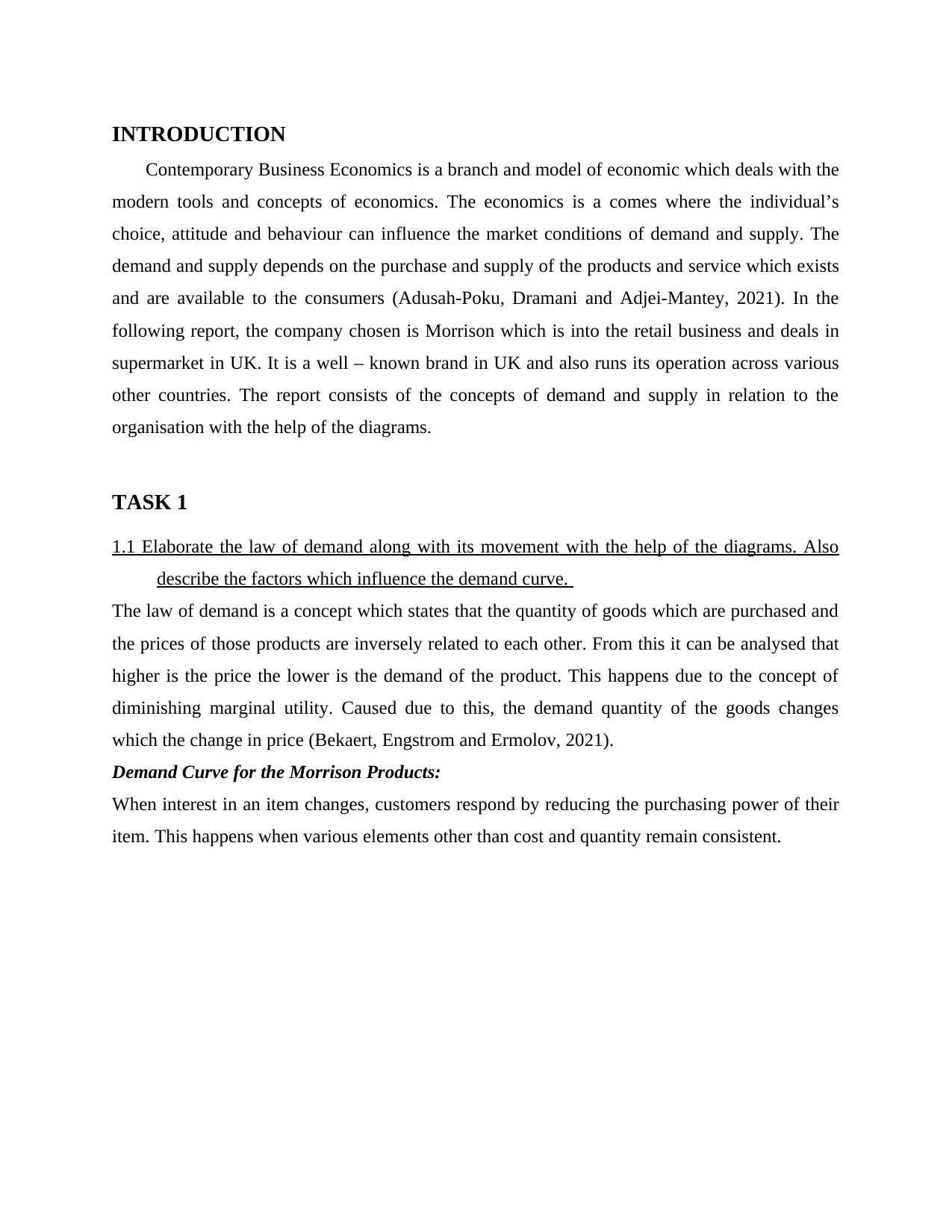
Changes in the factors of Demand Curve:
While the different elements remain consistent, interest in a project may change when
costs change. Nonetheless, the adjustment of these factors determines the market interest for the
project and further influences the case of interest bending. Adjustments to other interest factors
Figure 2: Shift in the demand for Morrison products
Figure 1: Demand Curve for Morrison products
tabler-icon-diamond-filled.svg

Paraphrase This Document

Need a fresh take? Get an instant paraphrase of this document with our AI Paraphraser
Document Page
other than value will cause the interest curve to change. Several factors contributed to the drop in
popularity from Q1 to Q2, which caused P1's interest bend to move left from D1 to D2.
1. Taste and preferences: A customer's decision about a particular product is not entirely
resolved by the act of purchasing the item. The main driver of adjustment in taste and
inclination among Morrison buyers is adjustment in style (Dessbesell and et.al., 2020).
This is subject to the commercial influence of merchants and manufacturers on different
items. It has a positive effect on customer interest, increasing interest, and adversely
reducing interest. This prompted a shift towards freedom and the left.
2. Income: It is one of the most important components upon which the interests of Morrison
merchandise depend. When payments increase, so does the purchasing power of
shoppers. It shows how customers can buy more for their current cost. This will build
interest and will cause the sought changes to bend to the right. Contrary to common
sense, once the salary is reduced, the purchasing power of customers will be weakened,
and they can basically buy. This will reduce the interest of the item and cause the change
sought by bending to one side.
3. Advertisement Expenditure: Many businesses spend a lot of money on advertising and
displaying their wares to influence customer tastes. If it is persuaded by an ad, it usually
buys more products, so interest increases and moves to the right in the interest curve.
When Morrison runs fewer promotions, it's less persuasive to customers. it promotes the
reduction of product benefits.
4. Change in price of related goods: There are certain items whose requirements are
affected by different items, and these goods are called substitutes or reciprocal products.
The increase in the cost of these products will affect the adjustment of the interest bend.
For example, as the cost of espresso falls, keeping a broad range of elements consistent,
tea interest wanes and quickly shifts to one side of the interest curve. In fact, the rising
cost of espresso will boost the interest in tea and will shift the curve to the right
(Kozenyasheva and Ko, 2020).
5. Consumers in the market: Buyers are the main source of interest to watch. As the
number of customers increases, the interest will rise.
6. Expectation of consumer's regarding the future prices: Item interest depends on the
shopper's assumptions about future cost changes. When shoppers estimate that the cost of
Document Page
a particular item will go up, they typically buy more items to avoid buying similar
products at higher costs. Assuming buyers expect costs to decrease over time, they will
defer the use of specific items, which will lead to less interest in those items.
1.2 Define law of supply and supply curve with the reasons of change in the supply curve.
The law of supply determines the amount of services and products that can be sold at a
given cost. The link between the amount offered and the cost shows a skewed expansion. The
law states that the higher the value, the more the supplier will sell. Manufacturers will offer more
products at a higher cost because it increases their revenue. Time remains an important inventory
factor as suppliers need to respond quickly to changes in popularity or costs. Providers should
therefore try to determine whether popular progress is impermanent or super-persistent
(LarraƱeta, Dominguez-Robles and Lamprou, 2020).
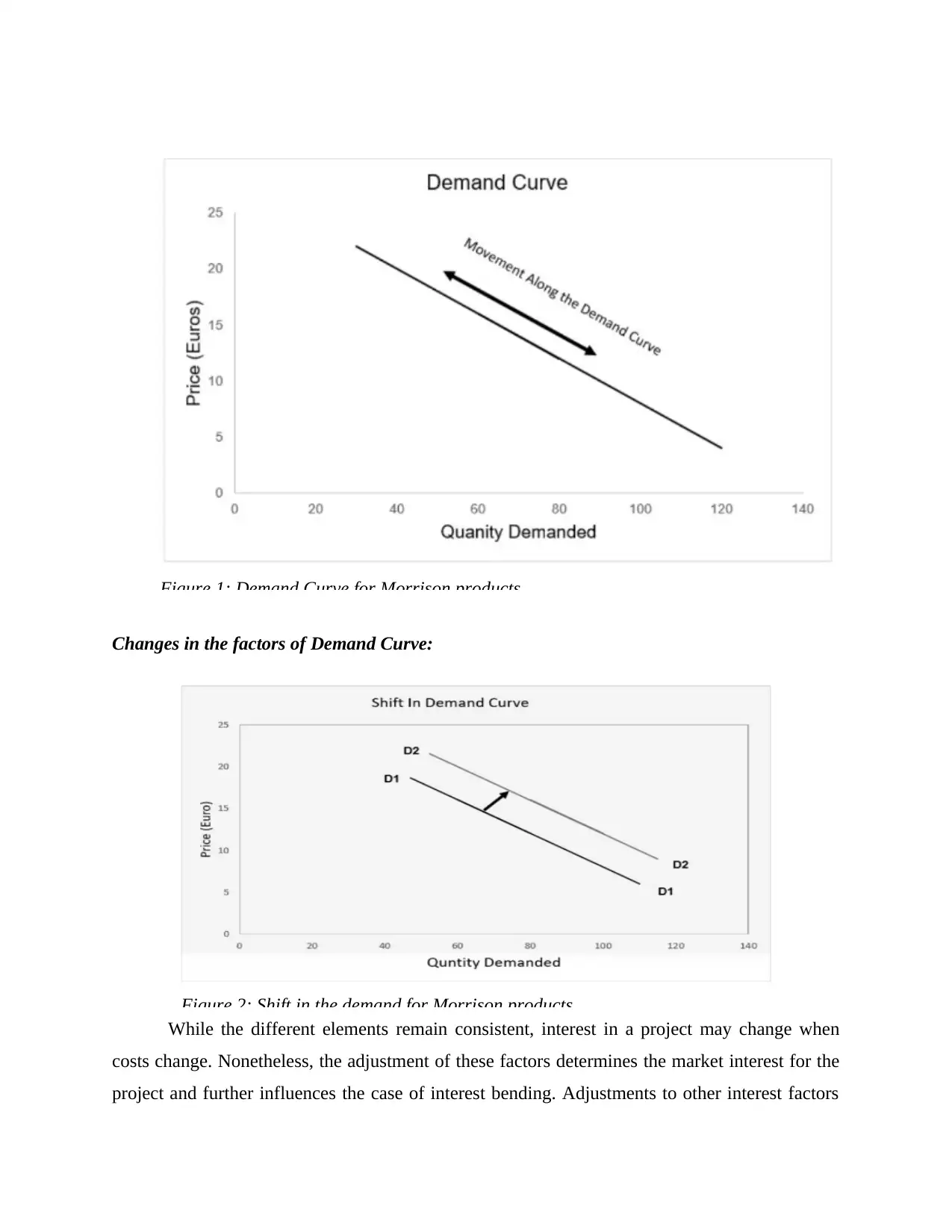
Supply Curve:
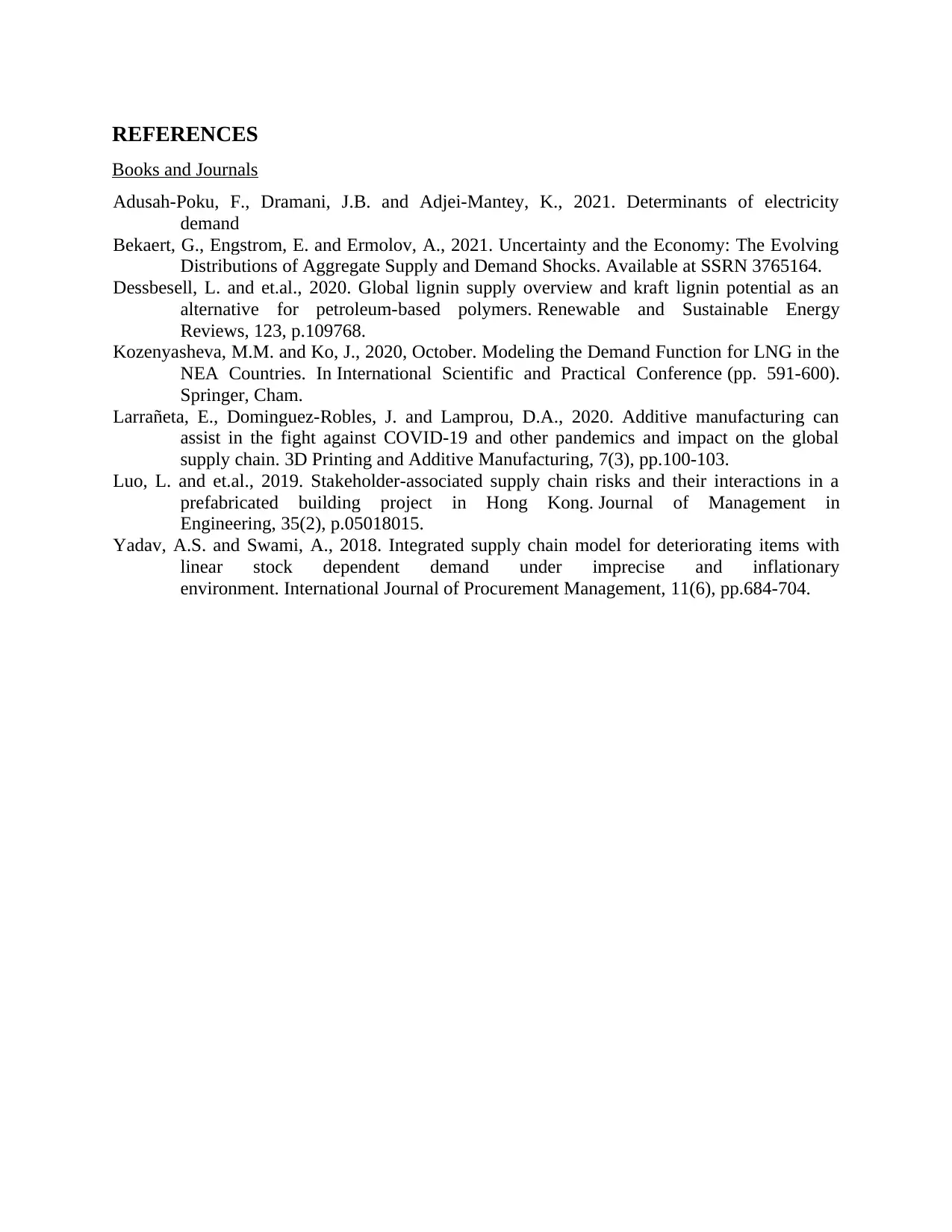
Every time the value of an item rises from P to P2, the supplier responds by supplying
more items to the market. In the same way, assuming the cost is reduced from P to P1, the
financial manager reduces the inventory of the monitored item and subsequently reduces the
inventory from OQ to OQ1. This prompted the inventory curve to develop along the inventory.
Figure 3: Supply Curve of Morrison Products
Document Page
An increase in cost drives the bend upwards, while a decrease in cost affects the development of
inventory down the bend. Morrison will now look for customers who can provide higher value to
the product when the value of the item declines. It can attract numerous suppliers by extending
the value of its goods.
Change in supply curve due to the factors:
1. Number of sellers: Supply is affected by the number of dealers concerned. The
abundance of items on the market brings more available items. As product inventory
increases, the inventory curve shifts to the right. When the number of providers increases,
it moves to one side, usually increasing the number of providers (Luo and et.al., 2019).
2. Prices: It affects how much product is offered on the lookout. When the cost of natural
substances increases, the cost of production increases as the benefit decreases. Profits are
an important motivator for producers in order to increase supply, so less profit reduces
supply. This pushes the corner to the left, resulting in a lack of product on the lookout.
Reducing the cost of natural substances also reduces the cost of creation. This
overwhelms the assembly and supply of items, prompting the repositioning of inventory
bends to one side.
3. Taxes and subsidies: It affects the provider's primary focus on benefits. For example,
fees can reduce benefits by inflating costs. This results in a reduction in the number of
items shipped by suppliers. Once again, sponsorships can lighten creative costs, thereby
increasing revenue. Expanding giving sparks more creation and supply. A reduction in
endowment funds will stop creating and reducing supply.
4. Technology: It is further increasing proficiency, lowering fees and increasing benefits.
This fosters more creation and a corresponding expansion of supply. Therefore, the stock
expands and the stock bend moves to one side. Changes in suppliers' assumptions about
future costs may affect current inventories (Yadav and Swami, 2018). If Morrison
suspects that costs will rise in the future, they will be preoccupied with expanding their
creations and expanding their supply.
tabler-icon-diamond-filled.svg

Paraphrase This Document

Need a fresh take? Get an instant paraphrase of this document with our AI Paraphraser
Document Page
CONCLUSION
The above report can be concluded and summarised by the above report, that retail business
set a good example of understanding the concept of demand and supply. As in the stock of the
goods is maintained and the supply chain system is maintained by the demand of the goods and
services in the organisation. The movement of the demand curve and supply curve is dependent
on the quantity demanded and supply quantity of the products with reference to the price of the
products and services. It happens because when the company changes the prices of the products
the demand of the goods is automatically impacted and thus the movement in the demand and
supply curve incurs.
Document Page
REFERENCES
Books and Journals
Adusah-Poku, F., Dramani, J.B. and Adjei-Mantey, K., 2021. Determinants of electricity
demand
Bekaert, G., Engstrom, E. and Ermolov, A., 2021. Uncertainty and the Economy: The Evolving
Distributions of Aggregate Supply and Demand Shocks. Available at SSRN 3765164.
Dessbesell, L. and et.al., 2020. Global lignin supply overview and kraft lignin potential as an
alternative for petroleum-based polymers. Renewable and Sustainable Energy
Reviews, 123, p.109768.
Kozenyasheva, M.M. and Ko, J., 2020, October. Modeling the Demand Function for LNG in the
NEA Countries. In International Scientific and Practical Conference (pp. 591-600).
Springer, Cham.
LarraƱeta, E., Dominguez-Robles, J. and Lamprou, D.A., 2020. Additive manufacturing can
assist in the fight against COVID-19 and other pandemics and impact on the global
supply chain. 3D Printing and Additive Manufacturing, 7(3), pp.100-103.
Luo, L. and et.al., 2019. Stakeholder-associated supply chain risks and their interactions in a
prefabricated building project in Hong Kong. Journal of Management in
Engineering, 35(2), p.05018015.
Yadav, A.S. and Swami, A., 2018. Integrated supply chain model for deteriorating items with
linear stock dependent demand under imprecise and inflationary
environment. International Journal of Procurement Management, 11(6), pp.684-704.
chevron_up_icon
1 out of 9
circle_padding
hide_on_mobile
zoom_out_icon
[object Object]