Design and Analysis of a Continuous Belt Conveyor System

Verified

Added on  2020/03/23

|8
|558
|120
Project
AI Summary
This project focuses on the design and analysis of a continuous belt conveyor system, a critical component in material handling. The assignment begins by outlining the project's objectives, which include designing a system that efficiently conveys materials while minimizing wear and tear, optimizing payload, and ensuring fail-safe operation. The solution details the selection of design parameters, including the nature of the material being conveyed, drive power calculations (resulting in a selected motor rating of 26kW), and the selection of belt width, type, and class. The project explores belt tension profiles under various loading conditions (empty, fully loaded, incline/horizontal, and decline). It also addresses the selection and location of the take-up method, determination of pulley diameters, and head and tail transition configurations. The influence of increased idler roll spacing on the carry and return sides is discussed, highlighting both advantages (increased tension for efficient delivery) and disadvantages (increased wear and tear). Finally, the project suggests alternative continuous conveying options, such as the bucket conveyor, and concludes with the need for continuous improvements and testing to optimize the system's performance.
Document Page
PROJECT SOLUTIONS TO THE QUESTIONS
INTRODUCTION
Material handling and transportation equipment play a critical role within the production floor. It
facilitates transfer of semi-finished parts within the production system. Now, there are a number
of methods that are being used for this purpose. One of them is the conveyors; which is further
split into various types like: chain conveyor, rail conveyor, and belt conveyor among others. In
this case, a project problem is presented in which the design team is required to come up with an
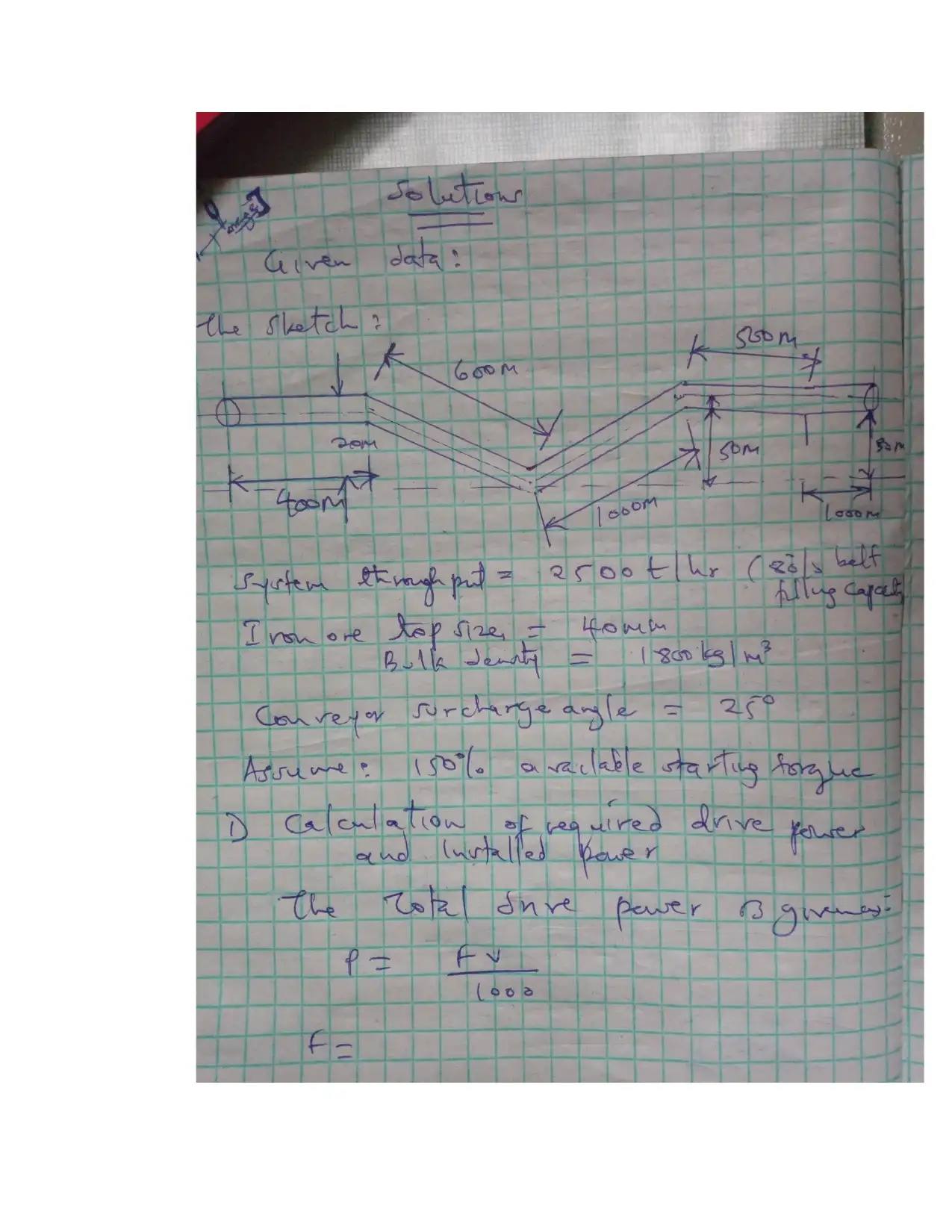
efficient design of continuous belt conveyor system as shown in figure 1. The conveyor profiles
illustrated must be achieved in the process. Critical design parameters as provided include: speed
of conveyor, the capacity in tonnes per hr, the tension in the belts at every section along the belt
profile, the power requirements hence selection of appropriate motor for this purpose. The aim is
to design a system that will be in tandem with the requirements that include: An efficient system
where belt wear and tear is minimized while performance maximized; achieve a sufficient
payload per day to match with the production throughput on a weekly basis and also design a
system that is safety-conscious such should it fail unexpectedly then it would happen in a fail-
safe manner.
Question 1
(i) Design Parameters Selection
Selection of design parameters will have to consider the following factors:
The nature and amount of material that us being conveyed; heavier materials
may require slightly lower speeds otherwise wear and tear would be too
frequent
Hence the payload is a critical design factor and must be optimized to ensure
efficient performance with return on investment
(ii) Calculation of required drive power and installed power
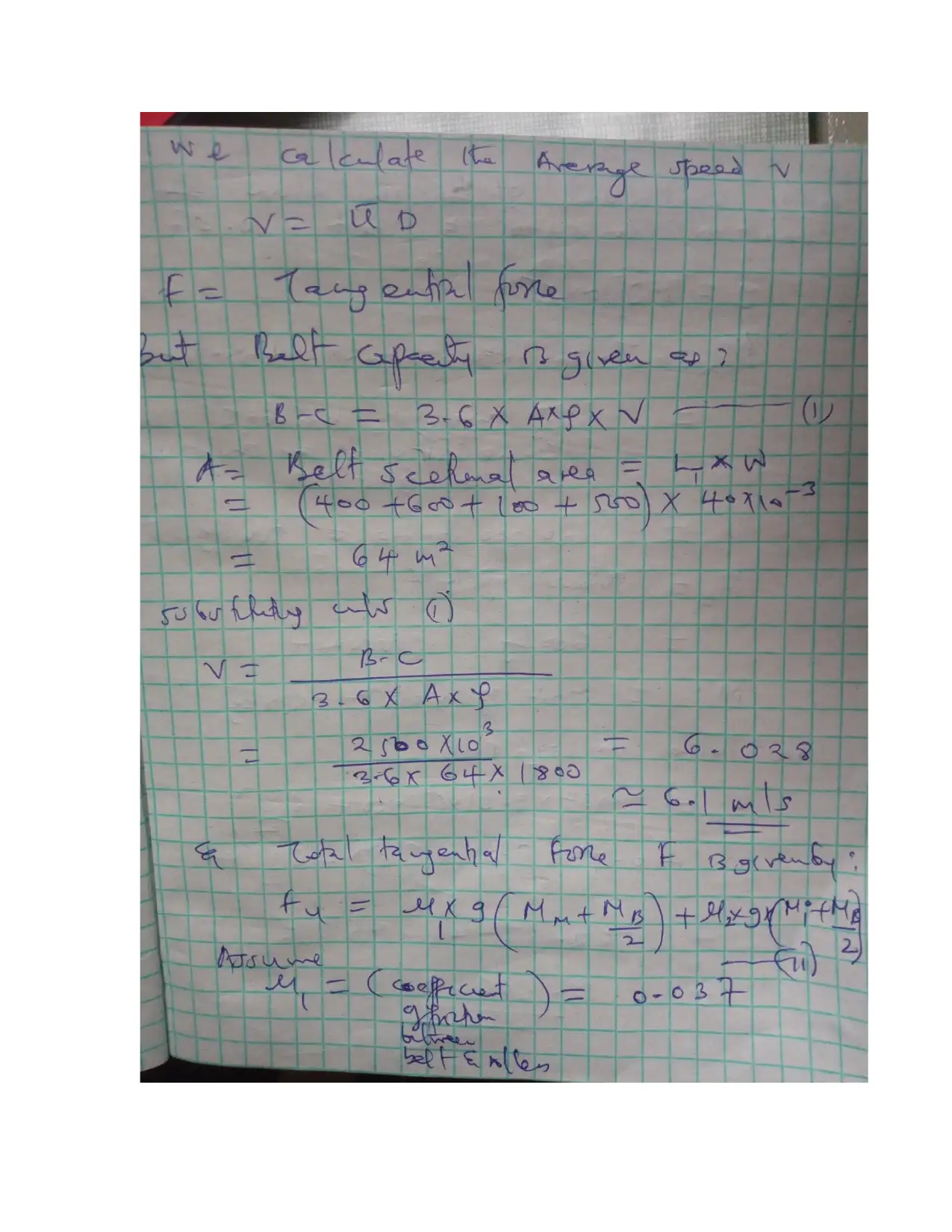
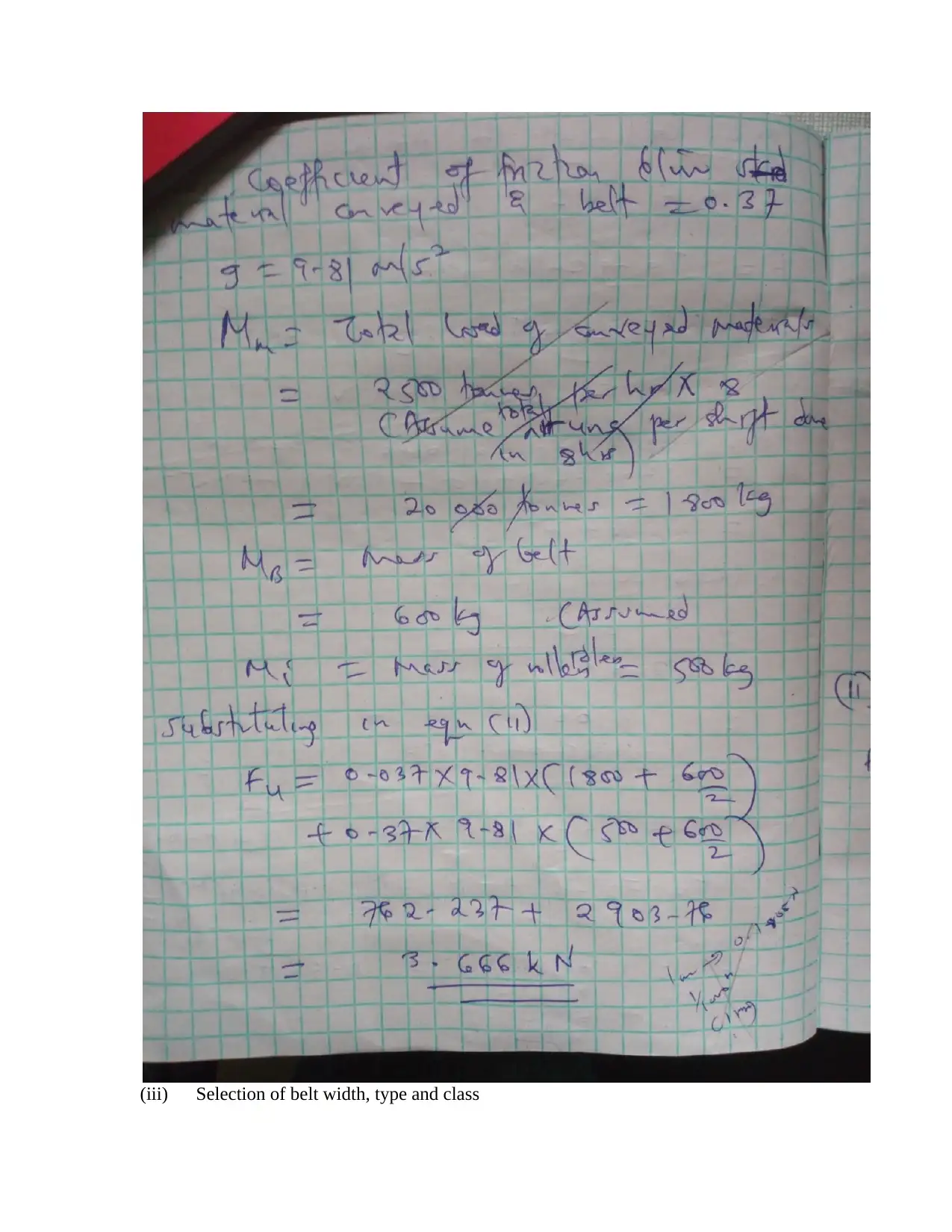
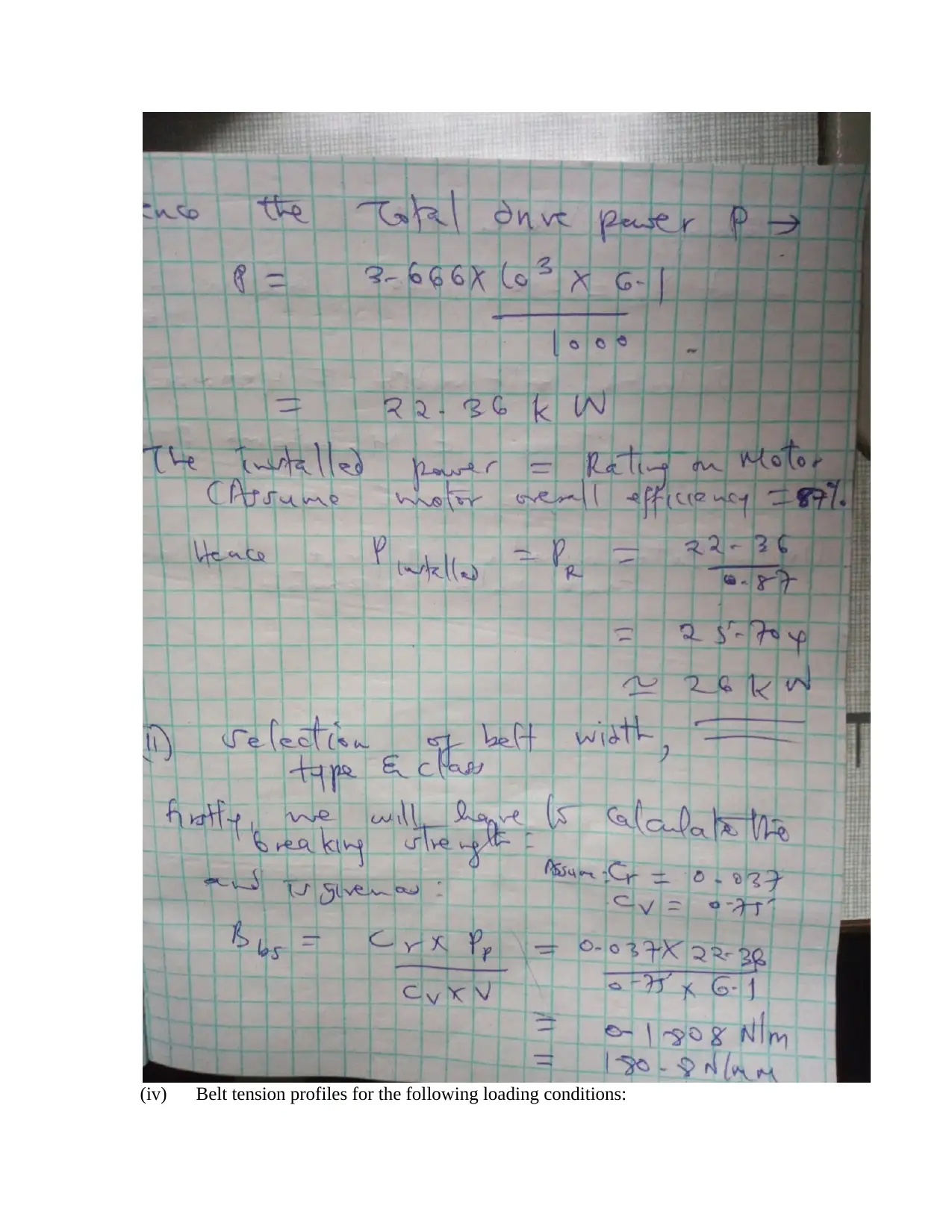
In calculating the drive power, check figure 1 where in this case we obtained a drive
power of 22.36kW and motor with a rating of 26kW will be selected.
tabler-icon-diamond-filled.svg

Paraphrase This Document

Need a fresh take? Get an instant paraphrase of this document with our AI Paraphraser
Document Page
Document Page
Document Page
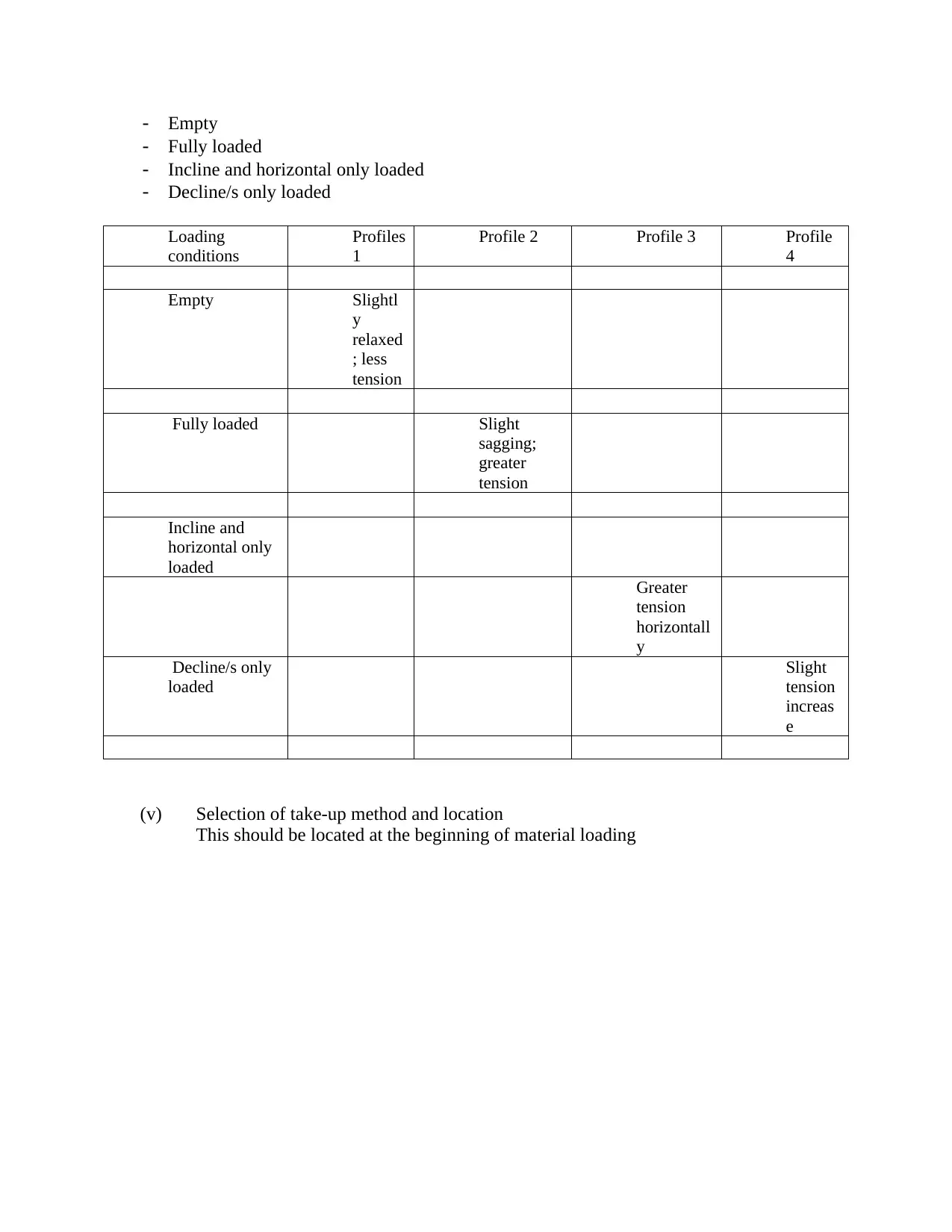
(iii) Selection of belt width, type and class
tabler-icon-diamond-filled.svg

Paraphrase This Document

Need a fresh take? Get an instant paraphrase of this document with our AI Paraphraser
Document Page
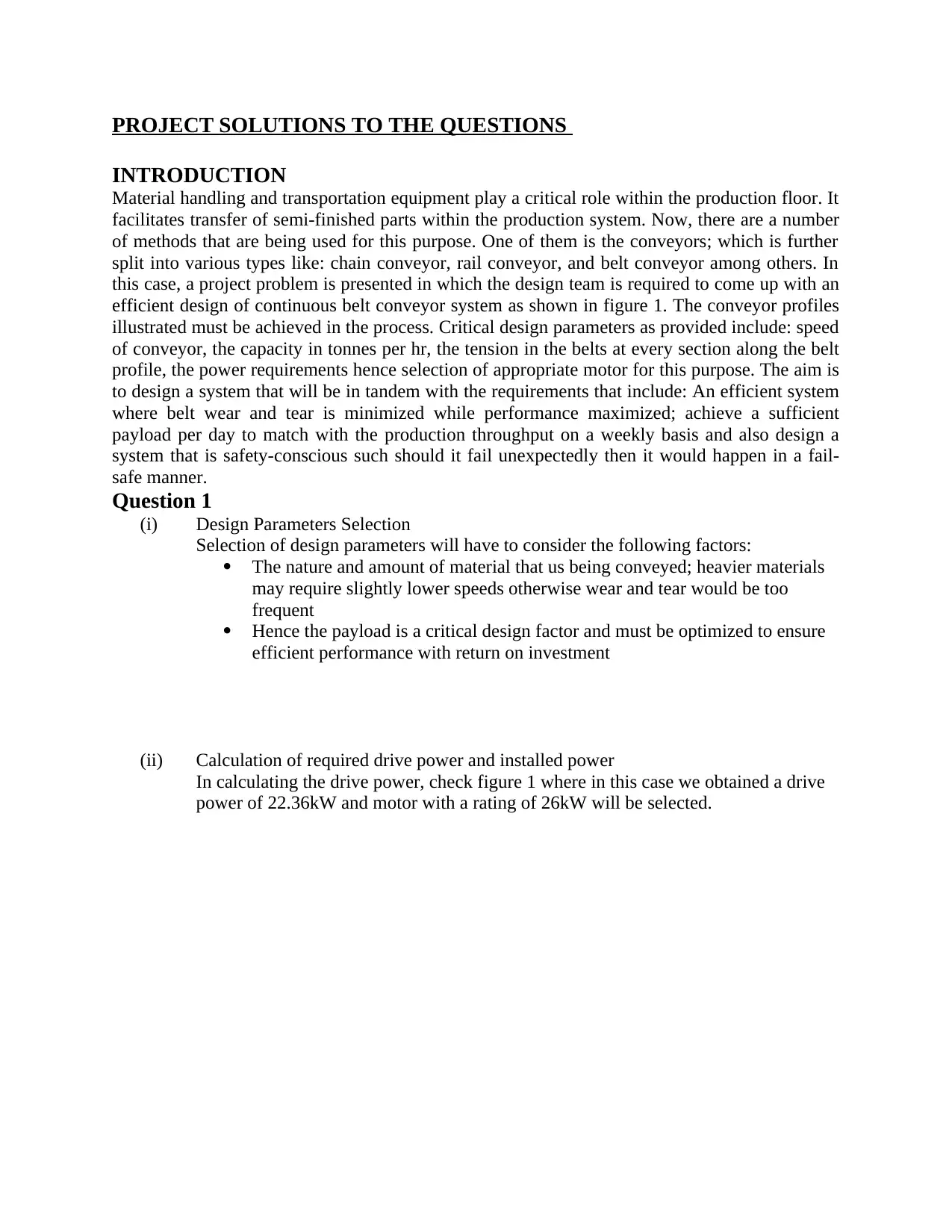
(iv) Belt tension profiles for the following loading conditions:
Document Page
- Empty
- Fully loaded
- Incline and horizontal only loaded
- Decline/s only loaded
Loading
conditions
Profiles
1
Profile 2 Profile 3 Profile
4
Empty Slightl
y
relaxed
; less
tension
Fully loaded Slight
sagging;
greater
tension
Incline and
horizontal only
loaded
Greater
tension
horizontall
y
Decline/s only
loaded
Slight
tension
increas
e
(v) Selection of take-up method and location
This should be located at the beginning of material loading
Document Page
(vi) Calculation of the minimum radii for the vertical curves
tabler-icon-diamond-filled.svg

Paraphrase This Document

Need a fresh take? Get an instant paraphrase of this document with our AI Paraphraser
Document Page
(vii) Determination of drive, tail and snub pulley diameters
(viii) Head and tail transition configurations and lengths
Question 2
Influence of increased idler roll spacing on both carry and return side.
Advantages
Leads to increased tension of belts hence efficient delivery of material
Disadvantages
Increased tensioning of belts lead to frequent wear and tear hence lowering lifespan of belts
Question 3
Alternative continuous conveying options
The bucket conveyor can be used especially for vertical lifting of material
CONCLUSION
The belt conveying system design will have to be tested and corrective action made as early as
possible. Expectedly, all the requirements are supposed to be met however it unlikely that they
will be achieved at a go. Therefore, there is need to make continuous improvements as the
operation ensues.
chevron_up_icon
1 out of 8
circle_padding
hide_on_mobile
zoom_out_icon
[object Object]