LSBM302 Corporate Risk Management: Abraaj Group Scandal Case Study
VerifiedAdded on 2022/12/27
|8
|2457
|95
Case Study
AI Summary
The provided document is a comprehensive case study analyzing the Abraaj Group scandal and its collapse in 2018-2019. It begins with an introduction to the company, its founder, and the events leading to its downfall, highlighting instances of financial mismanagement, misappropriation of funds, and misleading of investors. The case study then assesses the various risks faced by the company, categorized into economic, financial, compliance, and reputation risks, detailing the specific issues within each category. It further examines Abraaj's response to the exposure of these risks and identifies gaps and shortfalls in its risk management approach, including failures in risk identification, measurement, mitigation, reporting, and governance. The study also explores aspects of governance and regulatory risks, offering recommendations for preventing similar events in the future. The conclusion summarizes the key findings and emphasizes the importance of systematic decision-making, effective fund management, and transparent communication to investors. The document is a detailed analysis of corporate risk management failures and their severe consequences.
Case Study: The
Abraaj Group Scandal
and Collapse 201819
Abraaj Group Scandal
and Collapse 201819

Paraphrase This Document
Need a fresh take? Get an instant paraphrase of this document with our AI Paraphraser
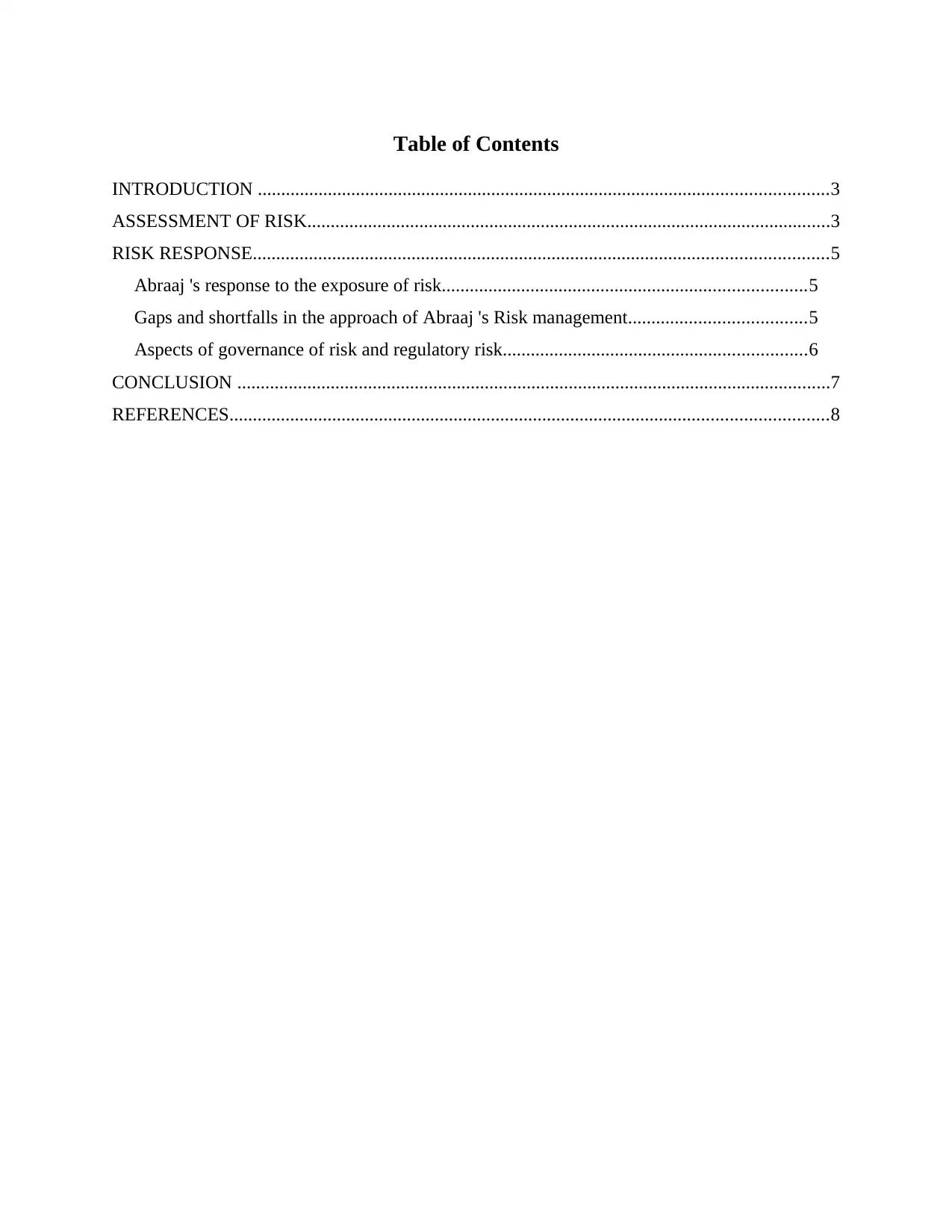
Table of Contents
INTRODUCTION ..........................................................................................................................3
ASSESSMENT OF RISK................................................................................................................3
RISK RESPONSE...........................................................................................................................5
Abraaj 's response to the exposure of risk..............................................................................5
Gaps and shortfalls in the approach of Abraaj 's Risk management......................................5
Aspects of governance of risk and regulatory risk.................................................................6
CONCLUSION ...............................................................................................................................7
REFERENCES................................................................................................................................8
INTRODUCTION ..........................................................................................................................3
ASSESSMENT OF RISK................................................................................................................3
RISK RESPONSE...........................................................................................................................5
Abraaj 's response to the exposure of risk..............................................................................5
Gaps and shortfalls in the approach of Abraaj 's Risk management......................................5
Aspects of governance of risk and regulatory risk.................................................................6
CONCLUSION ...............................................................................................................................7
REFERENCES................................................................................................................................8
INTRODUCTION
The Abraaj Group is a Dubai based firm that deals in private equity. The firm was
founded by Arif Naqvi. The company was very influential even after 16 years of its operations
and had more than $14 Billion in AUM. In the year 2018, the reputation of the company was
tattered and its story collapsed just in period of 4 months. The practices of the company were
not appropriate and they were continuously defrauding its investors by not disclosing the true
information of the accounts of company (Rügemer, 2019). The company was in loss and they
instead of disclosing the information to its investors, divested its holding from its Pakistani firm.
Soon after some time, when they were not able to hide loses, situation came open to all its
investors.
There were many key causes to Abraaj Scandal. Few of them are as follows: Firstly, they
misused money from different funds to alleviate problems of cash flow in the company.
Secondly, they over valued their assets and also misappropriated the funds by investors. They
also to hide finances manipulated the periods of accounting. Thirdly, every time they were
misleading its investors from quite a long time and Mr Naqvi also mislead the investors and
other partners of the company. At the time of inquiry he always diverted it and did not allow to
have proper inquiry to happen. Lastly, they were lacking adequate oversight controls due to their
weak governance system.
ASSESSMENT OF RISK
The key risk which were associated with the company to which the company should have
focused upon to safe their company were many. This included risk which relates to the finances
of the company where they were not disclosing the finances and balances of the company to its
investors in fear that they might lose them and the reputation of them would be at stake. The
another key risk was that if investors gets to know that the company is defrauding them, then
they will withdraw their money back and no other investor will invest in their company (Beerel,
2019). The key risk was also associated with the poor governance system at the company as they
were not complying with the provisions which is expected from them, by the law. The company
was involved in various kinds of practices which was risky for the company as disclosure of it
would make the company liable for punishments, penalties and fines. This could all lead to the
The Abraaj Group is a Dubai based firm that deals in private equity. The firm was
founded by Arif Naqvi. The company was very influential even after 16 years of its operations
and had more than $14 Billion in AUM. In the year 2018, the reputation of the company was
tattered and its story collapsed just in period of 4 months. The practices of the company were
not appropriate and they were continuously defrauding its investors by not disclosing the true
information of the accounts of company (Rügemer, 2019). The company was in loss and they
instead of disclosing the information to its investors, divested its holding from its Pakistani firm.
Soon after some time, when they were not able to hide loses, situation came open to all its
investors.
There were many key causes to Abraaj Scandal. Few of them are as follows: Firstly, they
misused money from different funds to alleviate problems of cash flow in the company.
Secondly, they over valued their assets and also misappropriated the funds by investors. They
also to hide finances manipulated the periods of accounting. Thirdly, every time they were
misleading its investors from quite a long time and Mr Naqvi also mislead the investors and
other partners of the company. At the time of inquiry he always diverted it and did not allow to
have proper inquiry to happen. Lastly, they were lacking adequate oversight controls due to their
weak governance system.
ASSESSMENT OF RISK
The key risk which were associated with the company to which the company should have
focused upon to safe their company were many. This included risk which relates to the finances
of the company where they were not disclosing the finances and balances of the company to its
investors in fear that they might lose them and the reputation of them would be at stake. The
another key risk was that if investors gets to know that the company is defrauding them, then
they will withdraw their money back and no other investor will invest in their company (Beerel,
2019). The key risk was also associated with the poor governance system at the company as they
were not complying with the provisions which is expected from them, by the law. The company
was involved in various kinds of practices which was risky for the company as disclosure of it
would make the company liable for punishments, penalties and fines. This could all lead to the
⊘ This is a preview!⊘
Do you want full access?
Subscribe today to unlock all pages.

Trusted by 1+ million students worldwide
deterioration of the reputation of the company in market which would lead to the downfall of the
company.
There are many types of risk which are associated while running a business. Each of
these risks are expected to be assessed by the company so that the business runs smoothly and
efficiently. The key risks which were involved in the business practices by the Abraaj Group
were many. They are all explained and classified below under different categories. They are as
follows:
Economic Risk:
The key risk which was involved was the maintenance of steady cash flow. The Company
was not maintaining its cash flow and therefore most of the risk was associated with it. Due to its
non maintenance, the investors of the company were being mislead and also the company to
balance the amount was taking loans and divesting its money from different accounts (Ofori,
2021). All these practices were very risky as taking one risk was leading to taking another risk.
Financial Risk:
The another key risk which was present was relating to the finances.
The company was not disclosing its finances to the investors as they were in losses. The
company to increase the money and pay its loan used the amount from its Pakistani firm
by de-vesting money from it. This involved great risk as the company was already in loss
and still was continuing to borrow money to pay off its loan amount.
The company was non disclosing its finances to the investors as the risk was high that the
investors would withdraw their money back from the company or will demand their
money back from the company. This would have lead to the winding up of the company
if the finances of the company came out. If the finances of the company came out, then no other banking institute or company will
lend money to the Abraaj group for any further dealings.
Compliance Risk:
The risk which were related to the compliance was that the company was not complying
with the rules and regulations provided by the law (Revilla and Saenz, 2017). This non
compliance was majorly affecting the company and due to this many risk got associated with the
company. They are as follows:
company.
There are many types of risk which are associated while running a business. Each of
these risks are expected to be assessed by the company so that the business runs smoothly and
efficiently. The key risks which were involved in the business practices by the Abraaj Group
were many. They are all explained and classified below under different categories. They are as
follows:
Economic Risk:
The key risk which was involved was the maintenance of steady cash flow. The Company
was not maintaining its cash flow and therefore most of the risk was associated with it. Due to its
non maintenance, the investors of the company were being mislead and also the company to
balance the amount was taking loans and divesting its money from different accounts (Ofori,
2021). All these practices were very risky as taking one risk was leading to taking another risk.
Financial Risk:
The another key risk which was present was relating to the finances.
The company was not disclosing its finances to the investors as they were in losses. The
company to increase the money and pay its loan used the amount from its Pakistani firm
by de-vesting money from it. This involved great risk as the company was already in loss
and still was continuing to borrow money to pay off its loan amount.
The company was non disclosing its finances to the investors as the risk was high that the
investors would withdraw their money back from the company or will demand their
money back from the company. This would have lead to the winding up of the company
if the finances of the company came out. If the finances of the company came out, then no other banking institute or company will
lend money to the Abraaj group for any further dealings.
Compliance Risk:
The risk which were related to the compliance was that the company was not complying
with the rules and regulations provided by the law (Revilla and Saenz, 2017). This non
compliance was majorly affecting the company and due to this many risk got associated with the
company. They are as follows:
Paraphrase This Document
Need a fresh take? Get an instant paraphrase of this document with our AI Paraphraser
The company was not complying with rules and regulations due to which they may be
held liable to pay penalties and fines to the government.
Non following the provisions of the government will make the company liable for
punishment.
The company was expected to disclose all the financial and material facts to its investors
but they failed to, which created risk for the company. The company had poor governance system which also created risk for the company as
they were lacking in it and no measures were taken by them in this regard.
Reputation Risk:
the company was involved in defrauding of its investors. If this information leaks in the
market then it will hamper the reputation of the company.
This will lead to the downfall of the company if the reputation of the company is
destroyed as no investor would further invest in their company and they will get no other
projects or deals to run their business.
RISK RESPONSE
Abraaj 's response to the exposure of risk
In the first week of February 2018, one of the news paper and the journal disclosed that
few investors have hired a forensic accountants to look into the finances of Abraaj Group
(Mojtahedi and Oo, 2017). This was done by them as they wanted to know that why their
amount of $200m was not invested in the project of healthcare as per the planning done. After
the disclosure of this statement, Naqvi resigned from his post, many staffs were reported
redundant, investors released their investments made, etc. Abraaj after the exposure of this risk,
tried to sell the parts of his business. The two creditors after this asked the court for the winding
up of the company. In response to this, Abraaj filed in the court for Provisional Liquidation.
Gaps and shortfalls in the approach of Abraaj 's Risk management
Every company is likely to face risk as without them the success or growth of a company
is not possible. There are although many approaches or framework that can be followed by the
companies to manage the risk coming its way. If the risk management of the company is
effective then it add value to the organisation (Bernard and et. al., 2018). There are five
components which are to be considered while working on risk management. They are as follows:
held liable to pay penalties and fines to the government.
Non following the provisions of the government will make the company liable for
punishment.
The company was expected to disclose all the financial and material facts to its investors
but they failed to, which created risk for the company. The company had poor governance system which also created risk for the company as
they were lacking in it and no measures were taken by them in this regard.
Reputation Risk:
the company was involved in defrauding of its investors. If this information leaks in the
market then it will hamper the reputation of the company.
This will lead to the downfall of the company if the reputation of the company is
destroyed as no investor would further invest in their company and they will get no other
projects or deals to run their business.
RISK RESPONSE
Abraaj 's response to the exposure of risk
In the first week of February 2018, one of the news paper and the journal disclosed that
few investors have hired a forensic accountants to look into the finances of Abraaj Group
(Mojtahedi and Oo, 2017). This was done by them as they wanted to know that why their
amount of $200m was not invested in the project of healthcare as per the planning done. After
the disclosure of this statement, Naqvi resigned from his post, many staffs were reported
redundant, investors released their investments made, etc. Abraaj after the exposure of this risk,
tried to sell the parts of his business. The two creditors after this asked the court for the winding
up of the company. In response to this, Abraaj filed in the court for Provisional Liquidation.
Gaps and shortfalls in the approach of Abraaj 's Risk management
Every company is likely to face risk as without them the success or growth of a company
is not possible. There are although many approaches or framework that can be followed by the
companies to manage the risk coming its way. If the risk management of the company is
effective then it add value to the organisation (Bernard and et. al., 2018). There are five
components which are to be considered while working on risk management. They are as follows:
1. Identification of risk: in this, the risk pertaining to the functioning of the company are
identified. By adopting this, Abraaj Group would have identified all the risk and other
affecting factors that would have affected the company.
2. Risk Measurement: After making list of all the risk, the company can sort those risk
which could affect the company adversely if not taken care of immediately. Measuring
the risk by Abraaj group would have helped the company to know of the risk they had of
the exposure of it.
3. Risk Mitigation: This is the step in which the company decides those risks which are to
be eliminated or taken care of on the basis of its effect over the company (Welch, 2018) .
This way Abraaj would have known the risk which would have effected the reputation
and image of the company so that they would have started working on it as soon as it
would have been possible by them.
4. Reporting and Monitoring of Risk: This is the step in which the company should have
constantly monitored all the risk and such risk should be reported so that quick action
would have been taken by Abraaj group so that the risk are remained at optimal level.
5. Governance of Risk: It is the process in which the company looks after that the
framework of risk management is complied by all (Dudin and et. al., 2019). Abraaj at its
company failed to do this as took no measurement and precautions.
Aspects of governance of risk and regulatory risk
There are many aspects of the governance of risk and its regulations by the company. The
main of all is that it helps in the regulation of risk it the risk are properly governed. The aspects
may include:
Regular check up of the finances so that the risk can be regulated in case any error is
found by the finance department of the company. This will help in early elimination of
the risk of finances.
The company within its organisations shall make sure that all the functioning are done
complying with the provisions of law and no illegal practices are taking place. This is to
be done to safeguard the interest of the creditors and shareholders of the company.
The company shall double check its finances and accounts by appo8inting some third
person not related to company so that the error can be found if there and the risk can be
managed by the company.
identified. By adopting this, Abraaj Group would have identified all the risk and other
affecting factors that would have affected the company.
2. Risk Measurement: After making list of all the risk, the company can sort those risk
which could affect the company adversely if not taken care of immediately. Measuring
the risk by Abraaj group would have helped the company to know of the risk they had of
the exposure of it.
3. Risk Mitigation: This is the step in which the company decides those risks which are to
be eliminated or taken care of on the basis of its effect over the company (Welch, 2018) .
This way Abraaj would have known the risk which would have effected the reputation
and image of the company so that they would have started working on it as soon as it
would have been possible by them.
4. Reporting and Monitoring of Risk: This is the step in which the company should have
constantly monitored all the risk and such risk should be reported so that quick action
would have been taken by Abraaj group so that the risk are remained at optimal level.
5. Governance of Risk: It is the process in which the company looks after that the
framework of risk management is complied by all (Dudin and et. al., 2019). Abraaj at its
company failed to do this as took no measurement and precautions.
Aspects of governance of risk and regulatory risk
There are many aspects of the governance of risk and its regulations by the company. The
main of all is that it helps in the regulation of risk it the risk are properly governed. The aspects
may include:
Regular check up of the finances so that the risk can be regulated in case any error is
found by the finance department of the company. This will help in early elimination of
the risk of finances.
The company within its organisations shall make sure that all the functioning are done
complying with the provisions of law and no illegal practices are taking place. This is to
be done to safeguard the interest of the creditors and shareholders of the company.
The company shall double check its finances and accounts by appo8inting some third
person not related to company so that the error can be found if there and the risk can be
managed by the company.
⊘ This is a preview!⊘
Do you want full access?
Subscribe today to unlock all pages.
Trusted by 1+ million students worldwide
The company along with the external audit in the company shall also perform interim
audits on quarterly or half yearly basis so that there is strict monitoring of the finances
and the risk can be eliminated and regulated.
CONCLUSION
The scandal happened when the allegations were made against the company for its
misuse of the money being invested by the investors in some other thing instead of healthcare.
Both Abraaj and Naqvi denied the wrong being done by them and also they blamed the same on
the unforeseen political hurdles for the delayed deployment of money. After the disclosure of
the defaults made by them regarding loans, the two of the creditors, forced the company to go for
the supervised restructuring by the court and according to the procedure stated by the law. The
parent company of Abraaj after this filed for the provisional liquidation to the place called
Cayman Island, as the company was registered there. To fill the gaps, Abraaj borrowed lots of
money from various sources but all failed and the company still own the amount which is more
than $1 Billion. With the happening of this scandal, lots of creditors suffered as the company
owned huge amount which was to be paid by them to its creditors which it was unable to.
There are many recommendations which company may follow so that their company do
not witness any such type of event in future. Firstly, the company should make sure that they
make decisions systematically, administer the funds properly and also implement the control and
governance in an effective way. Secondly, it should be ensured that the company hire a fund
manager to ensure due diligence and see to it that it is updated. Thirdly, the company should
perform periodic reviews on governance which shall be conducted by some third party. Fourthly,
the company should make sure that they take all the necessary precautions and adopt a
framework to manage the risk associated with the company. Fifthly, the company shall always
disclose the informations associated with company to its investors so that the trust and
transparency is maintained. Lastly, the company should involve in good communication with its
investors and parties that are relevant to its business so to maintain the level of trust and
transparency.
audits on quarterly or half yearly basis so that there is strict monitoring of the finances
and the risk can be eliminated and regulated.
CONCLUSION
The scandal happened when the allegations were made against the company for its
misuse of the money being invested by the investors in some other thing instead of healthcare.
Both Abraaj and Naqvi denied the wrong being done by them and also they blamed the same on
the unforeseen political hurdles for the delayed deployment of money. After the disclosure of
the defaults made by them regarding loans, the two of the creditors, forced the company to go for
the supervised restructuring by the court and according to the procedure stated by the law. The
parent company of Abraaj after this filed for the provisional liquidation to the place called
Cayman Island, as the company was registered there. To fill the gaps, Abraaj borrowed lots of
money from various sources but all failed and the company still own the amount which is more
than $1 Billion. With the happening of this scandal, lots of creditors suffered as the company
owned huge amount which was to be paid by them to its creditors which it was unable to.
There are many recommendations which company may follow so that their company do
not witness any such type of event in future. Firstly, the company should make sure that they
make decisions systematically, administer the funds properly and also implement the control and
governance in an effective way. Secondly, it should be ensured that the company hire a fund
manager to ensure due diligence and see to it that it is updated. Thirdly, the company should
perform periodic reviews on governance which shall be conducted by some third party. Fourthly,
the company should make sure that they take all the necessary precautions and adopt a
framework to manage the risk associated with the company. Fifthly, the company shall always
disclose the informations associated with company to its investors so that the trust and
transparency is maintained. Lastly, the company should involve in good communication with its
investors and parties that are relevant to its business so to maintain the level of trust and
transparency.
Paraphrase This Document
Need a fresh take? Get an instant paraphrase of this document with our AI Paraphraser
REFERENCES
Books and Journals
Beerel, A., 2019. Ethical Leadership and Global Capitalism: A Guide to Good Practice.
Routledge.
Bernard, M., and et. al., 2018. Biocompatibility of polymer-based biomaterials and medical
devices–regulations, in vitro screening and risk-management. Biomaterials science,
6(8), pp.2025-2053.
Dudin, M.N., and et. al., 2019. Risk management as a tool for ensuring economic security: a
study of international practices. Journal of Advanced Research in Dynamical and
Control Systems, 11(7), pp.1006-1012.
Mojtahedi, M. and Oo, B.L., 2017. Critical attributes for proactive engagement of stakeholders in
disaster risk management. International Journal of Disaster Risk Reduction, 21, pp.35-
43.
Ofori, G., 2021. Leadership in the Construction Industry: Developing Authentic Leaders in a
Dynamic World. Routledge.
Revilla, E. and Saenz, M.J., 2017. The impact of risk management on the frequency of supply
chain disruptions. International Journal of Operations & Production Management.
Rügemer, W., 2019. The Capitalists of the 21st Century: An Easy-to-Understand Outline on the
Rise of the New Financial Players. tredition.
Welch, K., 2018. The effect of minority threat on risk management and the “new disciplinology”
in schools. Journal of Criminal Justice, 59, pp.12-17.
Books and Journals
Beerel, A., 2019. Ethical Leadership and Global Capitalism: A Guide to Good Practice.
Routledge.
Bernard, M., and et. al., 2018. Biocompatibility of polymer-based biomaterials and medical
devices–regulations, in vitro screening and risk-management. Biomaterials science,
6(8), pp.2025-2053.
Dudin, M.N., and et. al., 2019. Risk management as a tool for ensuring economic security: a
study of international practices. Journal of Advanced Research in Dynamical and
Control Systems, 11(7), pp.1006-1012.
Mojtahedi, M. and Oo, B.L., 2017. Critical attributes for proactive engagement of stakeholders in
disaster risk management. International Journal of Disaster Risk Reduction, 21, pp.35-
43.
Ofori, G., 2021. Leadership in the Construction Industry: Developing Authentic Leaders in a
Dynamic World. Routledge.
Revilla, E. and Saenz, M.J., 2017. The impact of risk management on the frequency of supply
chain disruptions. International Journal of Operations & Production Management.
Rügemer, W., 2019. The Capitalists of the 21st Century: An Easy-to-Understand Outline on the
Rise of the New Financial Players. tredition.
Welch, K., 2018. The effect of minority threat on risk management and the “new disciplinology”
in schools. Journal of Criminal Justice, 59, pp.12-17.

1 out of 8


Related Documents


Your All-in-One AI-Powered Toolkit for Academic Success.
+13062052269
info@desklib.com
Available 24*7 on WhatsApp / Email
![[object Object]](/_next/static/media/star-bottom.7253800d.svg)
Unlock your academic potential
Copyright © 2020–2026 A2Z Services. All Rights Reserved. Developed and managed by ZUCOL.