Research Proposal: Customer Engagement, Enthusiasm, and Loyalty
VerifiedAdded on 2020/05/16
|15
|3911
|133
Report
AI Summary
This research proposal investigates the relationship between customer engagement, enthusiasm, and loyalty within the context of Trip Advisor, Riverdale. It explores how customer involvement, engagement, and enthusiasm influence the behavioral intention of customer loyalty. The research employs a positivism research paradigm and utilizes a survey method with a sample size of 100-150 participants. The study aims to address research questions focused on the impact of customer involvement, engagement, and enthusiasm on loyalty, supported by a theoretical framework and detailed methodology. The literature review covers topics such as customer satisfaction, service quality, and the role of social media in customer engagement, providing context for the study's objectives and hypotheses. The proposal outlines the research design, including the use of an exploratory research design to understand the issues and opportunities related to customer engagement. The expected outcomes of the research are to provide valuable insights for Trip Advisor and other businesses in the tourism sector to enhance customer retention and increase market share.

Running Head: RESEARCH PROPOSAL 1
Research Proposal
Research Proposal

Paraphrase This Document
Need a fresh take? Get an instant paraphrase of this document with our AI Paraphraser
Research Proposal2
1.0 Abstract
The present research is focused on identifying the relation between consumer engagement, consumer
enthusiasm and the customer loyalty. The consumer loyalty is the phenomenon in which the customers
make repeated purchase and spread positive word of mouth for the company. It is directly linked with
customer engagement and enthusiasm. In the research, the survey method is used as a data collection
method. The positivism research paradigm is used and exploratory research design is used as a data
collection method. THz sample size is between 100-150 people depending upon the response of the
research participants. The research participants will be the customer of Trip advisor, Riverdale.
1.0 Abstract
The present research is focused on identifying the relation between consumer engagement, consumer
enthusiasm and the customer loyalty. The consumer loyalty is the phenomenon in which the customers
make repeated purchase and spread positive word of mouth for the company. It is directly linked with
customer engagement and enthusiasm. In the research, the survey method is used as a data collection
method. The positivism research paradigm is used and exploratory research design is used as a data
collection method. THz sample size is between 100-150 people depending upon the response of the
research participants. The research participants will be the customer of Trip advisor, Riverdale.
Research Proposal3
Table of Contents
1.0 Abstract.................................................................................................................................................2
2.0 Introduction...........................................................................................................................................4
2.1 Background of the Research..............................................................................................................4
2.2 Organization background..................................................................................................................4
2.3 Issues and Opportunities...................................................................................................................4
3.0 Literature Review..................................................................................................................................5
4.0 Research Objective................................................................................................................................6
5.0 Research Questions...............................................................................................................................6
6.0 Hypothesis:............................................................................................................................................7
7.0 Theoritical Framework...........................................................................................................................7
8.0 Methodology.........................................................................................................................................7
9.0 Research Design and methods...............................................................................................................8
10.0 Ethics...................................................................................................................................................9
11.0 Significance of the Research................................................................................................................9
12.0 Project Plan........................................................................................................................................10
References.................................................................................................................................................12
Appendix...................................................................................................................................................13
Table of Contents
1.0 Abstract.................................................................................................................................................2
2.0 Introduction...........................................................................................................................................4
2.1 Background of the Research..............................................................................................................4
2.2 Organization background..................................................................................................................4
2.3 Issues and Opportunities...................................................................................................................4
3.0 Literature Review..................................................................................................................................5
4.0 Research Objective................................................................................................................................6
5.0 Research Questions...............................................................................................................................6
6.0 Hypothesis:............................................................................................................................................7
7.0 Theoritical Framework...........................................................................................................................7
8.0 Methodology.........................................................................................................................................7
9.0 Research Design and methods...............................................................................................................8
10.0 Ethics...................................................................................................................................................9
11.0 Significance of the Research................................................................................................................9
12.0 Project Plan........................................................................................................................................10
References.................................................................................................................................................12
Appendix...................................................................................................................................................13
⊘ This is a preview!⊘
Do you want full access?
Subscribe today to unlock all pages.

Trusted by 1+ million students worldwide
Research Proposal4
2.0 Introduction
In the present era of competitiveness, customer loyalty and retention can be considered as one of the
most important feature in maintaining the customer loyalty of the organization. The customer
engagement and enthusiasm is positively linked with the brand performance, product performance and
referrals. In the tourism sector, the involvement of the customers with the brand boosts the customer
loyalty, enhance their performance, and increase the brand satisfaction and the loyalty of the
customers.
2.1 Background of the Research
The engagement of the customers is characterized by the repeated interactions between the customers
and the company. These interactions strengthen the bond with the customers and increase the
emotional, physical and the financial investment that a customer has towards the brand. Trip advisor,
Riverhead can establish a customer-brand link by balancing the costs and the benefits over a period of
time. The customers can enhance the enthusiasm and receive several benefits which includes the
product news and offers. There are several dimensions of customer satisfaction such as enthusiasm,
attention, absorption, interaction, and identification (So, King, Sparks, & Wang, 2016). The customer
enthusiasm refers to a high level of excitement or zeal which shows the high amount of interest in a
brand. Therefore, it is important that the brand invokes interest through different marketing channels.
Therefore, the present research will explore the impact of customer involvement, customer engagement
and enthusiasm on the behavioral intention of customer loyalty towards the tourism organization.
2.2 Organization background
The trip advisor is one of the largest travel sites, which enables the travelers to explore different
options in travel destinations. It provides the reviews of different customers as well as cover wide range
of hotels, airlines, attractions and restaurants. The company provides advice and knowledge to the
customers to provide them with the advice related to different hotels, restaurants and travel
destinations. It has made alliance with various branded organizations in different travel locations and a
travel community of 455 million users is registered on the website. It has a center in Riverdale. The
customers can also access the data through online mediums (Trip advisor New Zealand, 2018).
2.3 Issues and Opportunities
The customer loyalty is developed as a reson of various factors. The customer satisfaction, commitment,
corporate image, and communocation are several factors which can enhance the loyalty in the
customers. Trip advisor, Riverdale can get benefit from the the customer loyalty. In the present
competitive environment, it is the essential for the business organizations to enhance the loyalty of the
customers. It directly impacts on the profitability of the organization. The present research will provide
the business organizations with the opportunity to increrase their market share. It is also important to
build the market share of the company.
2.0 Introduction
In the present era of competitiveness, customer loyalty and retention can be considered as one of the
most important feature in maintaining the customer loyalty of the organization. The customer
engagement and enthusiasm is positively linked with the brand performance, product performance and
referrals. In the tourism sector, the involvement of the customers with the brand boosts the customer
loyalty, enhance their performance, and increase the brand satisfaction and the loyalty of the
customers.
2.1 Background of the Research
The engagement of the customers is characterized by the repeated interactions between the customers
and the company. These interactions strengthen the bond with the customers and increase the
emotional, physical and the financial investment that a customer has towards the brand. Trip advisor,
Riverhead can establish a customer-brand link by balancing the costs and the benefits over a period of
time. The customers can enhance the enthusiasm and receive several benefits which includes the
product news and offers. There are several dimensions of customer satisfaction such as enthusiasm,
attention, absorption, interaction, and identification (So, King, Sparks, & Wang, 2016). The customer
enthusiasm refers to a high level of excitement or zeal which shows the high amount of interest in a
brand. Therefore, it is important that the brand invokes interest through different marketing channels.
Therefore, the present research will explore the impact of customer involvement, customer engagement
and enthusiasm on the behavioral intention of customer loyalty towards the tourism organization.
2.2 Organization background
The trip advisor is one of the largest travel sites, which enables the travelers to explore different
options in travel destinations. It provides the reviews of different customers as well as cover wide range
of hotels, airlines, attractions and restaurants. The company provides advice and knowledge to the
customers to provide them with the advice related to different hotels, restaurants and travel
destinations. It has made alliance with various branded organizations in different travel locations and a
travel community of 455 million users is registered on the website. It has a center in Riverdale. The
customers can also access the data through online mediums (Trip advisor New Zealand, 2018).
2.3 Issues and Opportunities
The customer loyalty is developed as a reson of various factors. The customer satisfaction, commitment,
corporate image, and communocation are several factors which can enhance the loyalty in the
customers. Trip advisor, Riverdale can get benefit from the the customer loyalty. In the present
competitive environment, it is the essential for the business organizations to enhance the loyalty of the
customers. It directly impacts on the profitability of the organization. The present research will provide
the business organizations with the opportunity to increrase their market share. It is also important to
build the market share of the company.
Paraphrase This Document
Need a fresh take? Get an instant paraphrase of this document with our AI Paraphraser
Research Proposal5
3.0 Literature Review
In the views of Gustafsson, Johnson, & Roos (2005), the tourism and the travel industry has observed
immense growth in the recent years. The tourism industry has become a significant contributor to the
international economy and results in millions of jobs all across the globe. It also provides a large number
of job opportunities all across the globe. The hotel industry is the service provider and also provides
immense investment opportunities. In this situation, it is important that the business organizations
remains in contact and communicated with the customers. In the recent years, the communication
through social media has become crucial in enabling the organizations to increase their interactivity with
the customers. With the growing popularity of the internet, the companies are commonly using the
social media to engage with their customers.
As per the views of Mittal, & Kamakura (2001) loyal customers are a major success factor of the
company. The loyal customers can increase the customer loyalty by increasing the competitiveness of
the organization. The loyal customers can increase the value of the organization and keep it in an
appropriate level to attract new customers. Therefore, consumer involvement with the organization can
strongly influence the consumer loyalty in the tourism industry.
As per the views of Verhoef (2003), consumer engagement means to receive the attention of the
consumers. Contrary to it, the customer loyalty refers to the phenomenon in which the customers have
a deeply held view or the commitment to buy a preferred product or service. The loyal customers of the
organization consistently repurchase from the organization and invest more money in the organization.
In this case, the firms aim for high profitability and the superior performance with the help of customer
loyalty.
Bendapudi & Leone (2003) has highlighted that the customer satisfaction has a strong impact on the
customer loyalty. There is a positive relationship between customer loyalty and customer satisfaction.
The customer satisfaction is directly linked with the market share and the customer retention. As a
result, most of the tourism companies all across the globe develop their products or the services with
focus on the comfort of the customers. Trip advisor, Riverhead can use similar strategies. It is assumed
that the customers satisfied with the products or the services of the organization remain loyal to the
company. The companies get benefits in the market share and the profitability. In the service industry,
the loyalty refers to the likelihood of the customers returning to avail the particular service, making
referencess and providing strong word-of-mouth to other customers. There are several latent benefits
of providing high-quality services, which includes references and publicity. The customer loyalty can be
divided into four categories, namely, loyalty, latent loyalty, spurious loyalty, and no loyalty (Jiang,
Potwarka, & Havitz, 2017). The loyalty refers to positive attitude, and high repeat behavior. The latent
loyalty refers to the positive attitude towards the brand/ however, low repeat purchaser. The spurious
loyalty refers to high repeat purchase; however, lack of any relative attitude towards the brand or the
organization. On the other hand, no loyalty refers to the phenomenon when there is relatively low
attitude as well as low repeat purchase by the organization. Most of the companies in the tourism
industry desire the first type of loyalty as it is directly related to the purchase behavior.
3.0 Literature Review
In the views of Gustafsson, Johnson, & Roos (2005), the tourism and the travel industry has observed
immense growth in the recent years. The tourism industry has become a significant contributor to the
international economy and results in millions of jobs all across the globe. It also provides a large number
of job opportunities all across the globe. The hotel industry is the service provider and also provides
immense investment opportunities. In this situation, it is important that the business organizations
remains in contact and communicated with the customers. In the recent years, the communication
through social media has become crucial in enabling the organizations to increase their interactivity with
the customers. With the growing popularity of the internet, the companies are commonly using the
social media to engage with their customers.
As per the views of Mittal, & Kamakura (2001) loyal customers are a major success factor of the
company. The loyal customers can increase the customer loyalty by increasing the competitiveness of
the organization. The loyal customers can increase the value of the organization and keep it in an
appropriate level to attract new customers. Therefore, consumer involvement with the organization can
strongly influence the consumer loyalty in the tourism industry.
As per the views of Verhoef (2003), consumer engagement means to receive the attention of the
consumers. Contrary to it, the customer loyalty refers to the phenomenon in which the customers have
a deeply held view or the commitment to buy a preferred product or service. The loyal customers of the
organization consistently repurchase from the organization and invest more money in the organization.
In this case, the firms aim for high profitability and the superior performance with the help of customer
loyalty.
Bendapudi & Leone (2003) has highlighted that the customer satisfaction has a strong impact on the
customer loyalty. There is a positive relationship between customer loyalty and customer satisfaction.
The customer satisfaction is directly linked with the market share and the customer retention. As a
result, most of the tourism companies all across the globe develop their products or the services with
focus on the comfort of the customers. Trip advisor, Riverhead can use similar strategies. It is assumed
that the customers satisfied with the products or the services of the organization remain loyal to the
company. The companies get benefits in the market share and the profitability. In the service industry,
the loyalty refers to the likelihood of the customers returning to avail the particular service, making
referencess and providing strong word-of-mouth to other customers. There are several latent benefits
of providing high-quality services, which includes references and publicity. The customer loyalty can be
divided into four categories, namely, loyalty, latent loyalty, spurious loyalty, and no loyalty (Jiang,
Potwarka, & Havitz, 2017). The loyalty refers to positive attitude, and high repeat behavior. The latent
loyalty refers to the positive attitude towards the brand/ however, low repeat purchaser. The spurious
loyalty refers to high repeat purchase; however, lack of any relative attitude towards the brand or the
organization. On the other hand, no loyalty refers to the phenomenon when there is relatively low
attitude as well as low repeat purchase by the organization. Most of the companies in the tourism
industry desire the first type of loyalty as it is directly related to the purchase behavior.
Research Proposal6
Harrigan, Evers, Miles, & Daly, (2017) have discussed that the customer satisfaction is also an important
dimension of the service industry and it provides critical srtategic information which is significant for the
strategic decisions. It also supports the organization in establishing regular communication with other
companies. The customer satisfaction research can help the business organizations in producing
information related to service attributes of the organization and the link between these attributes and
their impact on the customer satisfaction. In the tourism sector, satisfaction is related to the match
between the expectations of the tourists and the services provided at the tourist location.
In the perspective of Omar, Devi, Phillips, & Cook (2017) the service quality also has a strong relation
with the trust of the customers. The trust can be defined as the willingness of the customers to rely on
the company for the offered services. In the business enterprises, confidence can be considered as the
most important factor in establishing collaborative relationship with other business organizations and
enhancing the reliability of the organization. The image of the organization and the overall impression of
the organization is a result of their feelings, attitude, and ad experience with the organization. The
corporate image of the organization is associated with the physical attributes and the behavior of the
firm in the organization. The image of the organization is related to the communication process of the
organization and the manner in which the firms deploy their messages to the firms as part of their
strategic mission, purpose and identity. Therefore, the company’s image is constructed on the basis of
the services provided by the organization to the customers.
In the views of Mohamad, Ab Yazid, Khatibi, & Azam, (2017) the customer satisfaction is the
interpretation of the feelings generated from the evaluation of the services offered by the customers.
The customers conduct an evaluation on the basis of the services provided and the services offered to
the customers. The costumer sartisfaction develops the customer loalty. It is a construct developed
through the attitudes and the behavior of the customers.
4.0 Research Objective
The research proposal aims to investigate the relationship between the behavioral intention of loyalty
and customer involvement, customer engagement and enthusiasm with the trip advisors in the
Riverhead enterprise.
5.0 Research Questions
1. What is the relation between Customer involvement and the behavioral intention of loyalty
towards the trip advisor?
2. What is the relationship between customer engagement and behavioral intention of loyalty
towards the trip advisor of the Riverhead?
3. What is the relationship between enthusiasm and the behavioral intention of loyalty towards
the trip advisor?
Harrigan, Evers, Miles, & Daly, (2017) have discussed that the customer satisfaction is also an important
dimension of the service industry and it provides critical srtategic information which is significant for the
strategic decisions. It also supports the organization in establishing regular communication with other
companies. The customer satisfaction research can help the business organizations in producing
information related to service attributes of the organization and the link between these attributes and
their impact on the customer satisfaction. In the tourism sector, satisfaction is related to the match
between the expectations of the tourists and the services provided at the tourist location.
In the perspective of Omar, Devi, Phillips, & Cook (2017) the service quality also has a strong relation
with the trust of the customers. The trust can be defined as the willingness of the customers to rely on
the company for the offered services. In the business enterprises, confidence can be considered as the
most important factor in establishing collaborative relationship with other business organizations and
enhancing the reliability of the organization. The image of the organization and the overall impression of
the organization is a result of their feelings, attitude, and ad experience with the organization. The
corporate image of the organization is associated with the physical attributes and the behavior of the
firm in the organization. The image of the organization is related to the communication process of the
organization and the manner in which the firms deploy their messages to the firms as part of their
strategic mission, purpose and identity. Therefore, the company’s image is constructed on the basis of
the services provided by the organization to the customers.
In the views of Mohamad, Ab Yazid, Khatibi, & Azam, (2017) the customer satisfaction is the
interpretation of the feelings generated from the evaluation of the services offered by the customers.
The customers conduct an evaluation on the basis of the services provided and the services offered to
the customers. The costumer sartisfaction develops the customer loalty. It is a construct developed
through the attitudes and the behavior of the customers.
4.0 Research Objective
The research proposal aims to investigate the relationship between the behavioral intention of loyalty
and customer involvement, customer engagement and enthusiasm with the trip advisors in the
Riverhead enterprise.
5.0 Research Questions
1. What is the relation between Customer involvement and the behavioral intention of loyalty
towards the trip advisor?
2. What is the relationship between customer engagement and behavioral intention of loyalty
towards the trip advisor of the Riverhead?
3. What is the relationship between enthusiasm and the behavioral intention of loyalty towards
the trip advisor?
⊘ This is a preview!⊘
Do you want full access?
Subscribe today to unlock all pages.
Trusted by 1+ million students worldwide
Research Proposal7
6.0 Hypothesis:
H1: There is a positive relation between customers’ involvement with a trip advisor and the behavioral
intention of loyalty towards the trip advisor
H2: There is a positive relationship between customer engagement and the behavioral intention of
loyalty towards the trip advisor of the Riverhead
H3: There is a positive relationship between enthusiasm and the behavioral intention towards the trip
advisor
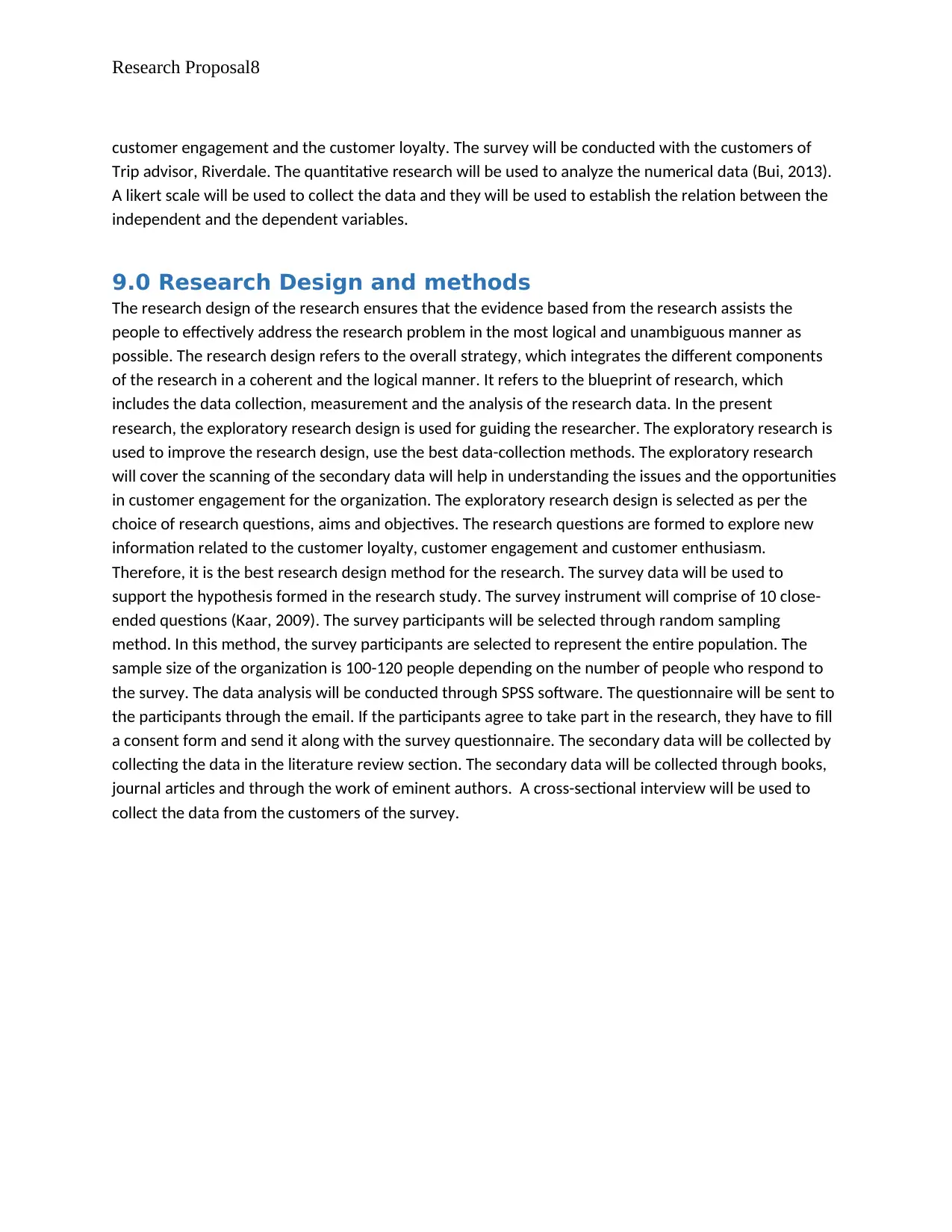
7.0 Theoritical Framework
Figure: theoritical framework
8.0 Methodology
The research methodology is an important aspect of the research as it directly impacts on the results or
the outcomes of the research. There are two research paradigms, including positivist approach and
interpretivism research paradigm. In the present research, the positivism research paradigm is used. In
this research paradigm, it is proposed that the researcher keeps himself distant from the research and
no bias is introduced by the researcher (Onwuegbuzie and Frels, 2016). The quantitative research design
aligns with the positivist paradigm. In the present research, the research instrument of survey has been
selected for the research. The survey method will be used to establish the relation between the
6.0 Hypothesis:
H1: There is a positive relation between customers’ involvement with a trip advisor and the behavioral
intention of loyalty towards the trip advisor
H2: There is a positive relationship between customer engagement and the behavioral intention of
loyalty towards the trip advisor of the Riverhead
H3: There is a positive relationship between enthusiasm and the behavioral intention towards the trip
advisor
7.0 Theoritical Framework
Figure: theoritical framework
8.0 Methodology
The research methodology is an important aspect of the research as it directly impacts on the results or
the outcomes of the research. There are two research paradigms, including positivist approach and
interpretivism research paradigm. In the present research, the positivism research paradigm is used. In
this research paradigm, it is proposed that the researcher keeps himself distant from the research and
no bias is introduced by the researcher (Onwuegbuzie and Frels, 2016). The quantitative research design
aligns with the positivist paradigm. In the present research, the research instrument of survey has been
selected for the research. The survey method will be used to establish the relation between the
Paraphrase This Document
Need a fresh take? Get an instant paraphrase of this document with our AI Paraphraser
Research Proposal8
customer engagement and the customer loyalty. The survey will be conducted with the customers of
Trip advisor, Riverdale. The quantitative research will be used to analyze the numerical data (Bui, 2013).
A likert scale will be used to collect the data and they will be used to establish the relation between the
independent and the dependent variables.
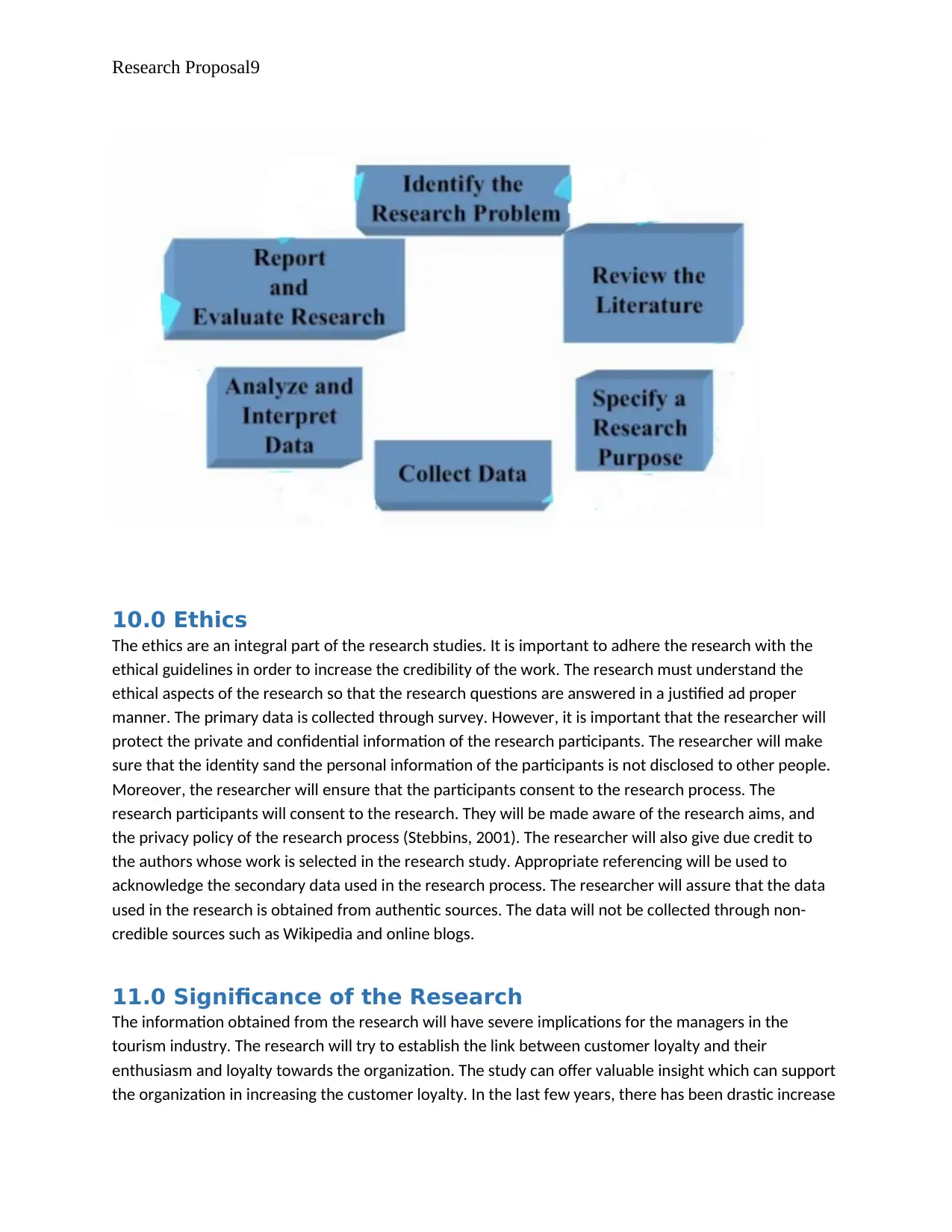
9.0 Research Design and methods
The research design of the research ensures that the evidence based from the research assists the
people to effectively address the research problem in the most logical and unambiguous manner as
possible. The research design refers to the overall strategy, which integrates the different components
of the research in a coherent and the logical manner. It refers to the blueprint of research, which
includes the data collection, measurement and the analysis of the research data. In the present
research, the exploratory research design is used for guiding the researcher. The exploratory research is
used to improve the research design, use the best data-collection methods. The exploratory research
will cover the scanning of the secondary data will help in understanding the issues and the opportunities
in customer engagement for the organization. The exploratory research design is selected as per the
choice of research questions, aims and objectives. The research questions are formed to explore new
information related to the customer loyalty, customer engagement and customer enthusiasm.
Therefore, it is the best research design method for the research. The survey data will be used to
support the hypothesis formed in the research study. The survey instrument will comprise of 10 close-
ended questions (Kaar, 2009). The survey participants will be selected through random sampling
method. In this method, the survey participants are selected to represent the entire population. The
sample size of the organization is 100-120 people depending on the number of people who respond to
the survey. The data analysis will be conducted through SPSS software. The questionnaire will be sent to
the participants through the email. If the participants agree to take part in the research, they have to fill
a consent form and send it along with the survey questionnaire. The secondary data will be collected by
collecting the data in the literature review section. The secondary data will be collected through books,
journal articles and through the work of eminent authors. A cross-sectional interview will be used to
collect the data from the customers of the survey.
customer engagement and the customer loyalty. The survey will be conducted with the customers of
Trip advisor, Riverdale. The quantitative research will be used to analyze the numerical data (Bui, 2013).
A likert scale will be used to collect the data and they will be used to establish the relation between the
independent and the dependent variables.
9.0 Research Design and methods
The research design of the research ensures that the evidence based from the research assists the
people to effectively address the research problem in the most logical and unambiguous manner as
possible. The research design refers to the overall strategy, which integrates the different components
of the research in a coherent and the logical manner. It refers to the blueprint of research, which
includes the data collection, measurement and the analysis of the research data. In the present
research, the exploratory research design is used for guiding the researcher. The exploratory research is
used to improve the research design, use the best data-collection methods. The exploratory research
will cover the scanning of the secondary data will help in understanding the issues and the opportunities
in customer engagement for the organization. The exploratory research design is selected as per the
choice of research questions, aims and objectives. The research questions are formed to explore new
information related to the customer loyalty, customer engagement and customer enthusiasm.
Therefore, it is the best research design method for the research. The survey data will be used to
support the hypothesis formed in the research study. The survey instrument will comprise of 10 close-
ended questions (Kaar, 2009). The survey participants will be selected through random sampling
method. In this method, the survey participants are selected to represent the entire population. The
sample size of the organization is 100-120 people depending on the number of people who respond to
the survey. The data analysis will be conducted through SPSS software. The questionnaire will be sent to
the participants through the email. If the participants agree to take part in the research, they have to fill
a consent form and send it along with the survey questionnaire. The secondary data will be collected by
collecting the data in the literature review section. The secondary data will be collected through books,
journal articles and through the work of eminent authors. A cross-sectional interview will be used to
collect the data from the customers of the survey.
Research Proposal9
10.0 Ethics
The ethics are an integral part of the research studies. It is important to adhere the research with the
ethical guidelines in order to increase the credibility of the work. The research must understand the
ethical aspects of the research so that the research questions are answered in a justified ad proper
manner. The primary data is collected through survey. However, it is important that the researcher will
protect the private and confidential information of the research participants. The researcher will make
sure that the identity sand the personal information of the participants is not disclosed to other people.
Moreover, the researcher will ensure that the participants consent to the research process. The
research participants will consent to the research. They will be made aware of the research aims, and
the privacy policy of the research process (Stebbins, 2001). The researcher will also give due credit to
the authors whose work is selected in the research study. Appropriate referencing will be used to
acknowledge the secondary data used in the research process. The researcher will assure that the data
used in the research is obtained from authentic sources. The data will not be collected through non-
credible sources such as Wikipedia and online blogs.
11.0 Significance of the Research
The information obtained from the research will have severe implications for the managers in the
tourism industry. The research will try to establish the link between customer loyalty and their
enthusiasm and loyalty towards the organization. The study can offer valuable insight which can support
the organization in increasing the customer loyalty. In the last few years, there has been drastic increase
10.0 Ethics
The ethics are an integral part of the research studies. It is important to adhere the research with the
ethical guidelines in order to increase the credibility of the work. The research must understand the
ethical aspects of the research so that the research questions are answered in a justified ad proper
manner. The primary data is collected through survey. However, it is important that the researcher will
protect the private and confidential information of the research participants. The researcher will make
sure that the identity sand the personal information of the participants is not disclosed to other people.
Moreover, the researcher will ensure that the participants consent to the research process. The
research participants will consent to the research. They will be made aware of the research aims, and
the privacy policy of the research process (Stebbins, 2001). The researcher will also give due credit to
the authors whose work is selected in the research study. Appropriate referencing will be used to
acknowledge the secondary data used in the research process. The researcher will assure that the data
used in the research is obtained from authentic sources. The data will not be collected through non-
credible sources such as Wikipedia and online blogs.
11.0 Significance of the Research
The information obtained from the research will have severe implications for the managers in the
tourism industry. The research will try to establish the link between customer loyalty and their
enthusiasm and loyalty towards the organization. The study can offer valuable insight which can support
the organization in increasing the customer loyalty. In the last few years, there has been drastic increase
⊘ This is a preview!⊘
Do you want full access?
Subscribe today to unlock all pages.
Trusted by 1+ million students worldwide
Research Proposal10
in the competition between the firms in the tourism industry. Therefore, it is important that the
organizations develop their competitive advantage and customer loyalty. The research highlights the
importance of the customer loyalty and its link with the customer engagement, enthusiasm.
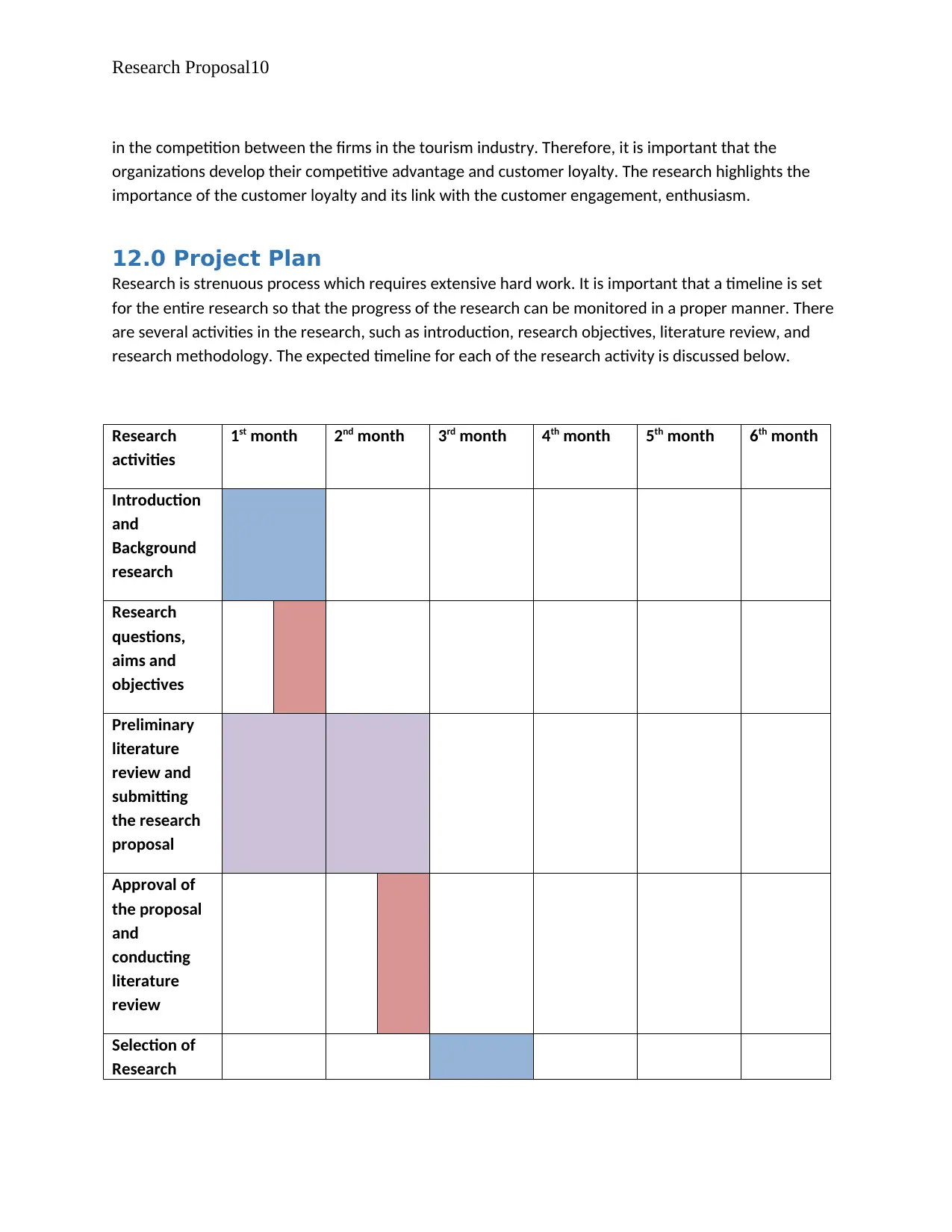
12.0 Project Plan
Research is strenuous process which requires extensive hard work. It is important that a timeline is set
for the entire research so that the progress of the research can be monitored in a proper manner. There
are several activities in the research, such as introduction, research objectives, literature review, and
research methodology. The expected timeline for each of the research activity is discussed below.
Research
activities
1st month 2nd month 3rd month 4th month 5th month 6th month
Introduction
and
Background
research
Research
questions,
aims and
objectives
Preliminary
literature
review and
submitting
the research
proposal
Approval of
the proposal
and
conducting
literature
review
Selection of
Research
in the competition between the firms in the tourism industry. Therefore, it is important that the
organizations develop their competitive advantage and customer loyalty. The research highlights the
importance of the customer loyalty and its link with the customer engagement, enthusiasm.
12.0 Project Plan
Research is strenuous process which requires extensive hard work. It is important that a timeline is set
for the entire research so that the progress of the research can be monitored in a proper manner. There
are several activities in the research, such as introduction, research objectives, literature review, and
research methodology. The expected timeline for each of the research activity is discussed below.
Research
activities
1st month 2nd month 3rd month 4th month 5th month 6th month
Introduction
and
Background
research
Research
questions,
aims and
objectives
Preliminary
literature
review and
submitting
the research
proposal
Approval of
the proposal
and
conducting
literature
review
Selection of
Research
Paraphrase This Document
Need a fresh take? Get an instant paraphrase of this document with our AI Paraphraser
Research Proposal11
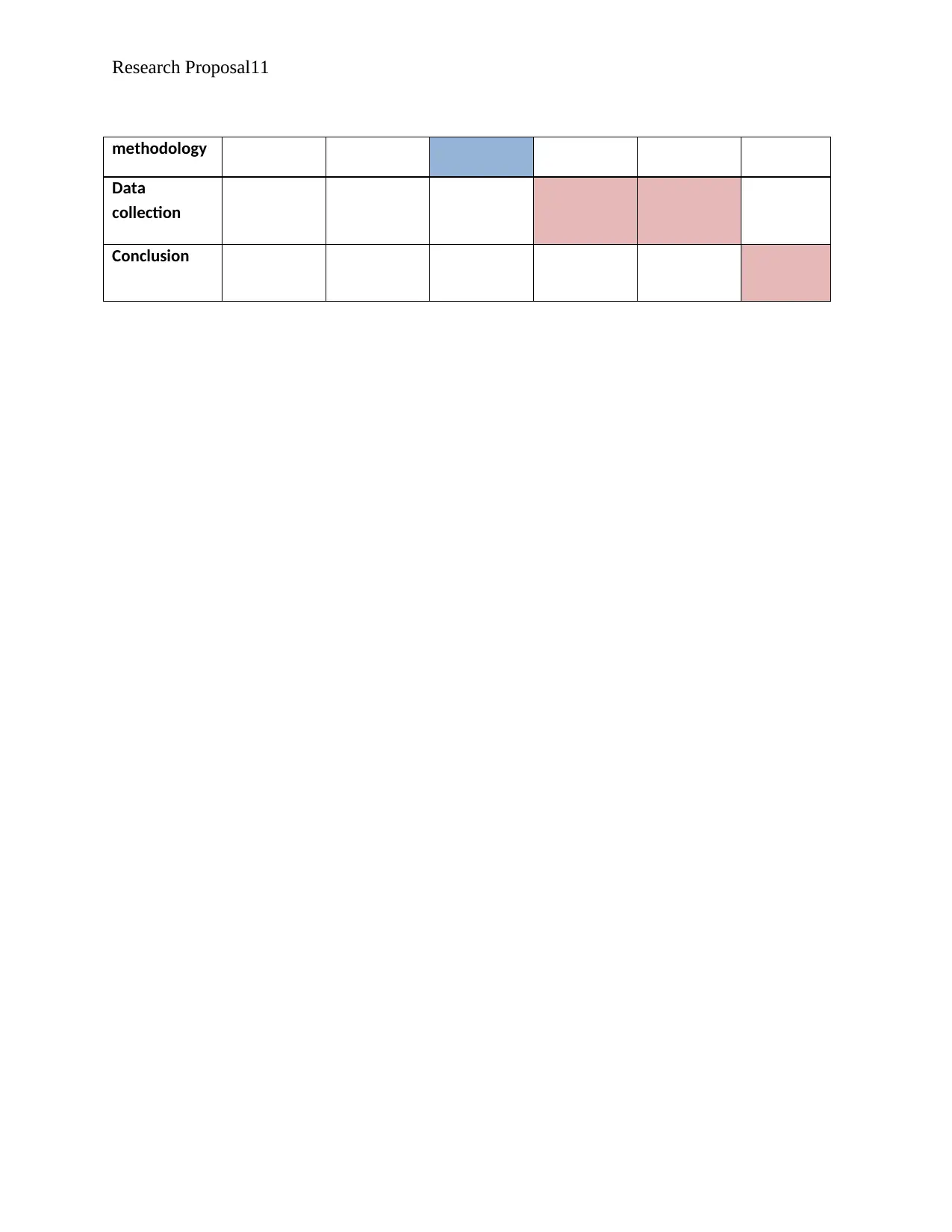
methodology
Data
collection
Conclusion
methodology
Data
collection
Conclusion
Research Proposal12
References
Bendapudi, N., & Leone, R. P. (2003). Psychological implications of customer participation in co-
production. Journal of marketing, 67(1), 14-28.
Bui, Y.N. 2013. How to Write a Master's Thesis. Los Angeles: SAGE Publications.
Gustafsson, A., Johnson, M. D., & Roos, I. (2005). The effects of customer satisfaction, relationship
commitment dimensions, and triggers on customer retention. Journal of marketing, 69(4), 210-
218.
Harrigan, P., Evers, U., Miles, M., & Daly, T. (2017). Customer engagement with tourism social media
brands. Tourism Management, 59, 597-609.
Jiang, K., Potwarka, L., & Havitz, M. (2017). Sub-Dimensions of Destination Brand Love and Their
Influences on Destination Brand Loyalty: A Study of First-timers and Repeat Visitors.
Kaar, M. 2009. Critical Investigation of the Merits and Drawbacks of In-depth Interviews. GRIN Verlag.
Mittal, V., & Kamakura, W. A. (2001). Satisfaction, repurchase intent, and repurchase behavior:
Investigating the moderating effect of customer characteristics. Journal of marketing
research, 38(1), 131-142.
Mohamad, H. A. D., Ab Yazid, M. S., Khatibi, A., & Azam, S. F. (2017). MEASURING THE MEDIATING ROLE
OF CUSTOMER SATISFACTION BETWEEN SERVICE QUALITY AND CUSTOMER LOYALTY IN UAE
HOTEL INDUSTRY. European Journal of Management and Marketing Studies.
Omar, S., Devi, G., Phillips, N., & Cook, J. (2017). An investigation of multi-stakeholder value co-creation
processes: a conceptual model of customer engagement, co-creation, and their impact on
customer satisfaction and behavioural intentions. 50th Academy of Marketing Conference, 3-6
July 2017, Hull University Business School.
Onwuegbuzie, A.J. and Frels, R. 2016. Seven Steps to a Comprehensive Literature Review: A Multimodal
and Cultural Approach. London: SAGE.
So, K. K. F., King, C., Sparks, B. A., & Wang, Y. (2016). The role of customer engagement in building
consumer loyalty to tourism brands. Journal of Travel Research, 55(1), 64-78.
Stebbins, R.A. 2001. Exploratory Research in the Social Sciences. Boston: SAGE
Trip Advisor. (2018). About Trip Advisor. Retrieved 29 January 2018 from
https://tripadvisor.mediaroom.com/NZ-about-us
References
Bendapudi, N., & Leone, R. P. (2003). Psychological implications of customer participation in co-
production. Journal of marketing, 67(1), 14-28.
Bui, Y.N. 2013. How to Write a Master's Thesis. Los Angeles: SAGE Publications.
Gustafsson, A., Johnson, M. D., & Roos, I. (2005). The effects of customer satisfaction, relationship
commitment dimensions, and triggers on customer retention. Journal of marketing, 69(4), 210-
218.
Harrigan, P., Evers, U., Miles, M., & Daly, T. (2017). Customer engagement with tourism social media
brands. Tourism Management, 59, 597-609.
Jiang, K., Potwarka, L., & Havitz, M. (2017). Sub-Dimensions of Destination Brand Love and Their
Influences on Destination Brand Loyalty: A Study of First-timers and Repeat Visitors.
Kaar, M. 2009. Critical Investigation of the Merits and Drawbacks of In-depth Interviews. GRIN Verlag.
Mittal, V., & Kamakura, W. A. (2001). Satisfaction, repurchase intent, and repurchase behavior:
Investigating the moderating effect of customer characteristics. Journal of marketing
research, 38(1), 131-142.
Mohamad, H. A. D., Ab Yazid, M. S., Khatibi, A., & Azam, S. F. (2017). MEASURING THE MEDIATING ROLE
OF CUSTOMER SATISFACTION BETWEEN SERVICE QUALITY AND CUSTOMER LOYALTY IN UAE
HOTEL INDUSTRY. European Journal of Management and Marketing Studies.
Omar, S., Devi, G., Phillips, N., & Cook, J. (2017). An investigation of multi-stakeholder value co-creation
processes: a conceptual model of customer engagement, co-creation, and their impact on
customer satisfaction and behavioural intentions. 50th Academy of Marketing Conference, 3-6
July 2017, Hull University Business School.
Onwuegbuzie, A.J. and Frels, R. 2016. Seven Steps to a Comprehensive Literature Review: A Multimodal
and Cultural Approach. London: SAGE.
So, K. K. F., King, C., Sparks, B. A., & Wang, Y. (2016). The role of customer engagement in building
consumer loyalty to tourism brands. Journal of Travel Research, 55(1), 64-78.
Stebbins, R.A. 2001. Exploratory Research in the Social Sciences. Boston: SAGE
Trip Advisor. (2018). About Trip Advisor. Retrieved 29 January 2018 from
https://tripadvisor.mediaroom.com/NZ-about-us
⊘ This is a preview!⊘
Do you want full access?
Subscribe today to unlock all pages.
Trusted by 1+ million students worldwide

1 out of 15


Related Documents


Your All-in-One AI-Powered Toolkit for Academic Success.
+13062052269
info@desklib.com
Available 24*7 on WhatsApp / Email
![[object Object]](/_next/static/media/star-bottom.7253800d.svg)
Unlock your academic potential
Copyright © 2020–2026 A2Z Services. All Rights Reserved. Developed and managed by ZUCOL.