Cyclin F's Role in DNA Damage Response and G2 Cell Cycle Checkpoints
VerifiedAdded on 2023/06/10
|4
|1139
|58
Report
AI Summary
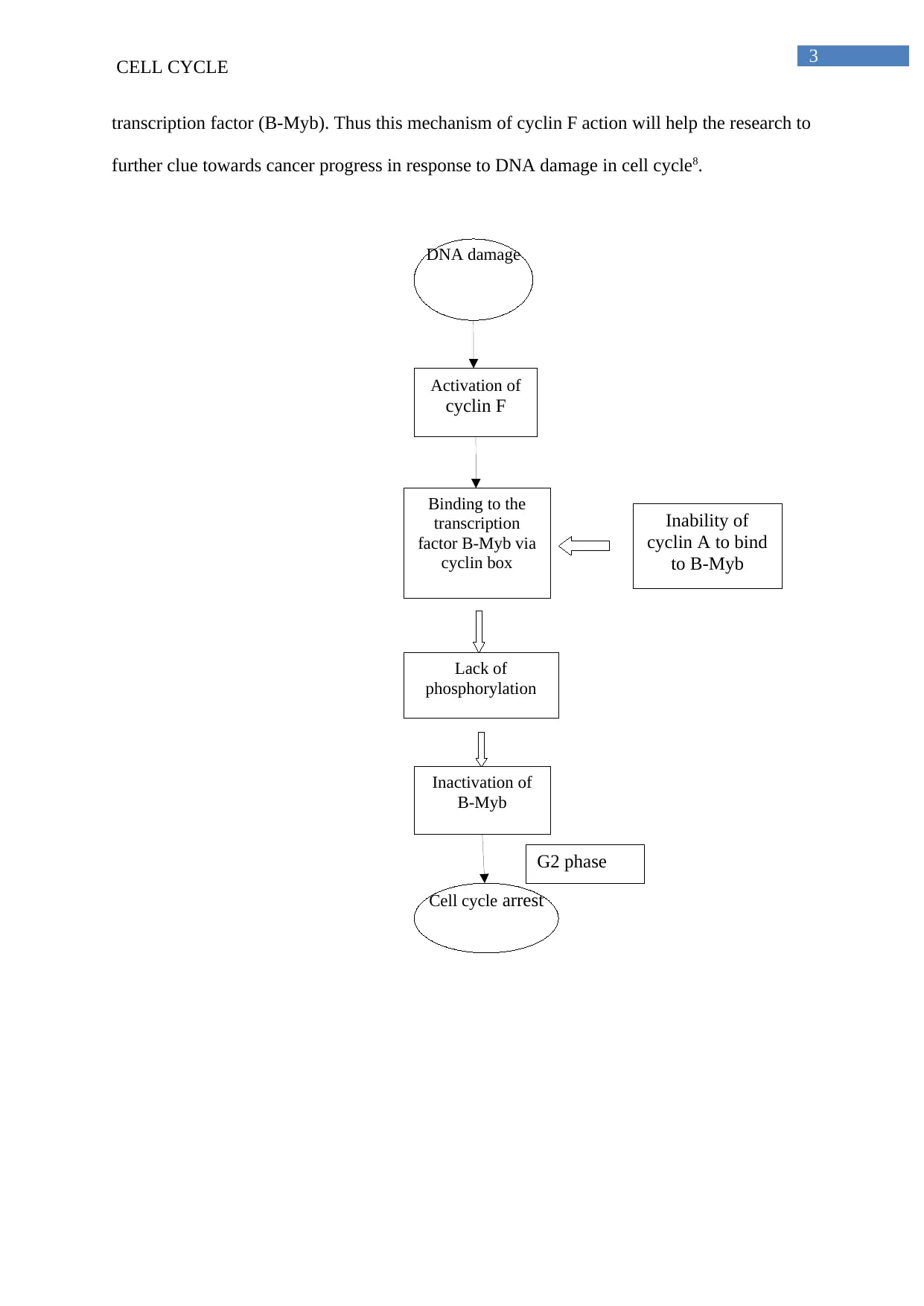
This report provides a comprehensive review of the role of Cyclin F in regulating the G2 cell cycle checkpoint, particularly in response to DNA damage. It begins by outlining the cell cycle and the importance of checkpoints in maintaining genomic integrity, focusing on the G2 phase. The report highlights Cyclin F's function as a key regulator, emphasizing its suppression of the B-Myb-driven transcriptional program. This suppression prevents the accumulation of mitosis-promoting factors and thereby maintains the G2 arrest. The report details experimental evidence, including ubiquitome library screens and various experiments, demonstrating that Cyclin F-depleted cells fail to maintain G2 arrest after DNA damage, leading to premature entry into mitosis with damaged DNA. The mechanism involves Cyclin F interacting with B-Myb via the cyclin box domain, preventing cyclin A-mediated phosphorylation and thus inactivating B-Myb. The report concludes by emphasizing the significance of these findings in understanding checkpoint dysfunction in disease development, particularly cancer, and how Cyclin F's mechanism could provide insights into cancer progression in response to DNA damage.



1 out of 4


Your All-in-One AI-Powered Toolkit for Academic Success.
+13062052269
info@desklib.com
Available 24*7 on WhatsApp / Email
![[object Object]](/_next/static/media/star-bottom.7253800d.svg)
Copyright © 2020–2025 A2Z Services. All Rights Reserved. Developed and managed by ZUCOL.