Accounting Theory and Contemporary Issues: Dali Food Group Analysis
VerifiedAdded on 2021/06/17
|13
|3069
|33
Report
AI Summary
This report delves into the accounting issues presented in the Dali Food Group's annual report, specifically highlighting problems related to disclosure, misrepresentation, and tax inconsistencies. The analysis focuses on the company's non-compliance with IFRS standards, particularly IAS 1, and the implications for its financial reporting. The report identifies the disclosure theory as a key framework, emphasizing the importance of transparent and accurate financial information. It examines specific issues such as discrepancies in revenue and cost of sales, changes in asset and liability values, and inconsistencies in finance costs and tax payments. The report suggests incorporating IFRS standards like IAS 16, 38, 9, 19, 21, and 39 to improve the accuracy and transparency of the annual report. The study underscores the significance of ethical financial reporting and the impact of non-disclosure on stakeholders, advocating for enhanced disclosure practices to build investor trust and ensure accurate financial representation.
Running head: ACCOUNTING THEORY & CONTEMPORARY ISSUES
Accounting Theory & Contemporary Issues
Name of the Student:
Name of the University:
Authors Note:
Accounting Theory & Contemporary Issues
Name of the Student:
Name of the University:
Authors Note:

Paraphrase This Document
Need a fresh take? Get an instant paraphrase of this document with our AI Paraphraser
ACCOUNTING THEORY & CONTEMPORARY ISSUES
1
Table of Contents
Assignment 1:.............................................................................................................................2
Hong Kong Exchange (Dali Food Group):................................................................................2
Introduction:...............................................................................................................................2
Analysis:.....................................................................................................................................3
Detailing the accounting problems:...........................................................................................3
Discussing the accounting requirements:...................................................................................4
Discussing the theory and the identified accounting problems:.................................................5
Discussing the main theme of the theory:..................................................................................8
Changes and suggestions that can be incorporated in the annual report:...................................8
Conclusion:................................................................................................................................9
References and Bibliography:..................................................................................................11
1
Table of Contents
Assignment 1:.............................................................................................................................2
Hong Kong Exchange (Dali Food Group):................................................................................2
Introduction:...............................................................................................................................2
Analysis:.....................................................................................................................................3
Detailing the accounting problems:...........................................................................................3
Discussing the accounting requirements:...................................................................................4
Discussing the theory and the identified accounting problems:.................................................5
Discussing the main theme of the theory:..................................................................................8
Changes and suggestions that can be incorporated in the annual report:...................................8
Conclusion:................................................................................................................................9
References and Bibliography:..................................................................................................11
ACCOUNTING THEORY & CONTEMPORARY ISSUES
2
Assignment 1:
Hong Kong Exchange (Dali Food Group):
Introduction:
The discussion is mainly based on the accounting issue, which is faced by Dali Food
Group and is depicted in their annual report. The article published in Reuters about Dali Food
Group portrayed the misdoing or misrepresentation of data, which has been conducted by the
organisation. The news directly indicated the problems regarding its books, as the company
has implausible low expenses and salary cost, while the tax filings also display inconsistency,
which escalates the chance of a fraud conducted by the organisation.
The company has been operating within the circular premises of China, while it deals
with snack food and beverage products. The company has been strengthening its position in
retail sector, as it deals with snacks and beverages. The company acquired a total revenue of
23 Billion HKD in 2017, while its net profit stood at 4 Billion HKD, which indicated an
inclination on the growth prospects of the organisation.
However, there are certain accounting issues, which has been detected in Dali Food
Group, such as non-disclosure, mis-representation, and Tax issues. The above identified
accounting issues directly affect the financial reporting structure of the organisation, which
will have a negative impact on its shareholders. The organisation has violated the disclosure
clause that has been set up by IFRS for preventing any kind of mishap or unethical activities
that has been conducted within an organisation. On the whole, the organisation prepares the
annual report in accordance with the Hong Kong Financial Reporting Standards. This directly
2
Assignment 1:
Hong Kong Exchange (Dali Food Group):
Introduction:
The discussion is mainly based on the accounting issue, which is faced by Dali Food
Group and is depicted in their annual report. The article published in Reuters about Dali Food
Group portrayed the misdoing or misrepresentation of data, which has been conducted by the
organisation. The news directly indicated the problems regarding its books, as the company
has implausible low expenses and salary cost, while the tax filings also display inconsistency,
which escalates the chance of a fraud conducted by the organisation.
The company has been operating within the circular premises of China, while it deals
with snack food and beverage products. The company has been strengthening its position in
retail sector, as it deals with snacks and beverages. The company acquired a total revenue of
23 Billion HKD in 2017, while its net profit stood at 4 Billion HKD, which indicated an
inclination on the growth prospects of the organisation.
However, there are certain accounting issues, which has been detected in Dali Food
Group, such as non-disclosure, mis-representation, and Tax issues. The above identified
accounting issues directly affect the financial reporting structure of the organisation, which
will have a negative impact on its shareholders. The organisation has violated the disclosure
clause that has been set up by IFRS for preventing any kind of mishap or unethical activities
that has been conducted within an organisation. On the whole, the organisation prepares the
annual report in accordance with the Hong Kong Financial Reporting Standards. This directly
⊘ This is a preview!⊘
Do you want full access?
Subscribe today to unlock all pages.

Trusted by 1+ million students worldwide
ACCOUNTING THEORY & CONTEMPORARY ISSUES
3
violates the measures that needs to be taken by the organisation while preparing the annual
report as per the financial conceptual framework.
The adequate disclosure theory is relatively identified for the organisation, as it does
not put all the relevant information in their annual report as per the IFRS.
Analysis:
Detailing the accounting problems:
The adoption of IFRS by the Chinese regulatory authorities has a relatively allowed
organisations to prepare an annual report as per the accounting standard. however, some of
the organisation still does not embed their annual report as per the complex nature of IFRS,
which increases the uncertainty in their operations. The major accounting problem that could
be identified from the annual report of Dali Food Group is the ignorance of IFRS rules in
preparing the financial statement. The organisation does not follow the first standard rule of
IAS 1, which depicts about the presentation of the financial statements. The organisation does
not follow the ruling depicted by IFRS in preparing their annual report, which directly affects
their disclosure measure and indicates the miss representation of their financial statement.
On the other hand, the organisation directly follows the Hong Kong financial
reporting statement for preparing the annual report. However, Schaltegger and Burritt (2017)
indicated that organisations use the IFRS measure for reducing the level of uncertainty in
their annual report and gain trust of their International investors. On the contrary, Hoque
(2018) mentioned that companies that are not using IFRS financial statement does not attract
International investors, as they are not aware of the regional accounting standards and their
exceptions.
3
violates the measures that needs to be taken by the organisation while preparing the annual
report as per the financial conceptual framework.
The adequate disclosure theory is relatively identified for the organisation, as it does
not put all the relevant information in their annual report as per the IFRS.
Analysis:
Detailing the accounting problems:
The adoption of IFRS by the Chinese regulatory authorities has a relatively allowed
organisations to prepare an annual report as per the accounting standard. however, some of
the organisation still does not embed their annual report as per the complex nature of IFRS,
which increases the uncertainty in their operations. The major accounting problem that could
be identified from the annual report of Dali Food Group is the ignorance of IFRS rules in
preparing the financial statement. The organisation does not follow the first standard rule of
IAS 1, which depicts about the presentation of the financial statements. The organisation does
not follow the ruling depicted by IFRS in preparing their annual report, which directly affects
their disclosure measure and indicates the miss representation of their financial statement.
On the other hand, the organisation directly follows the Hong Kong financial
reporting statement for preparing the annual report. However, Schaltegger and Burritt (2017)
indicated that organisations use the IFRS measure for reducing the level of uncertainty in
their annual report and gain trust of their International investors. On the contrary, Hoque
(2018) mentioned that companies that are not using IFRS financial statement does not attract
International investors, as they are not aware of the regional accounting standards and their
exceptions.
Paraphrase This Document
Need a fresh take? Get an instant paraphrase of this document with our AI Paraphraser
ACCOUNTING THEORY & CONTEMPORARY ISSUES
4
Discussing the accounting requirements:
Dali Food Group mainly need to follow the IFRS Standards for preparing the annual
report, which was previously not followed by the management. The basic requirements of the
financial report preparation are the maintenance of IAS 1 ruling, which requires that the
organisation represents the financial statement as per the standard. This preparation relatively
helps in depicting the financial transactions of the organisation in more organized and ethical
manner. The use of valuation standard such as IFRS 9 also needs to be maintained by the
organisation while preparing the annual report (Iasplus.com 2018). This would eventually
help in depicting the actual valuation of the Assets and liabilities in accordance with the
market value. This ethical presentation would eventually help in identifying the level of
actual financial performance of the organisation.
The other standards such as IAS 16 and IAS 38 are mainly used for the valuation
process of their plant, machinery and intangible assets. This valuation directly helps in
detecting the overall total Assets of the organisation, as of the current fiscal year. The
measures taken by IFRS directly helps in detecting the actual financial performance of the
organisation during the fiscal year by identifying the growth in its assets and revenues.
Different standards such as IAS 19, IAS 21 and IAS 39 are also essential while preparing the
annual report of an organisation (Iasplus.com 2018). Therefore, Dali food group needs to
follow all the above accounting standards while preparing the annual report, which will
increase their authenticity in the eyes of the international investors. The above accounting
requirements needs to be met by the organisation for preparing the annual report as per the
International Financial Regulation Standard.
4
Discussing the accounting requirements:
Dali Food Group mainly need to follow the IFRS Standards for preparing the annual
report, which was previously not followed by the management. The basic requirements of the
financial report preparation are the maintenance of IAS 1 ruling, which requires that the
organisation represents the financial statement as per the standard. This preparation relatively
helps in depicting the financial transactions of the organisation in more organized and ethical
manner. The use of valuation standard such as IFRS 9 also needs to be maintained by the
organisation while preparing the annual report (Iasplus.com 2018). This would eventually
help in depicting the actual valuation of the Assets and liabilities in accordance with the
market value. This ethical presentation would eventually help in identifying the level of
actual financial performance of the organisation.
The other standards such as IAS 16 and IAS 38 are mainly used for the valuation
process of their plant, machinery and intangible assets. This valuation directly helps in
detecting the overall total Assets of the organisation, as of the current fiscal year. The
measures taken by IFRS directly helps in detecting the actual financial performance of the
organisation during the fiscal year by identifying the growth in its assets and revenues.
Different standards such as IAS 19, IAS 21 and IAS 39 are also essential while preparing the
annual report of an organisation (Iasplus.com 2018). Therefore, Dali food group needs to
follow all the above accounting standards while preparing the annual report, which will
increase their authenticity in the eyes of the international investors. The above accounting
requirements needs to be met by the organisation for preparing the annual report as per the
International Financial Regulation Standard.
ACCOUNTING THEORY & CONTEMPORARY ISSUES
5
Discussing the theory and the identified accounting problems:
The major theory that has been identified for Dali Food Group is the Disclosure
theory, which is not effectively conducted by the organisation. The disclosure theory directly
indicates that organisation needs to depict all their transactions during the financial year,
which helps in depicting the level of income that has been generated by the organisation. The
theory also suggests that organisation need to follow certain principles and Standards
regarding the disclosure of their annual report, which eventually helps in depict the correct
valuation of the organisation. However, from the evaluation of the annual report certain
mishaps and problems in the accounting condition of Dali Food Group is adequately
identified.
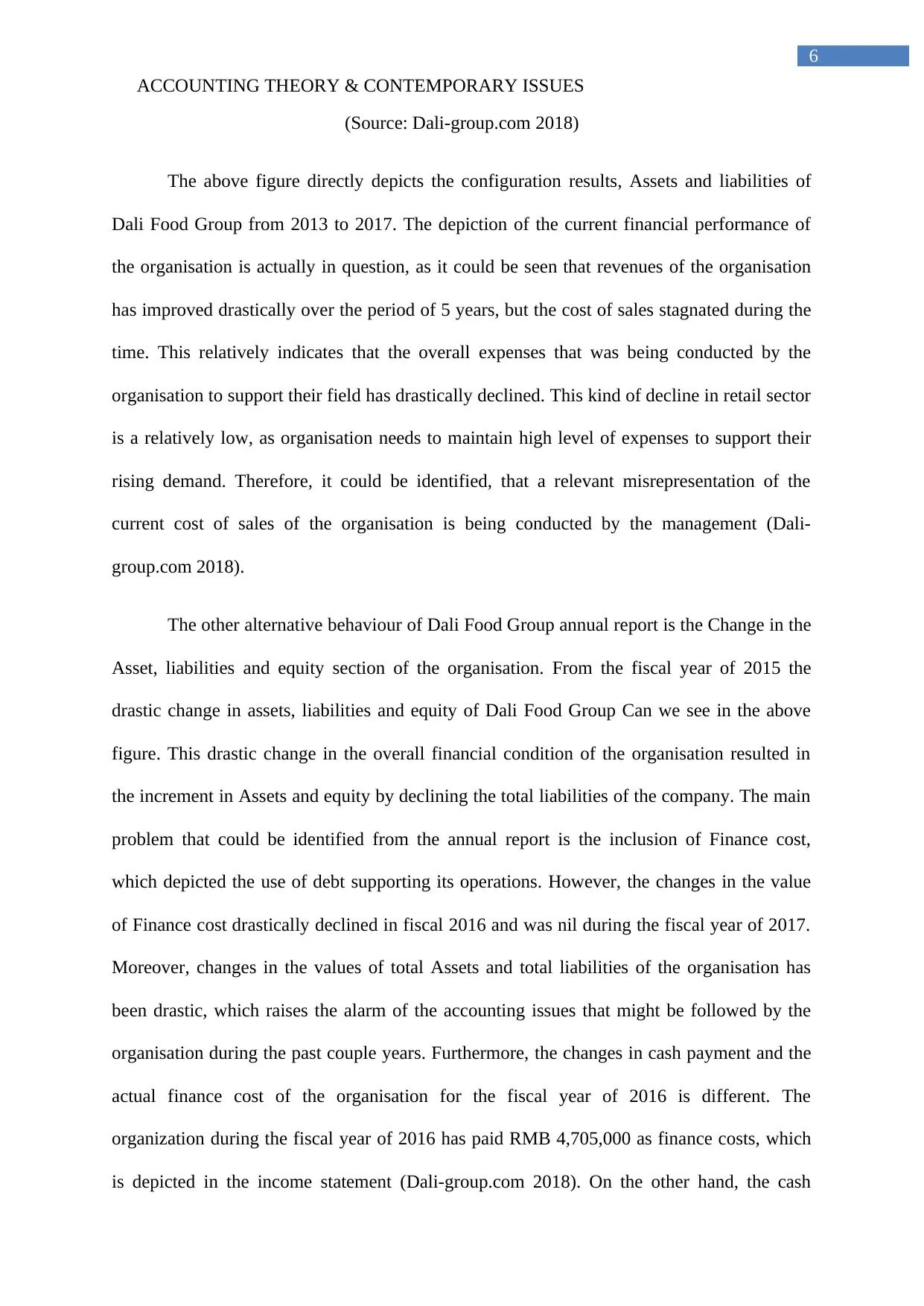
Figure 1: Depicting the Financial progress of Dali Food Group
5
Discussing the theory and the identified accounting problems:
The major theory that has been identified for Dali Food Group is the Disclosure
theory, which is not effectively conducted by the organisation. The disclosure theory directly
indicates that organisation needs to depict all their transactions during the financial year,
which helps in depicting the level of income that has been generated by the organisation. The
theory also suggests that organisation need to follow certain principles and Standards
regarding the disclosure of their annual report, which eventually helps in depict the correct
valuation of the organisation. However, from the evaluation of the annual report certain
mishaps and problems in the accounting condition of Dali Food Group is adequately
identified.
Figure 1: Depicting the Financial progress of Dali Food Group
⊘ This is a preview!⊘
Do you want full access?
Subscribe today to unlock all pages.
Trusted by 1+ million students worldwide
ACCOUNTING THEORY & CONTEMPORARY ISSUES
6
(Source: Dali-group.com 2018)
The above figure directly depicts the configuration results, Assets and liabilities of
Dali Food Group from 2013 to 2017. The depiction of the current financial performance of
the organisation is actually in question, as it could be seen that revenues of the organisation
has improved drastically over the period of 5 years, but the cost of sales stagnated during the
time. This relatively indicates that the overall expenses that was being conducted by the
organisation to support their field has drastically declined. This kind of decline in retail sector
is a relatively low, as organisation needs to maintain high level of expenses to support their
rising demand. Therefore, it could be identified, that a relevant misrepresentation of the
current cost of sales of the organisation is being conducted by the management (Dali-
group.com 2018).
The other alternative behaviour of Dali Food Group annual report is the Change in the
Asset, liabilities and equity section of the organisation. From the fiscal year of 2015 the
drastic change in assets, liabilities and equity of Dali Food Group Can we see in the above
figure. This drastic change in the overall financial condition of the organisation resulted in
the increment in Assets and equity by declining the total liabilities of the company. The main
problem that could be identified from the annual report is the inclusion of Finance cost,
which depicted the use of debt supporting its operations. However, the changes in the value
of Finance cost drastically declined in fiscal 2016 and was nil during the fiscal year of 2017.
Moreover, changes in the values of total Assets and total liabilities of the organisation has
been drastic, which raises the alarm of the accounting issues that might be followed by the
organisation during the past couple years. Furthermore, the changes in cash payment and the
actual finance cost of the organisation for the fiscal year of 2016 is different. The
organization during the fiscal year of 2016 has paid RMB 4,705,000 as finance costs, which
is depicted in the income statement (Dali-group.com 2018). On the other hand, the cash
6
(Source: Dali-group.com 2018)
The above figure directly depicts the configuration results, Assets and liabilities of
Dali Food Group from 2013 to 2017. The depiction of the current financial performance of
the organisation is actually in question, as it could be seen that revenues of the organisation
has improved drastically over the period of 5 years, but the cost of sales stagnated during the
time. This relatively indicates that the overall expenses that was being conducted by the
organisation to support their field has drastically declined. This kind of decline in retail sector
is a relatively low, as organisation needs to maintain high level of expenses to support their
rising demand. Therefore, it could be identified, that a relevant misrepresentation of the
current cost of sales of the organisation is being conducted by the management (Dali-
group.com 2018).
The other alternative behaviour of Dali Food Group annual report is the Change in the
Asset, liabilities and equity section of the organisation. From the fiscal year of 2015 the
drastic change in assets, liabilities and equity of Dali Food Group Can we see in the above
figure. This drastic change in the overall financial condition of the organisation resulted in
the increment in Assets and equity by declining the total liabilities of the company. The main
problem that could be identified from the annual report is the inclusion of Finance cost,
which depicted the use of debt supporting its operations. However, the changes in the value
of Finance cost drastically declined in fiscal 2016 and was nil during the fiscal year of 2017.
Moreover, changes in the values of total Assets and total liabilities of the organisation has
been drastic, which raises the alarm of the accounting issues that might be followed by the
organisation during the past couple years. Furthermore, the changes in cash payment and the
actual finance cost of the organisation for the fiscal year of 2016 is different. The
organization during the fiscal year of 2016 has paid RMB 4,705,000 as finance costs, which
is depicted in the income statement (Dali-group.com 2018). On the other hand, the cash
Paraphrase This Document
Need a fresh take? Get an instant paraphrase of this document with our AI Paraphraser
ACCOUNTING THEORY & CONTEMPORARY ISSUES
7
statement indicates that the overall interest paid by the organisation amounts to RMB
6,706,000. The changes in the values of interest payments is directly indicating and
accounting issue, which is being conducted by the organisation while preparing the annual
report. The use of IFRS standard would eventually help in reducing the occurrence of Shady
transactions and improve authenticity of the annual report.
Further elaboration can also be conducted on the income tax payment that the
organisation conducts during its fiscal year. from the evaluation off the annual report
difference in the income tax expense and Income Tax paid amount can be seen, which is
depicted in the income statement and cash flow statement. The difference in the values is a
relatively depicting the problems or issues that is currently present in their accounting system.
The article also indicated that the tax expense of the organisation is not adding up, which is
directly indicating the problems that is currently present within Dali Food Group (Dali-
group.com 2018).
The annual report of the organisation directly indicated the representation of different
accounts, which directly depicted the issues in their current accounting system. The drastic
changes in the Asset and liability value output depicted the current problems that might be
faced by the organisation. the exuberant increment in revenues, while the cost of good
remained same, which directly indicates the problems that is currently present within the
operations of Dali Food Group. The company directly belongs to Retail Industry, which
adequately increases the cost of sales due to the incremental revenue, while this type of
transaction is not seen in the operations of Dali Food Group. This mainly increases the
concern for foreign investors and raises the alarm for the current operation that has being
conducted by the organisation. The identification of the interest payment is also
Questionable, as the overall finance course declined immensely, while there is alteration
between actual finance cost depicted in the income statement and the interest paid depicted in
7
statement indicates that the overall interest paid by the organisation amounts to RMB
6,706,000. The changes in the values of interest payments is directly indicating and
accounting issue, which is being conducted by the organisation while preparing the annual
report. The use of IFRS standard would eventually help in reducing the occurrence of Shady
transactions and improve authenticity of the annual report.
Further elaboration can also be conducted on the income tax payment that the
organisation conducts during its fiscal year. from the evaluation off the annual report
difference in the income tax expense and Income Tax paid amount can be seen, which is
depicted in the income statement and cash flow statement. The difference in the values is a
relatively depicting the problems or issues that is currently present in their accounting system.
The article also indicated that the tax expense of the organisation is not adding up, which is
directly indicating the problems that is currently present within Dali Food Group (Dali-
group.com 2018).
The annual report of the organisation directly indicated the representation of different
accounts, which directly depicted the issues in their current accounting system. The drastic
changes in the Asset and liability value output depicted the current problems that might be
faced by the organisation. the exuberant increment in revenues, while the cost of good
remained same, which directly indicates the problems that is currently present within the
operations of Dali Food Group. The company directly belongs to Retail Industry, which
adequately increases the cost of sales due to the incremental revenue, while this type of
transaction is not seen in the operations of Dali Food Group. This mainly increases the
concern for foreign investors and raises the alarm for the current operation that has being
conducted by the organisation. The identification of the interest payment is also
Questionable, as the overall finance course declined immensely, while there is alteration
between actual finance cost depicted in the income statement and the interest paid depicted in
ACCOUNTING THEORY & CONTEMPORARY ISSUES
8
the annual report. The contrast between both the amount directly indicates the problem which
is currently present in the financial department of the organisation. Hence, changes in the
current accounting standard would eventually help the organization to depict the actual
transaction and financial position to the investor (Dali-group.com 2018).
Discussing the main theme of the theory:
The main theme of the theory is about disclosure, which needs to be conducted by the
organisations in their annual report. Disclosures are relatively depicted as the notes to the
financial transaction that has been conducted by the organisation during the fiscal year. The
disclosure would eventually help in identifying different level of transaction and that value,
which has been conducted by the company. Moreover, disclosures regarding all the relevant
transactions that is conducted by the company needs to be depicted in the annual report. The
disclosure transformation theory directly proposes that companies need to explain the process
of change in the mandatory and voluntary corporate disclosure practice. Hence, disclosure
theory relatively defines the activities in different sections such as mandatory and voluntary
disclosure which needs to be conducted by the organisation. Therefore, with adequate
disclosures organisations are able to depict their actual financial transactions and condition
during the fiscal year to their investors with the help of the financial report. In this context,
Beattie (2014) stated that with the incorporation of disclosure theories in the financial
conceptual framework, organisations are bound to provide all the relevant information in the
annual report, which reduces the possibility of unethical practices.
Changes and suggestions that can be incorporated in the annual report:
Dali Food Group can implement Different segments of the IAS standards for
preparing the annual report. the use of IAS 16 and 38 would eventually help in depicting the
actual valuation for their assets such as plant machinery and intangible assets. the description
8
the annual report. The contrast between both the amount directly indicates the problem which
is currently present in the financial department of the organisation. Hence, changes in the
current accounting standard would eventually help the organization to depict the actual
transaction and financial position to the investor (Dali-group.com 2018).
Discussing the main theme of the theory:
The main theme of the theory is about disclosure, which needs to be conducted by the
organisations in their annual report. Disclosures are relatively depicted as the notes to the
financial transaction that has been conducted by the organisation during the fiscal year. The
disclosure would eventually help in identifying different level of transaction and that value,
which has been conducted by the company. Moreover, disclosures regarding all the relevant
transactions that is conducted by the company needs to be depicted in the annual report. The
disclosure transformation theory directly proposes that companies need to explain the process
of change in the mandatory and voluntary corporate disclosure practice. Hence, disclosure
theory relatively defines the activities in different sections such as mandatory and voluntary
disclosure which needs to be conducted by the organisation. Therefore, with adequate
disclosures organisations are able to depict their actual financial transactions and condition
during the fiscal year to their investors with the help of the financial report. In this context,
Beattie (2014) stated that with the incorporation of disclosure theories in the financial
conceptual framework, organisations are bound to provide all the relevant information in the
annual report, which reduces the possibility of unethical practices.
Changes and suggestions that can be incorporated in the annual report:
Dali Food Group can implement Different segments of the IAS standards for
preparing the annual report. the use of IAS 16 and 38 would eventually help in depicting the
actual valuation for their assets such as plant machinery and intangible assets. the description
⊘ This is a preview!⊘
Do you want full access?
Subscribe today to unlock all pages.
Trusted by 1+ million students worldwide
ACCOUNTING THEORY & CONTEMPORARY ISSUES
9
of the actual valuation would eventually help the organisation to put their actual financial
position in the fiscal year. after incorporating the evaluation system, the use of IAS 19, 21
and 39 could also be effective for the organisation, as a directly helps in putting the current
financial position of a company. The above standards would eventually increase reliability of
the financial report, which would eventually increase the trust of international investors. The
regulation such as IFRS 9 should also be maintained by Dali Food Group, as it increases
authenticity of their current valuation. IFRS 9 many uses the market valuation system for
identifying the actual value for the assets held by the organisation. This valuation system
eventually improves the current financial report of an organisation and depict their actual
value to the investors. Hence, it is advisable that the organisation change the current Hong
King financial Reporting system of IFRS system.
Conclusion:
From the overall evaluation of the above statement it could be identified that Dali
Food Group does not use IFRS accounting standards for preparing their annual report. This is
the main reason where discrepancy in the accounting system adopted by the organisation is
identified. The company has drastically improved over the five fiscal years, where the
revenues have increased events. On the other hand, the overall expenses of the company have
deteriorated of contracted, which is not possible for retail organisation, as the continuous
demand and inventory stock it would eventually increase the cost with sales. The discrepancy
in the accounting system is directly affecting the organisations ability to provide adequate
financial statement for its foreign investors. Therefore, the use of different accounting
policies and standards of IAS could eventually help in depicting the annual report as per the
requirements of IFRS. Hence, the improvement on the financial report would eventually
allow Dali Food Group to depict their current and actual financial position to with investors.
9
of the actual valuation would eventually help the organisation to put their actual financial
position in the fiscal year. after incorporating the evaluation system, the use of IAS 19, 21
and 39 could also be effective for the organisation, as a directly helps in putting the current
financial position of a company. The above standards would eventually increase reliability of
the financial report, which would eventually increase the trust of international investors. The
regulation such as IFRS 9 should also be maintained by Dali Food Group, as it increases
authenticity of their current valuation. IFRS 9 many uses the market valuation system for
identifying the actual value for the assets held by the organisation. This valuation system
eventually improves the current financial report of an organisation and depict their actual
value to the investors. Hence, it is advisable that the organisation change the current Hong
King financial Reporting system of IFRS system.
Conclusion:
From the overall evaluation of the above statement it could be identified that Dali
Food Group does not use IFRS accounting standards for preparing their annual report. This is
the main reason where discrepancy in the accounting system adopted by the organisation is
identified. The company has drastically improved over the five fiscal years, where the
revenues have increased events. On the other hand, the overall expenses of the company have
deteriorated of contracted, which is not possible for retail organisation, as the continuous
demand and inventory stock it would eventually increase the cost with sales. The discrepancy
in the accounting system is directly affecting the organisations ability to provide adequate
financial statement for its foreign investors. Therefore, the use of different accounting
policies and standards of IAS could eventually help in depicting the annual report as per the
requirements of IFRS. Hence, the improvement on the financial report would eventually
allow Dali Food Group to depict their current and actual financial position to with investors.
Paraphrase This Document
Need a fresh take? Get an instant paraphrase of this document with our AI Paraphraser
ACCOUNTING THEORY & CONTEMPORARY ISSUES
10
Adequate suggestions have been conducted for the organisation, where it needs to comply
with the disclosure theory, which depicts that organisation need to portray all the relevant
information in the financial report.
10
Adequate suggestions have been conducted for the organisation, where it needs to comply
with the disclosure theory, which depicts that organisation need to portray all the relevant
information in the financial report.
ACCOUNTING THEORY & CONTEMPORARY ISSUES
11
References and Bibliography:
Baskerville, R., Carrera, N., Gomes, D., Lai, A. and Parker, L., 2017. Accounting historians
engaging with scholars inside and outside accounting: Issues, opportunities and
obstacles. Accounting History, 22(4), pp.403-424.
Beattie, V., 2014. Accounting narratives and the narrative turn in accounting research: Issues,
theory, methodology, methods and a research framework. The British Accounting
Review, 46(2), pp.111-134.
Bloomberg.com. (2018). 3799:Hong Kong Stock Quote - Dali Foods Group Co Ltd. [online]
Available at: https://www.bloomberg.com/quote/3799:HK [Accessed 24 Aug. 2018].
Camilleri, E. and Camilleri, R., 2017. Accounting for Financial Instruments: A Guide to
Valuation and Risk Management. Routledge.
Chenhall, R.H. and Moers, F., 2015. The role of innovation in the evolution of management
accounting and its integration into management control. Accounting, Organizations and
Society, 47, pp.1-13.
Dali-group.com. (2018). Investor relations-Financial Information. [online] Available at:
http://www.dali-group.com/en/relations.php?cid=122 [Accessed 24 Aug. 2018].
DesJardins, J.R. and McCall, J.J., 2014. Contemporary issues in business ethics. Cengage
Learning.
Henderson, S., Peirson, G., Herbohn, K. and Howieson, B., 2015. Issues in financial
accounting. Pearson Higher Education AU.
Hoque, Z., 2018. Methodological issues in accounting research. Spiramus Press Ltd.
11
References and Bibliography:
Baskerville, R., Carrera, N., Gomes, D., Lai, A. and Parker, L., 2017. Accounting historians
engaging with scholars inside and outside accounting: Issues, opportunities and
obstacles. Accounting History, 22(4), pp.403-424.
Beattie, V., 2014. Accounting narratives and the narrative turn in accounting research: Issues,
theory, methodology, methods and a research framework. The British Accounting
Review, 46(2), pp.111-134.
Bloomberg.com. (2018). 3799:Hong Kong Stock Quote - Dali Foods Group Co Ltd. [online]
Available at: https://www.bloomberg.com/quote/3799:HK [Accessed 24 Aug. 2018].
Camilleri, E. and Camilleri, R., 2017. Accounting for Financial Instruments: A Guide to
Valuation and Risk Management. Routledge.
Chenhall, R.H. and Moers, F., 2015. The role of innovation in the evolution of management
accounting and its integration into management control. Accounting, Organizations and
Society, 47, pp.1-13.
Dali-group.com. (2018). Investor relations-Financial Information. [online] Available at:
http://www.dali-group.com/en/relations.php?cid=122 [Accessed 24 Aug. 2018].
DesJardins, J.R. and McCall, J.J., 2014. Contemporary issues in business ethics. Cengage
Learning.
Henderson, S., Peirson, G., Herbohn, K. and Howieson, B., 2015. Issues in financial
accounting. Pearson Higher Education AU.
Hoque, Z., 2018. Methodological issues in accounting research. Spiramus Press Ltd.
⊘ This is a preview!⊘
Do you want full access?
Subscribe today to unlock all pages.
Trusted by 1+ million students worldwide

1 out of 13


Related Documents


Your All-in-One AI-Powered Toolkit for Academic Success.
+13062052269
info@desklib.com
Available 24*7 on WhatsApp / Email
![[object Object]](/_next/static/media/star-bottom.7253800d.svg)
Unlock your academic potential
Copyright © 2020–2026 A2Z Services. All Rights Reserved. Developed and managed by ZUCOL.