MIS2001S Data Analysis Report: Sports Management Decision Making

Verified

Added on  2023/04/23

|10
|1749
|234
Report
AI Summary
This report presents a data analysis for decision-makers in a sports management context, specifically focusing on a gym. The analysis uses data from customer swipe cards, including gender, entry/exit times, sauna usage, and height, captured in an Excel spreadsheet. The report calculates central tendencies and variations, displaying results in tables and graphs. It explores customer attendance in various classes (Spin, Yoga, Pilates, Circuit Training, and Dance) and sauna usage duration. The findings reveal gender distribution, class popularity, and time spent in the sauna, with statistical calculations like mean and standard deviation used to support the analysis. The report concludes with a discussion on how data analysis informs decision-making to improve the gym's performance. The report also includes the bibliography and appendix containing calculations and data representations.
Document Page
1
DATA ANALYSIS FOR DECISION MAKERS
By
Name
Professor’s Name
Course Number
College/University Name
Street
Date
tabler-icon-diamond-filled.svg

Paraphrase This Document

Need a fresh take? Get an instant paraphrase of this document with our AI Paraphraser
Document Page
2
Abstract
Data analysis involves evaluation of data using statistical and analytical tools to disclose useful
information to help in business decision making. Moreover, for any set of business operation,
data analysis is a key as it provides useful insights for managers that enable them to have
scheduled frameworks aimed at achieving organization’s goals. Furthermore, this report is
concerned with data analysis that would aid the manager in management decision making.
Moreover, the big data used for analysis is captured in the Excel Microsoft on the sector of the
sport management. The sector is about a gymnastic team where information from customers
swipe cards on 23/10/13 were collected including; customer gender, time for entry and exit, time
in sauna and height. In addition, tables have been used to record data from Excel file and graphs
have been drawn to display results from the tables. Notably, from analysis, central tendencies
and variations have been calculated in the appendix. Moreover, it is notable from the analysis
that when the value of standard deviation is closer to 0, then it means the data point is closer to
the average mean. Conclusion part appraises the accuracy of the analysis as aspect of decision
making is realized from data analysis.
Document Page
3
Introduction
For any given business operation to improve on performance, the management should conduct
regular assessments in order to obtain knowledge on progress (vomBrocke, Zelt, &Schmiedel,
2016). Furthermore, sports management is majorly the business organ of sports industry (Ratten,
2016). Hence to maintain safety and quality of playing surfaces, specific regulations and
procedures are implemented in order to ensure safety of participants. Furthermore, managers are
bestowed with responsibility of focusing on organization and business aspect to keep participants
concentration trainings to maintain peak performance (Scheinbaum& Lacey, 2015).
Moreover, this report is aimed at conducting statistical data analysis on a Gym team to help in
managerial decision making. Gym is one of the physical exercises performed to maintain and
improve people’s physical fitness as well as health. In addition, when gym is learnt as a lesson it
is done in rooms. Notably, in this case the data for the gym from Excel sheet has been analyzed.
Statement of Problem
The major challenge in this study begins from extracting data from the large Excel and analyzes
to give useful insights. Also to make the manager have relevant interpretation concerning the
analysis would be a problem.
Data Analysis
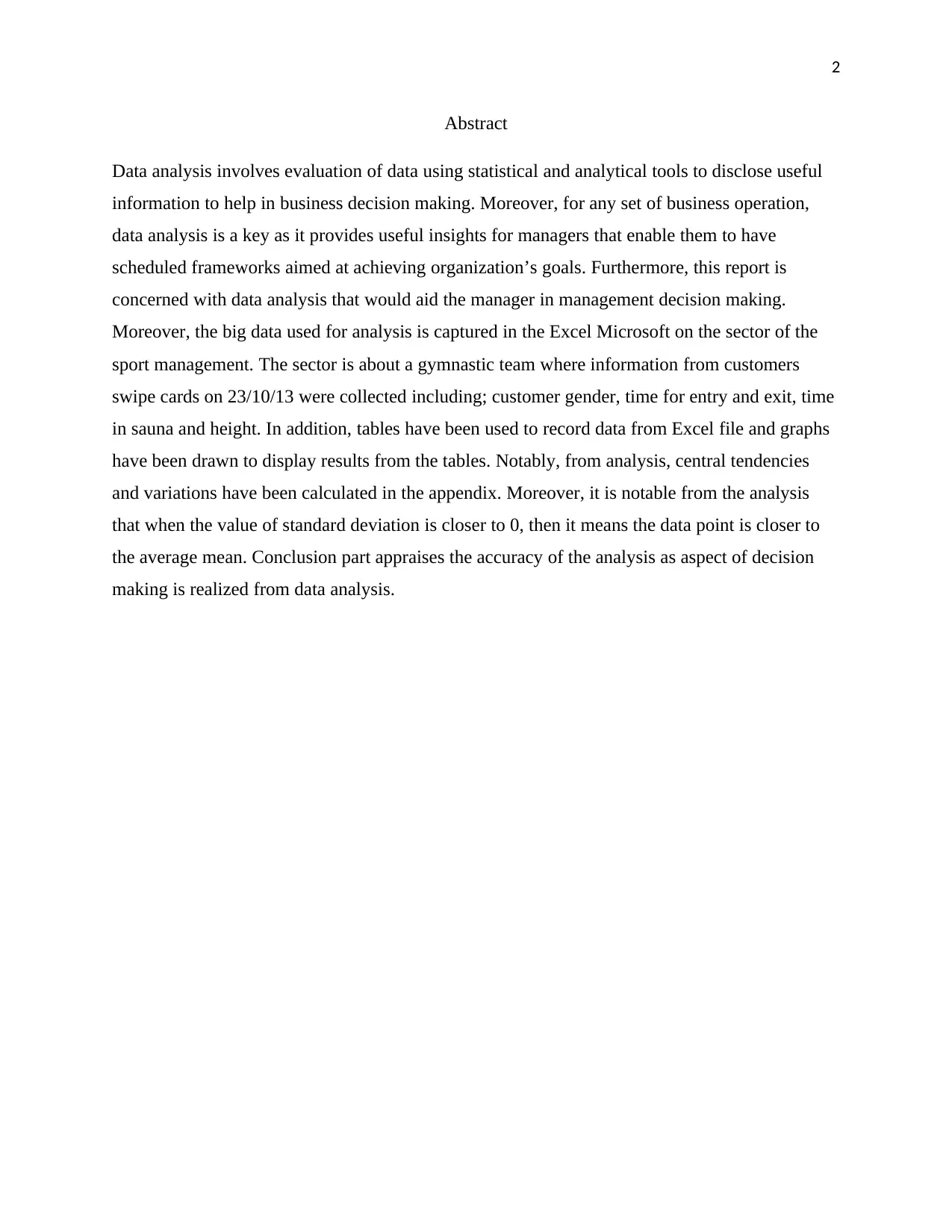
From the data, the number of Participants that attended the Gym 23/10/13were 98, where 51 (52
%) were females while 47 (48 %) were males. Figure 1 below shows the gender distribution of
the customers.
Document Page
4
Female
s Males
51 47
4
Figure 1: Distribution of Gender of Participants
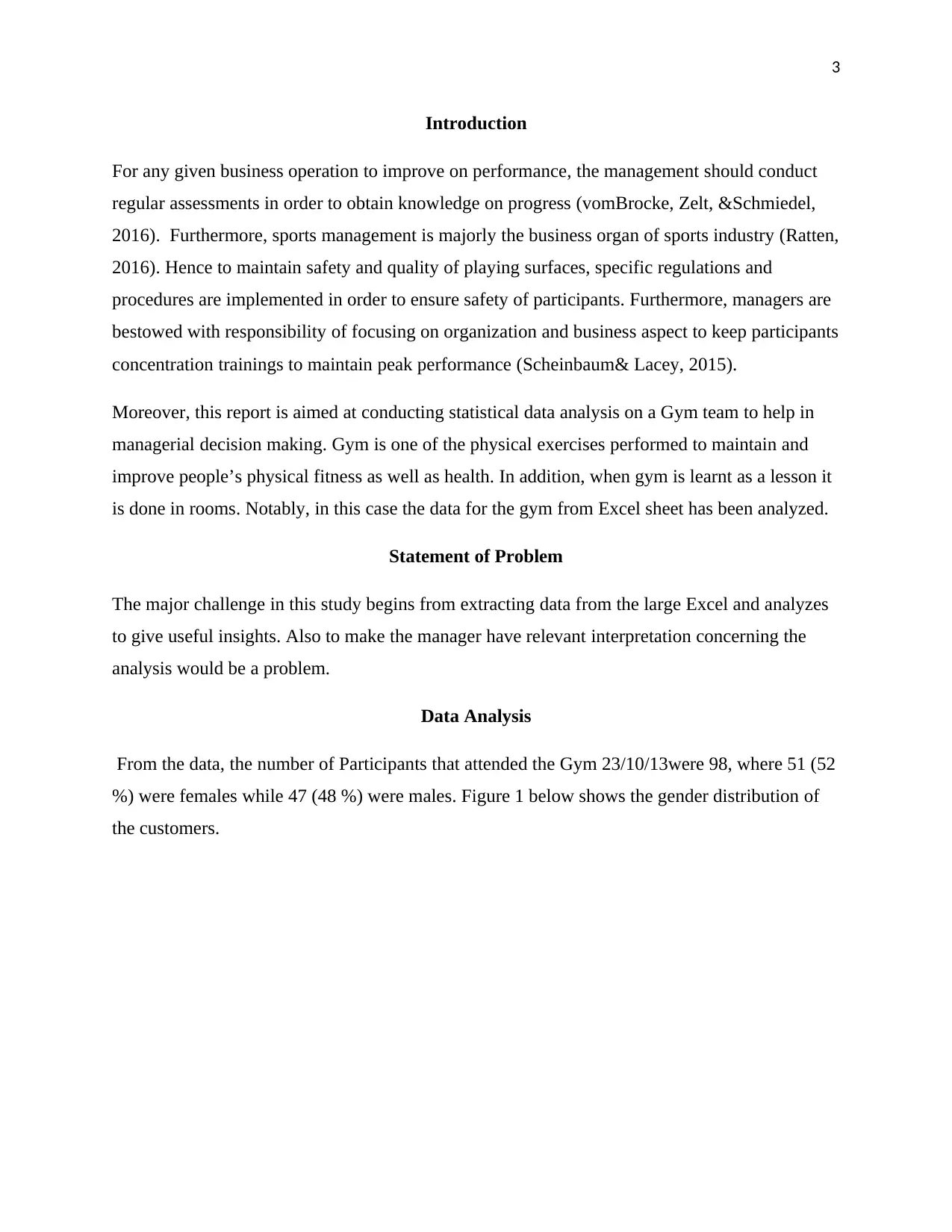
Furthermore, it is noticeable that many customers (82) who attended the gym attended classes
too (84 %), while 16 customers (16 %) never attended classes. Moreover, According to Da Silva,
et al (2019), Gym classes are of more value as they provide information that boost one’s
confidence and thoughts. Table 2 below shows the classes and number of customers who
attended the classes as well as graph in figure 2.
Table 1: Showing Number of Participants (Customers) who attended Gymnastic Classes
Classes No. of Customers
Spin 16
Yoga 24
Pilates 12
Circuit Training 15
Dance 15
52%
48%
Gender Distribution of Customers
Females
Males
tabler-icon-diamond-filled.svg

Paraphrase This Document

Need a fresh take? Get an instant paraphrase of this document with our AI Paraphraser
Document Page
5
Classes Spin Yoga Pilates Circuit
Training Dance
0
5
10
15
20
25
30
Graph Showing Number of Cutomers in Various
Classes
Classes
No. of Customers
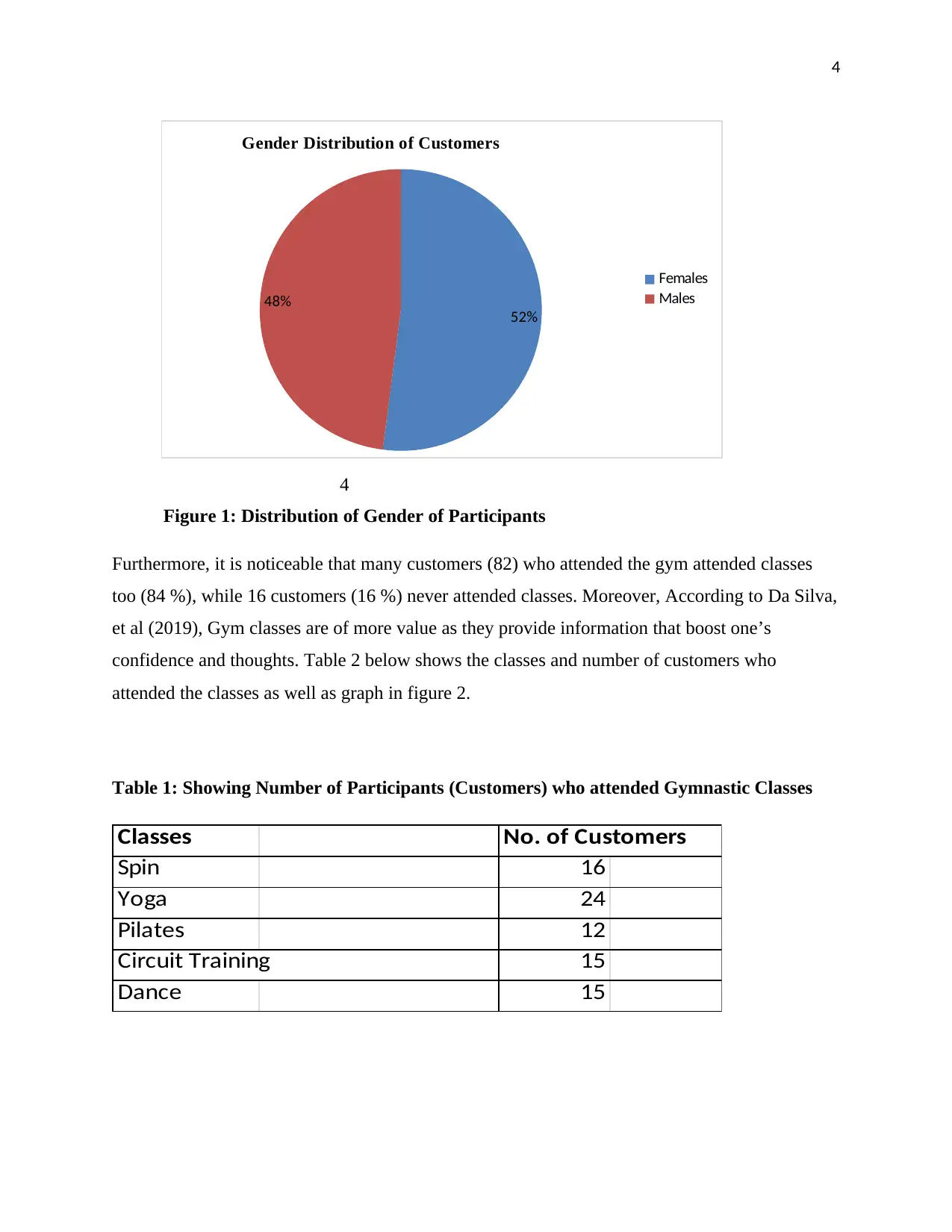
Figure 2: Displaying How Customers Attended Gymnastic Classes
From table 1 above, it is observable that 16 customers attended spin class, 24 Yoga class, 12
Pilates, 15 circuit training and also 15 attended Dance class. On the other hand, from the graph in
figure 2 above, classes represent the discrete random variable while the number of customers
represents the continuous random variable. Notably, the graph shows that Yoga class has the
highest number of customers whereas Pilate’s class had the least number (12) of customers. Thus
it is worth noting that Yoga class is the most attended class by customers. According to Sandroff
(2015), Yoga exercise helps in promoting a balanced development as well as removing toxins
from the body and negative blocks away from one’s mind. In addition, Yoga enhances self –
healing as well as boosting personal power; hence it has greater awareness leading to high
number of customers.
Summary of Calculations
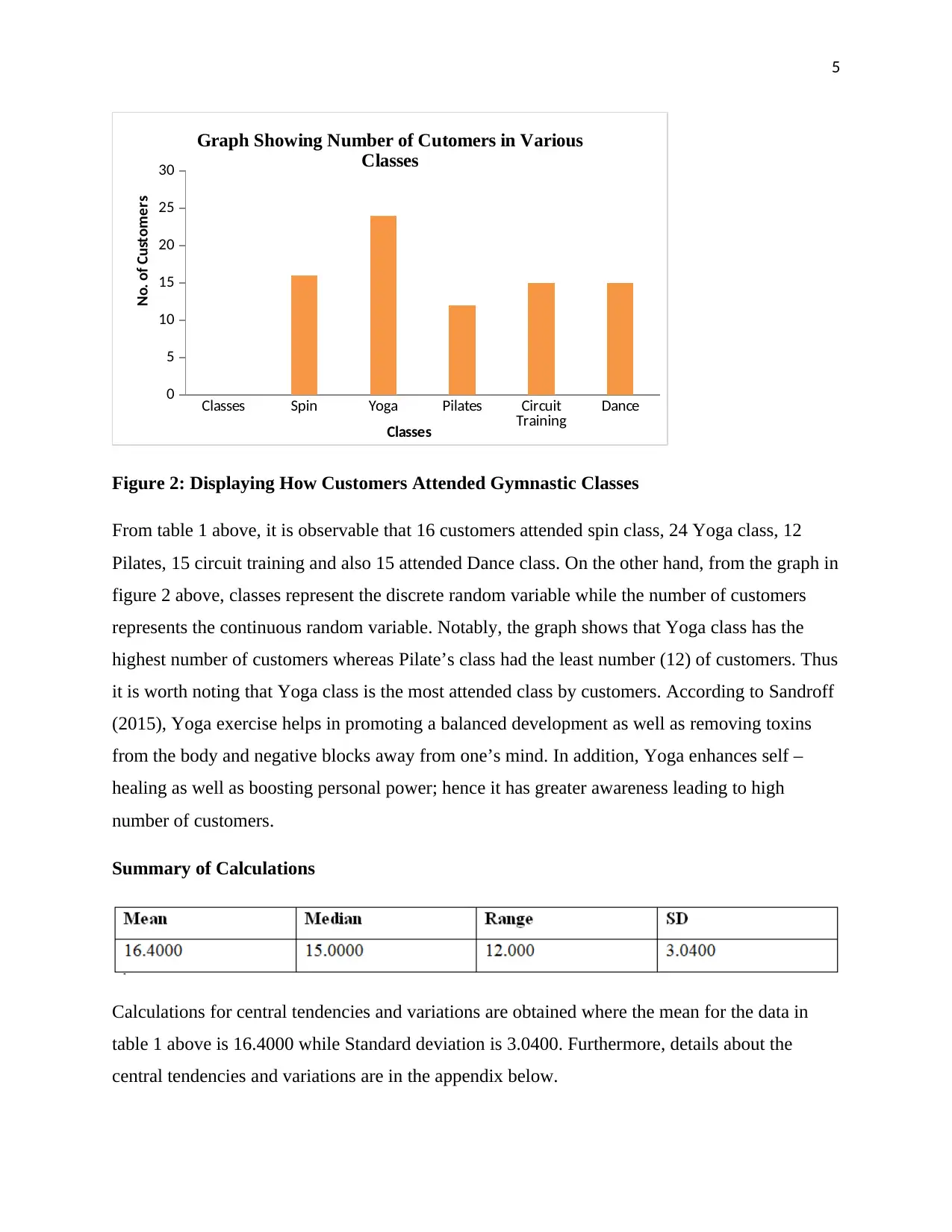
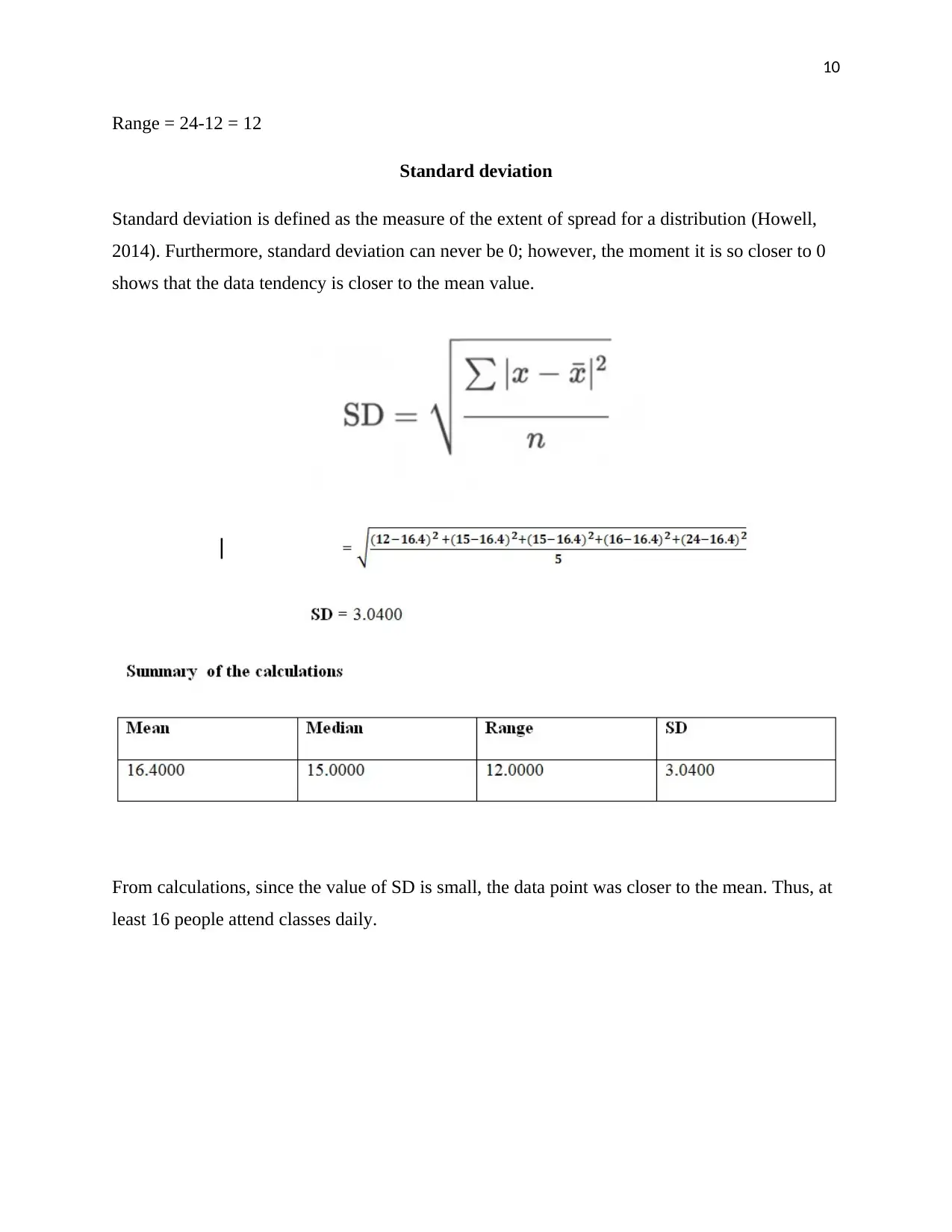
Calculations for central tendencies and variations are obtained where the mean for the data in
table 1 above is 16.4000 while Standard deviation is 3.0400. Furthermore, details about the
central tendencies and variations are in the appendix below.
Document Page
6
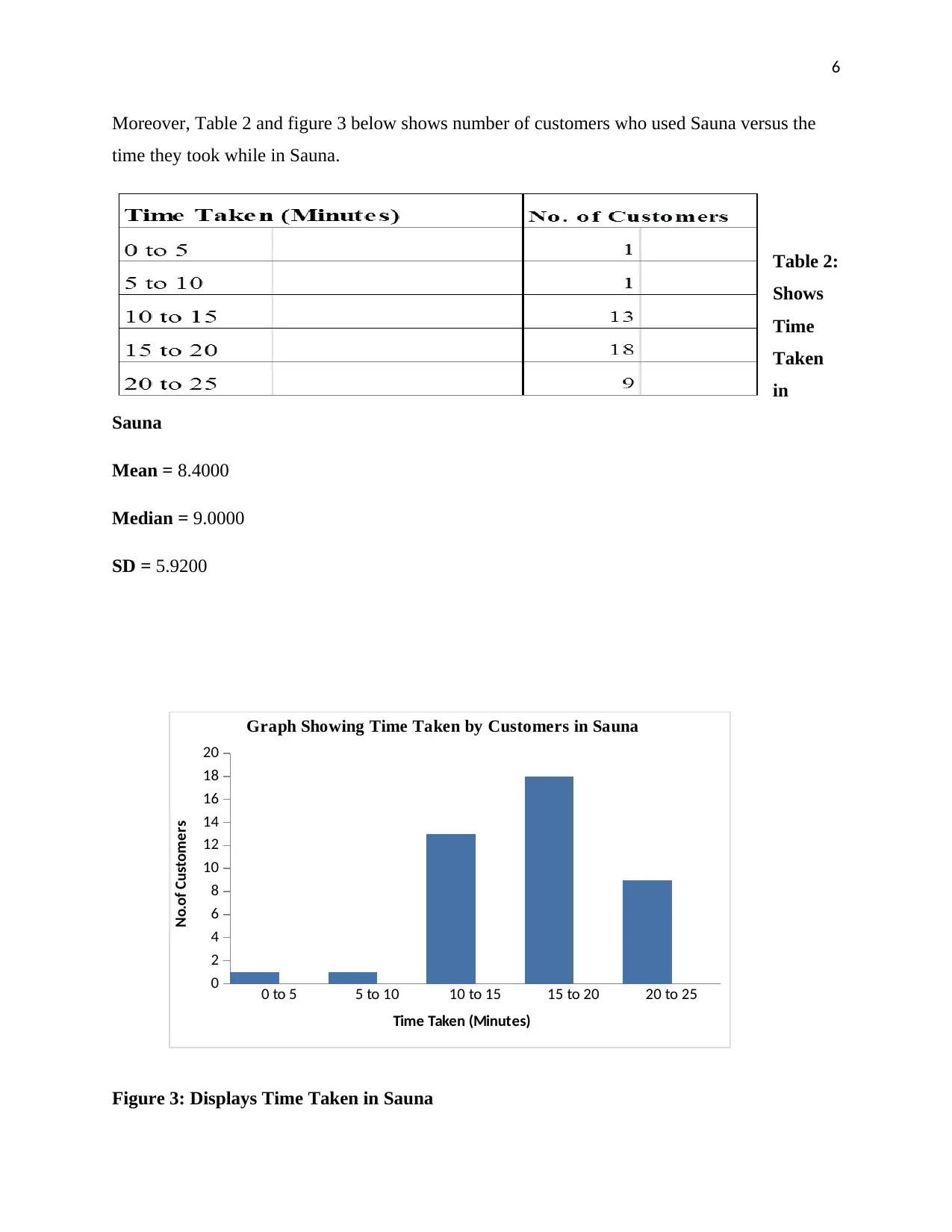
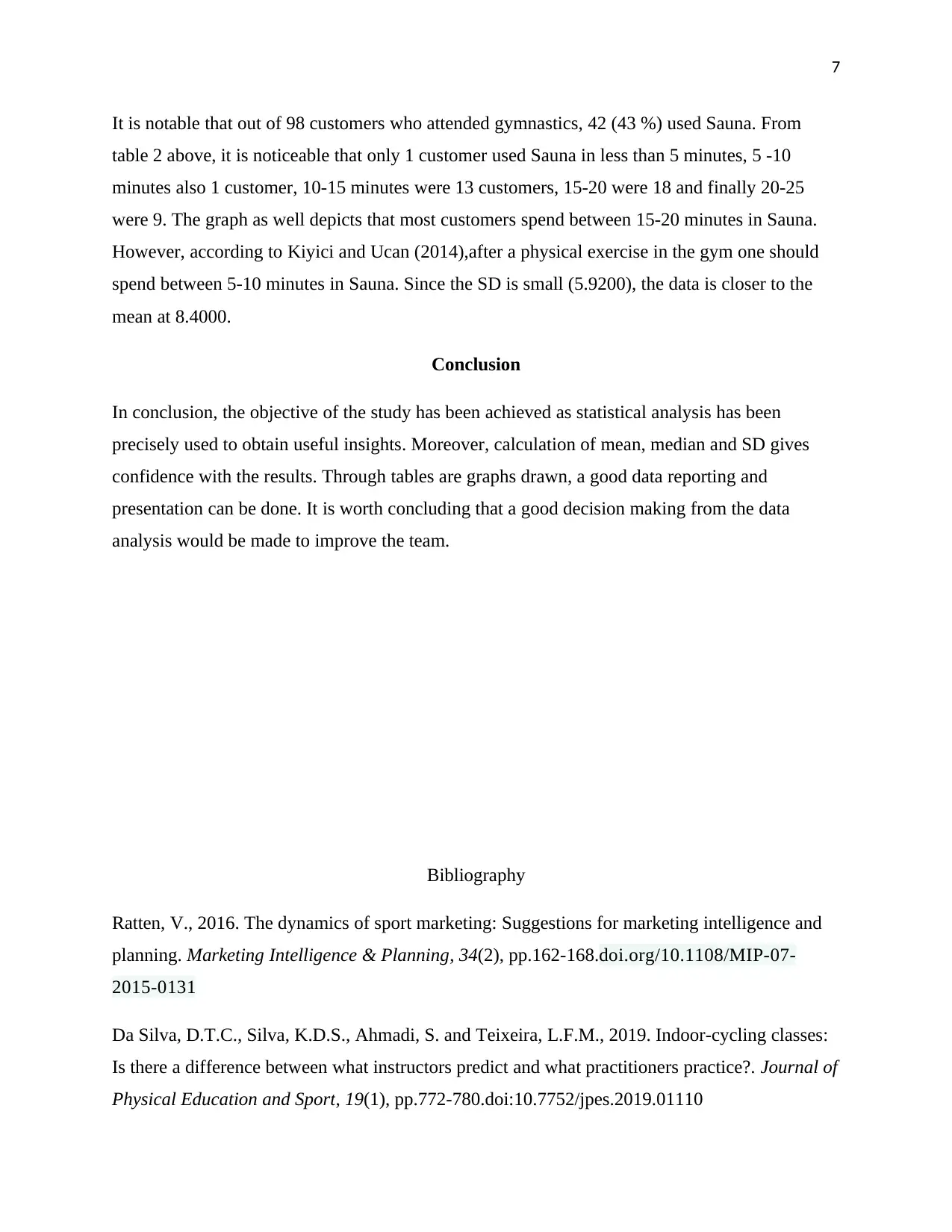
Moreover, Table 2 and figure 3 below shows number of customers who used Sauna versus the
time they took while in Sauna.
Table 2:
Shows
Time
Taken
in
Sauna
Mean = 8.4000
Median = 9.0000
SD = 5.9200
Figure 3: Displays Time Taken in Sauna
0 to 5 5 to 10 10 to 15 15 to 20 20 to 25
0
2
4
6
8
10
12
14
16
18
20
Graph Showing Time Taken by Customers in Sauna
Time Taken (Minutes)
No.of Customers
Document Page
7
It is notable that out of 98 customers who attended gymnastics, 42 (43 %) used Sauna. From
table 2 above, it is noticeable that only 1 customer used Sauna in less than 5 minutes, 5 -10
minutes also 1 customer, 10-15 minutes were 13 customers, 15-20 were 18 and finally 20-25
were 9. The graph as well depicts that most customers spend between 15-20 minutes in Sauna.
However, according to Kiyici and Ucan (2014),after a physical exercise in the gym one should
spend between 5-10 minutes in Sauna. Since the SD is small (5.9200), the data is closer to the
mean at 8.4000.
Conclusion
In conclusion, the objective of the study has been achieved as statistical analysis has been
precisely used to obtain useful insights. Moreover, calculation of mean, median and SD gives
confidence with the results. Through tables are graphs drawn, a good data reporting and
presentation can be done. It is worth concluding that a good decision making from the data
analysis would be made to improve the team.
Bibliography
Ratten, V., 2016. The dynamics of sport marketing: Suggestions for marketing intelligence and
planning. Marketing Intelligence & Planning, 34(2), pp.162-168.doi.org/10.1108/MIP-07-
2015-0131
Da Silva, D.T.C., Silva, K.D.S., Ahmadi, S. and Teixeira, L.F.M., 2019. Indoor-cycling classes:
Is there a difference between what instructors predict and what practitioners practice?. Journal of
Physical Education and Sport, 19(1), pp.772-780.doi:10.7752/jpes.2019.01110
tabler-icon-diamond-filled.svg

Paraphrase This Document

Need a fresh take? Get an instant paraphrase of this document with our AI Paraphraser
Document Page
8
Sandroff, B.M., 2015. Exercise and cognition in multiple sclerosis: the importance of acute
exercise for developing better interventions. Neuroscience &Biobehavioral Reviews, 59, pp.173-
183.doi.org/10.1016/j.neubiorev.2015.10.012
Howell, D.C., 2014. Median absolute deviation. Wiley statsRef: statistics reference
online.doi.org/10.1002/9781118445112.stat06232
Kiyici, F. and Ucan, I., 2014.The comparison of the wrestlers’ status of some physical,
physiological and growth hormone status after resting, competition and sauna
sessions. Procedia-Social and Behavioral Sciences, 116, pp.19-
22.doi.org/10.1016/j.sbspro.2014.01.161
Scheinbaum, A.C. and Lacey, R., 2015. Event social responsibility: A note to improve outcomes
for sponsors and events. Journal of business research, 68(9), pp.1982-1986.
doi.org/10.1016/j.jbusres.2015.01.017
Wan, X., Wang, W., Liu, J. and Tong, T., 2014. Estimating the sample mean and standard
deviation from the sample size, median, range and/or interquartile range. BMC medical research
methodology, 14(1), p.135.doi.org/10.1186/1471-2288-14-135
vomBrocke, J., Zelt, S. and Schmiedel, T., 2016. On the role of context in business process
management. International Journal of Information Management, 36(3), pp.486-
495.doi.org/10.1016/j.ijinfomgt.2015.10.002
Document Page
9
Appendix
Central Tendency and Measure of Variation
Central tendency is a representation of data using a central single value. The data from table 1 is
used in calculating the tendencies and variations.
Mean
Mean refers to the average of data.
Thus the formula: Mean = x
n
Mean = 16+24+12+15+ 15
5
Answer = 16.4000
Median
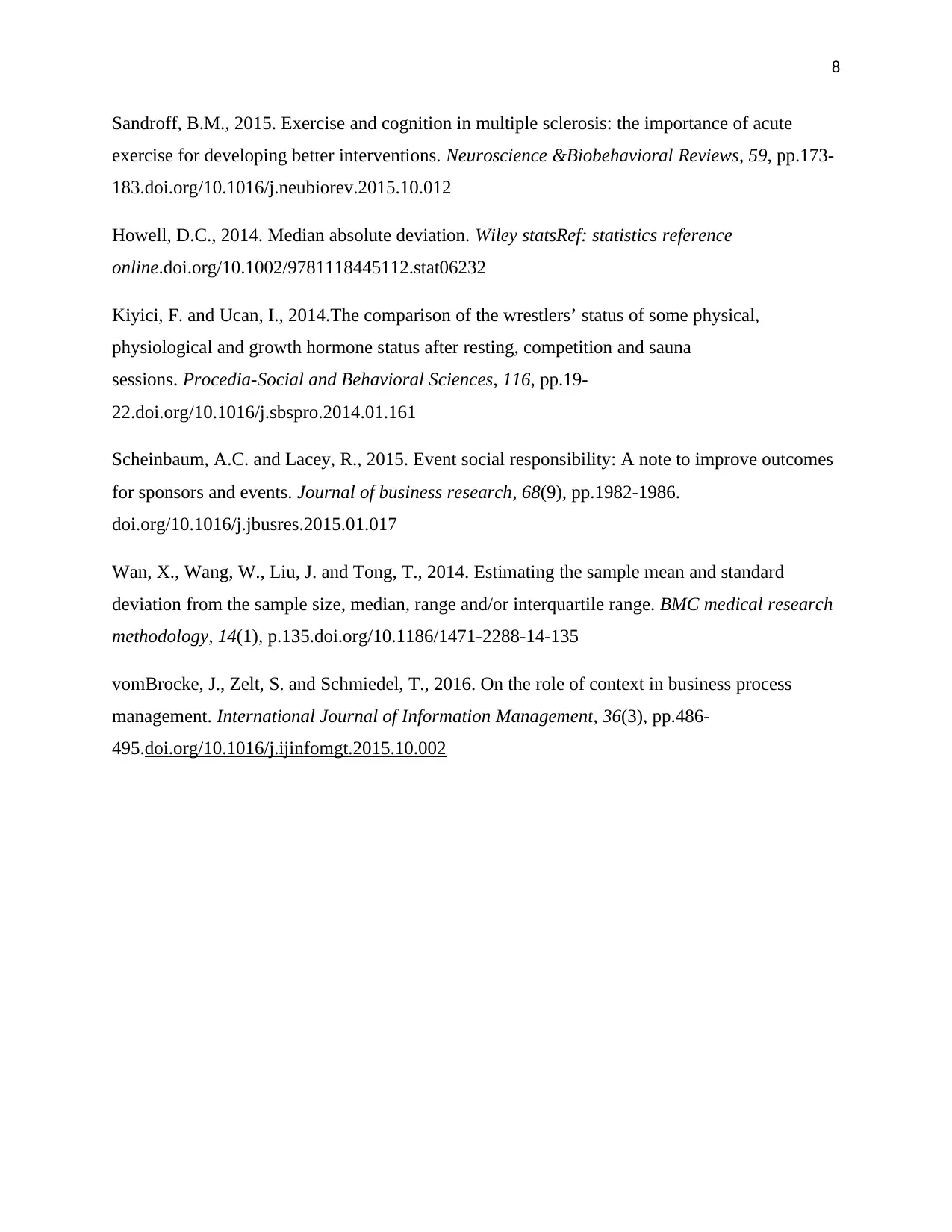
Median is the middle value in a distribution when points are arranged in ascending order, and
when two values are in the middle then their average (Wan et al., 2014). To find the median of
the customers who attended class at the gym, the data is arranged in ascending order.
From the analysis above, it is notable that the 3rd number is at the middle, meaning 15 is the
median. Thus the median = 15.0000
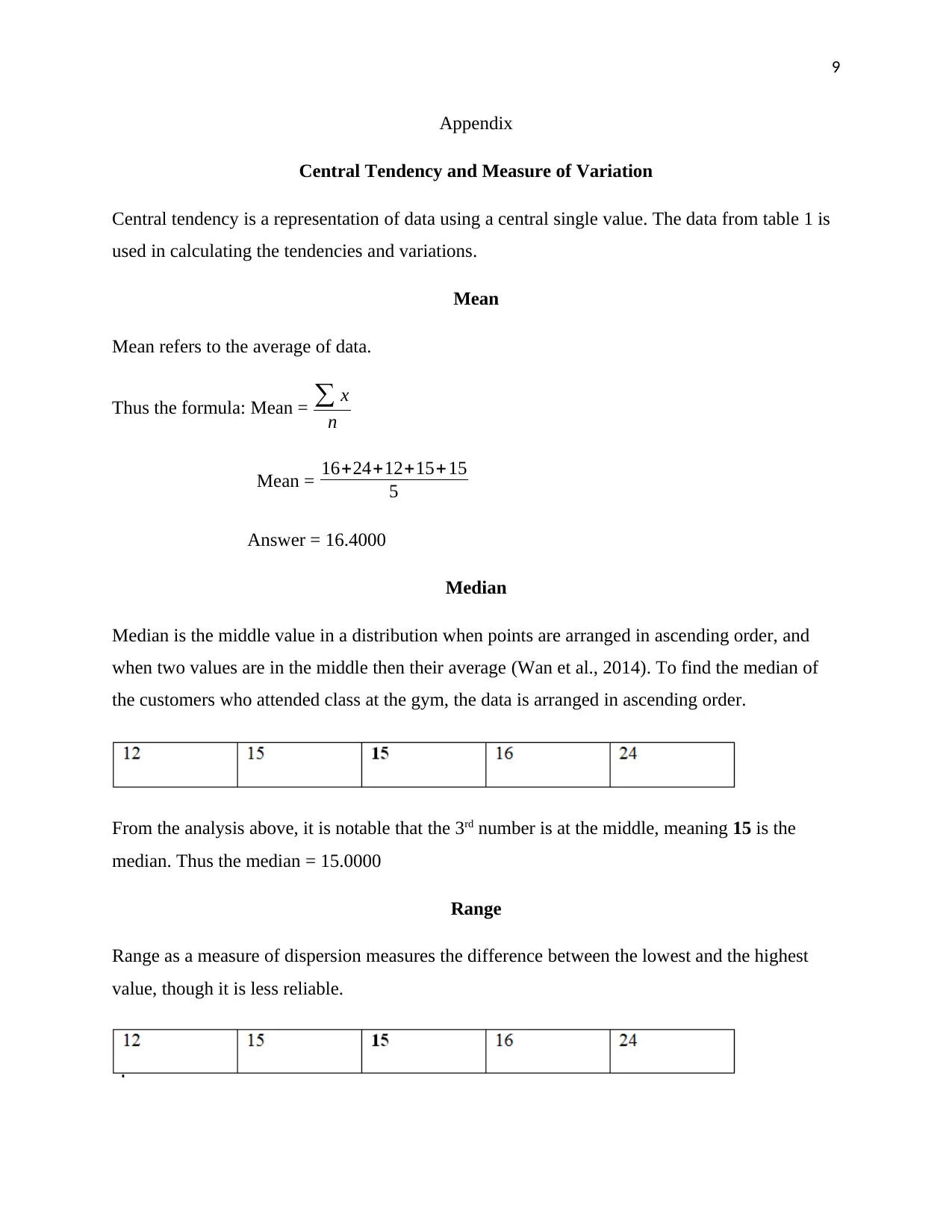
Range
Range as a measure of dispersion measures the difference between the lowest and the highest
value, though it is less reliable.
Document Page
10
Range = 24-12 = 12
Standard deviation
Standard deviation is defined as the measure of the extent of spread for a distribution (Howell,
2014). Furthermore, standard deviation can never be 0; however, the moment it is so closer to 0
shows that the data tendency is closer to the mean value.
From calculations, since the value of SD is small, the data point was closer to the mean. Thus, at
least 16 people attend classes daily.
chevron_up_icon
1 out of 10
circle_padding
hide_on_mobile
zoom_out_icon
[object Object]