Retail Business Decisions: Leveraging Data Insights and Analytics

Verified

Added on  2023/06/12

|17
|1129
|475
Report
AI Summary
This report explores the application of data insights in the retail industry, focusing on how big data analytics enhances customer experience, supply chain management, and overall business decisions. It differentiates between orthodox market research and big data, highlighting key differences in data volume and interpretation. The report details how retail industries capture information through various channels, including online registrations, websites, and social media, and how management information systems leverage this data. It further discusses the impact of technological advancements on the retail sector, emphasizing the strategic significance of data in day-to-day operations, stock management, and decision-making processes. The report concludes by outlining areas for research into improving data capture methods, referencing academic sources to support its analysis and findings, all of which are intended to provide a comprehensive overview of data's role in modern retail business strategies.
Document Page
DATA INSIGHTS FOR
BUSINESS
DECISIONS
tabler-icon-diamond-filled.svg

Paraphrase This Document

Need a fresh take? Get an instant paraphrase of this document with our AI Paraphraser
Document Page
Table of content
INTRODUCTION
Retail Industry: Big Data Analytics
Type of data collected by retail industry and if it is big data or if it is primary or secondary data
Description of Orthodox Market Research and Different from Big Data
Key Differences Between Orthodox Market Research and Big Data
How Retail Industries Capture information
How retail industry management information systems
Impact of technological development on Retail Industry
Impact of Technology on Business Decision Making Process and Roles and use of Data
Strategic significance to the firm within its industry
How information and data is used within the day to operations of retail industry sector
Outline For Research Into Improving Data Capture
CONCLUSION
Document Page
Introduction
Quantitative and interpretive data on an individual, a firm, an
industry, or even a nation is referred to as metadata. It's a one-
of-a-kind item with just single feature. This is a raw framework
of information and experiencing material that must be correctly
turned into primarily information, according to the notion. This
data could be used to assess a company's general success.
Document Page
Retail Industry: Big Data Analytics
Big Data Insights has boosted customer
experience, supply chain, and expense. The
merchandising industry is a manufacturing
industry which sells things and services to the
general public.
tabler-icon-diamond-filled.svg

Paraphrase This Document

Need a fresh take? Get an instant paraphrase of this document with our AI Paraphraser
Document Page
Type of data collected by retail industry
In the commercial sector, personal and corporate specimens are collected. This information assists businesses in
enhancing their products in attempt to meet the needs of future customers. Personal data is collected in the usual ways:
Customer communication information
Statistics on the demography
Ones house's placement and layout
Researchers collect activity information from online payments and also incentive vouchers.
The customer's name
Gmail addresses are provided as contacting material.
Document Page
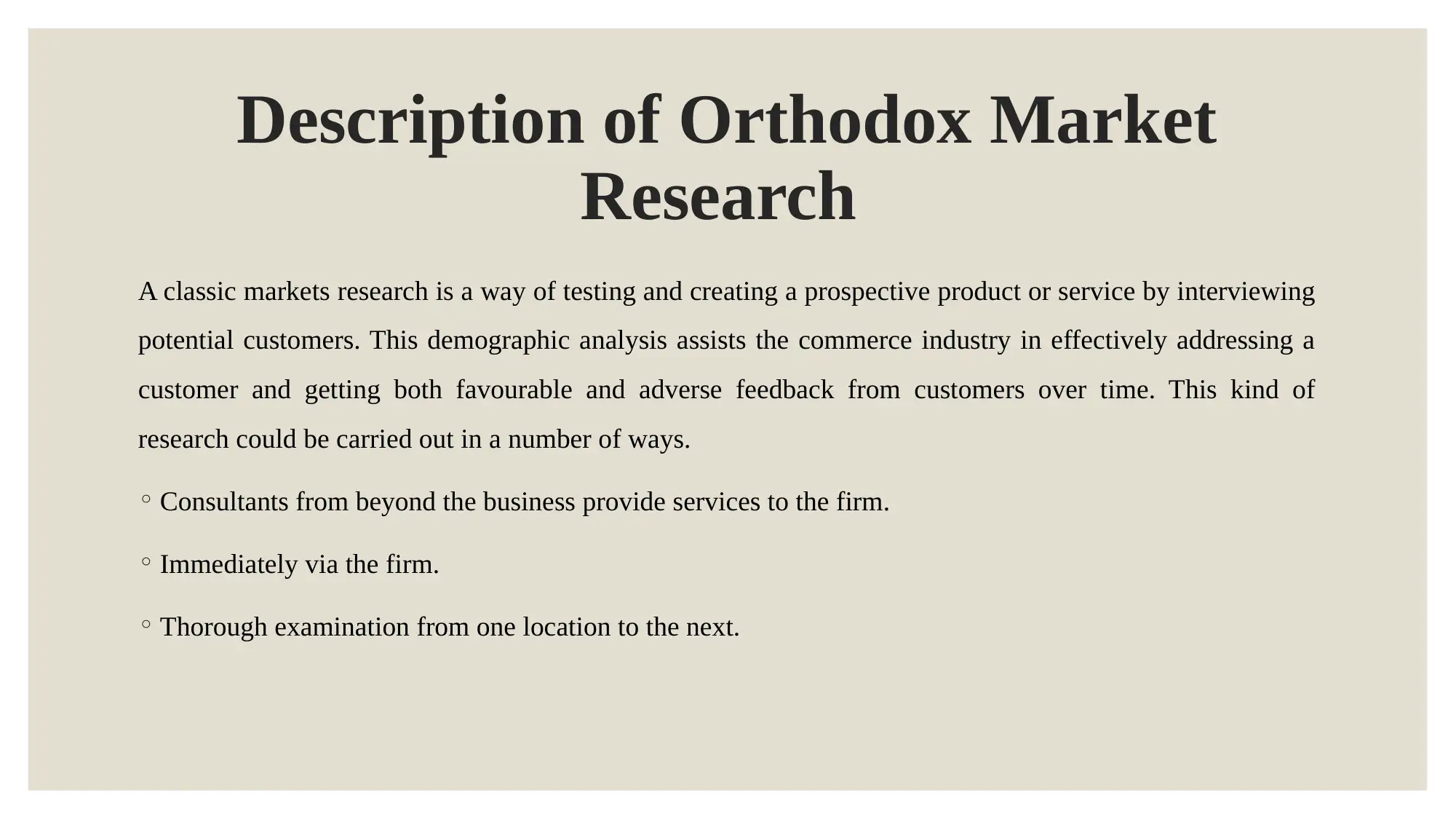
Description of Orthodox Market
Research
A classic markets research is a way of testing and creating a prospective product or service by interviewing
potential customers. This demographic analysis assists the commerce industry in effectively addressing a
customer and getting both favourable and adverse feedback from customers over time. This kind of
research could be carried out in a number of ways.
Consultants from beyond the business provide services to the firm.
Immediately via the firm.
Thorough examination from one location to the next.
Document Page
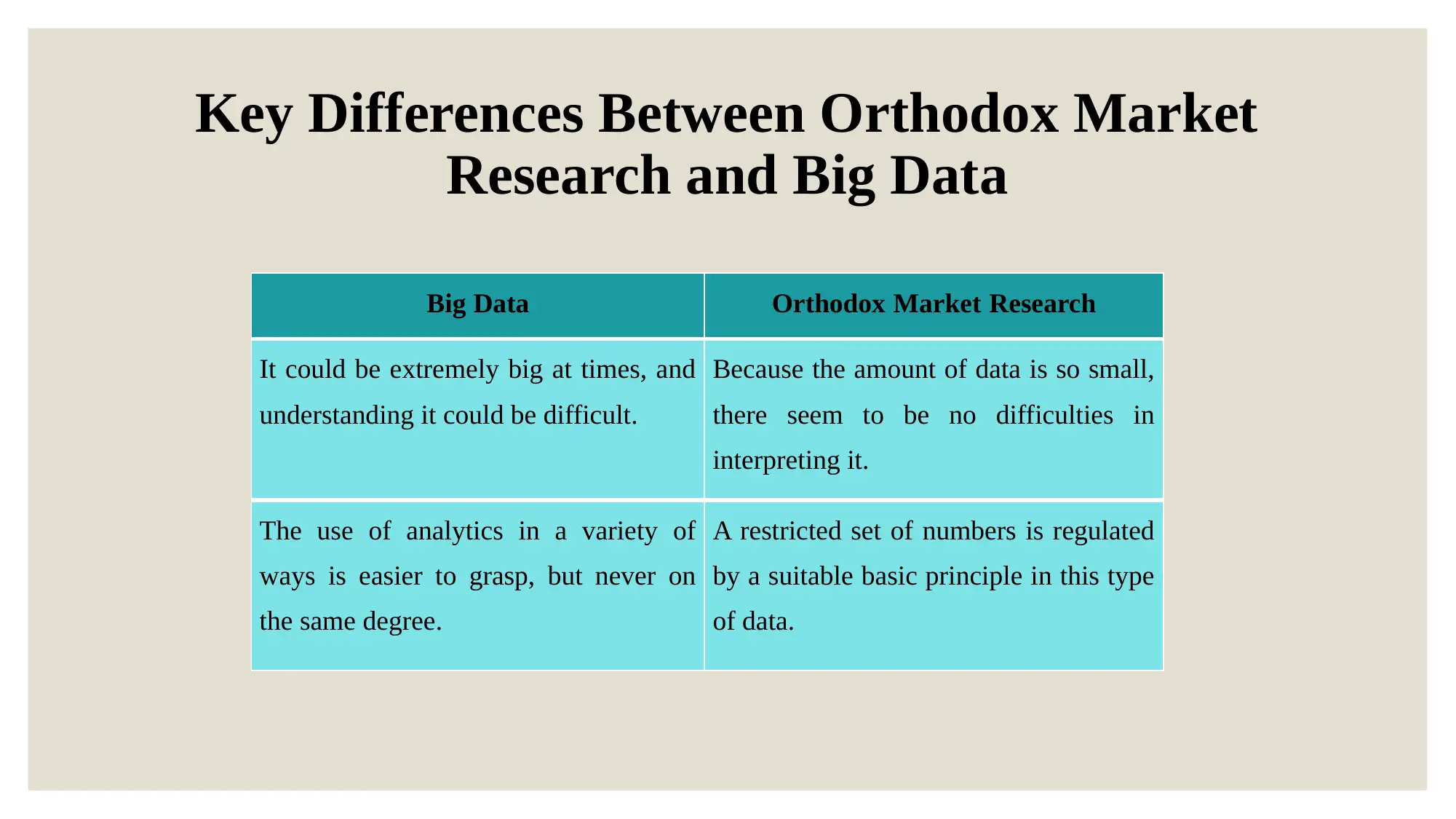
Key Differences Between Orthodox Market
Research and Big Data
Big Data Orthodox Market Research
It could be extremely big at times, and
understanding it could be difficult.
Because the amount of data is so small,
there seem to be no difficulties in
interpreting it.
The use of analytics in a variety of
ways is easier to grasp, but never on
the same degree.
A restricted set of numbers is regulated
by a suitable basic principle in this type
of data.
tabler-icon-diamond-filled.svg

Paraphrase This Document

Need a fresh take? Get an instant paraphrase of this document with our AI Paraphraser
Document Page
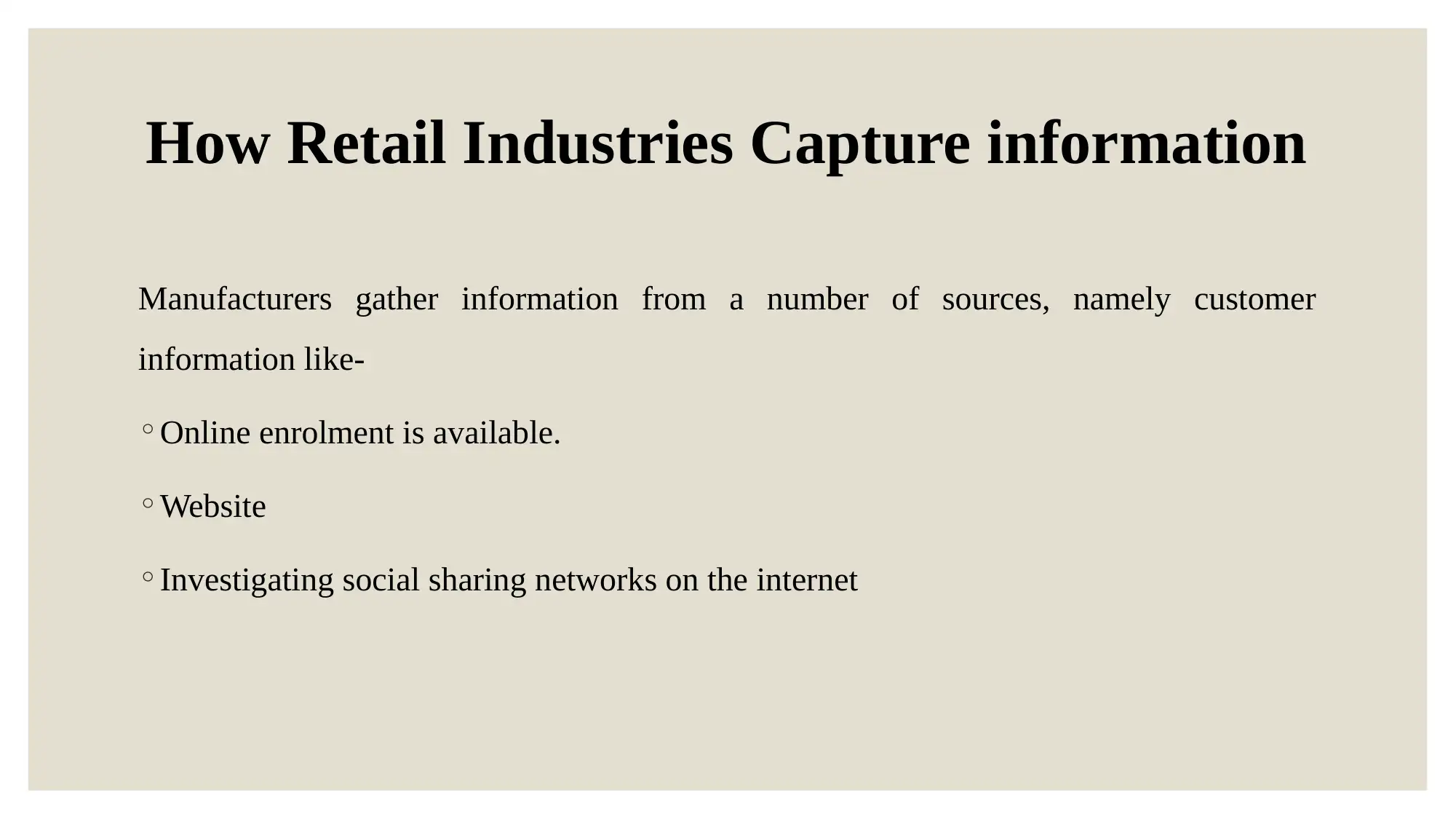
How Retail Industries Capture information
Manufacturers gather information from a number of sources, namely customer
information like-
Online enrolment is available.
Website
Investigating social sharing networks on the internet
Document Page
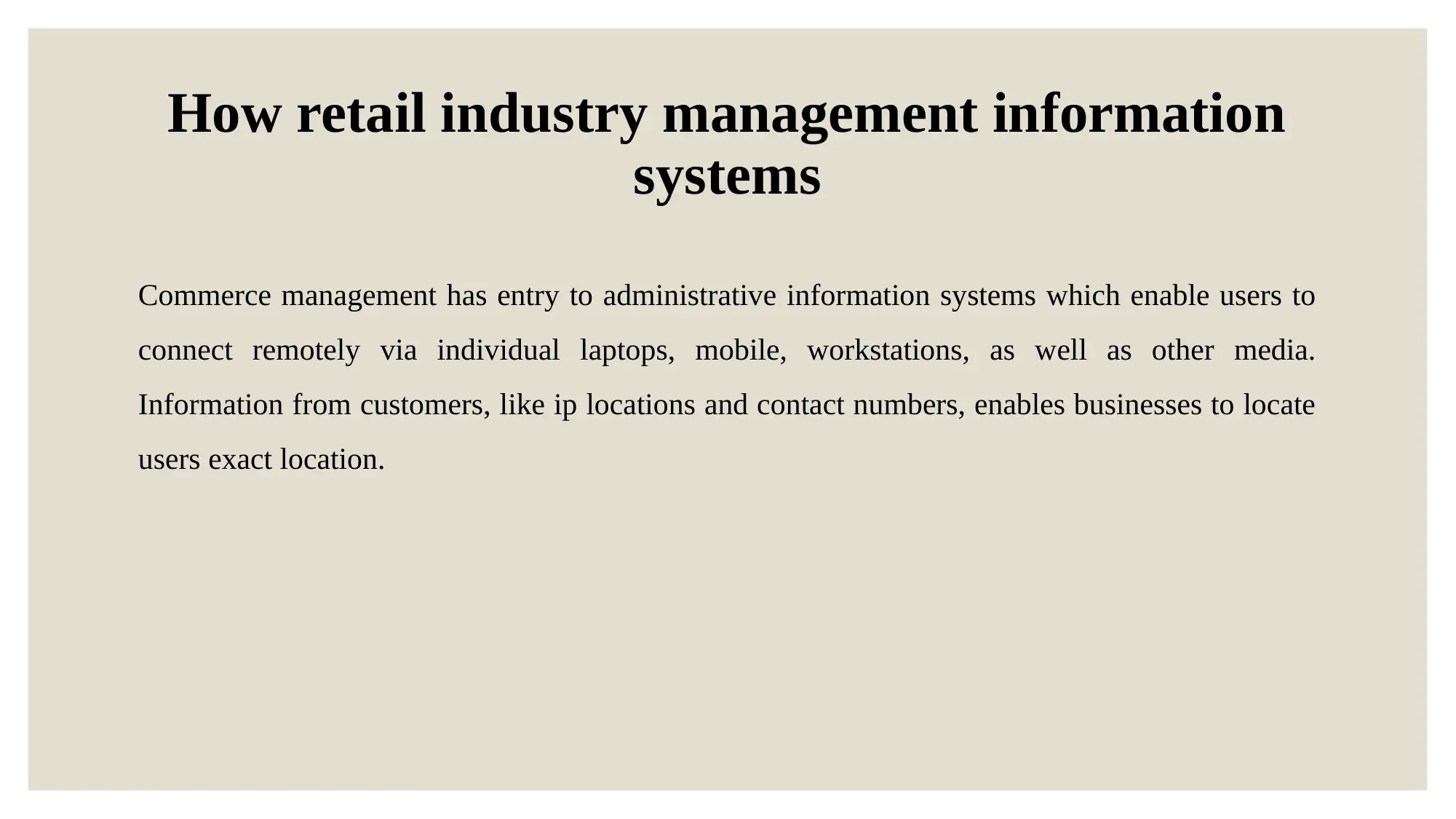
How retail industry management information
systems
Commerce management has entry to administrative information systems which enable users to
connect remotely via individual laptops, mobile, workstations, as well as other media.
Information from customers, like ip locations and contact numbers, enables businesses to locate
users exact location.
Document Page
Impact of technological development on Retail
Industry
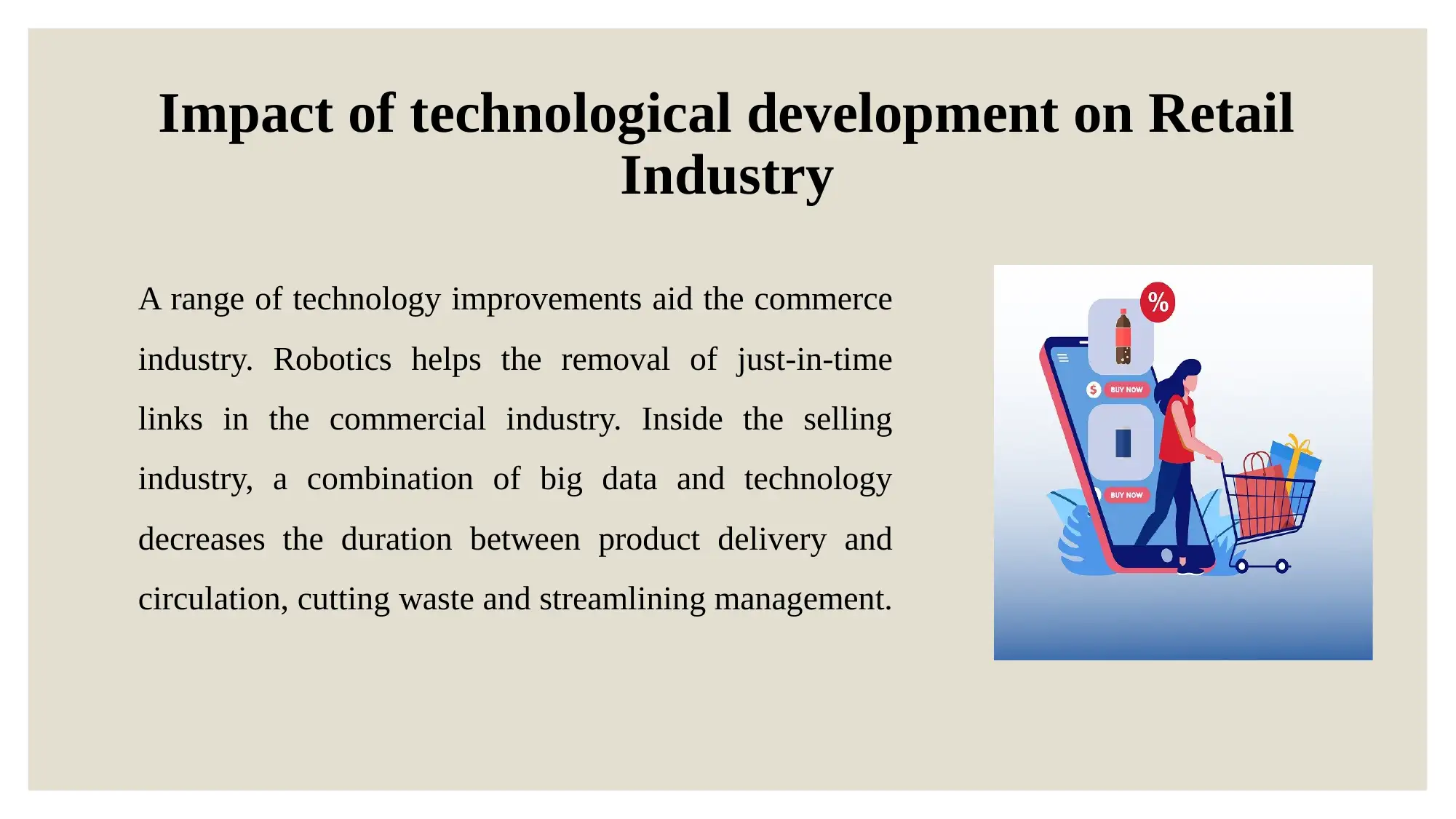
A range of technology improvements aid the commerce
industry. Robotics helps the removal of just-in-time
links in the commercial industry. Inside the selling
industry, a combination of big data and technology
decreases the duration between product delivery and
circulation, cutting waste and streamlining management.
tabler-icon-diamond-filled.svg

Paraphrase This Document

Need a fresh take? Get an instant paraphrase of this document with our AI Paraphraser
Document Page
Impact of Technology on Business
Decision Making Process
Managers can concentrate on the amount and
pace of fluctuations since innovations
emphasizes on the data which is supplied for
people. In cooperative groups, innovation
enhances the cognitive cycle and makes it
feasible to create the institutions.
Document Page
Strategic significance to the firm within its
industry
For a prolonged time, the procedure was a critical component of each commercial operation. It
enables users to comprehend the firm including its complete perspective, ones organization's
calendar of activities, and the marketplace in general. The process includes keeping track of
such and implementing those into the firm's structure, purpose statement, and objective.
chevron_up_icon
1 out of 17
circle_padding
hide_on_mobile
zoom_out_icon
[object Object]