ISYS617 Data Management: AusEd Human Resource System Model

Verified

Added on  2023/04/11

|9
|647
|331
Project
AI Summary
This project report details the conceptual modeling of a Human Resource Management (HRM) system for AusEd, a not-for-profit online education provider. The report includes project preliminaries, system services defined through a context diagram illustrating interactions with external actors, and a use case diagram outlining the system's functional requirements. Data requirements are specified using a data dictionary and various levels of Entity Relationship Diagrams (ERD), including conceptual, logical, and physical models. The report also addresses system constraints related to performance, security, operational, and legal aspects. References to relevant sources are provided to support the analysis and design choices. Desklib provides access to similar solved assignments and past papers for students.

Document Page
COVER PAGE
tabler-icon-diamond-filled.svg

Paraphrase This Document

Need a fresh take? Get an instant paraphrase of this document with our AI Paraphraser
Document Page
Contents
1 introduction..............................................................................................................................................3
2 Project Preliminaries................................................................................................................................3
3 System services........................................................................................................................................3
3.1 Context of the system........................................................................................................................3
3.1.1 Context diagram.........................................................................................................................3
3.1.2 Context diagram description.......................................................................................................3
4.3 Functional requirements...................................................................................................................4
4.3.1 Use case diagram........................................................................................................................4
5 System data requirements.......................................................................................................................5
5.1 Data dictionary..................................................................................................................................5
5.2 ERD....................................................................................................................................................6
5.2.1 Conceptual model.......................................................................................................................6
5.2.2 Logical Model..............................................................................................................................7
5.2.3 Physical model............................................................................................................................8
6 System constraints...................................................................................................................................9
6.1 Performance requirements...............................................................................................................9
6.2 Security requirements.......................................................................................................................9
6.3 Operational requirements.................................................................................................................9
6.4 Political and legal requirements........................................................................................................9
References...................................................................................................................................................9
Document Page
1 introduction
This report presents a report on the conceptual modelling of the proposed Human Resource
Management system to be used by AusEd.
2 Project Preliminaries
AusEd is in need of a Human Resource management system that will be useful in managing employee
information including their personal information, work attendance timesheets and leave of absence
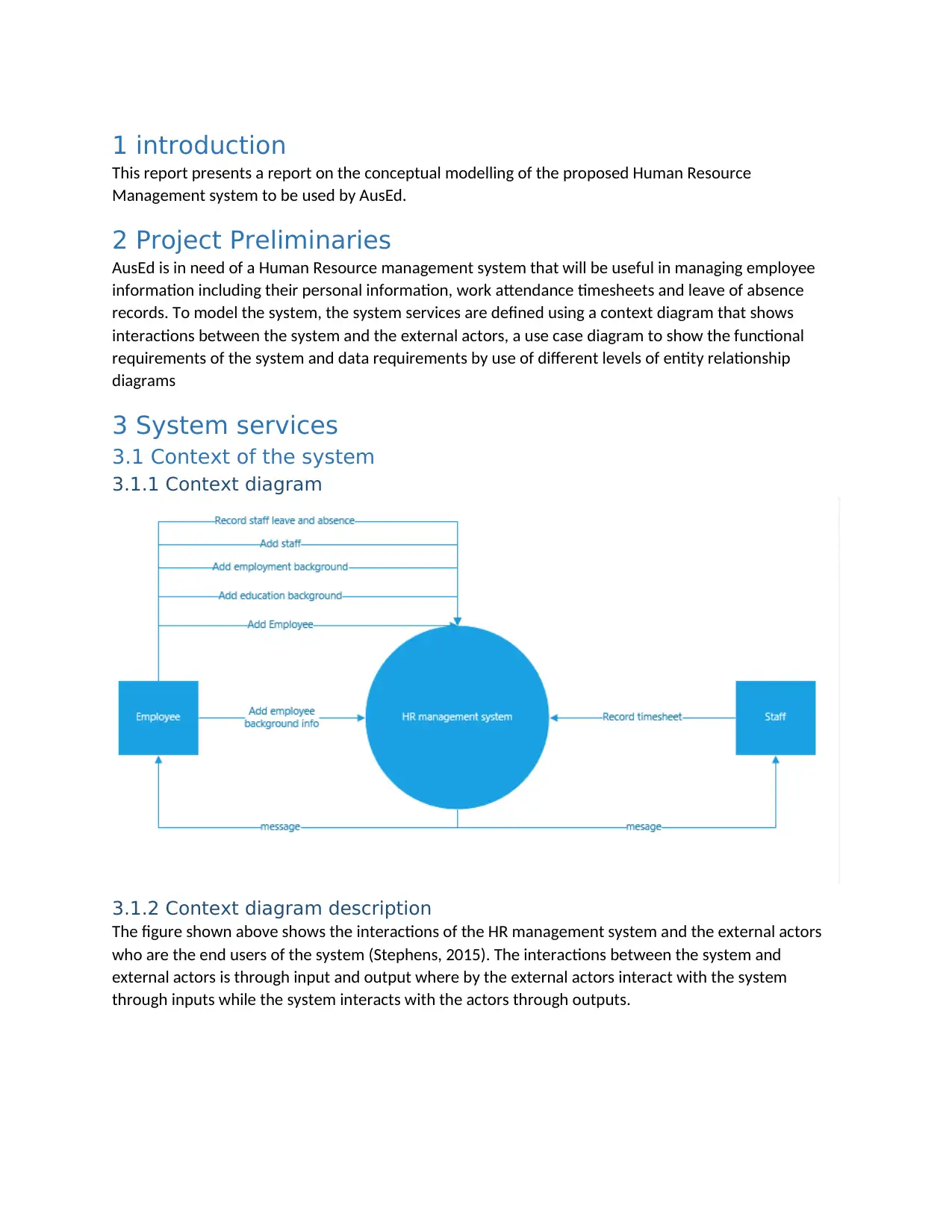
records. To model the system, the system services are defined using a context diagram that shows
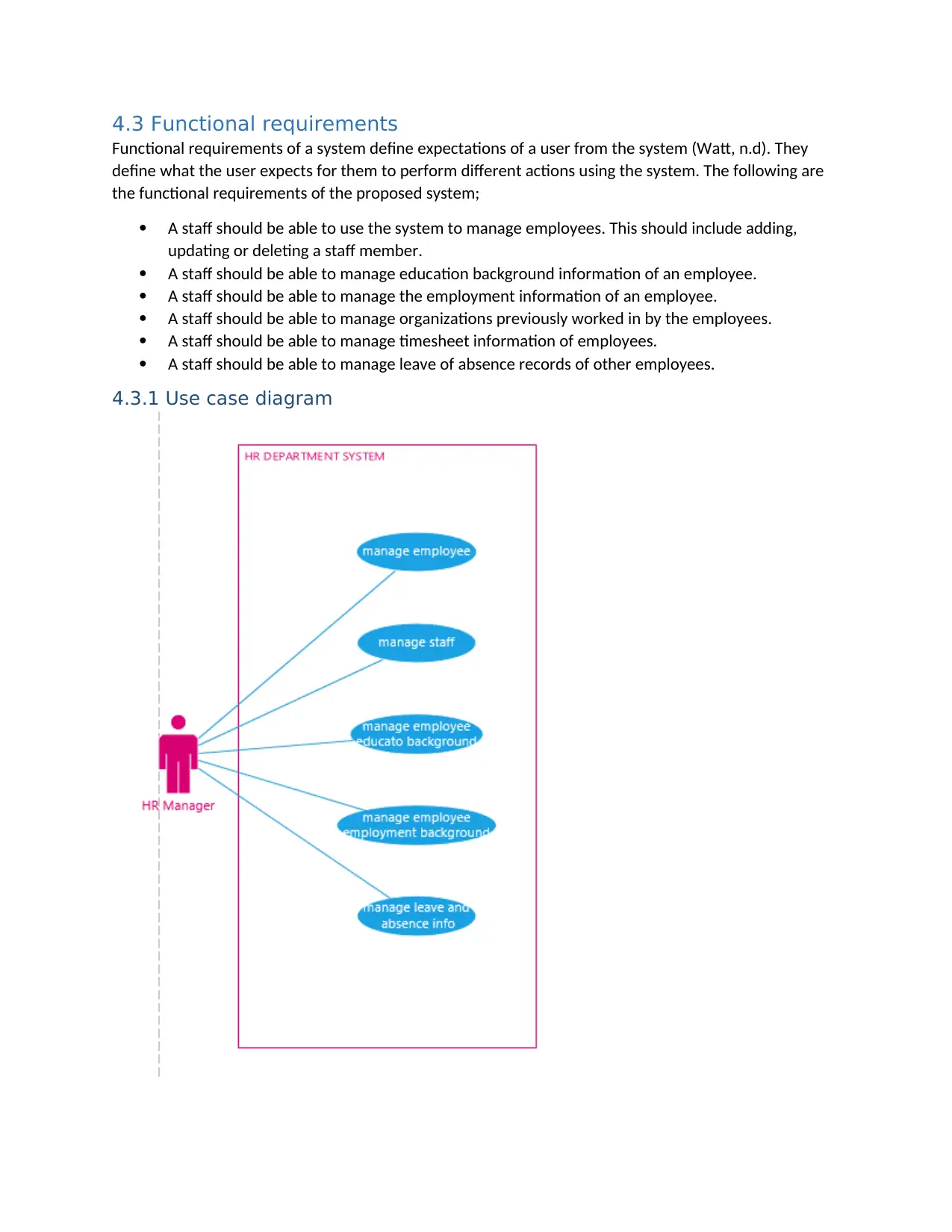
interactions between the system and the external actors, a use case diagram to show the functional
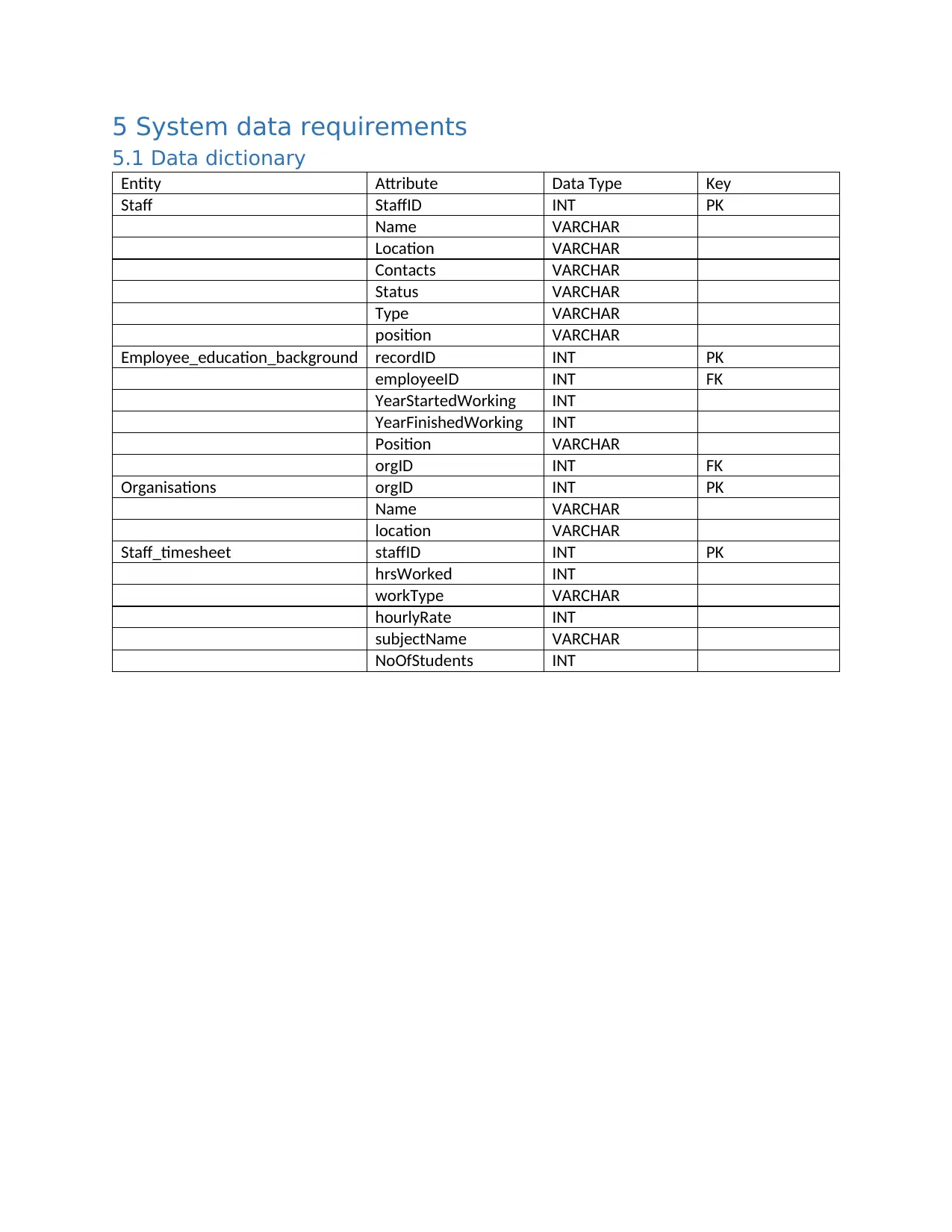
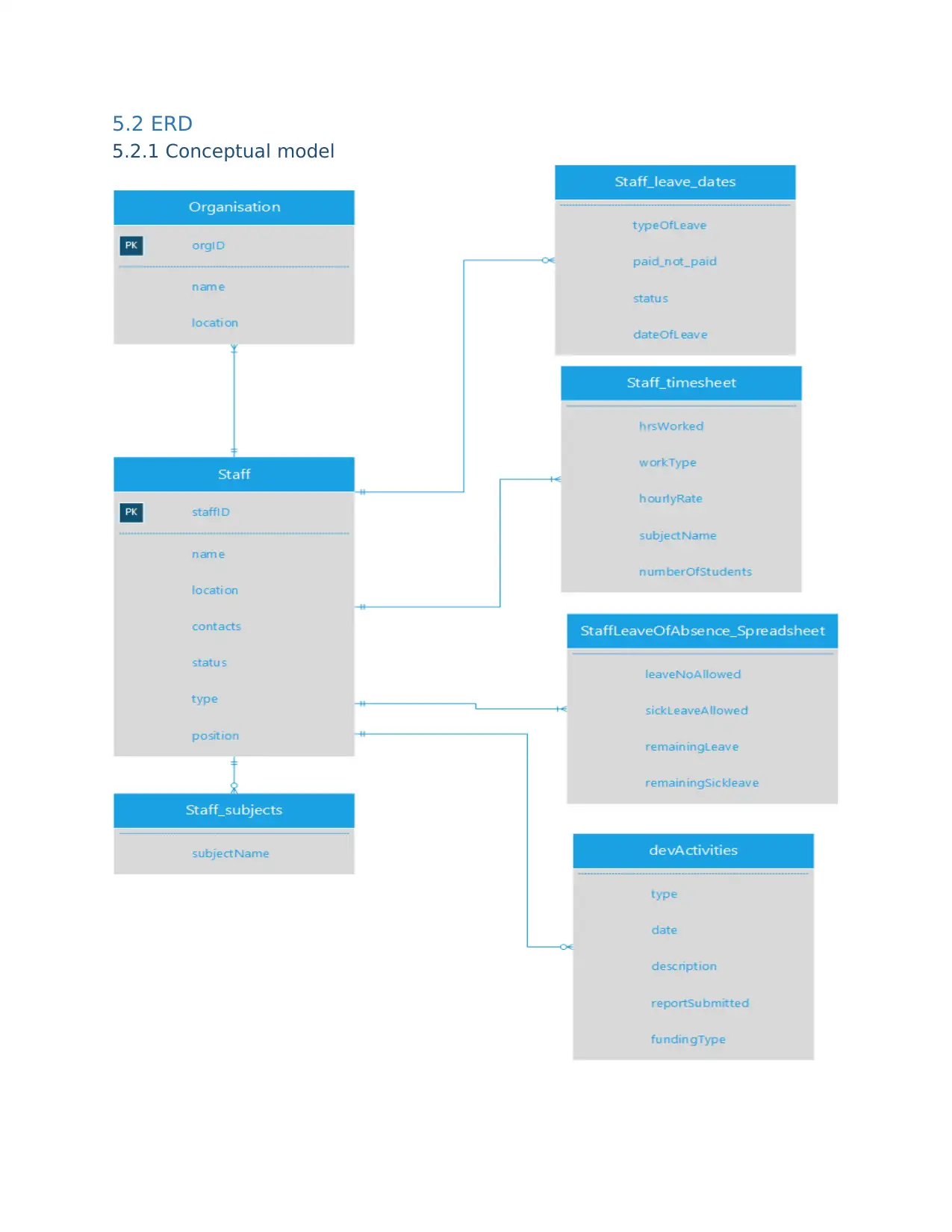
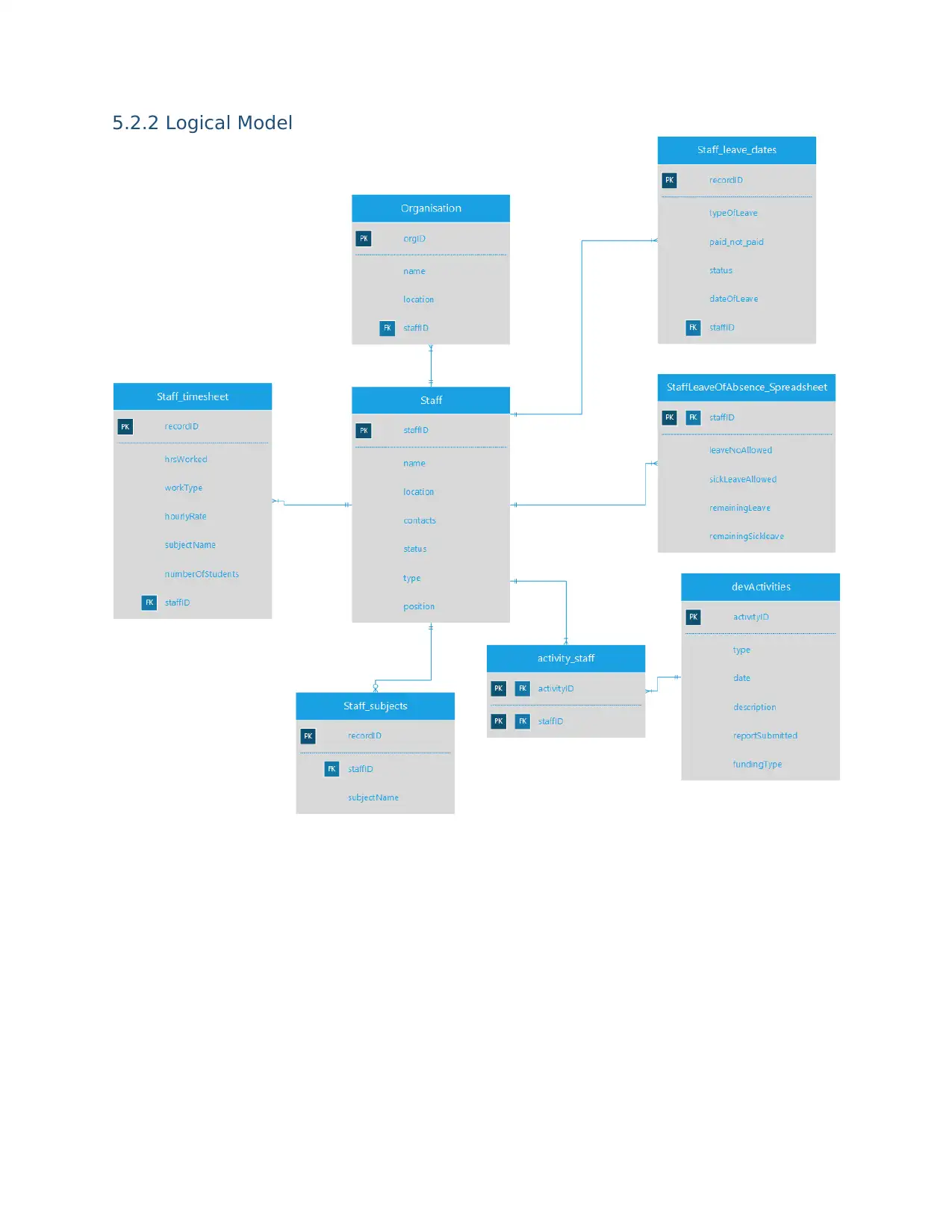
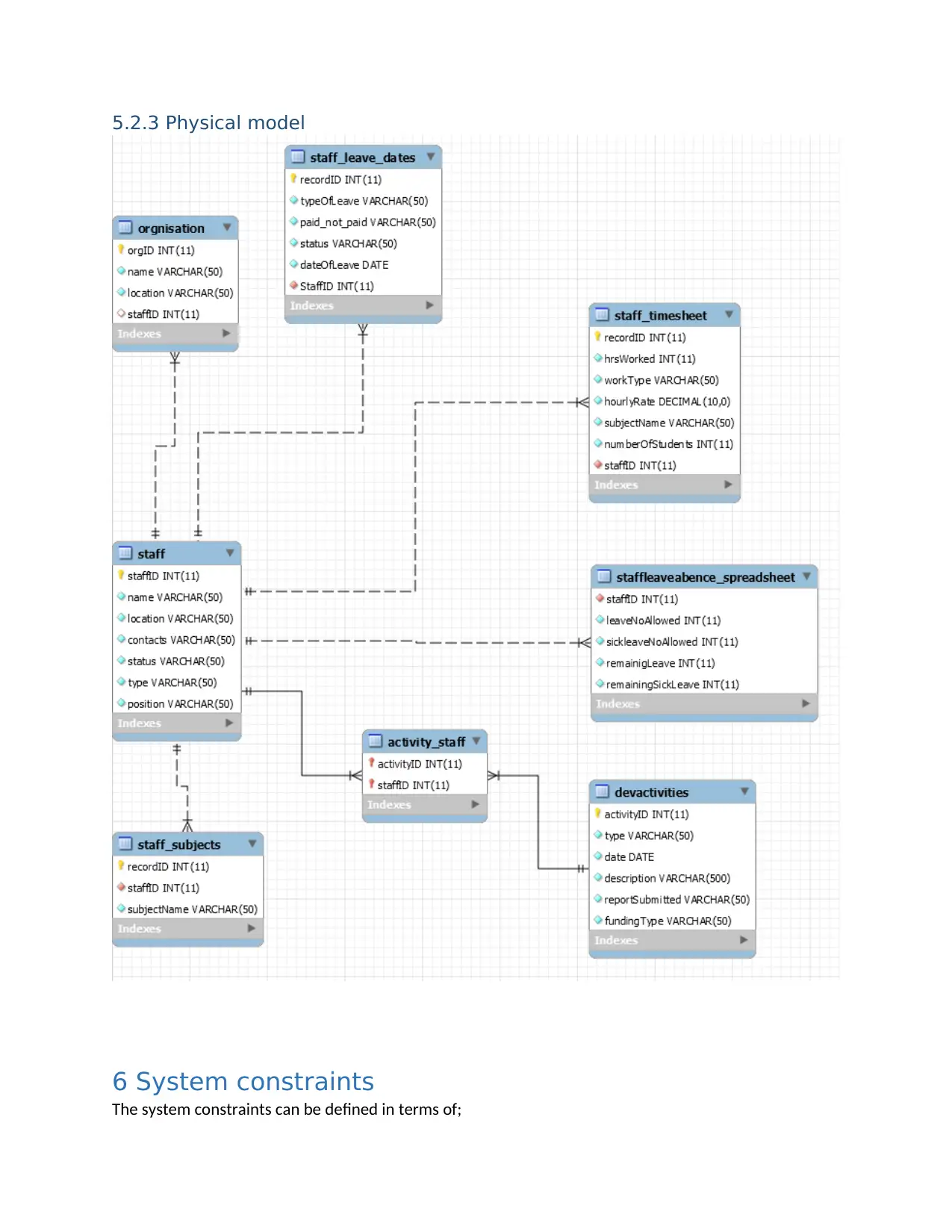
requirements of the system and data requirements by use of different levels of entity relationship
diagrams
3 System services
3.1 Context of the system
3.1.1 Context diagram
3.1.2 Context diagram description
The figure shown above shows the interactions of the HR management system and the external actors
who are the end users of the system (Stephens, 2015). The interactions between the system and
external actors is through input and output where by the external actors interact with the system
through inputs while the system interacts with the actors through outputs.
Document Page
4.3 Functional requirements
Functional requirements of a system define expectations of a user from the system (Watt, n.d). They
define what the user expects for them to perform different actions using the system. The following are
the functional requirements of the proposed system;
A staff should be able to use the system to manage employees. This should include adding,
updating or deleting a staff member.
A staff should be able to manage education background information of an employee.
A staff should be able to manage the employment information of an employee.
A staff should be able to manage organizations previously worked in by the employees.
A staff should be able to manage timesheet information of employees.
A staff should be able to manage leave of absence records of other employees.
4.3.1 Use case diagram
tabler-icon-diamond-filled.svg

Paraphrase This Document

Need a fresh take? Get an instant paraphrase of this document with our AI Paraphraser
Document Page
5 System data requirements
5.1 Data dictionary
Entity Attribute Data Type Key
Staff StaffID INT PK
Name VARCHAR
Location VARCHAR
Contacts VARCHAR
Status VARCHAR
Type VARCHAR
position VARCHAR
Employee_education_background recordID INT PK
employeeID INT FK
YearStartedWorking INT
YearFinishedWorking INT
Position VARCHAR
orgID INT FK
Organisations orgID INT PK
Name VARCHAR
location VARCHAR
Staff_timesheet staffID INT PK
hrsWorked INT
workType VARCHAR
hourlyRate INT
subjectName VARCHAR
NoOfStudents INT
Document Page
5.2 ERD
5.2.1 Conceptual model
Document Page
5.2.2 Logical Model
tabler-icon-diamond-filled.svg

Paraphrase This Document

Need a fresh take? Get an instant paraphrase of this document with our AI Paraphraser
Document Page
5.2.3 Physical model
6 System constraints
The system constraints can be defined in terms of;
Document Page
6.1 Performance requirements
The proposed system should ensure good performance at all times. This means that all the system
services should use the least amount of time possible to return the expected results (Finteq, 2018).
6.2 Security requirements
The proposed system should ensure data is stored securely to avoid unauthorized access of the data.
Transmission of the data in the system should be done in a secure socket layer.
6.3 Operational requirements
The proposed system should operate as expected at all times. The output of the system should be
accurate at all times.
6.4 Political and legal requirements
The proposed system should operate within the stipulated legal rules and regulations. Development of
the system should ensure that all rules and regulations are followed.
References
Finteq. (2018). Why standards are important in software development - Finteq. Retrieved from
http://www.finteq.co.za/why-standards-are-important-in-software-development/
Stephens, R. (2015). Beginning Software Engineering. John Wiley & Sons.
Watt, A. (n.d.). Database Design:Chapter 11 Functional Dependencies. Retrieved July 7, 2018, from
https://opentextbc.ca/dbdesign/chapter/chapter-11-functional-dependencies/
Watt, A. (n.d.). Database Design:Chapter 12 Normalization. Retrieved July 7, 2018, from
https://opentextbc.ca/dbdesign/chapter/chapter-12-Normalization/
chevron_up_icon
1 out of 9
circle_padding
hide_on_mobile
zoom_out_icon
[object Object]