Workforce Planning Based on Demand: A Case Study of ABC Airline
VerifiedAdded on 2023/06/15
|68
|19588
|439
Thesis and Dissertation
AI Summary
This dissertation provides a comprehensive analysis of demand-based workforce planning within the context of ABC Airline's ground staff scheduling. It addresses the increasing need for airlines to balance customer service enhancement with labor cost control. The research explores the concept of demand-based workforce scheduling, its benefits, and effective techniques for implementation, including cross-utilization of resources, flexible workplace agreements, and optimized staff scheduling. The study incorporates quantitative and qualitative data analysis, examining the impact of workforce planning on customer service and cost efficiency. Ultimately, the research aims to provide insights and recommendations for airlines seeking to improve their workforce planning strategies to meet customer demands while managing labor costs effectively. This document is available on Desklib, a platform offering a wide range of study resources, including past papers and solved assignments.
Running head: BUSINESS RESEARCH FOR DISSERTATION
Business Research for Dissertation
Name of the Student
Name of the University
Author Note
Business Research for Dissertation
Name of the Student
Name of the University
Author Note

Paraphrase This Document
Need a fresh take? Get an instant paraphrase of this document with our AI Paraphraser
2BUSINESS RESEARCH FOR DISSERTATION
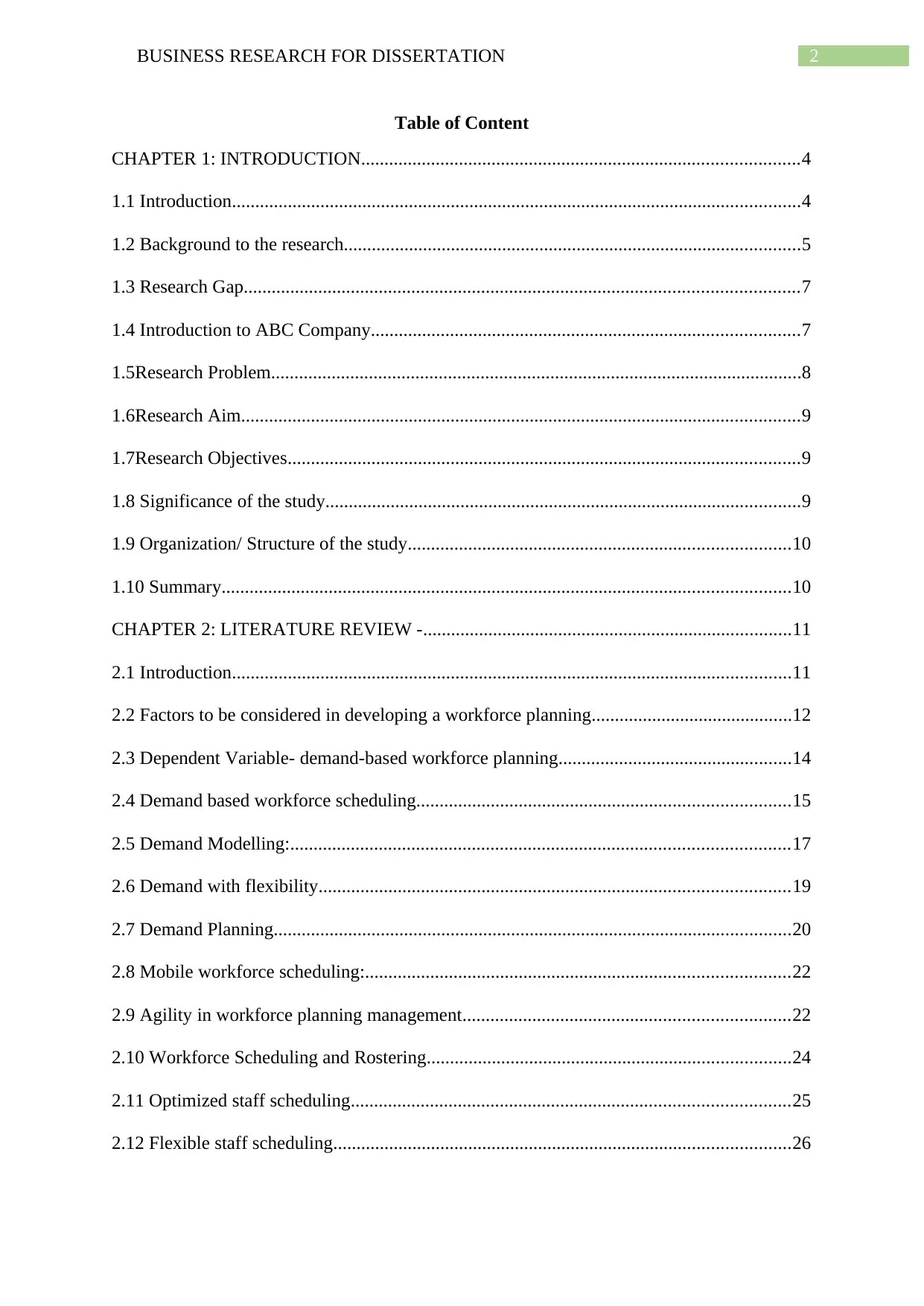
Table of Content
CHAPTER 1: INTRODUCTION..............................................................................................4
1.1 Introduction..........................................................................................................................4
1.2 Background to the research..................................................................................................5
1.3 Research Gap.......................................................................................................................7
1.4 Introduction to ABC Company............................................................................................7
1.5Research Problem..................................................................................................................8
1.6Research Aim........................................................................................................................9
1.7Research Objectives..............................................................................................................9
1.8 Significance of the study......................................................................................................9
1.9 Organization/ Structure of the study..................................................................................10
1.10 Summary..........................................................................................................................10
CHAPTER 2: LITERATURE REVIEW -...............................................................................11
2.1 Introduction........................................................................................................................11
2.2 Factors to be considered in developing a workforce planning...........................................12
2.3 Dependent Variable- demand-based workforce planning..................................................14
2.4 Demand based workforce scheduling................................................................................15
2.5 Demand Modelling:...........................................................................................................17
2.6 Demand with flexibility.....................................................................................................19
2.7 Demand Planning...............................................................................................................20
2.8 Mobile workforce scheduling:...........................................................................................22
2.9 Agility in workforce planning management......................................................................22
2.10 Workforce Scheduling and Rostering..............................................................................24
2.11 Optimized staff scheduling..............................................................................................25
2.12 Flexible staff scheduling..................................................................................................26
Table of Content
CHAPTER 1: INTRODUCTION..............................................................................................4
1.1 Introduction..........................................................................................................................4
1.2 Background to the research..................................................................................................5
1.3 Research Gap.......................................................................................................................7
1.4 Introduction to ABC Company............................................................................................7
1.5Research Problem..................................................................................................................8
1.6Research Aim........................................................................................................................9
1.7Research Objectives..............................................................................................................9
1.8 Significance of the study......................................................................................................9
1.9 Organization/ Structure of the study..................................................................................10
1.10 Summary..........................................................................................................................10
CHAPTER 2: LITERATURE REVIEW -...............................................................................11
2.1 Introduction........................................................................................................................11
2.2 Factors to be considered in developing a workforce planning...........................................12
2.3 Dependent Variable- demand-based workforce planning..................................................14
2.4 Demand based workforce scheduling................................................................................15
2.5 Demand Modelling:...........................................................................................................17
2.6 Demand with flexibility.....................................................................................................19
2.7 Demand Planning...............................................................................................................20
2.8 Mobile workforce scheduling:...........................................................................................22
2.9 Agility in workforce planning management......................................................................22
2.10 Workforce Scheduling and Rostering..............................................................................24
2.11 Optimized staff scheduling..............................................................................................25
2.12 Flexible staff scheduling..................................................................................................26
3BUSINESS RESEARCH FOR DISSERTATION
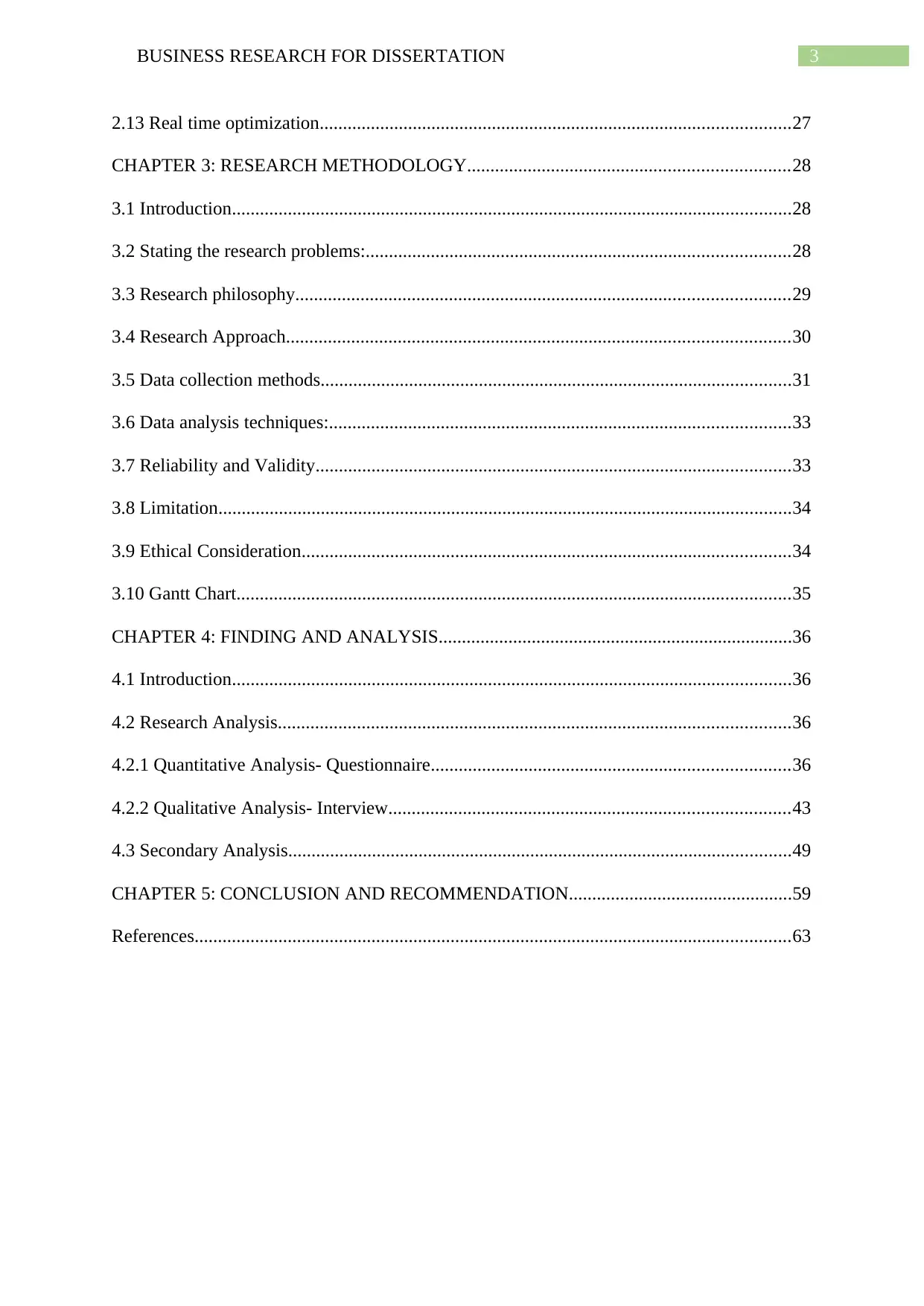
2.13 Real time optimization.....................................................................................................27
CHAPTER 3: RESEARCH METHODOLOGY.....................................................................28
3.1 Introduction........................................................................................................................28
3.2 Stating the research problems:...........................................................................................28
3.3 Research philosophy..........................................................................................................29
3.4 Research Approach............................................................................................................30
3.5 Data collection methods.....................................................................................................31
3.6 Data analysis techniques:...................................................................................................33
3.7 Reliability and Validity......................................................................................................33
3.8 Limitation...........................................................................................................................34
3.9 Ethical Consideration.........................................................................................................34
3.10 Gantt Chart.......................................................................................................................35
CHAPTER 4: FINDING AND ANALYSIS............................................................................36
4.1 Introduction........................................................................................................................36
4.2 Research Analysis..............................................................................................................36
4.2.1 Quantitative Analysis- Questionnaire.............................................................................36
4.2.2 Qualitative Analysis- Interview......................................................................................43
4.3 Secondary Analysis............................................................................................................49
CHAPTER 5: CONCLUSION AND RECOMMENDATION................................................59
References................................................................................................................................63
2.13 Real time optimization.....................................................................................................27
CHAPTER 3: RESEARCH METHODOLOGY.....................................................................28
3.1 Introduction........................................................................................................................28
3.2 Stating the research problems:...........................................................................................28
3.3 Research philosophy..........................................................................................................29
3.4 Research Approach............................................................................................................30
3.5 Data collection methods.....................................................................................................31
3.6 Data analysis techniques:...................................................................................................33
3.7 Reliability and Validity......................................................................................................33
3.8 Limitation...........................................................................................................................34
3.9 Ethical Consideration.........................................................................................................34
3.10 Gantt Chart.......................................................................................................................35
CHAPTER 4: FINDING AND ANALYSIS............................................................................36
4.1 Introduction........................................................................................................................36
4.2 Research Analysis..............................................................................................................36
4.2.1 Quantitative Analysis- Questionnaire.............................................................................36
4.2.2 Qualitative Analysis- Interview......................................................................................43
4.3 Secondary Analysis............................................................................................................49
CHAPTER 5: CONCLUSION AND RECOMMENDATION................................................59
References................................................................................................................................63
⊘ This is a preview!⊘
Do you want full access?
Subscribe today to unlock all pages.

Trusted by 1+ million students worldwide
4BUSINESS RESEARCH FOR DISSERTATION
Topic: Workforce planning based on the demand- A case study of ABC airline’s ground
staff scheduling
CHAPTER 1: INTRODUCTION
1.1 Introduction
This research presents a detailed analysis of workforce planning based on the demand
of services in the airline industry. As the market has been dynamic, customer expectation
about the services are increasing gradually. Consequently, the organizations in the sector now
tend to emphasize on the customer service. However, the labour cost of airline is an another
concern of the airline organizations, which is probably lingering in the mind of marketers and
creating the urge for developing a suitable workplace planning that enhances the customer
services and control labour cost. As put forward by Abdullah and Takahashi (2016), it is
certain that to enhance the customer service, the organizations must shape its workforce
because if employees are not skilled and potent, a negative reflection of service may appear
in the external environment, especially in the customer service. Moreover, if workforce
demands are not met properly, service industry like airline continue to face customer
complaints and records of switching to other brands.
Hence, Chen and Chen (2014) has mentioned that workplace planning is indeed a part
of strategic HR management and its rather an integral part of people management, which
creates the context for other activities related to development and deployment of
organizational members. When it comes to meeting customer requirement and maintaining
cost saving practice as the priority, scholars have presented different views. For example,
Easton (2014) mentioned that optimized staff schedule could provide adequate benefits but
require appropriate implemented decisions support system if customer’s demands have to be
fulfilled whole meeting requirements as flexible workplace agreements. Therefore, the
Topic: Workforce planning based on the demand- A case study of ABC airline’s ground
staff scheduling
CHAPTER 1: INTRODUCTION
1.1 Introduction
This research presents a detailed analysis of workforce planning based on the demand
of services in the airline industry. As the market has been dynamic, customer expectation
about the services are increasing gradually. Consequently, the organizations in the sector now
tend to emphasize on the customer service. However, the labour cost of airline is an another
concern of the airline organizations, which is probably lingering in the mind of marketers and
creating the urge for developing a suitable workplace planning that enhances the customer
services and control labour cost. As put forward by Abdullah and Takahashi (2016), it is
certain that to enhance the customer service, the organizations must shape its workforce
because if employees are not skilled and potent, a negative reflection of service may appear
in the external environment, especially in the customer service. Moreover, if workforce
demands are not met properly, service industry like airline continue to face customer
complaints and records of switching to other brands.
Hence, Chen and Chen (2014) has mentioned that workplace planning is indeed a part
of strategic HR management and its rather an integral part of people management, which
creates the context for other activities related to development and deployment of
organizational members. When it comes to meeting customer requirement and maintaining
cost saving practice as the priority, scholars have presented different views. For example,
Easton (2014) mentioned that optimized staff schedule could provide adequate benefits but
require appropriate implemented decisions support system if customer’s demands have to be
fulfilled whole meeting requirements as flexible workplace agreements. Therefore, the
Paraphrase This Document
Need a fresh take? Get an instant paraphrase of this document with our AI Paraphraser
5BUSINESS RESEARCH FOR DISSERTATION
purpose of the repot is develop a proper workplace planning which deals with two significant
concerns –maintaining labour cost and enhancement of customer services.
Workforce Planning:
As put forward by Jackson, Schuler and Jiang (2014), workforce planning is known as
the strategy which is used by employers or the business to anticipate labour needs as well as
deploy workers with advanced human resources technology. In this context, Beliën, Cardoen
and Demeulemeester (2012) commented that human resource remains as the core of any
business’s workforce is directly involved in running the key operation- such as staff in
handling the ground operation, customer representatives in servicing the customers. Barrera,
Velasco and Amaya (2012) mentioned that efficiently managed workforce eventually adds to
the productivity and then bottom line of organizations. The author of this article has also
mentioned that workforce planning often results in increased productivity and feedback and
support from the staff further results in improved overall reliability and efficiency of
business.
1.2 Background to the research
As put forward by Dantzig (2016), workforce planning remains as the core of HR
process and presents a significant opportunity for HR department to increase the bar and be
involved in developing the strategy for the growth and future of the business. In this context,
De Bruecker, Beliën, Van den Bergh and Demeulemeester (2017) also mentioned that
workforce planning is indeed a systematic process for identifying, acquiring enhancing and
retaining human capital to support the accomplishment off organizational goals. However,
accomplishment of goals are only possible when the business is able to meet the customer
demands. It is certain that global workforce planning in the global airline sector have
purpose of the repot is develop a proper workplace planning which deals with two significant
concerns –maintaining labour cost and enhancement of customer services.
Workforce Planning:
As put forward by Jackson, Schuler and Jiang (2014), workforce planning is known as
the strategy which is used by employers or the business to anticipate labour needs as well as
deploy workers with advanced human resources technology. In this context, Beliën, Cardoen
and Demeulemeester (2012) commented that human resource remains as the core of any
business’s workforce is directly involved in running the key operation- such as staff in
handling the ground operation, customer representatives in servicing the customers. Barrera,
Velasco and Amaya (2012) mentioned that efficiently managed workforce eventually adds to
the productivity and then bottom line of organizations. The author of this article has also
mentioned that workforce planning often results in increased productivity and feedback and
support from the staff further results in improved overall reliability and efficiency of
business.
1.2 Background to the research
As put forward by Dantzig (2016), workforce planning remains as the core of HR
process and presents a significant opportunity for HR department to increase the bar and be
involved in developing the strategy for the growth and future of the business. In this context,
De Bruecker, Beliën, Van den Bergh and Demeulemeester (2017) also mentioned that
workforce planning is indeed a systematic process for identifying, acquiring enhancing and
retaining human capital to support the accomplishment off organizational goals. However,
accomplishment of goals are only possible when the business is able to meet the customer
demands. It is certain that global workforce planning in the global airline sector have
6BUSINESS RESEARCH FOR DISSERTATION
increasingly been considered as the important aspect which prompted scholars to extend their
analysis particularly on the demand based workplace planning.
However, hardly any scholar paid attention to the relation between demand based
workforce planning and labour cost; there should be more emphasis on how workforce can
be managed to enhance performance in a cost effective manner. In addition, the emphasis
required in this context, because it is true that airline industry has been increasingly exposed
to competition and, to remain sustainable in the competition, the organization must focus on
the development of its workforce. This is because if the organization is internally strong, the
challenges in the external environment can be tackled. Nonetheless, what if an organization
has limited financial resource while customer service improvement is the priority. Hence,
Beliën, Cardoon and Demeulemeester (2012) mentioned that the organizations should
implement cost reduction initiatives, which will cut the labour cost in a manner that is
adaptable to company’s current culture.
Several organizations tend to neglect the critical need to form employee commitment
when applying cost reduction, and this is probably one of the reasons why about 10% of
organizations sustain cost reduction after few years. Thereby, the significance of conducting a
research lies in the fact that how originations make a demand-based workforce planning
following the criteria of labour cost reduction and enhancement of customer service while
satisfying requirements of workforce such as flexible workplace agreements, shift equity,
staff preference and part-tie work . When performing the research on this context, the ,major
focus is on the operational areas of the airline organizations such as check in, concierge
Service Boarding Gate Service, Arrival and transfer areas, Pax Control Workforce and other
significant areas.
increasingly been considered as the important aspect which prompted scholars to extend their
analysis particularly on the demand based workplace planning.
However, hardly any scholar paid attention to the relation between demand based
workforce planning and labour cost; there should be more emphasis on how workforce can
be managed to enhance performance in a cost effective manner. In addition, the emphasis
required in this context, because it is true that airline industry has been increasingly exposed
to competition and, to remain sustainable in the competition, the organization must focus on
the development of its workforce. This is because if the organization is internally strong, the
challenges in the external environment can be tackled. Nonetheless, what if an organization
has limited financial resource while customer service improvement is the priority. Hence,
Beliën, Cardoon and Demeulemeester (2012) mentioned that the organizations should
implement cost reduction initiatives, which will cut the labour cost in a manner that is
adaptable to company’s current culture.
Several organizations tend to neglect the critical need to form employee commitment
when applying cost reduction, and this is probably one of the reasons why about 10% of
organizations sustain cost reduction after few years. Thereby, the significance of conducting a
research lies in the fact that how originations make a demand-based workforce planning
following the criteria of labour cost reduction and enhancement of customer service while
satisfying requirements of workforce such as flexible workplace agreements, shift equity,
staff preference and part-tie work . When performing the research on this context, the ,major
focus is on the operational areas of the airline organizations such as check in, concierge
Service Boarding Gate Service, Arrival and transfer areas, Pax Control Workforce and other
significant areas.
⊘ This is a preview!⊘
Do you want full access?
Subscribe today to unlock all pages.
Trusted by 1+ million students worldwide
7BUSINESS RESEARCH FOR DISSERTATION
1.3 Research Gap
Many studies have been performed to understand and identify how customer service
in the airline sector can be improved by introducing technology, quality control, customer
feedback collection and other relevant methods. However, hardly any research talks about a
workforce planning that helps to enhance the customer service. This is required because if
internal environment of the organization is not intact or not in place, poor performance may
reflect on the organizational productivity and in customer service. Therefore, the organization
needs a demand base workforce planning which satisfy the basic requirement of staff and
manage the labour cost in an appropriate manner.
1.4 Introduction to ABC Company
ABC airline or Air Bridge Cargo is the leading all-cargo carrier in Russia as well as it
operates among the top ten global cargo airlines worldwide. It has been observed that
throughout ABC’s development, organizational airline has gained a strong growth, which
reports around 17% compound average growth rate of the year. Furthermore, it has also
identified that excellent performance of ABC is based on its determination to develop and
enhance a long-term relationship with the consumers around the world as well as the best in-
class service which include air and on the ground.
Mission- The mission of the company is to get to create a place in the global aviation and to
develop as the most envied service in the world.
Vision- The vision of ABC airline is to become the leader in innovation, environment
protection and best airline in the world with a global network of coverage.
Employees: It has been identified that ABC’ global team of experienced air cargo
professionals are currently over 900 people around the world and thee organizations hires
expertise with a global business insight of how to effectively provide value to the customers.
1.3 Research Gap
Many studies have been performed to understand and identify how customer service
in the airline sector can be improved by introducing technology, quality control, customer
feedback collection and other relevant methods. However, hardly any research talks about a
workforce planning that helps to enhance the customer service. This is required because if
internal environment of the organization is not intact or not in place, poor performance may
reflect on the organizational productivity and in customer service. Therefore, the organization
needs a demand base workforce planning which satisfy the basic requirement of staff and
manage the labour cost in an appropriate manner.
1.4 Introduction to ABC Company
ABC airline or Air Bridge Cargo is the leading all-cargo carrier in Russia as well as it
operates among the top ten global cargo airlines worldwide. It has been observed that
throughout ABC’s development, organizational airline has gained a strong growth, which
reports around 17% compound average growth rate of the year. Furthermore, it has also
identified that excellent performance of ABC is based on its determination to develop and
enhance a long-term relationship with the consumers around the world as well as the best in-
class service which include air and on the ground.
Mission- The mission of the company is to get to create a place in the global aviation and to
develop as the most envied service in the world.
Vision- The vision of ABC airline is to become the leader in innovation, environment
protection and best airline in the world with a global network of coverage.
Employees: It has been identified that ABC’ global team of experienced air cargo
professionals are currently over 900 people around the world and thee organizations hires
expertise with a global business insight of how to effectively provide value to the customers.
Paraphrase This Document
Need a fresh take? Get an instant paraphrase of this document with our AI Paraphraser
8BUSINESS RESEARCH FOR DISSERTATION
1.5Research Problem
The detailed background provided above indicates that airline organization is facing
stiff challenges of maintaining a desired customer service while increasing labour cost is
another significant concern of the organization. Even though, the airline organization has a
suitable workforce planning for managing its staff but the issue of limited career growth
opportunities is creating a significant barrier in the development of workforce. There has
been a trend of switching job with the expectation of suitable benefits and opportunities.
Consequently, the experienced individuals hardly continue working when their experience is
not recognized (Barrera, Velasco and Amaya 2012). Due to increasing demands of
customers, services in the airline sector is rapidly extending but it has become challenging for
business to deal with such desired quality of service because the existing staff are not capable
of enough to meet such growing needs. This happens because currently, the employees lack
skills in meeting the extending service needs due to lack training and development needs. In
the same context, Beliën, Cardoen and Demeulemeester (2012) mentioned that employees
often look for a suitable work schedule that helps them in balancing their work life and
personal life.
Hence, the gap is, disorganized workforce planning causing the poor customer service
and high labour cost. Thus, to enhance the customer service and reduce cost of labour, the
airline organization needs a demand based workforce planning where the basic of
requirements organizational members should be satisfied. This demand based workforce
planning must include actions of developing a flexible workplace agreement, shifting
equity, meeting staff needs and developing part-time work contracts.
1.5Research Problem
The detailed background provided above indicates that airline organization is facing
stiff challenges of maintaining a desired customer service while increasing labour cost is
another significant concern of the organization. Even though, the airline organization has a
suitable workforce planning for managing its staff but the issue of limited career growth
opportunities is creating a significant barrier in the development of workforce. There has
been a trend of switching job with the expectation of suitable benefits and opportunities.
Consequently, the experienced individuals hardly continue working when their experience is
not recognized (Barrera, Velasco and Amaya 2012). Due to increasing demands of
customers, services in the airline sector is rapidly extending but it has become challenging for
business to deal with such desired quality of service because the existing staff are not capable
of enough to meet such growing needs. This happens because currently, the employees lack
skills in meeting the extending service needs due to lack training and development needs. In
the same context, Beliën, Cardoen and Demeulemeester (2012) mentioned that employees
often look for a suitable work schedule that helps them in balancing their work life and
personal life.
Hence, the gap is, disorganized workforce planning causing the poor customer service
and high labour cost. Thus, to enhance the customer service and reduce cost of labour, the
airline organization needs a demand based workforce planning where the basic of
requirements organizational members should be satisfied. This demand based workforce
planning must include actions of developing a flexible workplace agreement, shifting
equity, meeting staff needs and developing part-time work contracts.
9BUSINESS RESEARCH FOR DISSERTATION
1.6Research Aim
The aim of the research is to develop an analysis for the future researcher insisting on the
need of demand-based workforce planning in airline’s ground operation.The following are
some of the key objectives to fulfil the stated aim.
1.7Research Objectives
To develop a demand based-workforce scheduling analysis
To describe the benefits of cross utilization of resources
To analyse an effective way of developing workforce planning for airline’s ground
staff
The following are the research questions that would help to traverse the whole concept of the
research.
1. What is the demand-based workforce scheduling?
2. Why it is so important for the airline to implement demand-based workforce
planning?
3. How does an airline cross utilize the resource?
4. What are the suggested techniques to deliver cost effective and cost efficient
workforce planning?
1.8 Significance of the study
This broad piece of research is important and it holds significant value because the
outcome of the research helps to know that instead of investing on technology and other
strategic processes for developing customer service, an internal approach of demand based
workforce planning can help to do the same in a more convenient way. This research helps to
know where an airline organization needs to invest in or what strategy should be applied to
enhance customer service in a cost effective manner.
1.6Research Aim
The aim of the research is to develop an analysis for the future researcher insisting on the
need of demand-based workforce planning in airline’s ground operation.The following are
some of the key objectives to fulfil the stated aim.
1.7Research Objectives
To develop a demand based-workforce scheduling analysis
To describe the benefits of cross utilization of resources
To analyse an effective way of developing workforce planning for airline’s ground
staff
The following are the research questions that would help to traverse the whole concept of the
research.
1. What is the demand-based workforce scheduling?
2. Why it is so important for the airline to implement demand-based workforce
planning?
3. How does an airline cross utilize the resource?
4. What are the suggested techniques to deliver cost effective and cost efficient
workforce planning?
1.8 Significance of the study
This broad piece of research is important and it holds significant value because the
outcome of the research helps to know that instead of investing on technology and other
strategic processes for developing customer service, an internal approach of demand based
workforce planning can help to do the same in a more convenient way. This research helps to
know where an airline organization needs to invest in or what strategy should be applied to
enhance customer service in a cost effective manner.
⊘ This is a preview!⊘
Do you want full access?
Subscribe today to unlock all pages.
Trusted by 1+ million students worldwide
10BUSINESS RESEARCH FOR DISSERTATION
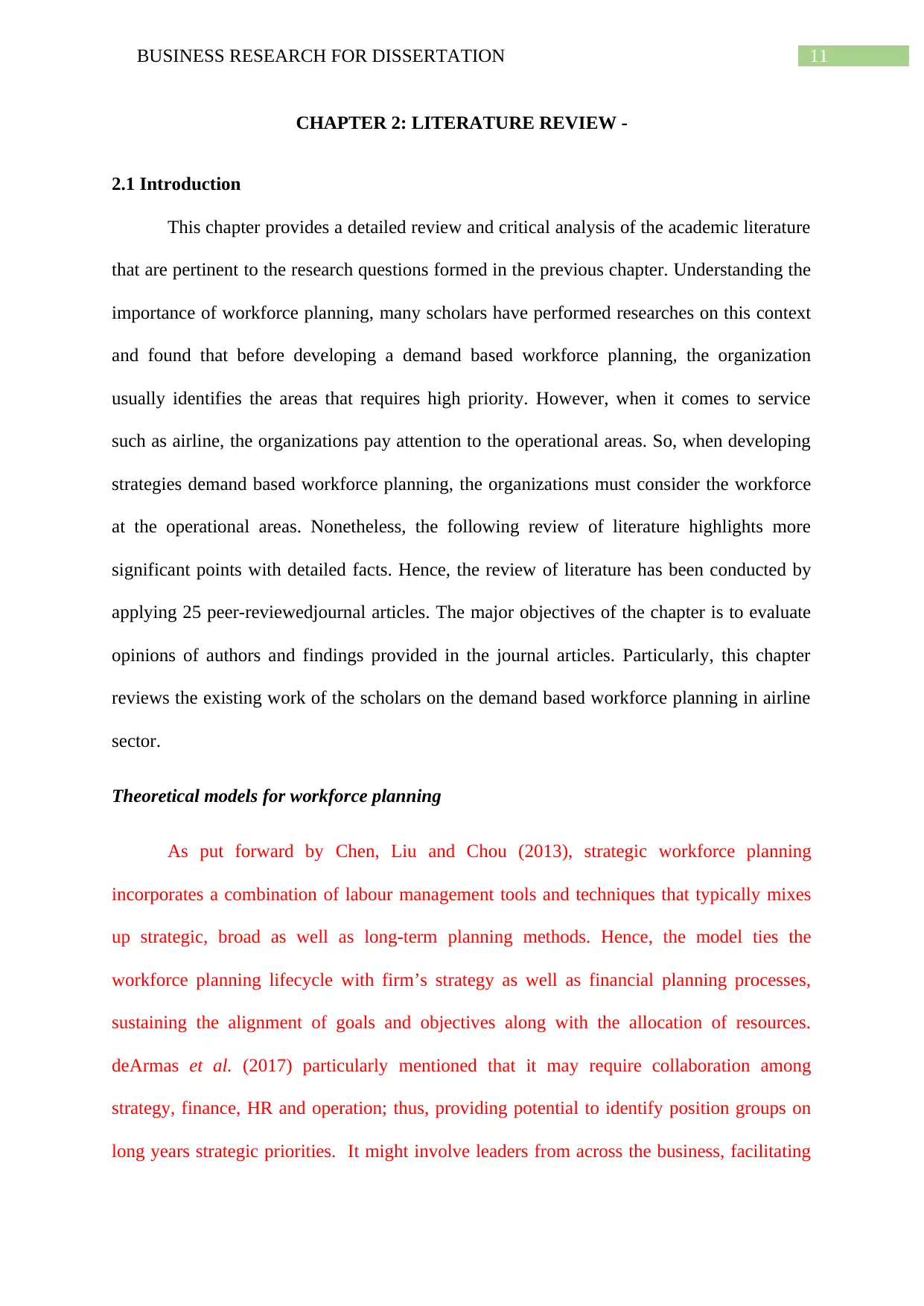
1.9 Organization/ Structure of the study
Figure 1: Organization of the study
1.10 Summary
This chapter introduces the topic by emphasizing on the demand-based workforce
planning. The background to the research provided in the chapter helps to observe how
important it is for an organization to develop a demand-based workforce planning to enhance
customer services while managing the labour cost. Few scholarly articles have been
evidenced to identify the gap in the existing researches. The articles only talk about the
importance of people management as the part of human resource management but they do no
place emphasis on the demand-based workforce. This gap creates the urge for performing the
research on the demand based workforce planning. Thereby, taking this fact into account,
suitable research objectives and questions have been formed. On the basis of research
questions formed in this chapter, the next chapter starts with reviewing the variables
mentioned in the objectives. The next chapter is a literature review, which has been
conducted considering 25 peer review articles.
Chapter 1: Introduction
Chapter 2: Literature Review
Chapter 3: Research Methodology
Chapter 4: Findiings and Analysis
Chapter 5: Conclusion and Recommendation
1.9 Organization/ Structure of the study
Figure 1: Organization of the study
1.10 Summary
This chapter introduces the topic by emphasizing on the demand-based workforce
planning. The background to the research provided in the chapter helps to observe how
important it is for an organization to develop a demand-based workforce planning to enhance
customer services while managing the labour cost. Few scholarly articles have been
evidenced to identify the gap in the existing researches. The articles only talk about the
importance of people management as the part of human resource management but they do no
place emphasis on the demand-based workforce. This gap creates the urge for performing the
research on the demand based workforce planning. Thereby, taking this fact into account,
suitable research objectives and questions have been formed. On the basis of research
questions formed in this chapter, the next chapter starts with reviewing the variables
mentioned in the objectives. The next chapter is a literature review, which has been
conducted considering 25 peer review articles.
Chapter 1: Introduction
Chapter 2: Literature Review
Chapter 3: Research Methodology
Chapter 4: Findiings and Analysis
Chapter 5: Conclusion and Recommendation
Paraphrase This Document
Need a fresh take? Get an instant paraphrase of this document with our AI Paraphraser
11BUSINESS RESEARCH FOR DISSERTATION
CHAPTER 2: LITERATURE REVIEW -
2.1 Introduction
This chapter provides a detailed review and critical analysis of the academic literature
that are pertinent to the research questions formed in the previous chapter. Understanding the
importance of workforce planning, many scholars have performed researches on this context
and found that before developing a demand based workforce planning, the organization
usually identifies the areas that requires high priority. However, when it comes to service
such as airline, the organizations pay attention to the operational areas. So, when developing
strategies demand based workforce planning, the organizations must consider the workforce
at the operational areas. Nonetheless, the following review of literature highlights more
significant points with detailed facts. Hence, the review of literature has been conducted by
applying 25 peer-reviewedjournal articles. The major objectives of the chapter is to evaluate
opinions of authors and findings provided in the journal articles. Particularly, this chapter
reviews the existing work of the scholars on the demand based workforce planning in airline
sector.
Theoretical models for workforce planning
As put forward by Chen, Liu and Chou (2013), strategic workforce planning
incorporates a combination of labour management tools and techniques that typically mixes
up strategic, broad as well as long-term planning methods. Hence, the model ties the
workforce planning lifecycle with firm’s strategy as well as financial planning processes,
sustaining the alignment of goals and objectives along with the allocation of resources.
deArmas et al. (2017) particularly mentioned that it may require collaboration among
strategy, finance, HR and operation; thus, providing potential to identify position groups on
long years strategic priorities. It might involve leaders from across the business, facilitating
CHAPTER 2: LITERATURE REVIEW -
2.1 Introduction
This chapter provides a detailed review and critical analysis of the academic literature
that are pertinent to the research questions formed in the previous chapter. Understanding the
importance of workforce planning, many scholars have performed researches on this context
and found that before developing a demand based workforce planning, the organization
usually identifies the areas that requires high priority. However, when it comes to service
such as airline, the organizations pay attention to the operational areas. So, when developing
strategies demand based workforce planning, the organizations must consider the workforce
at the operational areas. Nonetheless, the following review of literature highlights more
significant points with detailed facts. Hence, the review of literature has been conducted by
applying 25 peer-reviewedjournal articles. The major objectives of the chapter is to evaluate
opinions of authors and findings provided in the journal articles. Particularly, this chapter
reviews the existing work of the scholars on the demand based workforce planning in airline
sector.
Theoretical models for workforce planning
As put forward by Chen, Liu and Chou (2013), strategic workforce planning
incorporates a combination of labour management tools and techniques that typically mixes
up strategic, broad as well as long-term planning methods. Hence, the model ties the
workforce planning lifecycle with firm’s strategy as well as financial planning processes,
sustaining the alignment of goals and objectives along with the allocation of resources.
deArmas et al. (2017) particularly mentioned that it may require collaboration among
strategy, finance, HR and operation; thus, providing potential to identify position groups on
long years strategic priorities. It might involve leaders from across the business, facilitating
12BUSINESS RESEARCH FOR DISSERTATION
attention on the facility, regional and system levels developing mechanism for accountability.
There should be continuous evaluation of the delivery of models, relevant competencies and
the preparation required for employees to function within the delivery of the models. The
action plan should be developed and designed to make sure sufficient number of individuals
whose potential and competencies suited to the work expected of them. Workforce planning
is the forecasting and the strategic process that creates interaction between the management
activities; thereby, the business could undertake its business strategy. Hence, Ezzinbi et al.
(2014) mentioned about few steps in the formation of workforce planning.
Incorporating the aspects of workforce in managing the significance of strategic
objectives
Scan of environment for potential forces influencing the workforce within and
without the organization
Deriving the insight of present staff metrics
Developing a “no change scenario”, which demonstrates what might happen if there is
no change
Evaluating and monitoring progress based on a number of periods to respond to the
emerging change
2.2 Factors to be considered in developing a workforce planning
De Bruecker et al. (2017) argue that workforce planning may include several
advantages. Besides developing the numbers of employees needed, Workforce planning
allow managers to focus on the source of coming generation of leaders. In addition to this,
this mechanism could allow the management to restructure their department and reallocate
staff in which they can be best utilized. However, the organizers need to make sure that
replacements are available and diversity management help for expansion as well as the
reduction of workforce. Easton (2014) opined that such initiative and efforts are significant
attention on the facility, regional and system levels developing mechanism for accountability.
There should be continuous evaluation of the delivery of models, relevant competencies and
the preparation required for employees to function within the delivery of the models. The
action plan should be developed and designed to make sure sufficient number of individuals
whose potential and competencies suited to the work expected of them. Workforce planning
is the forecasting and the strategic process that creates interaction between the management
activities; thereby, the business could undertake its business strategy. Hence, Ezzinbi et al.
(2014) mentioned about few steps in the formation of workforce planning.
Incorporating the aspects of workforce in managing the significance of strategic
objectives
Scan of environment for potential forces influencing the workforce within and
without the organization
Deriving the insight of present staff metrics
Developing a “no change scenario”, which demonstrates what might happen if there is
no change
Evaluating and monitoring progress based on a number of periods to respond to the
emerging change
2.2 Factors to be considered in developing a workforce planning
De Bruecker et al. (2017) argue that workforce planning may include several
advantages. Besides developing the numbers of employees needed, Workforce planning
allow managers to focus on the source of coming generation of leaders. In addition to this,
this mechanism could allow the management to restructure their department and reallocate
staff in which they can be best utilized. However, the organizers need to make sure that
replacements are available and diversity management help for expansion as well as the
reduction of workforce. Easton (2014) opined that such initiative and efforts are significant
⊘ This is a preview!⊘
Do you want full access?
Subscribe today to unlock all pages.
Trusted by 1+ million students worldwide

1 out of 68


Related Documents


Your All-in-One AI-Powered Toolkit for Academic Success.
+13062052269
info@desklib.com
Available 24*7 on WhatsApp / Email
![[object Object]](/_next/static/media/star-bottom.7253800d.svg)
Unlock your academic potential
Copyright © 2020–2026 A2Z Services. All Rights Reserved. Developed and managed by ZUCOL.