Analysis of Construction and Demolition Waste Recycling and Reuse
VerifiedAdded on 2021/05/31
|13
|2744
|23
Report
AI Summary
This report examines the critical issue of construction and demolition (C&D) waste, emphasizing the need for recycling and reuse to mitigate its environmental impact. It begins by highlighting the adverse effects of C&D waste on groundwater, surface water, primary resources, fuel consumption, and tourism. The report then outlines the compelling reasons for recycling, including cost reduction, marketing opportunities, and job creation. It delves into the practical aspects of recycling, covering storage, segregation, collection, transportation, and the recycling and reuse of materials. Finally, the report underscores the importance of proper waste disposal, promoting inert materials for filling low-lying areas, such as mines and quarries. The report stresses the importance of sustainable practices in the construction industry and the need for society to be aware of the essence of recycling and reusing the construction and demolition waste.
CONSTRUCTION AND DEMOLITION WASTE 1
Title
Author’s name
Institutional affiliation
Title
Author’s name
Institutional affiliation

Paraphrase This Document
Need a fresh take? Get an instant paraphrase of this document with our AI Paraphraser
CONSTRUCTION AND DEMOLITION WASTE 2
Abstract
There is need of making the society aware of the essence of recycling and reusing the
construction and demolition waste. The paper is guided by different objectives that ensure that it
achieves the appropriate level in enlightening the society regarding the recycling of the
construction and demolition wastes. The city forms one common area that is prone to such form
of residues. Massive new structures are being brought up in addition to the demolition of the old
structures. The result is that the industry gets to grow so fast increasing on the wastes being
experienced in such places. The paper has focused on enlightening on the effects of construction
and demolition wastes, reasons for carrying out the recycling and finally the steps that can be
involved in the recycling and reuse of the construction and demolition wastes.
Abstract
There is need of making the society aware of the essence of recycling and reusing the
construction and demolition waste. The paper is guided by different objectives that ensure that it
achieves the appropriate level in enlightening the society regarding the recycling of the
construction and demolition wastes. The city forms one common area that is prone to such form
of residues. Massive new structures are being brought up in addition to the demolition of the old
structures. The result is that the industry gets to grow so fast increasing on the wastes being
experienced in such places. The paper has focused on enlightening on the effects of construction
and demolition wastes, reasons for carrying out the recycling and finally the steps that can be
involved in the recycling and reuse of the construction and demolition wastes.
CONSTRUCTION AND DEMOLITION WASTE 3
Table of Contents
Introduction.................................................................................................................................................4
Objective of Study...................................................................................................................................4
Background information..........................................................................................................................4
Importance of study................................................................................................................................6
Literature Review........................................................................................................................................6
Effects of Construction and Demolition Waste........................................................................................6
Reasons for recycling for construction and demolition waste.................................................................7
Cost Reduction.....................................................................................................................................7
Marketing Opportunity........................................................................................................................8
Employment........................................................................................................................................8
Recycling of Construction and Demolition Wastes..................................................................................9
Storage and segregation......................................................................................................................9
Collection and transportation..............................................................................................................9
Recycling and reuse.............................................................................................................................9
Disposal.............................................................................................................................................10
Conclusion.................................................................................................................................................10
Bibliography...............................................................................................................................................11
Table of Contents
Introduction.................................................................................................................................................4
Objective of Study...................................................................................................................................4
Background information..........................................................................................................................4
Importance of study................................................................................................................................6
Literature Review........................................................................................................................................6
Effects of Construction and Demolition Waste........................................................................................6
Reasons for recycling for construction and demolition waste.................................................................7
Cost Reduction.....................................................................................................................................7
Marketing Opportunity........................................................................................................................8
Employment........................................................................................................................................8
Recycling of Construction and Demolition Wastes..................................................................................9
Storage and segregation......................................................................................................................9
Collection and transportation..............................................................................................................9
Recycling and reuse.............................................................................................................................9
Disposal.............................................................................................................................................10
Conclusion.................................................................................................................................................10
Bibliography...............................................................................................................................................11
⊘ This is a preview!⊘
Do you want full access?
Subscribe today to unlock all pages.

Trusted by 1+ million students worldwide
CONSTRUCTION AND DEMOLITION WASTE 4
Introduction
Objective of Study
A study has to be guided by particular objectives to ensure that the general target of the
study is achieved at the end of the day (Ary et al, 2018). The goals ensure that the resources and
time directed to the study are not wasted but instead used for coming up with a solution to a
particular problem in the society. The following were the objectives of doing the study:
• Determine the effects that construction and demolition wastes bring to the environment
• Establish the reasons for carrying out the recycling activities regarding construction and
demolition wastes
• To identify the technologies that can help in efficient dealing with construction and
demolition wastes
• Establish the sustainable design measures in dealing with construction and demolition waste
• Establish the various methods on improving economic state in the construction industry
Background information
Urban cities are occupied with residential land and commercial land. The land serves as
the most valuable properties in the cities that many desire to have in their possession (Kneese,
2016). In addition to that, they are the most critical section of the city that individuals work to
ensure they achieve their goals through them. Hence their good keeping contributes to the
smooth growth of the economy of a nation. Some of the activities that contribute to the well
keeping of the land include the construction of structures that are in a position to harbor diverse
Introduction
Objective of Study
A study has to be guided by particular objectives to ensure that the general target of the
study is achieved at the end of the day (Ary et al, 2018). The goals ensure that the resources and
time directed to the study are not wasted but instead used for coming up with a solution to a
particular problem in the society. The following were the objectives of doing the study:
• Determine the effects that construction and demolition wastes bring to the environment
• Establish the reasons for carrying out the recycling activities regarding construction and
demolition wastes
• To identify the technologies that can help in efficient dealing with construction and
demolition wastes
• Establish the sustainable design measures in dealing with construction and demolition waste
• Establish the various methods on improving economic state in the construction industry
Background information
Urban cities are occupied with residential land and commercial land. The land serves as
the most valuable properties in the cities that many desire to have in their possession (Kneese,
2016). In addition to that, they are the most critical section of the city that individuals work to
ensure they achieve their goals through them. Hence their good keeping contributes to the
smooth growth of the economy of a nation. Some of the activities that contribute to the well
keeping of the land include the construction of structures that are in a position to harbor diverse
Paraphrase This Document
Need a fresh take? Get an instant paraphrase of this document with our AI Paraphraser
CONSTRUCTION AND DEMOLITION WASTE 5
activities at a go providing suitable conditions. On the other hand, there is the demolition of the
old structures to create space for the bringing up of the new structures. The move has pushed for
growth in the economic conditions in the nation (Fuller and Moore, 2017). The construction
industry has benefited greatly from the growth in economic conditions and has expanded its
activities significantly. The result is that the construction and demolition activities were
multiplied substantially leading to multiple increase in demolition waste. Some of the common
constituents of the waste are the bricks, concrete, and blocks. The main reason being they are the
primary constituents of the various old structures.
No action goes without having associated consequences. The consequences might either
be positive or negative depending with the action. The increase in construction activities led to
increase in the demolition waste that was released in the society (Boudon, 2016). However, the
increase in the waste did not imply the interruption of the normal activities that were being
handled by the community. The steps taken in the disposal of the wastes played a significant role
in dealing with such garbage. The increased activities made many pay less attention to the illegal
measures in the collection of scraps. Dumping of the waste was done illegally. Many did not
consider the very set criteria that the waste management authorities had put into place. Proper
planning has to be done before the disposal of the waste to ensure appropriate management.
However, the preparation was skipped through the working. The result was the ecology was
severely interrupted. Environmental complications were also introduced in the society. Hence,
there was the need for the carrying out the re-using and recycling activities. There was a
substantial reduction of the use of virgin raw material used. The problem of waste disposal also
received a significant solution.
activities at a go providing suitable conditions. On the other hand, there is the demolition of the
old structures to create space for the bringing up of the new structures. The move has pushed for
growth in the economic conditions in the nation (Fuller and Moore, 2017). The construction
industry has benefited greatly from the growth in economic conditions and has expanded its
activities significantly. The result is that the construction and demolition activities were
multiplied substantially leading to multiple increase in demolition waste. Some of the common
constituents of the waste are the bricks, concrete, and blocks. The main reason being they are the
primary constituents of the various old structures.
No action goes without having associated consequences. The consequences might either
be positive or negative depending with the action. The increase in construction activities led to
increase in the demolition waste that was released in the society (Boudon, 2016). However, the
increase in the waste did not imply the interruption of the normal activities that were being
handled by the community. The steps taken in the disposal of the wastes played a significant role
in dealing with such garbage. The increased activities made many pay less attention to the illegal
measures in the collection of scraps. Dumping of the waste was done illegally. Many did not
consider the very set criteria that the waste management authorities had put into place. Proper
planning has to be done before the disposal of the waste to ensure appropriate management.
However, the preparation was skipped through the working. The result was the ecology was
severely interrupted. Environmental complications were also introduced in the society. Hence,
there was the need for the carrying out the re-using and recycling activities. There was a
substantial reduction of the use of virgin raw material used. The problem of waste disposal also
received a significant solution.
CONSTRUCTION AND DEMOLITION WASTE 6
Importance of study
The study will play a major role in mobilizing the society on the ways they will cut down
the problems associated with the environment and come as a result of construction and
demolition waste, the main reason being that construction is associated the use of world’s
resources. The study does play a major role in ensuring the growth of the economy by cutting
down on the transport costs. Hence, the study will serve as a measure of promoting economic
growth in the society.
Literature Review
Effects of Construction and Demolition Waste
The groundwater is of much importance in ensuring the well-being of the general
environment. The plants rely on groundwater for their survival in the dry areas (Manahan, 2017).
Moreover, the quality of the products that the plants do produce is highly dependent on the kind
of water that is fed on them. The pollution of groundwater causes the poisoning of such water
interfering with the quality of produce at the end of the day. They tend to cause health problems
to the general population. Hence they cannot be used as a source of food. The surface water is
also affected by the construction and demolition wastes released into the environment (Kneese et
al, 2015). Animals rely on surface water for their survival. Drinking water is attained from the
rivers. The fish also are dependent on the lake water as their habitat. Introduction of construction
and demolition wastes in the water results in making the water not conducive in carrying out
their purpose (Kibert, 2016). The human beings also might end up being affected by unknown
diseases citing the water serving as breeding grounds for the bacterial and viral organs causing
the waterborne diseases.
Importance of study
The study will play a major role in mobilizing the society on the ways they will cut down
the problems associated with the environment and come as a result of construction and
demolition waste, the main reason being that construction is associated the use of world’s
resources. The study does play a major role in ensuring the growth of the economy by cutting
down on the transport costs. Hence, the study will serve as a measure of promoting economic
growth in the society.
Literature Review
Effects of Construction and Demolition Waste
The groundwater is of much importance in ensuring the well-being of the general
environment. The plants rely on groundwater for their survival in the dry areas (Manahan, 2017).
Moreover, the quality of the products that the plants do produce is highly dependent on the kind
of water that is fed on them. The pollution of groundwater causes the poisoning of such water
interfering with the quality of produce at the end of the day. They tend to cause health problems
to the general population. Hence they cannot be used as a source of food. The surface water is
also affected by the construction and demolition wastes released into the environment (Kneese et
al, 2015). Animals rely on surface water for their survival. Drinking water is attained from the
rivers. The fish also are dependent on the lake water as their habitat. Introduction of construction
and demolition wastes in the water results in making the water not conducive in carrying out
their purpose (Kibert, 2016). The human beings also might end up being affected by unknown
diseases citing the water serving as breeding grounds for the bacterial and viral organs causing
the waterborne diseases.
⊘ This is a preview!⊘
Do you want full access?
Subscribe today to unlock all pages.
Trusted by 1+ million students worldwide
CONSTRUCTION AND DEMOLITION WASTE 7
Primary resources are mainly used in facilitating construction activities (Dong and Ng,
2015). Individuals mishandling the construction and demolition waste will, therefore, be waiting
for the primary resources in the society, a factor that will lead to a drop in the economic level.
Fuel consumption is also high when it comes to dealing with the waste materials. The costs are
further increased due to the expenses incurred in ferrying the wastes from one place to another.
The result is that the general economy of the nation is affected. Tourism reputation is also highly
dependent on the cleanliness level of the society. The construction wastes lower the reputation
level regarding the cleanliness standards of such a nation. Most tourists will avoid such areas or
countries. The result will be a drop in the economy.
Reasons for recycling for construction and demolition waste
Cost Reduction
Waste disposal has many costs associated with it. The workforce in needed to offer help
in the packaging of waste that is to be ferried from one place to another. Apart from that, a
Primary resources are mainly used in facilitating construction activities (Dong and Ng,
2015). Individuals mishandling the construction and demolition waste will, therefore, be waiting
for the primary resources in the society, a factor that will lead to a drop in the economic level.
Fuel consumption is also high when it comes to dealing with the waste materials. The costs are
further increased due to the expenses incurred in ferrying the wastes from one place to another.
The result is that the general economy of the nation is affected. Tourism reputation is also highly
dependent on the cleanliness level of the society. The construction wastes lower the reputation
level regarding the cleanliness standards of such a nation. Most tourists will avoid such areas or
countries. The result will be a drop in the economy.
Reasons for recycling for construction and demolition waste
Cost Reduction
Waste disposal has many costs associated with it. The workforce in needed to offer help
in the packaging of waste that is to be ferried from one place to another. Apart from that, a
Paraphrase This Document
Need a fresh take? Get an instant paraphrase of this document with our AI Paraphraser
CONSTRUCTION AND DEMOLITION WASTE 8
proper means of transport that will ensure the ferrying of the waste materials is needed. The
methods will call for fuel consumption through its operation. The result will be a significant
amount of money will be spent at the end of the day. Recycling cuts down such expenses by a
considerable margin leading to the finances being saved for spending in other different areas
(Stark, 2015).
Marketing Opportunity
There are several programs in the society that act as potential marketing opportunities for
different companies. However, to be in a position to access such opportunities, the companies
have to participate in certain activities. The LEED™ and the BUILT GREEN™ are common
green building programs that have played a major role in offering marketing opportunities to
companies that have proved to be excellent in ensuring waste prevention. Therefore, the
companies engaging in such activities have always found their way in top positions in the market
ranking (Schaltegger, Burritt and Petersen, 2017).
Employment
Employment has always been a problem facing diverse people in the society. There is a
need to come up with opportunities that will significantly solve the problem. The industry offers
a solution for such issues as each person has a chance to exercise their skill, attain a product,
which will later be sold in the market and earn some finances to cater for their needs. The
recycling process is highly beneficial in making such a function a reality. The recycling
company does harbor a workforce who will perform different roles. After that, the manufacturing
products that come after recycling also create room for employment. The result will be a
significant section of the problem will receive a lasting solution (Rhyner et al, 2017).
proper means of transport that will ensure the ferrying of the waste materials is needed. The
methods will call for fuel consumption through its operation. The result will be a significant
amount of money will be spent at the end of the day. Recycling cuts down such expenses by a
considerable margin leading to the finances being saved for spending in other different areas
(Stark, 2015).
Marketing Opportunity
There are several programs in the society that act as potential marketing opportunities for
different companies. However, to be in a position to access such opportunities, the companies
have to participate in certain activities. The LEED™ and the BUILT GREEN™ are common
green building programs that have played a major role in offering marketing opportunities to
companies that have proved to be excellent in ensuring waste prevention. Therefore, the
companies engaging in such activities have always found their way in top positions in the market
ranking (Schaltegger, Burritt and Petersen, 2017).
Employment
Employment has always been a problem facing diverse people in the society. There is a
need to come up with opportunities that will significantly solve the problem. The industry offers
a solution for such issues as each person has a chance to exercise their skill, attain a product,
which will later be sold in the market and earn some finances to cater for their needs. The
recycling process is highly beneficial in making such a function a reality. The recycling
company does harbor a workforce who will perform different roles. After that, the manufacturing
products that come after recycling also create room for employment. The result will be a
significant section of the problem will receive a lasting solution (Rhyner et al, 2017).
CONSTRUCTION AND DEMOLITION WASTE 9
Recycling of Construction and Demolition Wastes
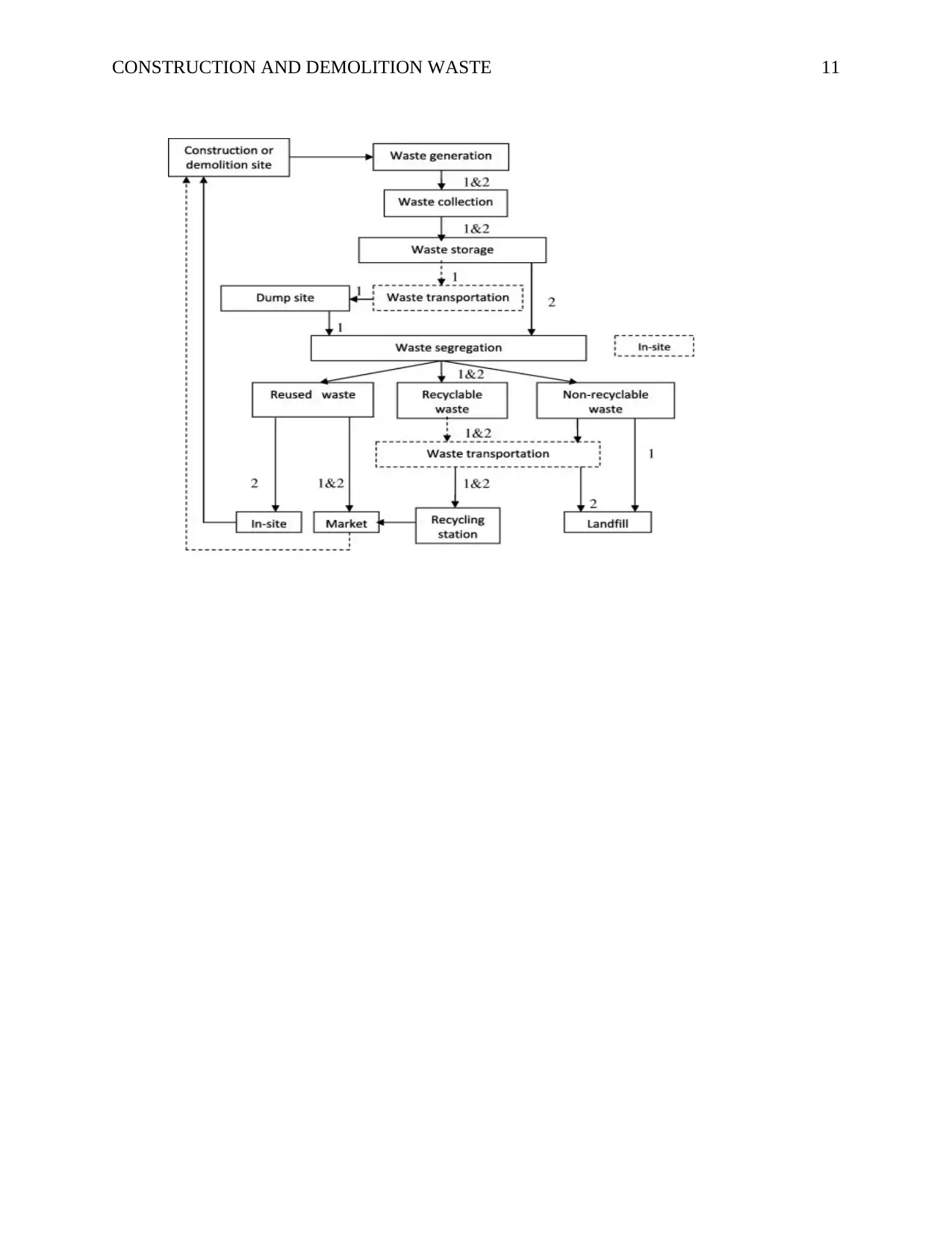
Several processes are to be followed while dealing with construction and demolition
wastes. There is a need to ensure to ensure that the procedures are in line with the best practices
associated with human health, engineering, environmental, economic, and aesthetic
considerations. The reviewing of the construction and management systems are done on different
basis. The differing basis are explained below.
Storage and segregation
Best storage of the construction and demolition wastes are done at the point of
generation. Scattering of the waste materials has many associated disadvantages. The materials
might lead to the obstruction of the paths of operation and main roads. Apart from that,
dispersing the wastes will call for the gathering of them before they are taken to a particular
station. The workload of the body will be added making the whole process tough at the end of
the day (de Gracia and Cabeza, 2015).
Collection and transportation
The storage of the waste materials is at times done in skips. The skip filters having the
hydraulic hoist system fitted within them play a significant role in ensuring proper collection of
the waste. Tractors can be used in the collection of the waste in cases where the trailers are used.
The methods work to ensure that time taken in loading remains to be at the least level.
Recycling and reuse
The nature of being heavy characterizes the construction and demolition waste of
construction materials. The traits contribute to the increase in cost required in ferrying them to
selected landfill. Recycling and reuse offer a significant solution to such a problem. The
demolished concrete can always be put into profitable use within the site for example in the
preparation of pathways that the tracks do make use of as they access the site (Haas et al, 2015).
Recycling of Construction and Demolition Wastes
Several processes are to be followed while dealing with construction and demolition
wastes. There is a need to ensure to ensure that the procedures are in line with the best practices
associated with human health, engineering, environmental, economic, and aesthetic
considerations. The reviewing of the construction and management systems are done on different
basis. The differing basis are explained below.
Storage and segregation
Best storage of the construction and demolition wastes are done at the point of
generation. Scattering of the waste materials has many associated disadvantages. The materials
might lead to the obstruction of the paths of operation and main roads. Apart from that,
dispersing the wastes will call for the gathering of them before they are taken to a particular
station. The workload of the body will be added making the whole process tough at the end of
the day (de Gracia and Cabeza, 2015).
Collection and transportation
The storage of the waste materials is at times done in skips. The skip filters having the
hydraulic hoist system fitted within them play a significant role in ensuring proper collection of
the waste. Tractors can be used in the collection of the waste in cases where the trailers are used.
The methods work to ensure that time taken in loading remains to be at the least level.
Recycling and reuse
The nature of being heavy characterizes the construction and demolition waste of
construction materials. The traits contribute to the increase in cost required in ferrying them to
selected landfill. Recycling and reuse offer a significant solution to such a problem. The
demolished concrete can always be put into profitable use within the site for example in the
preparation of pathways that the tracks do make use of as they access the site (Haas et al, 2015).
⊘ This is a preview!⊘
Do you want full access?
Subscribe today to unlock all pages.
Trusted by 1+ million students worldwide
CONSTRUCTION AND DEMOLITION WASTE 10
Disposal
The nature of being inert characterizes the construction and demolitions wastes (Bravo et
al, 2015). Therefore, their degree of engagement in a biochemical composition is meager. Hence,
there is a need for ensuring that maximum efforts are directed in fostering for the recycling of the
material. However, they can too be used in filling the areas that are low-lying. The mines and the
quarries are a typical example that needs the use of such materials in filling them (Powell, 2017).
Conclusion
Land forms a significant section of the society; there is a need to keep them accurately to
ensure gradual improvement in the society. Human beings primarily make use of the land in
carrying out their objectives. The working leads to growth in the economy that leads to increase
in waste materials due to the demolition of the old structures in place. There is a need for coming
up with set measures to ensure there is the least pollution of the environment as result of the
increased construction material waste. Waste pollution interferes with both ground water and
surface hence interfering with the comfort living of individuals. Apart from that, pollution leads
to increase in expenditure in dealing with them leading to an economy drop. Waste management
has to be introduced and more so, made to be efficient to ensure that such higher expenses being
experienced are cut down. Engaging in waste management leads to cost reduction. In the
recycling and reusing of construction materials, one must be cautious with the different steps
involved. The storage and segregation must be done with the utmost care. Apart from that, the
collection and transportation have to be done ensuring that the minimum amount is spent at the
end of the day. The recycling and reuse is encouraged most however, disposal can also be used
in filling the low-lying areas.
Disposal
The nature of being inert characterizes the construction and demolitions wastes (Bravo et
al, 2015). Therefore, their degree of engagement in a biochemical composition is meager. Hence,
there is a need for ensuring that maximum efforts are directed in fostering for the recycling of the
material. However, they can too be used in filling the areas that are low-lying. The mines and the
quarries are a typical example that needs the use of such materials in filling them (Powell, 2017).
Conclusion
Land forms a significant section of the society; there is a need to keep them accurately to
ensure gradual improvement in the society. Human beings primarily make use of the land in
carrying out their objectives. The working leads to growth in the economy that leads to increase
in waste materials due to the demolition of the old structures in place. There is a need for coming
up with set measures to ensure there is the least pollution of the environment as result of the
increased construction material waste. Waste pollution interferes with both ground water and
surface hence interfering with the comfort living of individuals. Apart from that, pollution leads
to increase in expenditure in dealing with them leading to an economy drop. Waste management
has to be introduced and more so, made to be efficient to ensure that such higher expenses being
experienced are cut down. Engaging in waste management leads to cost reduction. In the
recycling and reusing of construction materials, one must be cautious with the different steps
involved. The storage and segregation must be done with the utmost care. Apart from that, the
collection and transportation have to be done ensuring that the minimum amount is spent at the
end of the day. The recycling and reuse is encouraged most however, disposal can also be used
in filling the low-lying areas.
Paraphrase This Document
Need a fresh take? Get an instant paraphrase of this document with our AI Paraphraser
CONSTRUCTION AND DEMOLITION WASTE 11
CONSTRUCTION AND DEMOLITION WASTE 12
Bibliography
Ary, D., Jacobs, L.C., Irvine, C.K.S. and Walker, D., 2018. Introduction to research in
education. Cengage Learning.
Bravo, M., de Brito, J., Pontes, J. and Evangelista, L., 2015. Mechanical performance of concrete
made with aggregates from construction and demolition waste recycling plants. Journal of
cleaner production, 99, pp.59-74.
Boudon, R., 2016. The unintended consequences of social action. Springer.
de Gracia, A. and Cabeza, L.F., 2015. Phase change materials and thermal energy storage for
buildings. Energy and Buildings, 103, pp.414-419.
Dong, Y.H. and Ng, S.T., 2015. A life cycle assessment model for evaluating the environmental
impacts of building construction in Hong Kong. Building and Environment, 89, pp.183-191.
Fuller, M. and Moore, R., 2017. The death and life of great American cities. Macat Library.
Haas, W., Krausmann, F., Wiedenhofer, D. and Heinz, M., 2015. How circular is the global
economy?: An assessment of material flows, waste production, and recycling in the European
Union and the world in 2005. Journal of Industrial Ecology, 19(5), pp.765-777.
Kibert, C.J., 2016. Sustainable construction: green building design and delivery. John Wiley &
Sons.
Kneese, Allen V., Robert U. Ayres, and Ralph C. d'Arge. Economics and the environment: a
materials balance approach. Routledge, 2015.
Kneese, A.V., 2016. Transportation and urban land. Routledge.
Bibliography
Ary, D., Jacobs, L.C., Irvine, C.K.S. and Walker, D., 2018. Introduction to research in
education. Cengage Learning.
Bravo, M., de Brito, J., Pontes, J. and Evangelista, L., 2015. Mechanical performance of concrete
made with aggregates from construction and demolition waste recycling plants. Journal of
cleaner production, 99, pp.59-74.
Boudon, R., 2016. The unintended consequences of social action. Springer.
de Gracia, A. and Cabeza, L.F., 2015. Phase change materials and thermal energy storage for
buildings. Energy and Buildings, 103, pp.414-419.
Dong, Y.H. and Ng, S.T., 2015. A life cycle assessment model for evaluating the environmental
impacts of building construction in Hong Kong. Building and Environment, 89, pp.183-191.
Fuller, M. and Moore, R., 2017. The death and life of great American cities. Macat Library.
Haas, W., Krausmann, F., Wiedenhofer, D. and Heinz, M., 2015. How circular is the global
economy?: An assessment of material flows, waste production, and recycling in the European
Union and the world in 2005. Journal of Industrial Ecology, 19(5), pp.765-777.
Kibert, C.J., 2016. Sustainable construction: green building design and delivery. John Wiley &
Sons.
Kneese, Allen V., Robert U. Ayres, and Ralph C. d'Arge. Economics and the environment: a
materials balance approach. Routledge, 2015.
Kneese, A.V., 2016. Transportation and urban land. Routledge.
⊘ This is a preview!⊘
Do you want full access?
Subscribe today to unlock all pages.
Trusted by 1+ million students worldwide

1 out of 13


Related Documents


Your All-in-One AI-Powered Toolkit for Academic Success.
+13062052269
info@desklib.com
Available 24*7 on WhatsApp / Email
![[object Object]](/_next/static/media/star-bottom.7253800d.svg)
Unlock your academic potential
Copyright © 2020–2026 A2Z Services. All Rights Reserved. Developed and managed by ZUCOL.