Designing a Performance Measurement System for Woolworths Limited
VerifiedAdded on 2020/04/07
|21
|5048
|46
Report
AI Summary
This report focuses on designing a performance measurement system for the delivery department of Woolworths Limited, an Australian retail giant. It begins with an executive summary and introduction, highlighting the importance of performance measurement in today's competitive business environment. The report details the design of the performance measurement system, including defining objectives, aligning key performance indicators (KPIs) such as order capturing, inventory management, purchasing, warehousing, and transportation. It explores various performance measurement methods, including 360-degree feedback, self-evaluation, balanced scorecards, rating scales, psychological appraisals, and checklists. The report then identifies areas for improvement and proposes corrective actions, such as training programs, motivation strategies, feedback mechanisms, and counseling. The justification for the design is provided, along with its relevance to management accounting theory and accounting for the design process. The report concludes by summarizing the key findings and providing references for further research.
Running head: PERFORMANCE MEASUREMENT SYSTEM
Designing performance
measurement system for
Woolworths Limited
Designing performance
measurement system for
Woolworths Limited

Paraphrase This Document
Need a fresh take? Get an instant paraphrase of this document with our AI Paraphraser

PERFORMANCE MEASUREMENT SYSTEM 1
PERFORMANCE MEASUREMENT SYSTEM 2
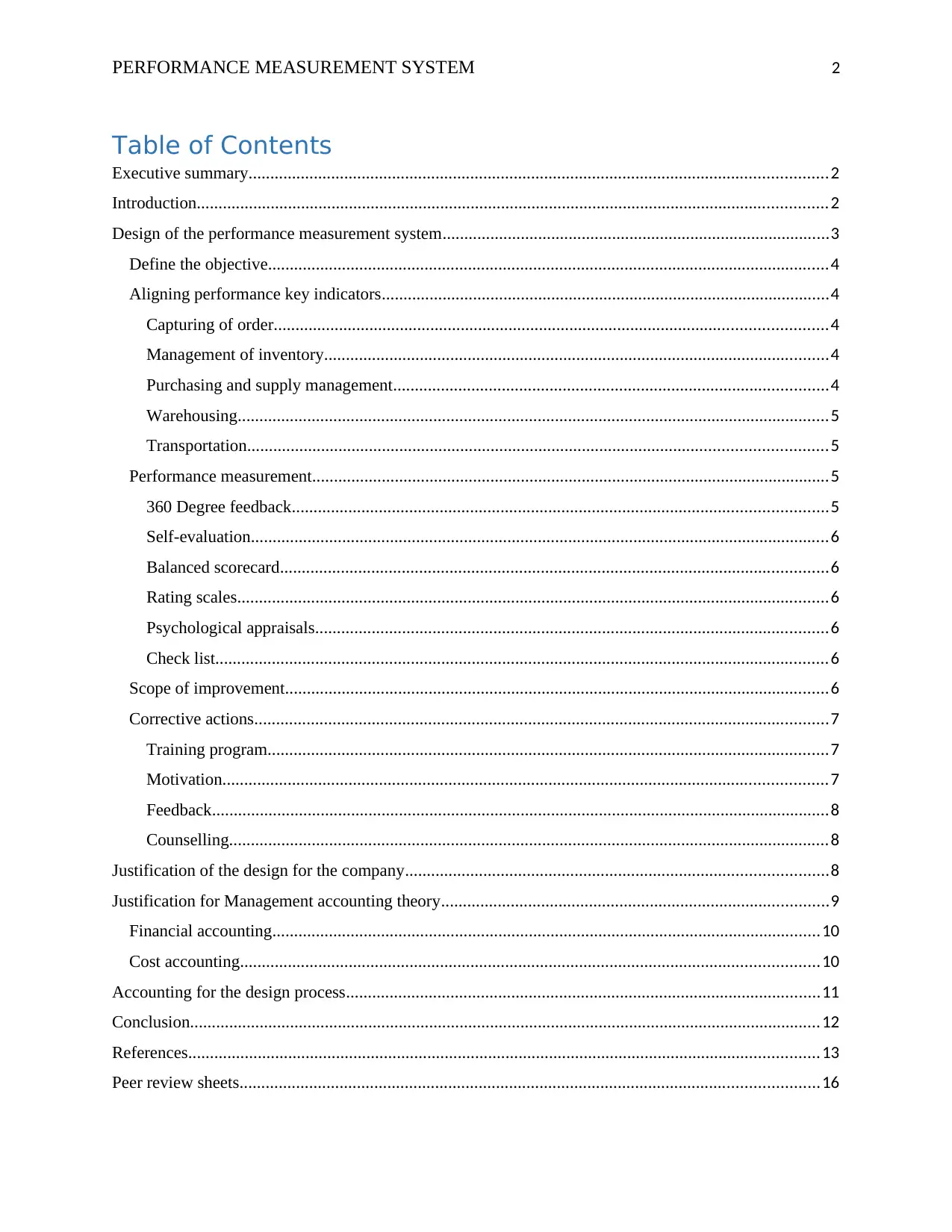
Table of Contents
Executive summary.....................................................................................................................................2
Introduction.................................................................................................................................................2
Design of the performance measurement system.........................................................................................3
Define the objective.................................................................................................................................4
Aligning performance key indicators.......................................................................................................4
Capturing of order...............................................................................................................................4
Management of inventory....................................................................................................................4
Purchasing and supply management....................................................................................................4
Warehousing........................................................................................................................................5
Transportation.....................................................................................................................................5
Performance measurement.......................................................................................................................5
360 Degree feedback...........................................................................................................................5
Self-evaluation.....................................................................................................................................6
Balanced scorecard..............................................................................................................................6
Rating scales........................................................................................................................................6
Psychological appraisals......................................................................................................................6
Check list.............................................................................................................................................6
Scope of improvement.............................................................................................................................6
Corrective actions....................................................................................................................................7
Training program.................................................................................................................................7
Motivation...........................................................................................................................................7
Feedback..............................................................................................................................................8
Counselling..........................................................................................................................................8
Justification of the design for the company.................................................................................................8
Justification for Management accounting theory.........................................................................................9
Financial accounting..............................................................................................................................10
Cost accounting.....................................................................................................................................10
Accounting for the design process.............................................................................................................11
Conclusion.................................................................................................................................................12
References.................................................................................................................................................13
Peer review sheets.....................................................................................................................................16
Table of Contents
Executive summary.....................................................................................................................................2
Introduction.................................................................................................................................................2
Design of the performance measurement system.........................................................................................3
Define the objective.................................................................................................................................4
Aligning performance key indicators.......................................................................................................4
Capturing of order...............................................................................................................................4
Management of inventory....................................................................................................................4
Purchasing and supply management....................................................................................................4
Warehousing........................................................................................................................................5
Transportation.....................................................................................................................................5
Performance measurement.......................................................................................................................5
360 Degree feedback...........................................................................................................................5
Self-evaluation.....................................................................................................................................6
Balanced scorecard..............................................................................................................................6
Rating scales........................................................................................................................................6
Psychological appraisals......................................................................................................................6
Check list.............................................................................................................................................6
Scope of improvement.............................................................................................................................6
Corrective actions....................................................................................................................................7
Training program.................................................................................................................................7
Motivation...........................................................................................................................................7
Feedback..............................................................................................................................................8
Counselling..........................................................................................................................................8
Justification of the design for the company.................................................................................................8
Justification for Management accounting theory.........................................................................................9
Financial accounting..............................................................................................................................10
Cost accounting.....................................................................................................................................10
Accounting for the design process.............................................................................................................11
Conclusion.................................................................................................................................................12
References.................................................................................................................................................13
Peer review sheets.....................................................................................................................................16
⊘ This is a preview!⊘
Do you want full access?
Subscribe today to unlock all pages.

Trusted by 1+ million students worldwide
PERFORMANCE MEASUREMENT SYSTEM 3
Executive summary
Performance measurement is a process of assembling, evaluating and recording information
regarding the performance of an employee, a team or an organization. It can be done by
comparing actual performance with assigned performance standards. This report aims at
explaining performance measurement system and it’s designing. In this report Performance
measurement system has been designed for Woolworths supermarket’s delivery department.
Woolworths is one of the Australian leading players with brand retail business throughout New
Zealand and Australia. The organization started its business operations in the year 1924 by
launching its first store in Sydney. Besides this report also involve description for the design of
the performance measurement system. Management accounting theory is used for showing the
effectiveness of the design. Efforts of all the team members are reflected through this report.
Introduction
Competition is increasing, demands of customers are changing that forces business to change or
improve their strategies (David, and Joseph, 2014). For sustaining into the competitive
environment business implement different techniques and tools for improving their performances
and strategies. Performance measurement system is one of the important tool for every
organization as it helps in measuring the performance of an employee, a team or an organization
that results in taking corrective actions to improve the performance. It reflects whether the
performance of department has improved or ruined. In last decades, researchers used to study
about performance of business, measurement definitions and its measurement systems. Later,
researchers developed different models and frameworks for performance measurement (David,
and Joseph, 2014).
In this report performance measurement system is designed for Delivery department of
Woolworths supermarket. Woolworths supermarket has its retail business throughout New
Zealand and Australia (Woolworths group. 2017). It is the second largest retail organization in
Australia in terms of revenues after Wesfarmers Limited. In the year 1924 the organization has
started its business operations by launching its first store in Sydney. In the year 2012, the
Executive summary
Performance measurement is a process of assembling, evaluating and recording information
regarding the performance of an employee, a team or an organization. It can be done by
comparing actual performance with assigned performance standards. This report aims at
explaining performance measurement system and it’s designing. In this report Performance
measurement system has been designed for Woolworths supermarket’s delivery department.
Woolworths is one of the Australian leading players with brand retail business throughout New
Zealand and Australia. The organization started its business operations in the year 1924 by
launching its first store in Sydney. Besides this report also involve description for the design of
the performance measurement system. Management accounting theory is used for showing the
effectiveness of the design. Efforts of all the team members are reflected through this report.
Introduction
Competition is increasing, demands of customers are changing that forces business to change or
improve their strategies (David, and Joseph, 2014). For sustaining into the competitive
environment business implement different techniques and tools for improving their performances
and strategies. Performance measurement system is one of the important tool for every
organization as it helps in measuring the performance of an employee, a team or an organization
that results in taking corrective actions to improve the performance. It reflects whether the
performance of department has improved or ruined. In last decades, researchers used to study
about performance of business, measurement definitions and its measurement systems. Later,
researchers developed different models and frameworks for performance measurement (David,
and Joseph, 2014).
In this report performance measurement system is designed for Delivery department of
Woolworths supermarket. Woolworths supermarket has its retail business throughout New
Zealand and Australia (Woolworths group. 2017). It is the second largest retail organization in
Australia in terms of revenues after Wesfarmers Limited. In the year 1924 the organization has
started its business operations by launching its first store in Sydney. In the year 2012, the
Paraphrase This Document
Need a fresh take? Get an instant paraphrase of this document with our AI Paraphraser
PERFORMANCE MEASUREMENT SYSTEM 4
organization has become one of the largest retail stores in Australia and New Zealand
(Woolworths group. 2017). This is the subsidiary of a well-known brand, i.e. Woolworths
limited. It operated different brands, such as; Dick Smith Electronics, Safeway Supermarkets,
Big W, BMS, Tandy etc. Currently, Woolworths has 1000 retail stores across Australia, from
which 968 are supermarkets and 19 are convenience stores (Woolworths group. 2017). Which
carry similar logo of Woolworths. Mostly, the company sells groceries, like; fruits, vegetables,
meat, packed food products etc. with this it also sells magazines, stationary goods and DVDs.
With Coles, this organization makes a duopoly of supermarkets in Australia, accounting
approximately 80% of the Australian industry. Company’s goal is to provide good services to
their customers and deliver the product to their nearest place. They serve over 29 million
customers every week with team of 205,000 employees (Woolworths group. 2017). With
addition to this report also includes justification of design for company and for management
accounting theory. Accounting for design process is also shown in this report.
organization has become one of the largest retail stores in Australia and New Zealand
(Woolworths group. 2017). This is the subsidiary of a well-known brand, i.e. Woolworths
limited. It operated different brands, such as; Dick Smith Electronics, Safeway Supermarkets,
Big W, BMS, Tandy etc. Currently, Woolworths has 1000 retail stores across Australia, from
which 968 are supermarkets and 19 are convenience stores (Woolworths group. 2017). Which
carry similar logo of Woolworths. Mostly, the company sells groceries, like; fruits, vegetables,
meat, packed food products etc. with this it also sells magazines, stationary goods and DVDs.
With Coles, this organization makes a duopoly of supermarkets in Australia, accounting
approximately 80% of the Australian industry. Company’s goal is to provide good services to
their customers and deliver the product to their nearest place. They serve over 29 million
customers every week with team of 205,000 employees (Woolworths group. 2017). With
addition to this report also includes justification of design for company and for management
accounting theory. Accounting for design process is also shown in this report.
PERFORMANCE MEASUREMENT SYSTEM 5
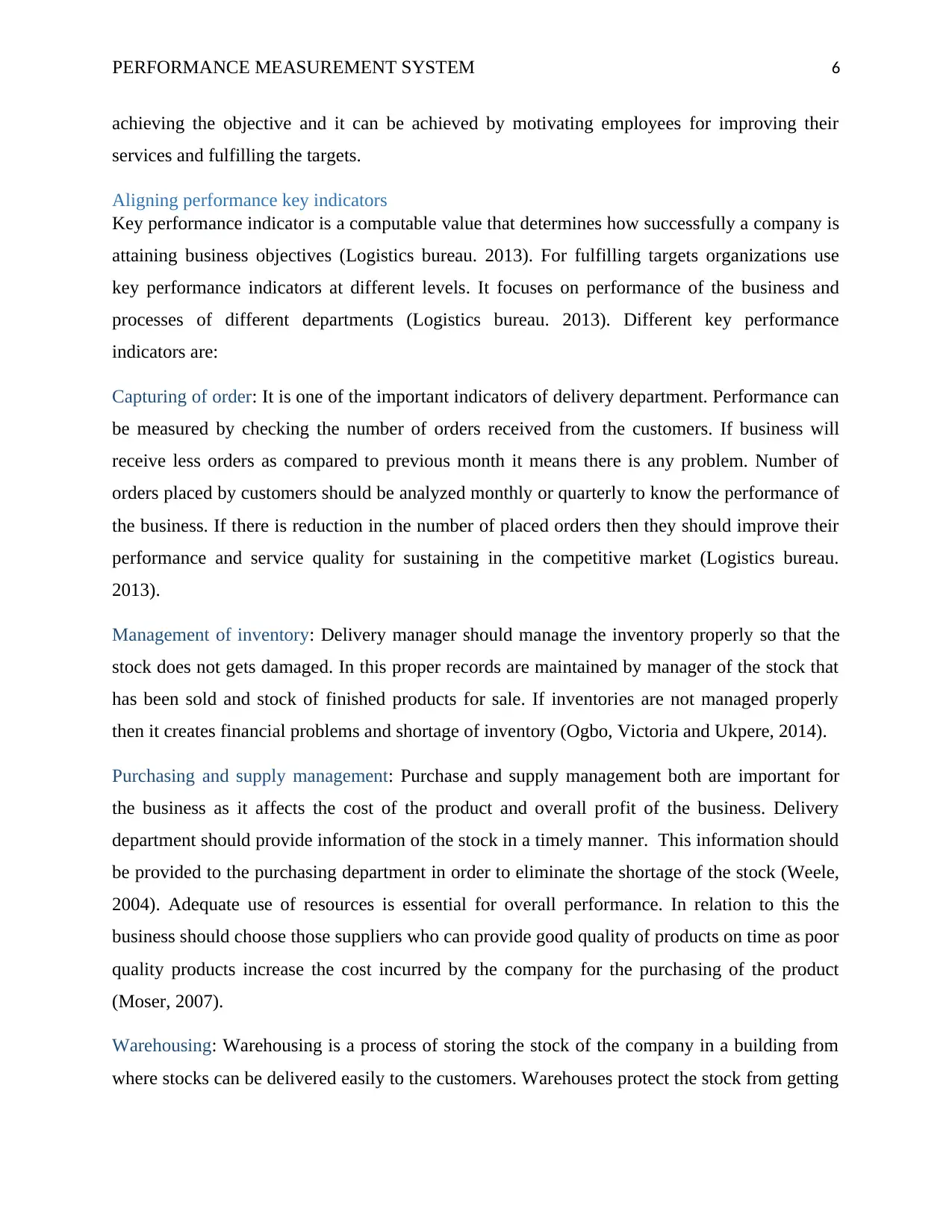
Design of the performance measurement system
Define the objective
Setting objectives for different departments of the organization is very important as it provides a
blue print to the employees. In this stage, short term and long term objectives will be decided for
delivery department by its manager. While deciding objectives for the department company’s
main focus should be on improving customer services, satisfaction of the customers, maintaining
proper records and building good relations with the clients (Green, 2017). For achieving these
objectives business should appoint employees with good communication and interpersonal skills.
Delivery manager should identify new systems to make services customer centric and
competitive. For maintaining customer satisfaction business should maintain good relations with
their clients and suppliers. Organizations that maintain proper records can achieve their decided
goals effectively. As maintaining proper track of clients and customers can help in improving
service quality (Green, 2017). Delivery manager should be very much competent towards
Design of the performance measurement system
Define the objective
Setting objectives for different departments of the organization is very important as it provides a
blue print to the employees. In this stage, short term and long term objectives will be decided for
delivery department by its manager. While deciding objectives for the department company’s
main focus should be on improving customer services, satisfaction of the customers, maintaining
proper records and building good relations with the clients (Green, 2017). For achieving these
objectives business should appoint employees with good communication and interpersonal skills.
Delivery manager should identify new systems to make services customer centric and
competitive. For maintaining customer satisfaction business should maintain good relations with
their clients and suppliers. Organizations that maintain proper records can achieve their decided
goals effectively. As maintaining proper track of clients and customers can help in improving
service quality (Green, 2017). Delivery manager should be very much competent towards
⊘ This is a preview!⊘
Do you want full access?
Subscribe today to unlock all pages.
Trusted by 1+ million students worldwide
PERFORMANCE MEASUREMENT SYSTEM 6
achieving the objective and it can be achieved by motivating employees for improving their
services and fulfilling the targets.
Aligning performance key indicators
Key performance indicator is a computable value that determines how successfully a company is
attaining business objectives (Logistics bureau. 2013). For fulfilling targets organizations use
key performance indicators at different levels. It focuses on performance of the business and
processes of different departments (Logistics bureau. 2013). Different key performance
indicators are:
Capturing of order: It is one of the important indicators of delivery department. Performance can
be measured by checking the number of orders received from the customers. If business will
receive less orders as compared to previous month it means there is any problem. Number of
orders placed by customers should be analyzed monthly or quarterly to know the performance of
the business. If there is reduction in the number of placed orders then they should improve their
performance and service quality for sustaining in the competitive market (Logistics bureau.
2013).
Management of inventory: Delivery manager should manage the inventory properly so that the
stock does not gets damaged. In this proper records are maintained by manager of the stock that
has been sold and stock of finished products for sale. If inventories are not managed properly
then it creates financial problems and shortage of inventory (Ogbo, Victoria and Ukpere, 2014).
Purchasing and supply management: Purchase and supply management both are important for
the business as it affects the cost of the product and overall profit of the business. Delivery
department should provide information of the stock in a timely manner. This information should
be provided to the purchasing department in order to eliminate the shortage of the stock (Weele,
2004). Adequate use of resources is essential for overall performance. In relation to this the
business should choose those suppliers who can provide good quality of products on time as poor
quality products increase the cost incurred by the company for the purchasing of the product
(Moser, 2007).
Warehousing: Warehousing is a process of storing the stock of the company in a building from
where stocks can be delivered easily to the customers. Warehouses protect the stock from getting
achieving the objective and it can be achieved by motivating employees for improving their
services and fulfilling the targets.
Aligning performance key indicators
Key performance indicator is a computable value that determines how successfully a company is
attaining business objectives (Logistics bureau. 2013). For fulfilling targets organizations use
key performance indicators at different levels. It focuses on performance of the business and
processes of different departments (Logistics bureau. 2013). Different key performance
indicators are:
Capturing of order: It is one of the important indicators of delivery department. Performance can
be measured by checking the number of orders received from the customers. If business will
receive less orders as compared to previous month it means there is any problem. Number of
orders placed by customers should be analyzed monthly or quarterly to know the performance of
the business. If there is reduction in the number of placed orders then they should improve their
performance and service quality for sustaining in the competitive market (Logistics bureau.
2013).
Management of inventory: Delivery manager should manage the inventory properly so that the
stock does not gets damaged. In this proper records are maintained by manager of the stock that
has been sold and stock of finished products for sale. If inventories are not managed properly
then it creates financial problems and shortage of inventory (Ogbo, Victoria and Ukpere, 2014).
Purchasing and supply management: Purchase and supply management both are important for
the business as it affects the cost of the product and overall profit of the business. Delivery
department should provide information of the stock in a timely manner. This information should
be provided to the purchasing department in order to eliminate the shortage of the stock (Weele,
2004). Adequate use of resources is essential for overall performance. In relation to this the
business should choose those suppliers who can provide good quality of products on time as poor
quality products increase the cost incurred by the company for the purchasing of the product
(Moser, 2007).
Warehousing: Warehousing is a process of storing the stock of the company in a building from
where stocks can be delivered easily to the customers. Warehouses protect the stock from getting
Paraphrase This Document
Need a fresh take? Get an instant paraphrase of this document with our AI Paraphraser
PERFORMANCE MEASUREMENT SYSTEM 7
damaged and reduces the time taken in delivery of the product. Packaging of the product is also
done in the warehouses (Keller, and Keller, 2014).
Transportation: Carrying of goods from one place to another is known as transportation. It
connects the business from its suppliers and customers. Transportation provides its major
contribution in the customer satisfaction. It supports two commercial utilities i.e. place and time
(Turnbull, K. F. 2005).
Performance measurement
Performance measurement is a process of assembling, evaluating and recording information
regarding the performance of an employee, a team or an organization. It can be done by
comparing actual performance with assigned performance standards. It is also known as
performance appraisal that involves systematic evaluation of employees (Word press. 2017). It is
a structured system that evaluates work and behavior of the employees. Factors that are
considered for measuring the performance of the employees are knowledge of the job,
communication, leadership quality, etc. (Word press. 2017). Methods that are used for
performance measurement are as follows:-
360 Degree feedback- It is a process in which employees provide feedback about their colleagues
or team. 360 degree feedback technique is very helpful in self-development. Organizations use
this technique for measuring customer satisfaction, team management and interactive skills
(Healthfield, 2016). Negative side of this technique is that it involves multiple raters that might
not represent correct or balanced feedback.
Self-evaluation- Self-evaluation is part of performance appraisal because it serves a genuine
purpose as it helps in development of the career (Fleschner, 2017). Woolworths supermarket can
ask their employees for setting their own objectives timely basis. Through this they can evaluate
themselves and provide feedback to their managers about achieving their self-made objectives.
Balanced scorecard: It is a performance measurement technique used to measure the activities of
a company. For long term benefits balanced scorecard technique focuses on marketing,
operational, financial and development outputs. It is an instrument which provides navigation
towards future success (Zizlavsky, 2014).
damaged and reduces the time taken in delivery of the product. Packaging of the product is also
done in the warehouses (Keller, and Keller, 2014).
Transportation: Carrying of goods from one place to another is known as transportation. It
connects the business from its suppliers and customers. Transportation provides its major
contribution in the customer satisfaction. It supports two commercial utilities i.e. place and time
(Turnbull, K. F. 2005).
Performance measurement
Performance measurement is a process of assembling, evaluating and recording information
regarding the performance of an employee, a team or an organization. It can be done by
comparing actual performance with assigned performance standards. It is also known as
performance appraisal that involves systematic evaluation of employees (Word press. 2017). It is
a structured system that evaluates work and behavior of the employees. Factors that are
considered for measuring the performance of the employees are knowledge of the job,
communication, leadership quality, etc. (Word press. 2017). Methods that are used for
performance measurement are as follows:-
360 Degree feedback- It is a process in which employees provide feedback about their colleagues
or team. 360 degree feedback technique is very helpful in self-development. Organizations use
this technique for measuring customer satisfaction, team management and interactive skills
(Healthfield, 2016). Negative side of this technique is that it involves multiple raters that might
not represent correct or balanced feedback.
Self-evaluation- Self-evaluation is part of performance appraisal because it serves a genuine
purpose as it helps in development of the career (Fleschner, 2017). Woolworths supermarket can
ask their employees for setting their own objectives timely basis. Through this they can evaluate
themselves and provide feedback to their managers about achieving their self-made objectives.
Balanced scorecard: It is a performance measurement technique used to measure the activities of
a company. For long term benefits balanced scorecard technique focuses on marketing,
operational, financial and development outputs. It is an instrument which provides navigation
towards future success (Zizlavsky, 2014).
PERFORMANCE MEASUREMENT SYSTEM 8
Rating scales: Rating scales involves criteria of the performance such as attendance, loyalty,
creativity, attitude, outcomes etc. It provides ranges to employees from excellent to poor. Then
all the scores are calculated that will reflect the performance of the employee’s (Performance
appraisal. 2010). Advantages of rating scales are it is easy to use and adopt, inexpensive, suitable
for all types of jobs.
Psychological appraisals: Psychological appraisal is concerned about the future performance of
the employee’s rather than their past performance. Its main focus is on the personal
characteristics that affects the performance of the employee’s. Besides this psychological
appraisal is costly and time consuming (Cooper and Rothmann, 2013).
Check list: Under checklist method, different questions are prepared with options of yes or no.
Superior who is responsible for this only prepare the checklist but final evaluating and rating is
given by the HR of the company (Libraries. 2017). This method can help Woolworths
supermarket in preparing the list of responsibilities for each of the employees in delivery
department and then they can evaluate their performance.
Scope of improvement
Any retail business needs to make improvements in its way of working in order to attain its
organizational objectives (Roberthall. 2014). Woolworths can make some improvements in their
delivery department according to the deviations reflected in the above stage of performance
measurement. Improvements that business can make in its delivery department are as follows:-
Software of addressing is used by the business for noting the address of the customer so that they
can recheck the address at the time of delivery (Bennett, 2014). As false address can result in
delivery failure or delay in delivery and this can reflect negative image of the company in the
customer’s mind. Improvement can be done in the delivery system by checking the list of the
activities is done correctly. Tracking of vehicle can help business to provide information of the
product to its customer and it helps in cutting the fuel cost. Business can opt outsourcing for
delivery whenever it is appropriate. GPS system can help in providing updates of the products to
the customers through emails and texts. Drivers that are appointed by business should be trained
as they represent the business. They are the ones who interact face to face with the customers so
Rating scales: Rating scales involves criteria of the performance such as attendance, loyalty,
creativity, attitude, outcomes etc. It provides ranges to employees from excellent to poor. Then
all the scores are calculated that will reflect the performance of the employee’s (Performance
appraisal. 2010). Advantages of rating scales are it is easy to use and adopt, inexpensive, suitable
for all types of jobs.
Psychological appraisals: Psychological appraisal is concerned about the future performance of
the employee’s rather than their past performance. Its main focus is on the personal
characteristics that affects the performance of the employee’s. Besides this psychological
appraisal is costly and time consuming (Cooper and Rothmann, 2013).
Check list: Under checklist method, different questions are prepared with options of yes or no.
Superior who is responsible for this only prepare the checklist but final evaluating and rating is
given by the HR of the company (Libraries. 2017). This method can help Woolworths
supermarket in preparing the list of responsibilities for each of the employees in delivery
department and then they can evaluate their performance.
Scope of improvement
Any retail business needs to make improvements in its way of working in order to attain its
organizational objectives (Roberthall. 2014). Woolworths can make some improvements in their
delivery department according to the deviations reflected in the above stage of performance
measurement. Improvements that business can make in its delivery department are as follows:-
Software of addressing is used by the business for noting the address of the customer so that they
can recheck the address at the time of delivery (Bennett, 2014). As false address can result in
delivery failure or delay in delivery and this can reflect negative image of the company in the
customer’s mind. Improvement can be done in the delivery system by checking the list of the
activities is done correctly. Tracking of vehicle can help business to provide information of the
product to its customer and it helps in cutting the fuel cost. Business can opt outsourcing for
delivery whenever it is appropriate. GPS system can help in providing updates of the products to
the customers through emails and texts. Drivers that are appointed by business should be trained
as they represent the business. They are the ones who interact face to face with the customers so
⊘ This is a preview!⊘
Do you want full access?
Subscribe today to unlock all pages.
Trusted by 1+ million students worldwide
PERFORMANCE MEASUREMENT SYSTEM 9
they should greet customers with a smile on their face and feedback should be asked from the
customers to know where they are lacking in order to do improvements (Bennett, 2014).
Corrective actions
After completing performance measurement and searching for scope of improvements next stage
is of taking corrective actions. In this stage business will take different decisions for solving the
problems of employee’s performance (University of Washington. 2017). Association between
the supervisor and employee should be such that the corrective action is implemented rather than
taking negative actions against the employee (University of Washington. 2017). Corrective
actions that business can take are:-
Training program: Business can start training sessions for their employees to help them in
resolving their problems. Training is meant to increase the productivity, revenue, profits,
decreases waste and cost (Dalto, 2014). It increases satisfaction of employee’s and reduces
employee turnover. There are different techniques available for training such as Whiteboard or
blackboard, projector, power point presentation, storytelling, group discussion, quizzes, case
studies, etc. (Training today. 2016).
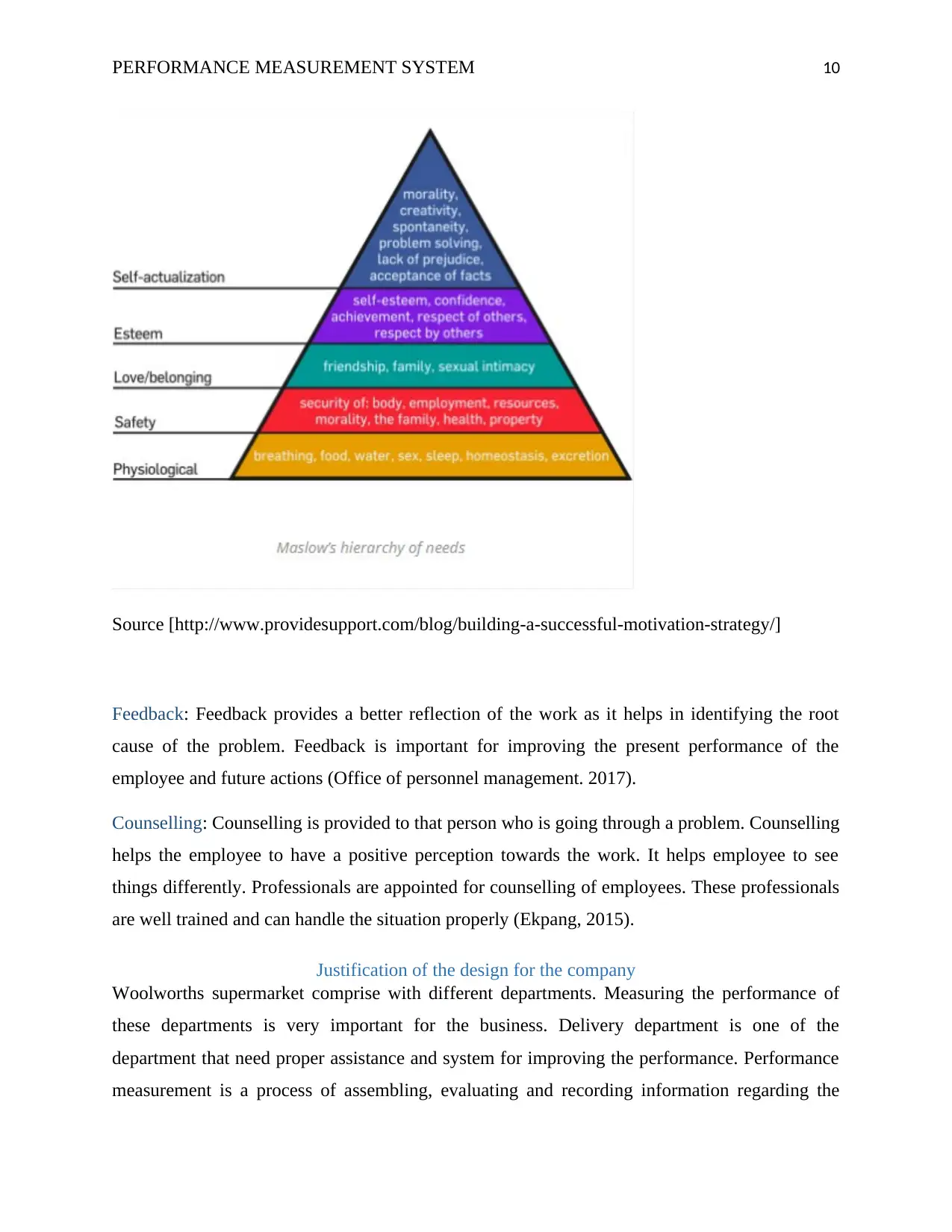
Motivation: Motivation is another technique that helps in increasing productivity and improving
the performance of the employees. Motivation can be done in two ways i.e. monetary motivation
and non-monetary motivations. Monetary motivation can be done by salary increment, incentives
and other monetary benefits. Non-monetary motivations involve promotion (increase in
designation), recognition of the work, non-monetary rewards and appreciation (Sturman, and
Ford, 2011).
they should greet customers with a smile on their face and feedback should be asked from the
customers to know where they are lacking in order to do improvements (Bennett, 2014).
Corrective actions
After completing performance measurement and searching for scope of improvements next stage
is of taking corrective actions. In this stage business will take different decisions for solving the
problems of employee’s performance (University of Washington. 2017). Association between
the supervisor and employee should be such that the corrective action is implemented rather than
taking negative actions against the employee (University of Washington. 2017). Corrective
actions that business can take are:-
Training program: Business can start training sessions for their employees to help them in
resolving their problems. Training is meant to increase the productivity, revenue, profits,
decreases waste and cost (Dalto, 2014). It increases satisfaction of employee’s and reduces
employee turnover. There are different techniques available for training such as Whiteboard or
blackboard, projector, power point presentation, storytelling, group discussion, quizzes, case
studies, etc. (Training today. 2016).
Motivation: Motivation is another technique that helps in increasing productivity and improving
the performance of the employees. Motivation can be done in two ways i.e. monetary motivation
and non-monetary motivations. Monetary motivation can be done by salary increment, incentives
and other monetary benefits. Non-monetary motivations involve promotion (increase in
designation), recognition of the work, non-monetary rewards and appreciation (Sturman, and
Ford, 2011).
Paraphrase This Document
Need a fresh take? Get an instant paraphrase of this document with our AI Paraphraser
PERFORMANCE MEASUREMENT SYSTEM 10
Source [http://www.providesupport.com/blog/building-a-successful-motivation-strategy/]
Feedback: Feedback provides a better reflection of the work as it helps in identifying the root
cause of the problem. Feedback is important for improving the present performance of the
employee and future actions (Office of personnel management. 2017).
Counselling: Counselling is provided to that person who is going through a problem. Counselling
helps the employee to have a positive perception towards the work. It helps employee to see
things differently. Professionals are appointed for counselling of employees. These professionals
are well trained and can handle the situation properly (Ekpang, 2015).
Justification of the design for the company
Woolworths supermarket comprise with different departments. Measuring the performance of
these departments is very important for the business. Delivery department is one of the
department that need proper assistance and system for improving the performance. Performance
measurement is a process of assembling, evaluating and recording information regarding the
Source [http://www.providesupport.com/blog/building-a-successful-motivation-strategy/]
Feedback: Feedback provides a better reflection of the work as it helps in identifying the root
cause of the problem. Feedback is important for improving the present performance of the
employee and future actions (Office of personnel management. 2017).
Counselling: Counselling is provided to that person who is going through a problem. Counselling
helps the employee to have a positive perception towards the work. It helps employee to see
things differently. Professionals are appointed for counselling of employees. These professionals
are well trained and can handle the situation properly (Ekpang, 2015).
Justification of the design for the company
Woolworths supermarket comprise with different departments. Measuring the performance of
these departments is very important for the business. Delivery department is one of the
department that need proper assistance and system for improving the performance. Performance
measurement is a process of assembling, evaluating and recording information regarding the
PERFORMANCE MEASUREMENT SYSTEM 11
performance of an employee, a team or an organization. The above mentioned system is
designed for Woolworths supermarket as it can help the company for measuring the performance
of their employees. System include different stages such as defining the objective, aligning
performance key indicators, performance measurement, scope of improvement and corrective
actions.
First stage included in the design is defining the objective because it is very important for
business to decide the objectives for business as well as for employees. Objectives provide a
wider image of company’s goal. Superior should provide proper communication about the set
objectives for eliminating doubts. Second stage of the design includes aligning performance key
indicators as it sets some standards on which department and employee’s performance will be
measured. Different key indicators are explained above as that will help Woolworths
supermarket to set the performance standards. Third stage of the designed system is performance
measurement. Performance measurement is included in the system because this stage will help
business to measure the performance of the department and employees. It can be done by
comparing actual performance with set standards. Company can use different methods for
measuring the performance that are explained above. 360 degree, self-evaluation, balanced
scorecard, rating scales, psychological appraisals. These methods will help superiors to check the
progress of department and where they are lacking. Measurement of performance stage will
guide the superiors for taking correct action. Fourth stage is of scope of improvement. This stage
was included in the design because it is important for concerned superiors for making
improvements reflected in the third stage. Fifth stage of the system explains corrective actions. It
is important for business to take actions for solving the problems faced by the department and
employees. Actions that business can prefer are training, motivation and counselling.
Justification for Management accounting theory
Business use an accounting system for taking decisions that system is known as management
accounting. For the development of policies and procedures for the business management
accounting provides essential information (Epstein and Lee, 2008). For improving the business
services management accounting provide guidance to its management. Different budgets are
prepared by the management for controlling the operations of the business. Management
accounting use different tools to recognize and examine the problems in the business (Epstein
performance of an employee, a team or an organization. The above mentioned system is
designed for Woolworths supermarket as it can help the company for measuring the performance
of their employees. System include different stages such as defining the objective, aligning
performance key indicators, performance measurement, scope of improvement and corrective
actions.
First stage included in the design is defining the objective because it is very important for
business to decide the objectives for business as well as for employees. Objectives provide a
wider image of company’s goal. Superior should provide proper communication about the set
objectives for eliminating doubts. Second stage of the design includes aligning performance key
indicators as it sets some standards on which department and employee’s performance will be
measured. Different key indicators are explained above as that will help Woolworths
supermarket to set the performance standards. Third stage of the designed system is performance
measurement. Performance measurement is included in the system because this stage will help
business to measure the performance of the department and employees. It can be done by
comparing actual performance with set standards. Company can use different methods for
measuring the performance that are explained above. 360 degree, self-evaluation, balanced
scorecard, rating scales, psychological appraisals. These methods will help superiors to check the
progress of department and where they are lacking. Measurement of performance stage will
guide the superiors for taking correct action. Fourth stage is of scope of improvement. This stage
was included in the design because it is important for concerned superiors for making
improvements reflected in the third stage. Fifth stage of the system explains corrective actions. It
is important for business to take actions for solving the problems faced by the department and
employees. Actions that business can prefer are training, motivation and counselling.
Justification for Management accounting theory
Business use an accounting system for taking decisions that system is known as management
accounting. For the development of policies and procedures for the business management
accounting provides essential information (Epstein and Lee, 2008). For improving the business
services management accounting provide guidance to its management. Different budgets are
prepared by the management for controlling the operations of the business. Management
accounting use different tools to recognize and examine the problems in the business (Epstein
⊘ This is a preview!⊘
Do you want full access?
Subscribe today to unlock all pages.
Trusted by 1+ million students worldwide

1 out of 21


Related Documents


Your All-in-One AI-Powered Toolkit for Academic Success.
+13062052269
info@desklib.com
Available 24*7 on WhatsApp / Email
![[object Object]](/_next/static/media/star-bottom.7253800d.svg)
Unlock your academic potential
Copyright © 2020–2026 A2Z Services. All Rights Reserved. Developed and managed by ZUCOL.