Analyzing the Role of Lending Institutions in Developing Countries
VerifiedAdded on 2021/04/24
|5
|1050
|28
Report
AI Summary
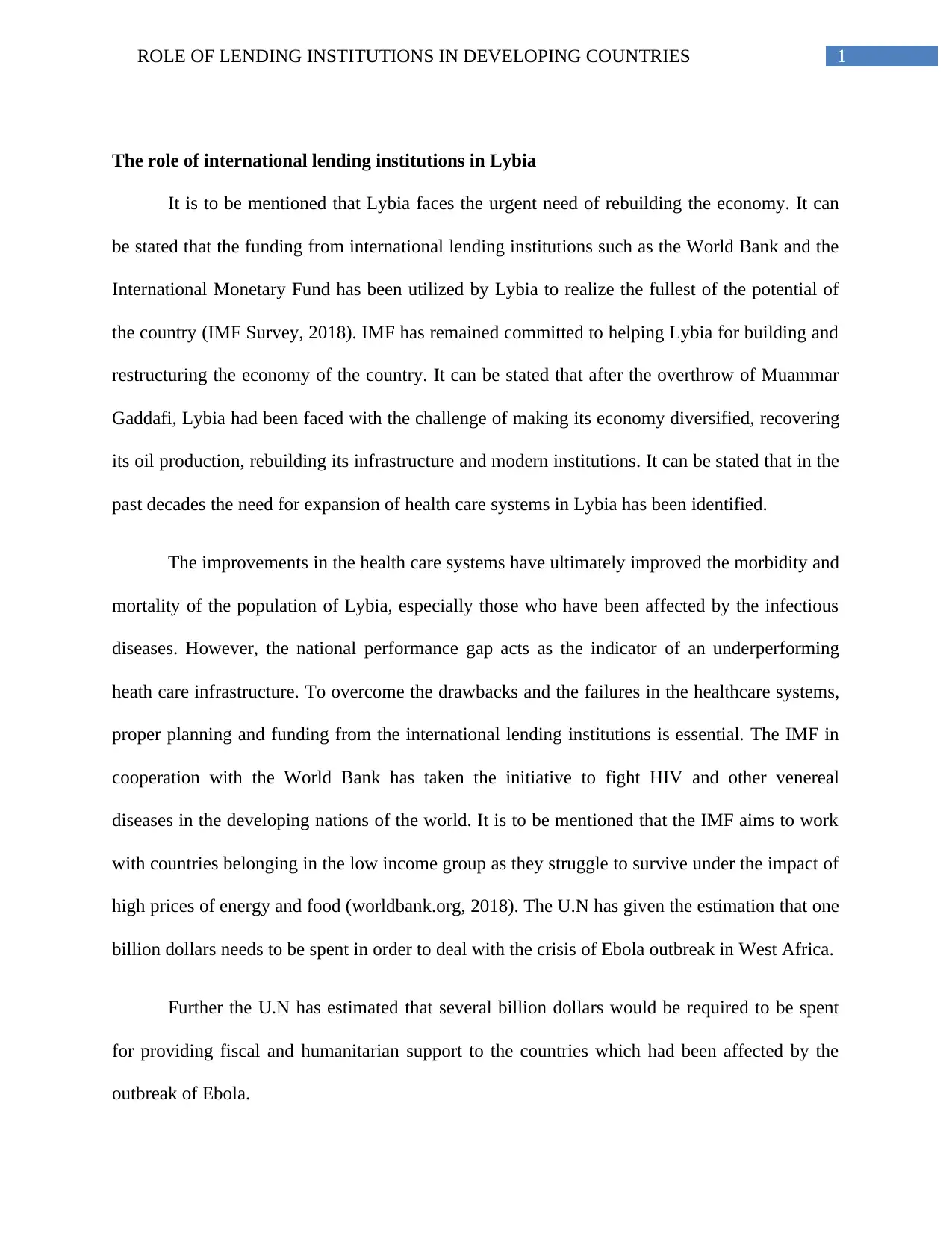
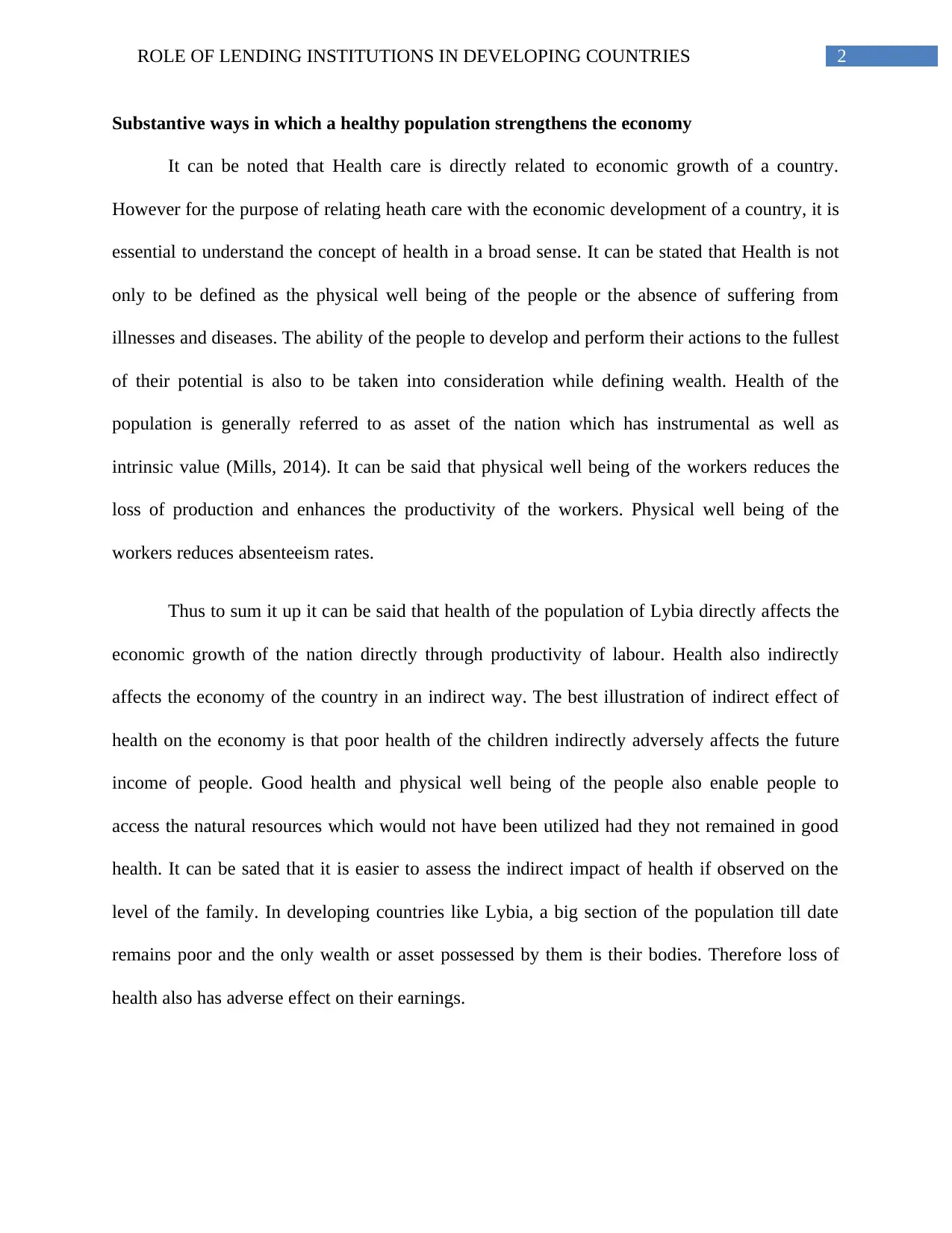
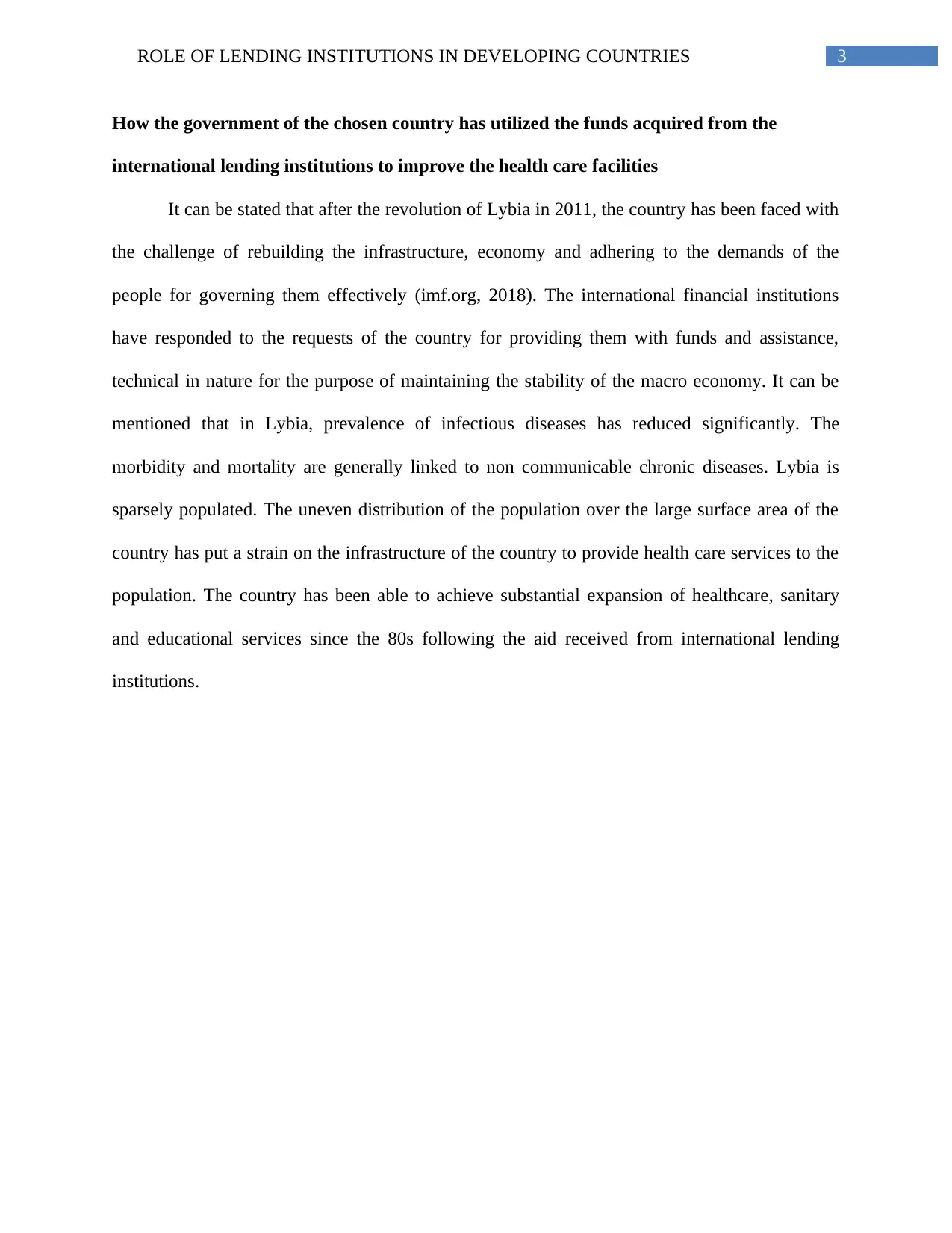
This report examines the role of international lending institutions, specifically focusing on their impact on developing countries, with Libya as a case study. The report highlights how funding from institutions like the World Bank and the International Monetary Fund (IMF) has been utilized to rebuild Libya's economy, infrastructure, and healthcare systems after the overthrow of Muammar Gaddafi. It emphasizes the importance of healthcare in economic growth, discussing how improvements in healthcare can improve the morbidity and mortality rates, especially those affected by infectious diseases. The report also explores how the Libyan government has utilized funds from these institutions to improve healthcare facilities and address the challenges of a sparsely populated country. The analysis includes references to the IMF's commitment to assisting Libya, the impact of health on economic productivity, and the indirect effects of health on the economy, such as the impact on future income. The study underscores the importance of international financial aid in addressing health crises and supporting economic stability in developing nations.



1 out of 5


Related Documents


Your All-in-One AI-Powered Toolkit for Academic Success.
+13062052269
info@desklib.com
Available 24*7 on WhatsApp / Email
![[object Object]](/_next/static/media/star-bottom.7253800d.svg)
Copyright © 2020–2026 A2Z Services. All Rights Reserved. Developed and managed by ZUCOL.