Digital Technology's Impact on Management and Leadership Skills

Verified

Added on  2023/04/24

|16
|953
|105
Report
AI Summary
This report critically evaluates the influence of digital technology on management and leadership skills within the service sector, drawing on case studies of restaurant chains Hazev, Haz, Tas, and Starbucks. It explores essential leadership skills like motivation, employee development, and stress management, alongside the advantages of digital technology such as automated inventory, cost monitoring, and waste reduction. The report highlights the need for staff to develop both hard and soft skills to adapt to technological changes, comparing leadership styles across the case studies. It also details the implementation of digital technologies like MS Excel for internal and external business operations. The analysis provides a comprehensive understanding of how digital transformation is reshaping leadership and management practices in the service industry.
Document Page
CRITICAL EVALUATION OF THE
MANAGEMENT AND LEADERSHIP
SKILLS
How the staff working in the service sector have developed in response
to change
tabler-icon-diamond-filled.svg

Paraphrase This Document

Need a fresh take? Get an instant paraphrase of this document with our AI Paraphraser
Document Page
MANAGEMENT AND LEADERSHIP
SKILLS IN THE SERVICE SECTOR
Motivational Skills
The leaders should not just be an
executive person for the
subordinate employees but should
also be personally knowing the
employees and motivating them at
all the incidences possible
Document Page
MANAGEMENT AND LEADERSHIP
SKILLS IN THE SERVICE SECTOR
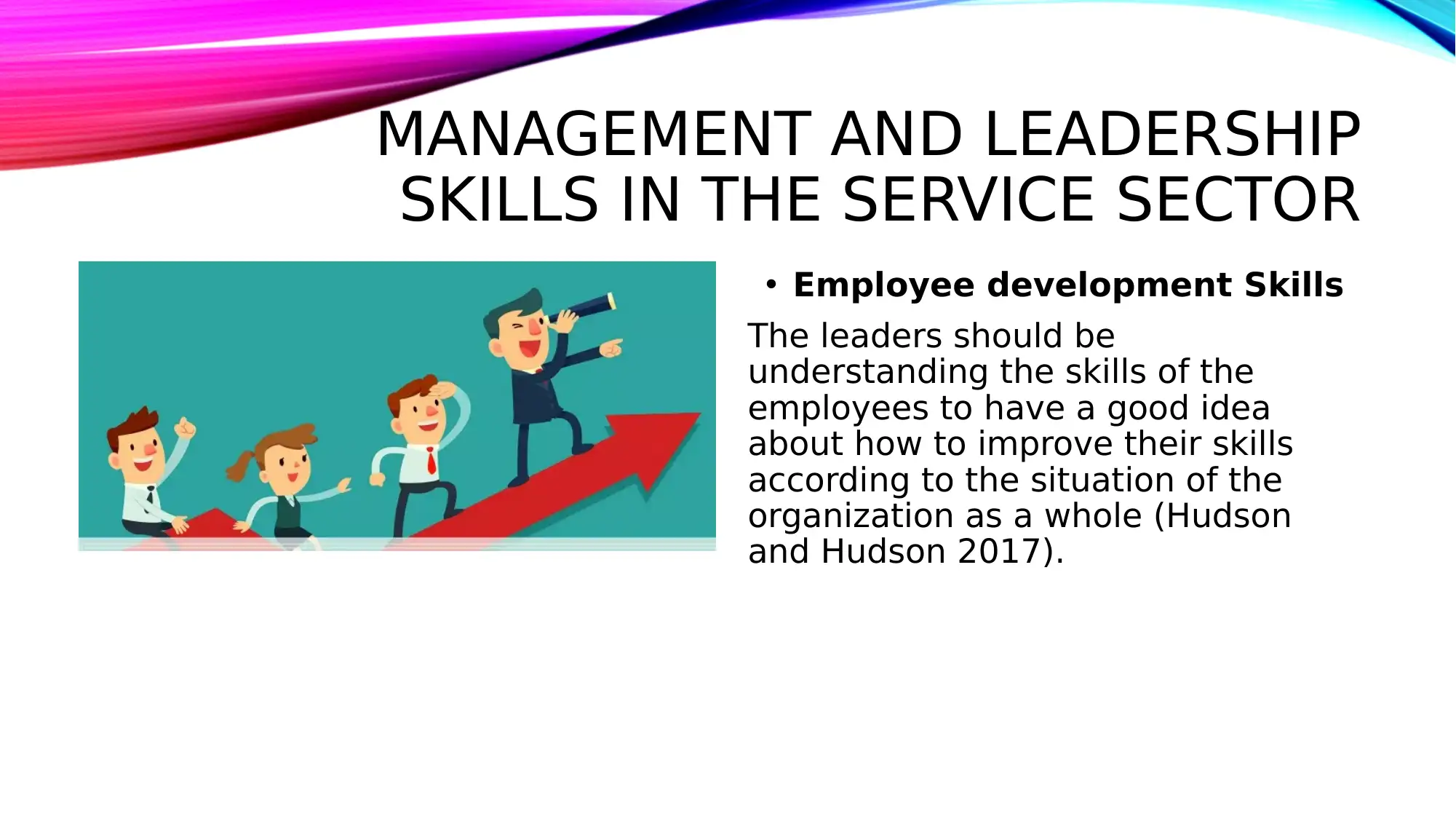
Employee development Skills
The leaders should be
understanding the skills of the
employees to have a good idea
about how to improve their skills
according to the situation of the
organization as a whole (Hudson
and Hudson 2017).
Document Page
MANAGEMENT AND LEADERSHIP
SKILLS IN THE SERVICE SECTOR
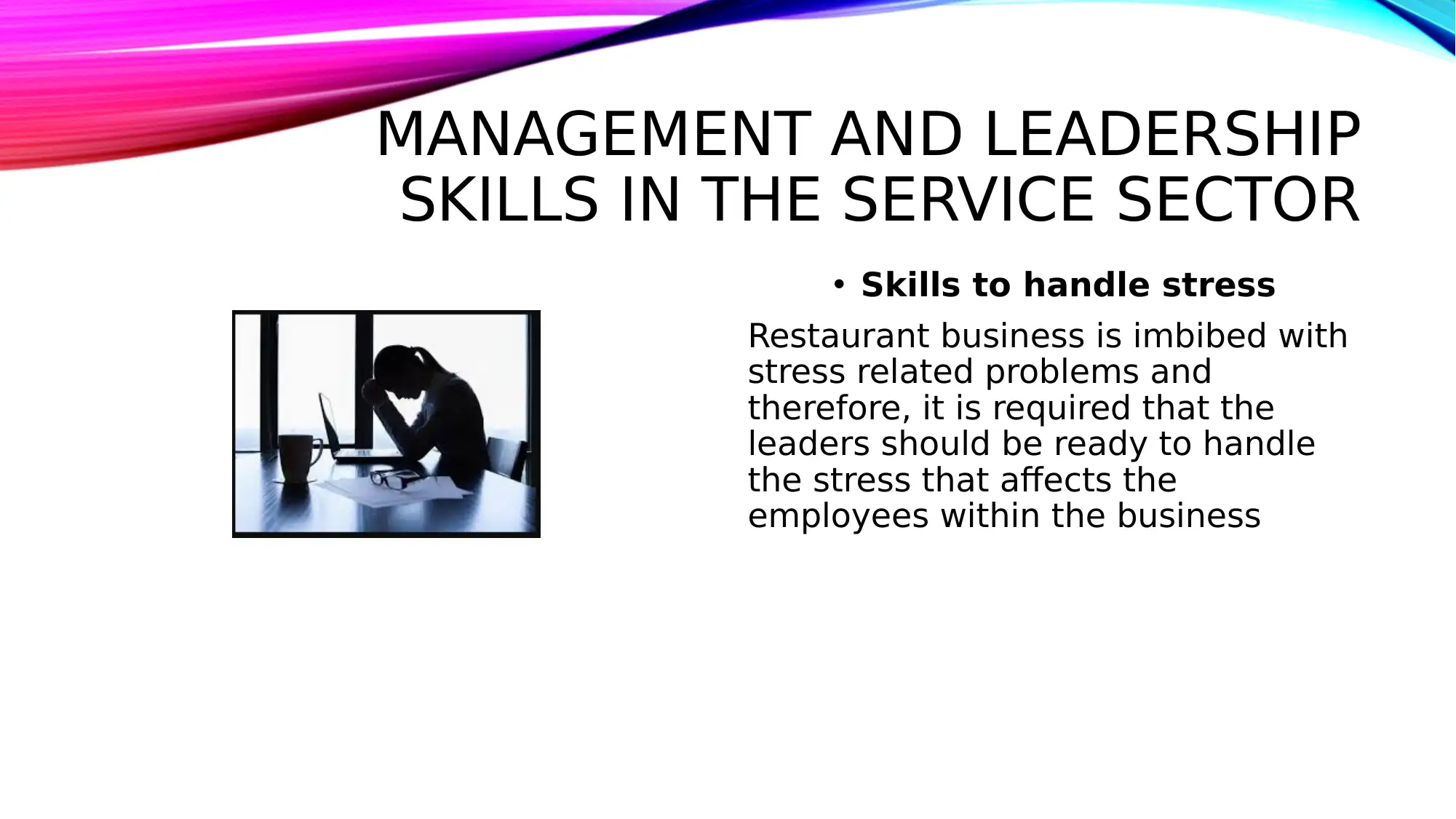
Skills to handle stress
Restaurant business is imbibed with
stress related problems and
therefore, it is required that the
leaders should be ready to handle
the stress that affects the
employees within the business
tabler-icon-diamond-filled.svg

Paraphrase This Document

Need a fresh take? Get an instant paraphrase of this document with our AI Paraphraser
Document Page
MANAGEMENT AND LEADERSHIP
SKILLS IN THE SERVICE SECTOR
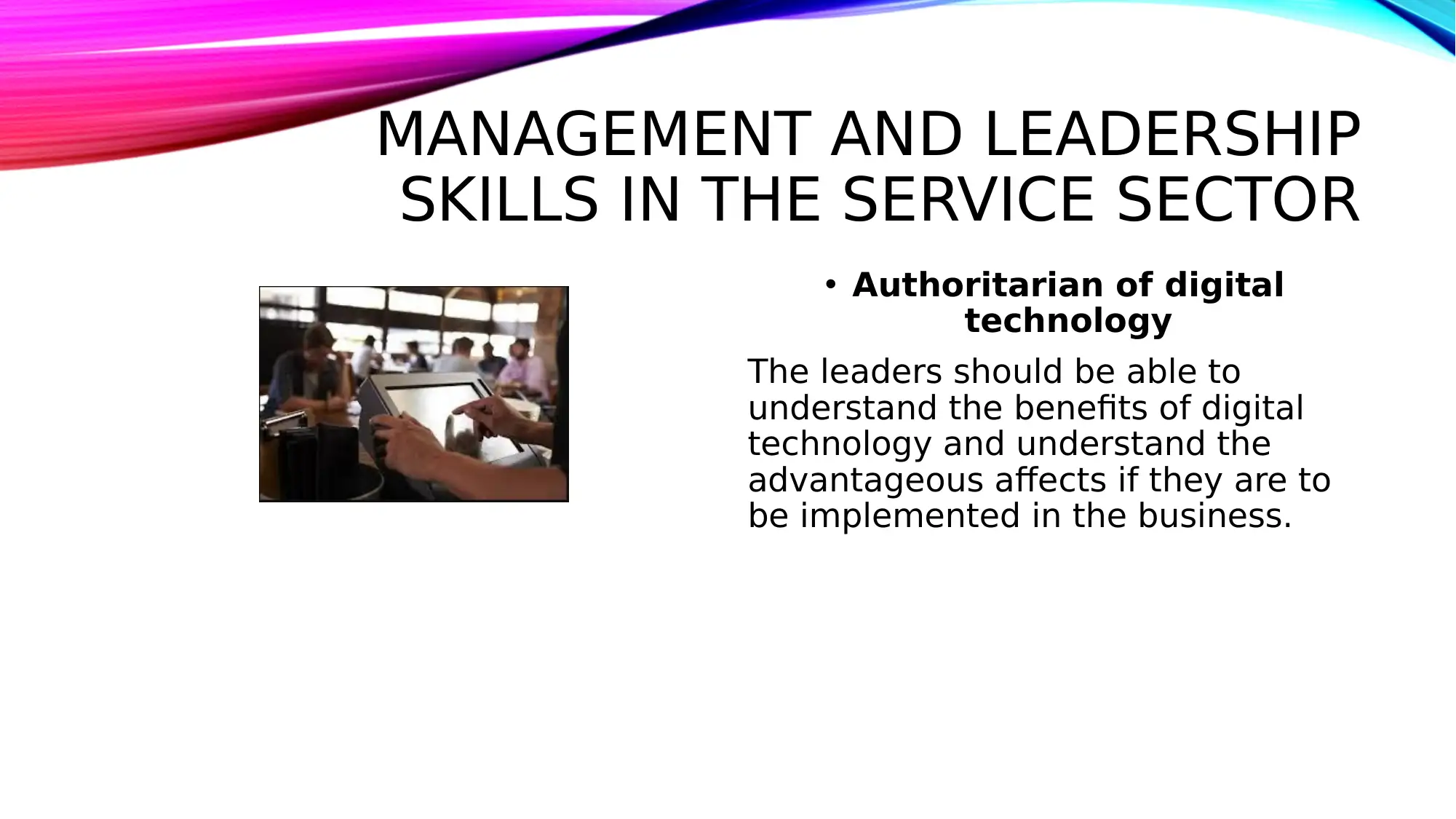
Authoritarian of digital
technology
The leaders should be able to
understand the benefits of digital
technology and understand the
advantageous affects if they are to
be implemented in the business.
Document Page
ADVANTAGES OF USING DIGITAL
TECHNOLOGY IN SERVICE BASED BUSINESS
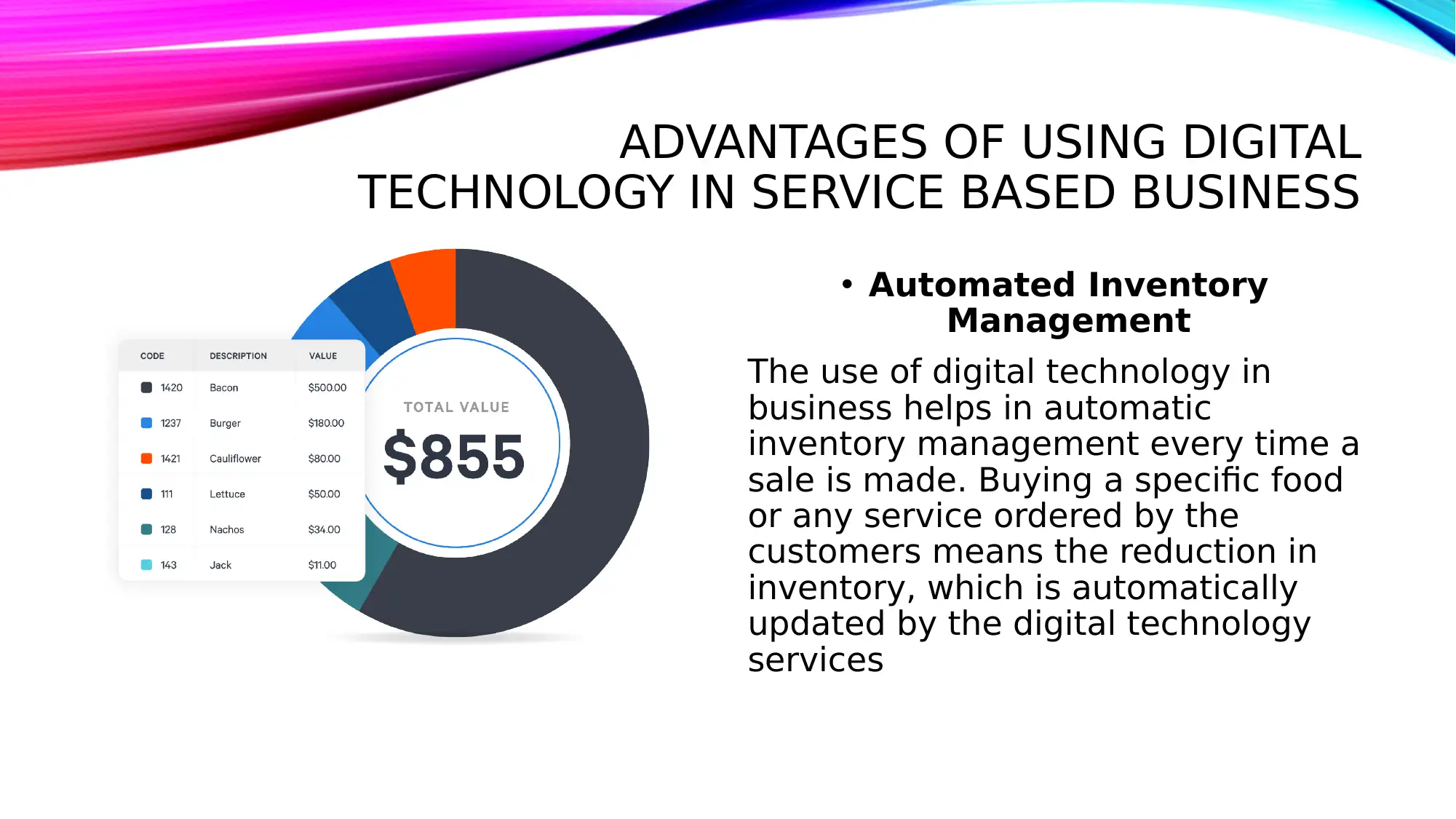
Automated Inventory
Management
The use of digital technology in
business helps in automatic
inventory management every time a
sale is made. Buying a specific food
or any service ordered by the
customers means the reduction in
inventory, which is automatically
updated by the digital technology
services
Document Page
ADVANTAGES OF USING DIGITAL
TECHNOLOGY IN SERVICE BASED BUSINESS
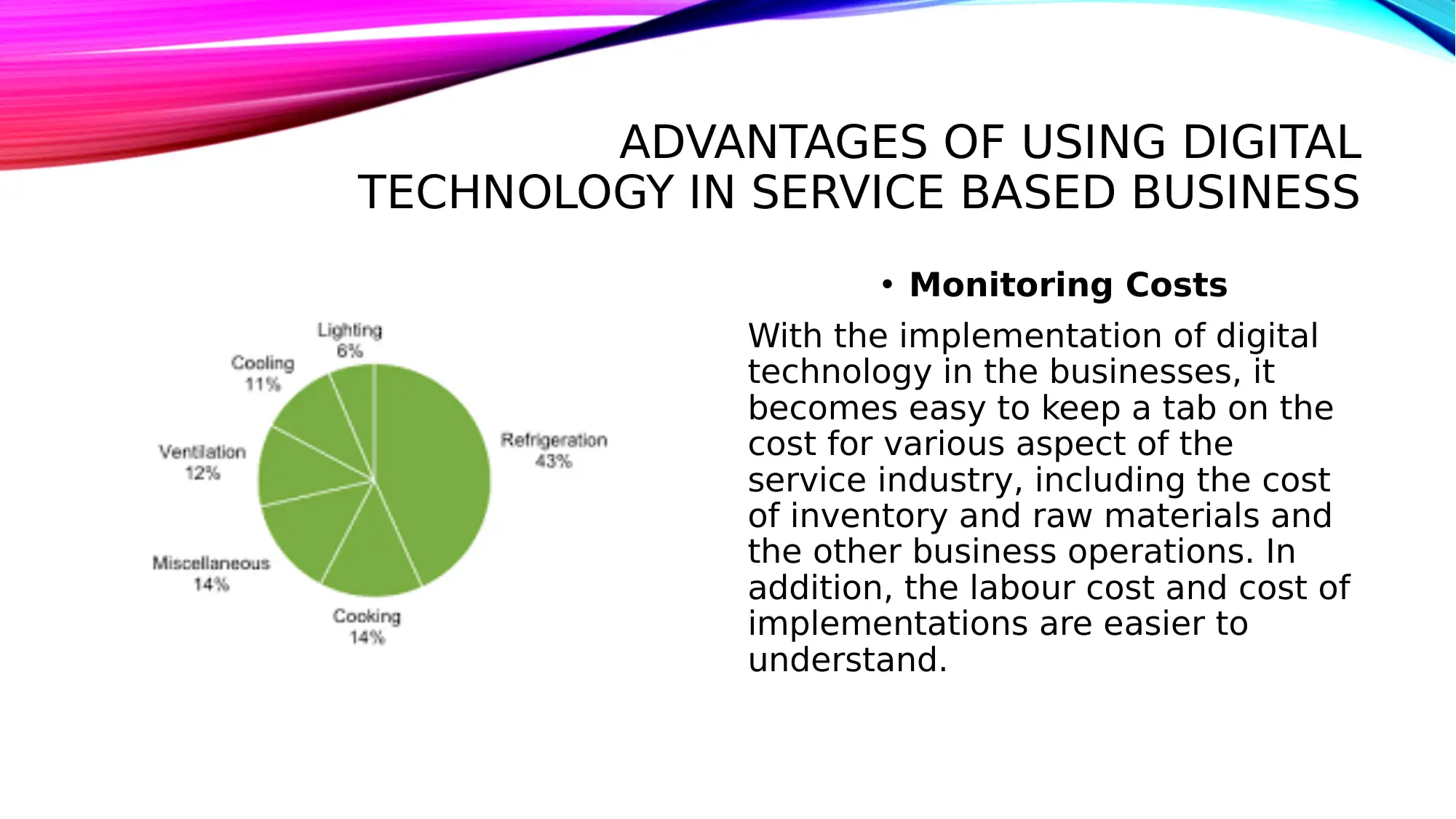
Monitoring Costs
With the implementation of digital
technology in the businesses, it
becomes easy to keep a tab on the
cost for various aspect of the
service industry, including the cost
of inventory and raw materials and
the other business operations. In
addition, the labour cost and cost of
implementations are easier to
understand.
tabler-icon-diamond-filled.svg

Paraphrase This Document

Need a fresh take? Get an instant paraphrase of this document with our AI Paraphraser
Document Page
ADVANTAGES OF USING DIGITAL
TECHNOLOGY IN SERVICE BASED BUSINESS
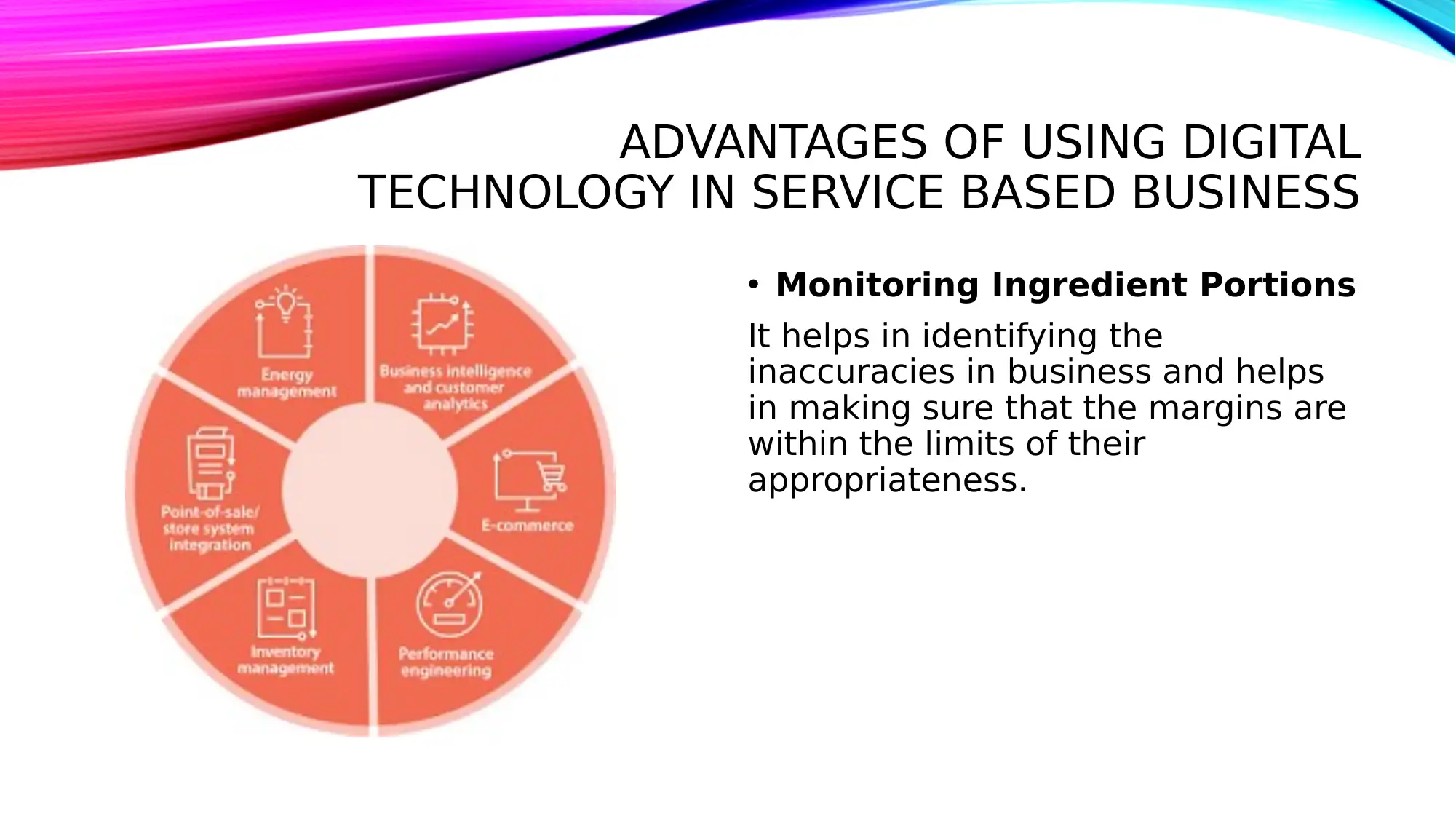
Monitoring Ingredient Portions
It helps in identifying the
inaccuracies in business and helps
in making sure that the margins are
within the limits of their
appropriateness.
Document Page
ADVANTAGES OF USING DIGITAL
TECHNOLOGY IN SERVICE BASED BUSINESS
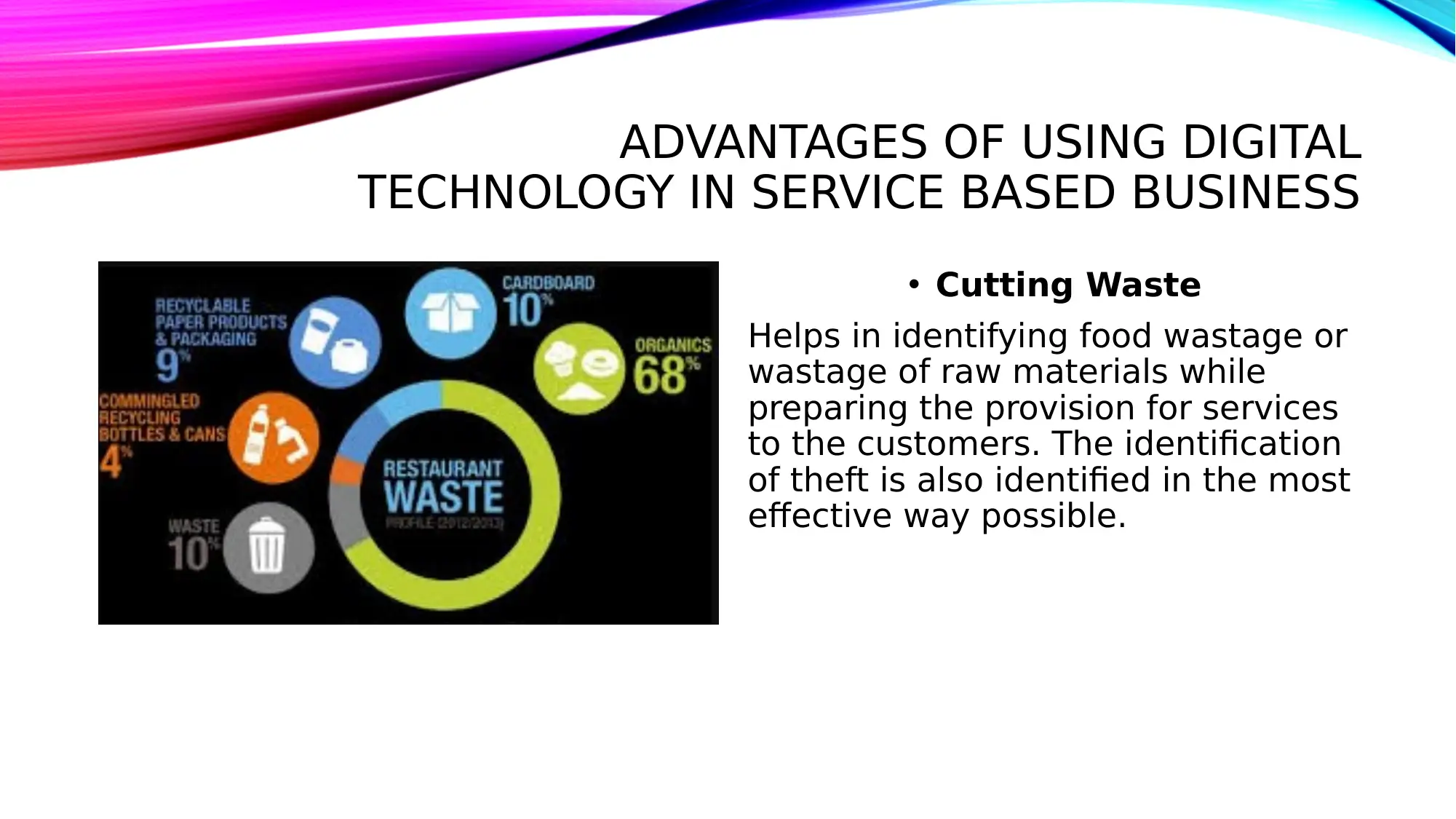
Cutting Waste
Helps in identifying food wastage or
wastage of raw materials while
preparing the provision for services
to the customers. The identification
of theft is also identified in the most
effective way possible.
Document Page
ADVANTAGES OF USING DIGITAL
TECHNOLOGY IN SERVICE BASED BUSINESS
Identifying changes in
business
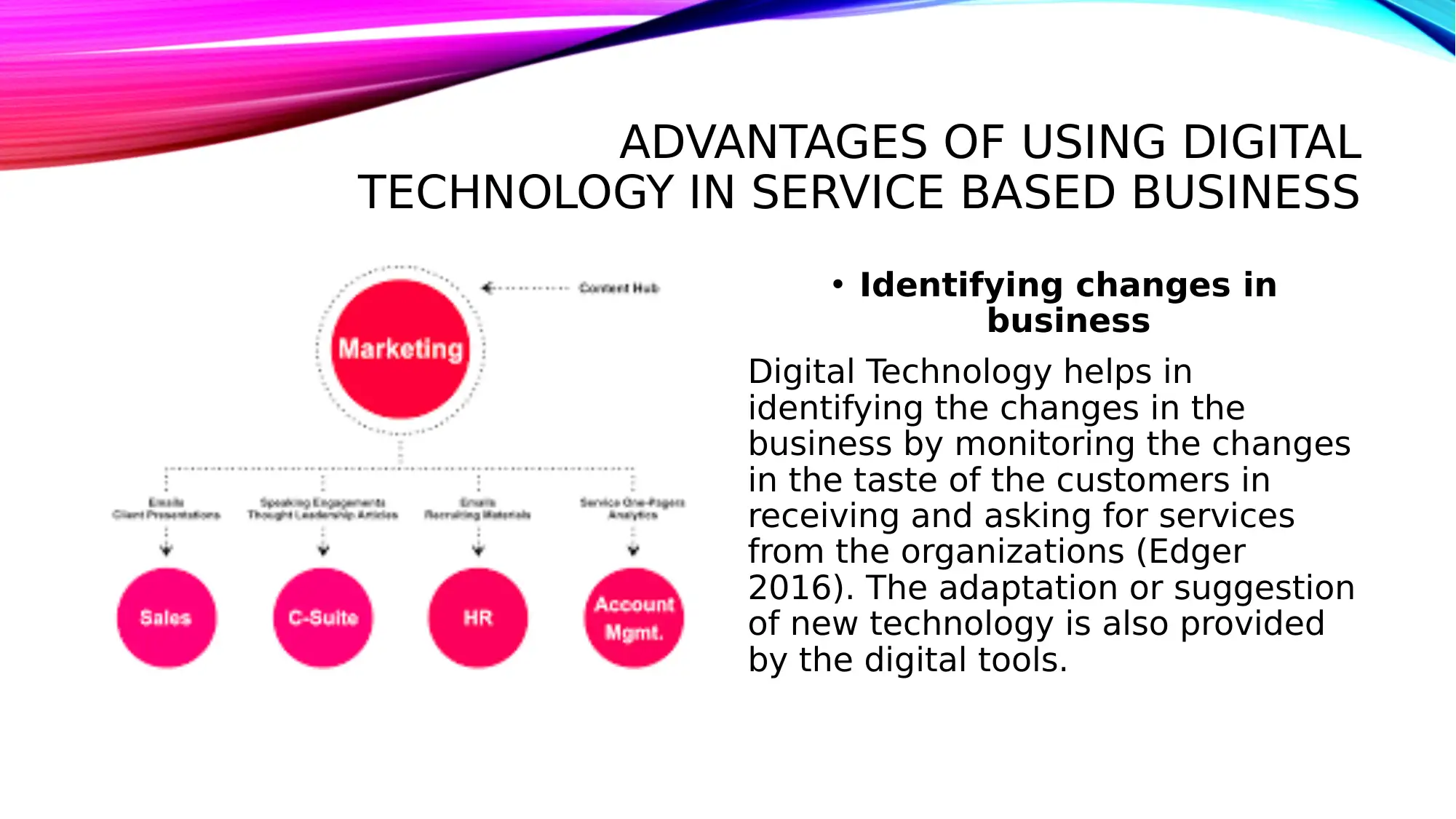
Digital Technology helps in
identifying the changes in the
business by monitoring the changes
in the taste of the customers in
receiving and asking for services
from the organizations (Edger
2016). The adaptation or suggestion
of new technology is also provided
by the digital tools.
tabler-icon-diamond-filled.svg

Paraphrase This Document

Need a fresh take? Get an instant paraphrase of this document with our AI Paraphraser
Document Page
HOW DIGITAL TECHNOLOGY HAS
CREATED A NEED FOR STAFF TO
DEVELOP MORE HARD SKILLS
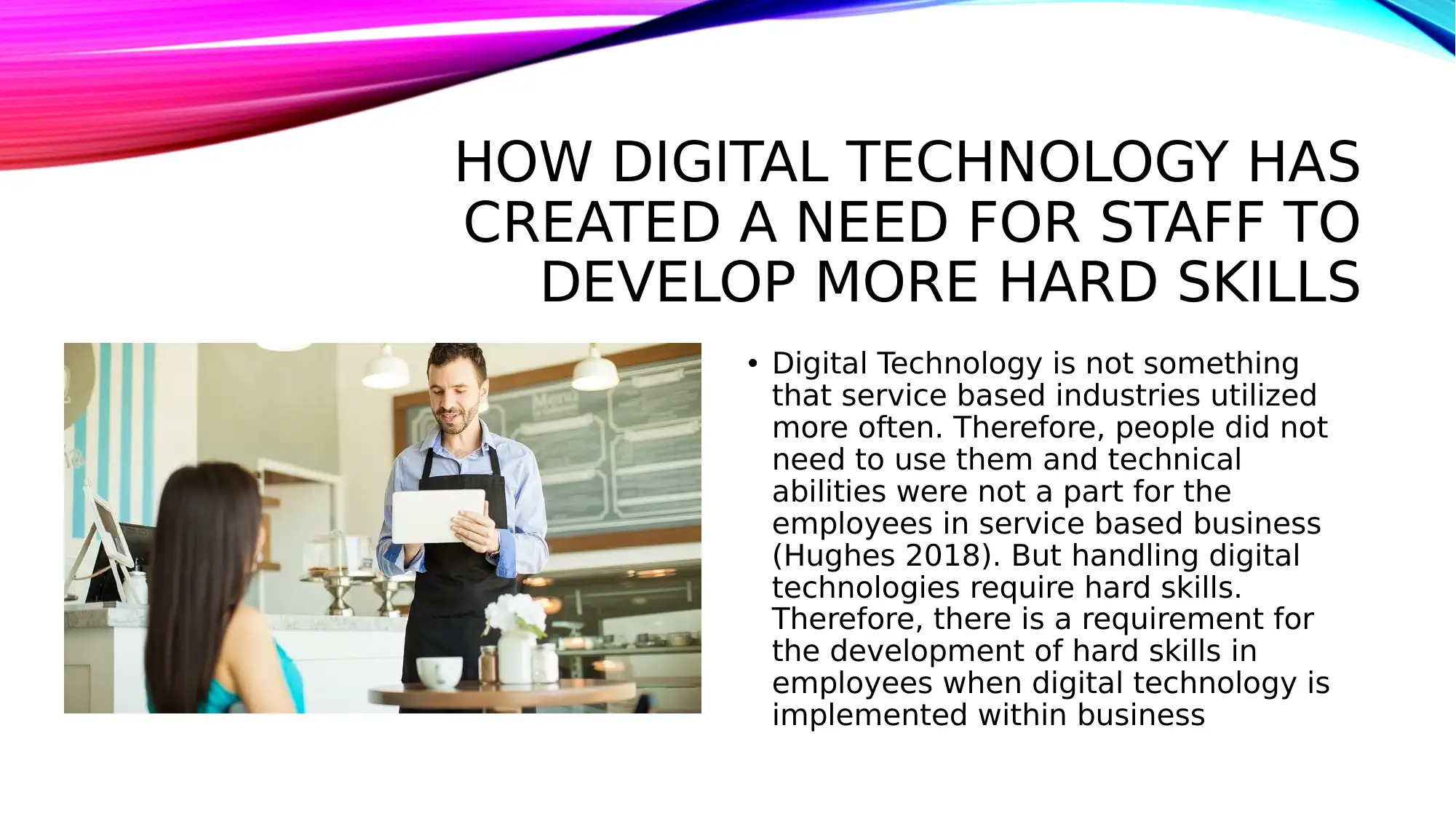
Digital Technology is not something
that service based industries utilized
more often. Therefore, people did not
need to use them and technical
abilities were not a part for the
employees in service based business
(Hughes 2018). But handling digital
technologies require hard skills.
Therefore, there is a requirement for
the development of hard skills in
employees when digital technology is
implemented within business
Document Page
DIGITAL TECHNOLOGY AND THE
NEED FOR STAFF TO DEVELOP
MORE HARD AND SOFT SKILLS
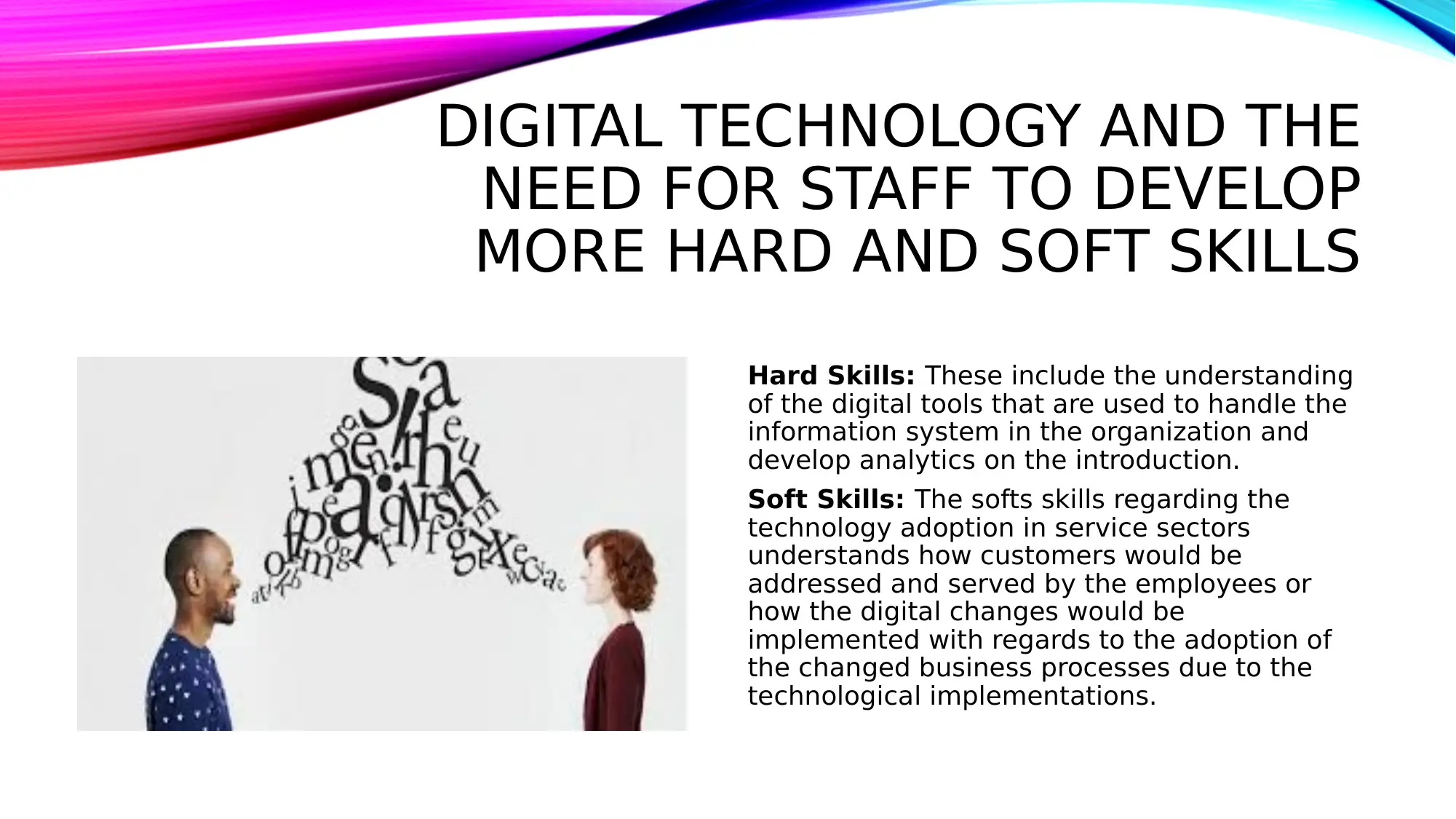
Hard Skills: These include the understanding
of the digital tools that are used to handle the
information system in the organization and
develop analytics on the introduction.
Soft Skills: The softs skills regarding the
technology adoption in service sectors
understands how customers would be
addressed and served by the employees or
how the digital changes would be
implemented with regards to the adoption of
the changed business processes due to the
technological implementations.
chevron_up_icon
1 out of 16
circle_padding
hide_on_mobile
zoom_out_icon
[object Object]