BUS105 - Disruptive Technology and Information Systems Report

Verified

Added on  2023/06/11

|9
|1801
|184
Report
AI Summary
This report examines mobile phone technology as a disruptive force within the cell phone industry. It details the history of mobile phones, from early bulky models to modern smartphones, highlighting key advancements and their impact. The report discusses the advantages and disadvantages of mobile phone technology, including convenience, connectivity, and educational applications, as well as potential drawbacks such as decreased physical contact, health concerns, and data security risks. Furthermore, it addresses the ethical, legal, and security implications of mobile phones, such as privacy violations through IMSI catchers, the use of mobile device data in legal cases, and the potential for location tracking and remote monitoring. The report concludes that while mobile phone technology presents some challenges, its benefits and future potential outweigh the drawbacks, making it a crucial technology for the future.
Document Page
Running head: DISRUPTIVE TECHNOLOGY AND INFORMATION SYSTEMS
DISRUPTIVE TECHNOLOGY AND INFORMATION SYSTEMS
Name of the University
Name of the student
Author Note
tabler-icon-diamond-filled.svg

Paraphrase This Document

Need a fresh take? Get an instant paraphrase of this document with our AI Paraphraser
Document Page
1DISRUPTIVE TECHNOLOGY AND INFORMATION SYSTEMS
Table of Contents
Introduction................................................................................................................................2
Discussion..................................................................................................................................2
PART A..................................................................................................................................2
PART B..................................................................................................................................3
PART C..................................................................................................................................4
PART D..................................................................................................................................6
Conclusion..................................................................................................................................7
References..................................................................................................................................8
Document Page
2DISRUPTIVE TECHNOLOGY AND INFORMATION SYSTEMS
Introduction
Disruptive technology are referred to those technologies that creates a whole new
industry by establishing a ground breaking product which shakes the market scenario.
Sustaining technologies normally improves the established technology in increments while a
disruptive technology has no refinement and occasionally has performance problems.
In the following report, a disruptive technology has been discussed. The chosen
disruptive technology for the chosen assignment is Mobile phone. A brief history of the
technology in relation to the cell phone industry has been evaluated in the report. The pros
and cons of the disruptive technology has been discussed. The security, legal and ethical
implications of the mobile phone technology has been discussed in the report.
Discussion
PART A
Chose a disruptive technology from an industry of your choice.
The disruptive technology chosen for this report is mobile phone from the cell phone
industry. It is a handheld device that is accessed wirelessly to send text messages and receive
as well as make calls. Earlier, the mobile phones were only capable of making and receiving
phone calls but nowadays, the mobile phones have increased in capability like playing games
and navigating the web browser.
Mobile phones were initially bulky and not portable. The mobile phones which used
the GSM network or Global System for mobile communications were initially able to receive
and send text messages. As the devices grew smaller and faster, MMS messages with pictures
and audio files could be send from mobile to mobile (Goodman and Robison 2013). Slowly,
Document Page
3DISRUPTIVE TECHNOLOGY AND INFORMATION SYSTEMS
the mobile phones which adopted computer like features were termed as smart phones
whereas the regular ones came to be known as the feature phones. These devices operate on
wireless technologies that relies on scattered cell sites all over the region. If a user wants to
place a call from a place where no network is present, the mobile phone won’t be able to
make or receive any calls.
PART B
Describe some history in relation to the technology and the industry you chose
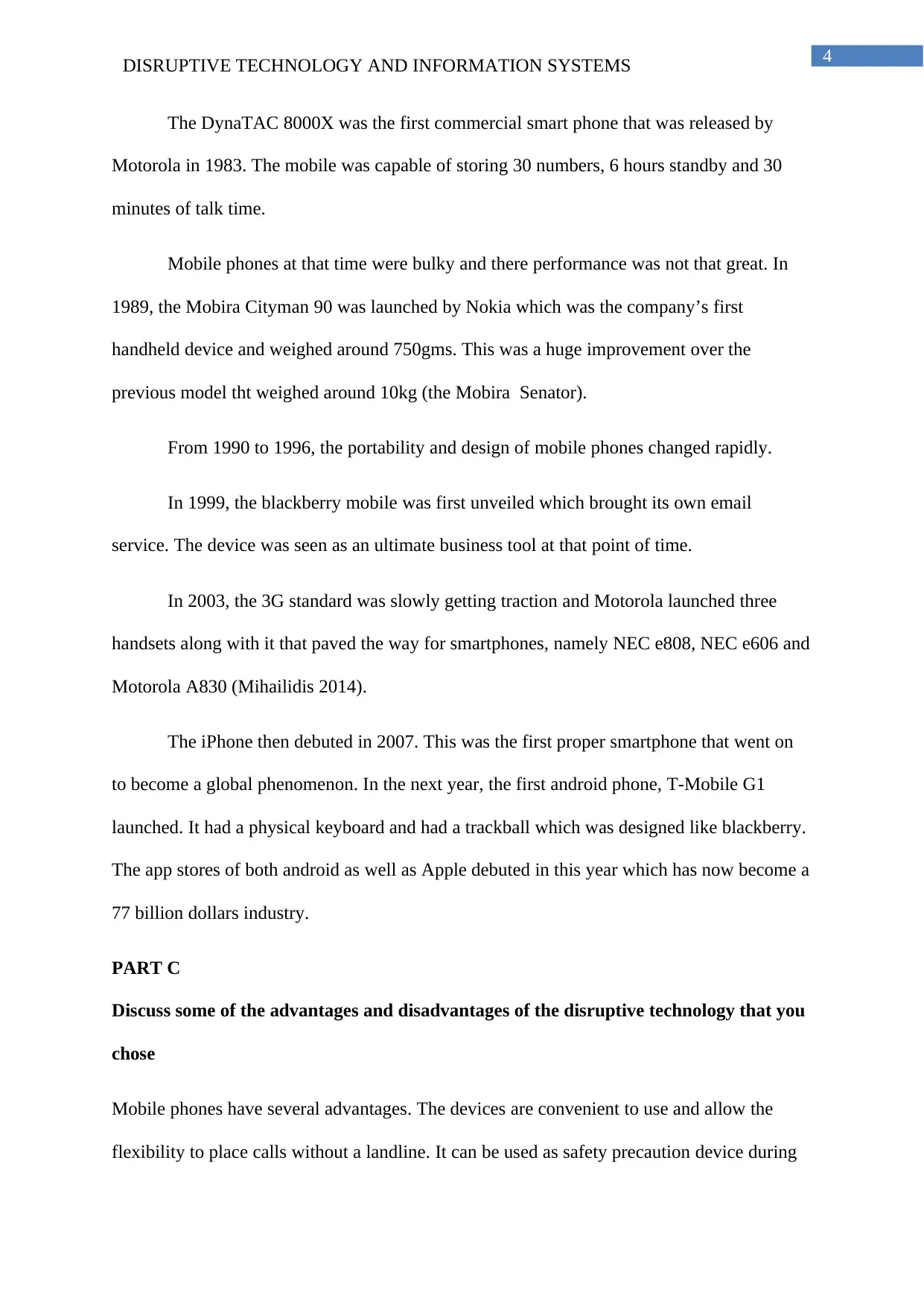
Figure 1: The first commercial mobile phone
(Source: Goodman and Robison 2013)
In 1973, an executive and researcher of Motorola named Martin Cooper placed the
first mobile phone call to his rival, Joel Engel (who worked in Bell Labs).
tabler-icon-diamond-filled.svg

Paraphrase This Document

Need a fresh take? Get an instant paraphrase of this document with our AI Paraphraser
Document Page
4DISRUPTIVE TECHNOLOGY AND INFORMATION SYSTEMS
The DynaTAC 8000X was the first commercial smart phone that was released by
Motorola in 1983. The mobile was capable of storing 30 numbers, 6 hours standby and 30
minutes of talk time.
Mobile phones at that time were bulky and there performance was not that great. In
1989, the Mobira Cityman 90 was launched by Nokia which was the company’s first
handheld device and weighed around 750gms. This was a huge improvement over the
previous model tht weighed around 10kg (the Mobira Senator).
From 1990 to 1996, the portability and design of mobile phones changed rapidly.
In 1999, the blackberry mobile was first unveiled which brought its own email
service. The device was seen as an ultimate business tool at that point of time.
In 2003, the 3G standard was slowly getting traction and Motorola launched three
handsets along with it that paved the way for smartphones, namely NEC e808, NEC e606 and
Motorola A830 (Mihailidis 2014).
The iPhone then debuted in 2007. This was the first proper smartphone that went on
to become a global phenomenon. In the next year, the first android phone, T-Mobile G1
launched. It had a physical keyboard and had a trackball which was designed like blackberry.
The app stores of both android as well as Apple debuted in this year which has now become a
77 billion dollars industry.
PART C
Discuss some of the advantages and disadvantages of the disruptive technology that you
chose
Mobile phones have several advantages. The devices are convenient to use and allow the
flexibility to place calls without a landline. It can be used as safety precaution device during
Document Page
5DISRUPTIVE TECHNOLOGY AND INFORMATION SYSTEMS
emergencies and life threatening situations. The devices help the users to stay connected with
the rest of the world through phone calls, social media, voice calls and Face Time. The
mobile phones have changed the way that business conduct their processes. Students can use
various learning applications from the app stores for educational purposes. The GPS
technology present in the mobile phone allows the user to find their location when they are
travelling (Shoaib et al. 2015). Mobile games can be played on the devices and the devices
can be used as a recording medium. Reminder and alarm notes can be set up in the mobile
phones rather than investing on a separate alarm clock. Other utilities such as calculator,
cameras and calendars can be accessed through mobile devices.
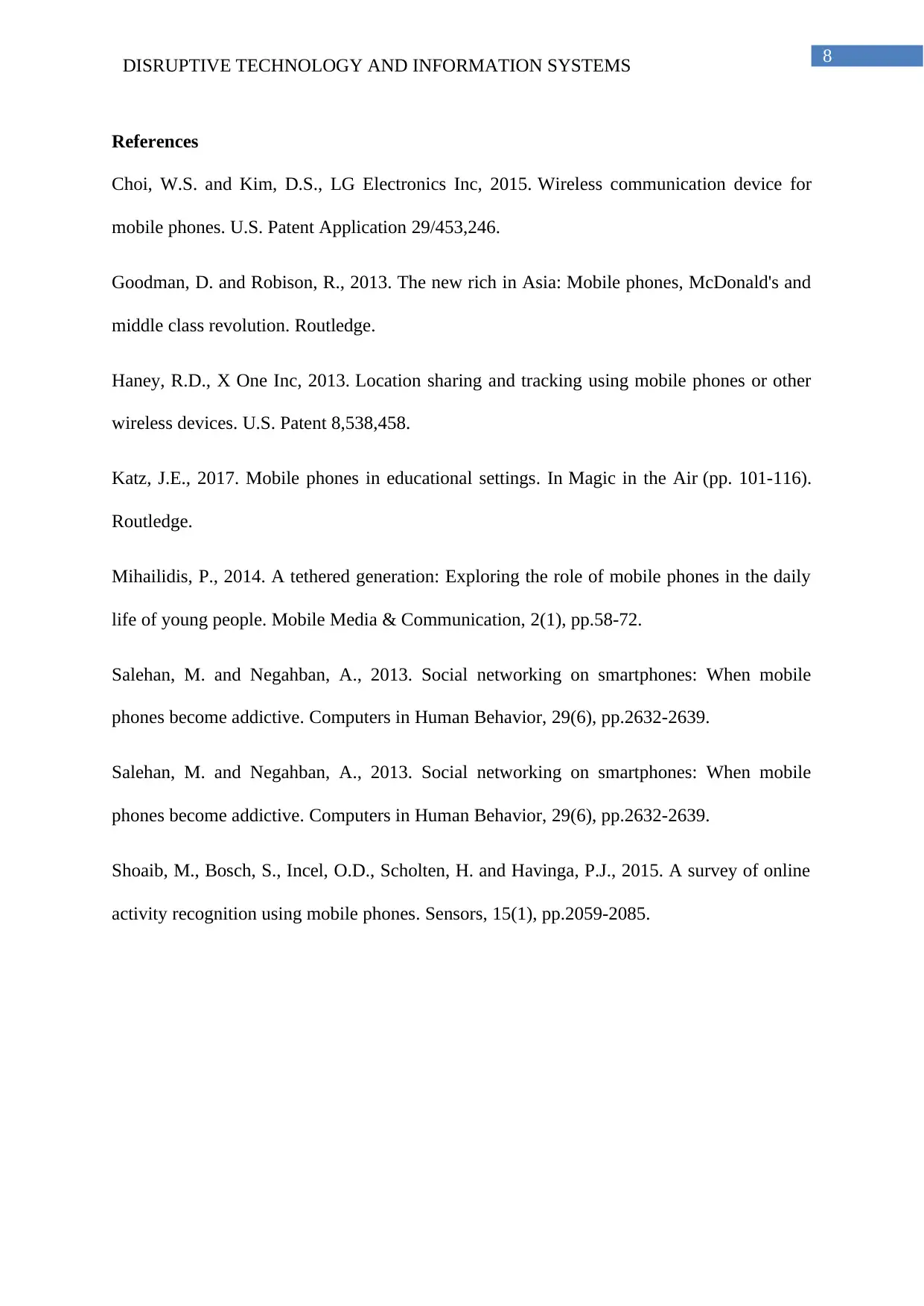
Figure 2: Mobile phones before 2006
(Source: Goodman and Robison 2013)
There are several disadvantages of mobile phones as well. Mobile phone usage has
decreased the distance between distant relatives but it has also decreased the amount of
physical contact among them which can cause misunderstandings to escalate. Students
nowadays spend more time on mobile phones then they spend on other activities (Salehan
and Negahban 2013). Excessive usage of mobile phoned can cause harm to our body in the
Document Page
6DISRUPTIVE TECHNOLOGY AND INFORMATION SYSTEMS
form of radiation and to our eyes in the form of eye strain. They are also one of the reasons
for failure in student examination and is the second largest contributor for road accidents
(Salehan and Negahban 2013). Using mobile phones in airplanes have the potential to crash
them as they can theoretically hamper the wireless system of the airplane. Moreover, the
mobile phones are getting expensive day by day and the loss of user data is still a major issue
for this technology.
PART D
Discuss the ethical, legal and security implications/concerns of the technology that you
chose
The ethical issues related to mobile phones is with the issue of privacy. Stingrays or
IMSI catchers are increasingly adopted by USA and UK forces. This technology gives the
concerned authorities with the power to capture data from radius of five years by mimicking
a base station of the mobile network. The attacker can capture text messages, recorded calls
and emails (Choi and Kim 2015). Moreover, the police still refuse that they do not have
possession of this technology. Basically, this technology allows a person to access all the
private information of the individual without their prior permission which is an ethical issue.
The legal issues can gain traction from the fact that the mobile devices can be used as
an evidence during a legal case. The authority of the data during research and development
phase is also a legal issue that needs to be addressed. Research has revealed that several
police forces are using a mobile cracking technology used by Cellebrite to retrieve data from
the victim’s mobile phone (Katz 2017). A recent legal battle took place between Apple and
FBI when FBI asked the company to unlock the apple device.
The social issues can come from position tracking where the users can be tracked with
hidden technologies by tampering with the GPS devices of the mobile phones (Haney 2013).
tabler-icon-diamond-filled.svg

Paraphrase This Document

Need a fresh take? Get an instant paraphrase of this document with our AI Paraphraser
Document Page
7DISRUPTIVE TECHNOLOGY AND INFORMATION SYSTEMS
The WLAN technologies can be hacked to reveal the position of the user like where they are
eating, studying and working. Moreover, the user can be remotely monitored by an attacker
as well leading to a social issue.
Conclusion
To conclude the report, it can be stated that the mobile phone technology has a lot of
advantages over the prospective disadvantages. The report has conclusively defined the
disruptive technology and has provided historical background about the technologies’
initiation. The mobile phone technology has advanced a lot since its initial days and will
grow in capability in the years to come. The technology has some serious ethical, legal and
social concerns but that can be addressed if proper recommendations are followed. Despite
the disadvantages, the mobile phone devices are the gadgets of the future and will continue to
assist users with its innovative technologies.
Document Page
8DISRUPTIVE TECHNOLOGY AND INFORMATION SYSTEMS
References
Choi, W.S. and Kim, D.S., LG Electronics Inc, 2015. Wireless communication device for
mobile phones. U.S. Patent Application 29/453,246.
Goodman, D. and Robison, R., 2013. The new rich in Asia: Mobile phones, McDonald's and
middle class revolution. Routledge.
Haney, R.D., X One Inc, 2013. Location sharing and tracking using mobile phones or other
wireless devices. U.S. Patent 8,538,458.
Katz, J.E., 2017. Mobile phones in educational settings. In Magic in the Air (pp. 101-116).
Routledge.
Mihailidis, P., 2014. A tethered generation: Exploring the role of mobile phones in the daily
life of young people. Mobile Media & Communication, 2(1), pp.58-72.
Salehan, M. and Negahban, A., 2013. Social networking on smartphones: When mobile
phones become addictive. Computers in Human Behavior, 29(6), pp.2632-2639.
Salehan, M. and Negahban, A., 2013. Social networking on smartphones: When mobile
phones become addictive. Computers in Human Behavior, 29(6), pp.2632-2639.
Shoaib, M., Bosch, S., Incel, O.D., Scholten, H. and Havinga, P.J., 2015. A survey of online
activity recognition using mobile phones. Sensors, 15(1), pp.2059-2085.
chevron_up_icon
1 out of 9
circle_padding
hide_on_mobile
zoom_out_icon
[object Object]