Analyzing E-Business's Effect on Mining & Engineering Profitability
VerifiedAdded on 2023/06/10
|8
|2241
|460
Report
AI Summary
This report critically examines the impact of e-business on the value and profitability of firms in the mining and engineering product manufacturing industry. It begins by defining e-business and its role in today's digitalized world, emphasizing its impact on communication with stakeholders and enhancing commercial processes. The study explores strategies, human resources, customer relationship management, the business environment, and financial performance. It highlights the importance of adapting to new technologies and business models for increased productivity and financial performance. The research uses empirical data from the Australian Securities Exchange to analyze company performance, focusing on ratios like return on assets and operating income. The report covers the influence of e-business innovation on firm performance, including discussions on organizational innovation theory, early adoption, and the innovative use of technology. It also addresses challenges in capital budgeting and the need for senior management to adopt non-traditional approaches. The research is structured into chapters covering background, objectives, research questions, research design, literature review, data analysis using SPSS and Excel, and overall conclusions and recommendations. It concludes that e-business significantly changes how industries and entities operate, stimulating reconfiguration of adopter's technology strategy and structure.
Chapter 1
CRITICAL EXAMINATION OF THE EFFECT OF
E-BUSINESS ON VALUE AND PROFITABILITY
OF FIRM IN MINING & ENGINEERING
PRODUCT MANUFACTURE INDUSTRY
CRITICAL EXAMINATION OF THE EFFECT OF
E-BUSINESS ON VALUE AND PROFITABILITY
OF FIRM IN MINING & ENGINEERING
PRODUCT MANUFACTURE INDUSTRY
Paraphrase This Document
Need a fresh take? Get an instant paraphrase of this document with our AI Paraphraser

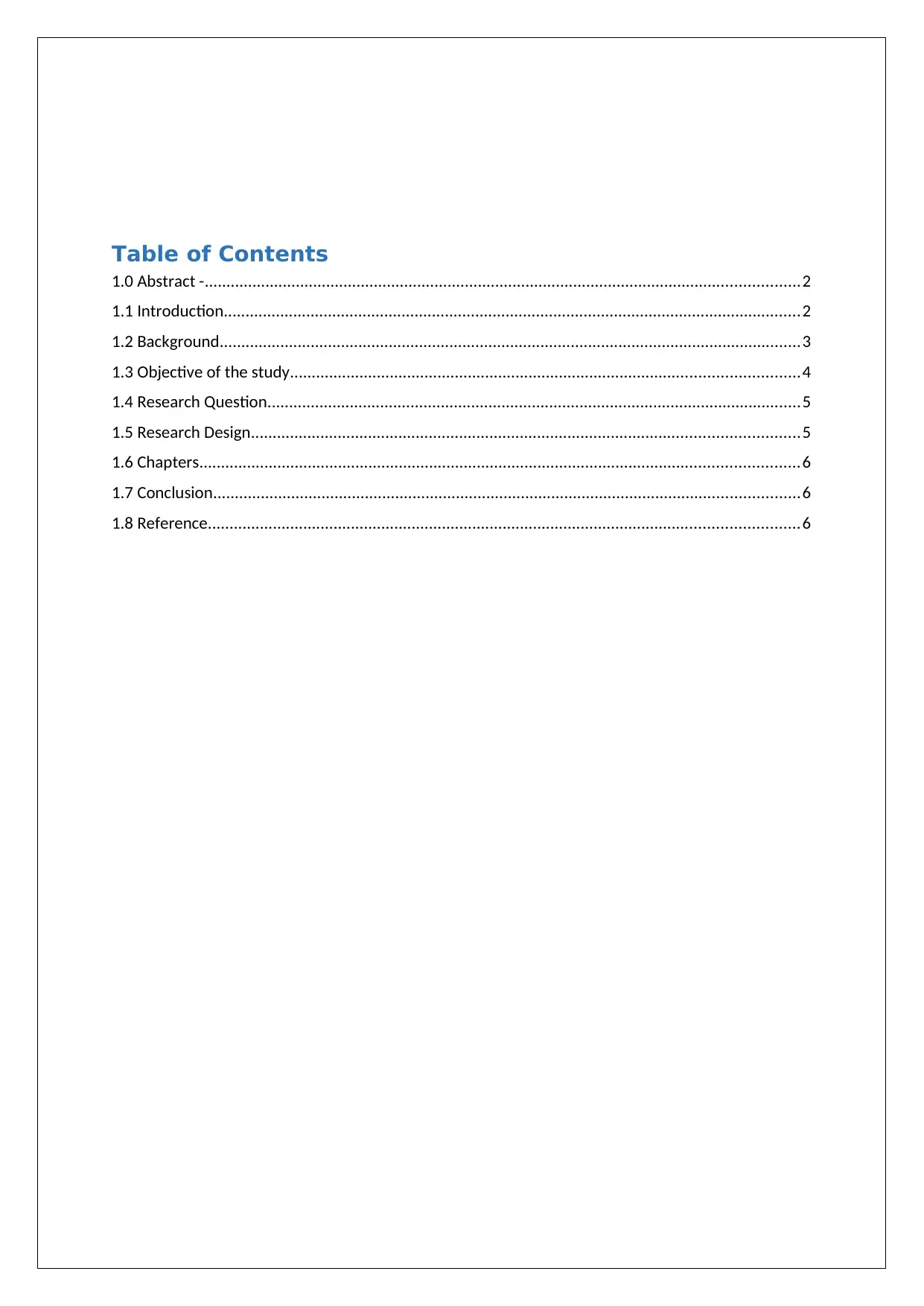
Table of Contents
1.0 Abstract -.........................................................................................................................................2
1.1 Introduction.....................................................................................................................................2
1.2 Background......................................................................................................................................3
1.3 Objective of the study.....................................................................................................................4
1.4 Research Question...........................................................................................................................5
1.5 Research Design..............................................................................................................................5
1.6 Chapters..........................................................................................................................................6
1.7 Conclusion.......................................................................................................................................6
1.8 Reference........................................................................................................................................6
1.0 Abstract -.........................................................................................................................................2
1.1 Introduction.....................................................................................................................................2
1.2 Background......................................................................................................................................3
1.3 Objective of the study.....................................................................................................................4
1.4 Research Question...........................................................................................................................5
1.5 Research Design..............................................................................................................................5
1.6 Chapters..........................................................................................................................................6
1.7 Conclusion.......................................................................................................................................6
1.8 Reference........................................................................................................................................6

1.0 ABSTRACT -
In the era of the digitalized world, every organization is using the internet services in direct or
indirect manner. E-business can be defined as the procedure of linking the business process
with the internet. This change in business process changes the way of communicating with
customers, dealers and other stakeholders. Internet enhances the quality of commercial
processes of an organization. E-business is often used with e-commerce, however, these two
terms are different and the former term is a subset of e-commerce. E-commerce has helped an
organization to control the management even by staying away from the original destination of
the organization. It helped in minimizing the limitations of boundaries between countries as
well. Various organizations have shifted from physical movements to electronic supply chain
to enhance their profitability. Thus it can be said that e-business is a revolution in the
business market which can help in reducing the limitation of distance barriers.
1.1 INTRODUCTION
According to Ruoco and Durfee (2001), today's economy runs on skills and knowledge.
Hence, a huge number of businesses work assiduously to capitalize on this fact. They tend to
build a cross-functional team, customer or product-focused business units and work in groups
to achieve the desired outcome. E-business has become an important aspect for businesses to
consider the way it runs. This research study will focus on the effects of e-business on the
value of an organization. It will address key areas such as strategies, human resources,
customer relationship management, business environment and financial performance which
undermine the quality of work. When a business implements e-businesses, a number of
factors need to be taken into consideration such as process redesign, organizational structure,
policies and procedures and financial performance (Wiengarten, Humhreys, Mckittrick and
Fynes, 2013). Businesses will also need to examine the tax, legal and security issues. Today
we see that e-business is changing all the rules and models to adapt to customer needs. A
business‘s ability to adapt to new technology and business models is the key to increasing the
organization's productivity and financial performance.
In the era of the digitalized world, every organization is using the internet services in direct or
indirect manner. E-business can be defined as the procedure of linking the business process
with the internet. This change in business process changes the way of communicating with
customers, dealers and other stakeholders. Internet enhances the quality of commercial
processes of an organization. E-business is often used with e-commerce, however, these two
terms are different and the former term is a subset of e-commerce. E-commerce has helped an
organization to control the management even by staying away from the original destination of
the organization. It helped in minimizing the limitations of boundaries between countries as
well. Various organizations have shifted from physical movements to electronic supply chain
to enhance their profitability. Thus it can be said that e-business is a revolution in the
business market which can help in reducing the limitation of distance barriers.
1.1 INTRODUCTION
According to Ruoco and Durfee (2001), today's economy runs on skills and knowledge.
Hence, a huge number of businesses work assiduously to capitalize on this fact. They tend to
build a cross-functional team, customer or product-focused business units and work in groups
to achieve the desired outcome. E-business has become an important aspect for businesses to
consider the way it runs. This research study will focus on the effects of e-business on the
value of an organization. It will address key areas such as strategies, human resources,
customer relationship management, business environment and financial performance which
undermine the quality of work. When a business implements e-businesses, a number of
factors need to be taken into consideration such as process redesign, organizational structure,
policies and procedures and financial performance (Wiengarten, Humhreys, Mckittrick and
Fynes, 2013). Businesses will also need to examine the tax, legal and security issues. Today
we see that e-business is changing all the rules and models to adapt to customer needs. A
business‘s ability to adapt to new technology and business models is the key to increasing the
organization's productivity and financial performance.
⊘ This is a preview!⊘
Do you want full access?
Subscribe today to unlock all pages.

Trusted by 1+ million students worldwide

1.2 BACKGROUND
According to Ruoco and Durfee (2001), today's economy runs on skills and knowledge.
Hence, a huge number of businesses work assiduously to capitalize on this fact. They tend to
build a cross-functional team, customer or product-focused business units and work in groups
to achieve the desired outcome. E-business has become an important aspect for businesses to
consider the way it runs. This research study will focus on the effects of e-business on the
value of an organization. It will address key areas such as strategies, human resources,
customer relationship management, business environment and financial performance which
undermine the quality of work. When a business implements e-businesses, a number of
factors need to be taken into consideration such as process redesign, organizational structure,
policies and procedures and financial performance (Wiengarten et al., 2013). Businesses will
also need to examine the tax, legal and security issues. Today we see that e-business is
changing all the rules and models to adapt to customer needs. A business‘s ability to adapt to
new technology and business models is the key to increasing the organization's productivity
and financial performance.
1.3 OBJECTIVE OF THE STUDY
The purpose of this research paper is to critically examine the role of e-business innovation
on a firm's performance. It follows the footstep of past researchers who described
organizational innovation as a more important to understand how innovation theory can
explain one particular innovation instead of searching a single unifying theory that explains
all innovations in general Caldwell, Harland, Powell, and Zeng (2013). However, the current
research applies to organizational innovation theory in relation to e-business. This research
will discuss e-business innovation and how this affects the business success by combining
early adoption and innovative use of e-business to an entities performance.
The well-recognized work of Fei and Cheng (2015), highlights the significance of innovation
as the source of value creation. He also suggests that innovation can not only change the way
businesses operates but has even been called "creative destruction" due to its radical nature.
Matlay, Westhead, and Wright (2011) believed innovation theory focuses on the importance
According to Ruoco and Durfee (2001), today's economy runs on skills and knowledge.
Hence, a huge number of businesses work assiduously to capitalize on this fact. They tend to
build a cross-functional team, customer or product-focused business units and work in groups
to achieve the desired outcome. E-business has become an important aspect for businesses to
consider the way it runs. This research study will focus on the effects of e-business on the
value of an organization. It will address key areas such as strategies, human resources,
customer relationship management, business environment and financial performance which
undermine the quality of work. When a business implements e-businesses, a number of
factors need to be taken into consideration such as process redesign, organizational structure,
policies and procedures and financial performance (Wiengarten et al., 2013). Businesses will
also need to examine the tax, legal and security issues. Today we see that e-business is
changing all the rules and models to adapt to customer needs. A business‘s ability to adapt to
new technology and business models is the key to increasing the organization's productivity
and financial performance.
1.3 OBJECTIVE OF THE STUDY
The purpose of this research paper is to critically examine the role of e-business innovation
on a firm's performance. It follows the footstep of past researchers who described
organizational innovation as a more important to understand how innovation theory can
explain one particular innovation instead of searching a single unifying theory that explains
all innovations in general Caldwell, Harland, Powell, and Zeng (2013). However, the current
research applies to organizational innovation theory in relation to e-business. This research
will discuss e-business innovation and how this affects the business success by combining
early adoption and innovative use of e-business to an entities performance.
The well-recognized work of Fei and Cheng (2015), highlights the significance of innovation
as the source of value creation. He also suggests that innovation can not only change the way
businesses operates but has even been called "creative destruction" due to its radical nature.
Matlay, Westhead, and Wright (2011) believed innovation theory focuses on the importance
Paraphrase This Document
Need a fresh take? Get an instant paraphrase of this document with our AI Paraphraser

of technology and identifies that innovation recognizes the use of technology as the
foundation of new products and production methods. For instance, the implementation of new
goods or a new method of production, the introduction of a new market and, or the
development of a new source of supply of raw materials or partly manufactured goods.
According to Saleem and Dhavachelvan (2011), the high uncertainty characteristics of e-
business challenges high-level management involved in e-business. It is the innovative use of
technology that differentiates superior performance from the inferior ones. Such innovative
use often accompanies the introduction of new goods or even a new method of production.
According to Ruoco and Durfee (2001), it is established that larger organizations find it
difficult to adapt to the traditional capital budgeting method, which commencing e-business
projects. E-business focuses on senior management to adopt a non-traditional approach while
measuring the payoff of a project. Hence, senior management tends to discount the time value
of money and calculate it with the Net Present Value (NPV) of the project. Thus,
management can decide that, if the net present value is positive then they should fund the
project since it will generate value for the company in excess of the cost of capital which is
required to find the project. On the other hand, if the net present value is negative then the
management would need to decline the project due to the fact that it will from the company’s
value.
Due to high pervasiveness, e-business affects within the organization. For instance,
employees need to be retained to assume new responsibilities brought about by e-business.
Entities would need to reorganize its structure to fit the e-business concept which emphasizes
the flow of information both within their boundaries and among partners along the supply
chain such as its customers, suppliers, and stakeholders. Bordonaba Juste, Lucia Palacios and
Polo Redondo (2012), emphasizes e-business has become to change the way industries and
entities operate. Its diffusion often stimulates reconfiguration of adopter's technology strategy
and structure and for early adoption tends to provide a dominant design that gains an initial
competitive advantage. For instance, one early adoption of e-business was Dell, which was
the first firm to use the internet to sell its products directly to businesses, governments, and
consumers. As a result, it was able to gain significant advantages over its competitors.
foundation of new products and production methods. For instance, the implementation of new
goods or a new method of production, the introduction of a new market and, or the
development of a new source of supply of raw materials or partly manufactured goods.
According to Saleem and Dhavachelvan (2011), the high uncertainty characteristics of e-
business challenges high-level management involved in e-business. It is the innovative use of
technology that differentiates superior performance from the inferior ones. Such innovative
use often accompanies the introduction of new goods or even a new method of production.
According to Ruoco and Durfee (2001), it is established that larger organizations find it
difficult to adapt to the traditional capital budgeting method, which commencing e-business
projects. E-business focuses on senior management to adopt a non-traditional approach while
measuring the payoff of a project. Hence, senior management tends to discount the time value
of money and calculate it with the Net Present Value (NPV) of the project. Thus,
management can decide that, if the net present value is positive then they should fund the
project since it will generate value for the company in excess of the cost of capital which is
required to find the project. On the other hand, if the net present value is negative then the
management would need to decline the project due to the fact that it will from the company’s
value.
Due to high pervasiveness, e-business affects within the organization. For instance,
employees need to be retained to assume new responsibilities brought about by e-business.
Entities would need to reorganize its structure to fit the e-business concept which emphasizes
the flow of information both within their boundaries and among partners along the supply
chain such as its customers, suppliers, and stakeholders. Bordonaba Juste, Lucia Palacios and
Polo Redondo (2012), emphasizes e-business has become to change the way industries and
entities operate. Its diffusion often stimulates reconfiguration of adopter's technology strategy
and structure and for early adoption tends to provide a dominant design that gains an initial
competitive advantage. For instance, one early adoption of e-business was Dell, which was
the first firm to use the internet to sell its products directly to businesses, governments, and
consumers. As a result, it was able to gain significant advantages over its competitors.

1.4 RESEARCH QUESTION
What are the factors which influence an organization to shift to e-business
How to analyze the effect of e-business on the profitability of the companies
What are the factors to be considered while opting for e-business
To compare the financial performance of various e-business firms
1.5 RESEARCH DESIGN
This research aims to identify the critical effects of e-business on the value of the
organization. Due to the fact, that there are large numbers of e-business this research will
narrow its analysis on empirical data to analyze the companies based on annual reports, SPSS
data, excel, ANOVA and histogram to demonstrate how e-business has changed the way
business operates today. There are different types of sampling such as random sampling,
systematic sampling and stratified sampling (Raghu, Rao and Sharman, 2012). In this
research, information will be collected from the Australian Securities Exchange to analyze
the performance of the company using ratios such as return on assets and operating income of
the company.
1.6 CHAPTERS
Chapter One – This chapter provides an overview of the background, objective, research
question, research design and limitation of studies for Mercury Z, Genesis Energy Limited,
AusNet Service Limited and Infigen Energy Limited.
Chapter Two – This chapter focuses on the dependent and independent variables and also
backups the argument with a review of the literature with regards to cost management.
Chapter Three – This chapter focuses on the data collected from the four companies that are
listed in the Australian Securities Exchanges (ASX) within the utility sector.
Chapter Four – The data analyzed will be extracted using both SPSS and Excel. The results
collected will be analyzed to determine how well the company has been performing.
Chapter Five – The final chapter will focus on the overall research project. The research
question will be analyzed and will provide recommendation and conclusion for future
research within the utility sector.
What are the factors which influence an organization to shift to e-business
How to analyze the effect of e-business on the profitability of the companies
What are the factors to be considered while opting for e-business
To compare the financial performance of various e-business firms
1.5 RESEARCH DESIGN
This research aims to identify the critical effects of e-business on the value of the
organization. Due to the fact, that there are large numbers of e-business this research will
narrow its analysis on empirical data to analyze the companies based on annual reports, SPSS
data, excel, ANOVA and histogram to demonstrate how e-business has changed the way
business operates today. There are different types of sampling such as random sampling,
systematic sampling and stratified sampling (Raghu, Rao and Sharman, 2012). In this
research, information will be collected from the Australian Securities Exchange to analyze
the performance of the company using ratios such as return on assets and operating income of
the company.
1.6 CHAPTERS
Chapter One – This chapter provides an overview of the background, objective, research
question, research design and limitation of studies for Mercury Z, Genesis Energy Limited,
AusNet Service Limited and Infigen Energy Limited.
Chapter Two – This chapter focuses on the dependent and independent variables and also
backups the argument with a review of the literature with regards to cost management.
Chapter Three – This chapter focuses on the data collected from the four companies that are
listed in the Australian Securities Exchanges (ASX) within the utility sector.
Chapter Four – The data analyzed will be extracted using both SPSS and Excel. The results
collected will be analyzed to determine how well the company has been performing.
Chapter Five – The final chapter will focus on the overall research project. The research
question will be analyzed and will provide recommendation and conclusion for future
research within the utility sector.
⊘ This is a preview!⊘
Do you want full access?
Subscribe today to unlock all pages.

Trusted by 1+ million students worldwide

1.7 CONCLUSION
In this section is a prologue to the overview of the research project. The section additionally
gives an overview of the background of the topic, objective of the study, research question,
research design, limitation and importance of study and the overall chapters.
1.8 REFERENCE
Balaraman, P., &Kosalram, K. (2012). E-commerce evaluation and E business
trends. International Journal of Information Engineering and Electronic Business, 4(5),
9-16. Retrieved from https://login.ezproxy.holmesglen.edu.au
Bordonaba-Juste, V., Lucia-Palacios, L., & Polo-Redondo, Y. (2012). The influence of
organizational factors on e-business use: Analysis of firm size. Marketing Intelligence &
Planning, 30(2), 212-229
doi:http://dx.doi.org.ezproxy.holmesglen.edu.au/10.1108/02634501211211984
Burnie, E., & Maguire, E. (2000). E-business. International Tax Review,, 59-67.
Retrieved from https://login.ezproxy.holmesglen.edu.au
Caldwell, N., Harland, C., Powell, P., & Zheng, J. (2013). Impact of e-business on
perceived supply chain risks. Journal of Small Business and Enterprise
Development, 20(4), 688-715. Retrieved from
https://login.ezproxy.holmesglen.edu.au/login?url=https://search-proquest-
com.ezproxy.holmesglen.edu.au/docview/1462472703?accountid=132066
Fei, X., & Chung, J. (2015). IT for future e-business management. Information Systems
and E-Business Management, 13(2), 191-192
Luqman, A., & Abdullah, N. K. (2011). E-business adoption amongst SMEs: A structural
equation modeling approach. Journal of Internet Banking and Commerce, 16(2), 1-20.
In this section is a prologue to the overview of the research project. The section additionally
gives an overview of the background of the topic, objective of the study, research question,
research design, limitation and importance of study and the overall chapters.
1.8 REFERENCE
Balaraman, P., &Kosalram, K. (2012). E-commerce evaluation and E business
trends. International Journal of Information Engineering and Electronic Business, 4(5),
9-16. Retrieved from https://login.ezproxy.holmesglen.edu.au
Bordonaba-Juste, V., Lucia-Palacios, L., & Polo-Redondo, Y. (2012). The influence of
organizational factors on e-business use: Analysis of firm size. Marketing Intelligence &
Planning, 30(2), 212-229
doi:http://dx.doi.org.ezproxy.holmesglen.edu.au/10.1108/02634501211211984
Burnie, E., & Maguire, E. (2000). E-business. International Tax Review,, 59-67.
Retrieved from https://login.ezproxy.holmesglen.edu.au
Caldwell, N., Harland, C., Powell, P., & Zheng, J. (2013). Impact of e-business on
perceived supply chain risks. Journal of Small Business and Enterprise
Development, 20(4), 688-715. Retrieved from
https://login.ezproxy.holmesglen.edu.au/login?url=https://search-proquest-
com.ezproxy.holmesglen.edu.au/docview/1462472703?accountid=132066
Fei, X., & Chung, J. (2015). IT for future e-business management. Information Systems
and E-Business Management, 13(2), 191-192
Luqman, A., & Abdullah, N. K. (2011). E-business adoption amongst SMEs: A structural
equation modeling approach. Journal of Internet Banking and Commerce, 16(2), 1-20.
Paraphrase This Document
Need a fresh take? Get an instant paraphrase of this document with our AI Paraphraser

Retrieved from https://login.ezproxy.holmesglen.edu.au /login?url=https://search-
proquest-com.ezproxy.holmesglen.edu.au/docview/915653722?accountid=132066
M.S. Saleem Basha, & P. Dhavachelvan. (2011). Survey On E-Business
Models. International Journal of Engineering Science and Technology, 3(5), 3631-3639
Martínez-Caro, E., &Cegarra-Navarro, J. (2010). The impact of e-business on capital
productivity. International Journal of Operations & Production Management, 30(5), 488-
507. doi:http://dx.doi.org.ezproxy.holmesglen.edu.au/10.1108/01443571011039597
Matlay, H., Westhead, P., & Wright, M. (2011). Classeek Spirits of the World: E-
Business Internationalization. The International Journal of Entrepreneurship and
Innovation, 12(2), 137-144
Nerguizian, V., Mhiri, R., &Saad, M. (2011). Active e-Learning Approach For e-
Business. International Journal Of E-Business Management, 5(1), 48-60.
doi:10.3316/IJEBM0501048
Ruocco, A., &Durfee, T. (2001). Thinking inside the box. The Journal of Business
Strategy, 22(1), 10-13. Retrieved from https://login.ezproxy.holmesglen.edu.au
Sarac, M., Radojevic, T., Stanisic, N., Adamovic, S., &Radovanovic, D. (2012). Safety of
e-business applications in Serbia: Applied knowledge based on SSL traffic. Journal of
Internet Banking and Commerce, 17(3), 1-18. Retrieved from
https://login.ezproxy.holmesglen.edu.au/login?url=https://search-proquest-
com.ezproxy.holmesglen.edu.au/docview/1319781475?accountid=132066
Wiengarten, F., Humphreys, P., McKittrick, A., &Fynes, B. (2013). Investigating the
impact of e-business applications on supply chain collaboration in the german automotive
industry. International Journal of Operations & Production Management, 33(1), 25-48.
doi:http://dx.doi.org.ezproxy.holmesglen.edu.au/10.1108/01443571311288039
proquest-com.ezproxy.holmesglen.edu.au/docview/915653722?accountid=132066
M.S. Saleem Basha, & P. Dhavachelvan. (2011). Survey On E-Business
Models. International Journal of Engineering Science and Technology, 3(5), 3631-3639
Martínez-Caro, E., &Cegarra-Navarro, J. (2010). The impact of e-business on capital
productivity. International Journal of Operations & Production Management, 30(5), 488-
507. doi:http://dx.doi.org.ezproxy.holmesglen.edu.au/10.1108/01443571011039597
Matlay, H., Westhead, P., & Wright, M. (2011). Classeek Spirits of the World: E-
Business Internationalization. The International Journal of Entrepreneurship and
Innovation, 12(2), 137-144
Nerguizian, V., Mhiri, R., &Saad, M. (2011). Active e-Learning Approach For e-
Business. International Journal Of E-Business Management, 5(1), 48-60.
doi:10.3316/IJEBM0501048
Ruocco, A., &Durfee, T. (2001). Thinking inside the box. The Journal of Business
Strategy, 22(1), 10-13. Retrieved from https://login.ezproxy.holmesglen.edu.au
Sarac, M., Radojevic, T., Stanisic, N., Adamovic, S., &Radovanovic, D. (2012). Safety of
e-business applications in Serbia: Applied knowledge based on SSL traffic. Journal of
Internet Banking and Commerce, 17(3), 1-18. Retrieved from
https://login.ezproxy.holmesglen.edu.au/login?url=https://search-proquest-
com.ezproxy.holmesglen.edu.au/docview/1319781475?accountid=132066
Wiengarten, F., Humphreys, P., McKittrick, A., &Fynes, B. (2013). Investigating the
impact of e-business applications on supply chain collaboration in the german automotive
industry. International Journal of Operations & Production Management, 33(1), 25-48.
doi:http://dx.doi.org.ezproxy.holmesglen.edu.au/10.1108/01443571311288039
1 out of 8
Related Documents
Your All-in-One AI-Powered Toolkit for Academic Success.
+13062052269
info@desklib.com
Available 24*7 on WhatsApp / Email
Unlock your academic potential
Copyright © 2020–2025 A2Z Services. All Rights Reserved. Developed and managed by ZUCOL.