Ecology Assignment: Ecosystems, Cycles, and Succession
VerifiedAdded on 2022/09/15
|10
|2152
|17
Homework Assignment
AI Summary
This assignment delves into the multifaceted field of ecology, presenting three distinct definitions and emphasizing the study of relationships between organisms and their environment, as well as the processes influencing organism distribution and abundance. It then examines a coastal rain forest ecosystem, detailing nutrient and energy cycles, and the processes of primary and secondary succession. The assignment further explores biomass, productivity factors, and the impact of human activities on ecosystems through historical and systems ecology perspectives. Key concepts such as open systems, nitrogen fixation, and the differences between Western scientific and traditional knowledge are also discussed, providing a comprehensive overview of ecological principles and applications.
RUNNING HEAD: ECOLOGY
Ecology and Ecosystem
Name
Institutional affiliation
Ecology and Ecosystem
Name
Institutional affiliation

Paraphrase This Document
Need a fresh take? Get an instant paraphrase of this document with our AI Paraphraser
Ecology 2
QUESTION 1
There are three pervasive definitions of ecology
Ecology can be described as the study of the relationship between environment and organism.
This definition emphasizes on the non-living components of the natural world and emphasizes
that the organisms are the relevant demonstration of the living world. The benefit of this
definition is that it is simple and emphasizes on both abiotic and biotic factors of nature. The
negative side is its emphasis on organism as the focus and it should be the study of relationships
instead of study of organisms and how they relate with environment (Agarwal, 2013)
The other definition of ecology focused on organisms as the ecology core. Their work includes
the biotic and abiotic factors that affects the abundance and distribution of organism. Their
recognition shows the importance of climatic variations but mostly they have been associated
with a predominantly biotic focus. This definition however has not stimulated the ecology
exploration with the physical environment science. The benefit of this definition is the emphasis
on unambiguous and quantifiable parameter but omits the critical subjects of ecology (Agarwal,
2013).
Ecology can also be referred as the environmental biology. This definition termed ecology as the
study of function and structure of nature and is not restricted to the organisms or patterns and
recognise that the ecology is about the processes (Ahmad, 2019).
Out of all these definition ecology can be termed as the study of processes affecting the
abundance and distribution of organism, their interaction between and among the organisms and
the transformation and flux of matter and energy. This definition is unique since its focus on
QUESTION 1
There are three pervasive definitions of ecology
Ecology can be described as the study of the relationship between environment and organism.
This definition emphasizes on the non-living components of the natural world and emphasizes
that the organisms are the relevant demonstration of the living world. The benefit of this
definition is that it is simple and emphasizes on both abiotic and biotic factors of nature. The
negative side is its emphasis on organism as the focus and it should be the study of relationships
instead of study of organisms and how they relate with environment (Agarwal, 2013)
The other definition of ecology focused on organisms as the ecology core. Their work includes
the biotic and abiotic factors that affects the abundance and distribution of organism. Their
recognition shows the importance of climatic variations but mostly they have been associated
with a predominantly biotic focus. This definition however has not stimulated the ecology
exploration with the physical environment science. The benefit of this definition is the emphasis
on unambiguous and quantifiable parameter but omits the critical subjects of ecology (Agarwal,
2013).
Ecology can also be referred as the environmental biology. This definition termed ecology as the
study of function and structure of nature and is not restricted to the organisms or patterns and
recognise that the ecology is about the processes (Ahmad, 2019).
Out of all these definition ecology can be termed as the study of processes affecting the
abundance and distribution of organism, their interaction between and among the organisms and
the transformation and flux of matter and energy. This definition is unique since its focus on
Ecology 3
organisms and their aggregations, system incorporating the organisms and their byproducts;
bounding the ecology by both physical and biological sciences. Joint consideration of abiotic and
biotic matter, process, interactions relations instead of physical entity (Raffaelli & Frid, 2010).
QUESTION 2 A
COASTAL RAIN FOREST ECOSYSTEM
They are known as the ‘lungs of earth’ since they produce oxygen. Covers less than ten percent
of the word’s land surface which is small on the global scale but their impact is great because
they are productive with high rate of nutrient transformation (Schoonmaker).
organisms and their aggregations, system incorporating the organisms and their byproducts;
bounding the ecology by both physical and biological sciences. Joint consideration of abiotic and
biotic matter, process, interactions relations instead of physical entity (Raffaelli & Frid, 2010).
QUESTION 2 A
COASTAL RAIN FOREST ECOSYSTEM
They are known as the ‘lungs of earth’ since they produce oxygen. Covers less than ten percent
of the word’s land surface which is small on the global scale but their impact is great because
they are productive with high rate of nutrient transformation (Schoonmaker).
⊘ This is a preview!⊘
Do you want full access?
Subscribe today to unlock all pages.

Trusted by 1+ million students worldwide
Ecology 4
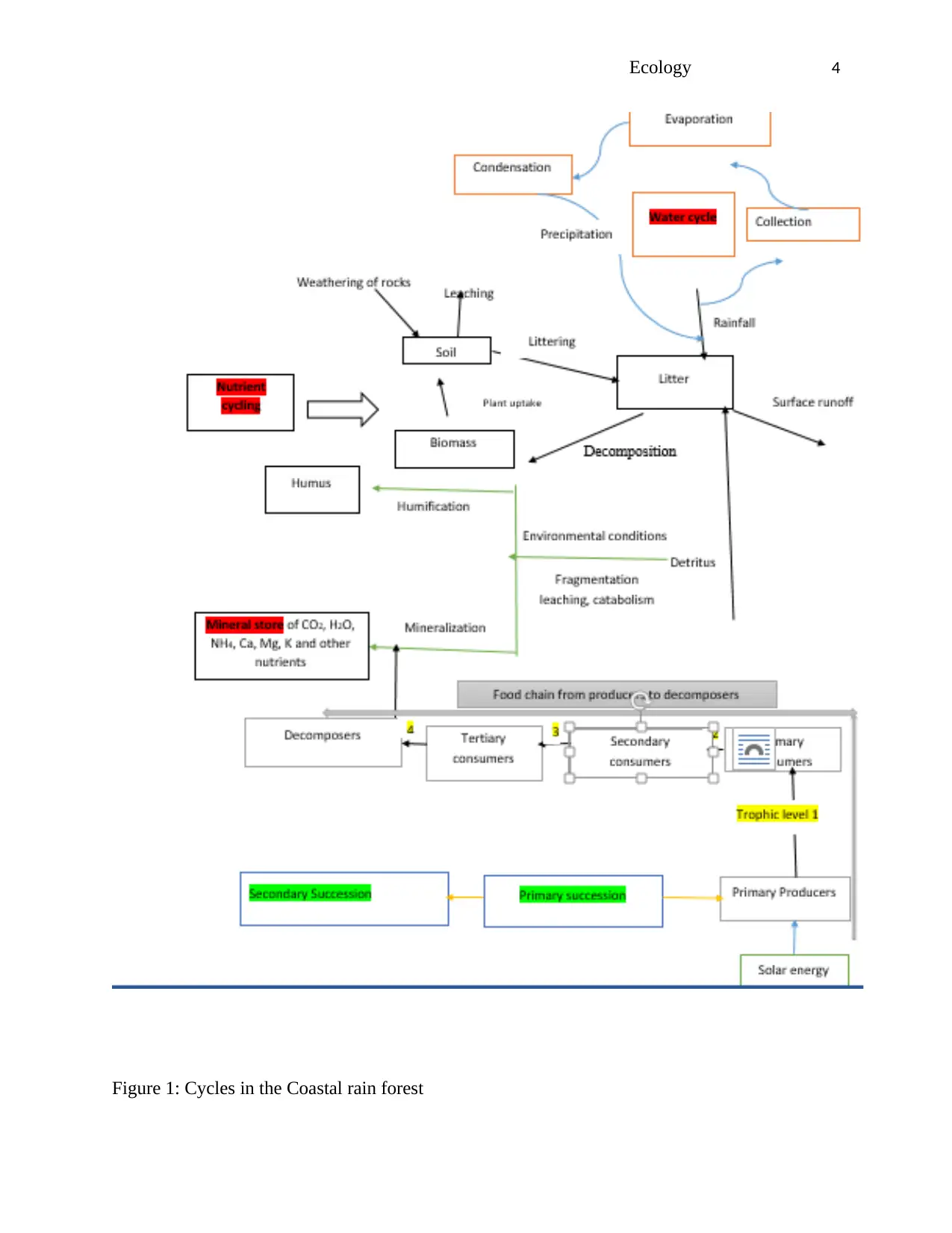
Figure 1: Cycles in the Coastal rain forest
Figure 1: Cycles in the Coastal rain forest
Paraphrase This Document
Need a fresh take? Get an instant paraphrase of this document with our AI Paraphraser
Ecology 5
QUESTION 2 B
Nutrient cycling: this cycle regularly transform nutrients from non-living to living environment
and then back again. Most of the nutrients in coastal rainforest are stored in biomass including
animals and plants. Warm and moist climate provide favourable conditions for the decomposers
to break down the organic matters quickly into the litter. The layers of litter is all the dead
organic matter such as dead woods, fallen leaves and dead animals on the soil surface. The
vegetation takes up the nutrients dissolved in the soil which is formed by mixing the weathered
rocks and dead organic matter. Trees constantly use the nutrients and return them into the soil
throughout their life stages (Marschner and Rengel, 2017).
The decomposers released the organic matter to insoluble organic form that is available to the
plants. Mineral store increase the bioavailability of nutrients that were in the organic compound
decomposing. Carbon in the organic matter in the soil is more than the need of decomposer then
the mineral store will be high.
Two main process that are important in the growth of the forest are respiration and
photosynthesis. During the process of photosynthesis, the forest ecosystem absorb carbon
dioxide from the atmospheres during daytime to enable growth and maintainace of plant tissues.
The process of respiration releases carbon dioxide into the atmosphere as the byproduct at night
when the oxygen is being taken.
Water cycle: Daily rainstorms are important to the survival of the forests because trees require
large quantity of water. Plants and trees gather water as it makes its way to the floor of the forest.
Less water that reaches the ground is absorbed as the ground water into the soil (Bredemeier, et
al., 2010). The roots of plants and trees in the soil uses the water for growth and development.
QUESTION 2 B
Nutrient cycling: this cycle regularly transform nutrients from non-living to living environment
and then back again. Most of the nutrients in coastal rainforest are stored in biomass including
animals and plants. Warm and moist climate provide favourable conditions for the decomposers
to break down the organic matters quickly into the litter. The layers of litter is all the dead
organic matter such as dead woods, fallen leaves and dead animals on the soil surface. The
vegetation takes up the nutrients dissolved in the soil which is formed by mixing the weathered
rocks and dead organic matter. Trees constantly use the nutrients and return them into the soil
throughout their life stages (Marschner and Rengel, 2017).
The decomposers released the organic matter to insoluble organic form that is available to the
plants. Mineral store increase the bioavailability of nutrients that were in the organic compound
decomposing. Carbon in the organic matter in the soil is more than the need of decomposer then
the mineral store will be high.
Two main process that are important in the growth of the forest are respiration and
photosynthesis. During the process of photosynthesis, the forest ecosystem absorb carbon
dioxide from the atmospheres during daytime to enable growth and maintainace of plant tissues.
The process of respiration releases carbon dioxide into the atmosphere as the byproduct at night
when the oxygen is being taken.
Water cycle: Daily rainstorms are important to the survival of the forests because trees require
large quantity of water. Plants and trees gather water as it makes its way to the floor of the forest.
Less water that reaches the ground is absorbed as the ground water into the soil (Bredemeier, et
al., 2010). The roots of plants and trees in the soil uses the water for growth and development.
Ecology 6
Water is then released from the plants and trees through the process of condensation and is
evaporated by the sun (Bredemeier, et al., 2010).
Energy cycle: The cycle starts by conversation of solar energy into chemical energy with the
producers. Primary producers use the process of photosynthesis to make their own food by
turning the solar energy into chemical energy known as glucose. The energy created through the
photosynthesis is transferred to the primary consumers for example insects who feed directly on
the plants. From this, the secondary consumers for example birds feed on the primary consumers.
When these organism are dead, decomposers break them down and use that energy for their
benefit for example fungi and bacteria. 10% of energy is lost through heat at each step of the
cycle (Georgiade and Fukushima, 2012).
Food chain is a linear sequence of organism where the nutrients and energy are pass as as
organism eat each other. Animals and plants in the coastal rain forest uses the energy from their
food for many things. Plants get their energy from the sun and their nutrients from the soil and
when the animal consime the plant, the energy from the plant is passed to the animal through the
food chain.
The trophic level of the organism is the step number it is from the start of the food chain. the
food web starts with the trophic level one which is the prmary producers such as pplants and
mobe to the next level of herbovores and to the highest level which contan the carnivores. the
level can go up to the forth level of predators.Each category in the food chain is known as the
trophic level and it reflects how many the steps of consumption separate an organism from the
original energy source of food chain.
Water is then released from the plants and trees through the process of condensation and is
evaporated by the sun (Bredemeier, et al., 2010).
Energy cycle: The cycle starts by conversation of solar energy into chemical energy with the
producers. Primary producers use the process of photosynthesis to make their own food by
turning the solar energy into chemical energy known as glucose. The energy created through the
photosynthesis is transferred to the primary consumers for example insects who feed directly on
the plants. From this, the secondary consumers for example birds feed on the primary consumers.
When these organism are dead, decomposers break them down and use that energy for their
benefit for example fungi and bacteria. 10% of energy is lost through heat at each step of the
cycle (Georgiade and Fukushima, 2012).
Food chain is a linear sequence of organism where the nutrients and energy are pass as as
organism eat each other. Animals and plants in the coastal rain forest uses the energy from their
food for many things. Plants get their energy from the sun and their nutrients from the soil and
when the animal consime the plant, the energy from the plant is passed to the animal through the
food chain.
The trophic level of the organism is the step number it is from the start of the food chain. the
food web starts with the trophic level one which is the prmary producers such as pplants and
mobe to the next level of herbovores and to the highest level which contan the carnivores. the
level can go up to the forth level of predators.Each category in the food chain is known as the
trophic level and it reflects how many the steps of consumption separate an organism from the
original energy source of food chain.
⊘ This is a preview!⊘
Do you want full access?
Subscribe today to unlock all pages.
Trusted by 1+ million students worldwide
Ecology 7
Primary succesion: it is the ecological succesion that begins in the area that is lifeless, where
there is no soil or the soil is not capable of sustaining life. the first species to arive are usually
weedy species such as lichens and annual plants that form the first layer of the soil through
decomposition. there plants provide habitats for other form of life and small animals. there plants
are replaced by shrubs and grasses and alter the the soil again before more tolerant and large
trees that replace shrubs and grass that love sun (Walker & Moral, 2010).
Secondary succession: occurs in areas where biological communtiy existed already but has
removed by disturbances that did not remove all the nutrient and life forms from the environemt.
the community don’t start from the scratch since the nutrients are still available created in the
primary succesion by former biological communities (Glenn-Lewin & Veblen, 2016).
Question 3
Biomass is the biological material gotten from the living organisms used for production of
energy. the carbon that form biomass is from the atmosphere as carbon dioxide and the sun’s
energy. Biomass take the carbon from the atmosphere while growing and return it as it is burned.
Biomass productivity is the difference between the gross productivity which is produced by the
plants through the process of photosynthesis and repiration. Plants only grow when the
production is higher than repiration. it is always higher when plants have enough moisture, and
nutrients and sunlight. gross primary productivity is the amount of the fixed carbon during the
process of photosynthesis by the producers in the ecosystem but the large part of this energy
harnned is used by respiration andnmetabolic steps of the producers. Major factors that affect
productivity in the terrestial ecosystem is the availability of resources required for photosyntehsis
and the ecosstem’s diversity. For example;sunlight input, community interaction eg grazing by
herbivores, water, carbon dioxide levels and nutrients such as iron, phosphorus and nitrogen.
Primary succesion: it is the ecological succesion that begins in the area that is lifeless, where
there is no soil or the soil is not capable of sustaining life. the first species to arive are usually
weedy species such as lichens and annual plants that form the first layer of the soil through
decomposition. there plants provide habitats for other form of life and small animals. there plants
are replaced by shrubs and grasses and alter the the soil again before more tolerant and large
trees that replace shrubs and grass that love sun (Walker & Moral, 2010).
Secondary succession: occurs in areas where biological communtiy existed already but has
removed by disturbances that did not remove all the nutrient and life forms from the environemt.
the community don’t start from the scratch since the nutrients are still available created in the
primary succesion by former biological communities (Glenn-Lewin & Veblen, 2016).
Question 3
Biomass is the biological material gotten from the living organisms used for production of
energy. the carbon that form biomass is from the atmosphere as carbon dioxide and the sun’s
energy. Biomass take the carbon from the atmosphere while growing and return it as it is burned.
Biomass productivity is the difference between the gross productivity which is produced by the
plants through the process of photosynthesis and repiration. Plants only grow when the
production is higher than repiration. it is always higher when plants have enough moisture, and
nutrients and sunlight. gross primary productivity is the amount of the fixed carbon during the
process of photosynthesis by the producers in the ecosystem but the large part of this energy
harnned is used by respiration andnmetabolic steps of the producers. Major factors that affect
productivity in the terrestial ecosystem is the availability of resources required for photosyntehsis
and the ecosstem’s diversity. For example;sunlight input, community interaction eg grazing by
herbivores, water, carbon dioxide levels and nutrients such as iron, phosphorus and nitrogen.
Paraphrase This Document
Need a fresh take? Get an instant paraphrase of this document with our AI Paraphraser
Ecology 8
QUESTION 4
Historical ecology:focus on the interaction between environment and human over a lon duration
of time mostly centuries. it aim to understand and study the interaction across the space and time
to gain more understanding on the cumulative effects. Historical ecologist recognised that there
is world wide impact of human on the landscape in a way that increase or reduce the diversity
and richness of species (Bilsky, 2015).
system ecology is the field of ecology that involve many disciplines and takes the holistic
approach to study the ecological systems like ecosystem. it applies the throry of genral system of
studing complex system with emergent charaxteristics. it focus on the trasactions and
interactions between and within the ecological and biological system and is also concrened with
how huma interventions can influence there ecosystems (Bilsky, 2015)
Open systems: has exteral interactions that can take form of energy, information and matter that
moves in and out of the boundary of the system. the discription of open system assumes that
there are more energy supplies that cannot be depleted and it is supplied from some of the
various sources in the sorrounding area (McIntosh, 2015).
Nitrogen fixation: is the proces where the molecular nitrogen in the atmosphere is transformed
into ammonia or other compounds of nitrogen in the soil. nitroen in the air is normally non
reactive and useless to organisms and its bilogical conversion makes the ammonia available to be
metabolised by organism. nitrogen fixation is important because inorrganic nitrogen is needed
for biosynthesis of organic compounds containing nitrogen,agriculture and production of
fertilizer.
QUESTION 4
Historical ecology:focus on the interaction between environment and human over a lon duration
of time mostly centuries. it aim to understand and study the interaction across the space and time
to gain more understanding on the cumulative effects. Historical ecologist recognised that there
is world wide impact of human on the landscape in a way that increase or reduce the diversity
and richness of species (Bilsky, 2015).
system ecology is the field of ecology that involve many disciplines and takes the holistic
approach to study the ecological systems like ecosystem. it applies the throry of genral system of
studing complex system with emergent charaxteristics. it focus on the trasactions and
interactions between and within the ecological and biological system and is also concrened with
how huma interventions can influence there ecosystems (Bilsky, 2015)
Open systems: has exteral interactions that can take form of energy, information and matter that
moves in and out of the boundary of the system. the discription of open system assumes that
there are more energy supplies that cannot be depleted and it is supplied from some of the
various sources in the sorrounding area (McIntosh, 2015).
Nitrogen fixation: is the proces where the molecular nitrogen in the atmosphere is transformed
into ammonia or other compounds of nitrogen in the soil. nitroen in the air is normally non
reactive and useless to organisms and its bilogical conversion makes the ammonia available to be
metabolised by organism. nitrogen fixation is important because inorrganic nitrogen is needed
for biosynthesis of organic compounds containing nitrogen,agriculture and production of
fertilizer.
Ecology 9
Succesion: is the process that explains hoe the biological community structure interacts with the
other species in the forst, desrt, marine and grassland environment. the pioneer species are the
ones that arrive fires in the newly made environment and through their interactions, they build
simple biological community which becomes compex when new species arrive in the place.
QUESTION 5
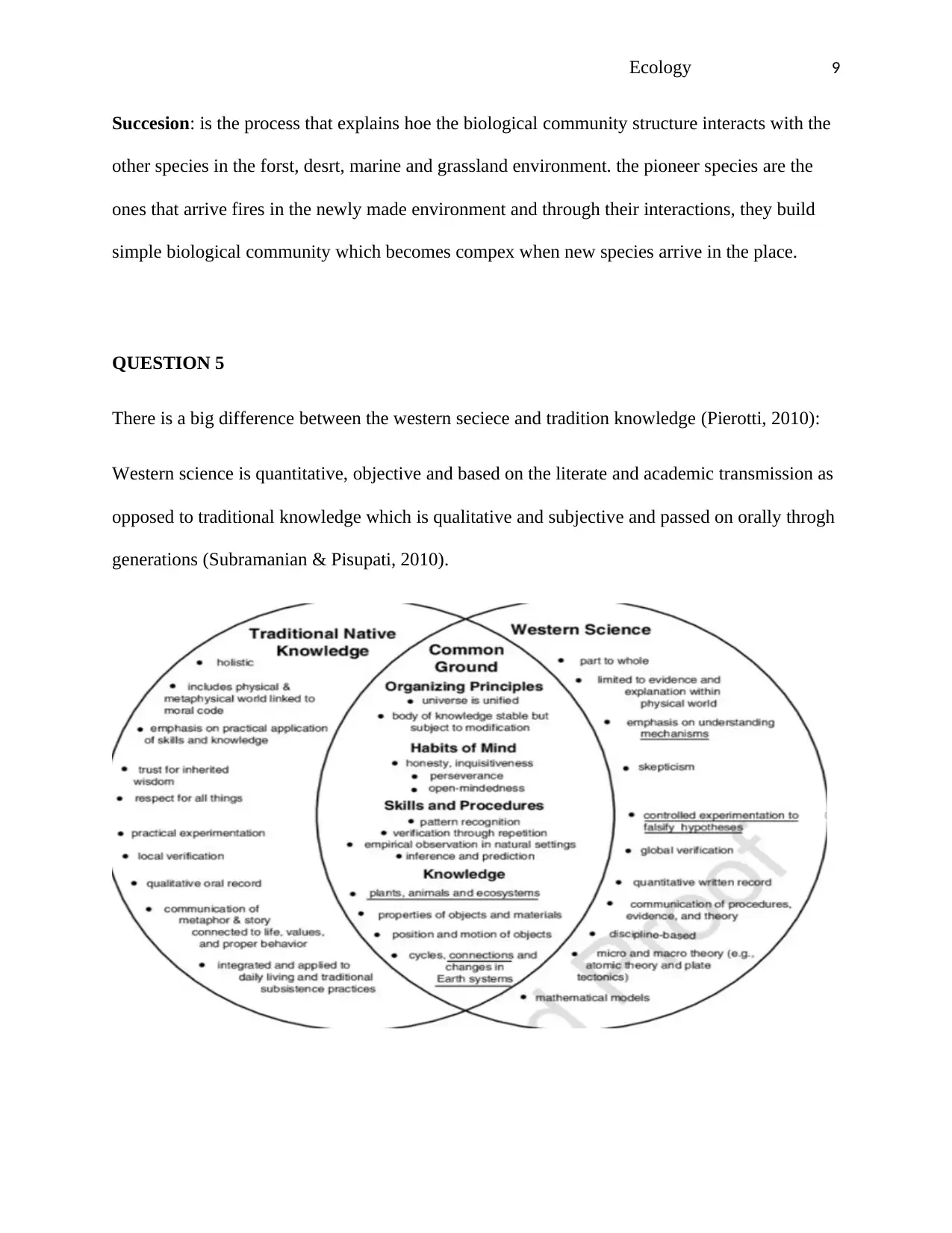
There is a big difference between the western seciece and tradition knowledge (Pierotti, 2010):
Western science is quantitative, objective and based on the literate and academic transmission as
opposed to traditional knowledge which is qualitative and subjective and passed on orally throgh
generations (Subramanian & Pisupati, 2010).
Succesion: is the process that explains hoe the biological community structure interacts with the
other species in the forst, desrt, marine and grassland environment. the pioneer species are the
ones that arrive fires in the newly made environment and through their interactions, they build
simple biological community which becomes compex when new species arrive in the place.
QUESTION 5
There is a big difference between the western seciece and tradition knowledge (Pierotti, 2010):
Western science is quantitative, objective and based on the literate and academic transmission as
opposed to traditional knowledge which is qualitative and subjective and passed on orally throgh
generations (Subramanian & Pisupati, 2010).
⊘ This is a preview!⊘
Do you want full access?
Subscribe today to unlock all pages.
Trusted by 1+ million students worldwide
Ecology 10
REFERENCES
Agarwal, K. (2013). Fundamentals of Ecology. APH Publishing.
Ahmad, S. (2019). Text book for Environmental science and Ecology. Sankalp Publication.
Bilsky, E. (2015). Historical Ecology: Essays on Environment and Social Chang. Kennikat Press.
Bredemeier, M., Cohen, S., Godbold, D., Lode, E., Pichler, V., & Schlepp, P. (2010). Forest Management
and the Water Cycle: An Ecosystem-Based Approach. Springer Science & Business Media.
Georgiade, A., and Fukushima, Y. (2012). Water and energy cycle in permafrost regions. Nagoya
University, Institute for Hydrospheric-Atmospheric Sciences.
Glenn-Lewin, and Veblen, P. (2016). Plant Succession: Theory and prediction. Springer Science &
Business Media.
Marschner, P., and Rengel, Z. (2017). Nutrient Cycling in Terrestrial Ecosystems. Springer Science &
Business Media.
McIntosh, R. (2015). The Background of Ecology: Concept and Theory. Cambridge University Press.
Pierotti, R. (2010). Indigenous Knowledge, Ecology, and Evolutionary Biology. Routledge.
Raffaelli, D., and Frid, C. (2010). Ecosystem Ecology: A New Synthesis. Cambridge University Press.
Schoonmaker, P. (n.d.). The Coastal Rain Forests . Island Press.
Subramanian, S., & Pisupati, B. (2010). Traditional Knowledge in Policy and Practice: Approaches to
Development and Human Well-being. United Nations University Press.
Walker, L., and Moral, R. d. (2010). Primary Succession and Ecosystem Rehabilitation. Cambridge
University Press.
REFERENCES
Agarwal, K. (2013). Fundamentals of Ecology. APH Publishing.
Ahmad, S. (2019). Text book for Environmental science and Ecology. Sankalp Publication.
Bilsky, E. (2015). Historical Ecology: Essays on Environment and Social Chang. Kennikat Press.
Bredemeier, M., Cohen, S., Godbold, D., Lode, E., Pichler, V., & Schlepp, P. (2010). Forest Management
and the Water Cycle: An Ecosystem-Based Approach. Springer Science & Business Media.
Georgiade, A., and Fukushima, Y. (2012). Water and energy cycle in permafrost regions. Nagoya
University, Institute for Hydrospheric-Atmospheric Sciences.
Glenn-Lewin, and Veblen, P. (2016). Plant Succession: Theory and prediction. Springer Science &
Business Media.
Marschner, P., and Rengel, Z. (2017). Nutrient Cycling in Terrestrial Ecosystems. Springer Science &
Business Media.
McIntosh, R. (2015). The Background of Ecology: Concept and Theory. Cambridge University Press.
Pierotti, R. (2010). Indigenous Knowledge, Ecology, and Evolutionary Biology. Routledge.
Raffaelli, D., and Frid, C. (2010). Ecosystem Ecology: A New Synthesis. Cambridge University Press.
Schoonmaker, P. (n.d.). The Coastal Rain Forests . Island Press.
Subramanian, S., & Pisupati, B. (2010). Traditional Knowledge in Policy and Practice: Approaches to
Development and Human Well-being. United Nations University Press.
Walker, L., and Moral, R. d. (2010). Primary Succession and Ecosystem Rehabilitation. Cambridge
University Press.

1 out of 10


Your All-in-One AI-Powered Toolkit for Academic Success.
+13062052269
info@desklib.com
Available 24*7 on WhatsApp / Email
![[object Object]](/_next/static/media/star-bottom.7253800d.svg)
Unlock your academic potential
Copyright © 2020–2026 A2Z Services. All Rights Reserved. Developed and managed by ZUCOL.