MB06 Economics for Managers: Analyzing Visy & Amcor's Market Conduct
VerifiedAdded on 2023/06/13
|14
|4296
|274
Case Study
AI Summary
This case study examines the anti-competitive behaviors of Visy and Amcor in the fiber packaging market, focusing on price-fixing, bid-rigging, and cover pricing. It explores the impact of these practices on competitors and consumers, detailing the penalties imposed on the firms and the tools used by the Australian Competition and Consumer Commission (ACCC) to prevent such conduct. The analysis includes a discussion of horizontal and vertical restraints, cartel formation, and resale price maintenance. The report also provides recommendations for government initiatives to prevent anti-competitive behavior, emphasizing the importance of maintaining fair competition to promote economic efficiency and consumer welfare. This detailed solution is available on Desklib, along with other valuable study resources for students.
ECONOMIC FOR
MANAGERS
MANAGERS

Paraphrase This Document
Need a fresh take? Get an instant paraphrase of this document with our AI Paraphraser
Table of Contents
INTRODUCTION 3
TASK 3
1. Explain anti competitive behaviour and describe its types. Provide some real life based
examples. 3
2. Summarising the key issues in the given case study. 4
3.Explaining the type of Anticompetitive behaviour the firm in the case study breached. 5
4. Explain the effect it had on other firms and their competitor's. 6
5. Explain effect of anti competitive behaviour on consumers. 8
6. What amount of penalty was implemented on firm. 9
7. Describing tools used by ACCC have to prevent the type of behaviour or conduct. 9
8. Recommendation on government initiatives to prevent this type of behaviour. 10
CONCLUSION 12
REFERENCES 13
INTRODUCTION 3
TASK 3
1. Explain anti competitive behaviour and describe its types. Provide some real life based
examples. 3
2. Summarising the key issues in the given case study. 4
3.Explaining the type of Anticompetitive behaviour the firm in the case study breached. 5
4. Explain the effect it had on other firms and their competitor's. 6
5. Explain effect of anti competitive behaviour on consumers. 8
6. What amount of penalty was implemented on firm. 9
7. Describing tools used by ACCC have to prevent the type of behaviour or conduct. 9
8. Recommendation on government initiatives to prevent this type of behaviour. 10
CONCLUSION 12
REFERENCES 13
INTRODUCTION
Economics for managers includes both microeconomic and macroeconomic concepts for
business mangers on global basis. The theories of economics focuses on solving real world
applications which includes various decisions of business either long term or short term. This
report includes the study of the price fixing of the business of fibre packaging market. The
business is owned by Visy and Amcor and large market share is held by them. It also includes
the literature review to describe the various anti competitive behaviour. It also encompasses the
issues in the given case study relating to bid rigging. The breach of various anticompetitive
behaviour is also explained in the given report. The practices followed by the Australian market
which adversely impact on the firms and consumers is also entailed. The Visy and Amcor has to
pay penalty for breaching the health competition in the market. There is a higher authority named
Australian competition and consumer commission helps to maintain the norms related to
competition for effective trading in the market. ACCC measures and initiatives taken by the
government for reducing the practices of cover pricing is elaborated in the report (de Andrade
Lima & Resende, (2021).
TASK
1. Explain anti competitive behaviour and describe its types. Provide some real life based
examples.
Anti competitive behaviour : It can be explained as a business exercise which reduces
or prevents competition in environment (Sawe, Kumar, & Garza-Reyes, 2020). It is practised
by companies and businesses to help dominating and monopolistic firms which could return
profits and discourage rivals from market. It is said to be a illegal process when their any form of
anti competitive practice is significantly affecting the market. These practices can be explained
with the help of examples such as price fixing, mergers, cartels, collusion etc. Such practices can
also be divided in two groups such as Horizontal and vertical restraints. Horizontal restraints
describe anti competitive behaviour which undertakes competitors from the said level of the
chain of supply whereas Vertical restraint can be explained which applies restriction against
other firms the reason being practice prevailing between firms at various levels of supply chain.
Such practices involve maintenance of resale price, exclusive deals etc (Ferson, (2019).
Economics for managers includes both microeconomic and macroeconomic concepts for
business mangers on global basis. The theories of economics focuses on solving real world
applications which includes various decisions of business either long term or short term. This
report includes the study of the price fixing of the business of fibre packaging market. The
business is owned by Visy and Amcor and large market share is held by them. It also includes
the literature review to describe the various anti competitive behaviour. It also encompasses the
issues in the given case study relating to bid rigging. The breach of various anticompetitive
behaviour is also explained in the given report. The practices followed by the Australian market
which adversely impact on the firms and consumers is also entailed. The Visy and Amcor has to
pay penalty for breaching the health competition in the market. There is a higher authority named
Australian competition and consumer commission helps to maintain the norms related to
competition for effective trading in the market. ACCC measures and initiatives taken by the
government for reducing the practices of cover pricing is elaborated in the report (de Andrade
Lima & Resende, (2021).
TASK
1. Explain anti competitive behaviour and describe its types. Provide some real life based
examples.
Anti competitive behaviour : It can be explained as a business exercise which reduces
or prevents competition in environment (Sawe, Kumar, & Garza-Reyes, 2020). It is practised
by companies and businesses to help dominating and monopolistic firms which could return
profits and discourage rivals from market. It is said to be a illegal process when their any form of
anti competitive practice is significantly affecting the market. These practices can be explained
with the help of examples such as price fixing, mergers, cartels, collusion etc. Such practices can
also be divided in two groups such as Horizontal and vertical restraints. Horizontal restraints
describe anti competitive behaviour which undertakes competitors from the said level of the
chain of supply whereas Vertical restraint can be explained which applies restriction against
other firms the reason being practice prevailing between firms at various levels of supply chain.
Such practices involve maintenance of resale price, exclusive deals etc (Ferson, (2019).
⊘ This is a preview!⊘
Do you want full access?
Subscribe today to unlock all pages.

Trusted by 1+ million students worldwide
Types of Anti competitive behaviour:
1. Fixation of prices: It can be explained as a situation where organisations interact to fix
prices/ rates, effectively demolish the free market by not participating in rivalry with each
other. In year, 2018 Flight centre, travel agency giant, was charged $12.5 million for
promoting plan based on collusive price fixing among 3 international airlines from year
2005-2009.
2. Dividing territories: It can be explained as type of anti competitive behaviour in which
there is a agreement present between two organisations which states that they must not
interfere in each other's business and stay away from each other's way which would help
them to reduce unwanted competition in agreed upon territories. It is also referred as
'Market sharing' a practice in which business divide and locate customer's with the help
of contractual agreements which consider non cooperation on constituted customer's, not
manufacturing the same nature of products or services in particular areas. Example: It led
to excess charging on construction quotation which were utilized by local, state and
federal government based plans (Vasegaard and et.al., (2022).
Techniques of Anti competitive behaviour:
● Cartels: Business enterprise which make agreements with their competitor's to agree on
fixing rates, share markets or control outputs and gear bids break laws and steal from
clients and business by increasing rates, decline in level of choices and affecting the
economy. Cartel comes into existence when organisations agree to work together rather
than to have a competition with one another. This type of deal is designed to cause the
profits to rise for cartel members while keeping the illusion of competition intact.
● Collective bargaining and boycotts: Collective bargaining can be explained as an
arrangement where two or more persons or companies join hands for negotiating with
supplier or consumer over prices, terms and conditions as well. Collective boycott can be
explained where a group of people agree not to purchase products or services from, or not
to supply products or services towards a company with whom the group of people are
already negotiating, until the firm gives acceptance towards the terms and conditions that
are being offered by the group (Gholipour & MOZAFARI, (2020).
1. Fixation of prices: It can be explained as a situation where organisations interact to fix
prices/ rates, effectively demolish the free market by not participating in rivalry with each
other. In year, 2018 Flight centre, travel agency giant, was charged $12.5 million for
promoting plan based on collusive price fixing among 3 international airlines from year
2005-2009.
2. Dividing territories: It can be explained as type of anti competitive behaviour in which
there is a agreement present between two organisations which states that they must not
interfere in each other's business and stay away from each other's way which would help
them to reduce unwanted competition in agreed upon territories. It is also referred as
'Market sharing' a practice in which business divide and locate customer's with the help
of contractual agreements which consider non cooperation on constituted customer's, not
manufacturing the same nature of products or services in particular areas. Example: It led
to excess charging on construction quotation which were utilized by local, state and
federal government based plans (Vasegaard and et.al., (2022).
Techniques of Anti competitive behaviour:
● Cartels: Business enterprise which make agreements with their competitor's to agree on
fixing rates, share markets or control outputs and gear bids break laws and steal from
clients and business by increasing rates, decline in level of choices and affecting the
economy. Cartel comes into existence when organisations agree to work together rather
than to have a competition with one another. This type of deal is designed to cause the
profits to rise for cartel members while keeping the illusion of competition intact.
● Collective bargaining and boycotts: Collective bargaining can be explained as an
arrangement where two or more persons or companies join hands for negotiating with
supplier or consumer over prices, terms and conditions as well. Collective boycott can be
explained where a group of people agree not to purchase products or services from, or not
to supply products or services towards a company with whom the group of people are
already negotiating, until the firm gives acceptance towards the terms and conditions that
are being offered by the group (Gholipour & MOZAFARI, (2020).
Paraphrase This Document
Need a fresh take? Get an instant paraphrase of this document with our AI Paraphraser
2. Summarising the key issues in the given case study.
The above case study includes various issues which can be explained as below:
Price fixing – It is a practice followed in the market which can be adopted by forming the groups
and deciding in advance the level of prices for a particular commodity or product. They
operate on the same level of a supply chain by which supply and demand of the market can
be controlled. It is a ill practice because Vicy and Amcor met confidently in the parks and
hotels to decide the price quotation offered to the different customers in the market(von
Blanckenburg, (2018).
Barriers on new entrants - In a freely competitive market, all the suppliers are allowed to trade
without any restriction. However, when cartels are formed it prohibits the entry of new
players in the market. It creates the condition of monopoly in which existing buyers enjoy
the large market share and even follow the practice of price discrimination in the different
market according to distinct elasticities. In context of Vicy and Amcor, they have covered
90% of the market share which is having worth of $1.8 billion to $2 billion per year.
Bid rigging – It is also known as collusive tendering. When two or more rivalries in the existing
market does not fairly operate and avoids the competition in the market is termed as bid
rigging. It enables one of the member of cartel to take the tender. It involves deciding in
advance that who is going to submit the wining bid. It is an illegal practice because it breach
the open and free market. With respect to Vicy and Amcor, they have swapped information
for ensuring that company's quotation was higher than the existing price structure. By
swapping, they revealed their price structure and get the knowledge about pricing strategies
of each other (Greenleaf, and et.al., (2019).
Cover pricing – It is a practice in which an company submit its tender but they know that
company is not going to win the tender. It is an artificial tender set to manipulate the client
by setting the prices higher than its competitors. This is a illegal practice in context of given
company of Vicy and Amor in which the prices rises to a greater extent in the year 2000-
2004. It has capture the large market share.
3.Explaining the type of Anticompetitive behaviour the firm in the case study breached.
Anticompetitive behaviour – These are the practices which diminishes the competition in the
existing market. The anticompetitive behaviour is classified into two major categories:
Horizontal and vertical. Horizontal competition which applies at the same level of supply
The above case study includes various issues which can be explained as below:
Price fixing – It is a practice followed in the market which can be adopted by forming the groups
and deciding in advance the level of prices for a particular commodity or product. They
operate on the same level of a supply chain by which supply and demand of the market can
be controlled. It is a ill practice because Vicy and Amcor met confidently in the parks and
hotels to decide the price quotation offered to the different customers in the market(von
Blanckenburg, (2018).
Barriers on new entrants - In a freely competitive market, all the suppliers are allowed to trade
without any restriction. However, when cartels are formed it prohibits the entry of new
players in the market. It creates the condition of monopoly in which existing buyers enjoy
the large market share and even follow the practice of price discrimination in the different
market according to distinct elasticities. In context of Vicy and Amcor, they have covered
90% of the market share which is having worth of $1.8 billion to $2 billion per year.
Bid rigging – It is also known as collusive tendering. When two or more rivalries in the existing
market does not fairly operate and avoids the competition in the market is termed as bid
rigging. It enables one of the member of cartel to take the tender. It involves deciding in
advance that who is going to submit the wining bid. It is an illegal practice because it breach
the open and free market. With respect to Vicy and Amcor, they have swapped information
for ensuring that company's quotation was higher than the existing price structure. By
swapping, they revealed their price structure and get the knowledge about pricing strategies
of each other (Greenleaf, and et.al., (2019).
Cover pricing – It is a practice in which an company submit its tender but they know that
company is not going to win the tender. It is an artificial tender set to manipulate the client
by setting the prices higher than its competitors. This is a illegal practice in context of given
company of Vicy and Amor in which the prices rises to a greater extent in the year 2000-
2004. It has capture the large market share.
3.Explaining the type of Anticompetitive behaviour the firm in the case study breached.
Anticompetitive behaviour – These are the practices which diminishes the competition in the
existing market. The anticompetitive behaviour is classified into two major categories:
Horizontal and vertical. Horizontal competition which applies at the same level of supply
chain. Vertical competition exists at different supply chains i.e., supplier distributor
relationship. In the above case study, the Visy and Amcor has breached the fair competition
from the market. It has adopted the following wrong measures which can be elaborated as
given below -
Cover pricing – The above two companies has exchanged their price quotation by which they
get complete knowledge about the pricing strategies. It is an illusory tender which is
maintained at a higher price even from its competitors (Haddock, (2020, March).
Resale price maintenance – It is a practice in which manufacturer fixes the level of price for its
brand product and retailer is restricted it sell it a lower price.
Cartel formation – The above two companies named Visy and Amcor have formed their cartel
to enjoy monopoly in the fibre packaging market. They breach the protocols relating to
ACCC by forming collusive cartel. It is a form in which persons mutually agree to set a
standard price so that equal treatment should be given to each supplier and trader. It includes
the price fixing agreements which deteriorates the free competition in the market.
4. Explain the effect it had on other firms and their competitor's.
Price fixing and cartels can be seen having a impact on other firms as well as their competitor's
too. It thus reduces the chances of ability towards competitor's in order to react freely and
smoothly to one another's price range. It also interrupts the normal law of demand and supply.
Effect on other firms and competitor's:
1. Reduction in ability to react freely and swiftly to each other's rates: The fixing of prices
in the market snatches the authority to react to any situation or condition by other firms
dealing in the same area as well from the competitor's. It serves as a barrier for new
entrants and turns out to be a problematic situation to deal with in case of existing
competitor's. If the prices are already fixed and companies are dealing in cartels then
there is no way companies can attract and retain existing potential customer's from
market (Heidari Sarban, (2020).
2. Interrupt the normal law of demand and supply: It affects the demand and supply chain
the reason being that demand law works taking in account the price changes, thus if the
prices are already fixed by the cartels and companies then there is no effect in demand
and supply because it would not work according to the normal law. The supply generated
would also prevail according to the prices fixed.
relationship. In the above case study, the Visy and Amcor has breached the fair competition
from the market. It has adopted the following wrong measures which can be elaborated as
given below -
Cover pricing – The above two companies has exchanged their price quotation by which they
get complete knowledge about the pricing strategies. It is an illusory tender which is
maintained at a higher price even from its competitors (Haddock, (2020, March).
Resale price maintenance – It is a practice in which manufacturer fixes the level of price for its
brand product and retailer is restricted it sell it a lower price.
Cartel formation – The above two companies named Visy and Amcor have formed their cartel
to enjoy monopoly in the fibre packaging market. They breach the protocols relating to
ACCC by forming collusive cartel. It is a form in which persons mutually agree to set a
standard price so that equal treatment should be given to each supplier and trader. It includes
the price fixing agreements which deteriorates the free competition in the market.
4. Explain the effect it had on other firms and their competitor's.
Price fixing and cartels can be seen having a impact on other firms as well as their competitor's
too. It thus reduces the chances of ability towards competitor's in order to react freely and
smoothly to one another's price range. It also interrupts the normal law of demand and supply.
Effect on other firms and competitor's:
1. Reduction in ability to react freely and swiftly to each other's rates: The fixing of prices
in the market snatches the authority to react to any situation or condition by other firms
dealing in the same area as well from the competitor's. It serves as a barrier for new
entrants and turns out to be a problematic situation to deal with in case of existing
competitor's. If the prices are already fixed and companies are dealing in cartels then
there is no way companies can attract and retain existing potential customer's from
market (Heidari Sarban, (2020).
2. Interrupt the normal law of demand and supply: It affects the demand and supply chain
the reason being that demand law works taking in account the price changes, thus if the
prices are already fixed by the cartels and companies then there is no effect in demand
and supply because it would not work according to the normal law. The supply generated
would also prevail according to the prices fixed.
⊘ This is a preview!⊘
Do you want full access?
Subscribe today to unlock all pages.
Trusted by 1+ million students worldwide
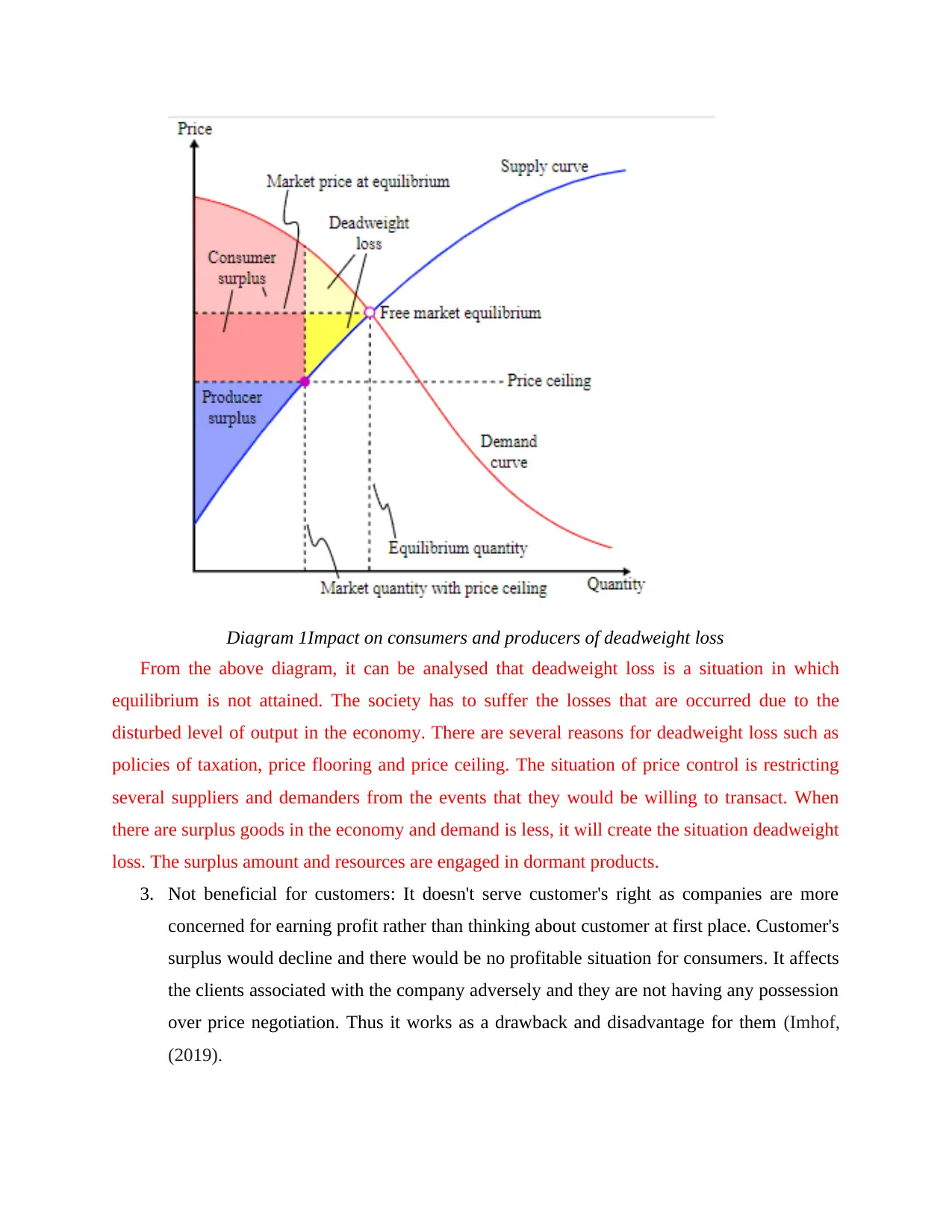
Diagram 1Impact on consumers and producers of deadweight loss
From the above diagram, it can be analysed that deadweight loss is a situation in which
equilibrium is not attained. The society has to suffer the losses that are occurred due to the
disturbed level of output in the economy. There are several reasons for deadweight loss such as
policies of taxation, price flooring and price ceiling. The situation of price control is restricting
several suppliers and demanders from the events that they would be willing to transact. When
there are surplus goods in the economy and demand is less, it will create the situation deadweight
loss. The surplus amount and resources are engaged in dormant products.
3. Not beneficial for customers: It doesn't serve customer's right as companies are more
concerned for earning profit rather than thinking about customer at first place. Customer's
surplus would decline and there would be no profitable situation for consumers. It affects
the clients associated with the company adversely and they are not having any possession
over price negotiation. Thus it works as a drawback and disadvantage for them (Imhof,
(2019).
From the above diagram, it can be analysed that deadweight loss is a situation in which
equilibrium is not attained. The society has to suffer the losses that are occurred due to the
disturbed level of output in the economy. There are several reasons for deadweight loss such as
policies of taxation, price flooring and price ceiling. The situation of price control is restricting
several suppliers and demanders from the events that they would be willing to transact. When
there are surplus goods in the economy and demand is less, it will create the situation deadweight
loss. The surplus amount and resources are engaged in dormant products.
3. Not beneficial for customers: It doesn't serve customer's right as companies are more
concerned for earning profit rather than thinking about customer at first place. Customer's
surplus would decline and there would be no profitable situation for consumers. It affects
the clients associated with the company adversely and they are not having any possession
over price negotiation. Thus it works as a drawback and disadvantage for them (Imhof,
(2019).
Paraphrase This Document
Need a fresh take? Get an instant paraphrase of this document with our AI Paraphraser
5. Explain effect of anti competitive behaviour on consumers.
There have been many adverse effects in case of customers. It had a huge impact on
people who were linked with the company. The reasons can be inflating price, reducing choices
available with the customer's and damaging the economic growth and expansion as well. There
are tie in agreements, exclusive demand supply and horizontal and vertical chains as well. In the
above graph, the portion above the market price and area below the curve of demand is a
consumer surplus. It can be occurred due to various reasons such as lower tax is applied and
eventually the situation of deadweight loss can be minimised as compared to the higher taxation
policies of the government. In this ways, the producer and consumer can enjoy surplus if the
governmental regulations impact can be minimised.
Effects are explained as under in relation to anti competitive behaviour on consumers:
1. Inflating prices: It can be explained as a situation where the demand and supply
shortfall leads to increase in prices and it affects customer in adverse and negative ways.
It decreases there purchasing power and it is not an easy situation to tackle when the
prices are fixed by organisations. Inflating prices increases the price level of goods
offered to customers which are already fixed and no negotiation is possible. It affects
consumer as he or she is left with no effective options which could be chosen by them.
2. Damaging the economy: It also damages economy which would also affect customer's
in the long run. It affects their life style and their rights are also being exploited. It thus
affects the working and functioning of business in market. It damages the economy in
many ways which might be unpredictable for the long run. It is impossible for them to
control the damage made because of the things which are out of control. It damages the
working and flow of company in environment (Mandal, (2019).
3. Reducing available choices: There are less of choices available with customers when
fixation prices are there in the market in advance. It also reduces their preferences for any
other products as there are cartels made in advance for setting up of prices. There are
many choices reduced because they are available with no relaxation in case of
preferences to be made by them. It leads them towards situations which are impossible to
deal with and thus they feel there are no options available which would reduce their
demands in return.
There have been many adverse effects in case of customers. It had a huge impact on
people who were linked with the company. The reasons can be inflating price, reducing choices
available with the customer's and damaging the economic growth and expansion as well. There
are tie in agreements, exclusive demand supply and horizontal and vertical chains as well. In the
above graph, the portion above the market price and area below the curve of demand is a
consumer surplus. It can be occurred due to various reasons such as lower tax is applied and
eventually the situation of deadweight loss can be minimised as compared to the higher taxation
policies of the government. In this ways, the producer and consumer can enjoy surplus if the
governmental regulations impact can be minimised.
Effects are explained as under in relation to anti competitive behaviour on consumers:
1. Inflating prices: It can be explained as a situation where the demand and supply
shortfall leads to increase in prices and it affects customer in adverse and negative ways.
It decreases there purchasing power and it is not an easy situation to tackle when the
prices are fixed by organisations. Inflating prices increases the price level of goods
offered to customers which are already fixed and no negotiation is possible. It affects
consumer as he or she is left with no effective options which could be chosen by them.
2. Damaging the economy: It also damages economy which would also affect customer's
in the long run. It affects their life style and their rights are also being exploited. It thus
affects the working and functioning of business in market. It damages the economy in
many ways which might be unpredictable for the long run. It is impossible for them to
control the damage made because of the things which are out of control. It damages the
working and flow of company in environment (Mandal, (2019).
3. Reducing available choices: There are less of choices available with customers when
fixation prices are there in the market in advance. It also reduces their preferences for any
other products as there are cartels made in advance for setting up of prices. There are
many choices reduced because they are available with no relaxation in case of
preferences to be made by them. It leads them towards situations which are impossible to
deal with and thus they feel there are no options available which would reduce their
demands in return.
4. Tie in agreements: It explains where a customer is forced to purchase goods other than
required nature of products. It is also referred to as clubbed sale where one product is
demanded and the other is not. It also affects customer's In various ways which can be
not fruitful for them, thus it is in case when the company wants to generate only profits
and revenues and not look for societal issues (Mifsud, 2021).
6. What amount of penalty was implemented on firm.
The amount of penalty which was charged by Federal court amounted to $ 36 million
whereas fine in case of individual totalled to $ 2 million. Thousands of companies were charged
more than actual charges by the cartels. Visy and Amcor were given strict orders for paying $95
million for covering the damage towards a customer class action which included more than 4500
businesses. It was because they practised anti competitive behaviours such as fixing of prices and
building of cartels which took all rights from customers. It exploited them by charging prices
which gave them a competitive advantage and helped them to generate more profit and revenues
in the business (Sims, (2019).
7. Describing tools used by ACCC have to prevent the type of behaviour or conduct.
ACCC stands for Australian competition and consumer commission is an independent
authority framed to enforce the competition and consumer act,2010 which is implemented for the
welfare of the people of Australia. It's main objective can be explained as given below-
3. It helps to regulate the health competition in the market of Australia.
4. It assists in improving the welfare of the Australian people by reducing the
anticompetitive practices followed in the market.
5. It conducts various market studies to know the loopholes or ill practices in the market.
There are various tools and techniques used by ACCC to regulate competition in the Australian
market which can be described as given below -
a.) Collective bargaining – It is an arrangement in which two or more competitors form a group
to negotiate the different prices, terms and conditions. There is benefit of collective bargaining
because it helps to set prices which would help them to be fruitful for the company as well.
There are several negotiations takes place between supplier and retailer. These negotiations are
helpful in deciding the price further price level is decided by the same. It helps in achieving the
required nature of products. It is also referred to as clubbed sale where one product is
demanded and the other is not. It also affects customer's In various ways which can be
not fruitful for them, thus it is in case when the company wants to generate only profits
and revenues and not look for societal issues (Mifsud, 2021).
6. What amount of penalty was implemented on firm.
The amount of penalty which was charged by Federal court amounted to $ 36 million
whereas fine in case of individual totalled to $ 2 million. Thousands of companies were charged
more than actual charges by the cartels. Visy and Amcor were given strict orders for paying $95
million for covering the damage towards a customer class action which included more than 4500
businesses. It was because they practised anti competitive behaviours such as fixing of prices and
building of cartels which took all rights from customers. It exploited them by charging prices
which gave them a competitive advantage and helped them to generate more profit and revenues
in the business (Sims, (2019).
7. Describing tools used by ACCC have to prevent the type of behaviour or conduct.
ACCC stands for Australian competition and consumer commission is an independent
authority framed to enforce the competition and consumer act,2010 which is implemented for the
welfare of the people of Australia. It's main objective can be explained as given below-
3. It helps to regulate the health competition in the market of Australia.
4. It assists in improving the welfare of the Australian people by reducing the
anticompetitive practices followed in the market.
5. It conducts various market studies to know the loopholes or ill practices in the market.
There are various tools and techniques used by ACCC to regulate competition in the Australian
market which can be described as given below -
a.) Collective bargaining – It is an arrangement in which two or more competitors form a group
to negotiate the different prices, terms and conditions. There is benefit of collective bargaining
because it helps to set prices which would help them to be fruitful for the company as well.
There are several negotiations takes place between supplier and retailer. These negotiations are
helpful in deciding the price further price level is decided by the same. It helps in achieving the
⊘ This is a preview!⊘
Do you want full access?
Subscribe today to unlock all pages.
Trusted by 1+ million students worldwide
exact price quotation of the firm. In regulating competition on a fair basis there must be ban on
the forced distribution to the products.
b.) Supervising mergers and acquisitions – In every country, there are several mergers &
acquisitions takes place and joint ventures are also formed. The ACCC keep check on the
viability of the agreement. It acknowledges whether the agreement does not result into disturbing
the competition and free trade practices in the Australian market.
● Abuse of dominant position – Every traders has its own unique position in the market
which can be used by the trader to win the position in the existing market. But the main
concern is that when the trader misuses its position in inappropriate manner by
restricting the other supplier to sell the same products. The suppliers force consumers for
tie in arrangements in which they engage to purchase supplementary products from the
same seller. Therefore, ACCC is responsible for reducing the misuse of dominant
position and helps to regulate competition (Vasegaard and et.al., (2022).
8. Recommendation on government initiatives to prevent this type of behaviour.
The above case study given of Visy and Amcor company suggest that they have taken
wrong measures to capture the market share which was possible by swapping the information of
both the companies. They secretly exchanged the price quotation information and the cartel was
running for five years. If ACCC did not stop the ill practices of the market it would affect the
market structure negatively. From the above scenario, it can be interpreted that government
should prevent these types of behaviours. There are several grounds on which cover pricing and
big rigging is not legal which should be banned from the market (Åberg and et.al., (2020)
● Growth of the economy – Every nation's government wants to expand its economy
which can be possible by increasing the level of output produced in the nation. The
supply chain should be regulated properly which improves the gross national product of
the country. There is growth and expansion required in economy in right manner because
it would also help to increase revenue earned and profit generated. Growth of economy
can be facilitated with the help of proper assigning jobs for price fixation and not using
cartels as well. This would attract more customers from market and help them to increase
the demand as well. More demand would generate more supply and this would also lead
to more revenue generation.
the forced distribution to the products.
b.) Supervising mergers and acquisitions – In every country, there are several mergers &
acquisitions takes place and joint ventures are also formed. The ACCC keep check on the
viability of the agreement. It acknowledges whether the agreement does not result into disturbing
the competition and free trade practices in the Australian market.
● Abuse of dominant position – Every traders has its own unique position in the market
which can be used by the trader to win the position in the existing market. But the main
concern is that when the trader misuses its position in inappropriate manner by
restricting the other supplier to sell the same products. The suppliers force consumers for
tie in arrangements in which they engage to purchase supplementary products from the
same seller. Therefore, ACCC is responsible for reducing the misuse of dominant
position and helps to regulate competition (Vasegaard and et.al., (2022).
8. Recommendation on government initiatives to prevent this type of behaviour.
The above case study given of Visy and Amcor company suggest that they have taken
wrong measures to capture the market share which was possible by swapping the information of
both the companies. They secretly exchanged the price quotation information and the cartel was
running for five years. If ACCC did not stop the ill practices of the market it would affect the
market structure negatively. From the above scenario, it can be interpreted that government
should prevent these types of behaviours. There are several grounds on which cover pricing and
big rigging is not legal which should be banned from the market (Åberg and et.al., (2020)
● Growth of the economy – Every nation's government wants to expand its economy
which can be possible by increasing the level of output produced in the nation. The
supply chain should be regulated properly which improves the gross national product of
the country. There is growth and expansion required in economy in right manner because
it would also help to increase revenue earned and profit generated. Growth of economy
can be facilitated with the help of proper assigning jobs for price fixation and not using
cartels as well. This would attract more customers from market and help them to increase
the demand as well. More demand would generate more supply and this would also lead
to more revenue generation.
Paraphrase This Document
Need a fresh take? Get an instant paraphrase of this document with our AI Paraphraser
● Optimum utilisation of resources – There is scarcity of resources in every nation which
can be resolved by allocating in the effective manner. It can be done in such a way that it
results in the sustainable growth of the economy. It can be explained proper utilisation of
resources where it involves optimum procurement and placing of useful sources at right
places at right time in right manner. It explains the usefulness and importance of such
resources in short. It is important for every person to understand that there are less of
resources available and everyone should use them in a better way.
can be resolved by allocating in the effective manner. It can be done in such a way that it
results in the sustainable growth of the economy. It can be explained proper utilisation of
resources where it involves optimum procurement and placing of useful sources at right
places at right time in right manner. It explains the usefulness and importance of such
resources in short. It is important for every person to understand that there are less of
resources available and everyone should use them in a better way.
CONCLUSION
From the above report, it can be concluded that economic for managers is helpful in
taking various decisions either short term or long term. This report includes various wrong
practices such as cover pricing which reduces the competition in the market and adversely
impact the welfare of the consumers. The company discussed above has to pay huge amount on
the bid rigging practices . The breach of competition in the market effects every industry and
each consumer segment of the country. However, there is a authority named ACCC which helps
to maintain legal practices in the country and eliminates the unfair trade practices. Government
also take various steps to minimise the impact of cover pricing from the economy of Australia.
The penalty is also imposed by the federal and court of 36 million and it damages the image of
the company in front of the customers. In fixing the prices, the market share can be captured but
it negatively impacts the goodwill of the enterprise. Cartel by both the companies are running for
five years which impacts the brand image of the fibre packaging market.
From the above report, it can be concluded that economic for managers is helpful in
taking various decisions either short term or long term. This report includes various wrong
practices such as cover pricing which reduces the competition in the market and adversely
impact the welfare of the consumers. The company discussed above has to pay huge amount on
the bid rigging practices . The breach of competition in the market effects every industry and
each consumer segment of the country. However, there is a authority named ACCC which helps
to maintain legal practices in the country and eliminates the unfair trade practices. Government
also take various steps to minimise the impact of cover pricing from the economy of Australia.
The penalty is also imposed by the federal and court of 36 million and it damages the image of
the company in front of the customers. In fixing the prices, the market share can be captured but
it negatively impacts the goodwill of the enterprise. Cartel by both the companies are running for
five years which impacts the brand image of the fibre packaging market.
⊘ This is a preview!⊘
Do you want full access?
Subscribe today to unlock all pages.
Trusted by 1+ million students worldwide

1 out of 14


Related Documents


Your All-in-One AI-Powered Toolkit for Academic Success.
+13062052269
info@desklib.com
Available 24*7 on WhatsApp / Email
![[object Object]](/_next/static/media/star-bottom.7253800d.svg)
Unlock your academic potential
Copyright © 2020–2026 A2Z Services. All Rights Reserved. Developed and managed by ZUCOL.