ECU CSI6201: Networking Technologies Worksheet - Semester 1, 2019
VerifiedAdded on 2023/04/07
|10
|1527
|373
Homework Assignment
AI Summary
This document presents a comprehensive solution to a networking technologies worksheet. The assignment delves into key concepts such as the superiority of switches over hubs in Local Area Networks (LANs), explaining their operational differences and advantages at the data link layer. It addresses the issue of excessive broadcast packets in a network environment and outlines the steps to mitigate their impact. Furthermore, the solution clarifies the necessity of both Media Access Control (MAC) addresses and Internet Protocol (IP) addresses for message delivery, detailing their respective roles in data transmission across an internetwork. Finally, the worksheet explores the importance of Wireless Protected Access (WPA) or WPA2 in securing wireless LANs, discussing the nature of the medium and the protocols used in WiFi to protect data transmitted between devices and access points.
Running head: NETWORKING TECHNOLOGIES
NETWORKING TECHNOLOGIES
Name of Student
Name of University
Author’s Note
NETWORKING TECHNOLOGIES
Name of Student
Name of University
Author’s Note
Paraphrase This Document
Need a fresh take? Get an instant paraphrase of this document with our AI Paraphraser

1NETWORKING TECHNOLOGIES
Table of Contents
Question 1............................................................................................................................2
Answer 1..........................................................................................................................2
Question 2............................................................................................................................2
Answer 2..........................................................................................................................3
Question 3............................................................................................................................3
Answer 3..........................................................................................................................3
Question 4............................................................................................................................5
Answer 4..........................................................................................................................5
Reflection exercise...............................................................................................................7
References............................................................................................................................8
Table of Contents
Question 1............................................................................................................................2
Answer 1..........................................................................................................................2
Question 2............................................................................................................................2
Answer 2..........................................................................................................................3
Question 3............................................................................................................................3
Answer 3..........................................................................................................................3
Question 4............................................................................................................................5
Answer 4..........................................................................................................................5
Reflection exercise...............................................................................................................7
References............................................................................................................................8

2NETWORKING TECHNOLOGIES
Question 1
Hubs are obsolete devices previously used to build LANs. Switches have replaced hubs
for building LANs even though at least initially, they were far more expensive. Explain why
switches are the preferred option for building LANs.
Answer 1
Switch is preferred over hubs for the purpose of building LANs because they operate the
layer 2 of the OSI model, hence they allow connection to more than one devices, it furthers
allows the changing of ports, management of security settings under VLAN. The data that is
usually transmitted with the use of switch is in the form of frame and packets whereas in hub
they include the format of electrical signals or bits (Kafle, Fukushima & Harai, 2016). One more
reason why switch is preferred over hub because it supports multi port bridge and it acts as an
active as well as networking device which makes it easier for the users to carry out the building
process. Usually hubs cannot store or learn the MAC address but switch make use of content
accessible memory CAM table that can be accessed by ASIC. Hubs as well as switches both
support one broadcast domain but if VLAN is implemented, the switch supports more domains.
Besides this, the switch supports more than one spanning trees (Hanes, Salgueiro & Grossetete,
2017). Along with these, the switch is considered as an intelligent device as compared to hub and
there are no chances of collision in a full-duplex switch.
Question 1
Hubs are obsolete devices previously used to build LANs. Switches have replaced hubs
for building LANs even though at least initially, they were far more expensive. Explain why
switches are the preferred option for building LANs.
Answer 1
Switch is preferred over hubs for the purpose of building LANs because they operate the
layer 2 of the OSI model, hence they allow connection to more than one devices, it furthers
allows the changing of ports, management of security settings under VLAN. The data that is
usually transmitted with the use of switch is in the form of frame and packets whereas in hub
they include the format of electrical signals or bits (Kafle, Fukushima & Harai, 2016). One more
reason why switch is preferred over hub because it supports multi port bridge and it acts as an
active as well as networking device which makes it easier for the users to carry out the building
process. Usually hubs cannot store or learn the MAC address but switch make use of content
accessible memory CAM table that can be accessed by ASIC. Hubs as well as switches both
support one broadcast domain but if VLAN is implemented, the switch supports more domains.
Besides this, the switch supports more than one spanning trees (Hanes, Salgueiro & Grossetete,
2017). Along with these, the switch is considered as an intelligent device as compared to hub and
there are no chances of collision in a full-duplex switch.
⊘ This is a preview!⊘
Do you want full access?
Subscribe today to unlock all pages.

Trusted by 1+ million students worldwide

3NETWORKING TECHNOLOGIES
Question 2
There are two hundred workstations and four servers on a single LAN connected by
multiple switches. You are seeing an excessive number of broadcast packets and you wish to
take steps to decrease the effect this is having on your network. What steps would you take?
Answer 2
In order to decrease the effect of excessive number of broadcast packets on my network, I
would take certain steps, these steps are as follows
Switches and Network Router: I would ensure that equipments such as IP address, subnet
masks, gateway and many more are configured appropriately (Granelli, Gebremariam & Usman,
2015). In case any routing protocols or some other propriety are presently in use, the
configuration should be checked repeatedly because they are usually held responsible for the
broadcasts
Network servers: I would check the settings of the network in order to ensure that they
are appropriate based on the setup that has been made. Any unnecessary services or software that
might have chances in contributing in the problem must be uninstalled (Kreutz, et al., 2015). I
would scan the servers for ensuring that they are free of any virus, I would also attempt in
downloading the TCP VIEW. This application does not require much space and also show all the
network connections in the machine in which it is run, it also has the ability to kill as well as
process that we would require.
Question 2
There are two hundred workstations and four servers on a single LAN connected by
multiple switches. You are seeing an excessive number of broadcast packets and you wish to
take steps to decrease the effect this is having on your network. What steps would you take?
Answer 2
In order to decrease the effect of excessive number of broadcast packets on my network, I
would take certain steps, these steps are as follows
Switches and Network Router: I would ensure that equipments such as IP address, subnet
masks, gateway and many more are configured appropriately (Granelli, Gebremariam & Usman,
2015). In case any routing protocols or some other propriety are presently in use, the
configuration should be checked repeatedly because they are usually held responsible for the
broadcasts
Network servers: I would check the settings of the network in order to ensure that they
are appropriate based on the setup that has been made. Any unnecessary services or software that
might have chances in contributing in the problem must be uninstalled (Kreutz, et al., 2015). I
would scan the servers for ensuring that they are free of any virus, I would also attempt in
downloading the TCP VIEW. This application does not require much space and also show all the
network connections in the machine in which it is run, it also has the ability to kill as well as
process that we would require.
Paraphrase This Document
Need a fresh take? Get an instant paraphrase of this document with our AI Paraphraser

4NETWORKING TECHNOLOGIES
Question 3
Why do we need both MAC addresses and IP addresses to deliver a message from source
to destination? It may be useful to detail the passage of a message across a simple internetwork
to explain your answer.
Answer 3
Every computer has a specific IP address as well as MAC address assigned to it. Both the
addresses are important in order to send a message from source to destination because the
transmission of message is done effectively with the help of routers. In this case IP addresses are
routable as well as logical addresses. As a result, the computer might not be able to learn the
MAC address of the destination computer. This is the reason why the computers need MAC as
well as IP addresses (Sarkar, Basavaraju & Puttamadappa, 2016). MAC address handles the
connections that are physical in nature from one computer to another computer whereas the IP
addresses are responsible for handling routable and logical connection from one computer to
another computer along with one network to another network.
Question 3
Why do we need both MAC addresses and IP addresses to deliver a message from source
to destination? It may be useful to detail the passage of a message across a simple internetwork
to explain your answer.
Answer 3
Every computer has a specific IP address as well as MAC address assigned to it. Both the
addresses are important in order to send a message from source to destination because the
transmission of message is done effectively with the help of routers. In this case IP addresses are
routable as well as logical addresses. As a result, the computer might not be able to learn the
MAC address of the destination computer. This is the reason why the computers need MAC as
well as IP addresses (Sarkar, Basavaraju & Puttamadappa, 2016). MAC address handles the
connections that are physical in nature from one computer to another computer whereas the IP
addresses are responsible for handling routable and logical connection from one computer to
another computer along with one network to another network.

5NETWORKING TECHNOLOGIES
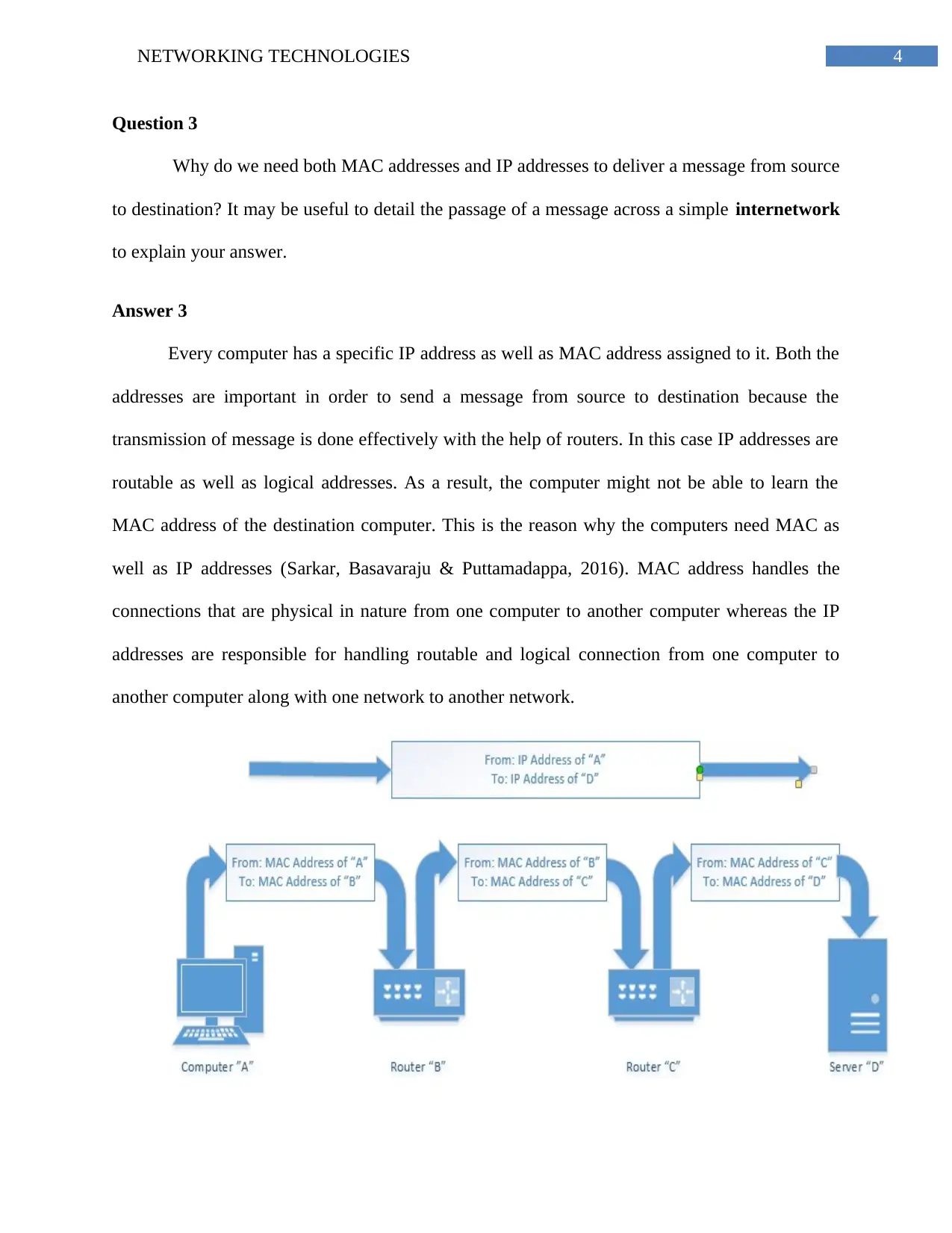
Diagram 1: the passage of a message across a simple internetwork
(Source: Ahmed, Imran & Zomaya, 2018)
The transmission of message has been describes in the diagram above, it can be
derived that while transmitting a message from computer A to computer D, the message is
passed from the MAC address of one device to the MAC address of the next device. This process
is continues till the message reaches the destination computer. in case of IP address, this process
becomes very easy because the message is transmitted directly from the IP address of computer
A to the IP address of computer D.
Question 4
Wireless LANS employ WPA or WPA2 to protect messages from devices to access
points (APs). Why is this necessary? Your answer should include discussion on the nature of the
medium and protocols used in WiFi.
Answer 4
It is important to secure data from the transmission of messages from devices to access
points in order to keep the router secured. The router directs the traffic between the internet and
the local network, hence they need to be secure, in case they are not secured, strangers or hackers
might gain access to the sensitive, personal and confidential or financial data present in the
device.
The IEEE 802.11 which is wireless LAN makes use of media access control protocol
named Carrier Sense Multiple Access (CSMA) along with Collision Avoidance (CA). The name
is very similar to the Ethernet’s Carrier Sense Multiple Access (CSMA) along with the Collision
Detection (CD), their concept for operation is very different (Wang, Yang & Chen, 2017). WiFi
Diagram 1: the passage of a message across a simple internetwork
(Source: Ahmed, Imran & Zomaya, 2018)
The transmission of message has been describes in the diagram above, it can be
derived that while transmitting a message from computer A to computer D, the message is
passed from the MAC address of one device to the MAC address of the next device. This process
is continues till the message reaches the destination computer. in case of IP address, this process
becomes very easy because the message is transmitted directly from the IP address of computer
A to the IP address of computer D.
Question 4
Wireless LANS employ WPA or WPA2 to protect messages from devices to access
points (APs). Why is this necessary? Your answer should include discussion on the nature of the
medium and protocols used in WiFi.
Answer 4
It is important to secure data from the transmission of messages from devices to access
points in order to keep the router secured. The router directs the traffic between the internet and
the local network, hence they need to be secure, in case they are not secured, strangers or hackers
might gain access to the sensitive, personal and confidential or financial data present in the
device.
The IEEE 802.11 which is wireless LAN makes use of media access control protocol
named Carrier Sense Multiple Access (CSMA) along with Collision Avoidance (CA). The name
is very similar to the Ethernet’s Carrier Sense Multiple Access (CSMA) along with the Collision
Detection (CD), their concept for operation is very different (Wang, Yang & Chen, 2017). WiFi
⊘ This is a preview!⊘
Do you want full access?
Subscribe today to unlock all pages.

Trusted by 1+ million students worldwide

6NETWORKING TECHNOLOGIES
systems are usually half duplex media configurations that are shared and where all the stations
are transmitted as well as received on radio channel that are same. The major problem of a
specific radio system includes the situation where the station is not able to hear when it sends; as
a result it is not possible to detect a certain collision. Due to this, the development of 802.11
specifications have been introduced for avoiding collision, this particular mechanism is called
Distributed Control Function (DCF). As per this mechanism, a particular WiFi station would
transmit when the channel has no obstacle (Sari, et al., 2017). The transmissions must be
acknowledged, so that suppose a station has not received any acknowledgement, it concludes
that a collision has been occurred and then it retires after a specific waiting interval. Along with
this, the two more operating modes that can be utilized in order to use various improved services
include WiFi Multimedia Extensions (WME) and WiFi Scheduled Multimedia (WSM), the
former one is mandatory whereas the later operating mode is optional. Reflection exercise
a. From the first three modules I have learnt regarding the reasons for which the
switch is preferred over a hub in order to build LANs. One more lesson that I
have learnt include the steps that I would undertake in case there is an excessive
number of broadcast packets and I want to decrease the effects that it would have
in my network. Some steps that I would undertake include implementing switches
and network router, network servers and many more. I have further learnt
regarding the reason why a system requires a MAC as well as IP address for the
purpose of transmitting message from one system to another.
b. The concept that I did not completely understand include the process utilized for
the protection of messages from devices to the access points by WPA or WPA2
that are employed by LANS.
systems are usually half duplex media configurations that are shared and where all the stations
are transmitted as well as received on radio channel that are same. The major problem of a
specific radio system includes the situation where the station is not able to hear when it sends; as
a result it is not possible to detect a certain collision. Due to this, the development of 802.11
specifications have been introduced for avoiding collision, this particular mechanism is called
Distributed Control Function (DCF). As per this mechanism, a particular WiFi station would
transmit when the channel has no obstacle (Sari, et al., 2017). The transmissions must be
acknowledged, so that suppose a station has not received any acknowledgement, it concludes
that a collision has been occurred and then it retires after a specific waiting interval. Along with
this, the two more operating modes that can be utilized in order to use various improved services
include WiFi Multimedia Extensions (WME) and WiFi Scheduled Multimedia (WSM), the
former one is mandatory whereas the later operating mode is optional. Reflection exercise
a. From the first three modules I have learnt regarding the reasons for which the
switch is preferred over a hub in order to build LANs. One more lesson that I
have learnt include the steps that I would undertake in case there is an excessive
number of broadcast packets and I want to decrease the effects that it would have
in my network. Some steps that I would undertake include implementing switches
and network router, network servers and many more. I have further learnt
regarding the reason why a system requires a MAC as well as IP address for the
purpose of transmitting message from one system to another.
b. The concept that I did not completely understand include the process utilized for
the protection of messages from devices to the access points by WPA or WPA2
that are employed by LANS.
Paraphrase This Document
Need a fresh take? Get an instant paraphrase of this document with our AI Paraphraser

7NETWORKING TECHNOLOGIES

8NETWORKING TECHNOLOGIES
References
Ahmed, E., Imran, M., Zomaya, A. Y., Rayes, A., Rodrigues, J. J., & Guibene, W. (2018).
Enabling Wireless Communications and Networking Technologies of Edge
Computing. IEEE Communications Magazine, 56(9), 94-95.
Granelli, F., Gebremariam, A. A., Usman, M., Cugini, F., Stamati, V., Alitska, M., &
Chatzimisios, P. (2015). Software defined and virtualized wireless access in future
wireless networks: scenarios and standards. IEEE Communications Magazine, 53(6), 26-
34.
Hanes, D., Salgueiro, G., Grossetete, P., Barton, R., & Henry, J. (2017). IoT fundamentals:
Networking technologies, protocols, and use cases for the internet of things. Cisco Press.
Kafle, V. P., Fukushima, Y., & Harai, H. (2016). Internet of things standardization in ITU and
prospective networking technologies. IEEE Communications Magazine, 54(9), 43-49.
Kreutz, D., Ramos, F. M., Verissimo, P., Rothenberg, C. E., Azodolmolky, S., & Uhlig, S.
(2015). Software-defined networking: A comprehensive survey. Proceedings of the
IEEE, 103(1), 14-76.
Sari, R. D., Supiyandi, A. P. U., Siahaan, M. M., & Ginting, R. B. (2017). A Review of IP and
MAC Address Filtering in Wireless Network Security. Int. J. Sci. Res. Sci. Technol, 3(6),
470-473.
Sarkar, S. K., Basavaraju, T. G., & Puttamadappa, C. (2016). Ad hoc mobile wireless networks:
principles, protocols, and applications. CRC Press.
Wang, K., Yang, K., Chen, H. H., & Zhang, L. (2017). Computation diversity in emerging
networking paradigms. IEEE Wireless Communications, 24(1), 88-94.
References
Ahmed, E., Imran, M., Zomaya, A. Y., Rayes, A., Rodrigues, J. J., & Guibene, W. (2018).
Enabling Wireless Communications and Networking Technologies of Edge
Computing. IEEE Communications Magazine, 56(9), 94-95.
Granelli, F., Gebremariam, A. A., Usman, M., Cugini, F., Stamati, V., Alitska, M., &
Chatzimisios, P. (2015). Software defined and virtualized wireless access in future
wireless networks: scenarios and standards. IEEE Communications Magazine, 53(6), 26-
34.
Hanes, D., Salgueiro, G., Grossetete, P., Barton, R., & Henry, J. (2017). IoT fundamentals:
Networking technologies, protocols, and use cases for the internet of things. Cisco Press.
Kafle, V. P., Fukushima, Y., & Harai, H. (2016). Internet of things standardization in ITU and
prospective networking technologies. IEEE Communications Magazine, 54(9), 43-49.
Kreutz, D., Ramos, F. M., Verissimo, P., Rothenberg, C. E., Azodolmolky, S., & Uhlig, S.
(2015). Software-defined networking: A comprehensive survey. Proceedings of the
IEEE, 103(1), 14-76.
Sari, R. D., Supiyandi, A. P. U., Siahaan, M. M., & Ginting, R. B. (2017). A Review of IP and
MAC Address Filtering in Wireless Network Security. Int. J. Sci. Res. Sci. Technol, 3(6),
470-473.
Sarkar, S. K., Basavaraju, T. G., & Puttamadappa, C. (2016). Ad hoc mobile wireless networks:
principles, protocols, and applications. CRC Press.
Wang, K., Yang, K., Chen, H. H., & Zhang, L. (2017). Computation diversity in emerging
networking paradigms. IEEE Wireless Communications, 24(1), 88-94.
⊘ This is a preview!⊘
Do you want full access?
Subscribe today to unlock all pages.

Trusted by 1+ million students worldwide

9NETWORKING TECHNOLOGIES
1 out of 10
Related Documents
Your All-in-One AI-Powered Toolkit for Academic Success.
+13062052269
info@desklib.com
Available 24*7 on WhatsApp / Email
Unlock your academic potential
Copyright © 2020–2026 A2Z Services. All Rights Reserved. Developed and managed by ZUCOL.