Education with Psychology: Understanding Learning and Development
VerifiedAdded on 2020/02/03
|5
|768
|91
Essay
AI Summary
This essay provides an overview of the relationship between education and psychology, exploring the historical background and definitions of both fields. It examines the importance of psychology in education, highlighting its role in understanding student behavior, development, and effective teaching strategies. The essay discusses various aspects of instructional psychology, including curriculum development, teaching methods, evaluation, guidance and counseling, and the different stages of child development. It also addresses the application of psychology to personality development, social adjustment, learning processes, mental health, and the needs of students requiring special attention. The essay concludes by touching upon the impact of instructional psychology on school organization. This document, available on Desklib, offers a comprehensive understanding of how psychological principles can enhance educational practices.

EDUCATION WITH PSYCHOLOGY
Paraphrase This Document
Need a fresh take? Get an instant paraphrase of this document with our AI Paraphraser

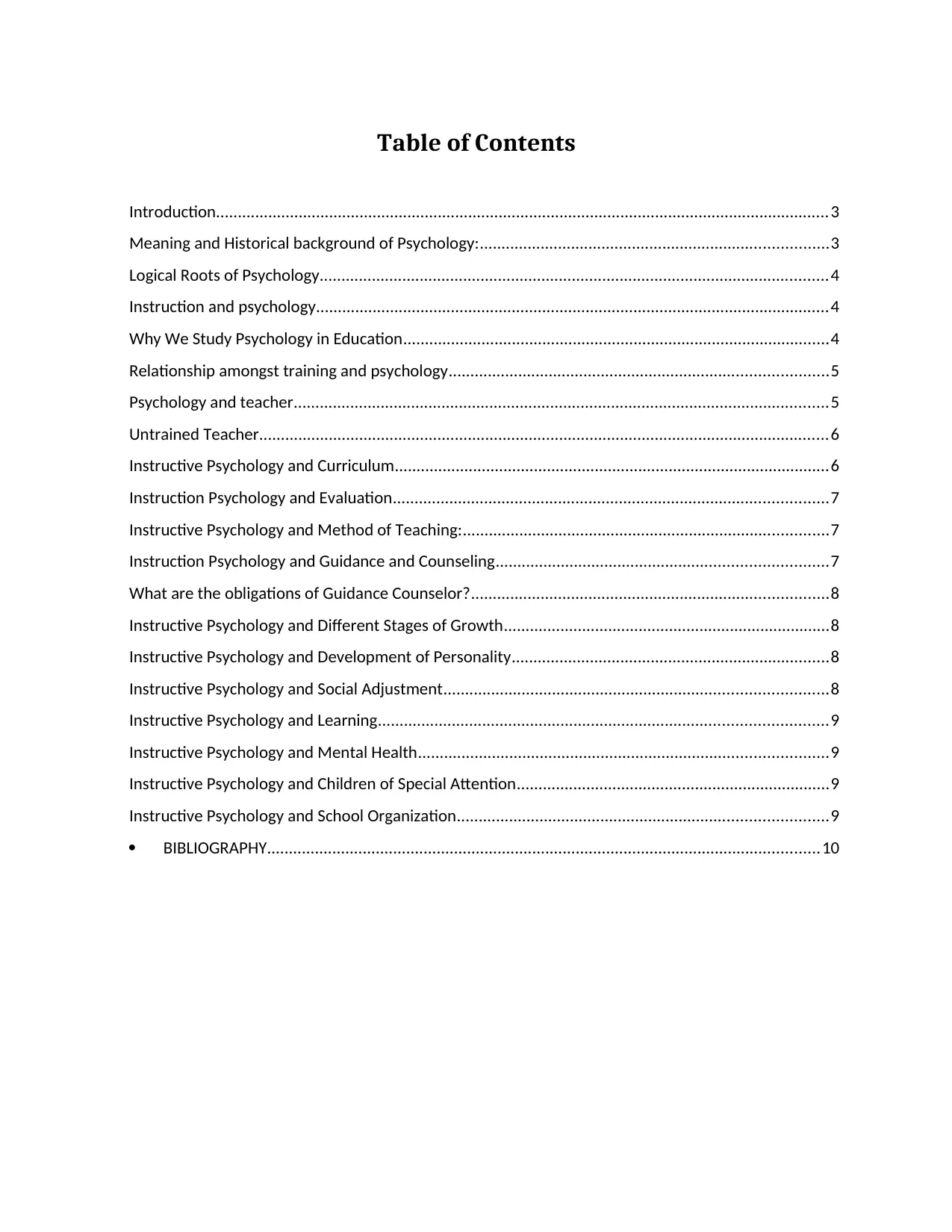
Table of Contents
Introduction.............................................................................................................................................3
Meaning and Historical background of Psychology:................................................................................3
Logical Roots of Psychology.....................................................................................................................4
Instruction and psychology......................................................................................................................4
Why We Study Psychology in Education..................................................................................................4
Relationship amongst training and psychology.......................................................................................5
Psychology and teacher...........................................................................................................................5
Untrained Teacher...................................................................................................................................6
Instructive Psychology and Curriculum....................................................................................................6
Instruction Psychology and Evaluation....................................................................................................7
Instructive Psychology and Method of Teaching:....................................................................................7
Instruction Psychology and Guidance and Counseling............................................................................7
What are the obligations of Guidance Counselor?..................................................................................8
Instructive Psychology and Different Stages of Growth...........................................................................8
Instructive Psychology and Development of Personality.........................................................................8
Instructive Psychology and Social Adjustment........................................................................................8
Instructive Psychology and Learning.......................................................................................................9
Instructive Psychology and Mental Health..............................................................................................9
Instructive Psychology and Children of Special Attention........................................................................9
Instructive Psychology and School Organization.....................................................................................9
BIBLIOGRAPHY...............................................................................................................................10
Introduction.............................................................................................................................................3
Meaning and Historical background of Psychology:................................................................................3
Logical Roots of Psychology.....................................................................................................................4
Instruction and psychology......................................................................................................................4
Why We Study Psychology in Education..................................................................................................4
Relationship amongst training and psychology.......................................................................................5
Psychology and teacher...........................................................................................................................5
Untrained Teacher...................................................................................................................................6
Instructive Psychology and Curriculum....................................................................................................6
Instruction Psychology and Evaluation....................................................................................................7
Instructive Psychology and Method of Teaching:....................................................................................7
Instruction Psychology and Guidance and Counseling............................................................................7
What are the obligations of Guidance Counselor?..................................................................................8
Instructive Psychology and Different Stages of Growth...........................................................................8
Instructive Psychology and Development of Personality.........................................................................8
Instructive Psychology and Social Adjustment........................................................................................8
Instructive Psychology and Learning.......................................................................................................9
Instructive Psychology and Mental Health..............................................................................................9
Instructive Psychology and Children of Special Attention........................................................................9
Instructive Psychology and School Organization.....................................................................................9
BIBLIOGRAPHY...............................................................................................................................10

Introduction
“Education” is a wider term which has variety of meanings, but it
is usually defined as the process of learning and acquiring
information. Formal learning in a school, college or university is
one of the most general types, though self-teaching and supposed
“experiences of life” can also qualify. Communities in the world
rank it high to educate people of all ages, whether formally or
informally. It is believed that persistent exposure to new ideas and
skills makes people better thinker, workers, thinkers, and social
contributors.
Etymologically, the word education is derived from educare (Latin
word) meaning "bring up", which is connected to educere which
means "bring out", "bring forth what is within", "bring out
potential" and ducere, "to lead". Education in the biggest sense is
any act/experience that has a developmental effect on the mind,
character or physical talent of an individual. In its technical way,
education is the process by which society intentionally transmits its
collected knowledge, skills and values from one generation to
another generation.
Meaning and Historical background of Psychology:
The word ‘Psychology’ is derived from Greek word Psycho which means ‘Soul’ and logos which
means ‘Science’. Therefore, it means ‘The Science of Soul’.
Psychology attained separate status very recently. Previously it was considered as a sub-
branch of philosophy. Later on philosophers give another definition; that is psychology is the
“Education” is a wider term which has variety of meanings, but it
is usually defined as the process of learning and acquiring
information. Formal learning in a school, college or university is
one of the most general types, though self-teaching and supposed
“experiences of life” can also qualify. Communities in the world
rank it high to educate people of all ages, whether formally or
informally. It is believed that persistent exposure to new ideas and
skills makes people better thinker, workers, thinkers, and social
contributors.
Etymologically, the word education is derived from educare (Latin
word) meaning "bring up", which is connected to educere which
means "bring out", "bring forth what is within", "bring out
potential" and ducere, "to lead". Education in the biggest sense is
any act/experience that has a developmental effect on the mind,
character or physical talent of an individual. In its technical way,
education is the process by which society intentionally transmits its
collected knowledge, skills and values from one generation to
another generation.
Meaning and Historical background of Psychology:
The word ‘Psychology’ is derived from Greek word Psycho which means ‘Soul’ and logos which
means ‘Science’. Therefore, it means ‘The Science of Soul’.
Psychology attained separate status very recently. Previously it was considered as a sub-
branch of philosophy. Later on philosophers give another definition; that is psychology is the
⊘ This is a preview!⊘
Do you want full access?
Subscribe today to unlock all pages.

Trusted by 1+ million students worldwide

‘science of mind’. All these definitions were given by philosophers and psychologists prior to the
commencement of experimental psychology.
Psychology as ‘Science of Behavior’
Today psychology comprises of scientific methods of collecting data about individuals and
groups to examine and predict their behavior.
Roots of Psychology
The foundations of Psychology can be followed back in reasoning and science. At the point when
physiologists of the nineteenth century started to utilize logical strategies to investigate mind, later on
Psychology turned into an autonomous logical train.
Logical Roots of Psychology
By nineteenth century, clinicians were advancing than thinkers in noting questions about the way of
mental procedures.
Instruction and psychology
Instruction is a procedure which empowers the person to recognize genuine and false, great and
terrible, good and bad (Imam Ghazali)
Stephen, "Instructive Psychology is the methodical investigation of the instructive development and
improvement of a youngster".
A few clinicians called psychology as a branch of instruction, as James Mill suggested in the mid
nineteenth century. In any case, some other clinician Disagree with them, who knew about the historical
backdrop of psychology and proceeding with, connections amongst psychology and training. They guard
it with the examination of verifiable and contemporary relationship amongst training and psychology.
One question, which is as often as possible asked that a field like psychology, which is isolated inside
self, could be utilized and connected productively to a pragmatic field like training. The reality we are
managing two unique fields; one is worried with human finishes and the method for advancing them,
the other with understanding and learning of human experience and activities. Today it is recognized
generally that psychology has affected training previously.
commencement of experimental psychology.
Psychology as ‘Science of Behavior’
Today psychology comprises of scientific methods of collecting data about individuals and
groups to examine and predict their behavior.
Roots of Psychology
The foundations of Psychology can be followed back in reasoning and science. At the point when
physiologists of the nineteenth century started to utilize logical strategies to investigate mind, later on
Psychology turned into an autonomous logical train.
Logical Roots of Psychology
By nineteenth century, clinicians were advancing than thinkers in noting questions about the way of
mental procedures.
Instruction and psychology
Instruction is a procedure which empowers the person to recognize genuine and false, great and
terrible, good and bad (Imam Ghazali)
Stephen, "Instructive Psychology is the methodical investigation of the instructive development and
improvement of a youngster".
A few clinicians called psychology as a branch of instruction, as James Mill suggested in the mid
nineteenth century. In any case, some other clinician Disagree with them, who knew about the historical
backdrop of psychology and proceeding with, connections amongst psychology and training. They guard
it with the examination of verifiable and contemporary relationship amongst training and psychology.
One question, which is as often as possible asked that a field like psychology, which is isolated inside
self, could be utilized and connected productively to a pragmatic field like training. The reality we are
managing two unique fields; one is worried with human finishes and the method for advancing them,
the other with understanding and learning of human experience and activities. Today it is recognized
generally that psychology has affected training previously.
Paraphrase This Document
Need a fresh take? Get an instant paraphrase of this document with our AI Paraphraser

Why We Study Psychology in Education
It is extremely basic for a teacher to show his understudies as per their mental capacities. Instructive
psychology helps the teacher in doing as such. It empowers the teacher to educate where and how? It
helps us in the accompanying ways.
It is extremely basic for a teacher to show his understudies as per their mental capacities. Instructive
psychology helps the teacher in doing as such. It empowers the teacher to educate where and how? It
helps us in the accompanying ways.
1 out of 5
Your All-in-One AI-Powered Toolkit for Academic Success.
+13062052269
info@desklib.com
Available 24*7 on WhatsApp / Email
Unlock your academic potential
Copyright © 2020–2025 A2Z Services. All Rights Reserved. Developed and managed by ZUCOL.