A Review of Emerging Wastewater Treatment Technologies in Textiles
VerifiedAdded on 2023/06/15
|12
|2728
|491
Report
AI Summary
This report provides a comprehensive review of wastewater treatment technologies employed in the textile industry, addressing the environmental challenges posed by textile wastewater, including resource waste, solid waste management, and the use of synthetic dyes. It discusses the negative impacts of untreated wastewater on plant photosynthesis, aquatic life, and marine ecosystems due to reduced light penetration, oxygen consumption, and the presence of harmful metals and chlorine. The report explores various treatment technologies, such as membrane technology, wet air oxidation, and phys-chemistry methods, used to manage textile wastewater, highlighting their advantages and limitations. It also examines current treatment processes, including evaporation, crystallization, and centrifuging, and emphasizes the importance of integrated approaches and water recycling within the industry. The conclusion underscores the need for effective strategies and norms for water treatment and recycling, advocating for separate watercourse management to improve treatability and enhance reuse options, ultimately aiming to minimize discharges and waste products from textile operations.
Running Head: ENVIRONMENT SCIENCE
Environment Science
Environment Science

Paraphrase This Document
Need a fresh take? Get an instant paraphrase of this document with our AI Paraphraser
2
ENVIRONMENT SCIENCE
Abstract
Wastewater is a primary environmental weakness for the textile industry growth while other
minor issues are resource waste and solid waste management. In addition, the textile industry
uses certain synthetic dyes and recycles huge volume of coloured wastewater that can
negative impact on the environment. In addition, the highly textile wastewater influences the
photosynthetic function of the plant. It can affect water life because of the lower level of light
penetration and oxygen consumption. It can also be harmful to marine life structure because
of occurring the component metals and chlorine exist within the synthetic dyes. Therefore,
textile wastewater might be treated before its discharge. This report discusses different kinds
of treatment technologies that are supportive to manage wastewater of textile industry. This
paper will also suggest the possible corrective measures for managing certain factors that are
occurred in the textile operation.
ENVIRONMENT SCIENCE
Abstract
Wastewater is a primary environmental weakness for the textile industry growth while other
minor issues are resource waste and solid waste management. In addition, the textile industry
uses certain synthetic dyes and recycles huge volume of coloured wastewater that can
negative impact on the environment. In addition, the highly textile wastewater influences the
photosynthetic function of the plant. It can affect water life because of the lower level of light
penetration and oxygen consumption. It can also be harmful to marine life structure because
of occurring the component metals and chlorine exist within the synthetic dyes. Therefore,
textile wastewater might be treated before its discharge. This report discusses different kinds
of treatment technologies that are supportive to manage wastewater of textile industry. This
paper will also suggest the possible corrective measures for managing certain factors that are
occurred in the textile operation.
3
ENVIRONMENT SCIENCE
Table of Contents
Introduction................................................................................................................................4
Research objectives................................................................................................................4
Literature review and conceptual discussion.............................................................................4
Introduction............................................................................................................................4
To explore the meaning and concept of wastewater treatment in the textile industry...........4
To analyze the Current Treatment Process in Textile Industry..............................................6
To address the emerging technologies in industrial wastewater treatment............................7
Conclusion and recommendation...............................................................................................9
References................................................................................................................................11
Figure 1: Textile Industry Profile in Canada..............................................................................5
ENVIRONMENT SCIENCE
Table of Contents
Introduction................................................................................................................................4
Research objectives................................................................................................................4
Literature review and conceptual discussion.............................................................................4
Introduction............................................................................................................................4
To explore the meaning and concept of wastewater treatment in the textile industry...........4
To analyze the Current Treatment Process in Textile Industry..............................................6
To address the emerging technologies in industrial wastewater treatment............................7
Conclusion and recommendation...............................................................................................9
References................................................................................................................................11
Figure 1: Textile Industry Profile in Canada..............................................................................5
⊘ This is a preview!⊘
Do you want full access?
Subscribe today to unlock all pages.

Trusted by 1+ million students worldwide
4
ENVIRONMENT SCIENCE
Introduction
In the current textile industry, different kinds of procedure are exercised and most of them are
generated in from the wastewater. In addition, there are many factors that may be the cause of
effluents result like differences in the procedure, used fabric, and machinery (Holkar, 2016).
The textile wastewater is managed as a combined stream. For the purpose of water and
chemicals recycle, it is mandatory for the industry to maintain the procedure stream and treat
them separately. In addition, it is also analyzed that the literature review offers a conceptual
understanding towards the research issues systematically.
Research objectives
The main aim of this research is to review of the emerging technologies in textile wastewater
treatment.
To analyze the meaning and concept of wastewater treatment in the textile industry
To analyze the current treatment process in textile industry
To address the emerging technologies in industry wastewater treatment
Literature review and conceptual discussion
Introduction
This chapter is supportive to offer the conceptual understanding towards the waste water
management in the textile industry. It discusses the meaning and concept of wastewater
treatment in the textile industry. In addition, it can also be said that the current technical
process of textile industry is also discusses in this section. This section is also imperative to
gain the understanding towards many methods that can be effective to manage the waste
water from the textile industry systematically.
To explore the meaning and concept of wastewater treatment in the textile industry
As per the view of Jegatheesan et al. (2016) the textile industry is difficult industrial chains in
the engineering industry. There are many stages many that are considered in the mechanical
ENVIRONMENT SCIENCE
Introduction
In the current textile industry, different kinds of procedure are exercised and most of them are
generated in from the wastewater. In addition, there are many factors that may be the cause of
effluents result like differences in the procedure, used fabric, and machinery (Holkar, 2016).
The textile wastewater is managed as a combined stream. For the purpose of water and
chemicals recycle, it is mandatory for the industry to maintain the procedure stream and treat
them separately. In addition, it is also analyzed that the literature review offers a conceptual
understanding towards the research issues systematically.
Research objectives
The main aim of this research is to review of the emerging technologies in textile wastewater
treatment.
To analyze the meaning and concept of wastewater treatment in the textile industry
To analyze the current treatment process in textile industry
To address the emerging technologies in industry wastewater treatment
Literature review and conceptual discussion
Introduction
This chapter is supportive to offer the conceptual understanding towards the waste water
management in the textile industry. It discusses the meaning and concept of wastewater
treatment in the textile industry. In addition, it can also be said that the current technical
process of textile industry is also discusses in this section. This section is also imperative to
gain the understanding towards many methods that can be effective to manage the waste
water from the textile industry systematically.
To explore the meaning and concept of wastewater treatment in the textile industry
As per the view of Jegatheesan et al. (2016) the textile industry is difficult industrial chains in
the engineering industry. There are many stages many that are considered in the mechanical
Paraphrase This Document
Need a fresh take? Get an instant paraphrase of this document with our AI Paraphraser
5
ENVIRONMENT SCIENCE
process of textile procedure like mercerizing, dyeing, scouring, desizing, bleaching, and
sizing. There is a positive relationship between consecutive wet treatments and dry
procedure. The textile industry produces a wide range of chemicals at all phases of garment
production, fibers, and fabrics. It comprises solid wastes, noise pollution, and emissions to air
for improving the environmental science.
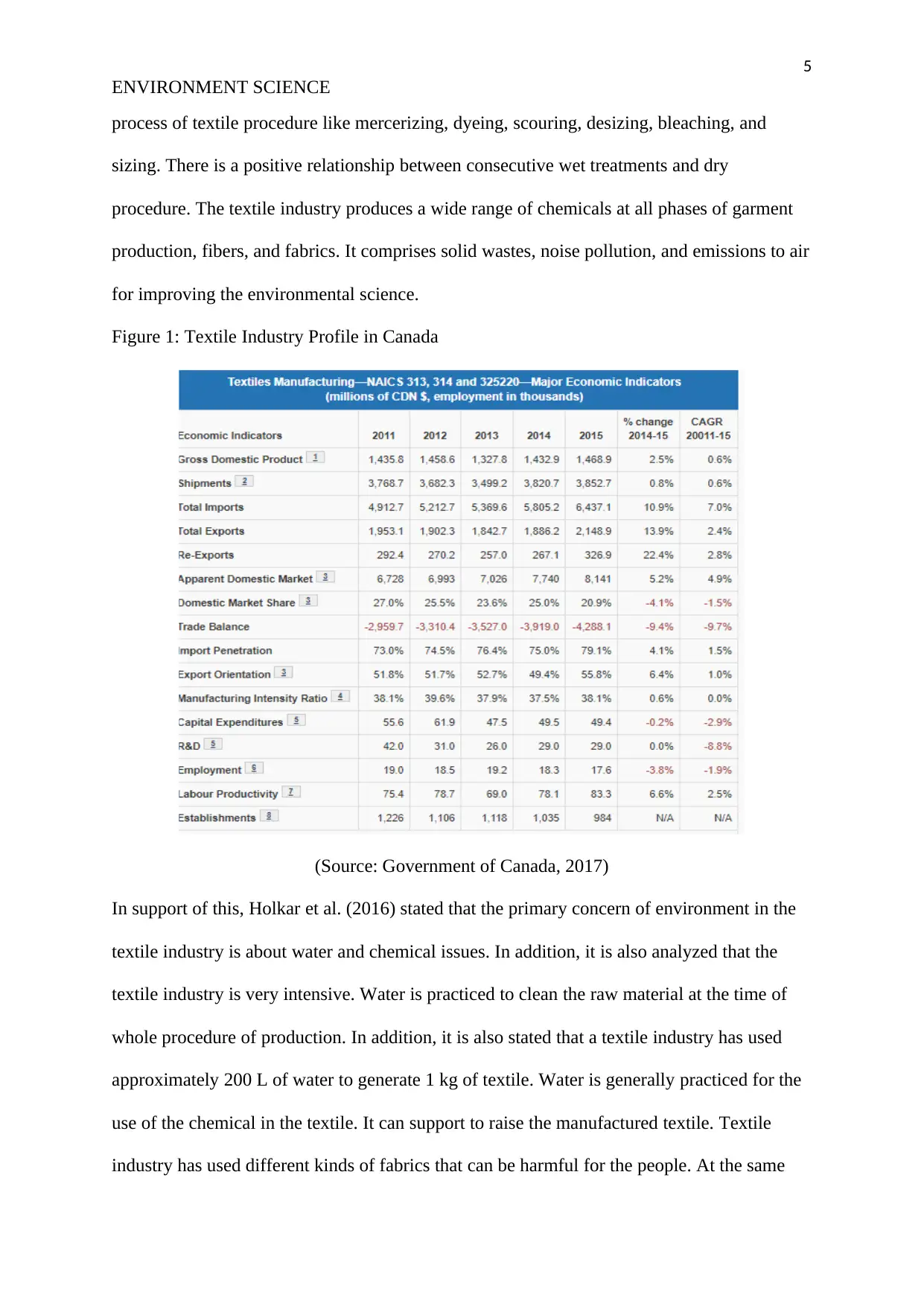
Figure 1: Textile Industry Profile in Canada
(Source: Government of Canada, 2017)
In support of this, Holkar et al. (2016) stated that the primary concern of environment in the
textile industry is about water and chemical issues. In addition, it is also analyzed that the
textile industry is very intensive. Water is practiced to clean the raw material at the time of
whole procedure of production. In addition, it is also stated that a textile industry has used
approximately 200 L of water to generate 1 kg of textile. Water is generally practiced for the
use of the chemical in the textile. It can support to raise the manufactured textile. Textile
industry has used different kinds of fabrics that can be harmful for the people. At the same
ENVIRONMENT SCIENCE
process of textile procedure like mercerizing, dyeing, scouring, desizing, bleaching, and
sizing. There is a positive relationship between consecutive wet treatments and dry
procedure. The textile industry produces a wide range of chemicals at all phases of garment
production, fibers, and fabrics. It comprises solid wastes, noise pollution, and emissions to air
for improving the environmental science.
Figure 1: Textile Industry Profile in Canada
(Source: Government of Canada, 2017)
In support of this, Holkar et al. (2016) stated that the primary concern of environment in the
textile industry is about water and chemical issues. In addition, it is also analyzed that the
textile industry is very intensive. Water is practiced to clean the raw material at the time of
whole procedure of production. In addition, it is also stated that a textile industry has used
approximately 200 L of water to generate 1 kg of textile. Water is generally practiced for the
use of the chemical in the textile. It can support to raise the manufactured textile. Textile
industry has used different kinds of fabrics that can be harmful for the people. At the same
6
ENVIRONMENT SCIENCE
time, it can also be said that the quality of chemicals and fabrics can be different from
industry to industry.
On the other hand, Ghaly et al. (2014) stated that a textile industry has used 39% of water at
the time of bleaching, 7%in printing, 15 % in dyeing, 13 % in the boiler, and 24% for other
activities. Consequently, many procedures of textile industry can be caused by the water
population. In addition, it is also addressed that an organization uses a huge amount of water
to meet their goal. However, the used water is a combination of different kinds of chemicals
and other harmful dyes, which can negative impact on the environment.
Gosavi and Sharma (2014) argued that textile industry includes many kinds of raw material,
process, and machinery to plan the needed shape and assets of the final product and services.
In addition, it is also found that the waste stream is developed in the textile industry which is
relied on the water-based sewage. Moreover, it can be said that the water-based sewage is
developed from many activities of the wet process of textile. The major cause of development
of effluent in the textile industry is that huge quantity of water is used in the harmful
chemicals for printing, dyeing, and finishing.
On the other hand, Hasanbeigi and Price (2015).stated that there are many factors that are
considered as pollution features of textile industry wastewater such as pollution
characteristics and conventional treatment. Moreover, the pollution characteristics consider
different factors like high alkalinity, high COD, high BOD, and high SS. In addition, the
conventional treatment covers chemical and biological treatment. Hence, it is analyzed that
organization should mainly consider such factors to eliminate the issues of water pollution.
To analyze the Current Treatment Process in Textile Industry
As per the view of Jarošová et al. (2014) the textile industry has used many strategies and
methods to deal with water issues systematically. At the same time, it can also be said that
ENVIRONMENT SCIENCE
time, it can also be said that the quality of chemicals and fabrics can be different from
industry to industry.
On the other hand, Ghaly et al. (2014) stated that a textile industry has used 39% of water at
the time of bleaching, 7%in printing, 15 % in dyeing, 13 % in the boiler, and 24% for other
activities. Consequently, many procedures of textile industry can be caused by the water
population. In addition, it is also addressed that an organization uses a huge amount of water
to meet their goal. However, the used water is a combination of different kinds of chemicals
and other harmful dyes, which can negative impact on the environment.
Gosavi and Sharma (2014) argued that textile industry includes many kinds of raw material,
process, and machinery to plan the needed shape and assets of the final product and services.
In addition, it is also found that the waste stream is developed in the textile industry which is
relied on the water-based sewage. Moreover, it can be said that the water-based sewage is
developed from many activities of the wet process of textile. The major cause of development
of effluent in the textile industry is that huge quantity of water is used in the harmful
chemicals for printing, dyeing, and finishing.
On the other hand, Hasanbeigi and Price (2015).stated that there are many factors that are
considered as pollution features of textile industry wastewater such as pollution
characteristics and conventional treatment. Moreover, the pollution characteristics consider
different factors like high alkalinity, high COD, high BOD, and high SS. In addition, the
conventional treatment covers chemical and biological treatment. Hence, it is analyzed that
organization should mainly consider such factors to eliminate the issues of water pollution.
To analyze the Current Treatment Process in Textile Industry
As per the view of Jarošová et al. (2014) the textile industry has used many strategies and
methods to deal with water issues systematically. At the same time, it can also be said that
⊘ This is a preview!⊘
Do you want full access?
Subscribe today to unlock all pages.
Trusted by 1+ million students worldwide
7
ENVIRONMENT SCIENCE
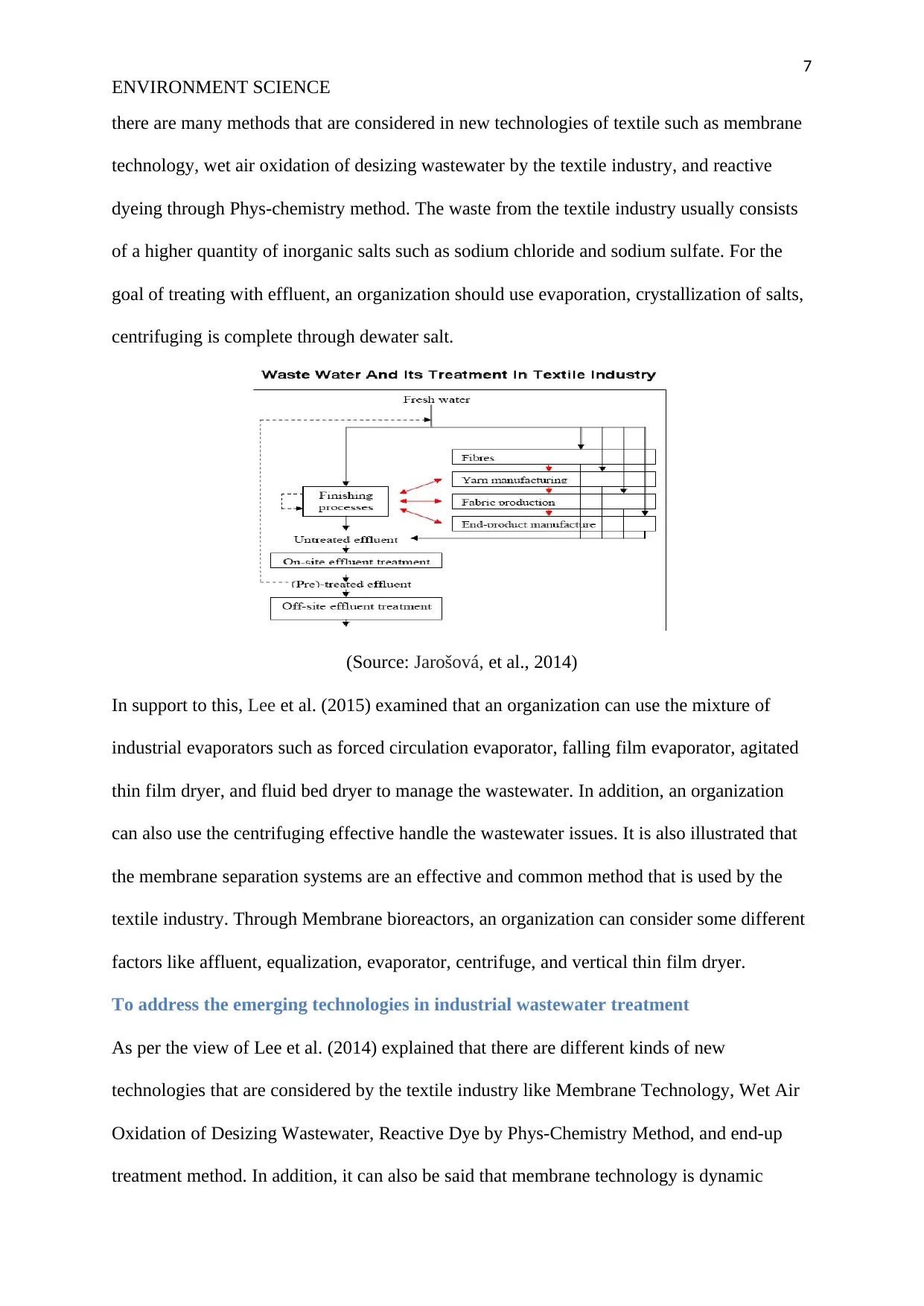
there are many methods that are considered in new technologies of textile such as membrane
technology, wet air oxidation of desizing wastewater by the textile industry, and reactive
dyeing through Phys-chemistry method. The waste from the textile industry usually consists
of a higher quantity of inorganic salts such as sodium chloride and sodium sulfate. For the
goal of treating with effluent, an organization should use evaporation, crystallization of salts,
centrifuging is complete through dewater salt.
(Source: Jarošová, et al., 2014)
In support to this, Lee et al. (2015) examined that an organization can use the mixture of
industrial evaporators such as forced circulation evaporator, falling film evaporator, agitated
thin film dryer, and fluid bed dryer to manage the wastewater. In addition, an organization
can also use the centrifuging effective handle the wastewater issues. It is also illustrated that
the membrane separation systems are an effective and common method that is used by the
textile industry. Through Membrane bioreactors, an organization can consider some different
factors like affluent, equalization, evaporator, centrifuge, and vertical thin film dryer.
To address the emerging technologies in industrial wastewater treatment
As per the view of Lee et al. (2014) explained that there are different kinds of new
technologies that are considered by the textile industry like Membrane Technology, Wet Air
Oxidation of Desizing Wastewater, Reactive Dye by Phys-Chemistry Method, and end-up
treatment method. In addition, it can also be said that membrane technology is dynamic
ENVIRONMENT SCIENCE
there are many methods that are considered in new technologies of textile such as membrane
technology, wet air oxidation of desizing wastewater by the textile industry, and reactive
dyeing through Phys-chemistry method. The waste from the textile industry usually consists
of a higher quantity of inorganic salts such as sodium chloride and sodium sulfate. For the
goal of treating with effluent, an organization should use evaporation, crystallization of salts,
centrifuging is complete through dewater salt.
(Source: Jarošová, et al., 2014)
In support to this, Lee et al. (2015) examined that an organization can use the mixture of
industrial evaporators such as forced circulation evaporator, falling film evaporator, agitated
thin film dryer, and fluid bed dryer to manage the wastewater. In addition, an organization
can also use the centrifuging effective handle the wastewater issues. It is also illustrated that
the membrane separation systems are an effective and common method that is used by the
textile industry. Through Membrane bioreactors, an organization can consider some different
factors like affluent, equalization, evaporator, centrifuge, and vertical thin film dryer.
To address the emerging technologies in industrial wastewater treatment
As per the view of Lee et al. (2014) explained that there are different kinds of new
technologies that are considered by the textile industry like Membrane Technology, Wet Air
Oxidation of Desizing Wastewater, Reactive Dye by Phys-Chemistry Method, and end-up
treatment method. In addition, it can also be said that membrane technology is dynamic
Paraphrase This Document
Need a fresh take? Get an instant paraphrase of this document with our AI Paraphraser
8
ENVIRONMENT SCIENCE
techniques in the textile industry over the many years. The main reason for practicing this
method within the textile industry is that it operates adding chemicals, with lower energy and
well-arranged procedure transmissions. Moreover, it is also addressed that membrane
separation procedure relies on the existence of semi penetrable skins. This method is quite
easy as compared to another method. In addition, the membrane acts successfully manage the
water and solid pollution uses from the textile industry and make clean and safe environment.
In support of this, Mujumdar (2014) sated that there are certain methods such as uses of high
pressure and keep of the concentration gradient, and the induction of electric potential are
considered in the membrane separation. At the same time, it can also be said that ultra-
filtration and micro are two important techniques which are also included in the membrane
filtration to deal with wastewater. Moreover, it is also evaluated that reverse osmosis and
nano filtration are practiced by the organization to remove the salt from water. Furthermore,
this method is imperative because it considers some elements such as low temperatures and
low energy cost.
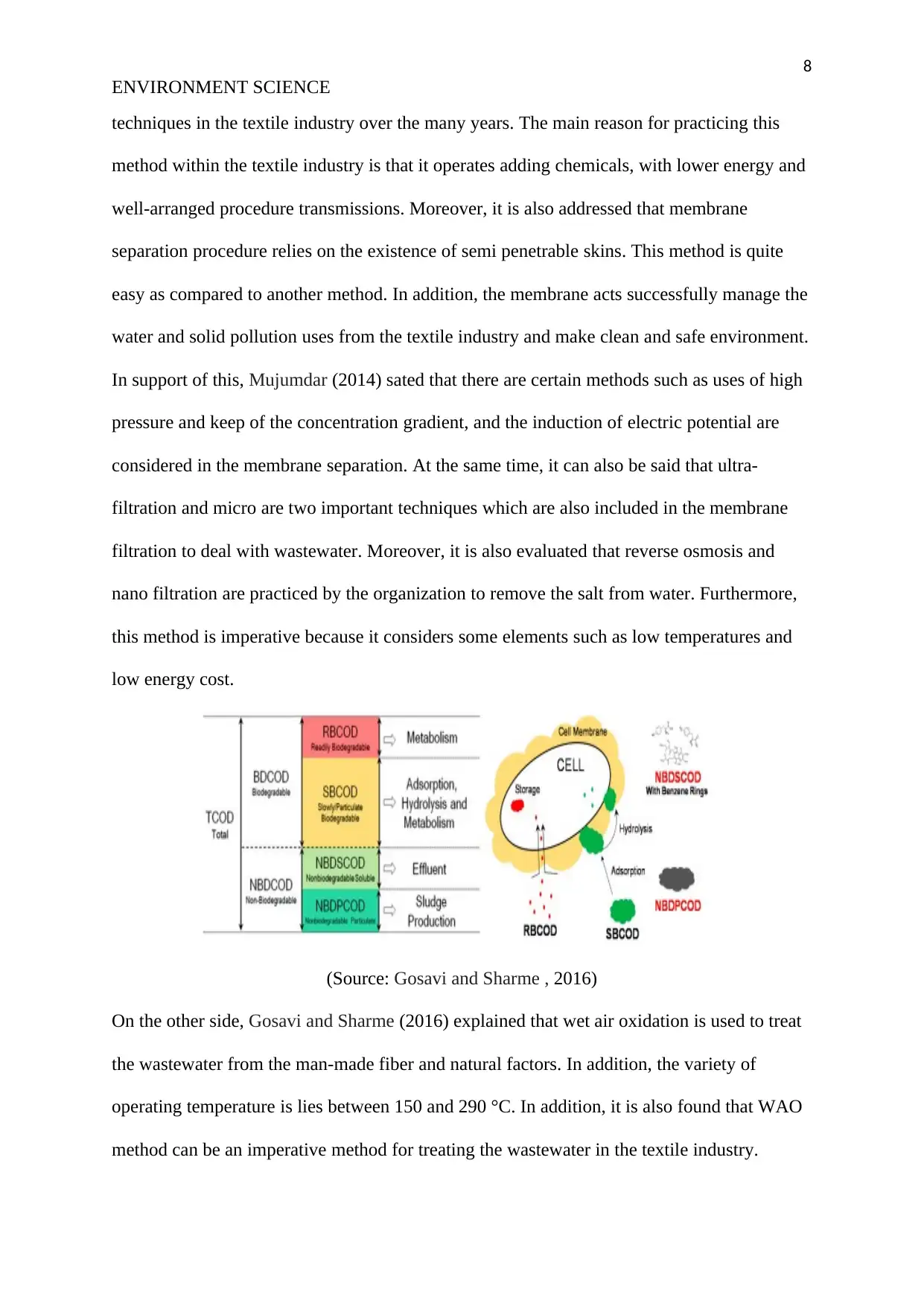
(Source: Gosavi and Sharme , 2016)
On the other side, Gosavi and Sharme (2016) explained that wet air oxidation is used to treat
the wastewater from the man-made fiber and natural factors. In addition, the variety of
operating temperature is lies between 150 and 290 °C. In addition, it is also found that WAO
method can be an imperative method for treating the wastewater in the textile industry.
ENVIRONMENT SCIENCE
techniques in the textile industry over the many years. The main reason for practicing this
method within the textile industry is that it operates adding chemicals, with lower energy and
well-arranged procedure transmissions. Moreover, it is also addressed that membrane
separation procedure relies on the existence of semi penetrable skins. This method is quite
easy as compared to another method. In addition, the membrane acts successfully manage the
water and solid pollution uses from the textile industry and make clean and safe environment.
In support of this, Mujumdar (2014) sated that there are certain methods such as uses of high
pressure and keep of the concentration gradient, and the induction of electric potential are
considered in the membrane separation. At the same time, it can also be said that ultra-
filtration and micro are two important techniques which are also included in the membrane
filtration to deal with wastewater. Moreover, it is also evaluated that reverse osmosis and
nano filtration are practiced by the organization to remove the salt from water. Furthermore,
this method is imperative because it considers some elements such as low temperatures and
low energy cost.
(Source: Gosavi and Sharme , 2016)
On the other side, Gosavi and Sharme (2016) explained that wet air oxidation is used to treat
the wastewater from the man-made fiber and natural factors. In addition, the variety of
operating temperature is lies between 150 and 290 °C. In addition, it is also found that WAO
method can be an imperative method for treating the wastewater in the textile industry.
9
ENVIRONMENT SCIENCE
In support of this, Holkar et al. (2016) illustrated that wastewater that includes easy-soluble
dyes and non-degradable dyes can be complicated to successfully manage the wastewater. In
addition, it can also be imperative to effectively manage the wastewater and provide the
security to the people from harmful chemicals and pollution. It supports to make healthier
environment successfully.
Accordance to the Hasanbeigi and Price (2015), end-of-pipe treatment methods can play an
imperative role in the wastewater management. An organization should use this method in the
operating process and easily control the wastewater. In addition, it is also illustrated that
researcher has made research on many kinds of methods to manage the wastewater and
eliminate the wastewater issues from the textile industry. There are different types of methods
that are considered in the end-of-pipe treatment methods like pilot scale, laboratory tests, and
full technical application.
On the other side, Lee et al. (2015) stated that through this method an organization can
consider the general concept of wastewater treatment along with considering the situation of
textile producer due to making an effective decision towards the wastewater. Moreover, it is
also examined that there are different kinds of factors that are involved in the end-of-pipe
treatment methods like concentrated liquids, washing, rinsing, and baths, cooling water, and
printing pastes. Furthermore, it is analysed that such factors can directly influence the
wastewater treatment in the working place.
Conclusion and recommendation
From the above analysis, it can be concluded that a textile industry is using technologies to
handle the wastewater and secure the environment. The procedure of textile production
especially wet treatment and final process of textile materials have needed a huge volume of
water consumption with better quality. It can also be summarized that many procedures and a
considerable volume of populated water are discharged. It can also be evaluated that water
ENVIRONMENT SCIENCE
In support of this, Holkar et al. (2016) illustrated that wastewater that includes easy-soluble
dyes and non-degradable dyes can be complicated to successfully manage the wastewater. In
addition, it can also be imperative to effectively manage the wastewater and provide the
security to the people from harmful chemicals and pollution. It supports to make healthier
environment successfully.
Accordance to the Hasanbeigi and Price (2015), end-of-pipe treatment methods can play an
imperative role in the wastewater management. An organization should use this method in the
operating process and easily control the wastewater. In addition, it is also illustrated that
researcher has made research on many kinds of methods to manage the wastewater and
eliminate the wastewater issues from the textile industry. There are different types of methods
that are considered in the end-of-pipe treatment methods like pilot scale, laboratory tests, and
full technical application.
On the other side, Lee et al. (2015) stated that through this method an organization can
consider the general concept of wastewater treatment along with considering the situation of
textile producer due to making an effective decision towards the wastewater. Moreover, it is
also examined that there are different kinds of factors that are involved in the end-of-pipe
treatment methods like concentrated liquids, washing, rinsing, and baths, cooling water, and
printing pastes. Furthermore, it is analysed that such factors can directly influence the
wastewater treatment in the working place.
Conclusion and recommendation
From the above analysis, it can be concluded that a textile industry is using technologies to
handle the wastewater and secure the environment. The procedure of textile production
especially wet treatment and final process of textile materials have needed a huge volume of
water consumption with better quality. It can also be summarized that many procedures and a
considerable volume of populated water are discharged. It can also be evaluated that water
⊘ This is a preview!⊘
Do you want full access?
Subscribe today to unlock all pages.
Trusted by 1+ million students worldwide
10
ENVIRONMENT SCIENCE
technologists and textile industry experts have contributed their best to decline the issues of
industrial water consumption. The industry should try to improve water consumption by
mandate the technologist to use the integrated approach and recycle water within the industry.
In addition, it can also be illustrated that the end-of-pipe technologies considered many
elements such as flocculation, adsorption, and use of membranes, combustion, and
coagulation for the specific condition of the textile plant. Consequently, it can also be
evaluated that it cannot be possible for an expert to handle the wastewater without depth
analysis of textile plant. Classification of textile industry wastewater is significant to make
approaches to water treatment and recycle. To improve the treatment and recycle
possibilities, the textile industry should make an effective strategy or norms separately.
Finally, it can be concluded that the separate watercourse focuses on different factors such as
improves treatability, and enhance reuse options. Finally, it can be concluded that it is
significant to identify all aspects of declining discharges and waste goods from the industry
of textile as it will be beneficial to improve the environmental performance and saving the
cost of the company.
ENVIRONMENT SCIENCE
technologists and textile industry experts have contributed their best to decline the issues of
industrial water consumption. The industry should try to improve water consumption by
mandate the technologist to use the integrated approach and recycle water within the industry.
In addition, it can also be illustrated that the end-of-pipe technologies considered many
elements such as flocculation, adsorption, and use of membranes, combustion, and
coagulation for the specific condition of the textile plant. Consequently, it can also be
evaluated that it cannot be possible for an expert to handle the wastewater without depth
analysis of textile plant. Classification of textile industry wastewater is significant to make
approaches to water treatment and recycle. To improve the treatment and recycle
possibilities, the textile industry should make an effective strategy or norms separately.
Finally, it can be concluded that the separate watercourse focuses on different factors such as
improves treatability, and enhance reuse options. Finally, it can be concluded that it is
significant to identify all aspects of declining discharges and waste goods from the industry
of textile as it will be beneficial to improve the environmental performance and saving the
cost of the company.
Paraphrase This Document
Need a fresh take? Get an instant paraphrase of this document with our AI Paraphraser
11
ENVIRONMENT SCIENCE
References
Ghaly, A. E., Ananthashankar, R., Alhattab, M. V. V. R., & Ramakrishnan, V. V. (2014).
Production, characterization and treatment of textile effluents: a critical review. J
Chem Eng Process Technol, 5(1), 1-18.
Gosavi, V. D., & Sharma, S. (2014). A general review on various treatment methods for
textile wastewater. J Environ Sci-Computer Sci Eng Technol, 3(1), 29-39.
Government of Canada (2017). About us: Textiles industry profile. Retrieved from:
https://www.ic.gc.ca/eic/site/textiles-textiles.nsf/eng/h_tx03222.html
Hasanbeigi, A., & Price, L. (2015). A technical review of emerging technologies for energy
and water efficiency and pollution reduction in the textile industry. Journal of
Cleaner Production, 95, 30-44.
Holkar, C. R., Jadhav, A. J., Pinjari, D. V., Mahamuni, N. M., & Pandit, A. B. (2016). A
critical review on textile wastewater treatments: possible approaches. Journal of
environmental management, 182, 351-366.
Jarošová, B., Erseková, A., Hilscherová, K., Loos, R., Gawlik, B. M., Giesy, J. P., & Bláha,
L. (2014). Europe-wide survey of estrogenicity in wastewater treatment plant
effluents: the need for the effect-based monitoring. Environmental Science and
Pollution Research, 21(18), 10970-10982.
Jegatheesan, V., Pramanik, B. K., Chen, J., Navaratna, D., Chang, C. Y., & Shu, L. (2016).
Treatment of textile wastewater with membrane bioreactor: a critical
review. Bioresource technology, 204, 202-212.
Lee, S., Liao, C., Song, G. J., Ra, K., Kannan, K., & Moon, H. B. (2015). Emission of
bisphenol analogues including bisphenol A and bisphenol F from wastewater
treatment plants in Korea. Chemosphere, 119, 1000-1006.
ENVIRONMENT SCIENCE
References
Ghaly, A. E., Ananthashankar, R., Alhattab, M. V. V. R., & Ramakrishnan, V. V. (2014).
Production, characterization and treatment of textile effluents: a critical review. J
Chem Eng Process Technol, 5(1), 1-18.
Gosavi, V. D., & Sharma, S. (2014). A general review on various treatment methods for
textile wastewater. J Environ Sci-Computer Sci Eng Technol, 3(1), 29-39.
Government of Canada (2017). About us: Textiles industry profile. Retrieved from:
https://www.ic.gc.ca/eic/site/textiles-textiles.nsf/eng/h_tx03222.html
Hasanbeigi, A., & Price, L. (2015). A technical review of emerging technologies for energy
and water efficiency and pollution reduction in the textile industry. Journal of
Cleaner Production, 95, 30-44.
Holkar, C. R., Jadhav, A. J., Pinjari, D. V., Mahamuni, N. M., & Pandit, A. B. (2016). A
critical review on textile wastewater treatments: possible approaches. Journal of
environmental management, 182, 351-366.
Jarošová, B., Erseková, A., Hilscherová, K., Loos, R., Gawlik, B. M., Giesy, J. P., & Bláha,
L. (2014). Europe-wide survey of estrogenicity in wastewater treatment plant
effluents: the need for the effect-based monitoring. Environmental Science and
Pollution Research, 21(18), 10970-10982.
Jegatheesan, V., Pramanik, B. K., Chen, J., Navaratna, D., Chang, C. Y., & Shu, L. (2016).
Treatment of textile wastewater with membrane bioreactor: a critical
review. Bioresource technology, 204, 202-212.
Lee, S., Liao, C., Song, G. J., Ra, K., Kannan, K., & Moon, H. B. (2015). Emission of
bisphenol analogues including bisphenol A and bisphenol F from wastewater
treatment plants in Korea. Chemosphere, 119, 1000-1006.
12
ENVIRONMENT SCIENCE
Lee, S., Song, G. J., Kannan, K., & Moon, H. B. (2014). Occurrence of PBDEs and other
alternative brominated flame retardants in sludge from wastewater treatment plants in
Korea. Science of the Total Environment, 470, 1422-1429.
Mujumdar, A. S. (2014). Handbook of industrial drying. USA: CRC press.
ENVIRONMENT SCIENCE
Lee, S., Song, G. J., Kannan, K., & Moon, H. B. (2014). Occurrence of PBDEs and other
alternative brominated flame retardants in sludge from wastewater treatment plants in
Korea. Science of the Total Environment, 470, 1422-1429.
Mujumdar, A. S. (2014). Handbook of industrial drying. USA: CRC press.
⊘ This is a preview!⊘
Do you want full access?
Subscribe today to unlock all pages.
Trusted by 1+ million students worldwide

1 out of 12


Related Documents


Your All-in-One AI-Powered Toolkit for Academic Success.
+13062052269
info@desklib.com
Available 24*7 on WhatsApp / Email
![[object Object]](/_next/static/media/star-bottom.7253800d.svg)
Unlock your academic potential
Copyright © 2020–2026 A2Z Services. All Rights Reserved. Developed and managed by ZUCOL.