Business Research: Employee Behavior Impact on Guest Satisfaction
VerifiedAdded on 2020/04/15
|25
|6252
|419
Report
AI Summary
This report delves into the crucial relationship between employee behavior and guest satisfaction within the hotel industry. The study begins with an introduction highlighting the importance of employee conduct in shaping customer perceptions of service quality and satisfaction. It then reviews existing literature, exploring the impact of various employee behaviors, such as friendliness and responsiveness, on guest experiences. The methodology section outlines the data collection methods, tools, and sampling techniques used to investigate this relationship. The findings and analysis section presents the results of the research, examining the correlation between specific employee behaviors and guest satisfaction levels. Furthermore, the report discusses the influence of factors like socio-cultural background and customer visit frequency. The conclusion summarizes the key insights, and recommendations are provided for enhancing employee behavior to improve guest satisfaction and overall hotel performance. The study emphasizes the significance of employee interactions in delivering high-quality service and fostering long-term customer relationships.
Running head: BUSINESS RESEARCH METHEDOLOGY
Business Research Methodology
Business Research Methodology

Paraphrase This Document
Need a fresh take? Get an instant paraphrase of this document with our AI Paraphraser
1BUSINESS RESEARCH METHEDOLOGY
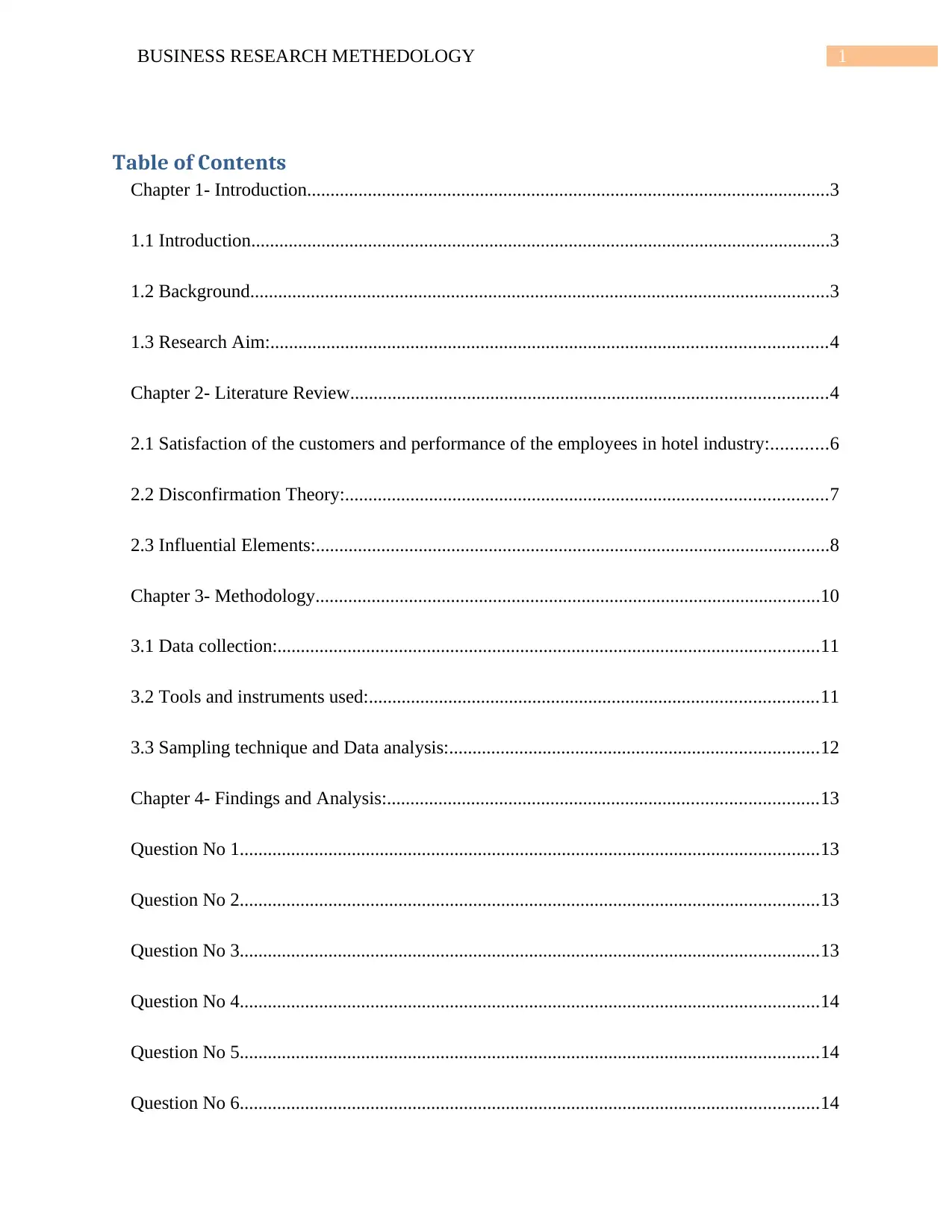
Table of Contents
Chapter 1- Introduction................................................................................................................3
1.1 Introduction............................................................................................................................3
1.2 Background............................................................................................................................3
1.3 Research Aim:.......................................................................................................................4
Chapter 2- Literature Review......................................................................................................4
2.1 Satisfaction of the customers and performance of the employees in hotel industry:............6
2.2 Disconfirmation Theory:.......................................................................................................7
2.3 Influential Elements:..............................................................................................................8
Chapter 3- Methodology............................................................................................................10
3.1 Data collection:....................................................................................................................11
3.2 Tools and instruments used:................................................................................................11
3.3 Sampling technique and Data analysis:...............................................................................12
Chapter 4- Findings and Analysis:............................................................................................13
Question No 1............................................................................................................................13
Question No 2............................................................................................................................13
Question No 3............................................................................................................................13
Question No 4............................................................................................................................14
Question No 5............................................................................................................................14
Question No 6............................................................................................................................14
Table of Contents
Chapter 1- Introduction................................................................................................................3
1.1 Introduction............................................................................................................................3
1.2 Background............................................................................................................................3
1.3 Research Aim:.......................................................................................................................4
Chapter 2- Literature Review......................................................................................................4
2.1 Satisfaction of the customers and performance of the employees in hotel industry:............6
2.2 Disconfirmation Theory:.......................................................................................................7
2.3 Influential Elements:..............................................................................................................8
Chapter 3- Methodology............................................................................................................10
3.1 Data collection:....................................................................................................................11
3.2 Tools and instruments used:................................................................................................11
3.3 Sampling technique and Data analysis:...............................................................................12
Chapter 4- Findings and Analysis:............................................................................................13
Question No 1............................................................................................................................13
Question No 2............................................................................................................................13
Question No 3............................................................................................................................13
Question No 4............................................................................................................................14
Question No 5............................................................................................................................14
Question No 6............................................................................................................................14
2BUSINESS RESEARCH METHEDOLOGY
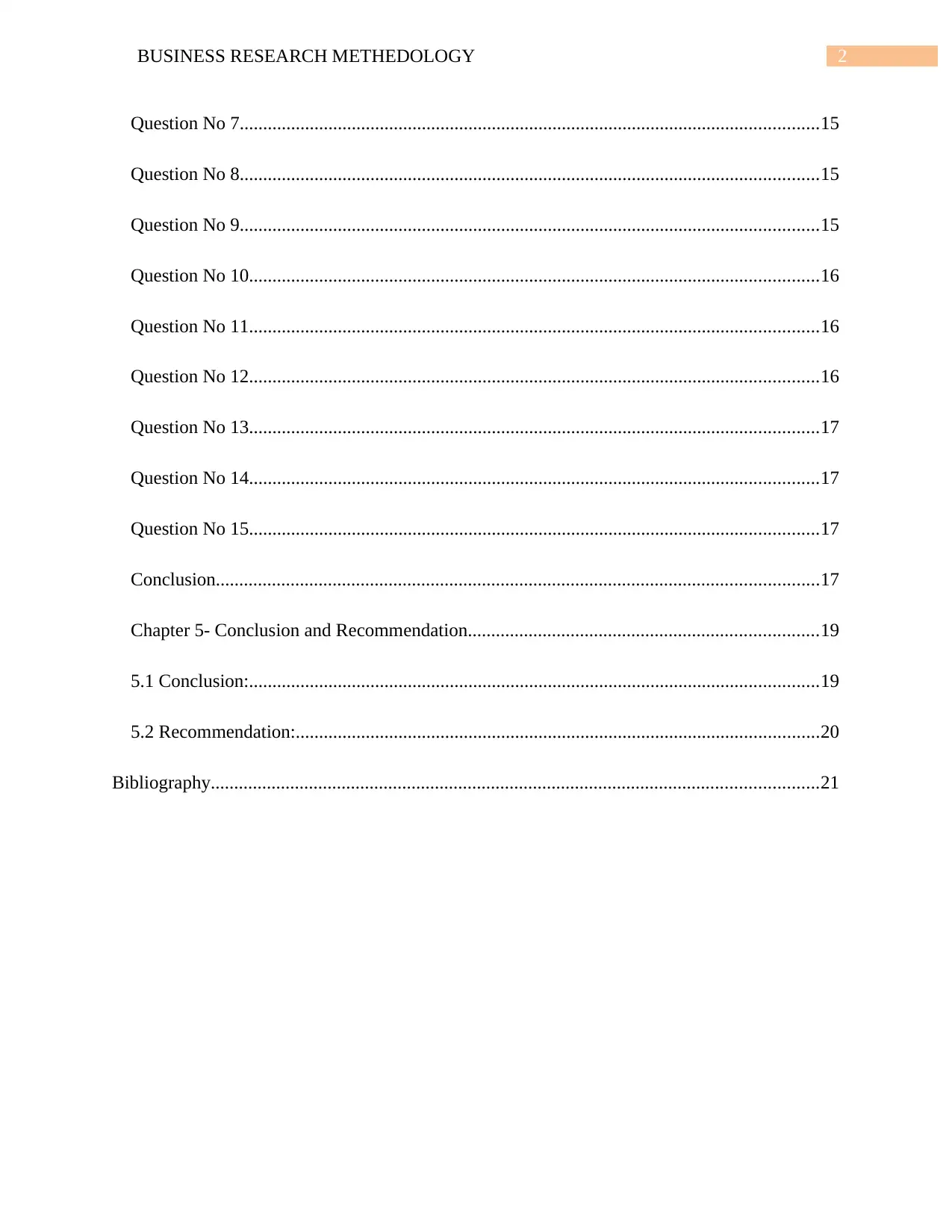
Question No 7............................................................................................................................15
Question No 8............................................................................................................................15
Question No 9............................................................................................................................15
Question No 10..........................................................................................................................16
Question No 11..........................................................................................................................16
Question No 12..........................................................................................................................16
Question No 13..........................................................................................................................17
Question No 14..........................................................................................................................17
Question No 15..........................................................................................................................17
Conclusion.................................................................................................................................17
Chapter 5- Conclusion and Recommendation...........................................................................19
5.1 Conclusion:..........................................................................................................................19
5.2 Recommendation:................................................................................................................20
Bibliography..................................................................................................................................21
Question No 7............................................................................................................................15
Question No 8............................................................................................................................15
Question No 9............................................................................................................................15
Question No 10..........................................................................................................................16
Question No 11..........................................................................................................................16
Question No 12..........................................................................................................................16
Question No 13..........................................................................................................................17
Question No 14..........................................................................................................................17
Question No 15..........................................................................................................................17
Conclusion.................................................................................................................................17
Chapter 5- Conclusion and Recommendation...........................................................................19
5.1 Conclusion:..........................................................................................................................19
5.2 Recommendation:................................................................................................................20
Bibliography..................................................................................................................................21
⊘ This is a preview!⊘
Do you want full access?
Subscribe today to unlock all pages.

Trusted by 1+ million students worldwide
3BUSINESS RESEARCH METHEDOLOGY
Topic- Employee behavior and its impact on guest satisfaction
Chapter 1- Introduction
1.1 Introduction
The present study investigates employee behavior and its impact on the customer
satisfaction of hotel organizations. In any hospitality sector, employee behavior holds a
significant value for organization and customer satisfaction. Particularly, in the service industry,
the level of customer satisfaction depends on employee behavior, attitudes and other similar
aspects. Employee behaviors are defined as different sequence of actions performed by the
employees within the organization(Ariffin & Maghzi, 2017). Here, some of the behavioral
attributes could be positive and indicate the constructive actions of employees and customers
while the rest of the attributes could be negative and could destroy a healthy and productive work
environment. However, it is certain that employee behavior can influence customer satisfaction
but it is not known that to what extent employee behavior can influence guest satisfaction in the
hotel industry. Therefore, the present study investigates the employee behavior and all related
aspects associated with it and the customer satisfaction. This investigation is necessary because
success of hotel organizations depends on customer satisfaction and in the service industry,
customer satisfaction is depended on how the employees of the hotel is treating the customers.
1.2 Background
Quality of service and customer satisfaction in the hotel industry largely depends on the
employees. It is believed that the behavior shown by employees towards customer’s perception
of service quality and their satisfaction(Brinkmann S. , 2014). It is mentioned that employees
have a great impact than other factors on customer satisfaction. In this sense, it is of great
significance that employees show appropriate behaviors for a service experience that customer
Topic- Employee behavior and its impact on guest satisfaction
Chapter 1- Introduction
1.1 Introduction
The present study investigates employee behavior and its impact on the customer
satisfaction of hotel organizations. In any hospitality sector, employee behavior holds a
significant value for organization and customer satisfaction. Particularly, in the service industry,
the level of customer satisfaction depends on employee behavior, attitudes and other similar
aspects. Employee behaviors are defined as different sequence of actions performed by the
employees within the organization(Ariffin & Maghzi, 2017). Here, some of the behavioral
attributes could be positive and indicate the constructive actions of employees and customers
while the rest of the attributes could be negative and could destroy a healthy and productive work
environment. However, it is certain that employee behavior can influence customer satisfaction
but it is not known that to what extent employee behavior can influence guest satisfaction in the
hotel industry. Therefore, the present study investigates the employee behavior and all related
aspects associated with it and the customer satisfaction. This investigation is necessary because
success of hotel organizations depends on customer satisfaction and in the service industry,
customer satisfaction is depended on how the employees of the hotel is treating the customers.
1.2 Background
Quality of service and customer satisfaction in the hotel industry largely depends on the
employees. It is believed that the behavior shown by employees towards customer’s perception
of service quality and their satisfaction(Brinkmann S. , 2014). It is mentioned that employees
have a great impact than other factors on customer satisfaction. In this sense, it is of great
significance that employees show appropriate behaviors for a service experience that customer
Paraphrase This Document
Need a fresh take? Get an instant paraphrase of this document with our AI Paraphraser
4BUSINESS RESEARCH METHEDOLOGY
perceives as pleasing and high quality(Delcourt C. , Gremler, Van Riel, & Van Birgelen , 2013).
There were many studies that tried to investigate the idea of employee’s behavior and its relation
to customer satisfaction. It is mentioned that a smiling face always has a beneficial effect on
guest satisfaction(Eccles , Ioannou , & Serafeim, 2012). On the other side, it has been implied
that the significance of friendly behaviors such as friendliness, familiarity, responsiveness and
trustworthiness enhances service outcome and long-term relationship(Evanschitzky, Sharma, &
Prykop, 2012). Another experimental study presented by the scholars mentioned that the effect
of respectful staff’s behavior on service encounter satisfaction and their study found a positive
employees’ behavior enhanced customer service encounter satisfaction(Fan & Suh, 2014). In
order to learn more about the role of employees on customer satisfaction in the hotel industry,
the present study investigates these variables employee behavior and customer satisfaction.
1.3 Research Aim:
The primary aim of the research is to investigate how employee behavior creates impact on
customer satisfaction. Likewise, the research also sheds light on the components associated with
employee behavior and customer satisfaction. The following are the key objectives of the study:
To identify different components that compromise employee behavior
To study the outcome of customer satisfaction
To study how employee behavior affects customer satisfaction
Chapter 2- Literature Review
With the help of reviewing the literature, it can be seen that there were many studies that
has been conducted tried in examining the idea of the behaviour of the employees as well as the
relation of the behaviour of the employees in providing satisfaction to the customers. For
perceives as pleasing and high quality(Delcourt C. , Gremler, Van Riel, & Van Birgelen , 2013).
There were many studies that tried to investigate the idea of employee’s behavior and its relation
to customer satisfaction. It is mentioned that a smiling face always has a beneficial effect on
guest satisfaction(Eccles , Ioannou , & Serafeim, 2012). On the other side, it has been implied
that the significance of friendly behaviors such as friendliness, familiarity, responsiveness and
trustworthiness enhances service outcome and long-term relationship(Evanschitzky, Sharma, &
Prykop, 2012). Another experimental study presented by the scholars mentioned that the effect
of respectful staff’s behavior on service encounter satisfaction and their study found a positive
employees’ behavior enhanced customer service encounter satisfaction(Fan & Suh, 2014). In
order to learn more about the role of employees on customer satisfaction in the hotel industry,
the present study investigates these variables employee behavior and customer satisfaction.
1.3 Research Aim:
The primary aim of the research is to investigate how employee behavior creates impact on
customer satisfaction. Likewise, the research also sheds light on the components associated with
employee behavior and customer satisfaction. The following are the key objectives of the study:
To identify different components that compromise employee behavior
To study the outcome of customer satisfaction
To study how employee behavior affects customer satisfaction
Chapter 2- Literature Review
With the help of reviewing the literature, it can be seen that there were many studies that
has been conducted tried in examining the idea of the behaviour of the employees as well as the
relation of the behaviour of the employees in providing satisfaction to the customers. For
5BUSINESS RESEARCH METHEDOLOGY
example: It is commented that the smiling gesture of the employees has positive impact on the
satisfaction of employees(Gin Choi, Known, & Kim, 2013). There have been different studies
that has been conducted that indicated the proper importance of friendly kind of behaviour that
includes proper politeness, caring as well as responsiveness kind of service staff in order to
improve the outcomes as well as long term relationships with the customers as well. It is
revealed that satisfaction of customers is least dependent on specific kind of relationship with
contact employees as well(Jeon & Choi, 2012).
One experimental study that has been conducted as well as introduced by the scholars
helped in investigating the effect of the respectful behaviour of employees on the satisfaction of
the customers(Jung & Yoon, 2014). The research that has been conducted helped in
understanding that the positive behaviour of employees has helped in increasing the satisfaction
among the customers. Furthermore, it is noticed that a proper personalization dimension that
helped in analysing the information relating to the behaviour of the employees in general with
the customers(Karatepe, 2013). The scale helped in analysing that the employees’ behaviour has
major effect on the satisfaction of the customers.
It is helped in conducting a proper study that helped in analysing as well as testing
propositions that helped in analysing bond or relationships that is interpersonal in nature between
the employees as well as the customers(Keh, Ren, Hill, & Li, 2013). This can help in
significantly influence the positive word of mouth communication and this study helped in
analysing the different dimensions that include trust, familiarity as well as support. According to
some scholars, it is specified that the service providers who are successful in nature help in
investigating the service requirements of the behaviour of employees on satisfaction of
example: It is commented that the smiling gesture of the employees has positive impact on the
satisfaction of employees(Gin Choi, Known, & Kim, 2013). There have been different studies
that has been conducted that indicated the proper importance of friendly kind of behaviour that
includes proper politeness, caring as well as responsiveness kind of service staff in order to
improve the outcomes as well as long term relationships with the customers as well. It is
revealed that satisfaction of customers is least dependent on specific kind of relationship with
contact employees as well(Jeon & Choi, 2012).
One experimental study that has been conducted as well as introduced by the scholars
helped in investigating the effect of the respectful behaviour of employees on the satisfaction of
the customers(Jung & Yoon, 2014). The research that has been conducted helped in
understanding that the positive behaviour of employees has helped in increasing the satisfaction
among the customers. Furthermore, it is noticed that a proper personalization dimension that
helped in analysing the information relating to the behaviour of the employees in general with
the customers(Karatepe, 2013). The scale helped in analysing that the employees’ behaviour has
major effect on the satisfaction of the customers.
It is helped in conducting a proper study that helped in analysing as well as testing
propositions that helped in analysing bond or relationships that is interpersonal in nature between
the employees as well as the customers(Keh, Ren, Hill, & Li, 2013). This can help in
significantly influence the positive word of mouth communication and this study helped in
analysing the different dimensions that include trust, familiarity as well as support. According to
some scholars, it is specified that the service providers who are successful in nature help in
investigating the service requirements of the behaviour of employees on satisfaction of
⊘ This is a preview!⊘
Do you want full access?
Subscribe today to unlock all pages.
Trusted by 1+ million students worldwide
6BUSINESS RESEARCH METHEDOLOGY
customers in the entire hotel industry(Kehoe & Wright, 2013). There is another study that helped
in citing the importance of the behaviour of employees on the satisfaction of the customers.
The recent studies helped in analysing the relationship between the customers as well as
employees during the encounters of the service provided by them. It commented that there is
positive relationship between the internal service that is provided by the employees as well as the
perceptions of the service quality of the customers in the entire hotel industry(Lankenton,
McKnight, & Thatcher, 2014). It is highlighted that the behaviour of employees during their
interactions of service in the hotel industry as there should be a personal linkage with the
customer as well as service provider. The author stated that the more attention has to be provided
to the service providers such as desk clerks, bell men, stewards as well as park rangers who
constantly interact with the customers.
According to the hypothesis that has been conducted, it can be seen that there are two
major topics that include satisfaction of the customers along with the expectation of the
customers from the behaviour of the employees who are working in the hotel industry. The
expectation of the customers is essential in nature to be considered as this will help in analysing
the feeling of the customers whether they are happy or disappointed with the kind of service that
has been provided to them.
2.1 Satisfaction of the customers and performance of the employees in hotel industry:
Proper satisfaction is the attitude or the evaluation that is formed with the help of
expectation of the customers. It is defined that satisfaction is defined as the feeling of the
customer’s pleasure or the disappointment of the customers resulting from comparison of the
perceived performance of the product that is in relation with the expectation of the
customers in the entire hotel industry(Kehoe & Wright, 2013). There is another study that helped
in citing the importance of the behaviour of employees on the satisfaction of the customers.
The recent studies helped in analysing the relationship between the customers as well as
employees during the encounters of the service provided by them. It commented that there is
positive relationship between the internal service that is provided by the employees as well as the
perceptions of the service quality of the customers in the entire hotel industry(Lankenton,
McKnight, & Thatcher, 2014). It is highlighted that the behaviour of employees during their
interactions of service in the hotel industry as there should be a personal linkage with the
customer as well as service provider. The author stated that the more attention has to be provided
to the service providers such as desk clerks, bell men, stewards as well as park rangers who
constantly interact with the customers.
According to the hypothesis that has been conducted, it can be seen that there are two
major topics that include satisfaction of the customers along with the expectation of the
customers from the behaviour of the employees who are working in the hotel industry. The
expectation of the customers is essential in nature to be considered as this will help in analysing
the feeling of the customers whether they are happy or disappointed with the kind of service that
has been provided to them.
2.1 Satisfaction of the customers and performance of the employees in hotel industry:
Proper satisfaction is the attitude or the evaluation that is formed with the help of
expectation of the customers. It is defined that satisfaction is defined as the feeling of the
customer’s pleasure or the disappointment of the customers resulting from comparison of the
perceived performance of the product that is in relation with the expectation of the
Paraphrase This Document
Need a fresh take? Get an instant paraphrase of this document with our AI Paraphraser
7BUSINESS RESEARCH METHEDOLOGY
customers(Mackey & Gass, 2015). Additionally, It is stated that satisfaction of the customers is a
collective outcome of the perception, evaluation as well as the psychological reactions to the
experience of consumption with the product as well as service that has been delivered to
them(Torres & Kline, 2013).
2.2 Disconfirmation Theory:
According to the marketing literature, It is commented that the theory of disconfirmation
emerges as one of the essential functions of the models related to satisfaction(Namasivayam,
Guchait, & Lei, 2014). According to the disconfirmation theory, satisfaction is determined with
the help of the discrepancy between the cognitive standards as well as perceived performance
such as desires as well as expectations of the customers. The five dimensions are essential in
nature as this helps in analysing the discrepancy gaps that is occurred within the expectation as
well as satisfaction of the customers.
The disconfirmation theory helps in analysing the different issues that can crop up in the
process of the satisfying the requirements of the customers. The satisfaction of the customers is
one of the essential criteria that is required in order to improve the different discrepancy gaps as
well as the other issues that is faced by the organization along with the reputation of the hotel as
well.
Furthermore, It is commented that the satisfaction of the tourists along with providing
proper and quality service is essential in nature and this plays an essential role in understanding
the requirements of the tourists(Oliver, 2014). This is one of the essential indicators that is
dependent with the performance of the employees along with the behaviour of the employees as
well.
customers(Mackey & Gass, 2015). Additionally, It is stated that satisfaction of the customers is a
collective outcome of the perception, evaluation as well as the psychological reactions to the
experience of consumption with the product as well as service that has been delivered to
them(Torres & Kline, 2013).
2.2 Disconfirmation Theory:
According to the marketing literature, It is commented that the theory of disconfirmation
emerges as one of the essential functions of the models related to satisfaction(Namasivayam,
Guchait, & Lei, 2014). According to the disconfirmation theory, satisfaction is determined with
the help of the discrepancy between the cognitive standards as well as perceived performance
such as desires as well as expectations of the customers. The five dimensions are essential in
nature as this helps in analysing the discrepancy gaps that is occurred within the expectation as
well as satisfaction of the customers.
The disconfirmation theory helps in analysing the different issues that can crop up in the
process of the satisfying the requirements of the customers. The satisfaction of the customers is
one of the essential criteria that is required in order to improve the different discrepancy gaps as
well as the other issues that is faced by the organization along with the reputation of the hotel as
well.
Furthermore, It is commented that the satisfaction of the tourists along with providing
proper and quality service is essential in nature and this plays an essential role in understanding
the requirements of the tourists(Oliver, 2014). This is one of the essential indicators that is
dependent with the performance of the employees along with the behaviour of the employees as
well.
8BUSINESS RESEARCH METHEDOLOGY
The recent studies on the performance of employees on the satisfaction of the customers
play a vital role and this will help in improving the techniques of the employees in the hotel
industry to satisfy the tastes and preferences of the customers as well. The disconfirmation
theory helps in studying the satisfaction models that is required to understand the expectation of
the customers as this will help in making proper considerations that are required to make the
changes in the performance of the employees. In order to understand the best indicators of the
service quality in the hotel sector, the experience of tourists is the key indicator that is required in
evaluating the performance as well as serving people properly as well(Pan , 2015).
2.3 Influential Elements:
Considering the fact of customer satisfaction,It is commented that the socio-cultural
background has certain impact on the same(Pannerselvam , 2014). The employee behaviour is
however the major variable for this research, which is further influenced the socio-cultural
background of the customers visiting the organization. For example, some researchers stated that
the people who come from a disturbed background is tended to be less satisfied by the employee
behaviour as the mentality and social perception is disrupted by their background(Ryu, Lee, &
Gon, 2012). On the other side, the service encounters from an organized and rich socio-cultural
background have less complain about the employee behaviour affecting their satisfaction level.
People who are enriched with the social values however provides feedback on the employee
behaviour based on the acceptance and use of values by the employees(Silverman, 2016).
Again, it is argued that the number of visits of the customer to a particular hotel is found
to be influential factor on the customer satisfaction(Taylor, Bogdan, & DeVault, 2015). He
further mentions that a particular customer who has visited the hotel for more than once is
generally found to be satisfied by the employee behaviour, whereas the people who have visited
The recent studies on the performance of employees on the satisfaction of the customers
play a vital role and this will help in improving the techniques of the employees in the hotel
industry to satisfy the tastes and preferences of the customers as well. The disconfirmation
theory helps in studying the satisfaction models that is required to understand the expectation of
the customers as this will help in making proper considerations that are required to make the
changes in the performance of the employees. In order to understand the best indicators of the
service quality in the hotel sector, the experience of tourists is the key indicator that is required in
evaluating the performance as well as serving people properly as well(Pan , 2015).
2.3 Influential Elements:
Considering the fact of customer satisfaction,It is commented that the socio-cultural
background has certain impact on the same(Pannerselvam , 2014). The employee behaviour is
however the major variable for this research, which is further influenced the socio-cultural
background of the customers visiting the organization. For example, some researchers stated that
the people who come from a disturbed background is tended to be less satisfied by the employee
behaviour as the mentality and social perception is disrupted by their background(Ryu, Lee, &
Gon, 2012). On the other side, the service encounters from an organized and rich socio-cultural
background have less complain about the employee behaviour affecting their satisfaction level.
People who are enriched with the social values however provides feedback on the employee
behaviour based on the acceptance and use of values by the employees(Silverman, 2016).
Again, it is argued that the number of visits of the customer to a particular hotel is found
to be influential factor on the customer satisfaction(Taylor, Bogdan, & DeVault, 2015). He
further mentions that a particular customer who has visited the hotel for more than once is
generally found to be satisfied by the employee behaviour, whereas the people who have visited
⊘ This is a preview!⊘
Do you want full access?
Subscribe today to unlock all pages.
Trusted by 1+ million students worldwide
9BUSINESS RESEARCH METHEDOLOGY
the hotel once often are dissatisfied. Therefore, It is opined that the employee behaviour is
individually does not impact on the customer satisfaction and further is impacted by the external
forces from the background of customers(Van Ryzin, 2013). However, it is opined that this fact
is not always true in terms of influencing customer satisfaction because the people who are
visiting the hotel are already satisfied by the employee behaviour as well as the service provided
by the organization(Wang, Tsai, & Tsai, 2014).
In regard to this, scholars mentioned that the interaction with the employees as well as the
management of the organization regarding the service is another major force for influencing the
customer satisfaction. The recent studies on the employee behavioural impact on the customer
satisfaction points it out that the effective and proper interaction of the customers with the
service providing employee creates impact on the emotional aspect of the customers. The
emotional commitment of the consumers is strengthened by the satisfied interaction between
them and the employees. In reverse, positive employee behaviour though the reflection of the
proper communication is capable of satisfying the customer expectation.
On the other hand, the technological factors are another major influential aspect for the
customer satisfaction out of the employee behaviour. It is opined that the technological
competencies of the employees create huge impact on the customer in terms of service
satisfaction(Ariffin & Maghzi, 2017). It is found from his research on the certain context that the
employees who shows excellent technological efficiencies to the customer in serving them, are
provided with good customer satisfaction feedback. Hence, the technologically advanced service
encounters are equally influential on the customer satisfaction along with the quality service and
the overall employee performance.
the hotel once often are dissatisfied. Therefore, It is opined that the employee behaviour is
individually does not impact on the customer satisfaction and further is impacted by the external
forces from the background of customers(Van Ryzin, 2013). However, it is opined that this fact
is not always true in terms of influencing customer satisfaction because the people who are
visiting the hotel are already satisfied by the employee behaviour as well as the service provided
by the organization(Wang, Tsai, & Tsai, 2014).
In regard to this, scholars mentioned that the interaction with the employees as well as the
management of the organization regarding the service is another major force for influencing the
customer satisfaction. The recent studies on the employee behavioural impact on the customer
satisfaction points it out that the effective and proper interaction of the customers with the
service providing employee creates impact on the emotional aspect of the customers. The
emotional commitment of the consumers is strengthened by the satisfied interaction between
them and the employees. In reverse, positive employee behaviour though the reflection of the
proper communication is capable of satisfying the customer expectation.
On the other hand, the technological factors are another major influential aspect for the
customer satisfaction out of the employee behaviour. It is opined that the technological
competencies of the employees create huge impact on the customer in terms of service
satisfaction(Ariffin & Maghzi, 2017). It is found from his research on the certain context that the
employees who shows excellent technological efficiencies to the customer in serving them, are
provided with good customer satisfaction feedback. Hence, the technologically advanced service
encounters are equally influential on the customer satisfaction along with the quality service and
the overall employee performance.
Paraphrase This Document
Need a fresh take? Get an instant paraphrase of this document with our AI Paraphraser
10BUSINESS RESEARCH METHEDOLOGY
Chapter 3- Methodology
The methodology of the nature is based on qualitative nature(Taylor, Bogdan, &
DeVault, 2015). The purpose of choosing this research methodology is based on behavioral
aspect of the employees of the organization. the respondent of the research is the manager of the
organization who have been interviewed. The research methodology analyses the diverse
behavior of theemployees are influenced by the number of factors and further effects them to
behave in a certain manner which satisfy the customers. In addition, the methodology is focused
on the measurement of the satisfaction level of the customers. The manger is responsible for the
maintaining effective relationship with the customers which indicates that the manager is the
appropriate person to be interviewed in terms of understanding the customer satisfaction
level(Oliver, 2014).
The methodology of the nature is based on qualitative nature. The purpose of choosing
this research methodology is based on behavioral aspect of the employees of the organization.
the respondent of the research is the manager of the organization who have been interviewed.
The research methodology analyses the diverse behavior of the employees are influenced by the
number of factors and further effects them to behave in a certain manner which satisfy the
customers. In addition, the methodology is focused on the measurement of the satisfaction level
of the customers(Mackey & Gass, 2015). The manger is responsible for the maintaining effective
relationship with the customers which indicates that the manager is the appropriate person to be
interviewed in terms of understanding the customer satisfaction level.
The qualitative research methodology is based on the inductive and deductive reasoning.
In this research, the researcher applies inductive approach of reasoning, taking into consideration
the observations and experiences of the manager. This consideration has helped the researcher to
Chapter 3- Methodology
The methodology of the nature is based on qualitative nature(Taylor, Bogdan, &
DeVault, 2015). The purpose of choosing this research methodology is based on behavioral
aspect of the employees of the organization. the respondent of the research is the manager of the
organization who have been interviewed. The research methodology analyses the diverse
behavior of theemployees are influenced by the number of factors and further effects them to
behave in a certain manner which satisfy the customers. In addition, the methodology is focused
on the measurement of the satisfaction level of the customers. The manger is responsible for the
maintaining effective relationship with the customers which indicates that the manager is the
appropriate person to be interviewed in terms of understanding the customer satisfaction
level(Oliver, 2014).
The methodology of the nature is based on qualitative nature. The purpose of choosing
this research methodology is based on behavioral aspect of the employees of the organization.
the respondent of the research is the manager of the organization who have been interviewed.
The research methodology analyses the diverse behavior of the employees are influenced by the
number of factors and further effects them to behave in a certain manner which satisfy the
customers. In addition, the methodology is focused on the measurement of the satisfaction level
of the customers(Mackey & Gass, 2015). The manger is responsible for the maintaining effective
relationship with the customers which indicates that the manager is the appropriate person to be
interviewed in terms of understanding the customer satisfaction level.
The qualitative research methodology is based on the inductive and deductive reasoning.
In this research, the researcher applies inductive approach of reasoning, taking into consideration
the observations and experiences of the manager. This consideration has helped the researcher to
11BUSINESS RESEARCH METHEDOLOGY
make relevant linkages between the gathered facts and the theories applied. As the subject matter
of the research is very subjective, deducing conclusions based on the gathered facts is next to
impossible. Herein lays the appropriateness of the other name of inductive approach, “bottom
down”, as the gathered facts are placed in the bottom.
The researcher, for efficient execution of the research, has chosen explorative design. The
major drive behind this is the easy deduction of relevant conclusions according to the structured
design of the research (Brinkmann, 2014). The study attempts to peek into the attempts of the
managers in terms of regulating the performance of the employees in the restaurants. Herein lays
the importance of the policies, specifically the code of conduct. The presentation in this direction
is precise, which assists the researcher to conduct an open-ended investigation at the end of the
research.
3.1 Data collection:
In this research, the researcher desires to apply primary data collection method. The aim
behind this application is the maintenance of originality throughout the research. As a matter of
specification, this research would collect first hand data from the Restaurant and Bar Manager of
a 5 star hotel in Sydney(Kehoe & Wright, 2013). The manager would be interviewed, which
would consist of a set of pre-determined questions. Effective consideration of the responses to
these questions would help the researcher to conduct in-depth investigations, which would be an
added advantage in terms of adding to the reliability of the gathered facts.
3.2 Tools and instruments used:
Interview schedule is the primary tool, which would be used by the researcher to carry
out this research. Within this schedule, a set of questions are included, which is to be answered
make relevant linkages between the gathered facts and the theories applied. As the subject matter
of the research is very subjective, deducing conclusions based on the gathered facts is next to
impossible. Herein lays the appropriateness of the other name of inductive approach, “bottom
down”, as the gathered facts are placed in the bottom.
The researcher, for efficient execution of the research, has chosen explorative design. The
major drive behind this is the easy deduction of relevant conclusions according to the structured
design of the research (Brinkmann, 2014). The study attempts to peek into the attempts of the
managers in terms of regulating the performance of the employees in the restaurants. Herein lays
the importance of the policies, specifically the code of conduct. The presentation in this direction
is precise, which assists the researcher to conduct an open-ended investigation at the end of the
research.
3.1 Data collection:
In this research, the researcher desires to apply primary data collection method. The aim
behind this application is the maintenance of originality throughout the research. As a matter of
specification, this research would collect first hand data from the Restaurant and Bar Manager of
a 5 star hotel in Sydney(Kehoe & Wright, 2013). The manager would be interviewed, which
would consist of a set of pre-determined questions. Effective consideration of the responses to
these questions would help the researcher to conduct in-depth investigations, which would be an
added advantage in terms of adding to the reliability of the gathered facts.
3.2 Tools and instruments used:
Interview schedule is the primary tool, which would be used by the researcher to carry
out this research. Within this schedule, a set of questions are included, which is to be answered
⊘ This is a preview!⊘
Do you want full access?
Subscribe today to unlock all pages.
Trusted by 1+ million students worldwide

1 out of 25


Related Documents


Your All-in-One AI-Powered Toolkit for Academic Success.
+13062052269
info@desklib.com
Available 24*7 on WhatsApp / Email
![[object Object]](/_next/static/media/star-bottom.7253800d.svg)
Unlock your academic potential
Copyright © 2020–2026 A2Z Services. All Rights Reserved. Developed and managed by ZUCOL.