Human Resource Management: Designing an Employee Benefits Package

Verified

Added on  2023/05/28

|24
|1408
|151
Report
AI Summary
This report provides a comprehensive overview of employee compensation and benefits packages within the context of Human Resource Management (HRM). It delves into critical components such as health insurance, highlighting its importance as a foundational element desired by employees. The report emphasizes the inclusion of paid time off, encompassing paid holidays, sick days, vacation, and personal days, as essential aspects of a complete benefits package. Furthermore, it explores the classification of employees as exempt or nonexempt, detailing how overtime is handled for hourly and salaried employees, and the importance of annual salary considerations. The report also covers other benefits like vision insurance and retirement plans, emphasizing their role in attracting and retaining employees. It discusses government regulations influencing compensation, including minimum wage, overtime pay, and equal pay. The report concludes by examining training and development systems, strategic HRM alignment, and issues in strategic HR development, providing a holistic view of compensation and benefits within an HRM framework.

Document Page
HUMAN RESOURCE
MANAGEMENT
tabler-icon-diamond-filled.svg

Paraphrase This Document

Need a fresh take? Get an instant paraphrase of this document with our AI Paraphraser
Document Page
EMPLOYEE COMPENSATION AND BENEFITS PACKAGE
Health insurance: health insurance can be
described as the basic foundation of a
comprehensive employee benefits package
which is needed as well as wanted by
employees (Jackson, Schuler & Jiang, 2014).
Health insurance is usually preferred by all the
employees irrespective of the organization being
multinational or small. The organization that has
been chosen should include health insurance as
their basic criteria in developing a package.
Document Page
EMPLOYEE COMPENSATION AND BENEFITS PACKAGE
Paid offs from work: usually companies
do not include paid offs in their
benefits. Without this benefit any
comprehensive employee benefits
package would be incomplete. In the
form of employee benefits package, the
employers provide numerous options
with respect to paid time off.
Document Page
EMPLOYEE COMPENSATION AND BENEFITS PACKAGE
Some types of paid time off that are
usually included in the employee
benefits package are paid holidays,
paid sick days, paid vacation days,
funeral leave and paid personal days
(Brewster, Chung & Sparrow, 2016).
This company should also include paid
offs in their benefits package.
tabler-icon-diamond-filled.svg

Paraphrase This Document

Need a fresh take? Get an instant paraphrase of this document with our AI Paraphraser
Document Page
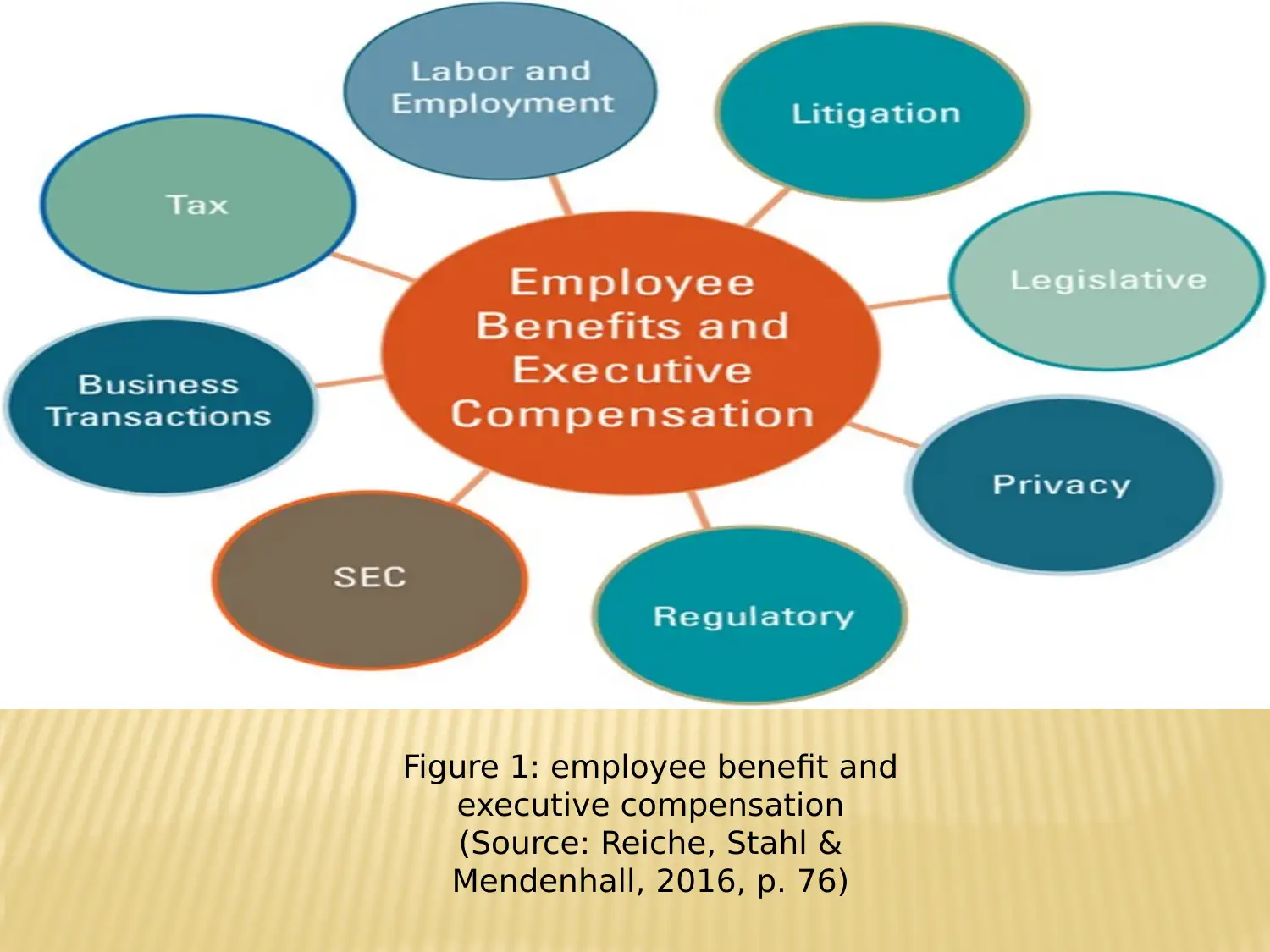
Figure 1: employee benefit and
executive compensation
(Source: Reiche, Stahl &
Mendenhall, 2016, p. 76)
Document Page
EXEMPT OR NONEXEMPT
EMPLOYEES AND HOW OVERTIME
WILL BE HANDLED
Hourly wage: employees that are classified as non
exempt get wages, these wages are calculated based
on the number of hours worked by employees
(Marchington, Wilkinson & Donnelly, 2016). Over
times should also be paid on hourly basis considering
the hard work and dedication of the employees.
Employees that have a specific collective bargaining
agreement along with the department of
management have their salary set by the terms of
contract for a specific time period.
Document Page
EXEMPT OR NONEXEMPT
EMPLOYEES AND HOW OVERTIME
WILL BE HANDLED
Annual salary: there are numerous salaried
employees who are known as non exempt and
as a result they are entitled to the overtime
pay. Salary usually refers to annual income of
an employee which excludes overtime pay.
Salary of an employee can be said as a
particular method of compensation provided
to employees. The term “salaries employee”
usually refers to the one who generally does
not receive pay from over time.
tabler-icon-diamond-filled.svg

Paraphrase This Document

Need a fresh take? Get an instant paraphrase of this document with our AI Paraphraser
Document Page
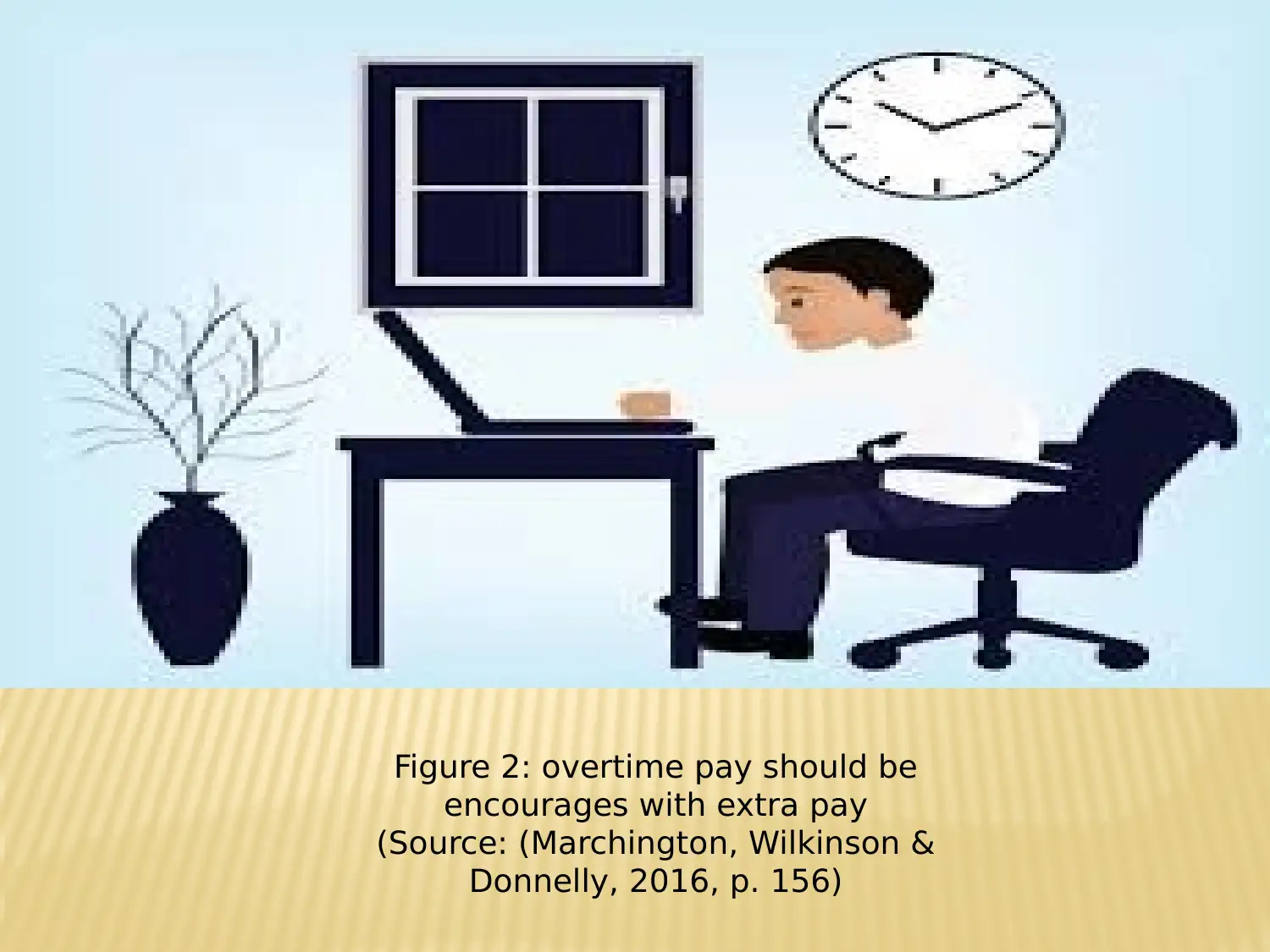
Figure 2: overtime pay should be
encourages with extra pay
(Source: (Marchington, Wilkinson &
Donnelly, 2016, p. 156)
Document Page
OTHER BENEFITS
Vision insurance is usually a very low
cost benefit that can be added to the
package. In most of the cases, this is
an optional addition to the
comprehensive health policy. Vision
insurance usually pays for the
employees in order to have vision
examinations; it also pays a certain
percentage of the required amount for
the corrective equipment.
Document Page
OTHER BENEFITS
Vision insurance can be described as a desirable
component that is included in the list of
employee benefits package. These benefits are
occasionally available with the help of health
benefits provided to the employees.
Retirement plan: a specific competitive base pay,
401(k) plan and a health insurance are the most
important components that should be included in
the benefits provided to employees. This helps
the organization to attract as well as keep honest
and loyal employees in the company.
tabler-icon-diamond-filled.svg

Paraphrase This Document

Need a fresh take? Get an instant paraphrase of this document with our AI Paraphraser
Document Page
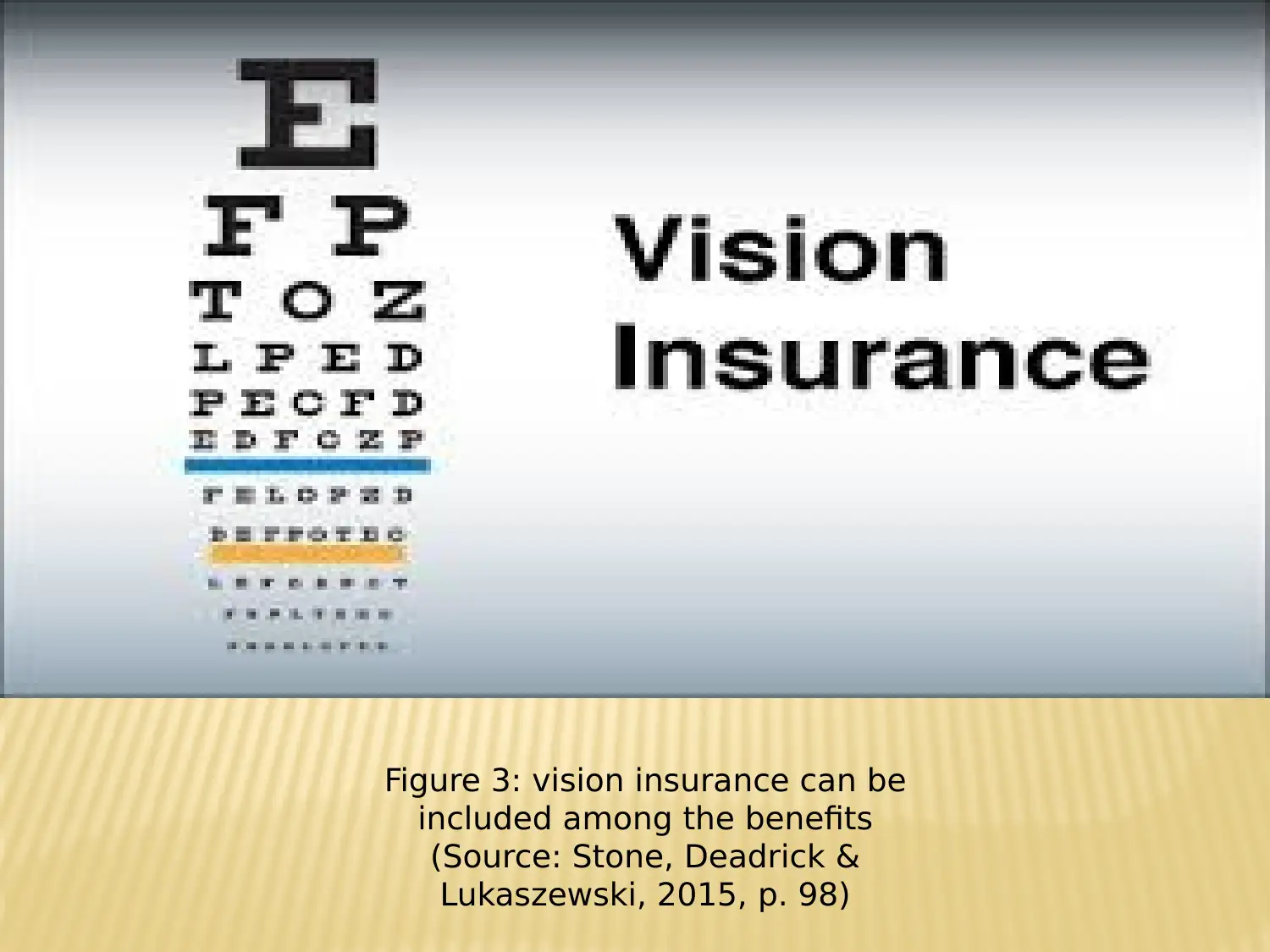
Figure 3: vision insurance can be
included among the benefits
(Source: Stone, Deadrick &
Lukaszewski, 2015, p. 98)
Document Page
OTHER BENEFITS
Annual salary: annual salary is one of the
most important factors that should be
included in the compensation plan. The
employees should be provided with a stable
annual salary irrespective of their
performance. The salary might be increased
based on their performances every month.
The stable salary should not be affected
otherwise and the incentive or over pay
might vary every month.
chevron_up_icon
1 out of 24
circle_padding
hide_on_mobile
zoom_out_icon
[object Object]