Impact of Employee Motivation on Sales and Profitability at M&S
VerifiedAdded on 2020/01/23
|43
|9911
|217
Report
AI Summary
This report assesses the impact of employee motivation on the sales and profitability of Marks and Spencer (M&S). It explores the connection between employee motivation techniques, such as rewards and recognition, and their influence on sales and profit. The study reviews literature on employee motivation, including theories like Maslow's hierarchy and Herzberg's theory, and sales and profitability models. The research employs a case study approach, analyzing M&S's strategies and challenges. The report highlights the importance of employee motivation for retail organizations, especially in customer-facing roles. Findings suggest that motivational techniques directly affect organizational performance, and recommendations are provided for M&S to enhance employee engagement and improve business outcomes. The report also discusses limitations and suggests areas for future research.
ASSESS THE IMPACT OF EMPLOYEE MOTIVATION ON SALES AND
PROFITABILITY IN AN ORGANISATION: A STUDY BASED ON MARKS
AND SPENCER
1
PROFITABILITY IN AN ORGANISATION: A STUDY BASED ON MARKS
AND SPENCER
1

Paraphrase This Document
Need a fresh take? Get an instant paraphrase of this document with our AI Paraphraser
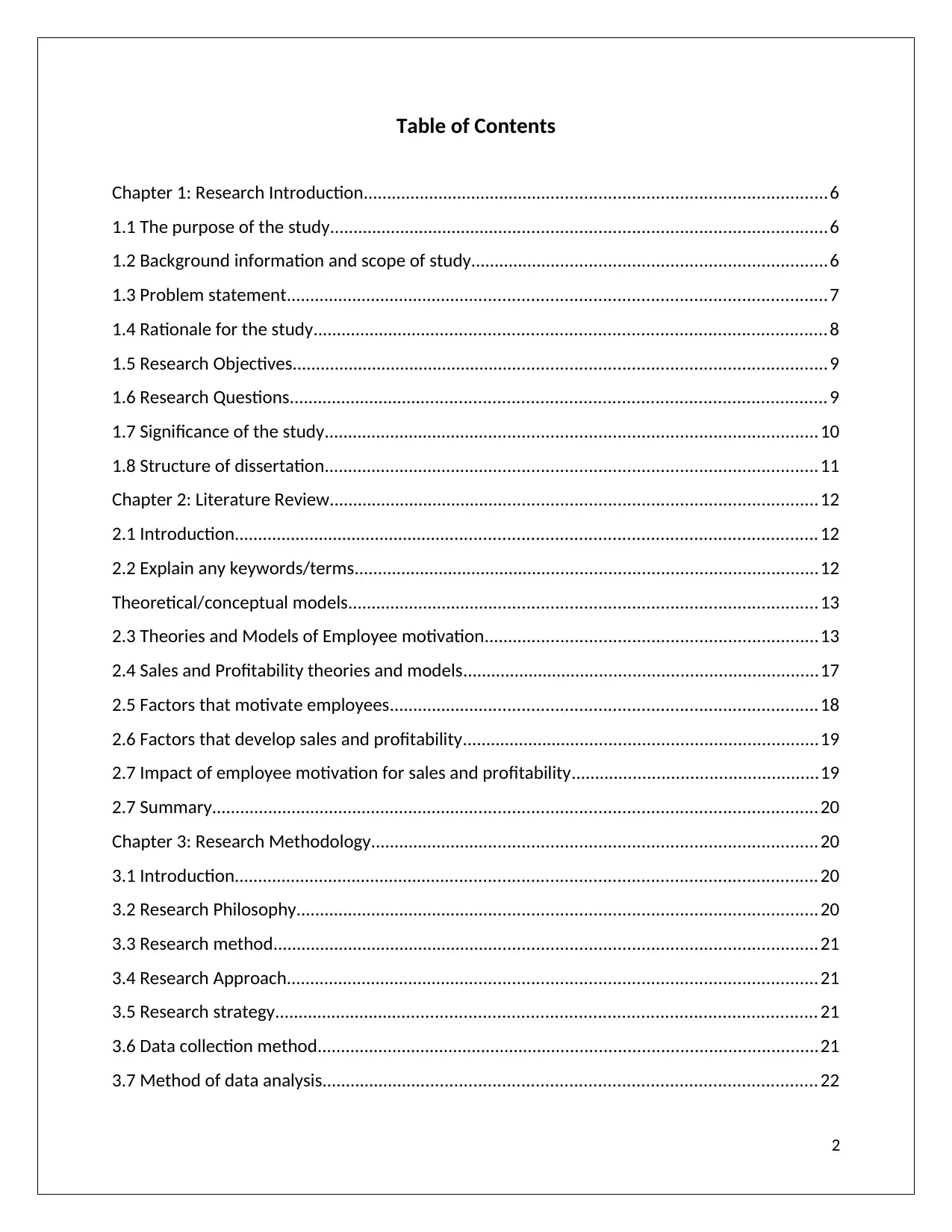
Table of Contents
Chapter 1: Research Introduction..................................................................................................6
1.1 The purpose of the study.........................................................................................................6
1.2 Background information and scope of study...........................................................................6
1.3 Problem statement..................................................................................................................7
1.4 Rationale for the study............................................................................................................ 8
1.5 Research Objectives.................................................................................................................9
1.6 Research Questions................................................................................................................. 9
1.7 Significance of the study........................................................................................................10
1.8 Structure of dissertation........................................................................................................11
Chapter 2: Literature Review.......................................................................................................12
2.1 Introduction........................................................................................................................... 12
2.2 Explain any keywords/terms..................................................................................................12
Theoretical/conceptual models...................................................................................................13
2.3 Theories and Models of Employee motivation......................................................................13
2.4 Sales and Profitability theories and models...........................................................................17
2.5 Factors that motivate employees..........................................................................................18
2.6 Factors that develop sales and profitability...........................................................................19
2.7 Impact of employee motivation for sales and profitability....................................................19
2.7 Summary................................................................................................................................20
Chapter 3: Research Methodology..............................................................................................20
3.1 Introduction........................................................................................................................... 20
3.2 Research Philosophy..............................................................................................................20
3.3 Research method...................................................................................................................21
3.4 Research Approach................................................................................................................21
3.5 Research strategy.................................................................................................................. 21
3.6 Data collection method..........................................................................................................21
3.7 Method of data analysis........................................................................................................ 22
2
Chapter 1: Research Introduction..................................................................................................6
1.1 The purpose of the study.........................................................................................................6
1.2 Background information and scope of study...........................................................................6
1.3 Problem statement..................................................................................................................7
1.4 Rationale for the study............................................................................................................ 8
1.5 Research Objectives.................................................................................................................9
1.6 Research Questions................................................................................................................. 9
1.7 Significance of the study........................................................................................................10
1.8 Structure of dissertation........................................................................................................11
Chapter 2: Literature Review.......................................................................................................12
2.1 Introduction........................................................................................................................... 12
2.2 Explain any keywords/terms..................................................................................................12
Theoretical/conceptual models...................................................................................................13
2.3 Theories and Models of Employee motivation......................................................................13
2.4 Sales and Profitability theories and models...........................................................................17
2.5 Factors that motivate employees..........................................................................................18
2.6 Factors that develop sales and profitability...........................................................................19
2.7 Impact of employee motivation for sales and profitability....................................................19
2.7 Summary................................................................................................................................20
Chapter 3: Research Methodology..............................................................................................20
3.1 Introduction........................................................................................................................... 20
3.2 Research Philosophy..............................................................................................................20
3.3 Research method...................................................................................................................21
3.4 Research Approach................................................................................................................21
3.5 Research strategy.................................................................................................................. 21
3.6 Data collection method..........................................................................................................21
3.7 Method of data analysis........................................................................................................ 22
2
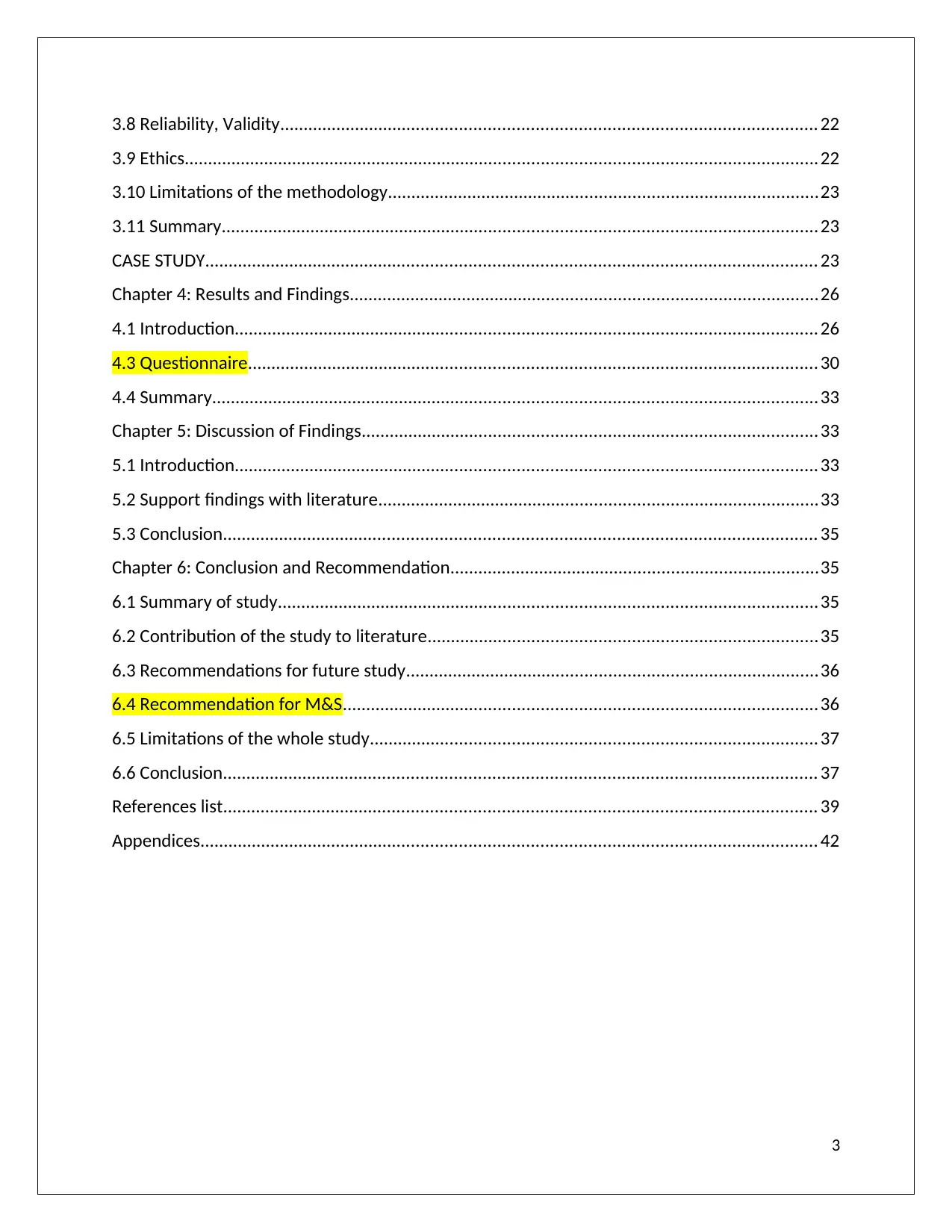
3.8 Reliability, Validity................................................................................................................. 22
3.9 Ethics......................................................................................................................................22
3.10 Limitations of the methodology...........................................................................................23
3.11 Summary..............................................................................................................................23
CASE STUDY................................................................................................................................. 23
Chapter 4: Results and Findings...................................................................................................26
4.1 Introduction........................................................................................................................... 26
4.3 Questionnaire........................................................................................................................ 30
4.4 Summary................................................................................................................................33
Chapter 5: Discussion of Findings................................................................................................33
5.1 Introduction........................................................................................................................... 33
5.2 Support findings with literature.............................................................................................33
5.3 Conclusion............................................................................................................................. 35
Chapter 6: Conclusion and Recommendation..............................................................................35
6.1 Summary of study..................................................................................................................35
6.2 Contribution of the study to literature..................................................................................35
6.3 Recommendations for future study.......................................................................................36
6.4 Recommendation for M&S.................................................................................................... 36
6.5 Limitations of the whole study.............................................................................................. 37
6.6 Conclusion............................................................................................................................. 37
References list............................................................................................................................. 39
Appendices.................................................................................................................................. 42
3
3.9 Ethics......................................................................................................................................22
3.10 Limitations of the methodology...........................................................................................23
3.11 Summary..............................................................................................................................23
CASE STUDY................................................................................................................................. 23
Chapter 4: Results and Findings...................................................................................................26
4.1 Introduction........................................................................................................................... 26
4.3 Questionnaire........................................................................................................................ 30
4.4 Summary................................................................................................................................33
Chapter 5: Discussion of Findings................................................................................................33
5.1 Introduction........................................................................................................................... 33
5.2 Support findings with literature.............................................................................................33
5.3 Conclusion............................................................................................................................. 35
Chapter 6: Conclusion and Recommendation..............................................................................35
6.1 Summary of study..................................................................................................................35
6.2 Contribution of the study to literature..................................................................................35
6.3 Recommendations for future study.......................................................................................36
6.4 Recommendation for M&S.................................................................................................... 36
6.5 Limitations of the whole study.............................................................................................. 37
6.6 Conclusion............................................................................................................................. 37
References list............................................................................................................................. 39
Appendices.................................................................................................................................. 42
3
⊘ This is a preview!⊘
Do you want full access?
Subscribe today to unlock all pages.

Trusted by 1+ million students worldwide
Abstract
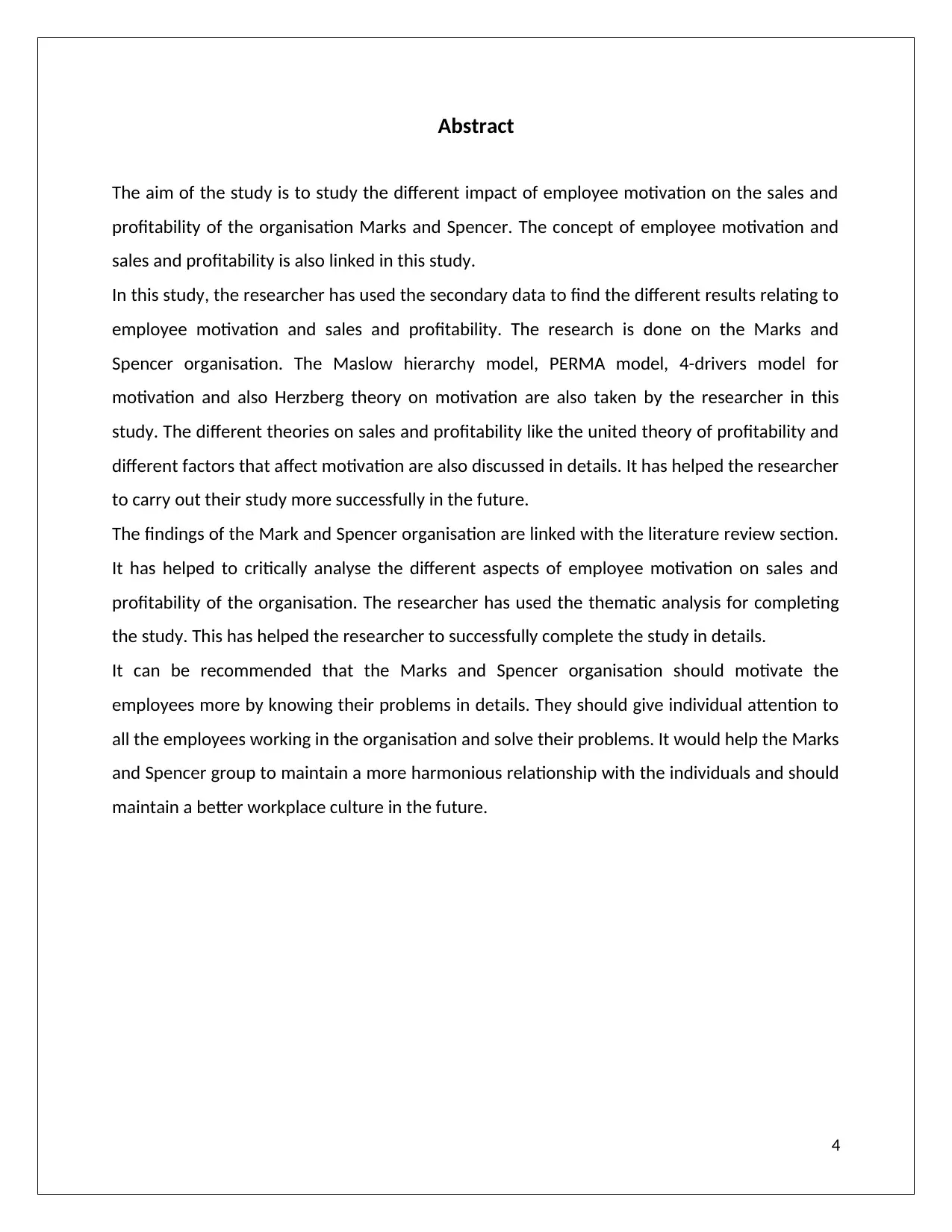
The aim of the study is to study the different impact of employee motivation on the sales and
profitability of the organisation Marks and Spencer. The concept of employee motivation and
sales and profitability is also linked in this study.
In this study, the researcher has used the secondary data to find the different results relating to
employee motivation and sales and profitability. The research is done on the Marks and
Spencer organisation. The Maslow hierarchy model, PERMA model, 4-drivers model for
motivation and also Herzberg theory on motivation are also taken by the researcher in this
study. The different theories on sales and profitability like the united theory of profitability and
different factors that affect motivation are also discussed in details. It has helped the researcher
to carry out their study more successfully in the future.
The findings of the Mark and Spencer organisation are linked with the literature review section.
It has helped to critically analyse the different aspects of employee motivation on sales and
profitability of the organisation. The researcher has used the thematic analysis for completing
the study. This has helped the researcher to successfully complete the study in details.
It can be recommended that the Marks and Spencer organisation should motivate the
employees more by knowing their problems in details. They should give individual attention to
all the employees working in the organisation and solve their problems. It would help the Marks
and Spencer group to maintain a more harmonious relationship with the individuals and should
maintain a better workplace culture in the future.
4
The aim of the study is to study the different impact of employee motivation on the sales and
profitability of the organisation Marks and Spencer. The concept of employee motivation and
sales and profitability is also linked in this study.
In this study, the researcher has used the secondary data to find the different results relating to
employee motivation and sales and profitability. The research is done on the Marks and
Spencer organisation. The Maslow hierarchy model, PERMA model, 4-drivers model for
motivation and also Herzberg theory on motivation are also taken by the researcher in this
study. The different theories on sales and profitability like the united theory of profitability and
different factors that affect motivation are also discussed in details. It has helped the researcher
to carry out their study more successfully in the future.
The findings of the Mark and Spencer organisation are linked with the literature review section.
It has helped to critically analyse the different aspects of employee motivation on sales and
profitability of the organisation. The researcher has used the thematic analysis for completing
the study. This has helped the researcher to successfully complete the study in details.
It can be recommended that the Marks and Spencer organisation should motivate the
employees more by knowing their problems in details. They should give individual attention to
all the employees working in the organisation and solve their problems. It would help the Marks
and Spencer group to maintain a more harmonious relationship with the individuals and should
maintain a better workplace culture in the future.
4
Paraphrase This Document
Need a fresh take? Get an instant paraphrase of this document with our AI Paraphraser
Acknowledgement
Developing this research is one of my best experiences in my life. It provides me the
opportunity to enhance the knowledge and analytical skill. I would like to thank my
supervisor ................................................... for the constant guidance and support during the
process of this research. Finally, I would like to thank professionals from Marks & Spencers who
have participated during the research survey provided the valuable inputs and inspired me
throughout the research process.
Heartfelt Thanks and warmest wishes,
Yours Sincerely,
5
Developing this research is one of my best experiences in my life. It provides me the
opportunity to enhance the knowledge and analytical skill. I would like to thank my
supervisor ................................................... for the constant guidance and support during the
process of this research. Finally, I would like to thank professionals from Marks & Spencers who
have participated during the research survey provided the valuable inputs and inspired me
throughout the research process.
Heartfelt Thanks and warmest wishes,
Yours Sincerely,
5
Chapter 1: Research Introduction
1.1 The purpose of the study
The purpose of the study is to assess the overall impact of employee motivation on the sales
and profitability of the organisation Marks and Spencer.
1.2 Background information and scope of study
As stated previously by Lazaroiu (2015, p. 12), the motivation of the employee affects the sales
of an organisation. The different motivation techniques like giving rewards to the employees,
which help the employees working in the organisation to increase their motivation and in turn
increases the overall sales of an organisation. There are various rewarding techniques like
giving hike in salaries and giving the employees a higher post in the organisation.
On the other hand, it has been stated by Ahmad et al. (2014:20), the motivation of the
employees of an organisation also affects the overall profit of an organisation. The different
motivation techniques help the employees to stay happy and so in results help the organisation
to achieve their desire profit in future (Bauer, 2014). It helps the organisation to achieve an
overall profit in every aspect. There is a presence of positive and harmonious atmosphere
between the employees working in the organisation and they feel motivated to complete their
work.
Background of organisation
The Marks and Spencer group is a multinational British retail company which has its
headquarters located in Westminster, London, the organisation, specialised in the areas of
home products, luxury products and produces different types of homemade products (Lester,
6
1.1 The purpose of the study
The purpose of the study is to assess the overall impact of employee motivation on the sales
and profitability of the organisation Marks and Spencer.
1.2 Background information and scope of study
As stated previously by Lazaroiu (2015, p. 12), the motivation of the employee affects the sales
of an organisation. The different motivation techniques like giving rewards to the employees,
which help the employees working in the organisation to increase their motivation and in turn
increases the overall sales of an organisation. There are various rewarding techniques like
giving hike in salaries and giving the employees a higher post in the organisation.
On the other hand, it has been stated by Ahmad et al. (2014:20), the motivation of the
employees of an organisation also affects the overall profit of an organisation. The different
motivation techniques help the employees to stay happy and so in results help the organisation
to achieve their desire profit in future (Bauer, 2014). It helps the organisation to achieve an
overall profit in every aspect. There is a presence of positive and harmonious atmosphere
between the employees working in the organisation and they feel motivated to complete their
work.
Background of organisation
The Marks and Spencer group is a multinational British retail company which has its
headquarters located in Westminster, London, the organisation, specialised in the areas of
home products, luxury products and produces different types of homemade products (Lester,
6
⊘ This is a preview!⊘
Do you want full access?
Subscribe today to unlock all pages.
Trusted by 1+ million students worldwide
2013). It has a net profit of over 1 billion in the market. It is also successfully enlisted in the
London stock exchange. It has over 853 stores in the whole of U.K
Figure 1: company logo of Mark and Spencer
(Source: Marksandspencer.com, 2017)
1.3 Problem statement
The lack of proper motivational aspects of the employees results in poor performance of the
organisation. It is seen that without proper motivation techniques like giving rewards
recognition and other types of initiatives like the salary hikes would cause lack of the
motivation of the employees in the organisation and affect the overall sales and profit of the
organisation. Especially in a retail organisation when the employees have to face customers
each day. Organisations mainly use the cost-cutting method to engage the staffs with using
social media network and congratulate the employees in achievement.
The low self-confidence of the employees and low expectation of success can create low
motivation to the employees. It has been seen that the employees working in organisations are
also facing the urge to do their work with extra motivation to complete their respective work.
The organisations are facing issue in making interest towards the job role than can lit the
passion to the employees and it leads to the sales growth and profitability to the retail
organisations(Ho et al.2015,p.1550)
7
London stock exchange. It has over 853 stores in the whole of U.K
Figure 1: company logo of Mark and Spencer
(Source: Marksandspencer.com, 2017)
1.3 Problem statement
The lack of proper motivational aspects of the employees results in poor performance of the
organisation. It is seen that without proper motivation techniques like giving rewards
recognition and other types of initiatives like the salary hikes would cause lack of the
motivation of the employees in the organisation and affect the overall sales and profit of the
organisation. Especially in a retail organisation when the employees have to face customers
each day. Organisations mainly use the cost-cutting method to engage the staffs with using
social media network and congratulate the employees in achievement.
The low self-confidence of the employees and low expectation of success can create low
motivation to the employees. It has been seen that the employees working in organisations are
also facing the urge to do their work with extra motivation to complete their respective work.
The organisations are facing issue in making interest towards the job role than can lit the
passion to the employees and it leads to the sales growth and profitability to the retail
organisations(Ho et al.2015,p.1550)
7
Paraphrase This Document
Need a fresh take? Get an instant paraphrase of this document with our AI Paraphraser
1.4 Rationale for the study
What is the issue?
The underlined researcher observed that the employees working in the organisation are greatly
motivated by differently motivated techniques like giving rewards to employees like giving
salary hikes gives extra incentives in their salary and gives different reward recognition on basis
of their performance in the organisation. In this underline study, it can be seen that the
effective motivational techniques are helpful in achieving the overall profit and sales of an
organisation (Wiek and Lang, 2016).
Why is it an issue?
It has been seen that without proper employee motivation in the organisation the employees
do not feel the urge to do their work in the organisation properly (Williams and Glisson, 2014).
It results also in creating less revenue for the organisation. It also affects the overall morale of
the employees working in the organisation. However, in this study, the underlined researcher
has found out the effectiveness of motivation on the employees, which in turn affects the
overall profit and sales of the organisation.
Why is it an issue now?
M&S has more than 76,000 employees in more than 810 retail stores all across the UK (M&S
2016). It has been seen that the lack of employee motivational techniques has affected the
overall sales and profit of the organisation. It has been observed that the effective motivational
techniques are necessary for achieving the overall sales and profit of the organisations.
Therefore, it is very much necessary for the organisation to successfully exhibit the different
motivational techniques to the different employees working in the organisation. M&S uses an
internal network that is Yammer, the management posts images and congratulate the workers
there. The organisation fails to be inspirational and innovate towards employees. Group
revenue was in the year 2016 £10.6 bn, however, international revenue was decreased by 0.4%
from the last year (Wiek and Lang, 2016)
8
What is the issue?
The underlined researcher observed that the employees working in the organisation are greatly
motivated by differently motivated techniques like giving rewards to employees like giving
salary hikes gives extra incentives in their salary and gives different reward recognition on basis
of their performance in the organisation. In this underline study, it can be seen that the
effective motivational techniques are helpful in achieving the overall profit and sales of an
organisation (Wiek and Lang, 2016).
Why is it an issue?
It has been seen that without proper employee motivation in the organisation the employees
do not feel the urge to do their work in the organisation properly (Williams and Glisson, 2014).
It results also in creating less revenue for the organisation. It also affects the overall morale of
the employees working in the organisation. However, in this study, the underlined researcher
has found out the effectiveness of motivation on the employees, which in turn affects the
overall profit and sales of the organisation.
Why is it an issue now?
M&S has more than 76,000 employees in more than 810 retail stores all across the UK (M&S
2016). It has been seen that the lack of employee motivational techniques has affected the
overall sales and profit of the organisation. It has been observed that the effective motivational
techniques are necessary for achieving the overall sales and profit of the organisations.
Therefore, it is very much necessary for the organisation to successfully exhibit the different
motivational techniques to the different employees working in the organisation. M&S uses an
internal network that is Yammer, the management posts images and congratulate the workers
there. The organisation fails to be inspirational and innovate towards employees. Group
revenue was in the year 2016 £10.6 bn, however, international revenue was decreased by 0.4%
from the last year (Wiek and Lang, 2016)
8
What does the researcher shed light on?
In this underlined research, the researcher sheds light on the effective motivational techniques
taken by Marks and Spencer group to increase the sales and profit in the overall market(Okeke
et al.2016,p.79)
1.5 Research Objectives
The objectives of the research are the straightforward objects for this case study. The following are the
objectives;
1. To recognise the strategies of motivating the employees
2. To identify the impact of employee motivation on sales and profit of Marks and
Spencer’s
3. To explore the different issues that Marks and Spencer’s are facing while
successfully implementing the employee motivation, which affects the sales and
profit?
4. To recommend some of the solutions to Marks and Spencer to exhibit the employee
motivation
1.6 Research Questions
The Research questions are the key questions which will be answered thought this research.
1. What are the strategies taken by the organisations to exhibit motivation on the
employees?
2. What is the impact of employee motivation on sales and profitability of Marks
Spencer organisation?
3. What are the different issues in motivation that Marks and Spencer face in exhibiting
to the employees which in turn affects the sales and profit?
9
In this underlined research, the researcher sheds light on the effective motivational techniques
taken by Marks and Spencer group to increase the sales and profit in the overall market(Okeke
et al.2016,p.79)
1.5 Research Objectives
The objectives of the research are the straightforward objects for this case study. The following are the
objectives;
1. To recognise the strategies of motivating the employees
2. To identify the impact of employee motivation on sales and profit of Marks and
Spencer’s
3. To explore the different issues that Marks and Spencer’s are facing while
successfully implementing the employee motivation, which affects the sales and
profit?
4. To recommend some of the solutions to Marks and Spencer to exhibit the employee
motivation
1.6 Research Questions
The Research questions are the key questions which will be answered thought this research.
1. What are the strategies taken by the organisations to exhibit motivation on the
employees?
2. What is the impact of employee motivation on sales and profitability of Marks
Spencer organisation?
3. What are the different issues in motivation that Marks and Spencer face in exhibiting
to the employees which in turn affects the sales and profit?
9
⊘ This is a preview!⊘
Do you want full access?
Subscribe today to unlock all pages.
Trusted by 1+ million students worldwide
4. What could be some of the possible recommendations made by Marks and Spencer
to exhibit employee motivation?
1.7 Significance of the study
The
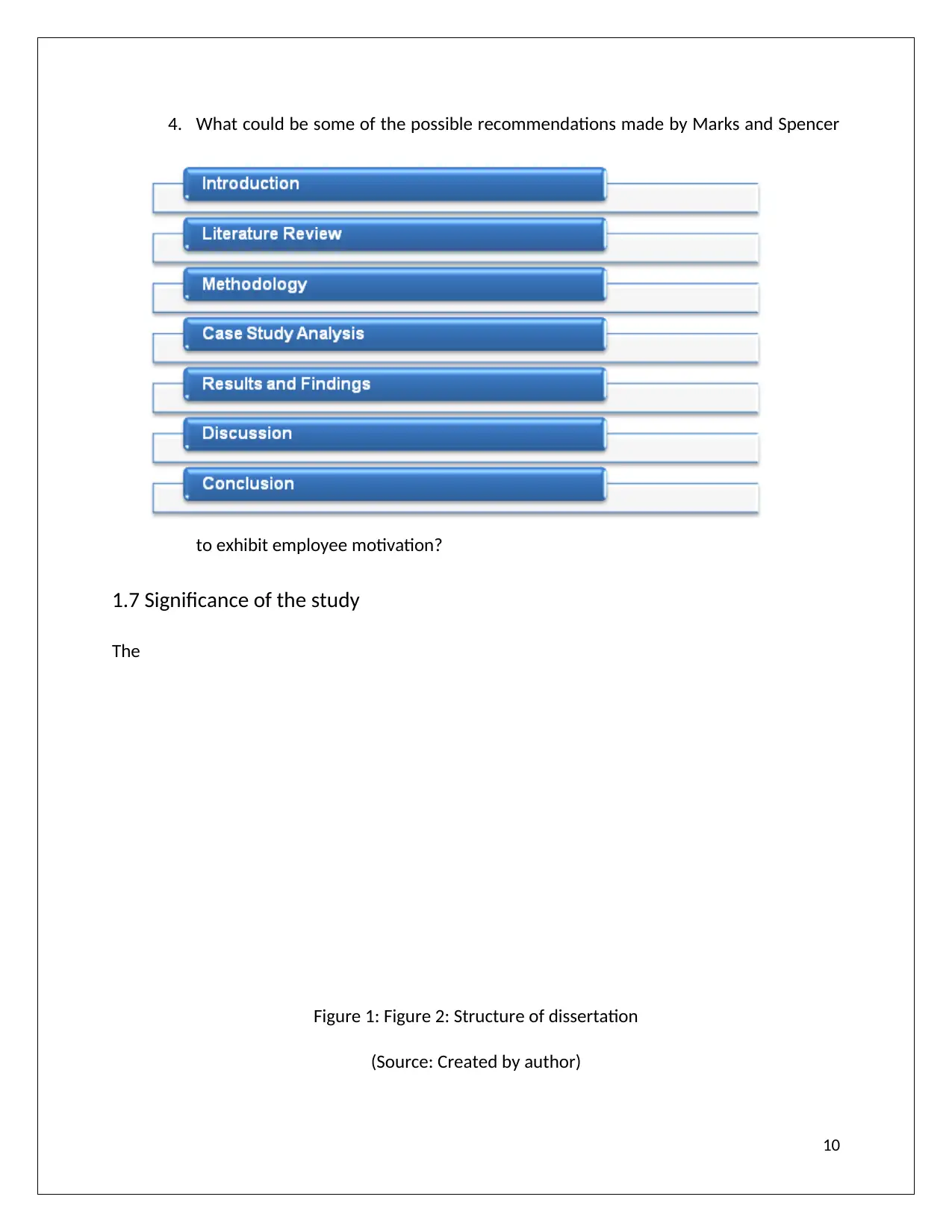
Figure 1: Figure 2: Structure of dissertation
(Source: Created by author)
10
to exhibit employee motivation?
1.7 Significance of the study
The
Figure 1: Figure 2: Structure of dissertation
(Source: Created by author)
10
Paraphrase This Document
Need a fresh take? Get an instant paraphrase of this document with our AI Paraphraser
The underlined research has successfully identified the different factors which are responsible
for increasing the sales and profit by increasing the motivation of the employees. The
identification of these factors will help the organisation to find out different motivation
techniques for increasing the morale of the employees, which in turn would increase the overall
profit, and sales of the organisation. The underlying approach of increasing the motivation of
the employees would help the Marks and Spencer group to increase its overall sales and profit
of the organisation. In this method, it is possible to increase the overall motivation of the
employees working in Marks and Spencer group after completing the underlined research
technique on the competitive nature of Marks and Spencer group.( March and J.G.2013,p.22)
1.8 Structure of dissertation
Chapter 1: In the first chapter, the researcher has formulated aim and objectives of the
research. The researcher has also presented rationale of the research on which this particular
research conducted.
Chapter 2: The second chapter is all about the literature review where the researcher has
revived different types of articles, books and journals in order to analyse the gap of the
research in link with the research topic.
Chapter 3: The third chapter is all about the research methodology where the researcher
showed the how the research has been conducted and what types of research philosophy,
design and approach has been used.
Chapter 4: In the chapter, the researcher has analysed the gained and collected data based on a
source of the literature. The researcher has made in this chapter a good approach to figure out
the outcomes of the research.
11
for increasing the sales and profit by increasing the motivation of the employees. The
identification of these factors will help the organisation to find out different motivation
techniques for increasing the morale of the employees, which in turn would increase the overall
profit, and sales of the organisation. The underlying approach of increasing the motivation of
the employees would help the Marks and Spencer group to increase its overall sales and profit
of the organisation. In this method, it is possible to increase the overall motivation of the
employees working in Marks and Spencer group after completing the underlined research
technique on the competitive nature of Marks and Spencer group.( March and J.G.2013,p.22)
1.8 Structure of dissertation
Chapter 1: In the first chapter, the researcher has formulated aim and objectives of the
research. The researcher has also presented rationale of the research on which this particular
research conducted.
Chapter 2: The second chapter is all about the literature review where the researcher has
revived different types of articles, books and journals in order to analyse the gap of the
research in link with the research topic.
Chapter 3: The third chapter is all about the research methodology where the researcher
showed the how the research has been conducted and what types of research philosophy,
design and approach has been used.
Chapter 4: In the chapter, the researcher has analysed the gained and collected data based on a
source of the literature. The researcher has made in this chapter a good approach to figure out
the outcomes of the research.
11
Chapter 5: This is the final chapter of the research. In this chapter, the researcher mainly made
final outcomes of the research and gave the suggestion of the future improvement. The
researcher has also depicted that whether the aim of the research achieved or not.
Chapter 6: This chapter is all about the self- reflection of research search. In this chapter, the
researcher mainly showed what they learnt and faced issues and challenges while doing this
research.
Chapter 2: Literature Review
2.1 Introduction
In this underlined research, two variables are chosen for conducting the research study. The
first variable is employee motivation and the second variable is sales and profit. The aim of the
study is to assess the overall impact of employee motivation on the sales and profit of the
organisation. Also, this chapter, many theories and models are also taken which relates to
employee motivation. There has been critical and through analysis of the models and theories
which relate to employee motivation and sales and profitability. The literature is concerned
very much with the variables and is most robust, dynamic and huge (Williams and Glisson,
2014). The literature review is also done to analyse the correct gap in the literature. The
underlined employee motivation techniques have helped to increase the overall profit and sales
of the organisation. In this following research, the researcher has taken the aid of different
journals, books and websites for successfully developing the topic.( Mani et al.2015,216)
2.2 Explain any keywords/terms
Concept of employee motivation
The employee motivation is defined as the overall commitment and the overall creativity of the
employees to successfully exhibit their skills in the organisation. The employee's working in an
organisation feels a great urge to work for them. It is a method by which the employees are
12
final outcomes of the research and gave the suggestion of the future improvement. The
researcher has also depicted that whether the aim of the research achieved or not.
Chapter 6: This chapter is all about the self- reflection of research search. In this chapter, the
researcher mainly showed what they learnt and faced issues and challenges while doing this
research.
Chapter 2: Literature Review
2.1 Introduction
In this underlined research, two variables are chosen for conducting the research study. The
first variable is employee motivation and the second variable is sales and profit. The aim of the
study is to assess the overall impact of employee motivation on the sales and profit of the
organisation. Also, this chapter, many theories and models are also taken which relates to
employee motivation. There has been critical and through analysis of the models and theories
which relate to employee motivation and sales and profitability. The literature is concerned
very much with the variables and is most robust, dynamic and huge (Williams and Glisson,
2014). The literature review is also done to analyse the correct gap in the literature. The
underlined employee motivation techniques have helped to increase the overall profit and sales
of the organisation. In this following research, the researcher has taken the aid of different
journals, books and websites for successfully developing the topic.( Mani et al.2015,216)
2.2 Explain any keywords/terms
Concept of employee motivation
The employee motivation is defined as the overall commitment and the overall creativity of the
employees to successfully exhibit their skills in the organisation. The employee's working in an
organisation feels a great urge to work for them. It is a method by which the employees are
12
⊘ This is a preview!⊘
Do you want full access?
Subscribe today to unlock all pages.
Trusted by 1+ million students worldwide

1 out of 43


Related Documents


Your All-in-One AI-Powered Toolkit for Academic Success.
+13062052269
info@desklib.com
Available 24*7 on WhatsApp / Email
![[object Object]](/_next/static/media/star-bottom.7253800d.svg)
Unlock your academic potential
Copyright © 2020–2026 A2Z Services. All Rights Reserved. Developed and managed by ZUCOL.