HI6008 Research Proposal: Impact of Employee Relations at Holmes
VerifiedAdded on 2023/06/15
|11
|2976
|302
Report
AI Summary
This research proposal for HI6008 examines the impact of employee relationship management on employee performance and positive behavior within organizations. It outlines the background, aims, objectives, and research questions related to employee relations. The proposal includes a literature review discussing employee relationship management, employee performance metrics, and the role of positive behavior. It details the research questions and hypotheses, operational definitions of variables, and the methodologies for data collection and analysis, including sampling techniques and methods. The proposal also presents a research process Gantt chart, expected outcomes, and concludes with references. This document is available on Desklib, where students can find a wide range of study resources and solved assignments.
HOLMES INSTITUTE
FACULTY OF HIGHER EDUCATION
HI6008: Research Proposal
Topic: Employee relationship
Name:
Student ID:
Date submitted:
FACULTY OF HIGHER EDUCATION
HI6008: Research Proposal
Topic: Employee relationship
Name:
Student ID:
Date submitted:

Paraphrase This Document
Need a fresh take? Get an instant paraphrase of this document with our AI Paraphraser
Table of Contents
1. Introduction...................................................................................................................................3
1.1 Background of the study..............................................................................................................3
1.2 Research aims and objectives......................................................................................................3
1.3 Research questions......................................................................................................................3
1.4 Research hypothesis....................................................................................................................3
2. Literature review...........................................................................................................................4
2.1 Employee relationship management...........................................................................................4
2.2 Employee performance...............................................................................................................5
2.3 Employee positive behaviour.......................................................................................................5
3. Research questions and hypotheses..............................................................................................5
3.1 Research questions......................................................................................................................5
3.2 Hypotheses..................................................................................................................................6
4. Operational definitions and measurement....................................................................................6
5. Research methodologies: Data collection and analysis.................................................................6
5.1 Sampling techniques....................................................................................................................6
5.2 Method of analysis......................................................................................................................7
6. Research process...........................................................................................................................7
7. Expected outcomes.......................................................................................................................8
8. Conclusion.....................................................................................................................................8
9. References.....................................................................................................................................9
10. Appendix..................................................................................................................................11
1. Introduction...................................................................................................................................3
1.1 Background of the study..............................................................................................................3
1.2 Research aims and objectives......................................................................................................3
1.3 Research questions......................................................................................................................3
1.4 Research hypothesis....................................................................................................................3
2. Literature review...........................................................................................................................4
2.1 Employee relationship management...........................................................................................4
2.2 Employee performance...............................................................................................................5
2.3 Employee positive behaviour.......................................................................................................5
3. Research questions and hypotheses..............................................................................................5
3.1 Research questions......................................................................................................................5
3.2 Hypotheses..................................................................................................................................6
4. Operational definitions and measurement....................................................................................6
5. Research methodologies: Data collection and analysis.................................................................6
5.1 Sampling techniques....................................................................................................................6
5.2 Method of analysis......................................................................................................................7
6. Research process...........................................................................................................................7
7. Expected outcomes.......................................................................................................................8
8. Conclusion.....................................................................................................................................8
9. References.....................................................................................................................................9
10. Appendix..................................................................................................................................11
1. Introduction
1.1 Background of the study
Employees are termed to be a very important part in any organizations. It is
considered that if the relationship among the employees and the employers are good, then
the success rate of a work increases to a much greater extent. Management of relationship
with the employees is an important consideration which should be utilized by the
organizational head (Wang et al. 2015). The development of positive relationship among the
employees and the employers is a main point of concern.
1.2 Research aims and objectives
This research paper aims to provide light on the context of employer relationship
development. The main objectives of this paper are to research the importance of employee
management in organizations (Shen and Benson 2016). Similarly, this research paper also aims
to examine the increase in employee performance due to effective employee management.
1.3 Research questions
This section of the research paper includes the main questions that are aimed for
answering through this research paper.
On the basis of employee relationship management, to what extent does it
solves the problems faced?
Is employee positive behaviour related to employee relationship?
1.4 Research hypothesis
The study conducted in this research paper includes the following hypothesis
There is a relationship among the components of the employee relationship
management and the performance level of the employee.
There are differences among each employee in response to employee
management due to varying traits.
1.1 Background of the study
Employees are termed to be a very important part in any organizations. It is
considered that if the relationship among the employees and the employers are good, then
the success rate of a work increases to a much greater extent. Management of relationship
with the employees is an important consideration which should be utilized by the
organizational head (Wang et al. 2015). The development of positive relationship among the
employees and the employers is a main point of concern.
1.2 Research aims and objectives
This research paper aims to provide light on the context of employer relationship
development. The main objectives of this paper are to research the importance of employee
management in organizations (Shen and Benson 2016). Similarly, this research paper also aims
to examine the increase in employee performance due to effective employee management.
1.3 Research questions
This section of the research paper includes the main questions that are aimed for
answering through this research paper.
On the basis of employee relationship management, to what extent does it
solves the problems faced?
Is employee positive behaviour related to employee relationship?
1.4 Research hypothesis
The study conducted in this research paper includes the following hypothesis
There is a relationship among the components of the employee relationship
management and the performance level of the employee.
There are differences among each employee in response to employee
management due to varying traits.
⊘ This is a preview!⊘
Do you want full access?
Subscribe today to unlock all pages.

Trusted by 1+ million students worldwide
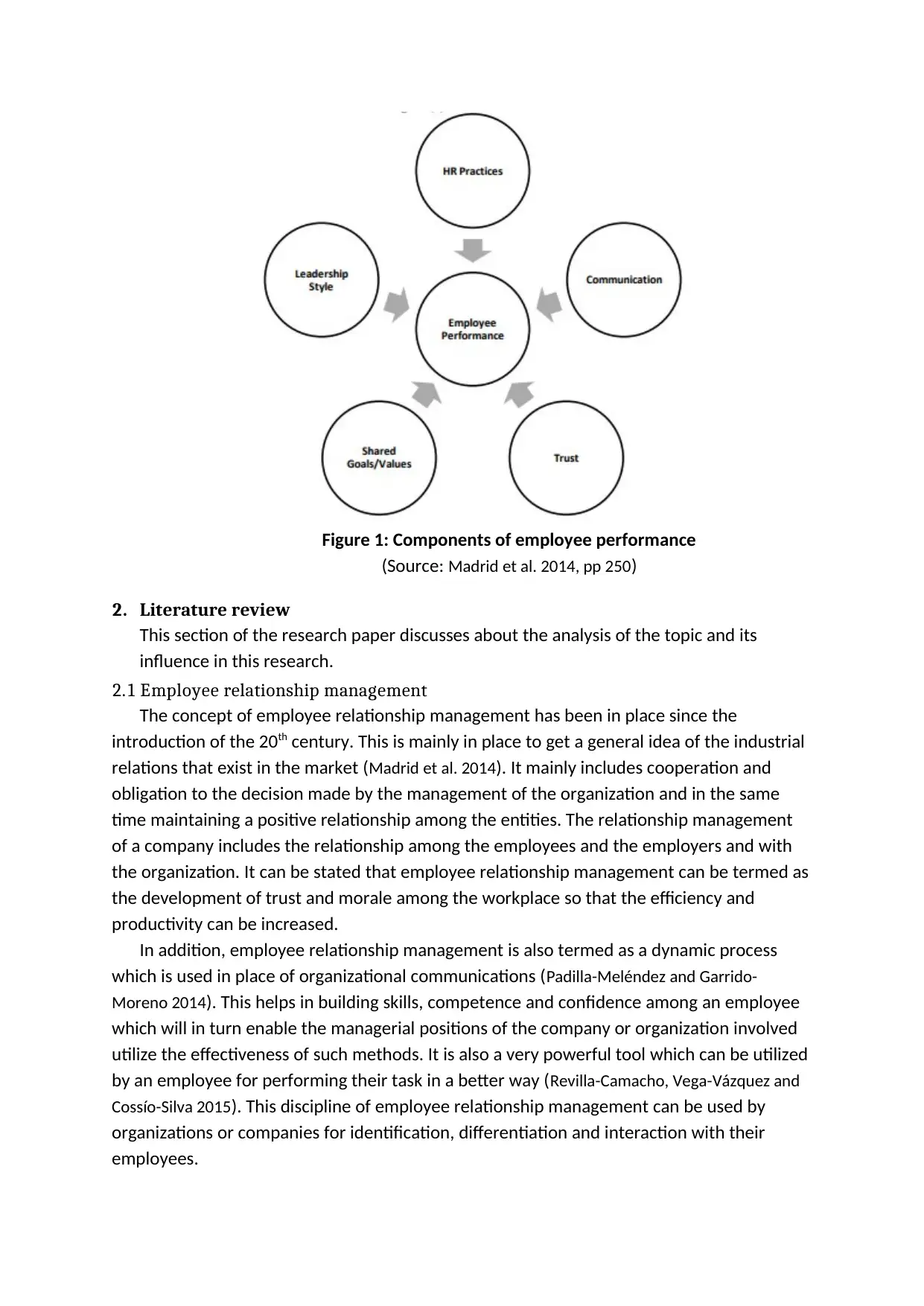
Figure 1: Components of employee performance
(Source: Madrid et al. 2014, pp 250)
2. Literature review
This section of the research paper discusses about the analysis of the topic and its
influence in this research.
2.1 Employee relationship management
The concept of employee relationship management has been in place since the
introduction of the 20th century. This is mainly in place to get a general idea of the industrial
relations that exist in the market (Madrid et al. 2014). It mainly includes cooperation and
obligation to the decision made by the management of the organization and in the same
time maintaining a positive relationship among the entities. The relationship management
of a company includes the relationship among the employees and the employers and with
the organization. It can be stated that employee relationship management can be termed as
the development of trust and morale among the workplace so that the efficiency and
productivity can be increased.
In addition, employee relationship management is also termed as a dynamic process
which is used in place of organizational communications (Padilla-Meléndez and Garrido-
Moreno 2014). This helps in building skills, competence and confidence among an employee
which will in turn enable the managerial positions of the company or organization involved
utilize the effectiveness of such methods. It is also a very powerful tool which can be utilized
by an employee for performing their task in a better way (Revilla-Camacho, Vega-Vázquez and
Cossío-Silva 2015). This discipline of employee relationship management can be used by
organizations or companies for identification, differentiation and interaction with their
employees.
(Source: Madrid et al. 2014, pp 250)
2. Literature review
This section of the research paper discusses about the analysis of the topic and its
influence in this research.
2.1 Employee relationship management
The concept of employee relationship management has been in place since the
introduction of the 20th century. This is mainly in place to get a general idea of the industrial
relations that exist in the market (Madrid et al. 2014). It mainly includes cooperation and
obligation to the decision made by the management of the organization and in the same
time maintaining a positive relationship among the entities. The relationship management
of a company includes the relationship among the employees and the employers and with
the organization. It can be stated that employee relationship management can be termed as
the development of trust and morale among the workplace so that the efficiency and
productivity can be increased.
In addition, employee relationship management is also termed as a dynamic process
which is used in place of organizational communications (Padilla-Meléndez and Garrido-
Moreno 2014). This helps in building skills, competence and confidence among an employee
which will in turn enable the managerial positions of the company or organization involved
utilize the effectiveness of such methods. It is also a very powerful tool which can be utilized
by an employee for performing their task in a better way (Revilla-Camacho, Vega-Vázquez and
Cossío-Silva 2015). This discipline of employee relationship management can be used by
organizations or companies for identification, differentiation and interaction with their
employees.
Paraphrase This Document
Need a fresh take? Get an instant paraphrase of this document with our AI Paraphraser
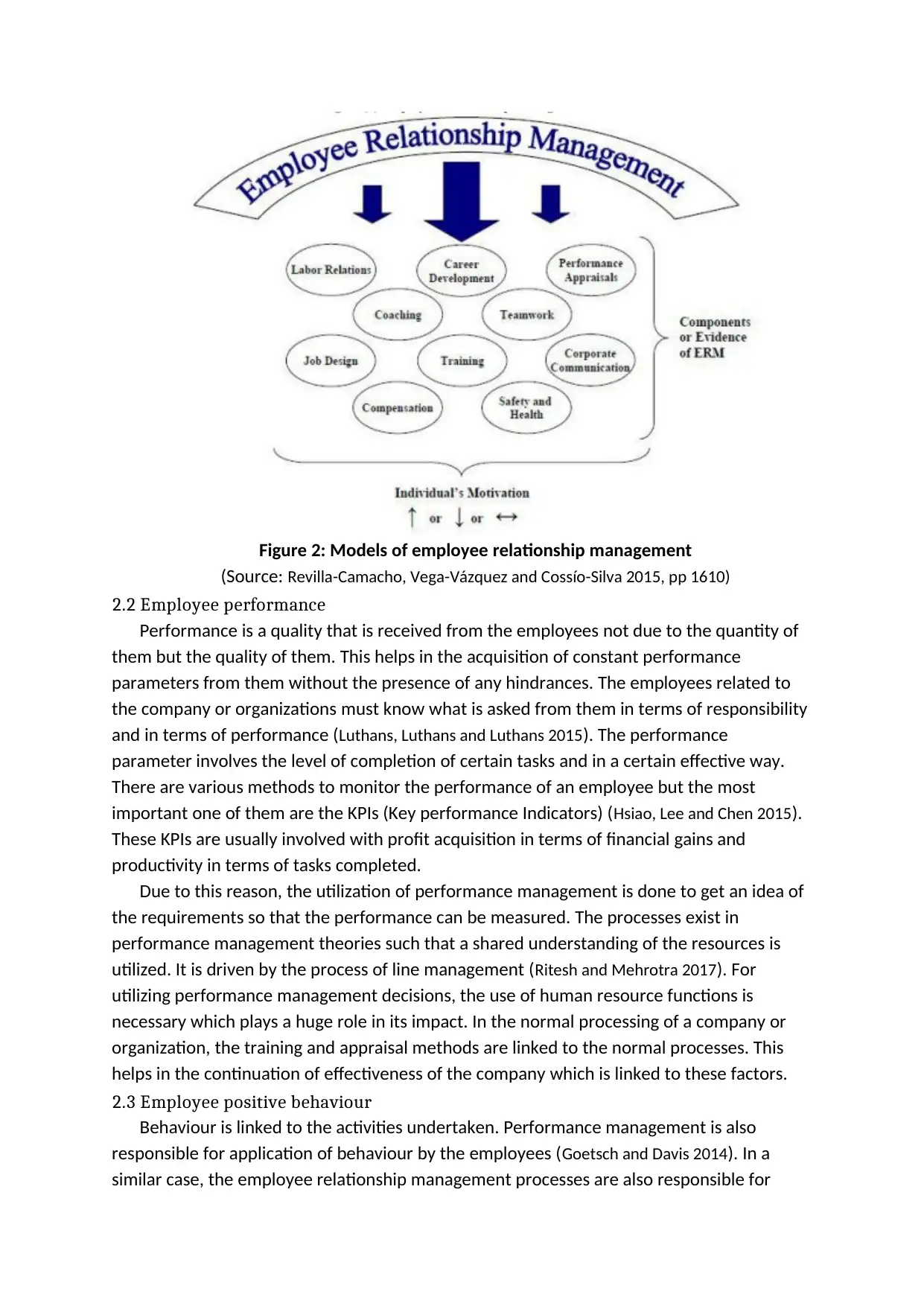
Figure 2: Models of employee relationship management
(Source: Revilla-Camacho, Vega-Vázquez and Cossío-Silva 2015, pp 1610)
2.2 Employee performance
Performance is a quality that is received from the employees not due to the quantity of
them but the quality of them. This helps in the acquisition of constant performance
parameters from them without the presence of any hindrances. The employees related to
the company or organizations must know what is asked from them in terms of responsibility
and in terms of performance (Luthans, Luthans and Luthans 2015). The performance
parameter involves the level of completion of certain tasks and in a certain effective way.
There are various methods to monitor the performance of an employee but the most
important one of them are the KPIs (Key performance Indicators) (Hsiao, Lee and Chen 2015).
These KPIs are usually involved with profit acquisition in terms of financial gains and
productivity in terms of tasks completed.
Due to this reason, the utilization of performance management is done to get an idea of
the requirements so that the performance can be measured. The processes exist in
performance management theories such that a shared understanding of the resources is
utilized. It is driven by the process of line management (Ritesh and Mehrotra 2017). For
utilizing performance management decisions, the use of human resource functions is
necessary which plays a huge role in its impact. In the normal processing of a company or
organization, the training and appraisal methods are linked to the normal processes. This
helps in the continuation of effectiveness of the company which is linked to these factors.
2.3 Employee positive behaviour
Behaviour is linked to the activities undertaken. Performance management is also
responsible for application of behaviour by the employees (Goetsch and Davis 2014). In a
similar case, the employee relationship management processes are also responsible for
(Source: Revilla-Camacho, Vega-Vázquez and Cossío-Silva 2015, pp 1610)
2.2 Employee performance
Performance is a quality that is received from the employees not due to the quantity of
them but the quality of them. This helps in the acquisition of constant performance
parameters from them without the presence of any hindrances. The employees related to
the company or organizations must know what is asked from them in terms of responsibility
and in terms of performance (Luthans, Luthans and Luthans 2015). The performance
parameter involves the level of completion of certain tasks and in a certain effective way.
There are various methods to monitor the performance of an employee but the most
important one of them are the KPIs (Key performance Indicators) (Hsiao, Lee and Chen 2015).
These KPIs are usually involved with profit acquisition in terms of financial gains and
productivity in terms of tasks completed.
Due to this reason, the utilization of performance management is done to get an idea of
the requirements so that the performance can be measured. The processes exist in
performance management theories such that a shared understanding of the resources is
utilized. It is driven by the process of line management (Ritesh and Mehrotra 2017). For
utilizing performance management decisions, the use of human resource functions is
necessary which plays a huge role in its impact. In the normal processing of a company or
organization, the training and appraisal methods are linked to the normal processes. This
helps in the continuation of effectiveness of the company which is linked to these factors.
2.3 Employee positive behaviour
Behaviour is linked to the activities undertaken. Performance management is also
responsible for application of behaviour by the employees (Goetsch and Davis 2014). In a
similar case, the employee relationship management processes are also responsible for
causing changes in the behaviour of the employees. If the employee relationship is termed
to be good by providing appraisals and performance praising, the retention of employees
are also possible which increases the adoption of positive behaviour by the employees. The
use of employee relationship management helps in the efficient handling of employee
performances (Eichorn 2017). In case the relationship with the employees and the
organizations is termed to be good, then the performance is directly impacted due to
increase in satisfaction level.
3. Research questions and hypotheses
3.1 Research questions
This section of the research paper includes the main questions that are aimed for
answering through this research paper.
Primary questions
Is the data gathered from the employees can be effective in research?
How will the data be gathered?
Secondary questions
How much problem is solved by adopting employee relationship
management standards?
Is the relationship linked to employee behaviour?
3.2 Hypotheses
The study conducted in this research paper includes the following hypothesis
There is a relationship among the components of the employee relationship
management and the performance level of the employee.
There are differences among each employee in response to employee
management due to varying traits.
4. Operational definitions and measurement
For this research paper, there are two different variables that will be used for
analysis. These are the dependent and the independent variables (Supanti, Butcher and
Fredline 2015). The dependent variable is considered to be the performance of the
employees. The performance of the employees denotes the rate of production which are
dependent on various other factors. These variables are related to the independent
variables and cannot perform without them. The independent variables are those which
include trust, leadership and human resource operations. Trust is considered to be an
independent variable in this paper mainly because presence or lack of trust between
employees and managers can affect the performance rates. An effective leadership shown
from managers causes the employees to follow them without any associative problems.
Lastly, human resource operations are necessary to handle the other requirements like on-
time salary, appraisals and even bonuses. These independent variables are not dependent
on other variables. The units of measurements will be based on percentage so that a
general analysis will be successfully adopted.
to be good by providing appraisals and performance praising, the retention of employees
are also possible which increases the adoption of positive behaviour by the employees. The
use of employee relationship management helps in the efficient handling of employee
performances (Eichorn 2017). In case the relationship with the employees and the
organizations is termed to be good, then the performance is directly impacted due to
increase in satisfaction level.
3. Research questions and hypotheses
3.1 Research questions
This section of the research paper includes the main questions that are aimed for
answering through this research paper.
Primary questions
Is the data gathered from the employees can be effective in research?
How will the data be gathered?
Secondary questions
How much problem is solved by adopting employee relationship
management standards?
Is the relationship linked to employee behaviour?
3.2 Hypotheses
The study conducted in this research paper includes the following hypothesis
There is a relationship among the components of the employee relationship
management and the performance level of the employee.
There are differences among each employee in response to employee
management due to varying traits.
4. Operational definitions and measurement
For this research paper, there are two different variables that will be used for
analysis. These are the dependent and the independent variables (Supanti, Butcher and
Fredline 2015). The dependent variable is considered to be the performance of the
employees. The performance of the employees denotes the rate of production which are
dependent on various other factors. These variables are related to the independent
variables and cannot perform without them. The independent variables are those which
include trust, leadership and human resource operations. Trust is considered to be an
independent variable in this paper mainly because presence or lack of trust between
employees and managers can affect the performance rates. An effective leadership shown
from managers causes the employees to follow them without any associative problems.
Lastly, human resource operations are necessary to handle the other requirements like on-
time salary, appraisals and even bonuses. These independent variables are not dependent
on other variables. The units of measurements will be based on percentage so that a
general analysis will be successfully adopted.
⊘ This is a preview!⊘
Do you want full access?
Subscribe today to unlock all pages.
Trusted by 1+ million students worldwide
5. Research methodologies: Data collection and analysis
This section of the paper discusses about the methodology of the research. This
section also includes the sample size and the data collection methods.
5.1 Sampling techniques
There are two different types of data collection methods. These are the primary and
the secondary methods (Rahman and Taniya 2017). The primary data collection methods
include those sources which collects information from surveys and questionnaires. The
secondary data collection methods involve utilizing journals and books. This paper has
utilized the primary method of data collections (Albrecht et al. 2015). The data collection
methods will be done by utilizing surveys and questionnaire forms. The sample size of this
paper includes 150 employees. However, for this research paper, 75 employees are selected
based on the time of their workings. Out of the 75 employees, 40% of them will be junior
level employees. 30% will be senior employees and the remaining will be managers. The
sampling technique used in this paper is the probability sampling technique. The responses
will be collected by utilizing surveys and questionnaires. The responses collected from them
will be utilized to make the analysis required for the paper.
5.2 Method of analysis
Data analysis processes involves analysis of the responses captured. There are two
different methods of data analysis which involves the quantitative and the qualitative data
analysis (Navimipour and Soltani 2016). In case of the qualitative data analysis, the analysis
emphasizes on the quality of data analysed. On the other hand, the quantitative data
analysis involves analysis of the respondents on the basis of quantity. For this paper, the
researcher has opted for quantitative data analysis mainly due to the fact that the collection
methods utilize surveys and questionnaires which will be based on quantity (Yuan et al.
2016). In addition, the employees have been asked questions based on the questionnaire
provided in the appendix section of this paper. This type of questionnaire-based
quantitative analysis is done to collect the raw data from the respondent employees.
Moreover, it helps to get a general idea of the responses received. Utilizing the quantitative
data analysis methods, the paper will make a successful data analysis.
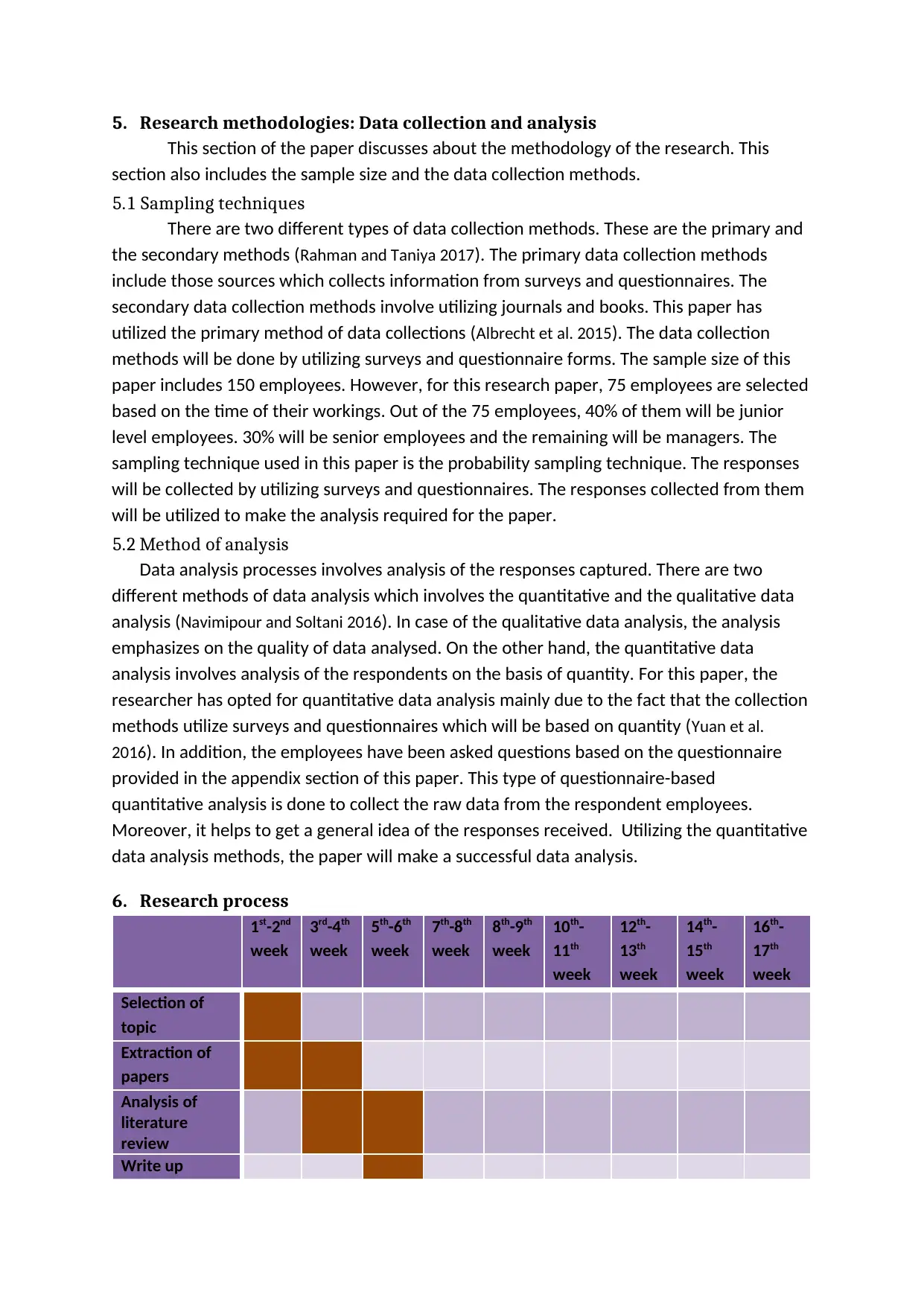
6. Research process
1st-2nd
week
3rd-4th
week
5th-6th
week
7th-8th
week
8th-9th
week
10th-
11th
week
12th-
13th
week
14th-
15th
week
16th-
17th
week
Selection of
topic
Extraction of
papers
Analysis of
literature
review
Write up
This section of the paper discusses about the methodology of the research. This
section also includes the sample size and the data collection methods.
5.1 Sampling techniques
There are two different types of data collection methods. These are the primary and
the secondary methods (Rahman and Taniya 2017). The primary data collection methods
include those sources which collects information from surveys and questionnaires. The
secondary data collection methods involve utilizing journals and books. This paper has
utilized the primary method of data collections (Albrecht et al. 2015). The data collection
methods will be done by utilizing surveys and questionnaire forms. The sample size of this
paper includes 150 employees. However, for this research paper, 75 employees are selected
based on the time of their workings. Out of the 75 employees, 40% of them will be junior
level employees. 30% will be senior employees and the remaining will be managers. The
sampling technique used in this paper is the probability sampling technique. The responses
will be collected by utilizing surveys and questionnaires. The responses collected from them
will be utilized to make the analysis required for the paper.
5.2 Method of analysis
Data analysis processes involves analysis of the responses captured. There are two
different methods of data analysis which involves the quantitative and the qualitative data
analysis (Navimipour and Soltani 2016). In case of the qualitative data analysis, the analysis
emphasizes on the quality of data analysed. On the other hand, the quantitative data
analysis involves analysis of the respondents on the basis of quantity. For this paper, the
researcher has opted for quantitative data analysis mainly due to the fact that the collection
methods utilize surveys and questionnaires which will be based on quantity (Yuan et al.
2016). In addition, the employees have been asked questions based on the questionnaire
provided in the appendix section of this paper. This type of questionnaire-based
quantitative analysis is done to collect the raw data from the respondent employees.
Moreover, it helps to get a general idea of the responses received. Utilizing the quantitative
data analysis methods, the paper will make a successful data analysis.
6. Research process
1st-2nd
week
3rd-4th
week
5th-6th
week
7th-8th
week
8th-9th
week
10th-
11th
week
12th-
13th
week
14th-
15th
week
16th-
17th
week
Selection of
topic
Extraction of
papers
Analysis of
literature
review
Write up
Paraphrase This Document
Need a fresh take? Get an instant paraphrase of this document with our AI Paraphraser
literature
review
Propose
research
questions
Select
appropriate
methodology
Synthesis
through
research
Framework
Write up
research
proposal
Submission of
research
proposal
Data collection
Data analysis
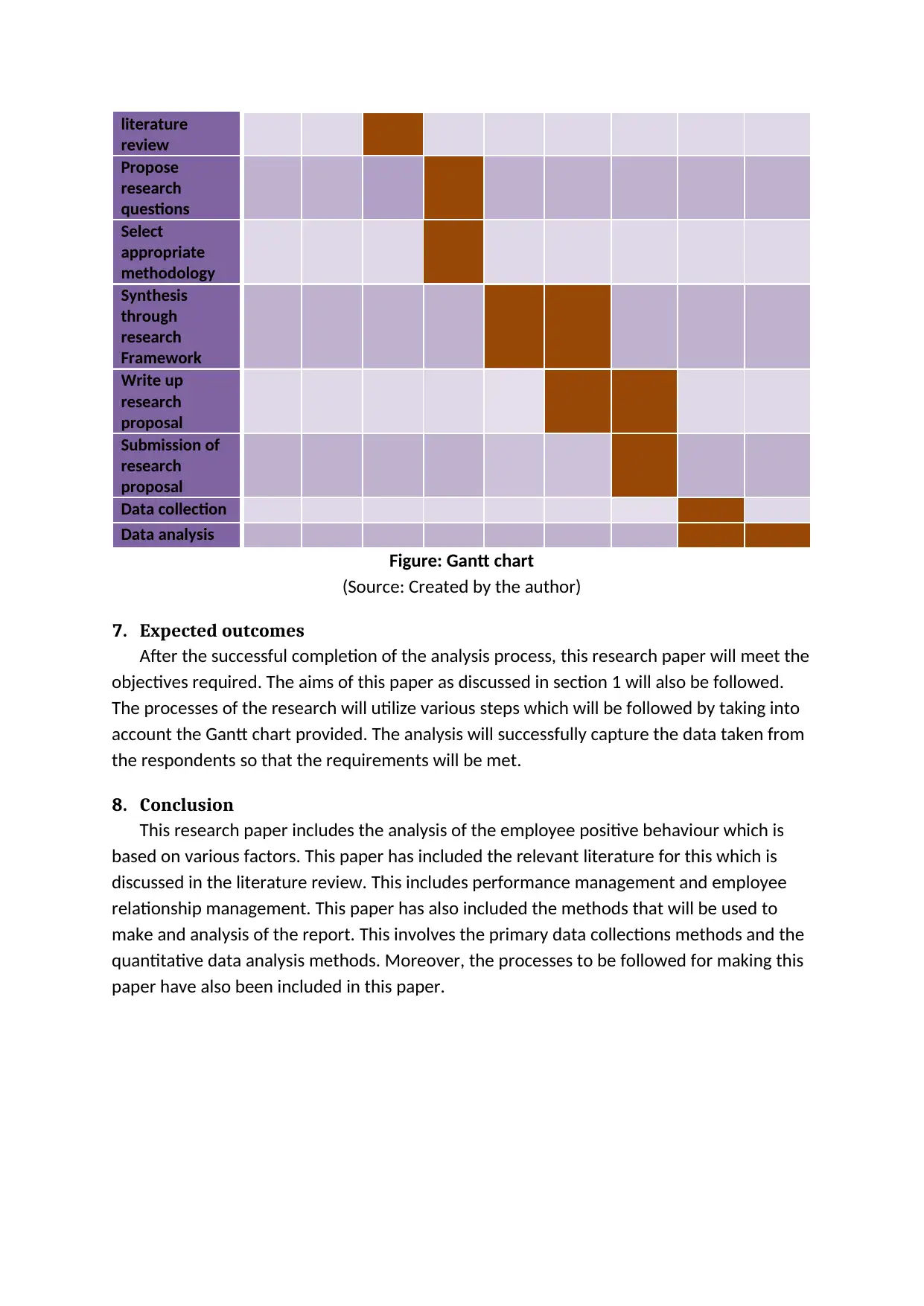
Figure: Gantt chart
(Source: Created by the author)
7. Expected outcomes
After the successful completion of the analysis process, this research paper will meet the
objectives required. The aims of this paper as discussed in section 1 will also be followed.
The processes of the research will utilize various steps which will be followed by taking into
account the Gantt chart provided. The analysis will successfully capture the data taken from
the respondents so that the requirements will be met.
8. Conclusion
This research paper includes the analysis of the employee positive behaviour which is
based on various factors. This paper has included the relevant literature for this which is
discussed in the literature review. This includes performance management and employee
relationship management. This paper has also included the methods that will be used to
make and analysis of the report. This involves the primary data collections methods and the
quantitative data analysis methods. Moreover, the processes to be followed for making this
paper have also been included in this paper.
review
Propose
research
questions
Select
appropriate
methodology
Synthesis
through
research
Framework
Write up
research
proposal
Submission of
research
proposal
Data collection
Data analysis
Figure: Gantt chart
(Source: Created by the author)
7. Expected outcomes
After the successful completion of the analysis process, this research paper will meet the
objectives required. The aims of this paper as discussed in section 1 will also be followed.
The processes of the research will utilize various steps which will be followed by taking into
account the Gantt chart provided. The analysis will successfully capture the data taken from
the respondents so that the requirements will be met.
8. Conclusion
This research paper includes the analysis of the employee positive behaviour which is
based on various factors. This paper has included the relevant literature for this which is
discussed in the literature review. This includes performance management and employee
relationship management. This paper has also included the methods that will be used to
make and analysis of the report. This involves the primary data collections methods and the
quantitative data analysis methods. Moreover, the processes to be followed for making this
paper have also been included in this paper.
9. References
Albrecht, S.L., Bakker, A.B., Gruman, J.A., Macey, W.H. and Saks, A.M., 2015. Employee engagement,
human resource management practices and competitive advantage: An integrated
approach. Journal of Organizational Effectiveness: People and Performance, 2(1), pp.7-35.
Bourne, L., 2016. Stakeholder relationship management: a maturity model for organisational
implementation. CRC Press.
Eichorn, F.L., 2017. Internal customer relationship management (IntCRM) a framework for achieving
customer relationship management from the inside out. Management (open-access), 2, p.1.
Goetsch, D.L. and Davis, S.B., 2014. Quality management for organizational excellence. Upper Saddle
River, NJ: pearson.
Hassan, R.S., Nawaz, A., Lashari, M.N. and Zafar, F., 2015. Effect of customer relationship
management on customer satisfaction. Procedia Economics and Finance, 23, pp.563-567.
Hsiao, C., Lee, Y.H. and Chen, W.J., 2015. The effect of servant leadership on customer value co-
creation: A cross-level analysis of key mediating roles. Tourism Management, 49, pp.45-57.
Jung, H.S. and Yoon, H.H., 2015. The impact of employees’ positive psychological capital on job
satisfaction and organizational citizenship behaviors in the hotel. International Journal of
Contemporary Hospitality Management, 27(6), pp.1135-1156.
Kaufman, B.E. and Taras, D.G., 2016. Nonunion employee representation: history, contemporary
practice and policy. Routledge.
Luthans, F., Luthans, B.C. and Luthans, K.W., 2015. Organizational Behavior: An evidencebased
approach. IAP.
Madrid, H.P., Patterson, M.G., Birdi, K.S., Leiva, P.I. and Kausel, E.E., 2014. The role of weekly high‐
activated positive mood, context, and personality in innovative work behavior: A multilevel and
interactional model. Journal of Organizational Behavior, 35(2), pp.234-256.
Navimipour, N.J. and Soltani, Z., 2016. The impact of cost, technology acceptance and employees'
satisfaction on the effectiveness of the electronic customer relationship management
systems. Computers in Human Behavior, 55, pp.1052-1066.
Norton, T.A., Parker, S.L., Zacher, H. and Ashkanasy, N.M., 2015. Employee green behavior: A
theoretical framework, multilevel review, and future research agenda. Organization &
Environment, 28(1), pp.103-125.
Padilla-Meléndez, A. and Garrido-Moreno, A., 2014. Customer relationship management in hotels:
examining critical success factors. Current Issues in Tourism, 17(5), pp.387-396.
Rahman, M.S. and Taniya, R.K., 2017. Effect of Employee Relationship Management (ERM) on
Employee Performance: A Study on Private Commercial Banks in Bangladesh. Human Resource
Management Research, 7(2), pp.90-96.
Albrecht, S.L., Bakker, A.B., Gruman, J.A., Macey, W.H. and Saks, A.M., 2015. Employee engagement,
human resource management practices and competitive advantage: An integrated
approach. Journal of Organizational Effectiveness: People and Performance, 2(1), pp.7-35.
Bourne, L., 2016. Stakeholder relationship management: a maturity model for organisational
implementation. CRC Press.
Eichorn, F.L., 2017. Internal customer relationship management (IntCRM) a framework for achieving
customer relationship management from the inside out. Management (open-access), 2, p.1.
Goetsch, D.L. and Davis, S.B., 2014. Quality management for organizational excellence. Upper Saddle
River, NJ: pearson.
Hassan, R.S., Nawaz, A., Lashari, M.N. and Zafar, F., 2015. Effect of customer relationship
management on customer satisfaction. Procedia Economics and Finance, 23, pp.563-567.
Hsiao, C., Lee, Y.H. and Chen, W.J., 2015. The effect of servant leadership on customer value co-
creation: A cross-level analysis of key mediating roles. Tourism Management, 49, pp.45-57.
Jung, H.S. and Yoon, H.H., 2015. The impact of employees’ positive psychological capital on job
satisfaction and organizational citizenship behaviors in the hotel. International Journal of
Contemporary Hospitality Management, 27(6), pp.1135-1156.
Kaufman, B.E. and Taras, D.G., 2016. Nonunion employee representation: history, contemporary
practice and policy. Routledge.
Luthans, F., Luthans, B.C. and Luthans, K.W., 2015. Organizational Behavior: An evidencebased
approach. IAP.
Madrid, H.P., Patterson, M.G., Birdi, K.S., Leiva, P.I. and Kausel, E.E., 2014. The role of weekly high‐
activated positive mood, context, and personality in innovative work behavior: A multilevel and
interactional model. Journal of Organizational Behavior, 35(2), pp.234-256.
Navimipour, N.J. and Soltani, Z., 2016. The impact of cost, technology acceptance and employees'
satisfaction on the effectiveness of the electronic customer relationship management
systems. Computers in Human Behavior, 55, pp.1052-1066.
Norton, T.A., Parker, S.L., Zacher, H. and Ashkanasy, N.M., 2015. Employee green behavior: A
theoretical framework, multilevel review, and future research agenda. Organization &
Environment, 28(1), pp.103-125.
Padilla-Meléndez, A. and Garrido-Moreno, A., 2014. Customer relationship management in hotels:
examining critical success factors. Current Issues in Tourism, 17(5), pp.387-396.
Rahman, M.S. and Taniya, R.K., 2017. Effect of Employee Relationship Management (ERM) on
Employee Performance: A Study on Private Commercial Banks in Bangladesh. Human Resource
Management Research, 7(2), pp.90-96.
⊘ This is a preview!⊘
Do you want full access?
Subscribe today to unlock all pages.
Trusted by 1+ million students worldwide
Revilla-Camacho, M.Á., Vega-Vázquez, M. and Cossío-Silva, F.J., 2015. Customer participation and
citizenship behavior effects on turnover intention. Journal of business research, 68(7), pp.1607-1611.
Ritesh, A. and Mehrotra, R., 2017. Innovative Attributes Of Employee Relationship Management And
Its Impact On Retention In Software Industry (No. 2017-06-11).
Shen, J. and Benson, J., 2016. When CSR is a social norm: How socially responsible human resource
management affects employee work behavior. Journal of Management, 42(6), pp.1723-1746.
Supanti, D., Butcher, K. and Fredline, L., 2015. Enhancing the employer-employee relationship
through corporate social responsibility (CSR) engagement. International Journal of Contemporary
Hospitality Management, 27(7), pp.1479-1498.
Wang, X.H.F., Fang, Y., Qureshi, I. and Janssen, O., 2015. Understanding employee innovative
behavior: Integrating the social network and leader–member exchange perspectives. Journal of
organizational Behavior, 36(3), pp.403-420.
Yuan, L., Wu, H., Zhang, L. and Dai, B., 2016. Psychological Contract Breach and Employee Loyalty
Management: A Perspective form Group Identification. Advanced Management Science, 5(1), pp.86-
94.
citizenship behavior effects on turnover intention. Journal of business research, 68(7), pp.1607-1611.
Ritesh, A. and Mehrotra, R., 2017. Innovative Attributes Of Employee Relationship Management And
Its Impact On Retention In Software Industry (No. 2017-06-11).
Shen, J. and Benson, J., 2016. When CSR is a social norm: How socially responsible human resource
management affects employee work behavior. Journal of Management, 42(6), pp.1723-1746.
Supanti, D., Butcher, K. and Fredline, L., 2015. Enhancing the employer-employee relationship
through corporate social responsibility (CSR) engagement. International Journal of Contemporary
Hospitality Management, 27(7), pp.1479-1498.
Wang, X.H.F., Fang, Y., Qureshi, I. and Janssen, O., 2015. Understanding employee innovative
behavior: Integrating the social network and leader–member exchange perspectives. Journal of
organizational Behavior, 36(3), pp.403-420.
Yuan, L., Wu, H., Zhang, L. and Dai, B., 2016. Psychological Contract Breach and Employee Loyalty
Management: A Perspective form Group Identification. Advanced Management Science, 5(1), pp.86-
94.
Paraphrase This Document
Need a fresh take? Get an instant paraphrase of this document with our AI Paraphraser

10.Appendix
This section includes various questionnaire forms that can be used for the data analysis section of
the research
How much satisfied are you in your current designation in the company?
Are you well-versed with the tools and resources needed for the job?
How much satisfied are you with the salary and the benefits package?
How would you describe your interaction level with other employees and managers?
Do you have any problems with the communications skills in the team?
Is there any suggestions you would like to give that will be helpful for the company?
This section includes various questionnaire forms that can be used for the data analysis section of
the research
How much satisfied are you in your current designation in the company?
Are you well-versed with the tools and resources needed for the job?
How much satisfied are you with the salary and the benefits package?
How would you describe your interaction level with other employees and managers?
Do you have any problems with the communications skills in the team?
Is there any suggestions you would like to give that will be helpful for the company?

1 out of 11


Related Documents


Your All-in-One AI-Powered Toolkit for Academic Success.
+13062052269
info@desklib.com
Available 24*7 on WhatsApp / Email
![[object Object]](/_next/static/media/star-bottom.7253800d.svg)
Unlock your academic potential
Copyright © 2020–2026 A2Z Services. All Rights Reserved. Developed and managed by ZUCOL.