Analysis of Employee Retention and Turnover at Wenzels the Bakers
VerifiedAdded on 2020/10/22
|9
|2519
|459
Report
AI Summary
This report provides a literature review on employee retention and turnover, focusing on the case of Wenzels the Bakers. It begins by defining the concepts of employee retention and turnover, discussing their impact on organizational performance. The report explores various factors influencing retention initiatives, such as skill recognition, working environment, job flexibility, and training. It also highlights the benefits of employee retention, including cost savings and experienced employees. The report then analyzes the impact of employee retention and turnover on Wenzels the Bakers' overall performance, referencing the ERC's Retention model. The report concludes by referencing several academic sources. Desklib provides this and other resources to aid students in their studies.
Investigating Employee
retention and turnover in
Wenzels The Bakers
retention and turnover in
Wenzels The Bakers

Paraphrase This Document
Need a fresh take? Get an instant paraphrase of this document with our AI Paraphraser
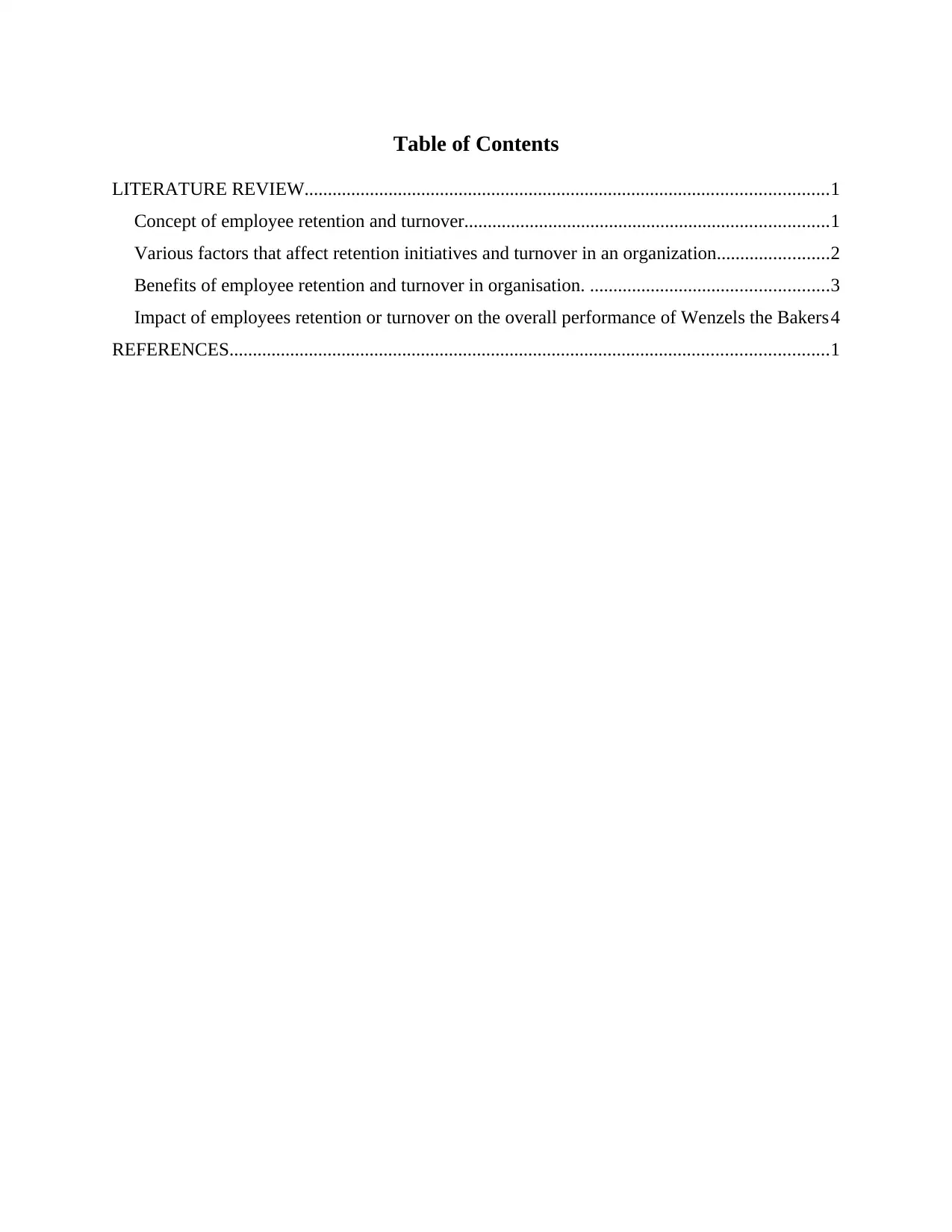
Table of Contents
LITERATURE REVIEW................................................................................................................1
Concept of employee retention and turnover..............................................................................1
Various factors that affect retention initiatives and turnover in an organization........................2
Benefits of employee retention and turnover in organisation. ...................................................3
Impact of employees retention or turnover on the overall performance of Wenzels the Bakers4
REFERENCES................................................................................................................................1
LITERATURE REVIEW................................................................................................................1
Concept of employee retention and turnover..............................................................................1
Various factors that affect retention initiatives and turnover in an organization........................2
Benefits of employee retention and turnover in organisation. ...................................................3
Impact of employees retention or turnover on the overall performance of Wenzels the Bakers4
REFERENCES................................................................................................................................1
LITERATURE REVIEW
Concept of employee retention and turnover
According to the perception of Al-Emadi, Schwabenland and Wei, (2015). it has been
analysed that employee retention is seen as the efforts of employers placed on existing staff in
order to convince them to work with the similar company for longer period of time. The main
intention of organisation behind this effort is to reduce workforce turnover so that they company
can obtain its targeted goals and objective in the less period of time. It can be said that the main
aim of every organisation is to perform their job responsibilities in effective manner so that they
could achieve their targeted goals in quick time. This can be only done in effective manner by
having positive staff of old workforce. For this, top management of every business organisation
always puts their efforts at constant basis for influencing employees to work with the same
company for long term. This helps the company in focusing on their long term objectives. It has
been identified that concept of employee retention has both the positive as well as negative
impression on organisational growth and performance. From the opinion of Kim, Song and Lee,
(2016) it can be said that positive impact of employee retention helps business organisation in
providing high quality services to customers which maximises their profitability ratio. On the
other hand, another author named as … have stated negative impression of employee retention
can be seen in form of lack of new ideas and talent in business organisation. It has been
represented by author that deficiency of new ideas interrupts business organisation in bringing
innovation in company.
It has been analysed that employee retention can be done in effective manner by
adopting different practices of employee engagement. Concept of employee engagement helps
company in motivating existing workforce which improves their performance and convinces
them to remain loyal with organisation. It also develops interest of employees in workplace
activities and motivates them to give their valuable ideas which enhance profitability of
company. Therefore, it can be said that effective employee engagement practices could
contribute in improving performance of employee and also motivates them to work their for
longer period of time (Harhara, Singh and Hussain, 2015).
In context to Wenzels the Bakers, the company is using ERC's Retention model for
retaining its staff. Employee Retention Connection's model states that organisational culture can
1
Concept of employee retention and turnover
According to the perception of Al-Emadi, Schwabenland and Wei, (2015). it has been
analysed that employee retention is seen as the efforts of employers placed on existing staff in
order to convince them to work with the similar company for longer period of time. The main
intention of organisation behind this effort is to reduce workforce turnover so that they company
can obtain its targeted goals and objective in the less period of time. It can be said that the main
aim of every organisation is to perform their job responsibilities in effective manner so that they
could achieve their targeted goals in quick time. This can be only done in effective manner by
having positive staff of old workforce. For this, top management of every business organisation
always puts their efforts at constant basis for influencing employees to work with the same
company for long term. This helps the company in focusing on their long term objectives. It has
been identified that concept of employee retention has both the positive as well as negative
impression on organisational growth and performance. From the opinion of Kim, Song and Lee,
(2016) it can be said that positive impact of employee retention helps business organisation in
providing high quality services to customers which maximises their profitability ratio. On the
other hand, another author named as … have stated negative impression of employee retention
can be seen in form of lack of new ideas and talent in business organisation. It has been
represented by author that deficiency of new ideas interrupts business organisation in bringing
innovation in company.
It has been analysed that employee retention can be done in effective manner by
adopting different practices of employee engagement. Concept of employee engagement helps
company in motivating existing workforce which improves their performance and convinces
them to remain loyal with organisation. It also develops interest of employees in workplace
activities and motivates them to give their valuable ideas which enhance profitability of
company. Therefore, it can be said that effective employee engagement practices could
contribute in improving performance of employee and also motivates them to work their for
longer period of time (Harhara, Singh and Hussain, 2015).
In context to Wenzels the Bakers, the company is using ERC's Retention model for
retaining its staff. Employee Retention Connection's model states that organisational culture can
1
⊘ This is a preview!⊘
Do you want full access?
Subscribe today to unlock all pages.

Trusted by 1+ million students worldwide
be improved by adopting five phases based approach. It also helps company in gaining
competitive advantage. All five phases of this model are defined as below:
Phase 1: At this phase, top management of the company observes and analysis actual
motivational culture of organisation. It can be done by conducting some surveys which helps in
effective evaluating overall organisational environment.
Phase 2: At next phase, it management team actively designs job work assignment that
involves feedback, decision taking authority, learning opportunities etc.
Phase 3: In this stage, company is providing training to its management team in order to
clear up their mission, vision, requirement of organisational change, etc.
Phase 4: After providing right training, another stage of this model emphasises on
executing prepared plan through which skill building of the employees can be done in effective
manner (Harhara, Singh and Hussain, 2015).
Phase 5: At this last stage, an evaluation is conducted by company in which employees
can analysed on the basis of their performance so that they could give reward to best performer.
It can be said that monetary benefit motivates employees at highest level.
Various factors that affect retention initiatives and turnover in an organization
According to the perception of Korsakienė, (2015), it has been analysed that there are
numerous of factors which has influence over retention initiatives and turnover in business
organisation. It can be said that modern days employers are focusing on retaining their maximum
number of employees for achieving their organisational goals and objective in quick manner.
Most commonly these employers are missing some of major factors of employee retention which
impacts upon growth of company (Sawatzky, Enns and Legare, 2015). In the present context,
some of the main factor which affects employee retention and turnover are defined as below:
Skill recognition:
Learning and Working environment: It is the another factor which impacts upon
employees retention and turnover of an organisation. This emphasis on the working environment
in which employee spent their maximum official time. Thus, it can be said that if an organisation
is not providing suitable working hours to company then it would not be possible for them retain
employees for longer time (MANDHANYA, 2015). On the other hand, if same company is
providing positive environment to employee then it will automatically retain them.
2
competitive advantage. All five phases of this model are defined as below:
Phase 1: At this phase, top management of the company observes and analysis actual
motivational culture of organisation. It can be done by conducting some surveys which helps in
effective evaluating overall organisational environment.
Phase 2: At next phase, it management team actively designs job work assignment that
involves feedback, decision taking authority, learning opportunities etc.
Phase 3: In this stage, company is providing training to its management team in order to
clear up their mission, vision, requirement of organisational change, etc.
Phase 4: After providing right training, another stage of this model emphasises on
executing prepared plan through which skill building of the employees can be done in effective
manner (Harhara, Singh and Hussain, 2015).
Phase 5: At this last stage, an evaluation is conducted by company in which employees
can analysed on the basis of their performance so that they could give reward to best performer.
It can be said that monetary benefit motivates employees at highest level.
Various factors that affect retention initiatives and turnover in an organization
According to the perception of Korsakienė, (2015), it has been analysed that there are
numerous of factors which has influence over retention initiatives and turnover in business
organisation. It can be said that modern days employers are focusing on retaining their maximum
number of employees for achieving their organisational goals and objective in quick manner.
Most commonly these employers are missing some of major factors of employee retention which
impacts upon growth of company (Sawatzky, Enns and Legare, 2015). In the present context,
some of the main factor which affects employee retention and turnover are defined as below:
Skill recognition:
Learning and Working environment: It is the another factor which impacts upon
employees retention and turnover of an organisation. This emphasis on the working environment
in which employee spent their maximum official time. Thus, it can be said that if an organisation
is not providing suitable working hours to company then it would not be possible for them retain
employees for longer time (MANDHANYA, 2015). On the other hand, if same company is
providing positive environment to employee then it will automatically retain them.
2
Paraphrase This Document
Need a fresh take? Get an instant paraphrase of this document with our AI Paraphraser
Job flexibility: Flexibility is admired by every individual whether they are working or
not. It also consider as the positive factor of employee retention which positively influences
interest of employees. It can be said that there are numerous of employers who are not focusing
on this factor but if they consider it as essential component, then it will automatically influence
interest of employees and will surely persuades them not switch their job. As a result, it will
reduce employee turnover rate of company. Whereas, on the other hand this factor also impacts
negatively on company's growth. This is because, excessive flexibility in job makes employees
extra free. This makes them lazy and ultimately impacts negatively on their performance (Getie,
Betre and Hareri, 2015).
Training: Training and development session provides opportunity to employees by
which they can maximise their skills and capability of working. It also raises chances of success
for company as it has support of high skilled manpower (Bode, Singh and Rogan, 2015). It can
be said that, if an organisation provides regular based training to its employees which not only
covers their job requirement but also enhances their knowledge about career, then it will work as
the effective factor of employee retention and engagement.
As per the above mentioned different factors which influences employee retention and
turnover, it can be said that all of them are highly effective and convinces employees to not
switch their job. At the same time, it has been evaluated that deficiency of these factor might
increase employee turnover figure. This is because, company do not regular based training, job
flexibility and learning working environment to employees then they will not satisfaction. Along
with this, if employee will not get effective training then it would not be possible for them to
develop their skills (Campbell and Im, 2016). As a result, they will look outside for different
models in which they can learn about new skills that will contribute in enhancing their business
growth. Thus, due to deficiency of these factors it might be possible that employee turnover of
company might increase.
Benefits of employee retention and turnover in organisation.
As per the viewpoint of Haider, (2015) it can be said employees retention or low
employee turnover rate brings variety of advantages and benefits to company. It has been
analysed that high employee turnover ratio impacts negatively on the business performance of
an organisation. This is because, it is difficult for management team to deal with new employee
and train them so that they perform effectively. On the other hand, if company has common
3
not. It also consider as the positive factor of employee retention which positively influences
interest of employees. It can be said that there are numerous of employers who are not focusing
on this factor but if they consider it as essential component, then it will automatically influence
interest of employees and will surely persuades them not switch their job. As a result, it will
reduce employee turnover rate of company. Whereas, on the other hand this factor also impacts
negatively on company's growth. This is because, excessive flexibility in job makes employees
extra free. This makes them lazy and ultimately impacts negatively on their performance (Getie,
Betre and Hareri, 2015).
Training: Training and development session provides opportunity to employees by
which they can maximise their skills and capability of working. It also raises chances of success
for company as it has support of high skilled manpower (Bode, Singh and Rogan, 2015). It can
be said that, if an organisation provides regular based training to its employees which not only
covers their job requirement but also enhances their knowledge about career, then it will work as
the effective factor of employee retention and engagement.
As per the above mentioned different factors which influences employee retention and
turnover, it can be said that all of them are highly effective and convinces employees to not
switch their job. At the same time, it has been evaluated that deficiency of these factor might
increase employee turnover figure. This is because, company do not regular based training, job
flexibility and learning working environment to employees then they will not satisfaction. Along
with this, if employee will not get effective training then it would not be possible for them to
develop their skills (Campbell and Im, 2016). As a result, they will look outside for different
models in which they can learn about new skills that will contribute in enhancing their business
growth. Thus, due to deficiency of these factors it might be possible that employee turnover of
company might increase.
Benefits of employee retention and turnover in organisation.
As per the viewpoint of Haider, (2015) it can be said employees retention or low
employee turnover rate brings variety of advantages and benefits to company. It has been
analysed that high employee turnover ratio impacts negatively on the business performance of
an organisation. This is because, it is difficult for management team to deal with new employee
and train them so that they perform effectively. On the other hand, if company has common
3
worker who is serving to the company from many year then top management team use their
worthy time in planning effective strategies which could maximise their profitability ratio
(Presbitero, Roxas and Chadee, 2016). It has been identified that there are some main benefits of
employees retention which are gained by Wenzels the Bakers, some of these merit points are
defined as below:
Cost saving: The main benefit of employee retention for Wenzels the Bakers is cost
saving. It can be said that if this company is still working with its old staff then it will definitely
save its recruitment cost which would have been consumed by them while hiring employees
(Advantages of employee retention, 2019).
Experienced employees: Wenzels the Bakers will gain benefit of having experienced
staff in the company by high employee retention rate (Noe and et. al., 2017). It can be said that
high experienced work are having capability of dealing with numerous of situations by which
they could execute their pre planned activities in effective manner.
Impact of employees retention or turnover on the overall performance of Wenzels the Bakers
Employees retention plays an essential role in the growth as well as business performance
of Wenzels the Bakers. It has been identified that this company is having much experienced
staff which is working with this company from many years (Selden and Sowa, 2015). These
experienced employees are aware about company's vision and mission statement which makes it
easier for them to work more effectively and accurately as compared to new staff. It can be said
that overall impact of employee retention is positive for Wenzels the Bakers as the company is
able to achieve its targeted goals and objective in very quick manner (Ahammad and et. al.,
2016). On the basis of perception of Wei, (2015), it has been analysed that impact of employees
retention could also impact negatively on performance of Wenzels the Bakers. This is because, it
could not be always possible for an organisation to conduct training or learning session for
existing employee excessive sessions also waste time of employees which reduces their
productivity (MICHAEL, PRINCE and CHACKO, 2016).
4
worthy time in planning effective strategies which could maximise their profitability ratio
(Presbitero, Roxas and Chadee, 2016). It has been identified that there are some main benefits of
employees retention which are gained by Wenzels the Bakers, some of these merit points are
defined as below:
Cost saving: The main benefit of employee retention for Wenzels the Bakers is cost
saving. It can be said that if this company is still working with its old staff then it will definitely
save its recruitment cost which would have been consumed by them while hiring employees
(Advantages of employee retention, 2019).
Experienced employees: Wenzels the Bakers will gain benefit of having experienced
staff in the company by high employee retention rate (Noe and et. al., 2017). It can be said that
high experienced work are having capability of dealing with numerous of situations by which
they could execute their pre planned activities in effective manner.
Impact of employees retention or turnover on the overall performance of Wenzels the Bakers
Employees retention plays an essential role in the growth as well as business performance
of Wenzels the Bakers. It has been identified that this company is having much experienced
staff which is working with this company from many years (Selden and Sowa, 2015). These
experienced employees are aware about company's vision and mission statement which makes it
easier for them to work more effectively and accurately as compared to new staff. It can be said
that overall impact of employee retention is positive for Wenzels the Bakers as the company is
able to achieve its targeted goals and objective in very quick manner (Ahammad and et. al.,
2016). On the basis of perception of Wei, (2015), it has been analysed that impact of employees
retention could also impact negatively on performance of Wenzels the Bakers. This is because, it
could not be always possible for an organisation to conduct training or learning session for
existing employee excessive sessions also waste time of employees which reduces their
productivity (MICHAEL, PRINCE and CHACKO, 2016).
4
⊘ This is a preview!⊘
Do you want full access?
Subscribe today to unlock all pages.
Trusted by 1+ million students worldwide
REFERENCES
Books and Journals
Al-Emadi, A. A. Q., Schwabenland, C. and Wei, Q., 2015. The vital role of employee retention
in human resource management: A literature review. IUP Journal of Organizational
Behavior. 14(3). p.7.
Kim, J. S., Song, H. J. and Lee, C. K., 2016. Effects of corporate social responsibility and
internal marketing on organizational commitment and turnover intentions. International
Journal of Hospitality Management. 55. pp.25-32.
Harhara, A. S., Singh, S. K. and Hussain, M., 2015. Correlates of employee turnover intentions
in oil and gas industry in the UAE. International journal of organizational
analysis. 23(3). pp.493-504.
Akgunduz, Y. and Sanli, S. C., 2017. The effect of employee advocacy and perceived
organizational support on job embeddedness and turnover intention in hotels. Journal of
Hospitality and Tourism Management. 31. pp.118-125.
Korsakienė, R., and et. al., 2015. Factors driving turnover and retention of information
technology professionals. Journal of business economics and management. 16(1). pp.1-
17.
MANDHANYA, Y., 2015. A STUDY OF IMPACT OF WORKING ENVIRONMENT ON
RETENTION OF EMPLOYEES (With special reference to Automobile sector). Global
Management Review. 9(4).
Bode, C., Singh, J. and Rogan, M., 2015. Corporate social initiatives and employee
retention. Organization Science. 26(6). pp.1702-1720.
Haider, M., and et. al., 2015. The impact of human resource practices on employee retention in
the telecom sector. International Journal of Economics and Financial Issues. 5(1S).
pp.63-69.
Noe, R. A., and et. al., 2017. Human resource management: Gaining a competitive advantage.
New York, NY: McGraw-Hill Education.
Presbitero, A., Roxas, B. and Chadee, D., 2016. Looking beyond HRM practices in enhancing
employee retention in BPOs: focus on employee–organisation value fit. The
International Journal of Human Resource Management. 27(6). pp.635-652.
Selden, S. C. and Sowa, J. E., 2015. Voluntary turnover in nonprofit human service
organizations: The impact of high performance work practices. Human Service
Organizations: Management, Leadership & Governance. 39(3). pp.182-207.
Ahammad, M. F., and et. al., 2016. Knowledge transfer and cross-border acquisition
performance: The impact of cultural distance and employee retention. International
business review. 25(1). pp.66-75.
Wei, Y.C., 2015. Do employees high in general human capital tend to have higher turnover
intention? The moderating role of high-performance HR practices and PO fit. Personnel
Review. 44(5). pp.739-756.
Sawatzky, J. A. V., Enns, C. L. and Legare, C., 2015. Identifying the key predictors for retention
in critical care nurses. Journal of Advanced Nursing. 71(10). pp.2315-2325.
Getie, G. A., Betre, E. T. and Hareri, H. A., 2015. Assessment of factors affecting turnover
intention among nurses working at governmental health care institutions in East Gojjam,
Amhara Region, Ethiopia, 2013. American journal of nursing science. 4(3). pp.107-112.
Books and Journals
Al-Emadi, A. A. Q., Schwabenland, C. and Wei, Q., 2015. The vital role of employee retention
in human resource management: A literature review. IUP Journal of Organizational
Behavior. 14(3). p.7.
Kim, J. S., Song, H. J. and Lee, C. K., 2016. Effects of corporate social responsibility and
internal marketing on organizational commitment and turnover intentions. International
Journal of Hospitality Management. 55. pp.25-32.
Harhara, A. S., Singh, S. K. and Hussain, M., 2015. Correlates of employee turnover intentions
in oil and gas industry in the UAE. International journal of organizational
analysis. 23(3). pp.493-504.
Akgunduz, Y. and Sanli, S. C., 2017. The effect of employee advocacy and perceived
organizational support on job embeddedness and turnover intention in hotels. Journal of
Hospitality and Tourism Management. 31. pp.118-125.
Korsakienė, R., and et. al., 2015. Factors driving turnover and retention of information
technology professionals. Journal of business economics and management. 16(1). pp.1-
17.
MANDHANYA, Y., 2015. A STUDY OF IMPACT OF WORKING ENVIRONMENT ON
RETENTION OF EMPLOYEES (With special reference to Automobile sector). Global
Management Review. 9(4).
Bode, C., Singh, J. and Rogan, M., 2015. Corporate social initiatives and employee
retention. Organization Science. 26(6). pp.1702-1720.
Haider, M., and et. al., 2015. The impact of human resource practices on employee retention in
the telecom sector. International Journal of Economics and Financial Issues. 5(1S).
pp.63-69.
Noe, R. A., and et. al., 2017. Human resource management: Gaining a competitive advantage.
New York, NY: McGraw-Hill Education.
Presbitero, A., Roxas, B. and Chadee, D., 2016. Looking beyond HRM practices in enhancing
employee retention in BPOs: focus on employee–organisation value fit. The
International Journal of Human Resource Management. 27(6). pp.635-652.
Selden, S. C. and Sowa, J. E., 2015. Voluntary turnover in nonprofit human service
organizations: The impact of high performance work practices. Human Service
Organizations: Management, Leadership & Governance. 39(3). pp.182-207.
Ahammad, M. F., and et. al., 2016. Knowledge transfer and cross-border acquisition
performance: The impact of cultural distance and employee retention. International
business review. 25(1). pp.66-75.
Wei, Y.C., 2015. Do employees high in general human capital tend to have higher turnover
intention? The moderating role of high-performance HR practices and PO fit. Personnel
Review. 44(5). pp.739-756.
Sawatzky, J. A. V., Enns, C. L. and Legare, C., 2015. Identifying the key predictors for retention
in critical care nurses. Journal of Advanced Nursing. 71(10). pp.2315-2325.
Getie, G. A., Betre, E. T. and Hareri, H. A., 2015. Assessment of factors affecting turnover
intention among nurses working at governmental health care institutions in East Gojjam,
Amhara Region, Ethiopia, 2013. American journal of nursing science. 4(3). pp.107-112.
Paraphrase This Document
Need a fresh take? Get an instant paraphrase of this document with our AI Paraphraser
Campbell, J. W. and Im, T., 2016. PSM and turnover intention in public organizations: Does
change-oriented organizational citizenship behavior play a role?. Review of Public
Personnel Administration. 36(4). pp.323-346.
MICHAEL, B., PRINCE, A. F. and CHACKO, A., 2016. IMPACT OF COMPENSATION
PACKAGE ON EMPLOYEE RETENTION. CLEAR International Journal of Research
in Commerce & Management. 7(10).
Online
Advantages of employee retention. 2019. [Online]. Available Through:
<https://www.crworldwide.com/news-ideas/employee-recognition/advantages-of-
employee-retention/>
change-oriented organizational citizenship behavior play a role?. Review of Public
Personnel Administration. 36(4). pp.323-346.
MICHAEL, B., PRINCE, A. F. and CHACKO, A., 2016. IMPACT OF COMPENSATION
PACKAGE ON EMPLOYEE RETENTION. CLEAR International Journal of Research
in Commerce & Management. 7(10).
Online
Advantages of employee retention. 2019. [Online]. Available Through:
<https://www.crworldwide.com/news-ideas/employee-recognition/advantages-of-
employee-retention/>

3
⊘ This is a preview!⊘
Do you want full access?
Subscribe today to unlock all pages.
Trusted by 1+ million students worldwide

1 out of 9


Related Documents


Your All-in-One AI-Powered Toolkit for Academic Success.
+13062052269
info@desklib.com
Available 24*7 on WhatsApp / Email
![[object Object]](/_next/static/media/star-bottom.7253800d.svg)
Unlock your academic potential
Copyright © 2020–2026 A2Z Services. All Rights Reserved. Developed and managed by ZUCOL.