Employee Motivation and Business Success: A Research Proposal
VerifiedAdded on 2023/01/06
|9
|2104
|98
Project
AI Summary
This research project proposal investigates the critical role of employee motivation in achieving business growth and success, focusing on a case study of the Camden Enterprise Hotel. The introduction defines employee motivation and its significance, highlighting the need for motivated staff to provide high-quality services. The research aims to assess the impact of employee motivation on business growth, with objectives to understand the concept, analyze its role, and identify effective motivational strategies. The research questions address the concept, role, and different motivational approaches. The significance of the research lies in its potential to inform the hotel's management on ways to enhance employee motivation and improve service quality. The literature review explores the concept of employee motivation, its significance for organizations, and its role in business growth and success. It also examines various strategies for motivating employees, such as providing rewards, training, and development opportunities. The research methodology outlines the research philosophy (positivism), approach (deductive), strategy (quantitative survey), and data collection methods (primary and secondary). It also addresses sampling techniques and ethical considerations, along with a detailed timescale for the project's completion.

Research Project Proposal
1
1
Paraphrase This Document
Need a fresh take? Get an instant paraphrase of this document with our AI Paraphraser

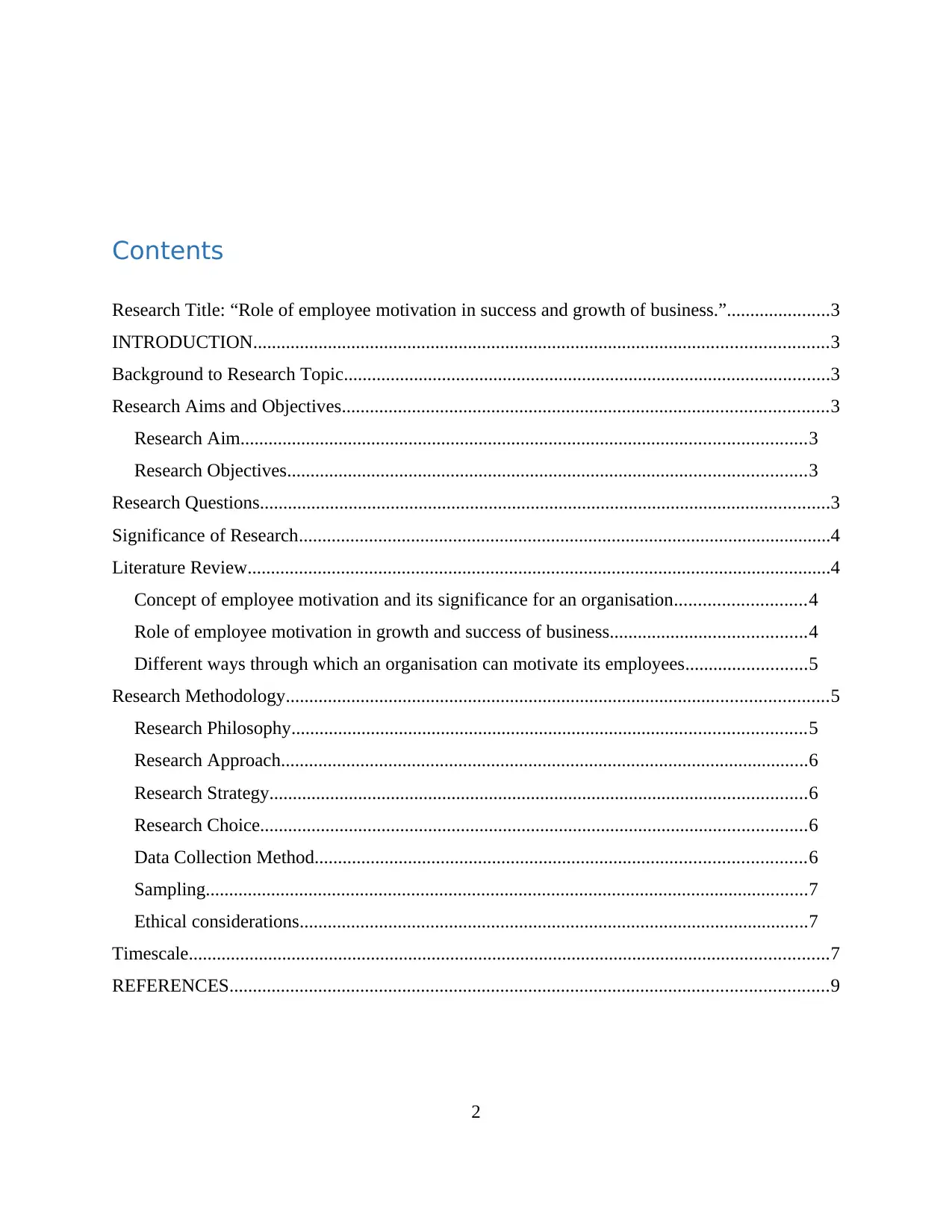
Contents
Research Title: “Role of employee motivation in success and growth of business.”......................3
INTRODUCTION...........................................................................................................................3
Background to Research Topic........................................................................................................3
Research Aims and Objectives........................................................................................................3
Research Aim.........................................................................................................................3
Research Objectives...............................................................................................................3
Research Questions..........................................................................................................................3
Significance of Research..................................................................................................................4
Literature Review.............................................................................................................................4
Concept of employee motivation and its significance for an organisation............................4
Role of employee motivation in growth and success of business..........................................4
Different ways through which an organisation can motivate its employees..........................5
Research Methodology....................................................................................................................5
Research Philosophy..............................................................................................................5
Research Approach.................................................................................................................6
Research Strategy...................................................................................................................6
Research Choice.....................................................................................................................6
Data Collection Method.........................................................................................................6
Sampling.................................................................................................................................7
Ethical considerations.............................................................................................................7
Timescale.........................................................................................................................................7
REFERENCES................................................................................................................................9
2
Research Title: “Role of employee motivation in success and growth of business.”......................3
INTRODUCTION...........................................................................................................................3
Background to Research Topic........................................................................................................3
Research Aims and Objectives........................................................................................................3
Research Aim.........................................................................................................................3
Research Objectives...............................................................................................................3
Research Questions..........................................................................................................................3
Significance of Research..................................................................................................................4
Literature Review.............................................................................................................................4
Concept of employee motivation and its significance for an organisation............................4
Role of employee motivation in growth and success of business..........................................4
Different ways through which an organisation can motivate its employees..........................5
Research Methodology....................................................................................................................5
Research Philosophy..............................................................................................................5
Research Approach.................................................................................................................6
Research Strategy...................................................................................................................6
Research Choice.....................................................................................................................6
Data Collection Method.........................................................................................................6
Sampling.................................................................................................................................7
Ethical considerations.............................................................................................................7
Timescale.........................................................................................................................................7
REFERENCES................................................................................................................................9
2

Research Title: “Role of employee motivation in success and growth of business.”
INTRODUCTION
Background to Research Topic
Employee motivation is defined as the level of commitment, energy and creativity that the
employees of company bring to their jobs. It is an internal drive to put it needed efforts and
actions towards activities related to work. For an organisation, it is very significant to keep its
employees motivated and satisfied in order to grow and succeed in the competitive business
environment (Lăzăroiu, 2015). Camden Enterprise Hotel is one of the best hotel of London
which is located in Victorian building, Cadman district. The hotel provides accommodation
services to people with various facilities. In order to provide high quality services to guests, the
management of hotel requires to keep its staff members motivated and satisfied so that they are
able to perform their roles and responsibilities effectively and provide high quality services to
guests. This report intent to assess to role of employee motivation for organisation in
accomplishing business growth and success.
Research Aims and Objectives
Research Aim
The primary aim associated with this investigation is “To assess the role of employee
motivation for organisation in accomplishing business growth and success: A case study on
Camden Enterprise Hotel.”
Research Objectives
The objectives linked to this particular investigation are provided below:
1. To understand the concept of employee motivation and its significance for organisation.
2. To analyse the role of employee motivation in growth and success of business.
3. To identify different ways through which organisation can motivate its employees.
Research Questions
The research questions linked to this research are provided below:
1. What is the concept of employee motivation and its significance for an organisation?
2. What is the role of employee motivation in growth and success of business?
3
INTRODUCTION
Background to Research Topic
Employee motivation is defined as the level of commitment, energy and creativity that the
employees of company bring to their jobs. It is an internal drive to put it needed efforts and
actions towards activities related to work. For an organisation, it is very significant to keep its
employees motivated and satisfied in order to grow and succeed in the competitive business
environment (Lăzăroiu, 2015). Camden Enterprise Hotel is one of the best hotel of London
which is located in Victorian building, Cadman district. The hotel provides accommodation
services to people with various facilities. In order to provide high quality services to guests, the
management of hotel requires to keep its staff members motivated and satisfied so that they are
able to perform their roles and responsibilities effectively and provide high quality services to
guests. This report intent to assess to role of employee motivation for organisation in
accomplishing business growth and success.
Research Aims and Objectives
Research Aim
The primary aim associated with this investigation is “To assess the role of employee
motivation for organisation in accomplishing business growth and success: A case study on
Camden Enterprise Hotel.”
Research Objectives
The objectives linked to this particular investigation are provided below:
1. To understand the concept of employee motivation and its significance for organisation.
2. To analyse the role of employee motivation in growth and success of business.
3. To identify different ways through which organisation can motivate its employees.
Research Questions
The research questions linked to this research are provided below:
1. What is the concept of employee motivation and its significance for an organisation?
2. What is the role of employee motivation in growth and success of business?
3
⊘ This is a preview!⊘
Do you want full access?
Subscribe today to unlock all pages.

Trusted by 1+ million students worldwide

3. Which are the different ways through which an organisation can motivate its employees?
Significance of Research
This research is conducted on the topic “Role of employee motivation in success and growth
of business” and it aims to evaluate the role of employee motivation in accomplishing business
growth and success. Performing this research is significant as it assists in understanding the
concept and importance of employee motivation. It also helps researcher to analyse the role of
employee motivation in growth and success of business (Kuranchie-Mensah, and Amponsah-
Tawiah, 2016). With the help of this investigation, Cadman Enterprise Hotel will be able to
determine the ways to which it can motivate its employees so that high quality services can be
offered to guest. Apart from this, this study also helps investigator to gain deep insights on topic.
Literature Review
Concept of employee motivation and its significance for an organisation
As per the view point of Hitka, Kozubíková, and Potkány, (2018), employee motivation
can be stated as energy level, enthusiasm, creativity and commitment of employees towards
organisation. It is all about keeping the employees satisfied in the organisation by improving
their morale and motivation. Motivated workforce is the crucial asset of company and are
directly proportional to the success of business. Employee motivation is very important for
organisation as it enable it to accomplish its goals and objectives. Without motivated employees,
an organisation cannot be grow and success. Motivated employees lead a company towards
enhanced productivity and make it able to accomplish high level of output. Apart from this,
employee motivation also helps in satisfying the employees and improving their efficiency to
perform their roles and responsibilities in an effective and efficient manner.
Role of employee motivation in growth and success of business
As per the opinion of Idowu, (2017), Employee motivation play very significant role in
growth and success of an organisation. Employees are the very important part of organisation
and without them, no business can be able to attain growth and success. So, it is very essential
for the company keep its employees motivated and satisfied so that their efficiency can be
improved and they are committed towards company. Motivated and satisfied employees perform
their roles and responsibilities effectively which lead the organisation towards growth and
4
Significance of Research
This research is conducted on the topic “Role of employee motivation in success and growth
of business” and it aims to evaluate the role of employee motivation in accomplishing business
growth and success. Performing this research is significant as it assists in understanding the
concept and importance of employee motivation. It also helps researcher to analyse the role of
employee motivation in growth and success of business (Kuranchie-Mensah, and Amponsah-
Tawiah, 2016). With the help of this investigation, Cadman Enterprise Hotel will be able to
determine the ways to which it can motivate its employees so that high quality services can be
offered to guest. Apart from this, this study also helps investigator to gain deep insights on topic.
Literature Review
Concept of employee motivation and its significance for an organisation
As per the view point of Hitka, Kozubíková, and Potkány, (2018), employee motivation
can be stated as energy level, enthusiasm, creativity and commitment of employees towards
organisation. It is all about keeping the employees satisfied in the organisation by improving
their morale and motivation. Motivated workforce is the crucial asset of company and are
directly proportional to the success of business. Employee motivation is very important for
organisation as it enable it to accomplish its goals and objectives. Without motivated employees,
an organisation cannot be grow and success. Motivated employees lead a company towards
enhanced productivity and make it able to accomplish high level of output. Apart from this,
employee motivation also helps in satisfying the employees and improving their efficiency to
perform their roles and responsibilities in an effective and efficient manner.
Role of employee motivation in growth and success of business
As per the opinion of Idowu, (2017), Employee motivation play very significant role in
growth and success of an organisation. Employees are the very important part of organisation
and without them, no business can be able to attain growth and success. So, it is very essential
for the company keep its employees motivated and satisfied so that their efficiency can be
improved and they are committed towards company. Motivated and satisfied employees perform
their roles and responsibilities effectively which lead the organisation towards growth and
4
Paraphrase This Document
Need a fresh take? Get an instant paraphrase of this document with our AI Paraphraser

success. Apart from this, it not only improves the productivity of employees, but the
organizational productivity will also be enhancing if the employees stay motivated. Thus,
maximized the profitability of company and leads the organisation towards accomplishment of
its goals and objectives. This highly contributes the organisation in achieving competitive
advantage in market and attaining growth and success (De Sousa Sabbagha, Ledimo, and
Martins, 2018).
Different ways through which an organisation can motivate its employees
As per the opinion presented by Závadský, Hitka, and Potkány, (2015), there are several
ways through which an organisation can motivate its employees. Some of the ways are define
below:
Providing rewards and recognition: if the organisation will provide appropriate reward
and recognition to its employees for the work they performed in the organisation, then it
assists in improving their motivation level and developed a sense of satisfaction among
them.
Training and development opportunities: this is also the another way through which a
company can motivate its employees. Providing all the employees with regular training
and development opportunities help in improving their skills and competency level which
will further supports in their future growth and development. This also improves
motivation of employees.
Research Methodology
Research Philosophy
There are two philosophies which the researcher used mainly in the research including
interpretivism and positivism research philosophy. Positivism research philosophy align itself
with approaches associated with natural science interpretivism includes data interpretation and
integrates interest of human in a study (Dumay, and Cai, 2015). Positivism philosophy will
consider by researcher for this study as it is the widely used philosophy and is based on
quantitative research method. Also, it uses verifiable data in the study.
5
organizational productivity will also be enhancing if the employees stay motivated. Thus,
maximized the profitability of company and leads the organisation towards accomplishment of
its goals and objectives. This highly contributes the organisation in achieving competitive
advantage in market and attaining growth and success (De Sousa Sabbagha, Ledimo, and
Martins, 2018).
Different ways through which an organisation can motivate its employees
As per the opinion presented by Závadský, Hitka, and Potkány, (2015), there are several
ways through which an organisation can motivate its employees. Some of the ways are define
below:
Providing rewards and recognition: if the organisation will provide appropriate reward
and recognition to its employees for the work they performed in the organisation, then it
assists in improving their motivation level and developed a sense of satisfaction among
them.
Training and development opportunities: this is also the another way through which a
company can motivate its employees. Providing all the employees with regular training
and development opportunities help in improving their skills and competency level which
will further supports in their future growth and development. This also improves
motivation of employees.
Research Methodology
Research Philosophy
There are two philosophies which the researcher used mainly in the research including
interpretivism and positivism research philosophy. Positivism research philosophy align itself
with approaches associated with natural science interpretivism includes data interpretation and
integrates interest of human in a study (Dumay, and Cai, 2015). Positivism philosophy will
consider by researcher for this study as it is the widely used philosophy and is based on
quantitative research method. Also, it uses verifiable data in the study.
5

Research Approach
Two approaches which researcher mainly use in the study includes inductive and deductive
approach. Inductive approach is linked with new theory development emerging through
information and deductive approach emphasize on testing of existing theory. This research will
use deductive research approach as it develops hypothesis based on existing theory and with the
help of this approach, researcher will be able to draw valid outcomes of study (Taherdoost,
2016).
Research Strategy
Different type of research strategies includes action oriented research, systematic literature
review, qualitative survey, quantitative survey, case study, experimental research etc. This study
considers quantitative survey method for performing the investigation appropriately. The reason
behind choosing this method is its wider use by researchers and it enable them to access
significantly the participants higher in number. For conducting the survey, questionnaire will be
used which involves questions that respondents required to answer.
Research Choice
There are two choices, quantitative and qualitative, which are often used by researcher. In
the research, when the collected data is in numerical form, then it is called quantitative research
choice and when the data is in words and language, then it is called qualitative research. In this
study, quantitative research choice will be selected by researcher as it supports in providing valid
and accurate outcomes of the study in an effective and appropriate way.
Data Collection Method
The two methods through which researcher can collect data includes primary and
secondary data collection method. When the data is completely fresh and new and is never
collected before, then it is called primary data (Flick, 2015). And when the data is collected
previously by any other person and is second hand then it is called secondary data. In relation to
this study, researcher will make use of both types of data collection method so that large amount
of information can be gathered and make the researcher able to draw reliable outcomes which are
accurate and valid.
6
Two approaches which researcher mainly use in the study includes inductive and deductive
approach. Inductive approach is linked with new theory development emerging through
information and deductive approach emphasize on testing of existing theory. This research will
use deductive research approach as it develops hypothesis based on existing theory and with the
help of this approach, researcher will be able to draw valid outcomes of study (Taherdoost,
2016).
Research Strategy
Different type of research strategies includes action oriented research, systematic literature
review, qualitative survey, quantitative survey, case study, experimental research etc. This study
considers quantitative survey method for performing the investigation appropriately. The reason
behind choosing this method is its wider use by researchers and it enable them to access
significantly the participants higher in number. For conducting the survey, questionnaire will be
used which involves questions that respondents required to answer.
Research Choice
There are two choices, quantitative and qualitative, which are often used by researcher. In
the research, when the collected data is in numerical form, then it is called quantitative research
choice and when the data is in words and language, then it is called qualitative research. In this
study, quantitative research choice will be selected by researcher as it supports in providing valid
and accurate outcomes of the study in an effective and appropriate way.
Data Collection Method
The two methods through which researcher can collect data includes primary and
secondary data collection method. When the data is completely fresh and new and is never
collected before, then it is called primary data (Flick, 2015). And when the data is collected
previously by any other person and is second hand then it is called secondary data. In relation to
this study, researcher will make use of both types of data collection method so that large amount
of information can be gathered and make the researcher able to draw reliable outcomes which are
accurate and valid.
6
⊘ This is a preview!⊘
Do you want full access?
Subscribe today to unlock all pages.

Trusted by 1+ million students worldwide

Sampling
Sampling can be stated as the process through which researcher select the sample from
large population. In this research, the investigator will make use of simple random probability
sampling for selecting the sample. The main reason of choosing this method is that it eliminates
biasness while selecting sample and provides all the individuals with equal opportunity of being
selected.
Ethical considerations
There are some ethical considerations that researcher should consider at the time of
performing investigation. It is very much required to ensure that all the data is kept confidential
so that the personal information of the respondents cannot be leaked and keep safe (Mackey, and
Gass, 2015). Apart from this, taking informed consent from participants prior to the research is
very necessary and they should be provided with the option to withdraw their consent anytime
from the research.
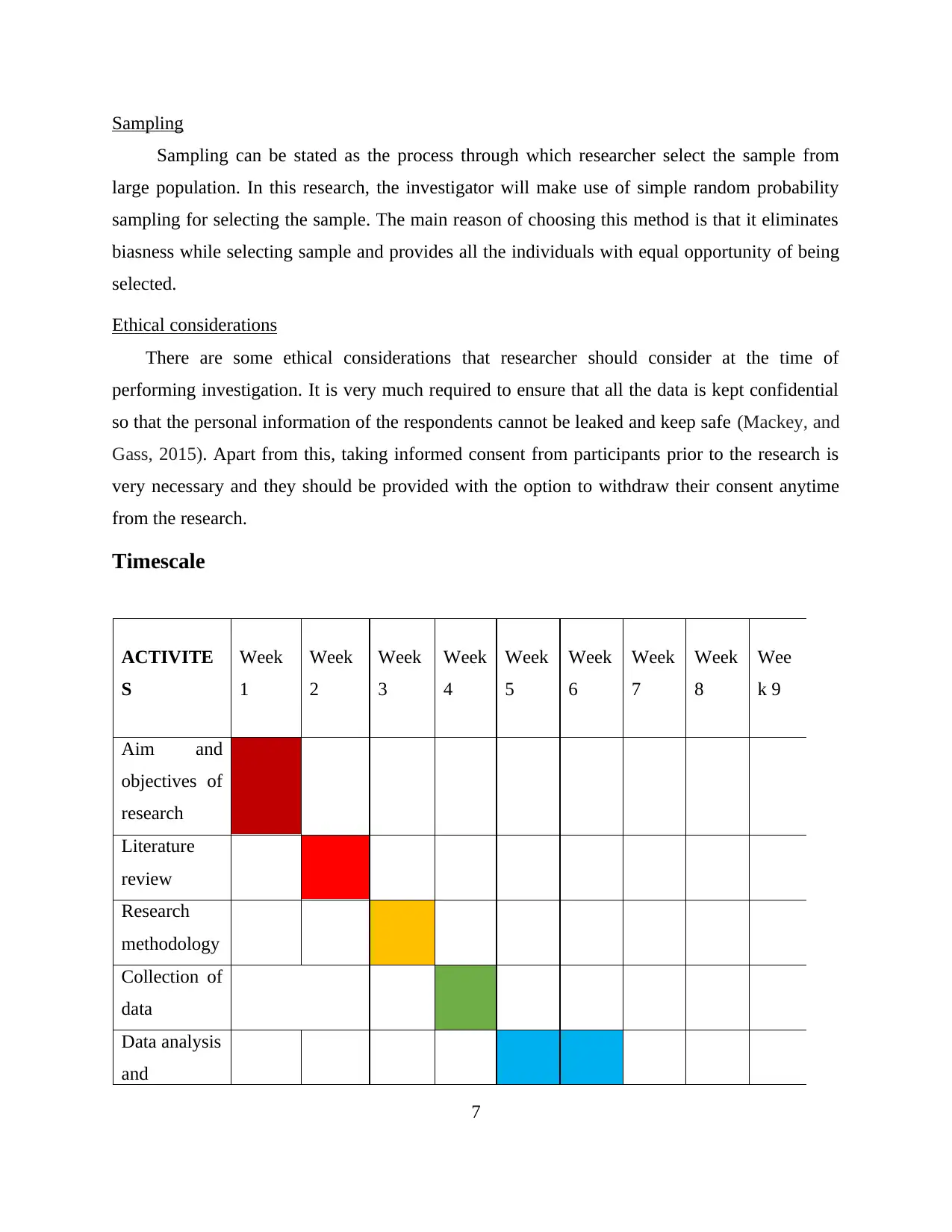
Timescale
ACTIVITE
S
Week
1
Week
2
Week
3
Week
4
Week
5
Week
6
Week
7
Week
8
Wee
k 9
Aim and
objectives of
research
Literature
review
Research
methodology
Collection of
data
Data analysis
and
7
Sampling can be stated as the process through which researcher select the sample from
large population. In this research, the investigator will make use of simple random probability
sampling for selecting the sample. The main reason of choosing this method is that it eliminates
biasness while selecting sample and provides all the individuals with equal opportunity of being
selected.
Ethical considerations
There are some ethical considerations that researcher should consider at the time of
performing investigation. It is very much required to ensure that all the data is kept confidential
so that the personal information of the respondents cannot be leaked and keep safe (Mackey, and
Gass, 2015). Apart from this, taking informed consent from participants prior to the research is
very necessary and they should be provided with the option to withdraw their consent anytime
from the research.
Timescale
ACTIVITE
S
Week
1
Week
2
Week
3
Week
4
Week
5
Week
6
Week
7
Week
8
Wee
k 9
Aim and
objectives of
research
Literature
review
Research
methodology
Collection of
data
Data analysis
and
7
Paraphrase This Document
Need a fresh take? Get an instant paraphrase of this document with our AI Paraphraser

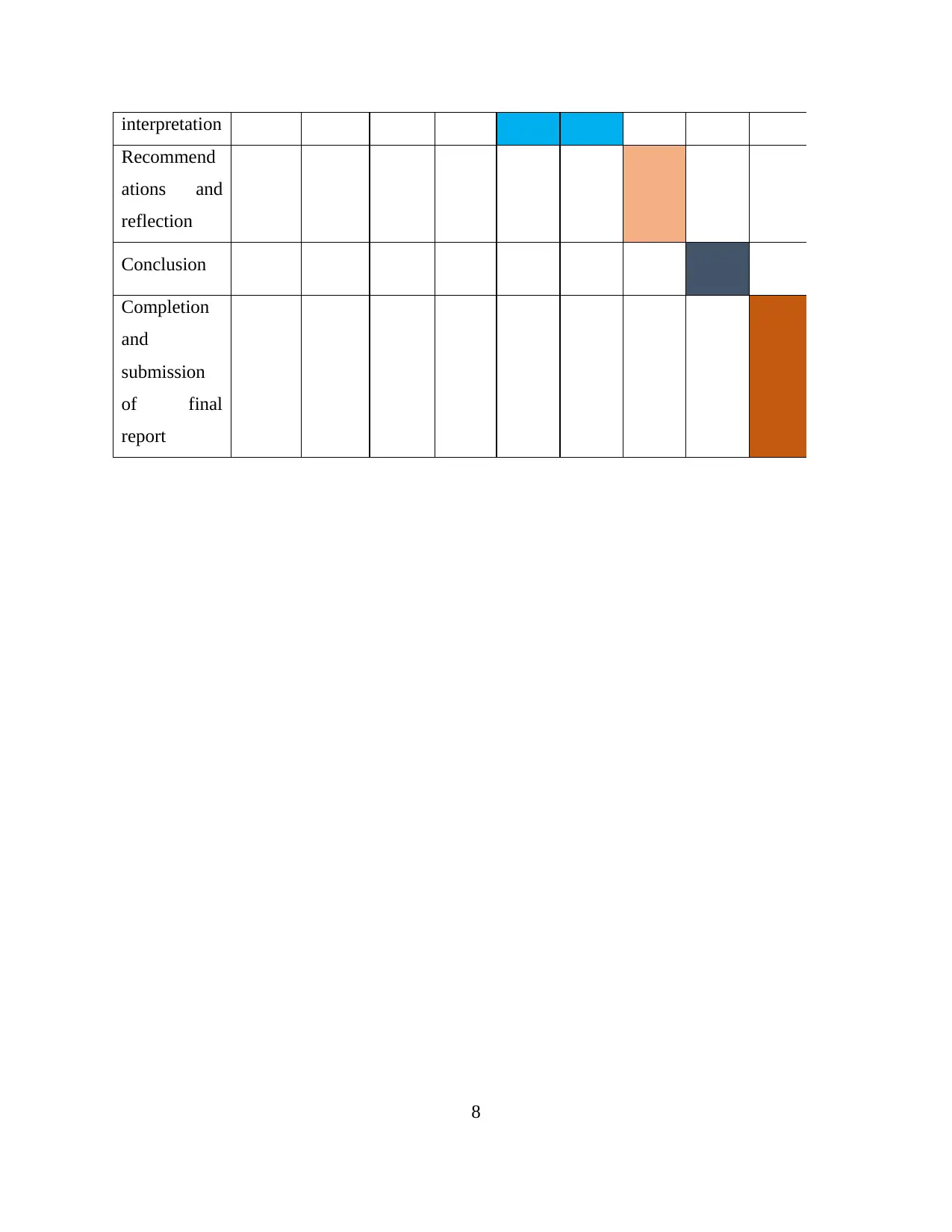
interpretation
Recommend
ations and
reflection
Conclusion
Completion
and
submission
of final
report
8
Recommend
ations and
reflection
Conclusion
Completion
and
submission
of final
report
8

REFERENCES
Books and Journals
De Sousa Sabbagha, M., Ledimo, O. and Martins, N., 2018. Predicting staff retention from
employee motivation and job satisfaction. Journal of Psychology in Africa, 28(2),
pp.136-140.
Dumay, J. and Cai, L., 2015. Using content analysis as a research methodology for investigating
intellectual capital disclosure. Journal of Intellectual Capital.
Flick, U., 2015. Introducing research methodology: A beginner's guide to doing a research
project. Sage.
Hitka, M., Kozubíková, Ľ. and Potkány, M., 2018. Education and gender-based differences in
employee motivation. Journal of Business Economics and Management, 19(1), pp.80-95.
Idowu, A., 2017. Effectiveness of performance appraisal system and its effect on employee
motivation. Nile Journal of Business and Economics, 3(5), pp.15-39.
Kuranchie-Mensah, E.B. and Amponsah-Tawiah, K., 2016. Employee motivation and work
performance: A comparative study of mining companies in Ghana. Journal of Industrial
Engineering and Management (JIEM), 9(2), pp.255-309.
Lăzăroiu, G., 2015. Employee motivation and job performance. Linguistic and Philosophical
Investigations, (14), pp.97-102.
Mackey, A. and Gass, S.M., 2015. Second language research: Methodology and design.
Routledge.
Taherdoost, H., 2016. Sampling methods in research methodology; how to choose a sampling
technique for research. How to Choose a Sampling Technique for Research (April 10,
2016).
Zangirolami-Raimundo, J., Echeimberg, J.D.O. and Leone, C., 2018. Research methodology
topics: Cross-sectional studies. Journal of Human Growth and Development, 28(3),
pp.356-360.
Závadský, J., Hitka, M. and Potkány, M., 2015. Changes of employee motivation of Slovak
enterprises due to global economic crisis.
9
Books and Journals
De Sousa Sabbagha, M., Ledimo, O. and Martins, N., 2018. Predicting staff retention from
employee motivation and job satisfaction. Journal of Psychology in Africa, 28(2),
pp.136-140.
Dumay, J. and Cai, L., 2015. Using content analysis as a research methodology for investigating
intellectual capital disclosure. Journal of Intellectual Capital.
Flick, U., 2015. Introducing research methodology: A beginner's guide to doing a research
project. Sage.
Hitka, M., Kozubíková, Ľ. and Potkány, M., 2018. Education and gender-based differences in
employee motivation. Journal of Business Economics and Management, 19(1), pp.80-95.
Idowu, A., 2017. Effectiveness of performance appraisal system and its effect on employee
motivation. Nile Journal of Business and Economics, 3(5), pp.15-39.
Kuranchie-Mensah, E.B. and Amponsah-Tawiah, K., 2016. Employee motivation and work
performance: A comparative study of mining companies in Ghana. Journal of Industrial
Engineering and Management (JIEM), 9(2), pp.255-309.
Lăzăroiu, G., 2015. Employee motivation and job performance. Linguistic and Philosophical
Investigations, (14), pp.97-102.
Mackey, A. and Gass, S.M., 2015. Second language research: Methodology and design.
Routledge.
Taherdoost, H., 2016. Sampling methods in research methodology; how to choose a sampling
technique for research. How to Choose a Sampling Technique for Research (April 10,
2016).
Zangirolami-Raimundo, J., Echeimberg, J.D.O. and Leone, C., 2018. Research methodology
topics: Cross-sectional studies. Journal of Human Growth and Development, 28(3),
pp.356-360.
Závadský, J., Hitka, M. and Potkány, M., 2015. Changes of employee motivation of Slovak
enterprises due to global economic crisis.
9
⊘ This is a preview!⊘
Do you want full access?
Subscribe today to unlock all pages.

Trusted by 1+ million students worldwide
1 out of 9
Related Documents
Your All-in-One AI-Powered Toolkit for Academic Success.
+13062052269
info@desklib.com
Available 24*7 on WhatsApp / Email
Unlock your academic potential
Copyright © 2020–2026 A2Z Services. All Rights Reserved. Developed and managed by ZUCOL.